Padmasambhava "Guru Rinpoche" Sculpture | Embodiment of Wisdom and Blessing
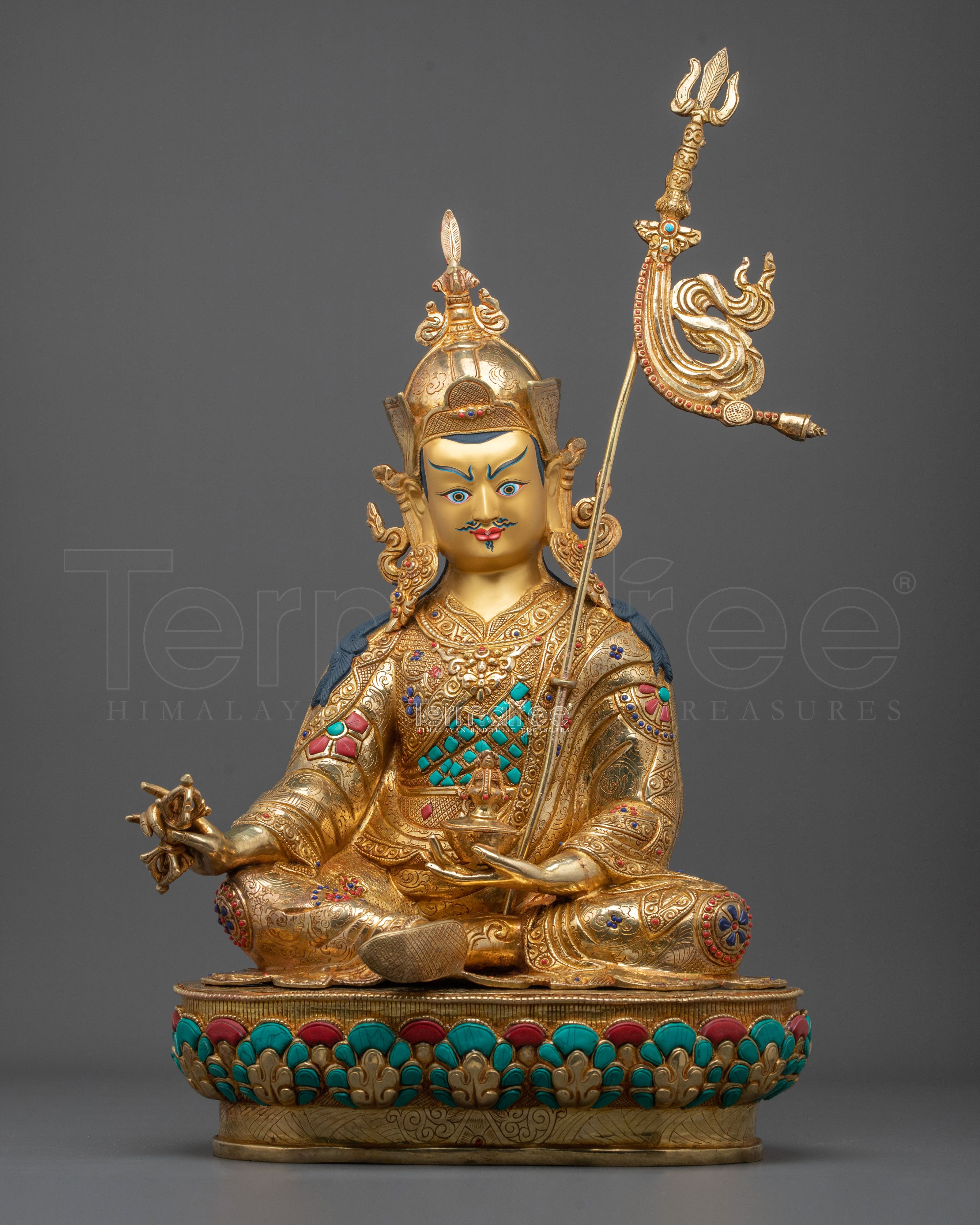
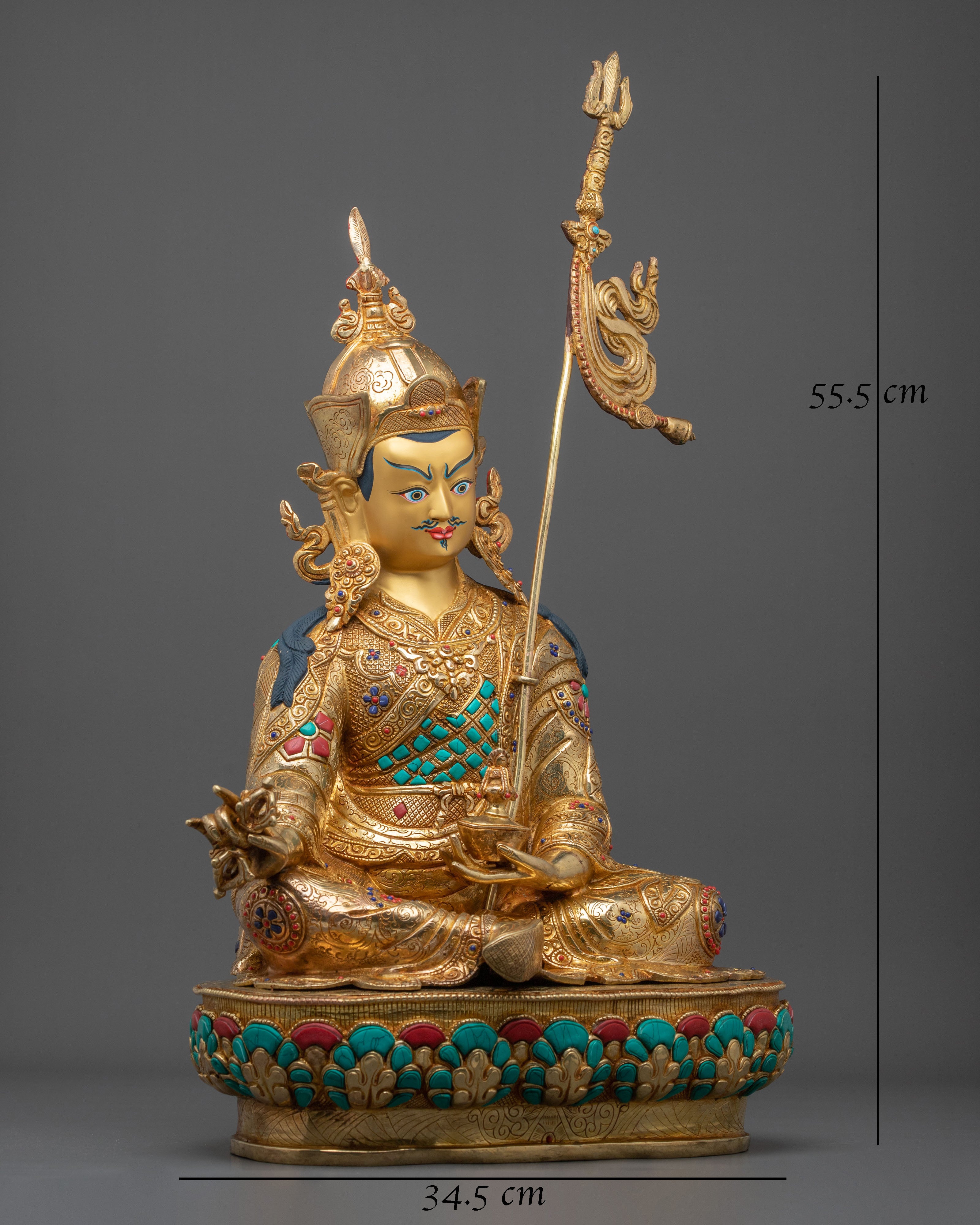
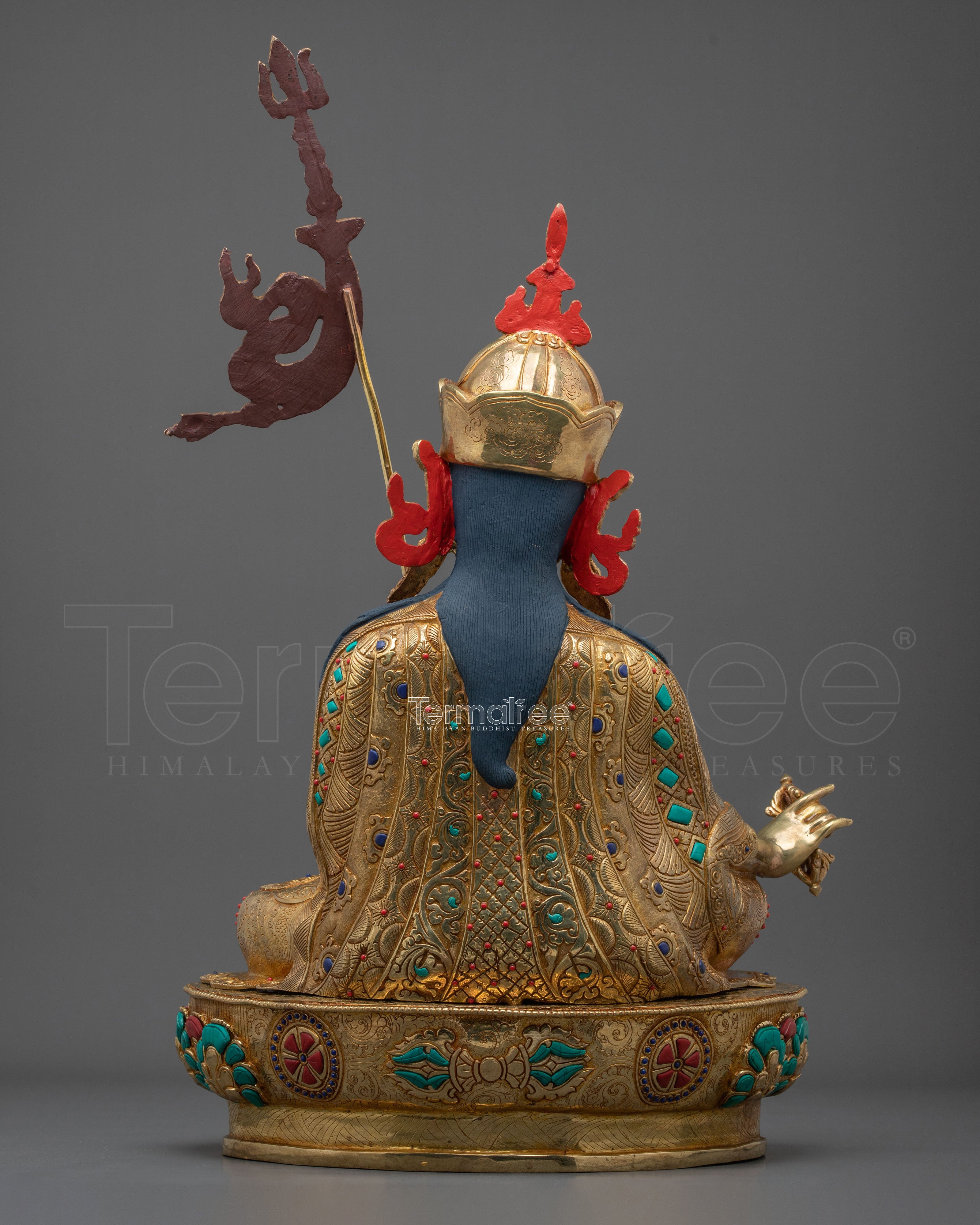
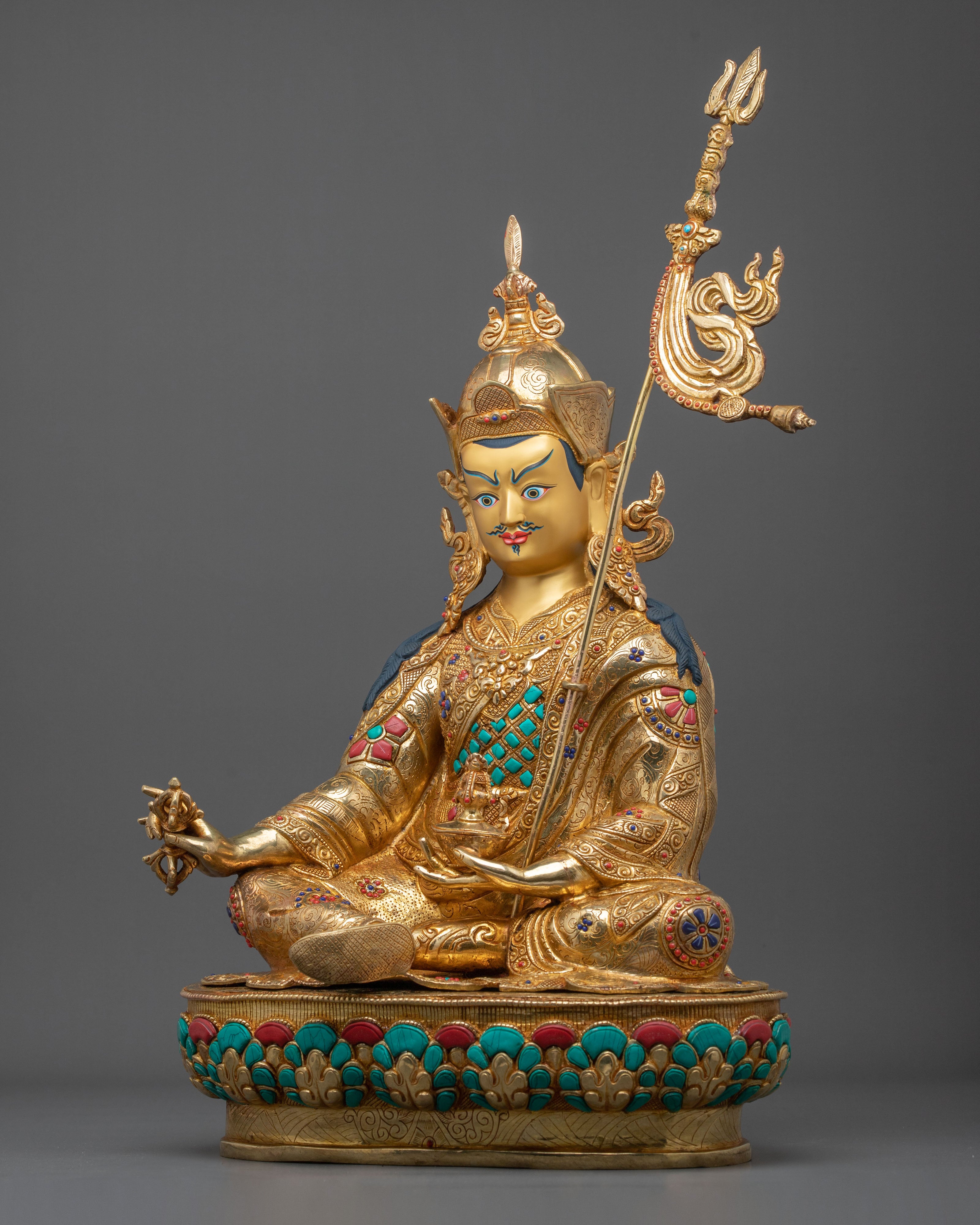
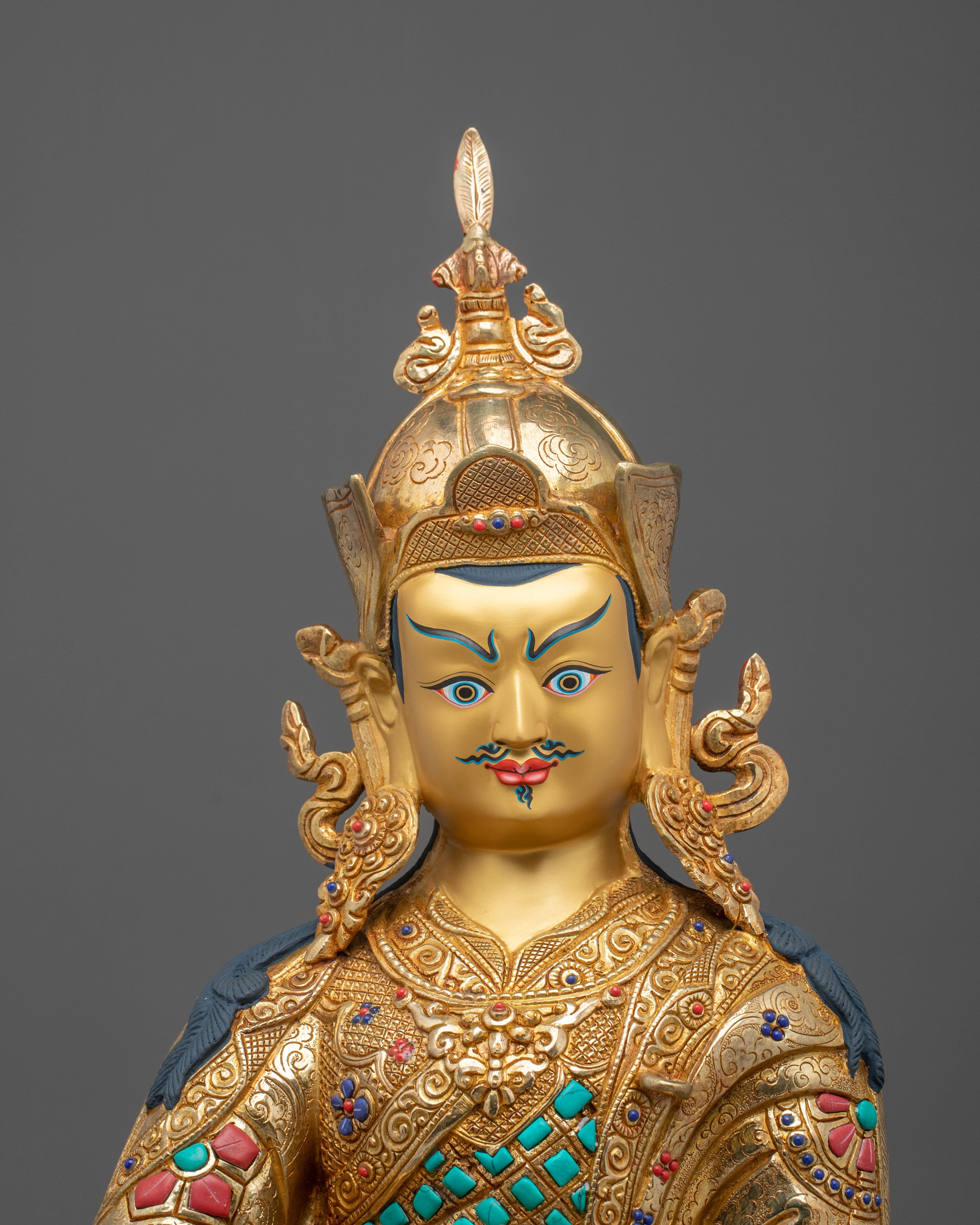
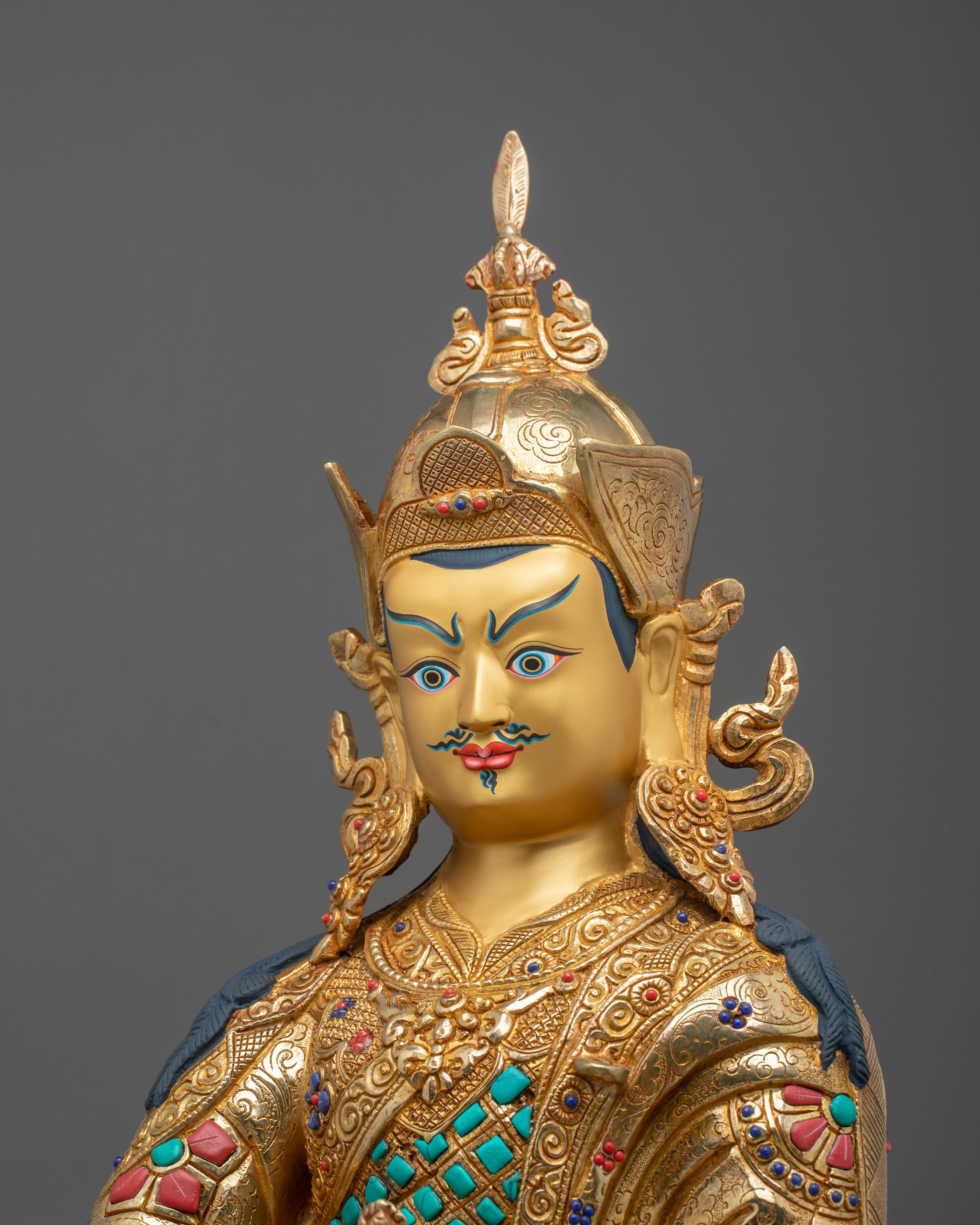
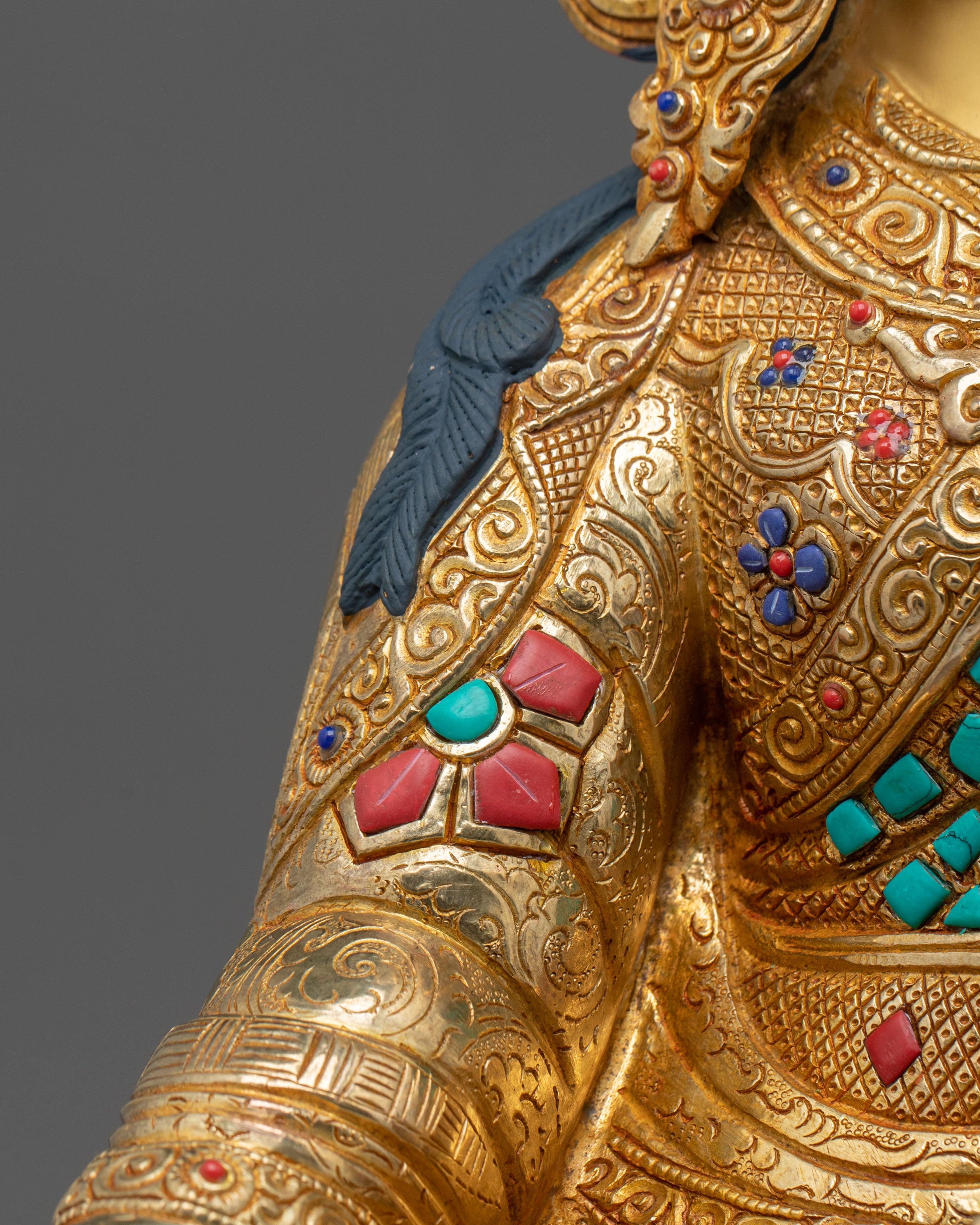
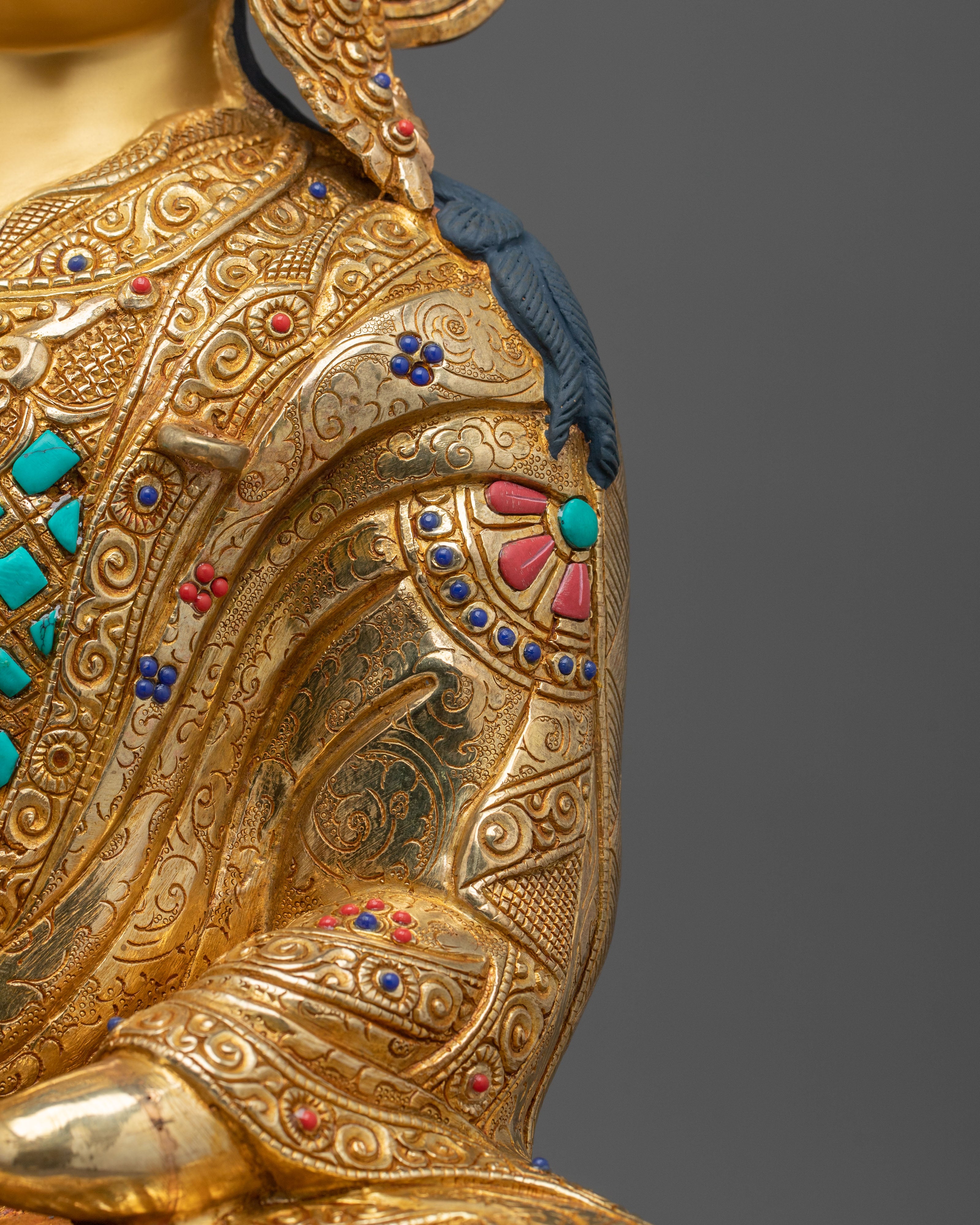
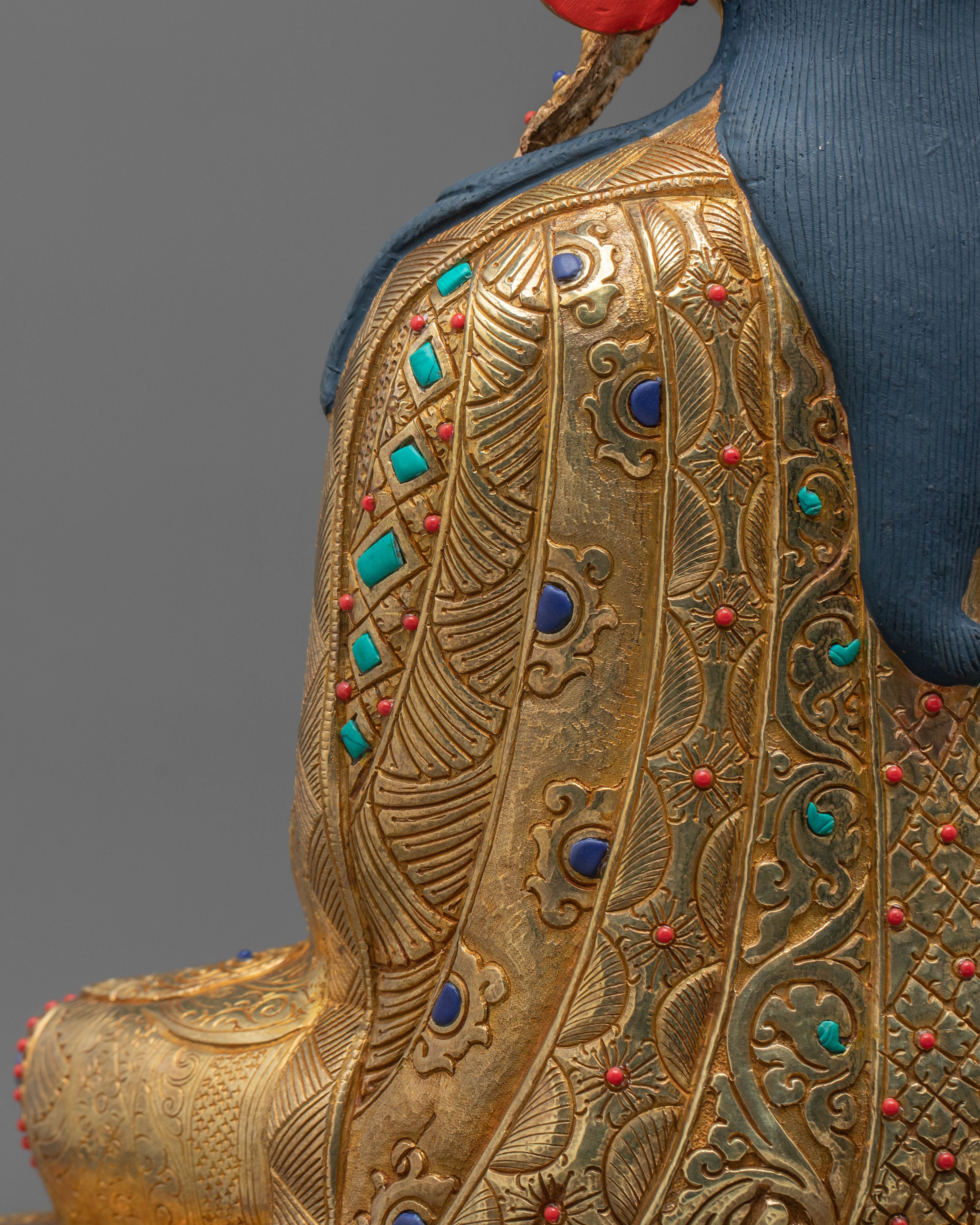
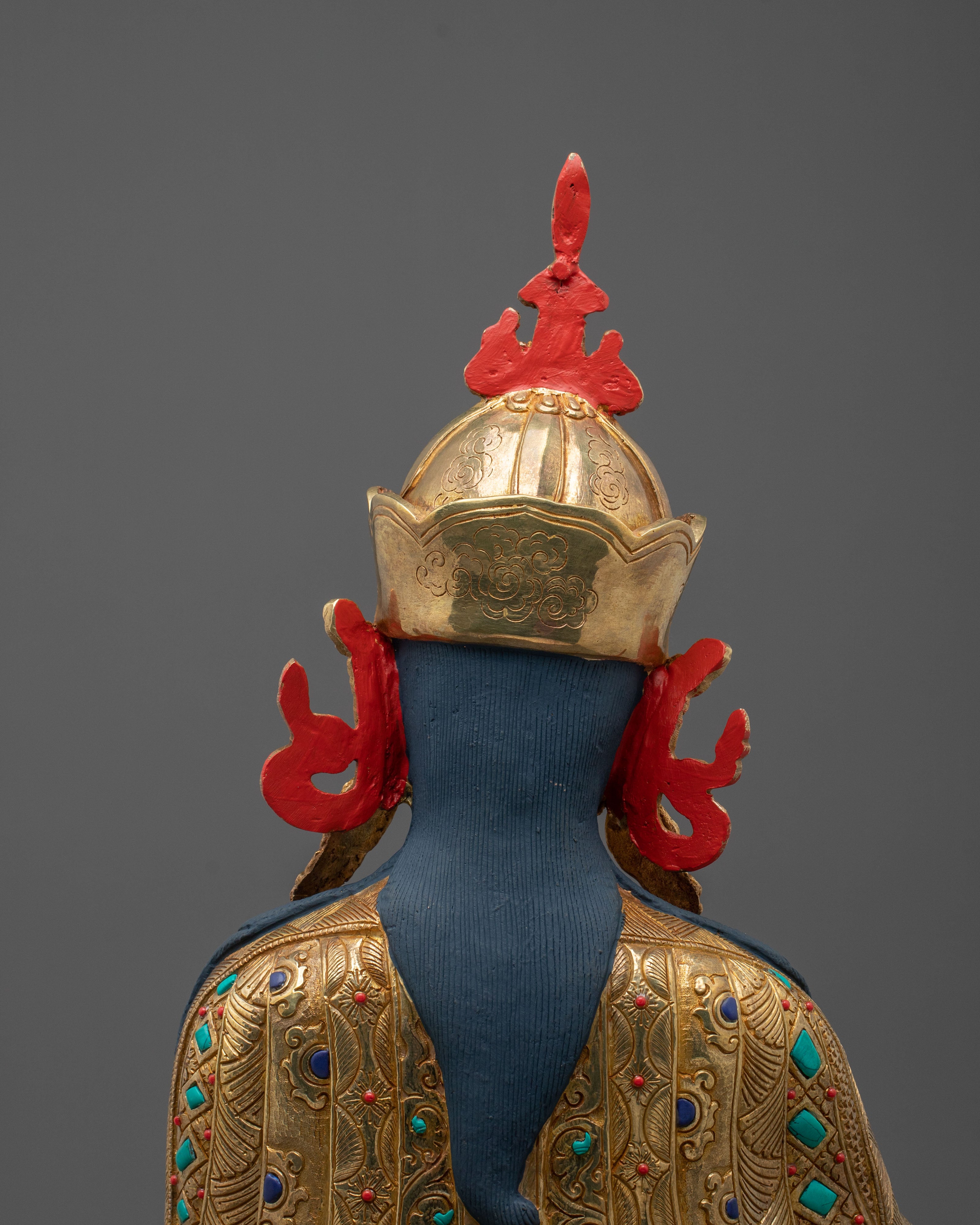
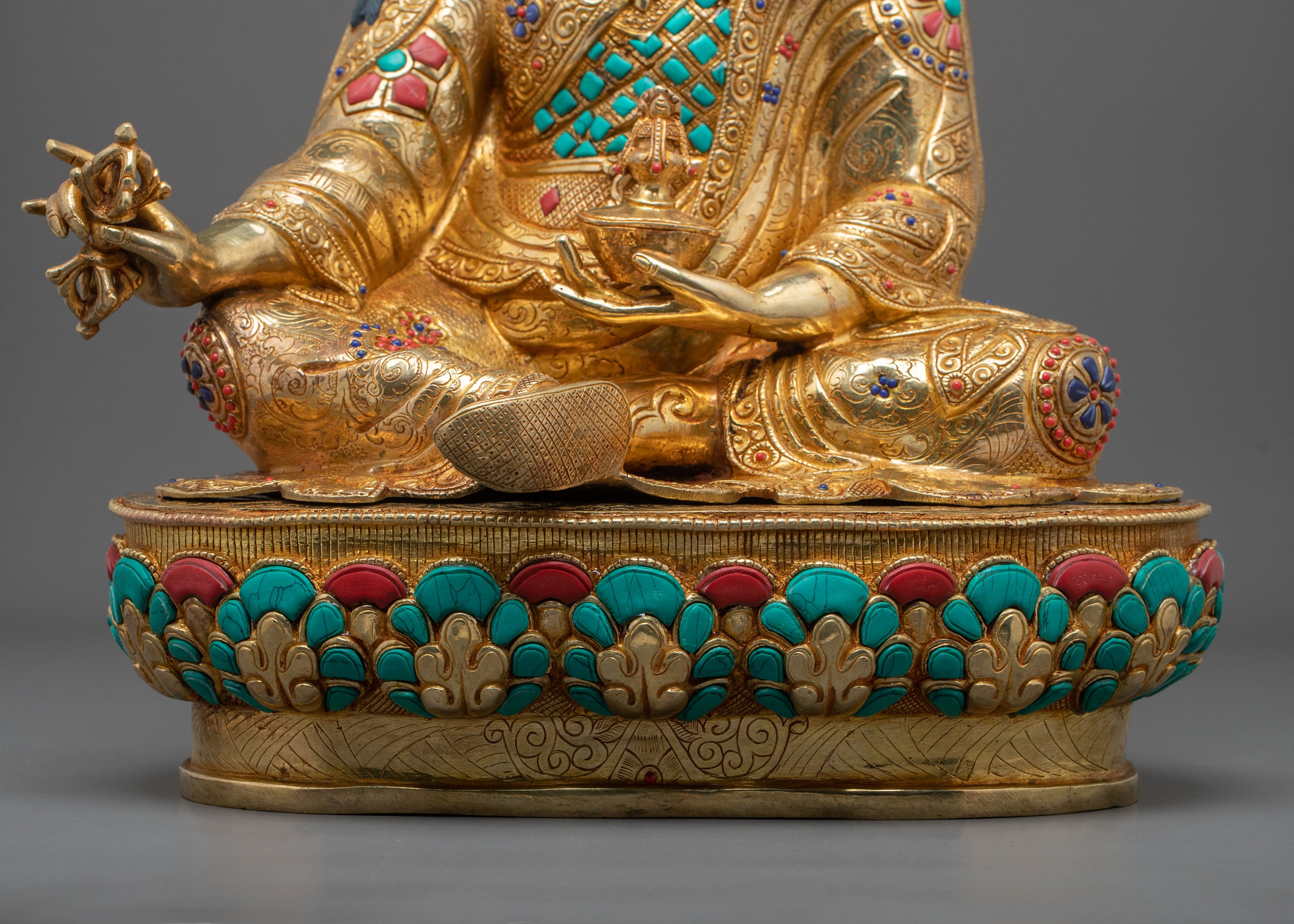
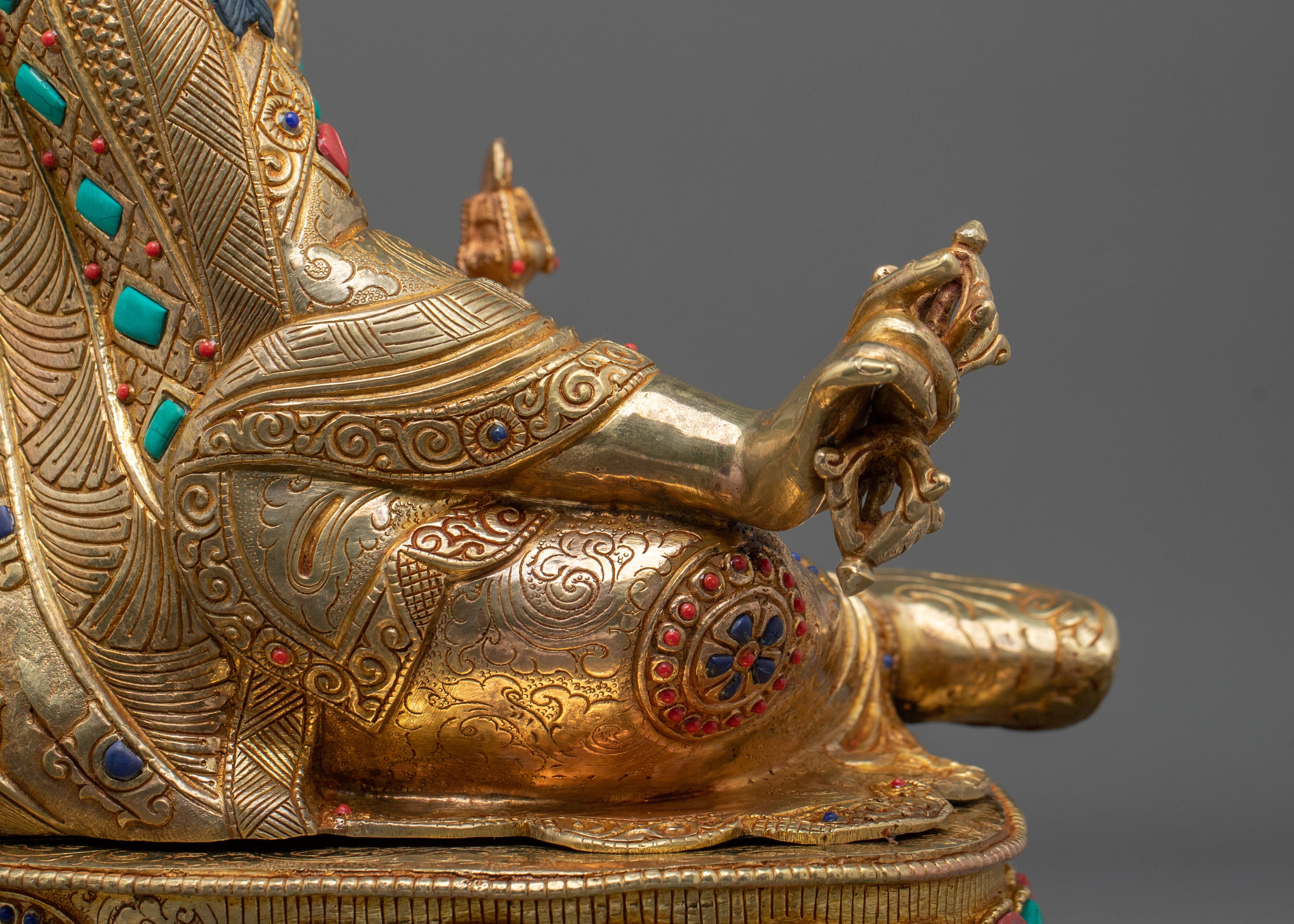
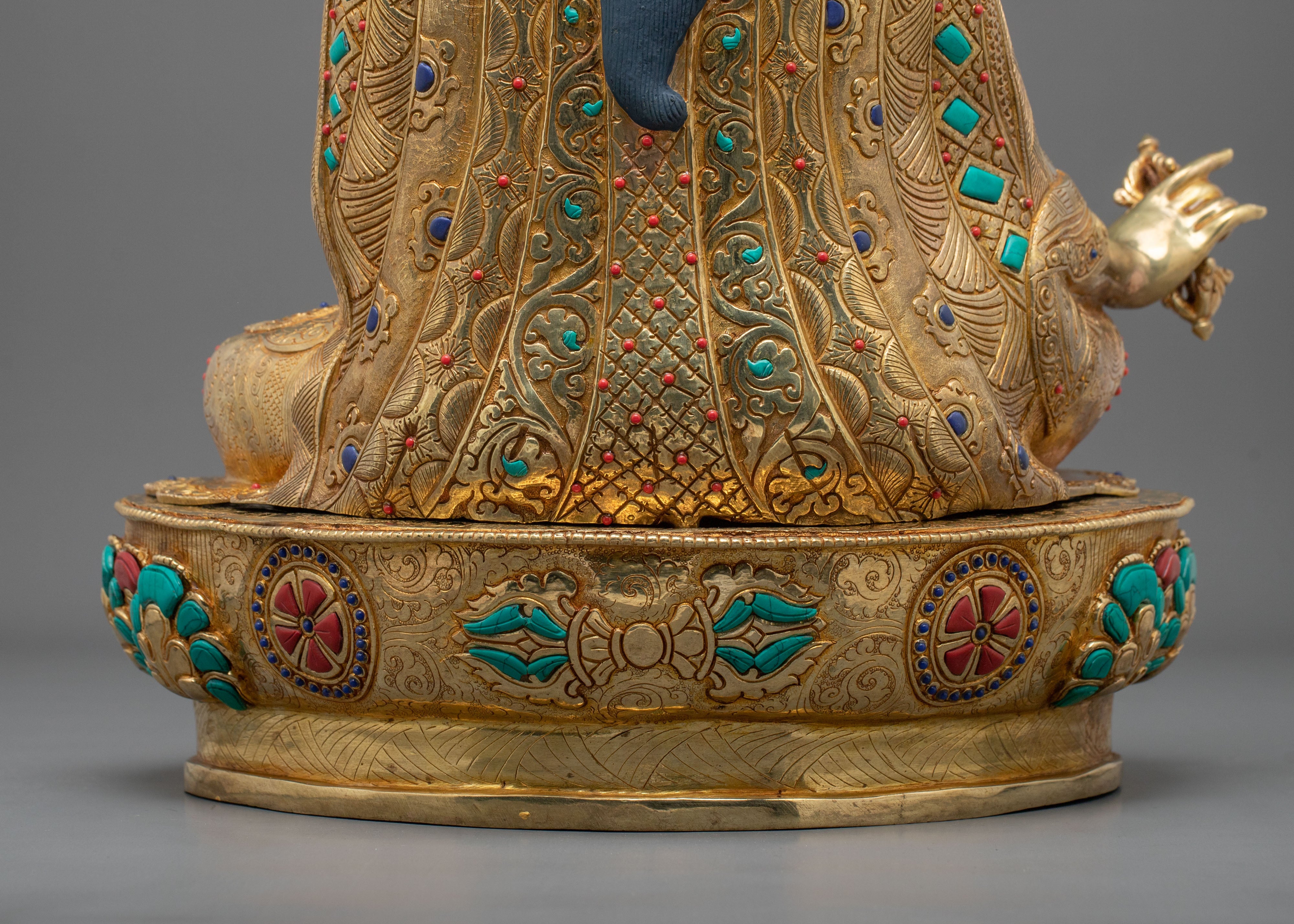
This Padmasambhava "Guru Rinpoche" Sculpture reflects the refined artistry and traditional craftsmanship of Himalayan Buddhist sculpture. Measuring 55.5 cm (21.85 inches) in height with a 34.5 cm (13.6 inches) base and weighing 8.74 kg, it features a copper body enhanced with 24K gold gilding, detailed acrylic painting, and carefully hand-carved gemstones. The radiant gold surface highlights the finely modeled contours, robes, and ornamental details, while the acrylic-painted elements add depth and definition to the finer features. The hand-carved gemstones provide additional richness and decorative refinement, showcasing the patience, precision, and skilled workmanship involved in creating this sacred Himalayan sculpture.
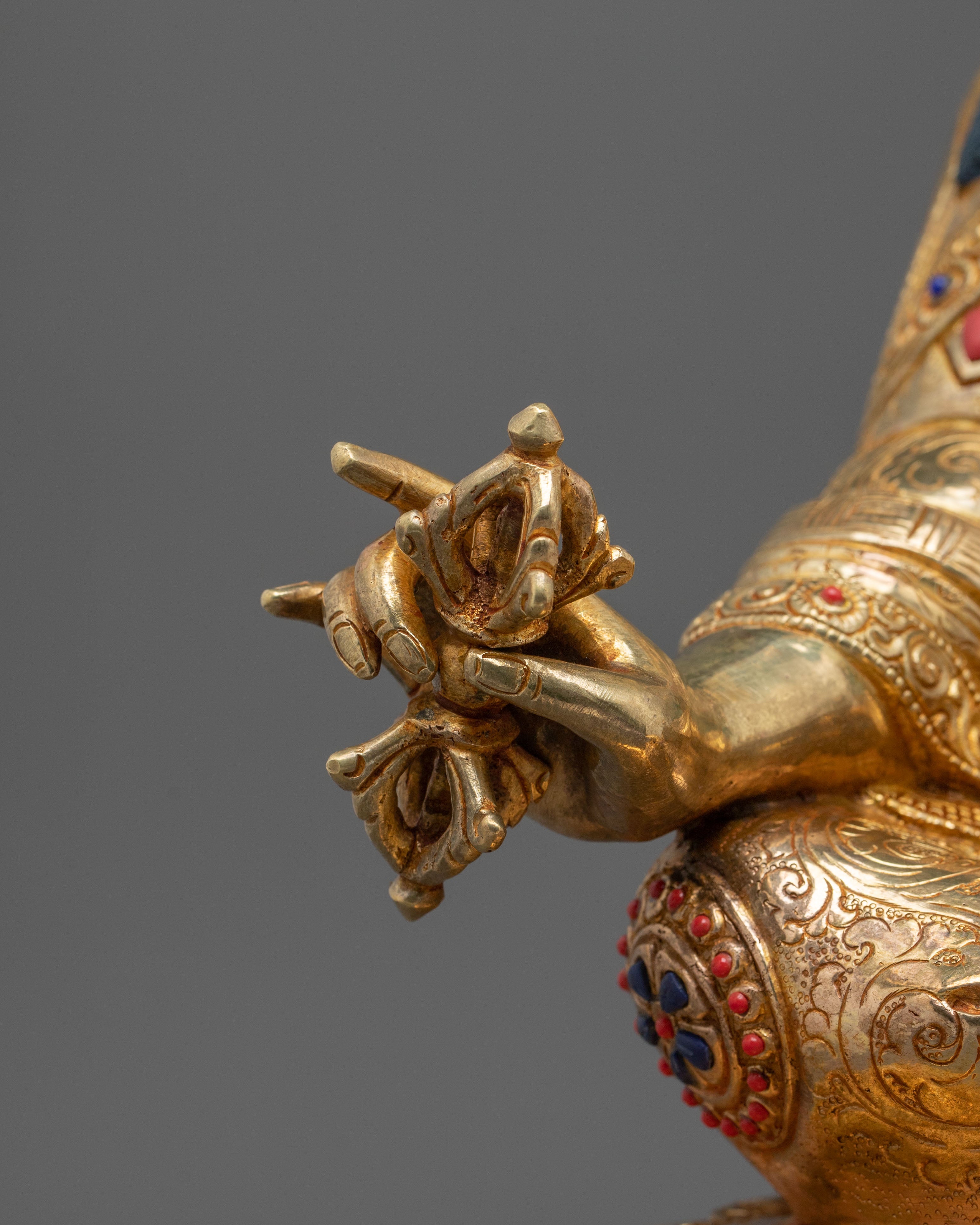
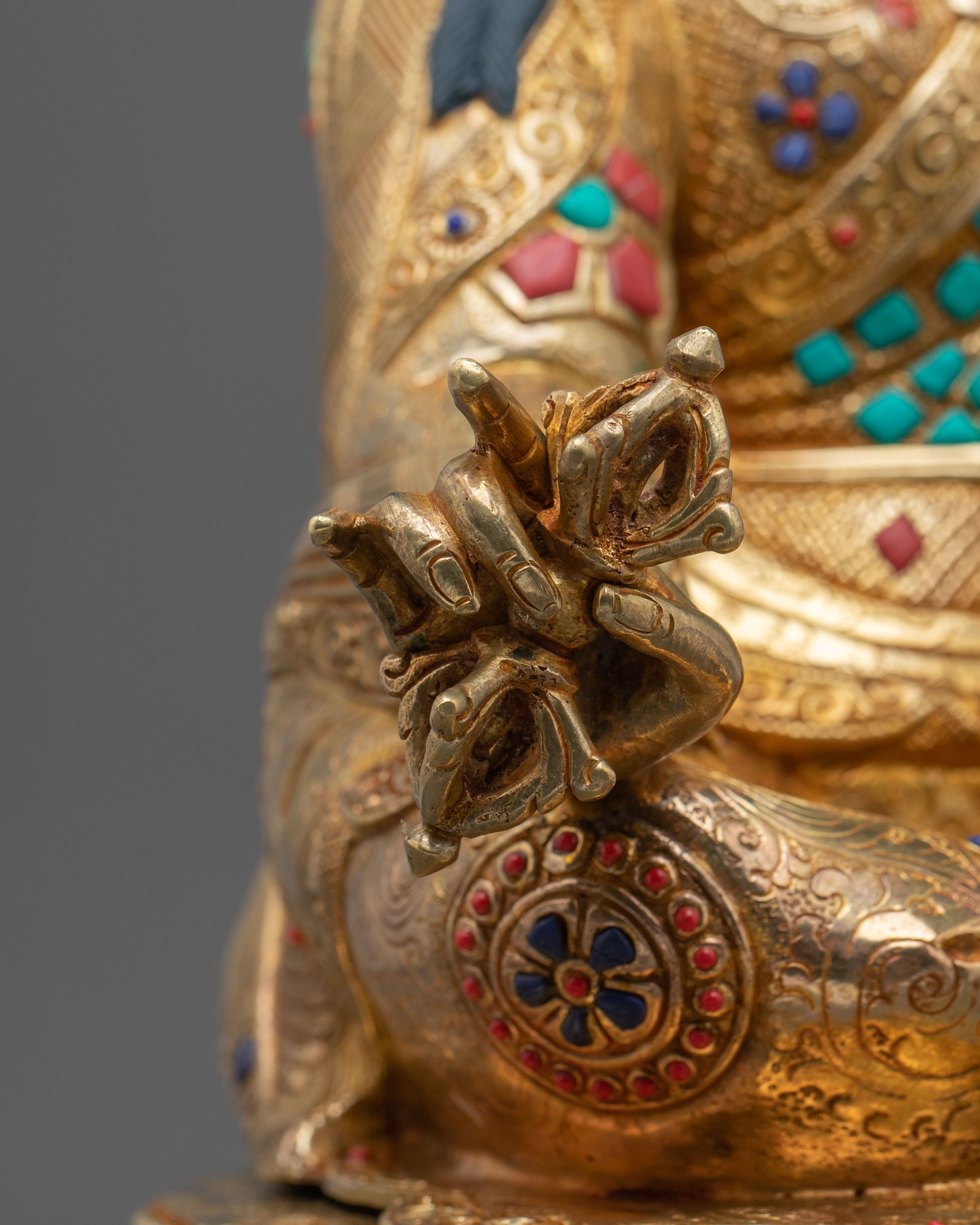
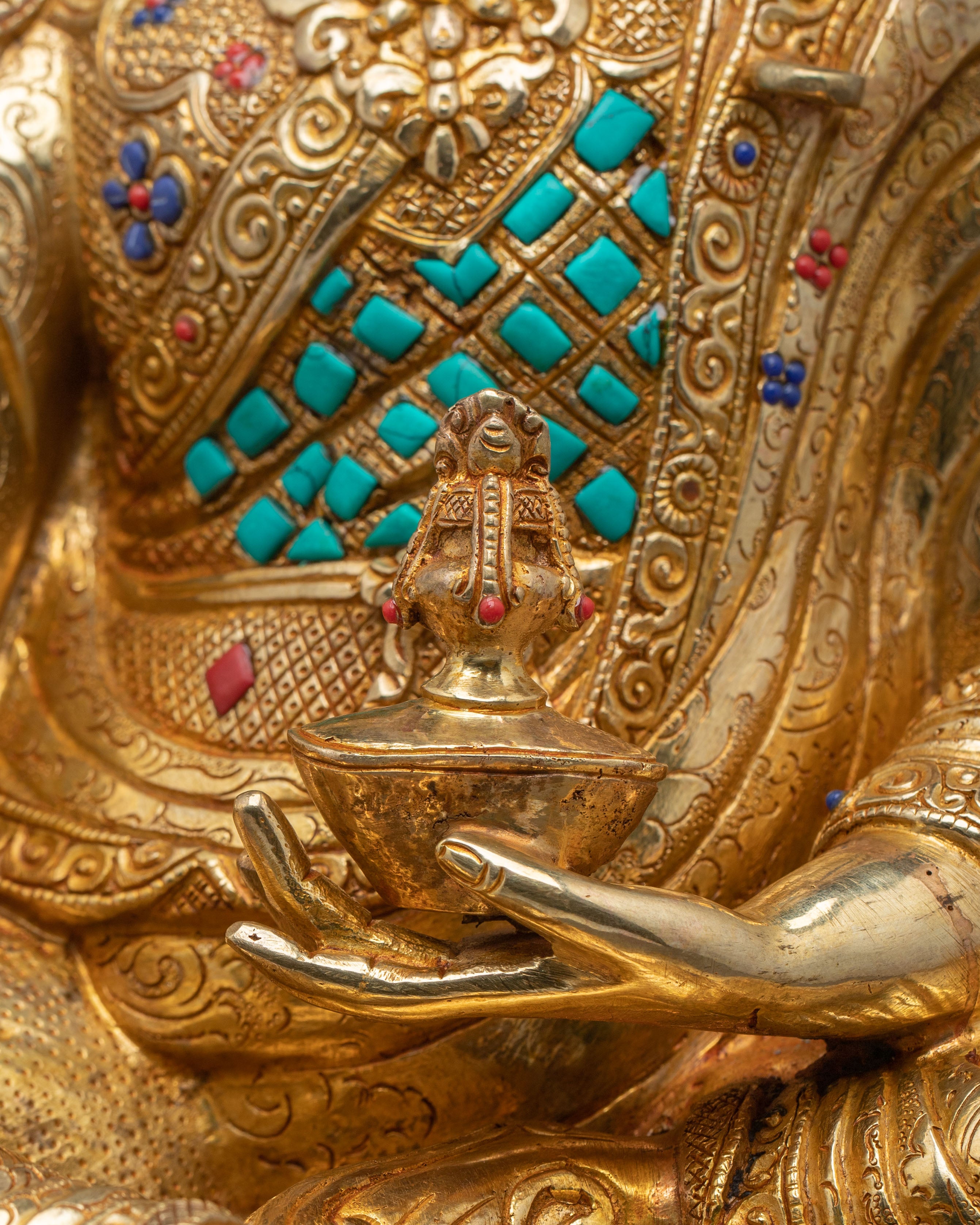
Guru Rinpoche is portrayed seated majestically upon a lotus pedestal, wearing layered robes and his distinctive lotus hat. His right hand holds a vajra near his heart, while his left hand supports a skull cup containing a sacred vase. A khatvanga staff rests against his left shoulder and rises beside his body, complementing the ritual objects held in his hands. His seated posture appears composed yet authoritative, with one leg folded inward and the other positioned forward. The carefully modelled face, defined moustache, attentive eyes, and firm expression give the figure a dignified presence. Intricate patterns cover the flowing robes, while the crown, ornaments, ritual implements, and lotus pedestal are enhanced through detailed carving and gemstone embellishment.
Size: 21.85”/55.5cm (Height) x 13.6”/34.5cm (Base)
Weight: 8.74 kg
Material: 24K Gold Gilded, Acrylic Painting, Copper Body, Handcarved Gemstones
Padmasambhava, known as Guru Rinpoche (“Precious Master”), is one of the most revered figures in Tibetan Buddhism and is traditionally credited with helping establish Vajrayana Buddhism in Tibet during the 8th century. Revered by many as the Second Buddha, he is regarded as a great master of tantric teachings who transformed obstacles into conditions for spiritual growth. His profound teachings emphasize the nature of mind, compassion, wisdom, and the path toward enlightenment, continuing to inspire practitioners across Tibetan Buddhist traditions.
Explore our Guru Rinpoche Statue Collection.