


Description
Yamantaka Copper Statue | Wrathful Form Symbolizing the Triumph Over Death and Fear
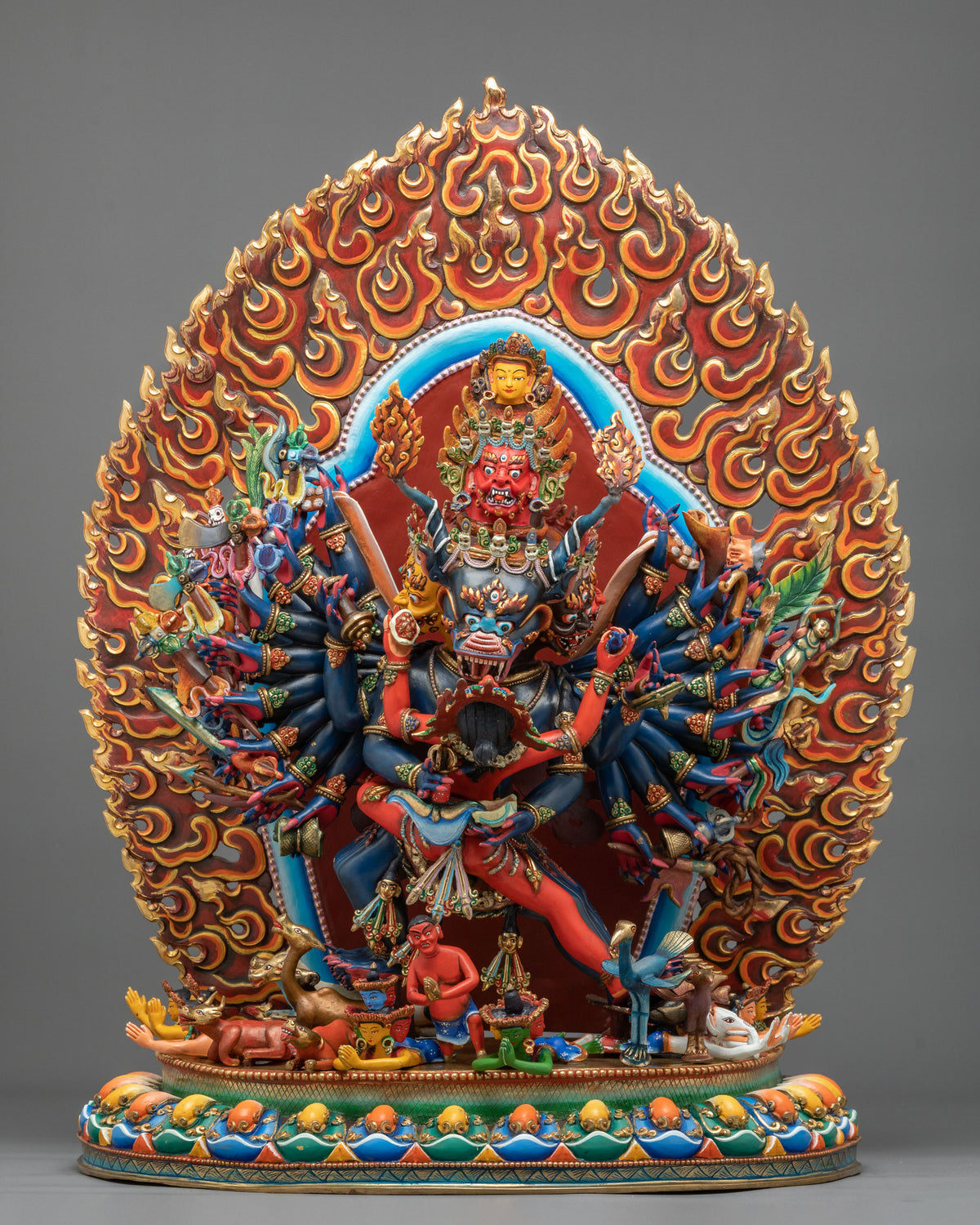
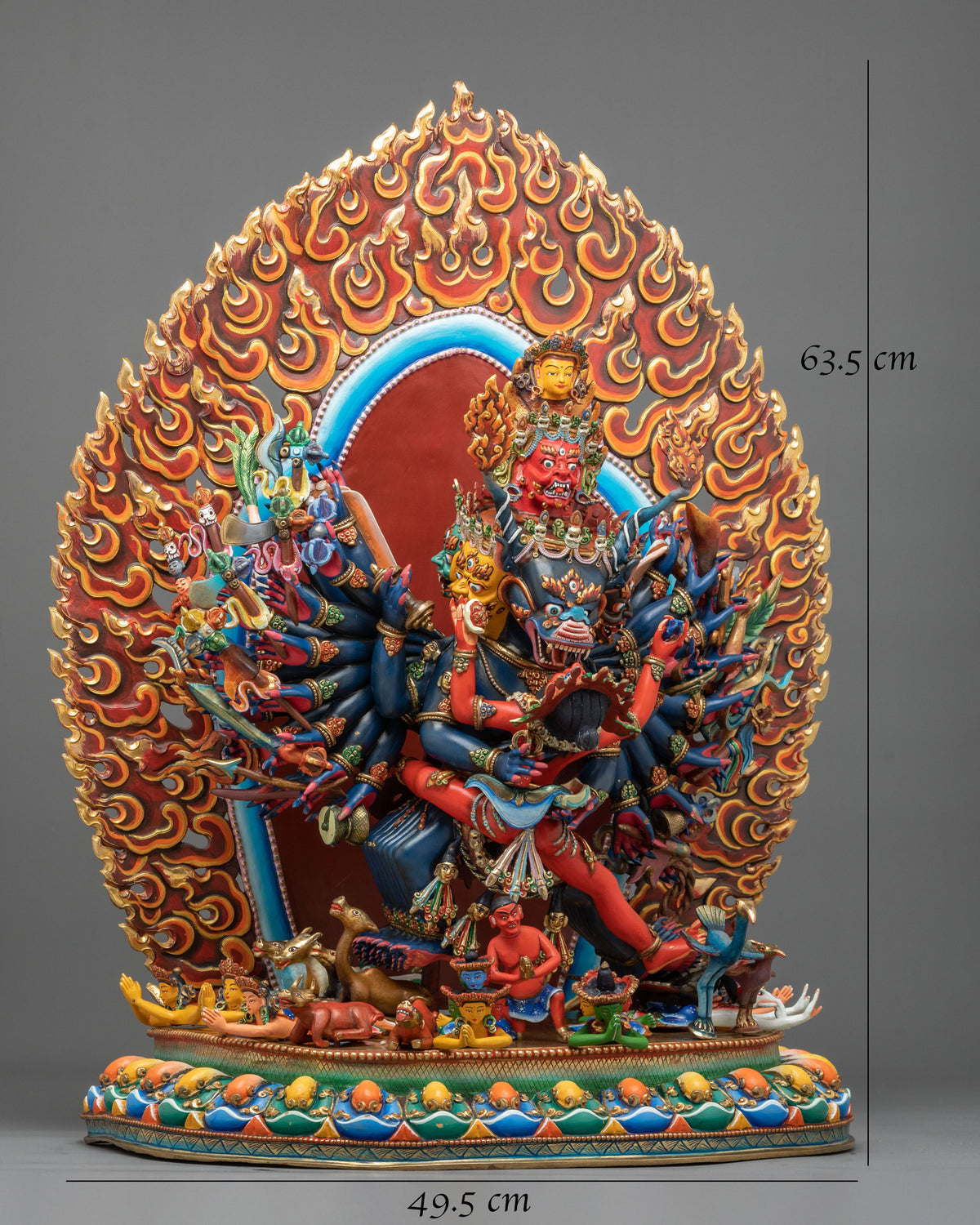
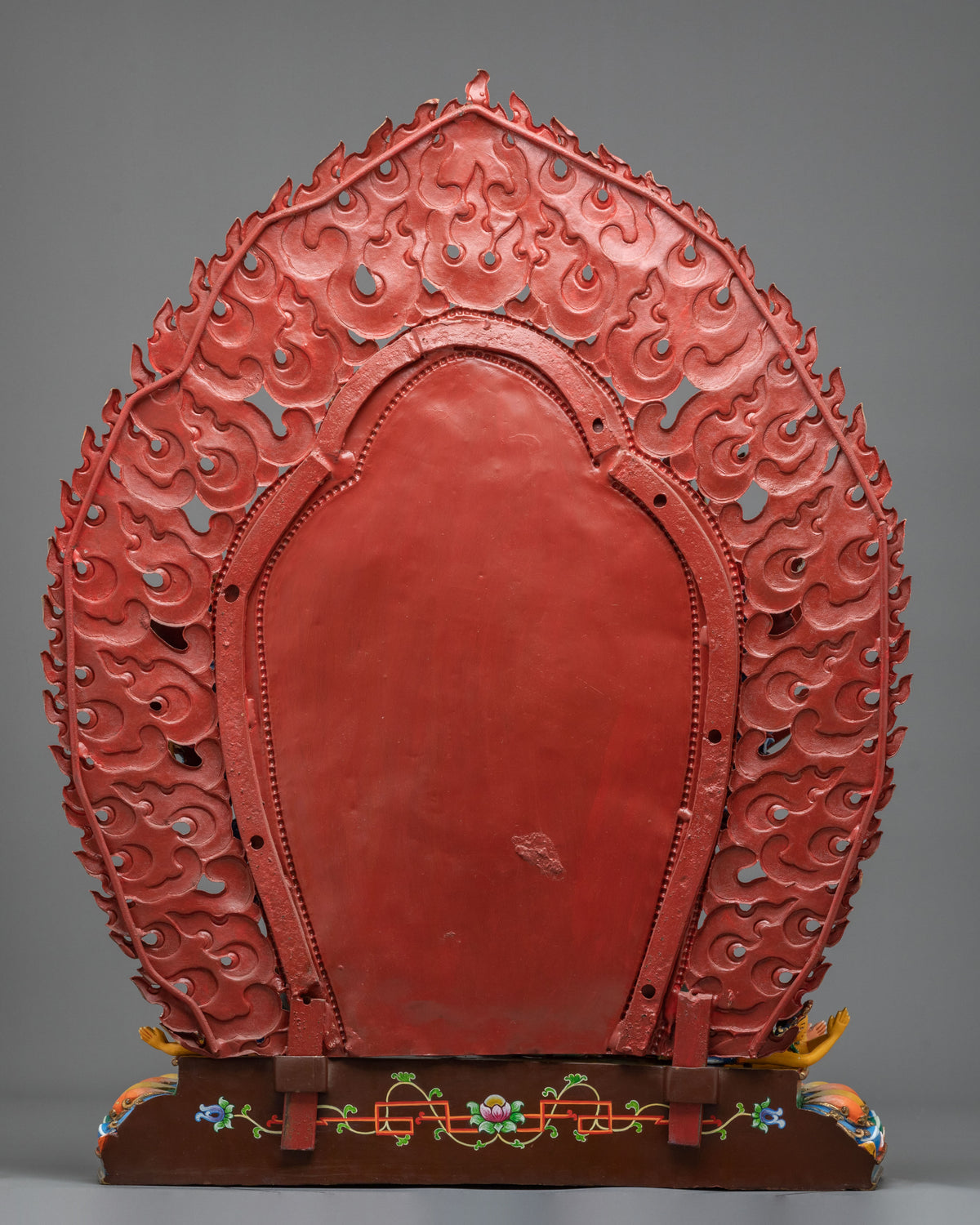
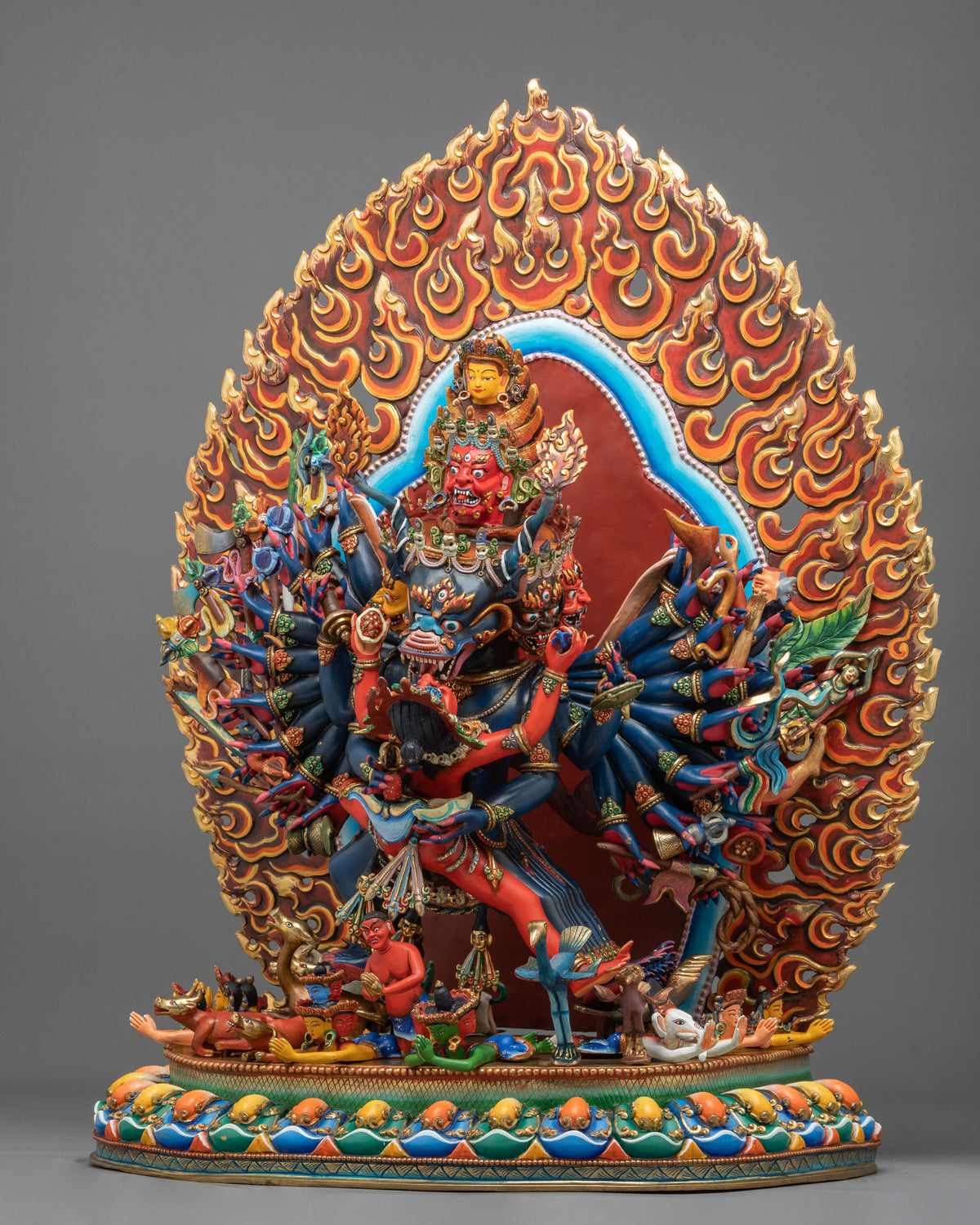
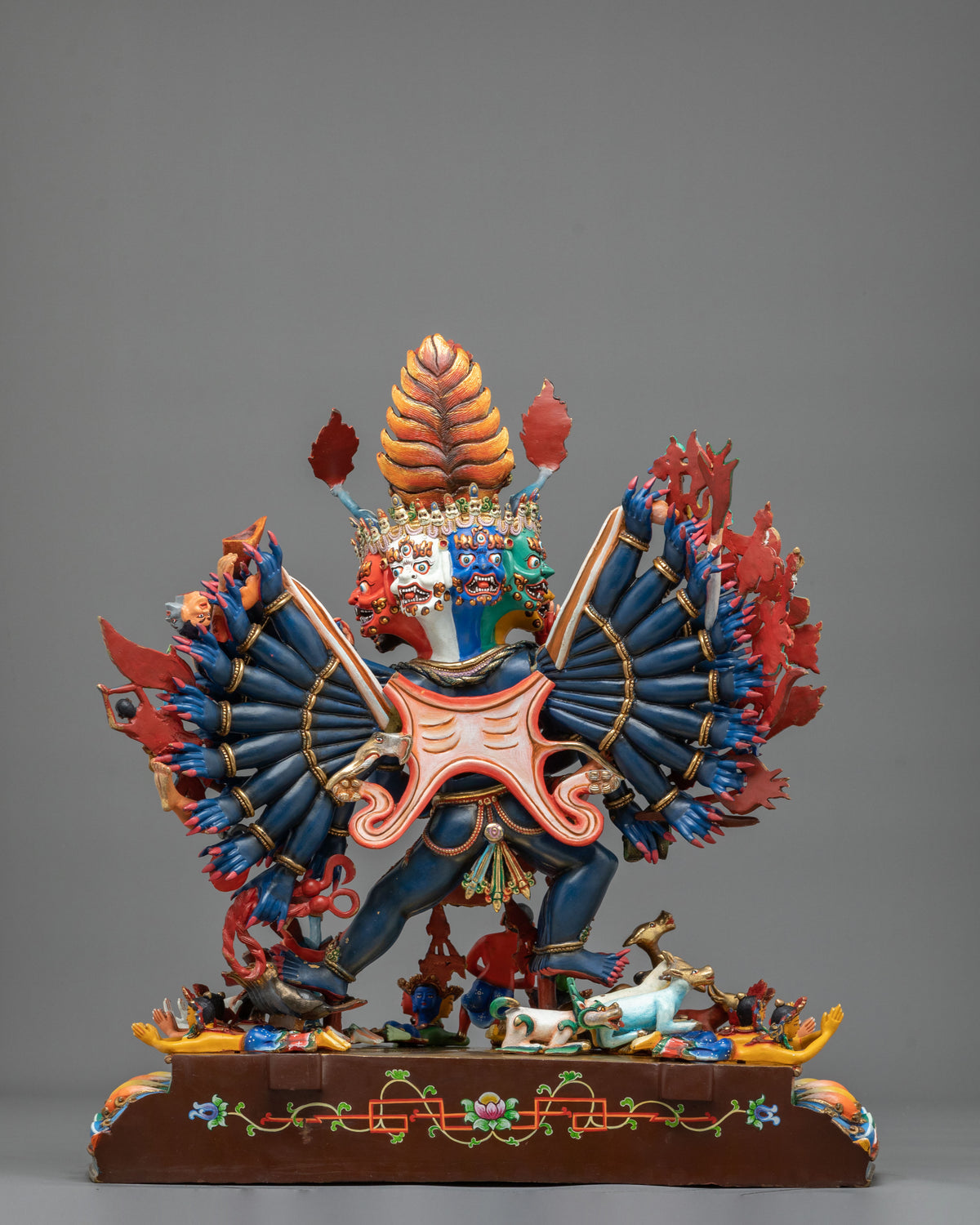
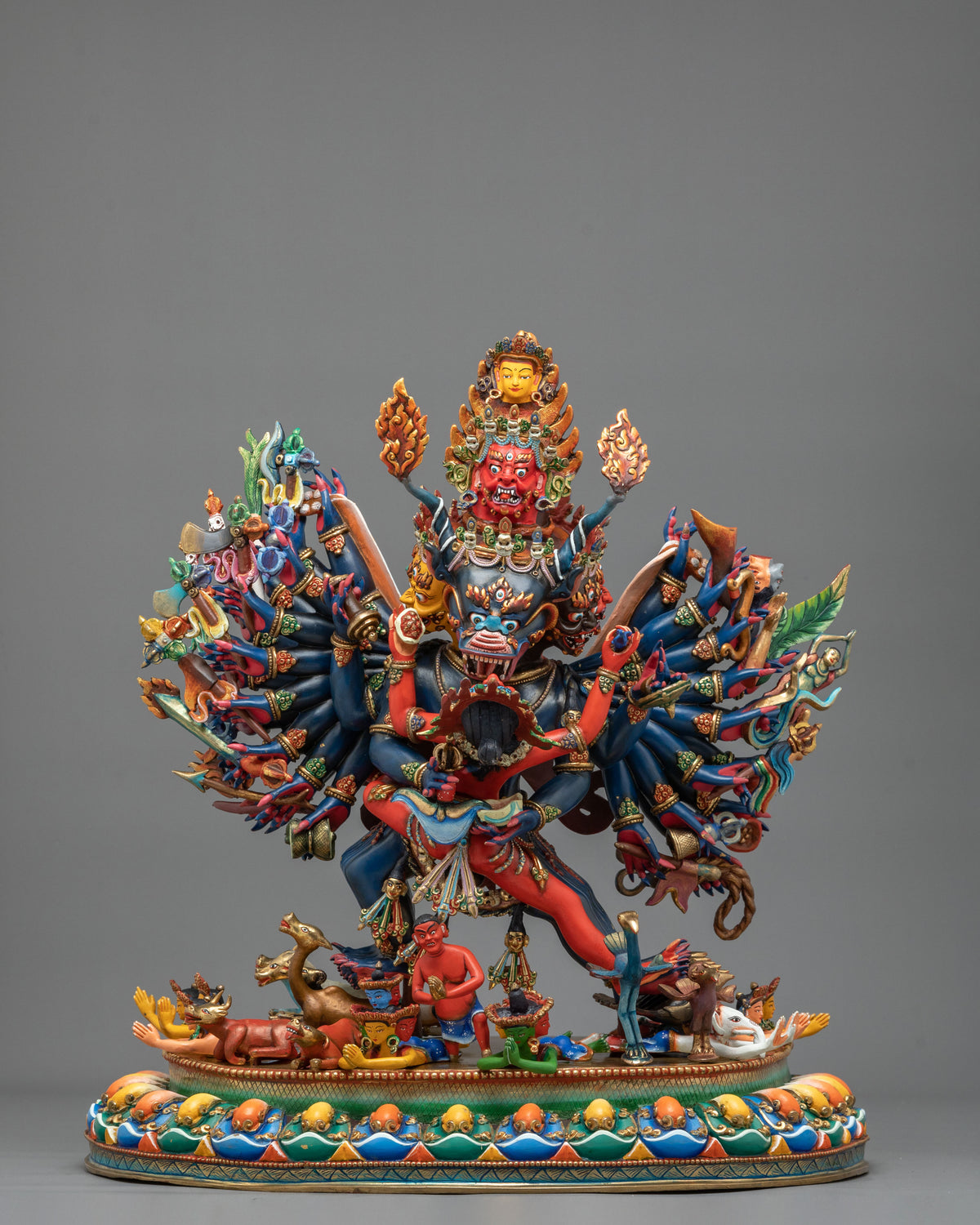
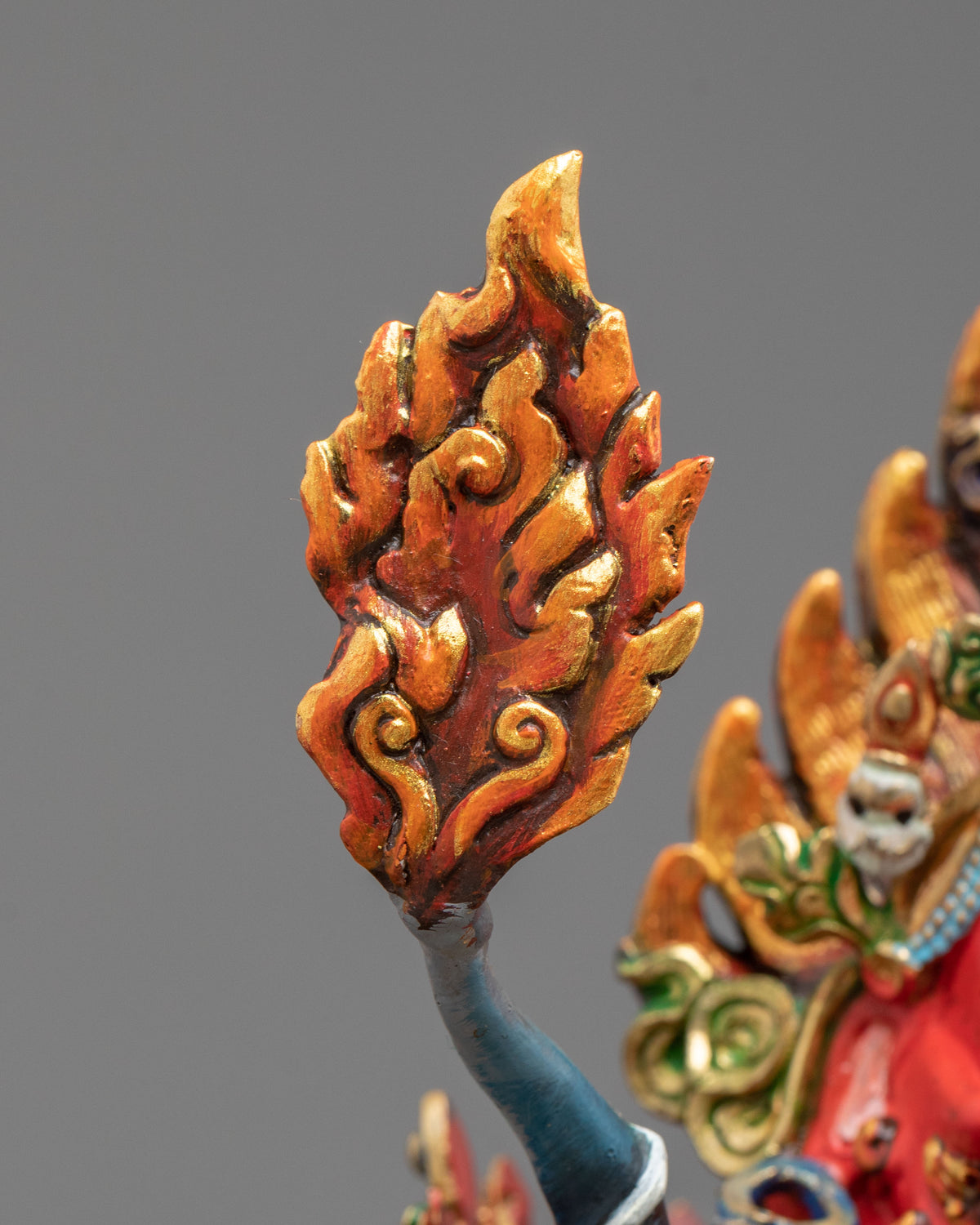
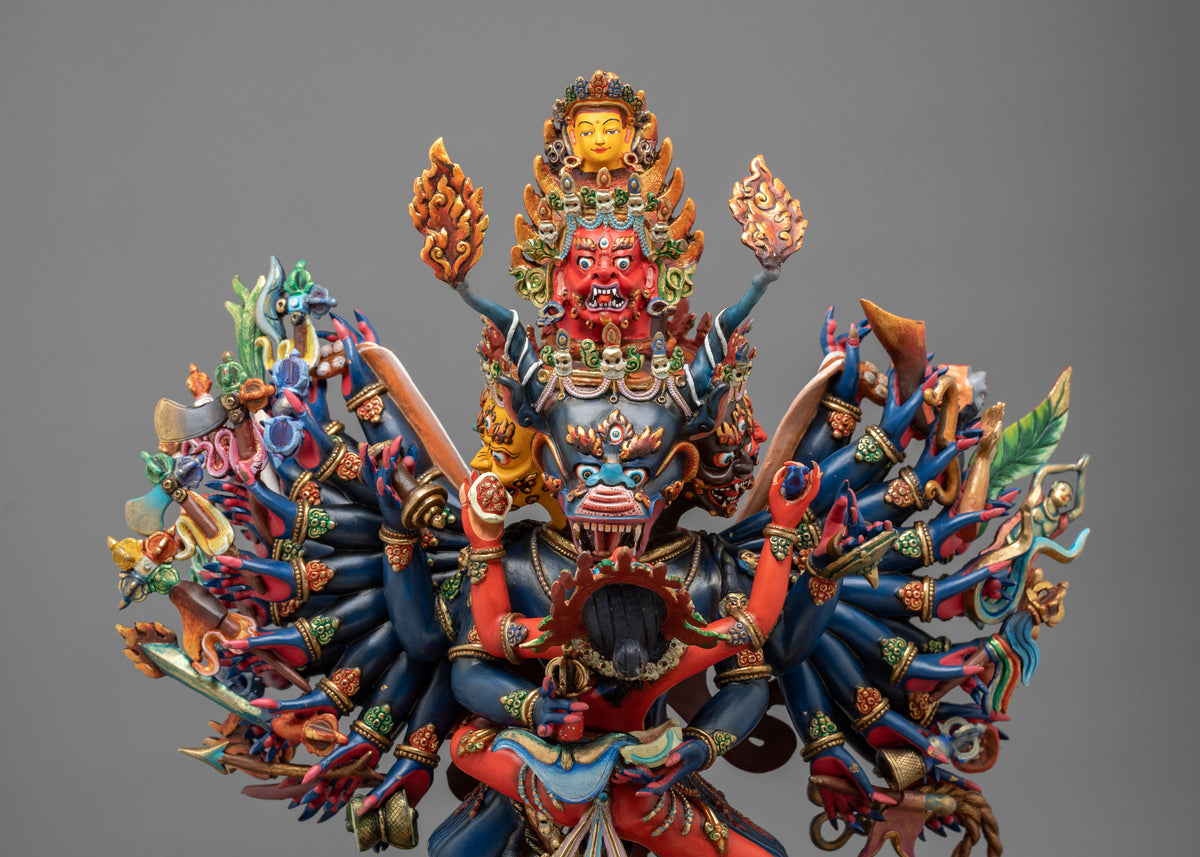
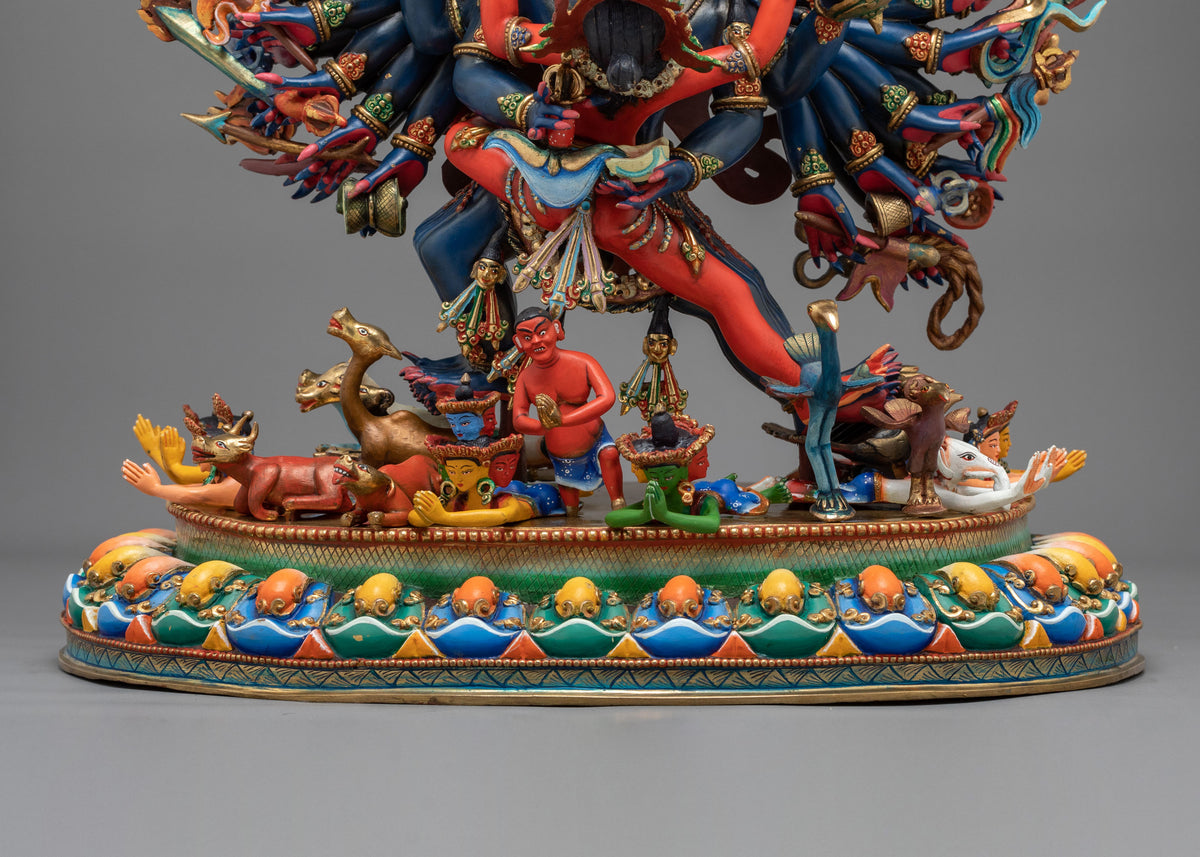
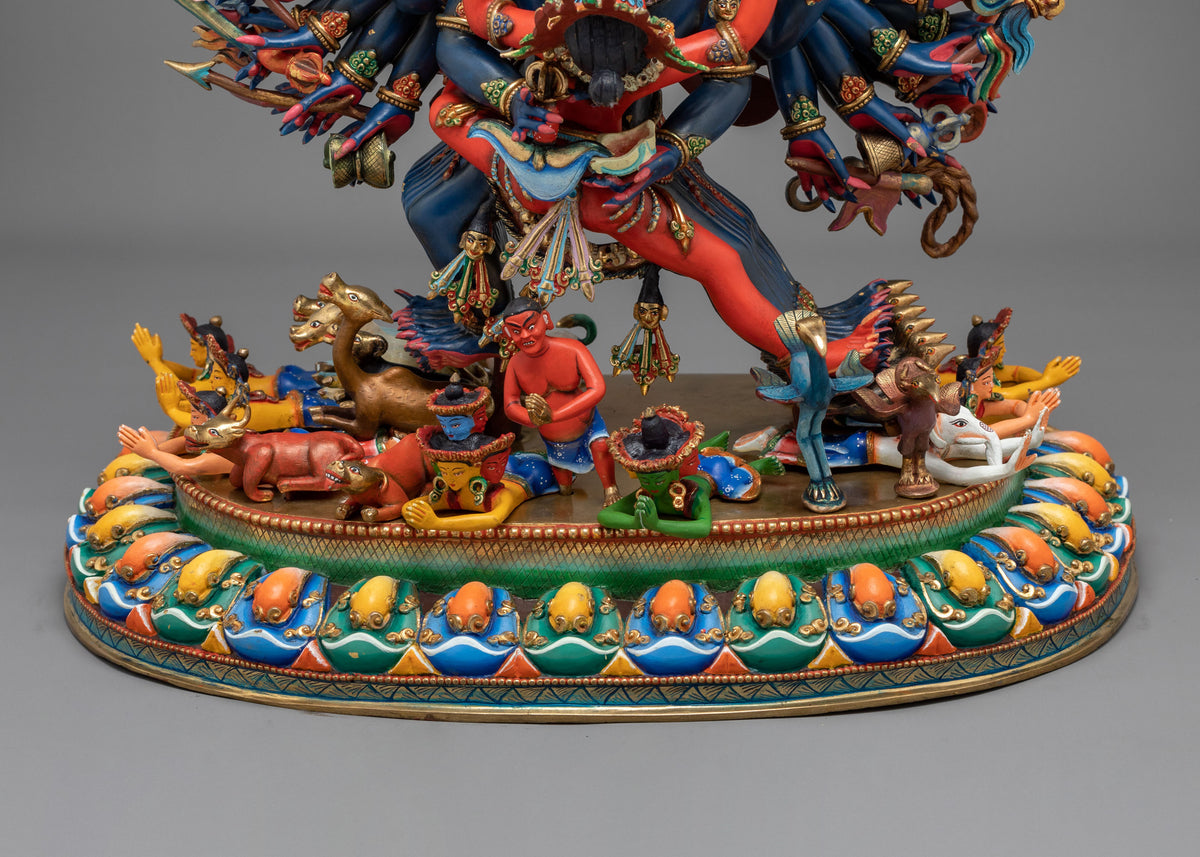
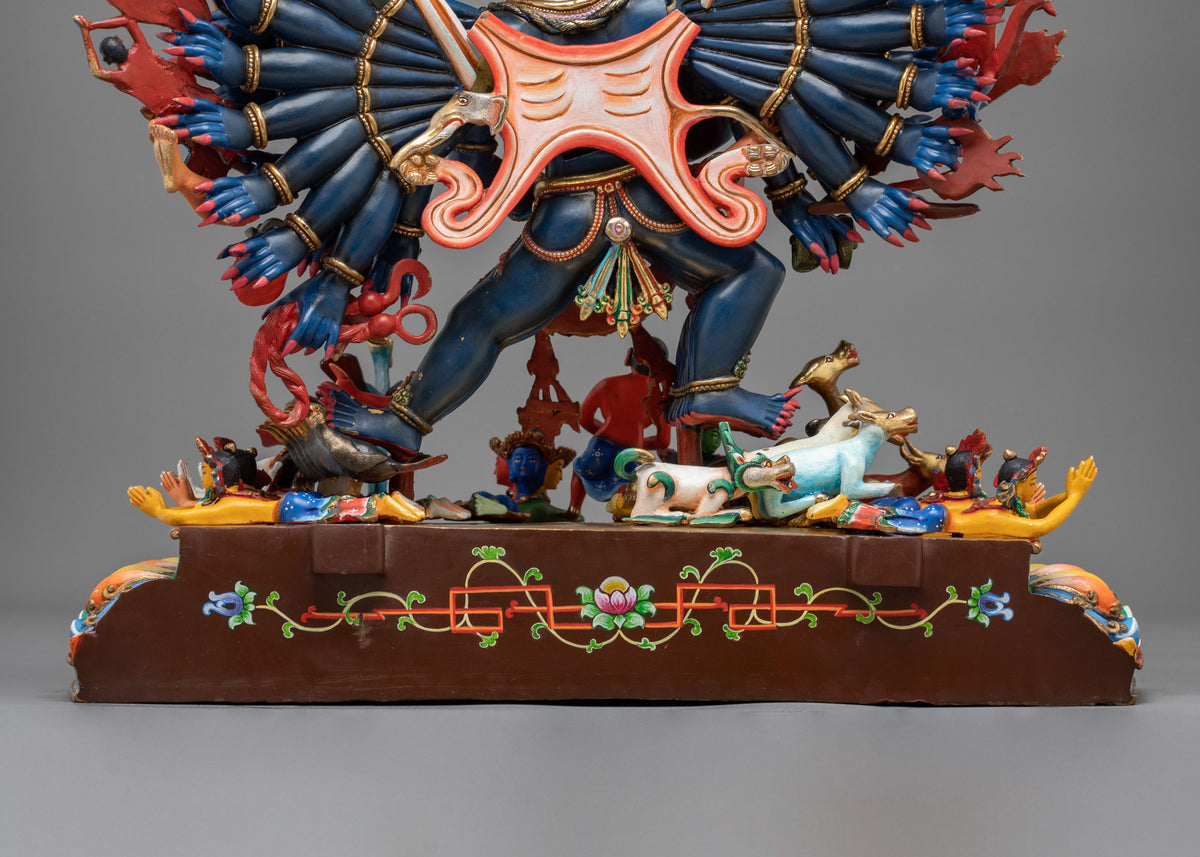
Yamantaka Copper Statue measures 25”/63.5cm in height with a 19.5”/49.5cm base and weighs 26.73 kg. Handcrafted in Nepal by skilled artisans, it features a copper body finished with gold and acrylic painting. The surface is carved with deeply engraved patterns that produce a magnificent 3D-like effect, creating pronounced depth across the intricate forms, ornaments, garments, and decorative elements. The gold detailing highlights the carved work, while the acrylic painting adds refined color and definition to selected areas. The combination of substantial copper craftsmanship, detailed engraving, gold finishing, and hand-applied painting reflects the precision and dedication of traditional Nepalese metalwork.
Size: 25”/63.5cm (Height) x 19.5”/49.5cm (Base)
Weight: 26.73 kg
Material: Copper Body, Gold and Acrylic Painting
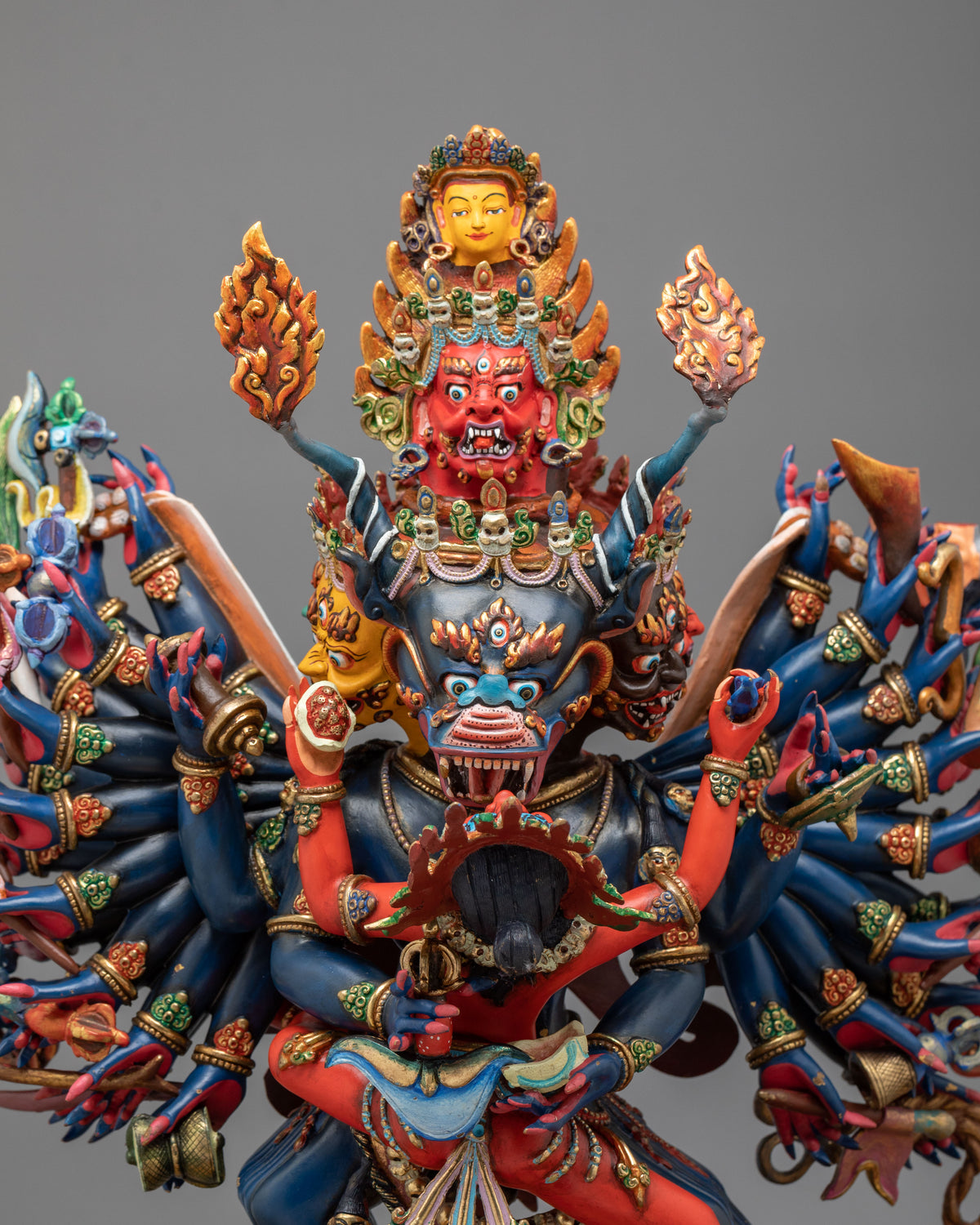
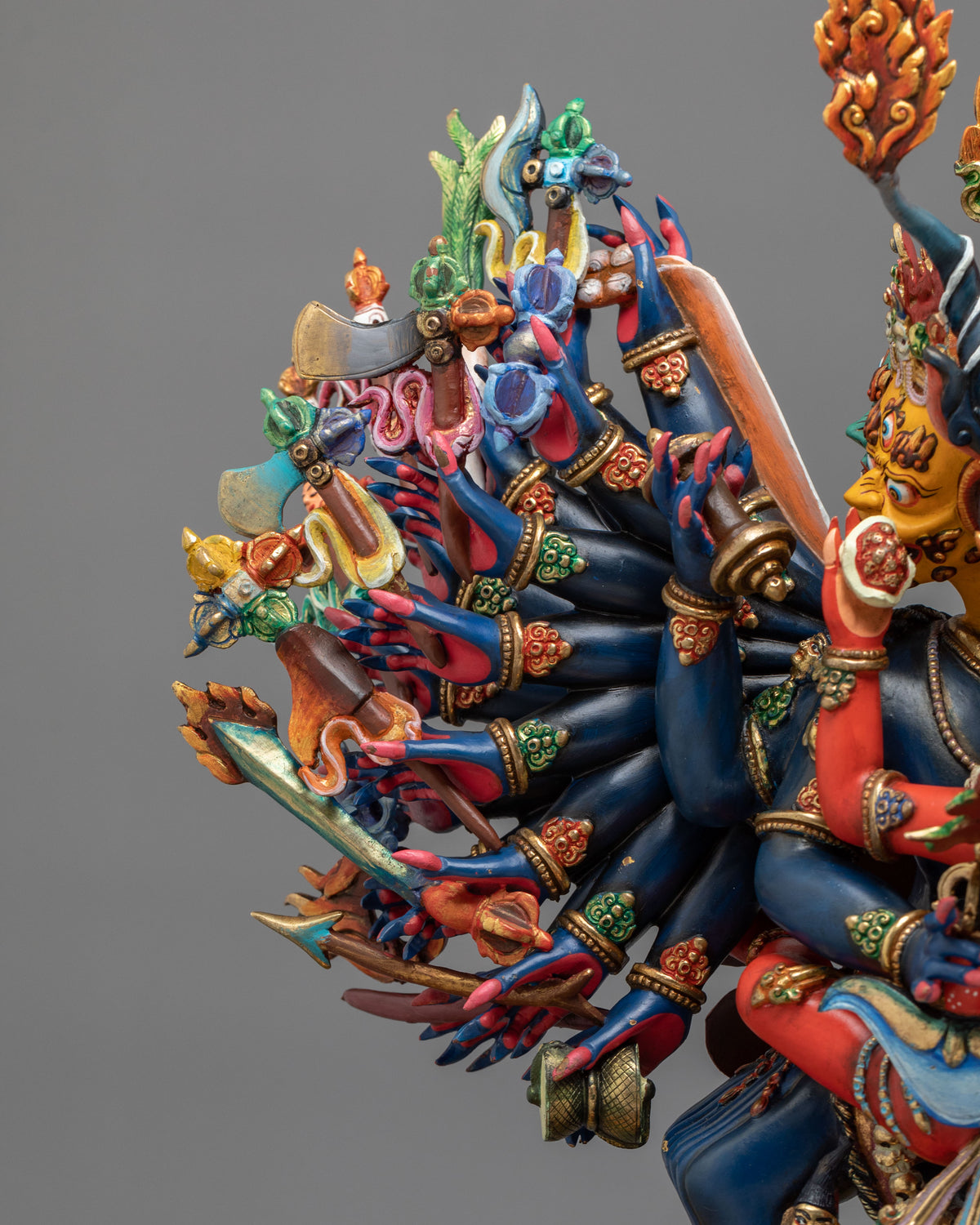
Yamantaka is portrayed in a powerful wrathful form, with an elaborate manifestation that emphasizes the union of transcendent wisdom and compassionate activity. His multiple heads, arms, and legs express the complex nature of this enlightened form, while his dynamic appearance represents the subjugation of delusion, ego, and worldly obstacles.
-
Central Deity:
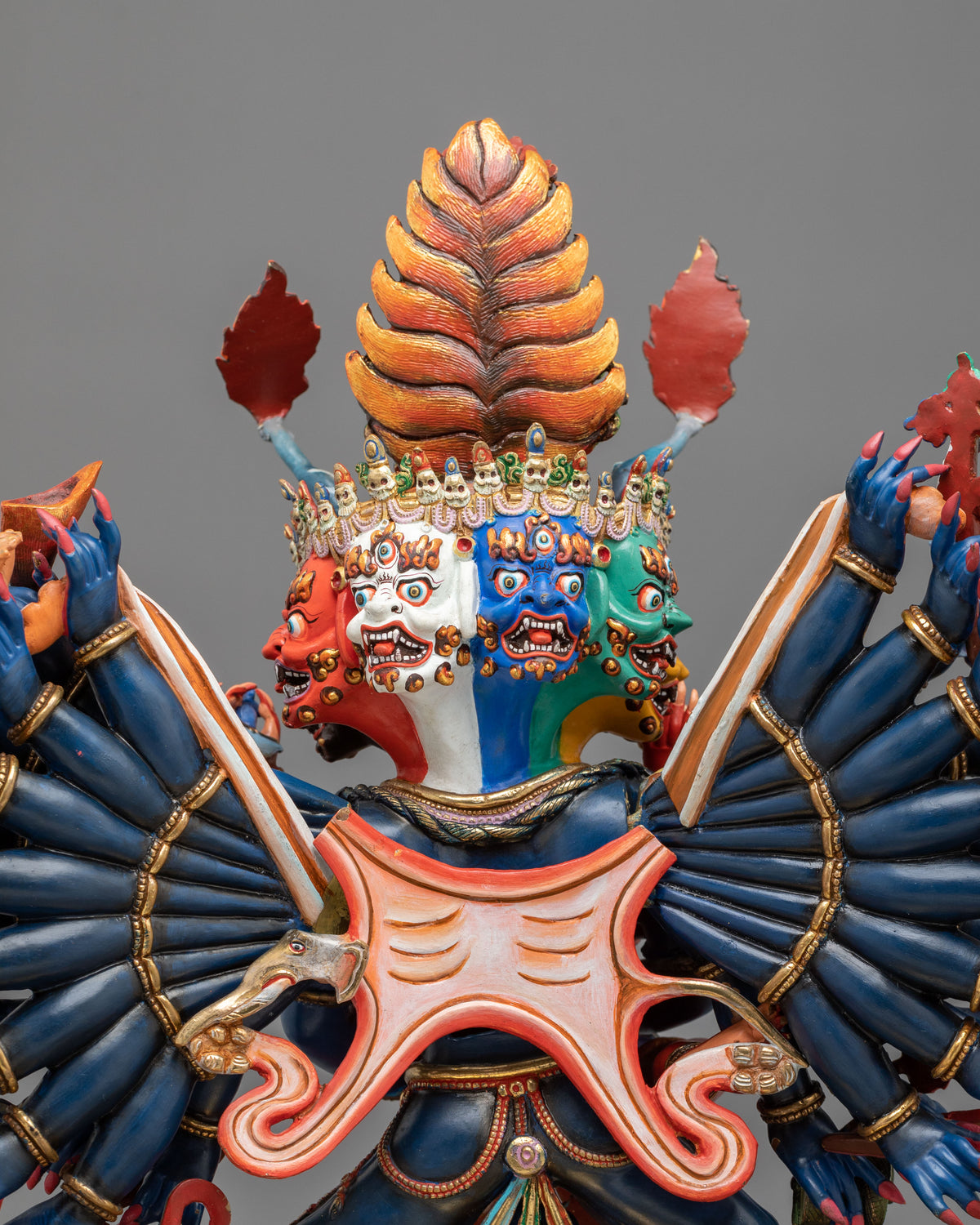
The central figure has a dark blue or black body with nine heads, 34 arms, and 16 legs. The central fierce head takes the form of a water buffalo, while the uppermost head is the peaceful golden face of Manjushri. -
Nine Heads:
The nine heads form a distinctive arrangement, combining the fierce buffalo-headed central form with the peaceful golden face of Manjushri at the apex. -
Thirty-Four Arms:
The 34 arms extend around the body and hold distinct symbolic implements, contributing to the complex and powerful appearance of the manifestation. -
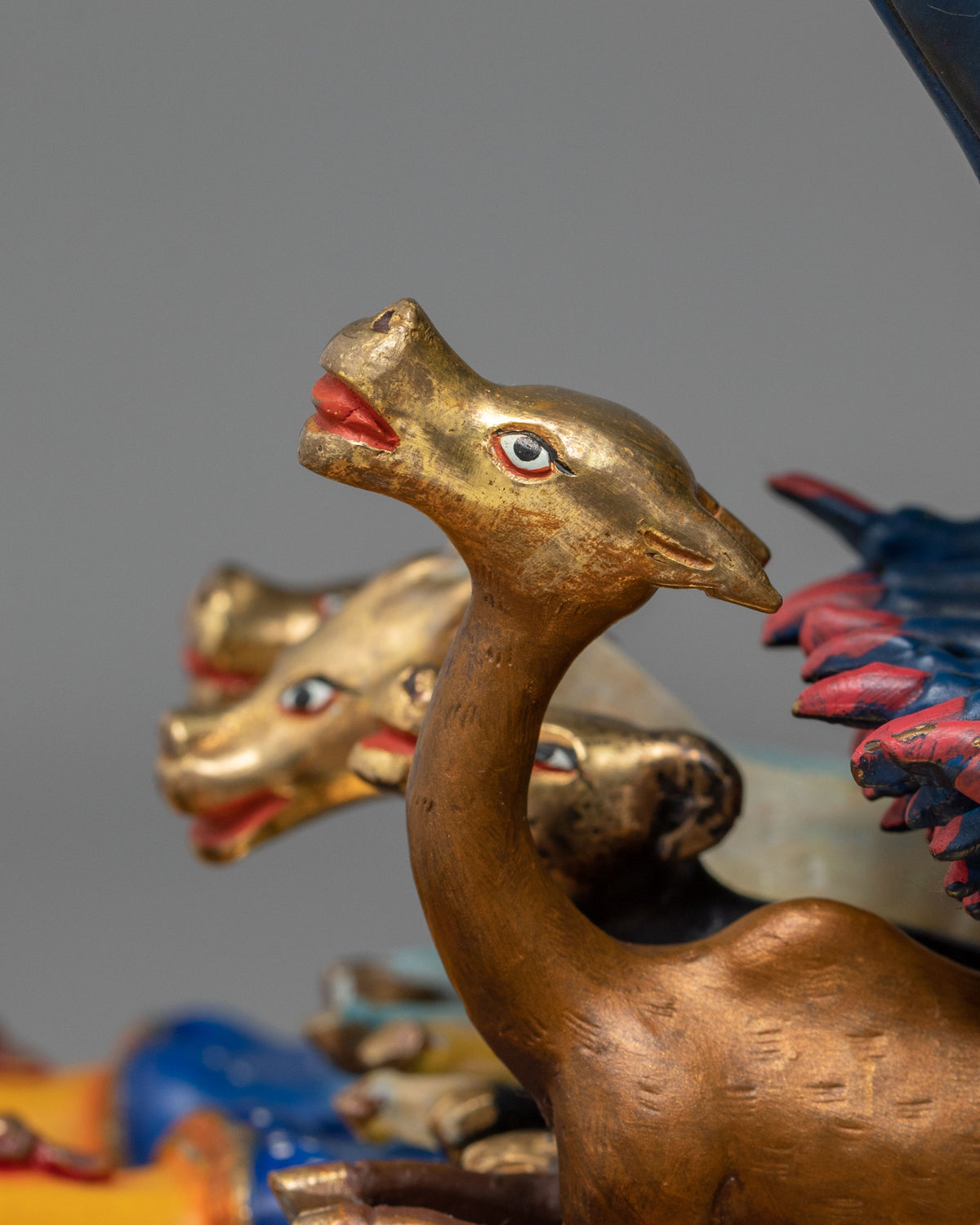
Sixteen Legs:
The sixteen legs are shown in a dynamic arrangement, trampling various figures, deities, and animals. This represents the subjugation of worldly obstacles, delusion, and ego. -
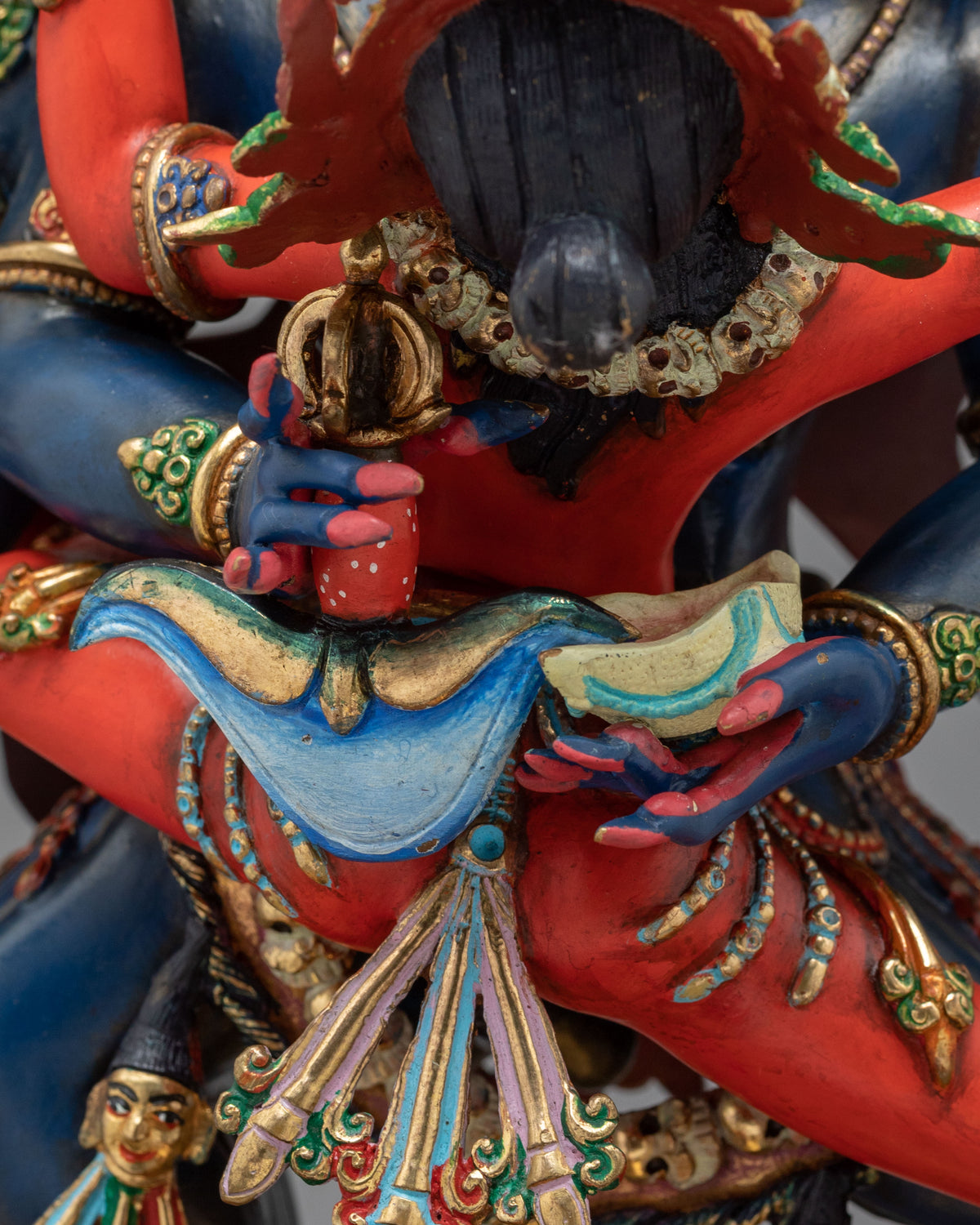
Vajravetali:
The consort is shown wrapped around the central figure in a cosmic embrace. She holds a skull cup and a curved knife, representing the feminine principle of transcendent wisdom (prajna). -
Yab-Yum Union:
Their embrace symbolizes the non-duality of compassionate method (upaya) and transcendent wisdom (prajna). Their union represents the combination necessary to cut through ego and the fear of mortality. -
Subjugation:
The figures and animals beneath the sixteen legs represent worldly obstacles, delusion, and ego being overcome through the powerful enlightened activity of the central form.
Explore our Yamantaka Statue Collection.