

Description
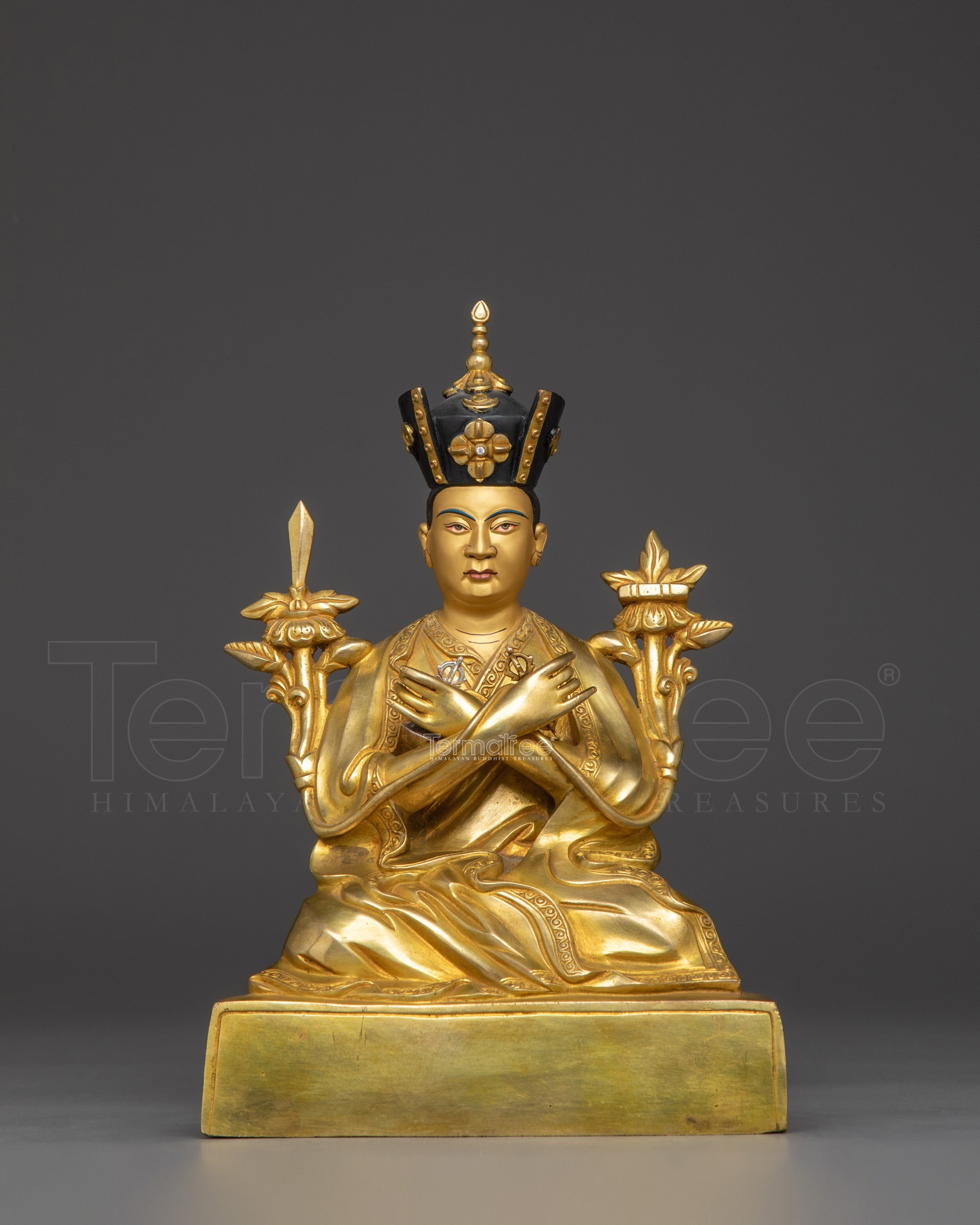
Spiritual Leader Rangjung Rigpe Dorje Statue | Golden Statue of 16th Karmapa
This Spiritual Leader Rangjung Rigpe Dorje Statue, also known as the Sixteenth Karmapa, measures 8.3”/21cm in height and 5.7”/14.5cm at the base and weighs 1.57 kg. Made from copper gilded in triple layer 24K gold with gold and acrylic paintings, the materials are finely finished to highlight his presence without overwhelming detail. Expertly crafted by skilled Nepali artisans, this piece reflects traditional craftsmanship and makes a refined addition to compact altars, meditation spaces, or personal spiritual collections.
The Sixteenth Karmapa is depicted in a powerful and serene form, seated in the embracing mudra—a gesture symbolizing the profound union of wisdom and compassionate action. In his right hand, he holds a vajra, representing unshakable spiritual power, while his left arm gently cradles a bell, a symbol of inner wisdom. At the same time, he holds lotus flowers in both hands: in the left-hand lotus rests the Prajñāpāramitā Sutra, symbolizing transcendent wisdom, and in the right-hand lotus is a sword, representing the cutting through of ignorance. Together, these sacred implements reflect the balance needed to walk the path of enlightenment. He wears traditional monastic robes, honoring his role as a great teacher and practitioner, and sits gracefully on a golden base that radiates a sense of sacred presence. Atop his head rests a crown adorned with the viswa vajra, or double vajra, signifying stability and the unchanging truth at the heart of all things. Each detail in his iconography speaks to his profound spiritual legacy and the timeless teachings he carried.
Size: 8.3”/21cm (Height) x 5.7”/14.5cm (Base)
Weight: 1.57 kg
Material: 24K Gold Gilded, Gold & Acrylic Paintings, Copper Body
Who is 16th Karmapa (Rangjung Rigpe Dorje)?
The 16th Karmapa, Rangjung Rigpe Dorje (1924–1981), was the spiritual leader of the Karma Kagyu school of Tibetan Buddhism and regarded as a "living Buddha." Born in eastern Tibet to a noble family, he was recognized as the Karmapa incarnation based on a letter left by his predecessor. He received extensive training in Buddhist sutra, tantra, and meditation, and was enthroned at Tsurphu Monastery. In 1959, fleeing the Chinese occupation of Tibet, he led many monks and sacred treasures to India, where he established Rumtek Monastery as the new seat of the Karma Kagyu lineage in exile. The 16th Karmapa was crucial in spreading Tibetan Vajrayana Buddhism to the West and revitalizing the tradition worldwide. Known as the "King of Yogis," he was deeply respected across Buddhist traditions and remained a compassionate, wise teacher until he died in 1981 the United States.