Sacred Sita Tara Handmade Spiritual Statue | Spiritual Decor
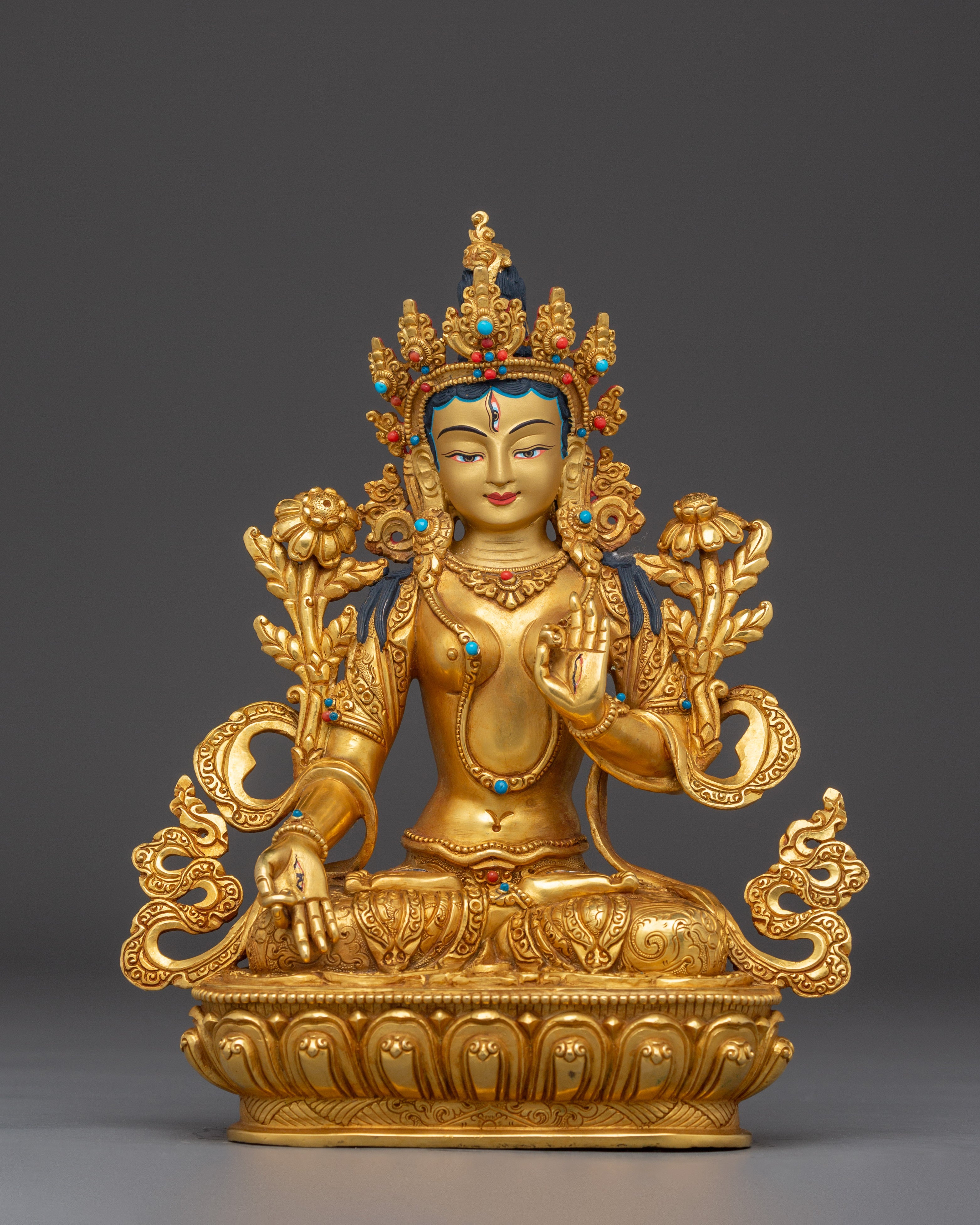
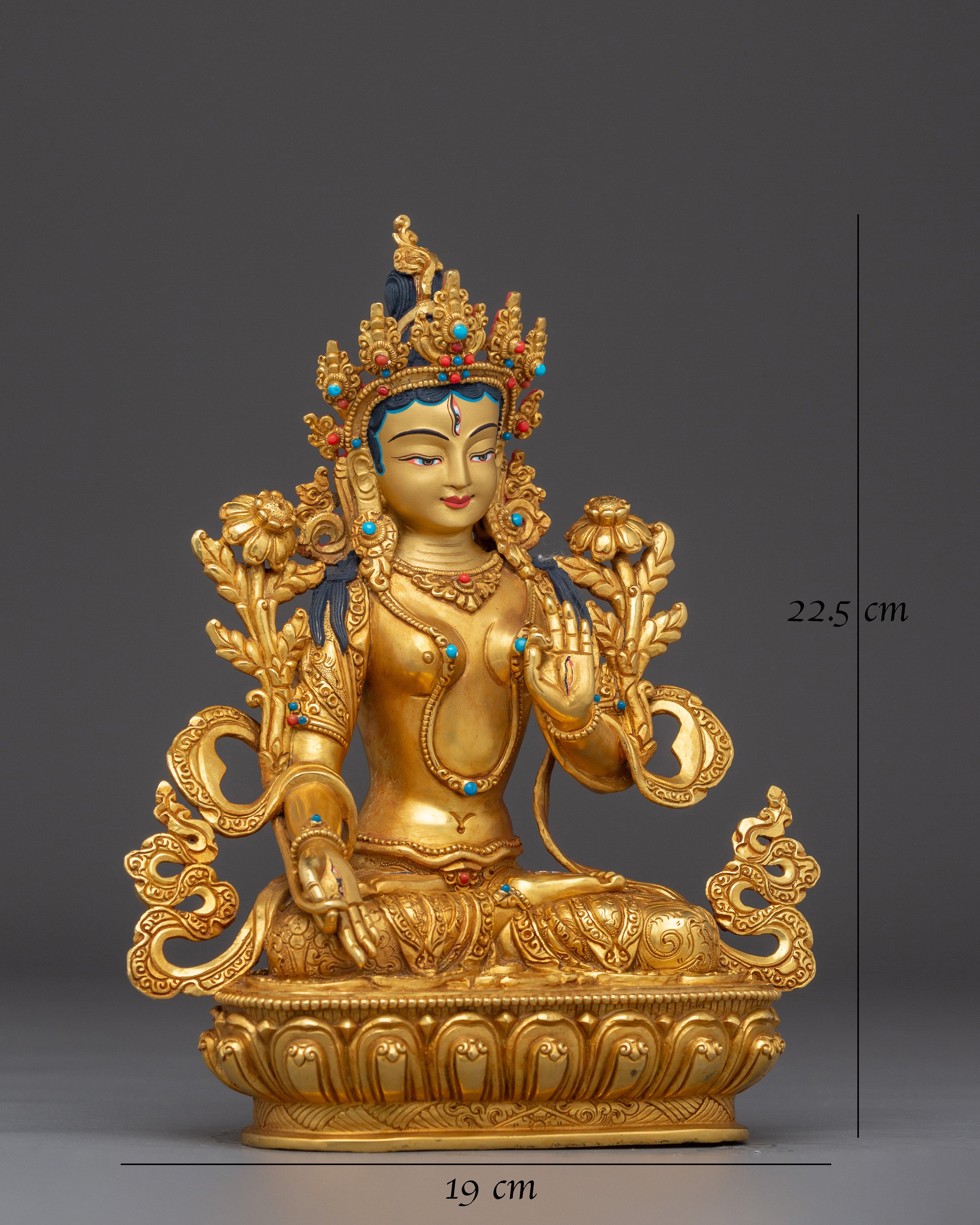
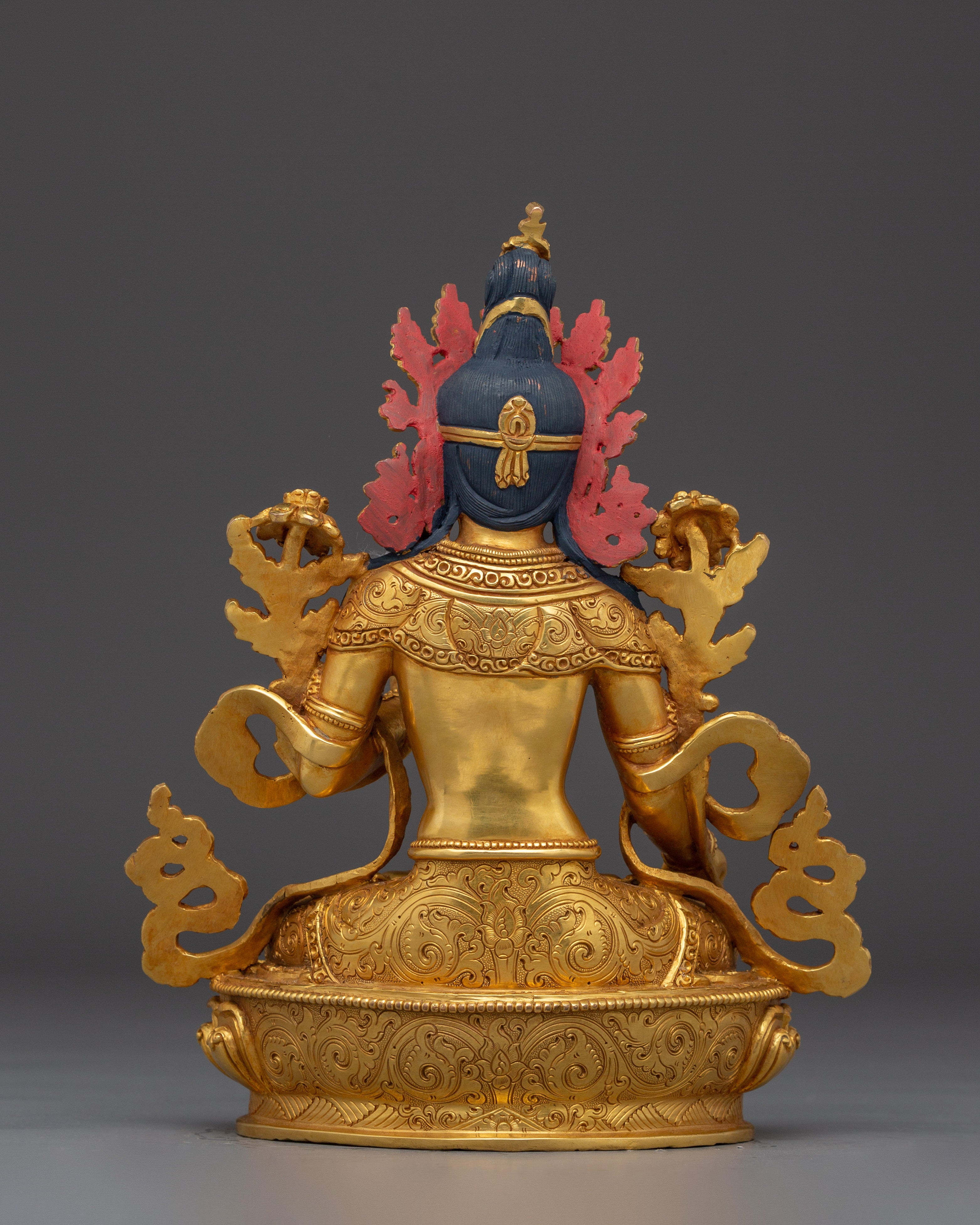
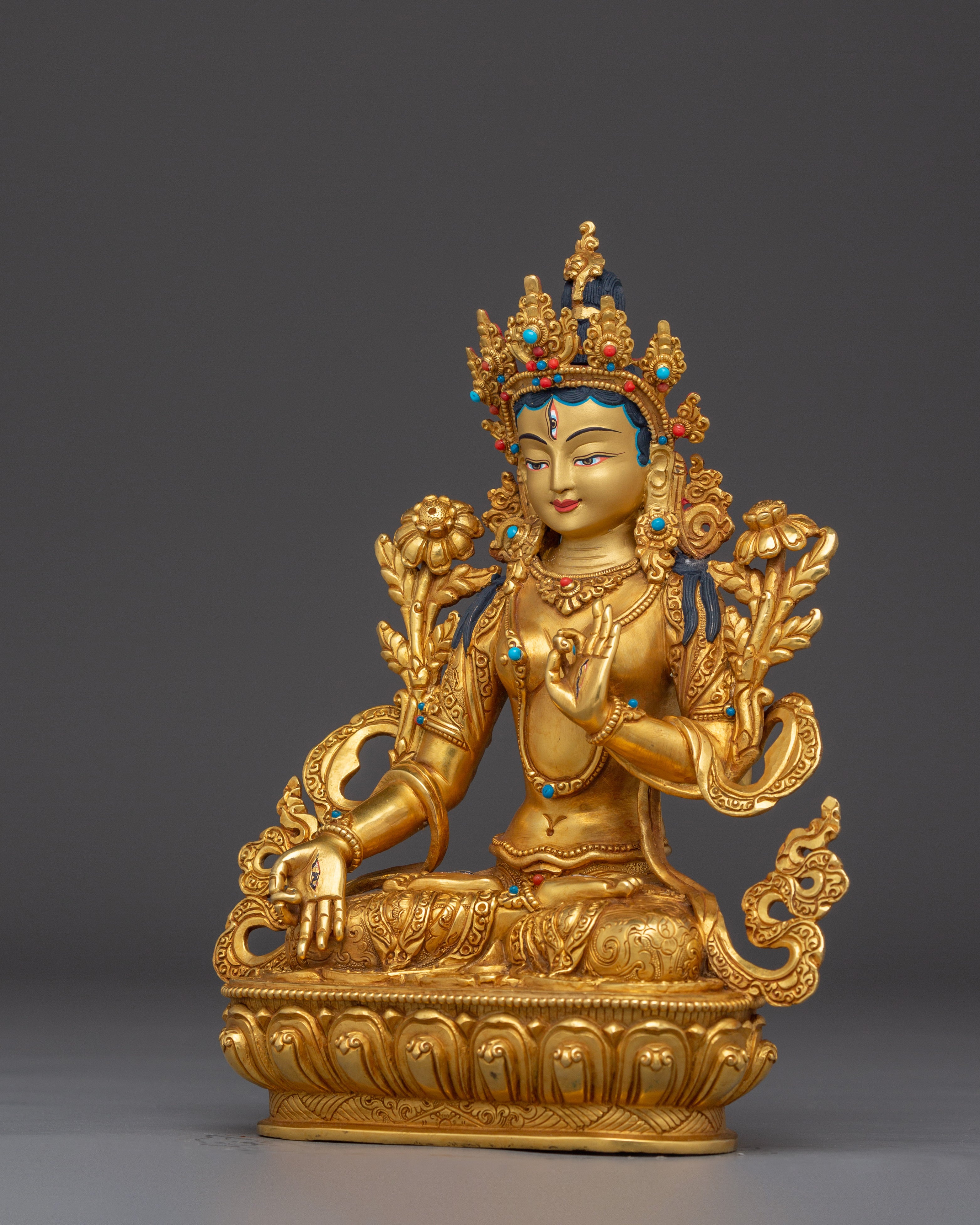
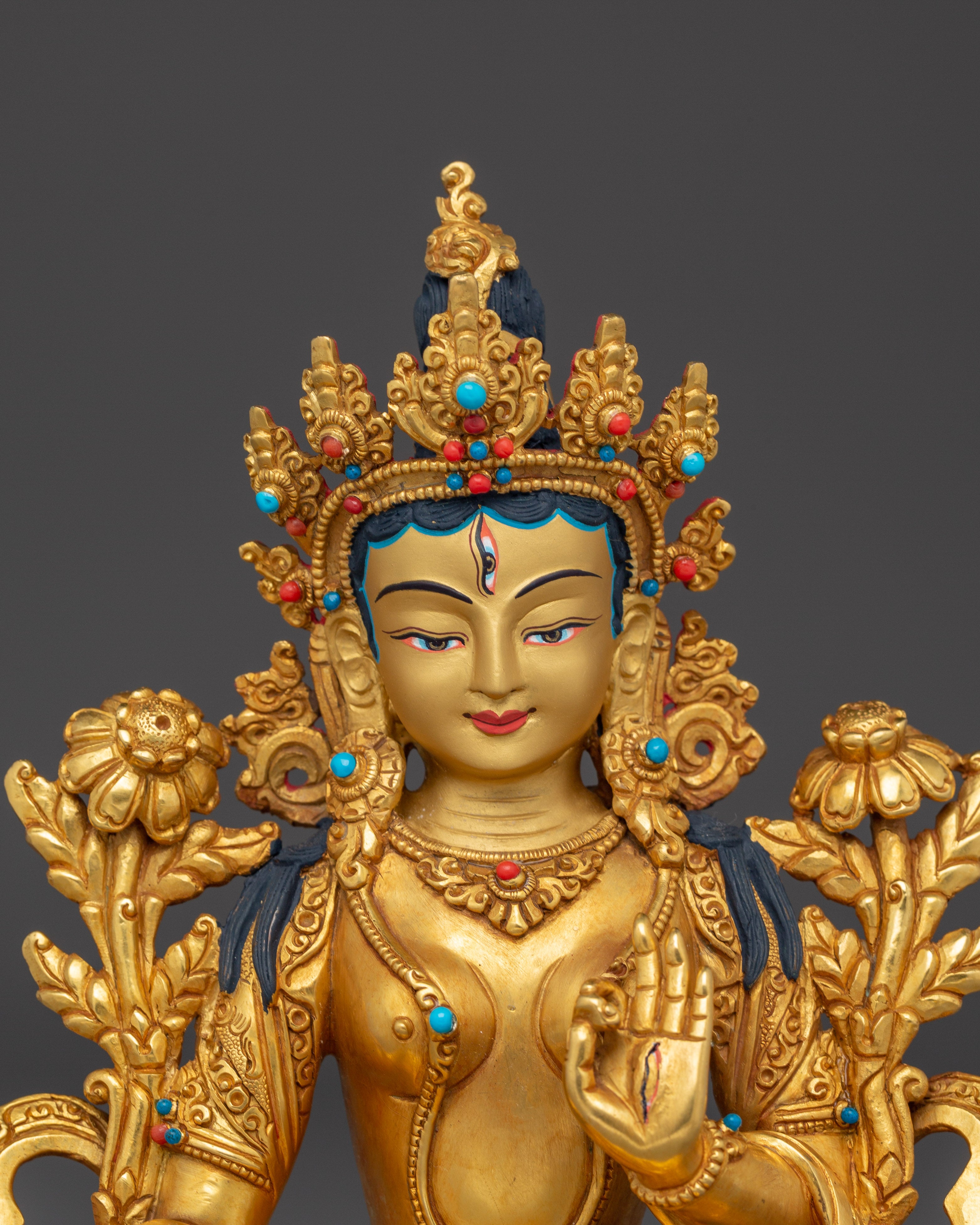
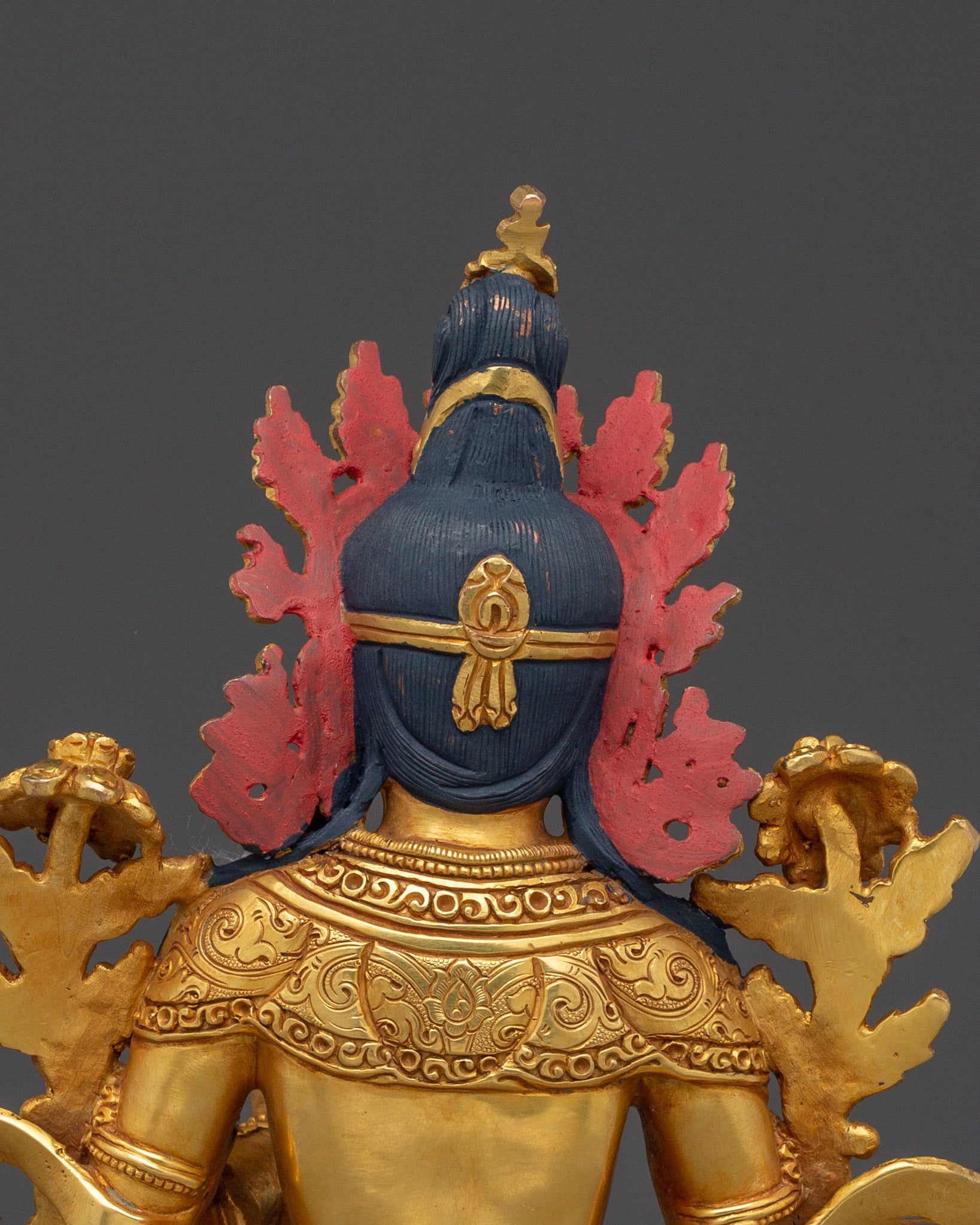
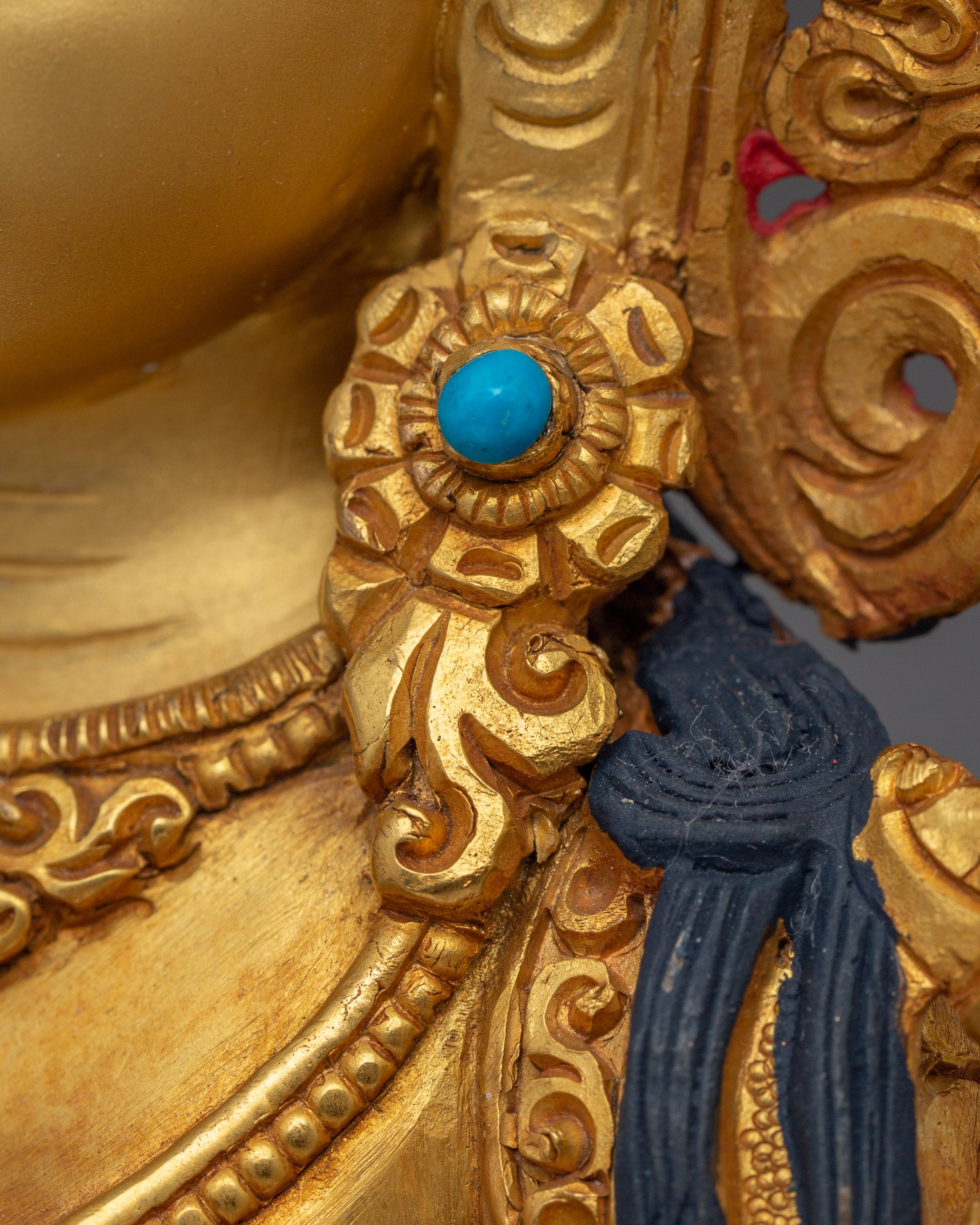
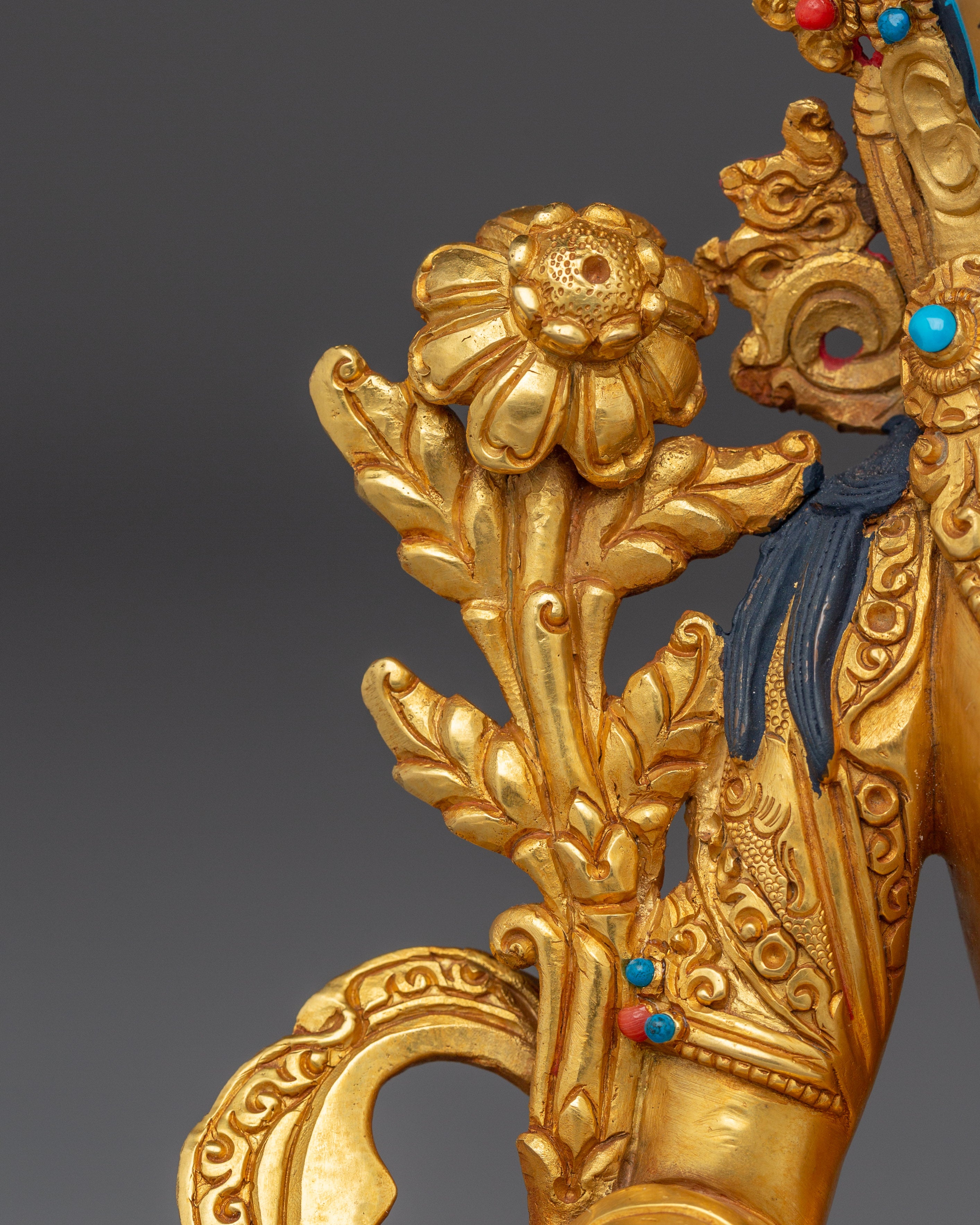
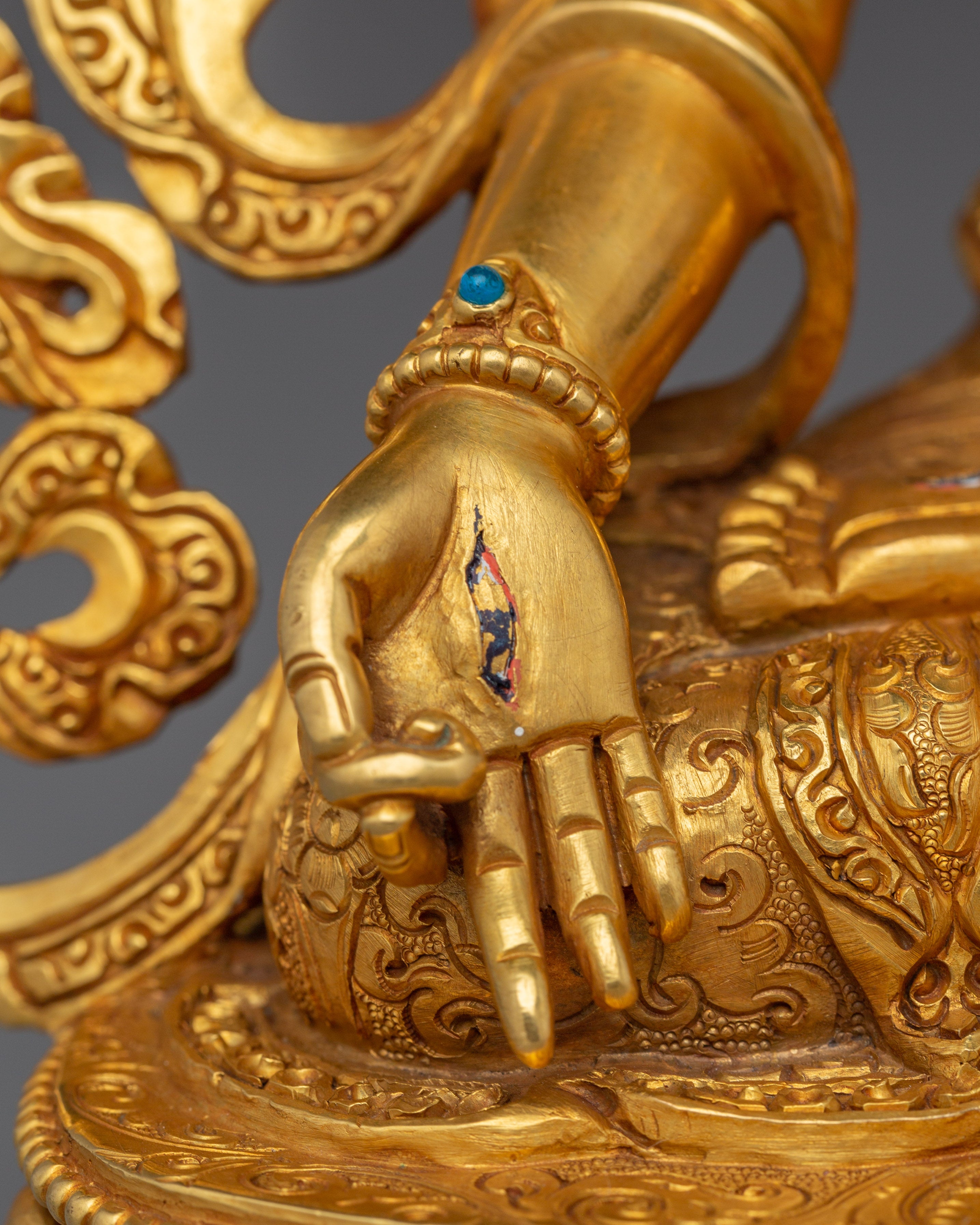
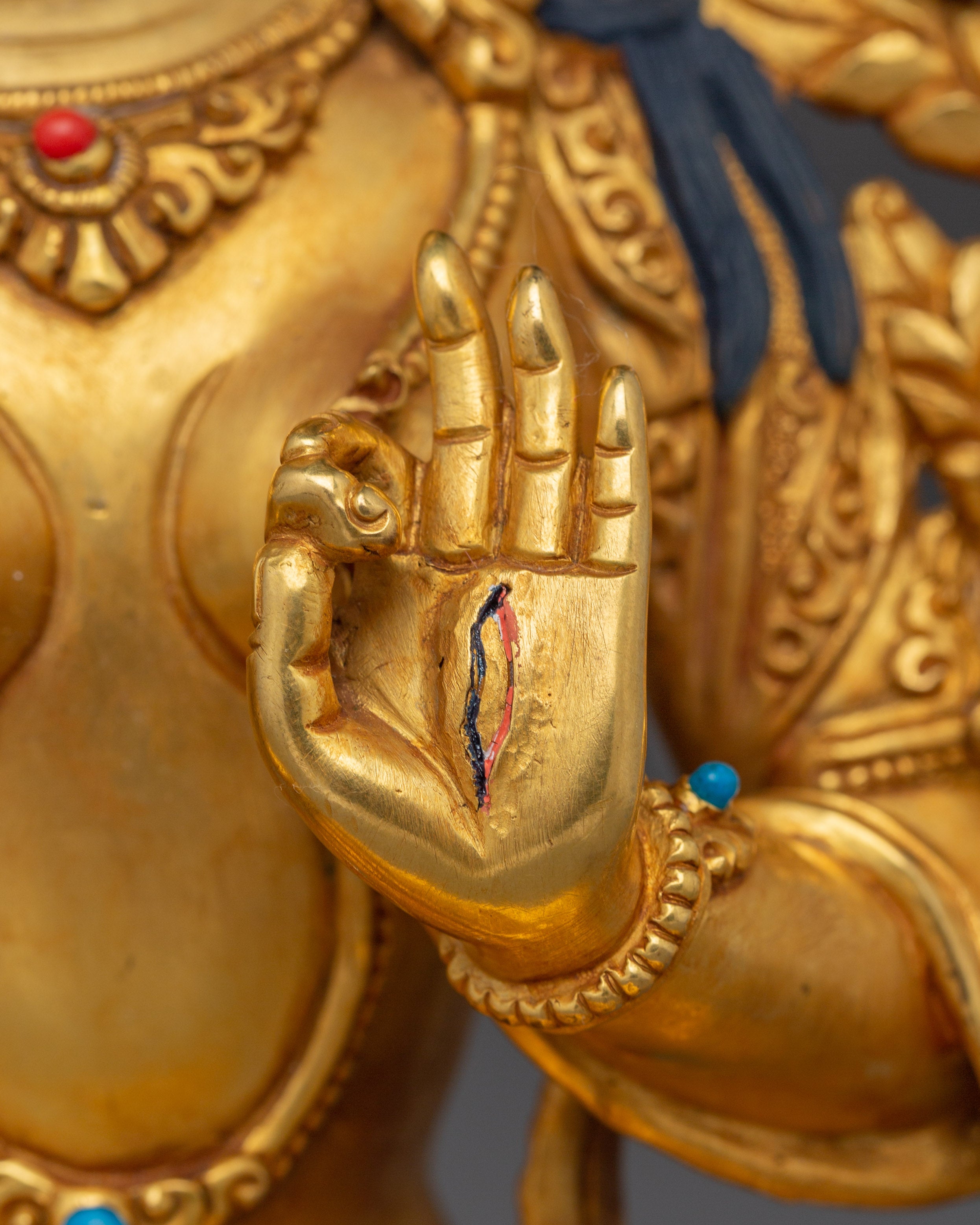
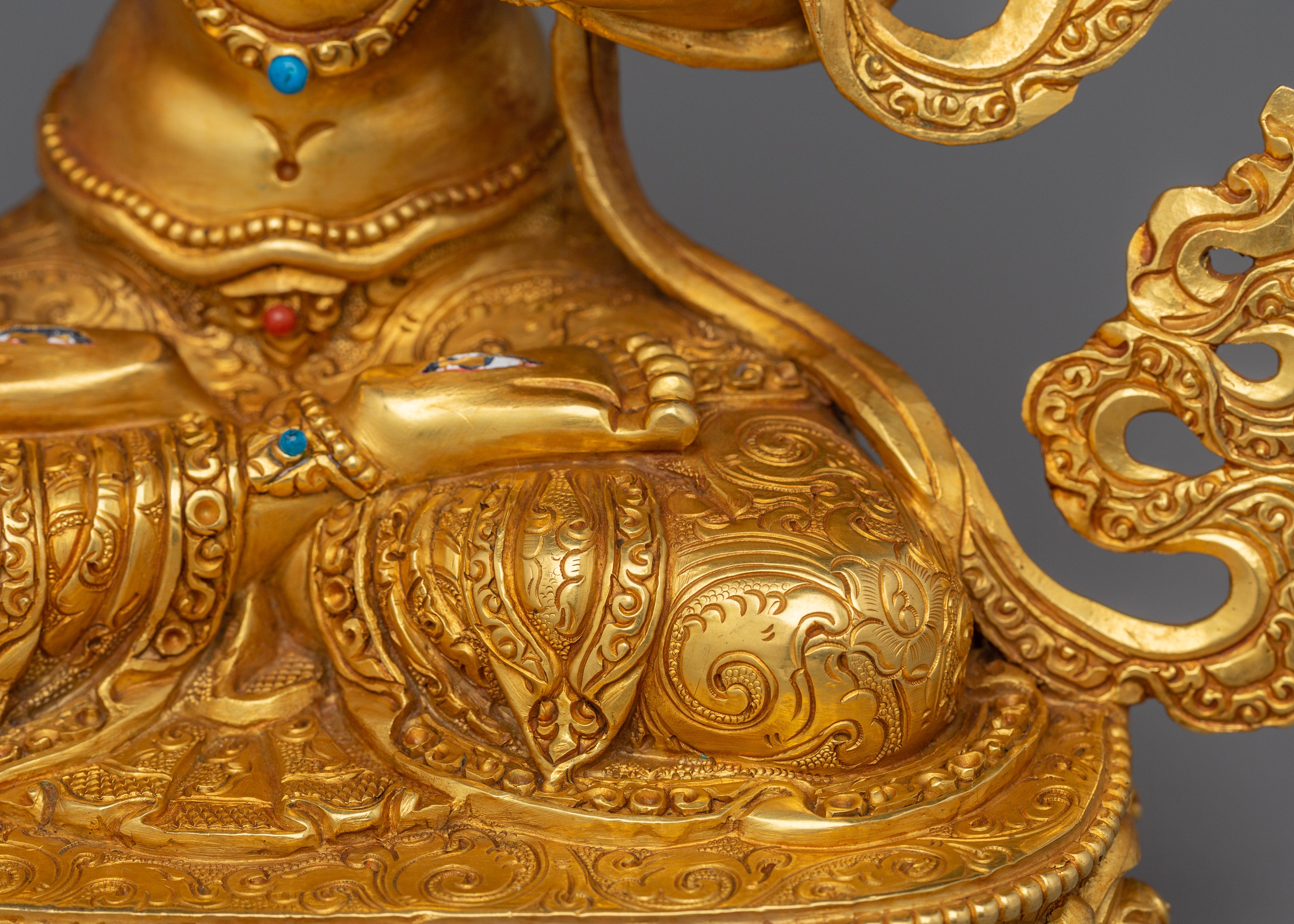
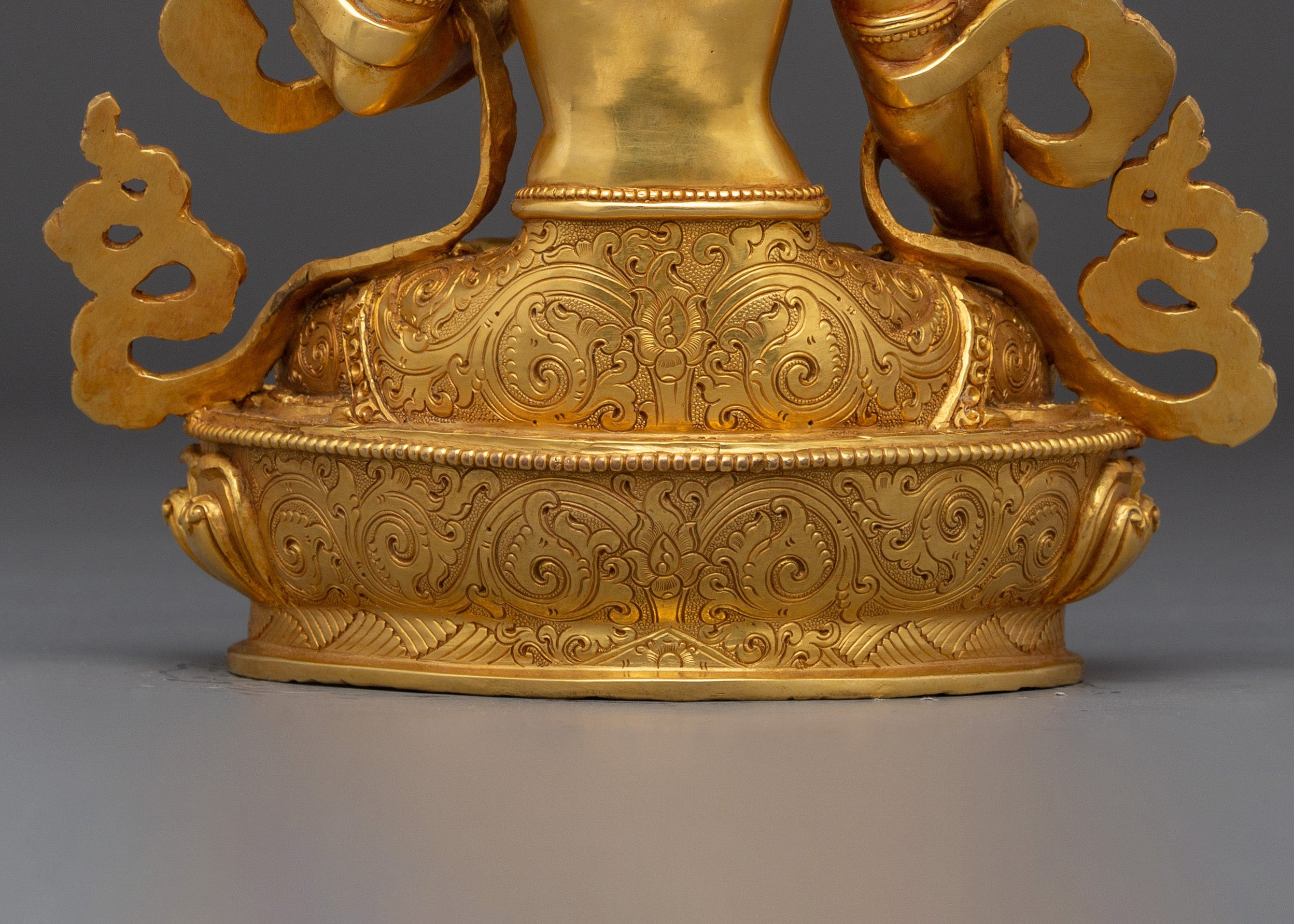
The Golden Handmade Statue of Sita Tara weighs 1.83 kg and is 8.9 inches (22.5 cm) tall with a base width of 7.5 inches (19 cm). This statue was expertly constructed from a copper body and lavishly embellished with beautiful gemstone inlay, intricate gold and acrylic paintings, and 24K gold gilding. It has intricately engraved carvings that provide a stunning three-dimensional appearance. The goddess of longevity and healing, Sita Tara, also known as the White Tara, is adored for her calm demeanor and seven eyes, which stand for omniscient compassion. Handcrafted by talented Nepali artisans, this exquisite sculpture adds grace and significance to altars, meditation spaces, or any other sacred spot devoted to wellbeing and peace.
As one of the Three Long Life Deities, White Tara exudes compassion and eternal vitality. She radiates purity and awakened serenity as she stands elegantly in full lotus on a moon disc and lotus pedestal. Her left hand, clutching a lotus in Vitarka Mudra, speaks of spiritual transcendence and purity, while her right hand extends in Varada Mudra, bestowing blessings and benevolence. Her seven eyes—on the face, forehead, hands, and feet—showcase her profound empathy and limitless awareness for all living things. She enchants with calm knowledge and beauty while wearing a five-pointed tiara, which represents the Five Dhyani Buddhas, and is embellished with celestial diamonds.
Size: 8.9”/22.5cm (Height) x 7.5”/19cm (Base)
Weight: 1.83 kg
Material: 24K Gold Gilded, Gold & Acrylic Paintings, Copper Body, Gemstones
A well-known figure in Tibetan Buddhism, White Tara is regarded as the goddess of longevity and compassion. She is believed to have arisen from Avalokiteshvara's tears, signifying his profound empathy for sentient beings' suffering. White Tara is supposed to offer long life, protection, and healing. Her seven eyes are a representation of all-seeing wisdom that bestows benefits on one's bodily and spiritual health. Her kind disposition acts as a reminder of altruism and the desire to lessen suffering.