


Description
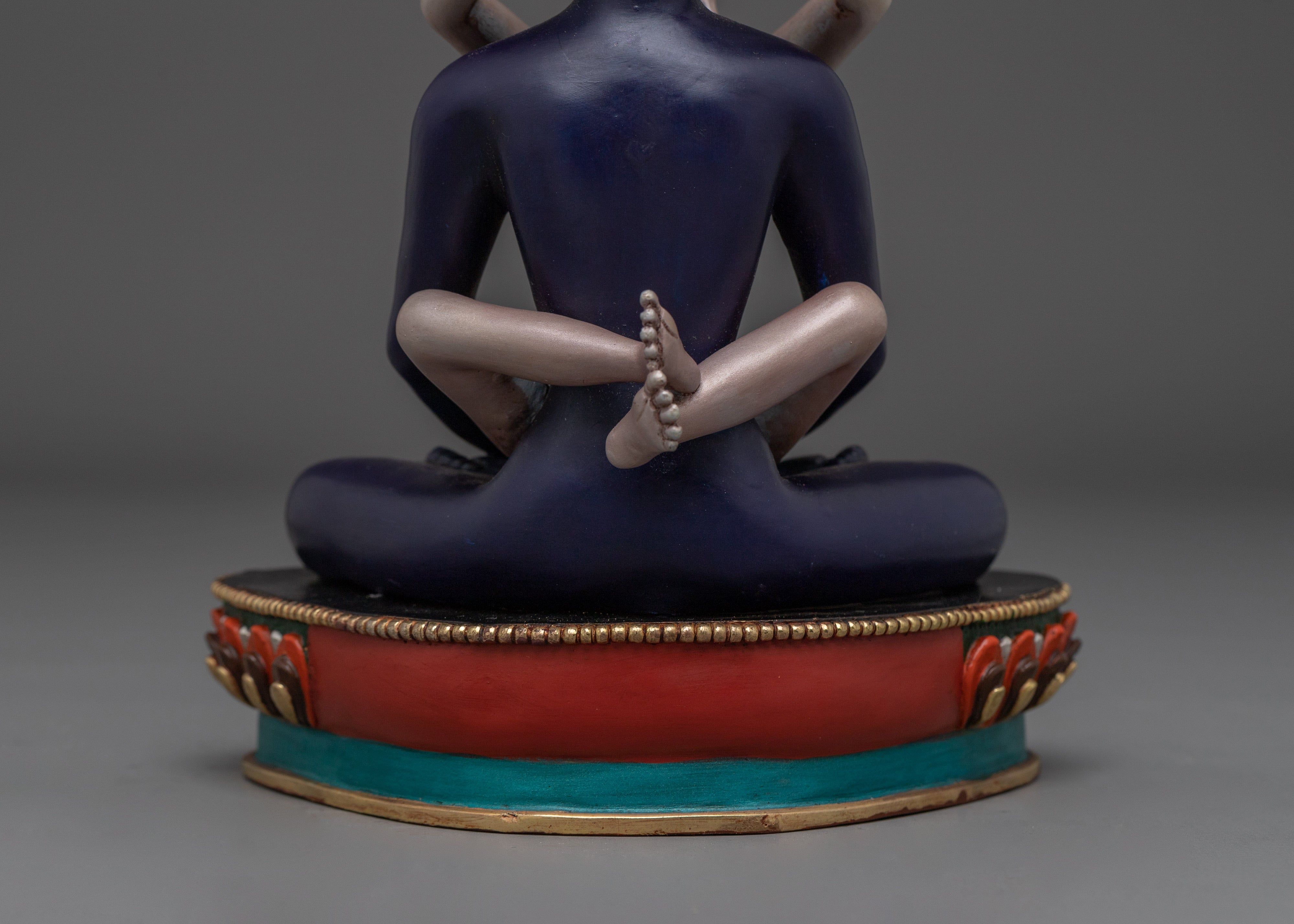
Statue of Samantabhadra, Tantric Form Figure | Sacred Icon for Dharma and Purity
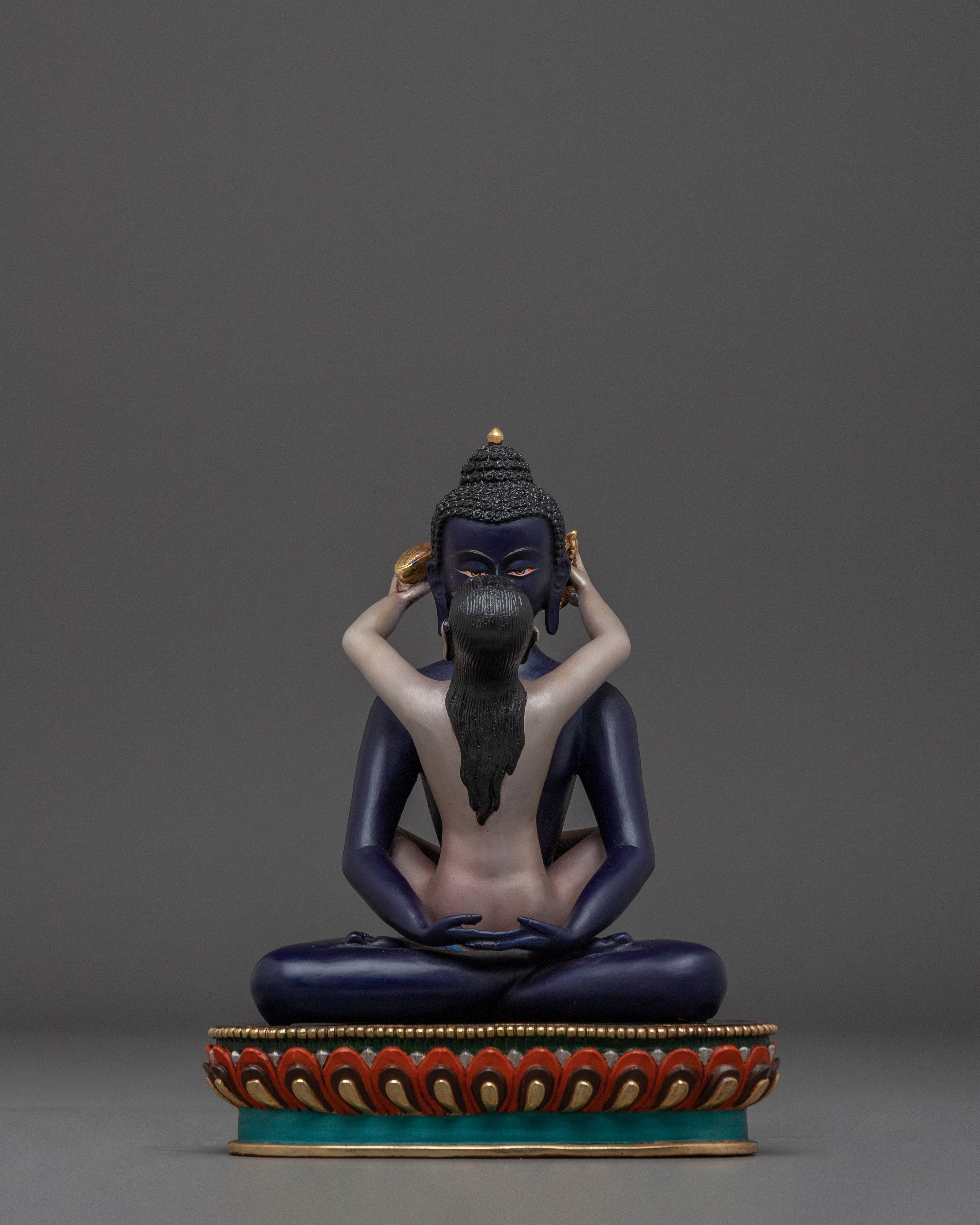
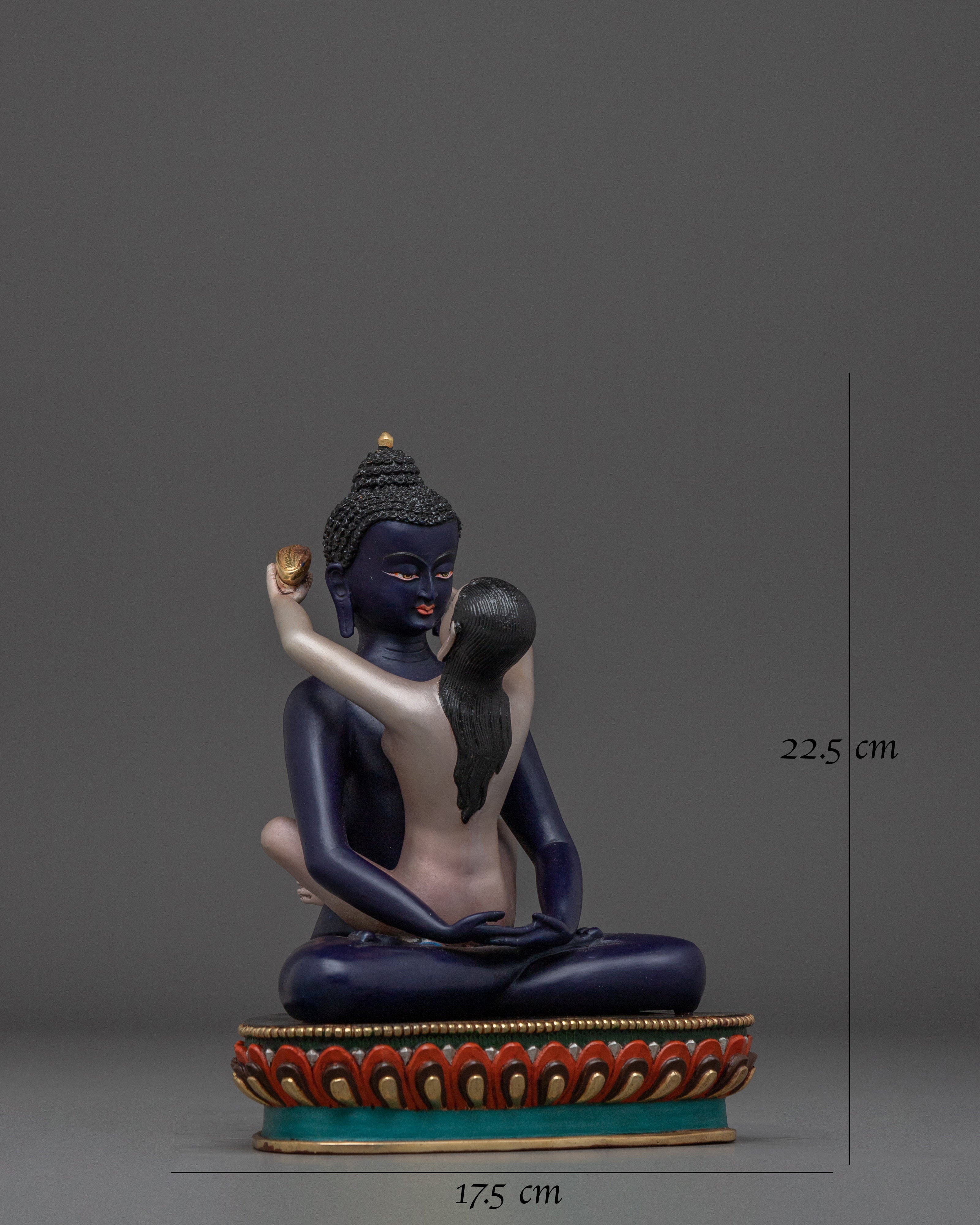
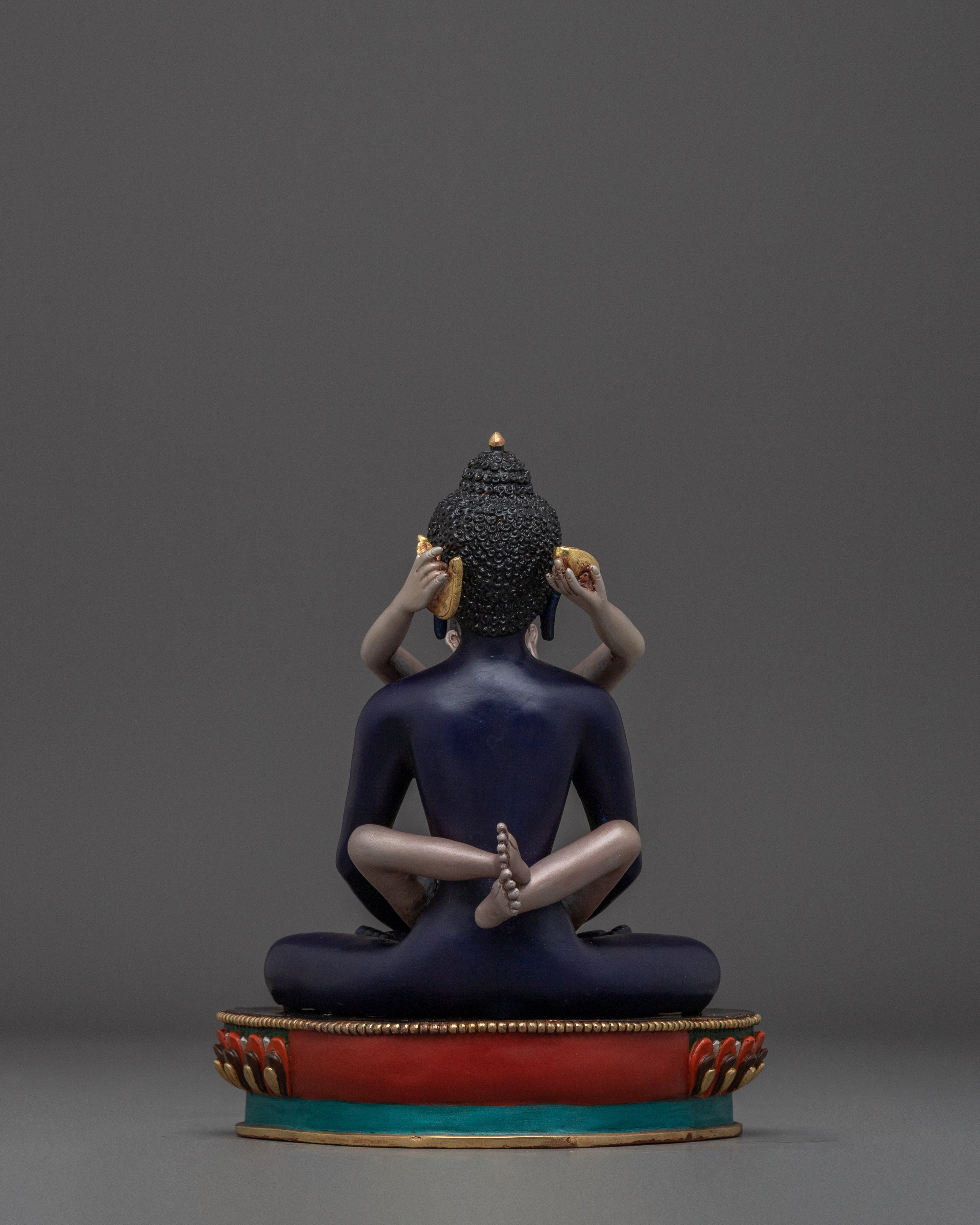
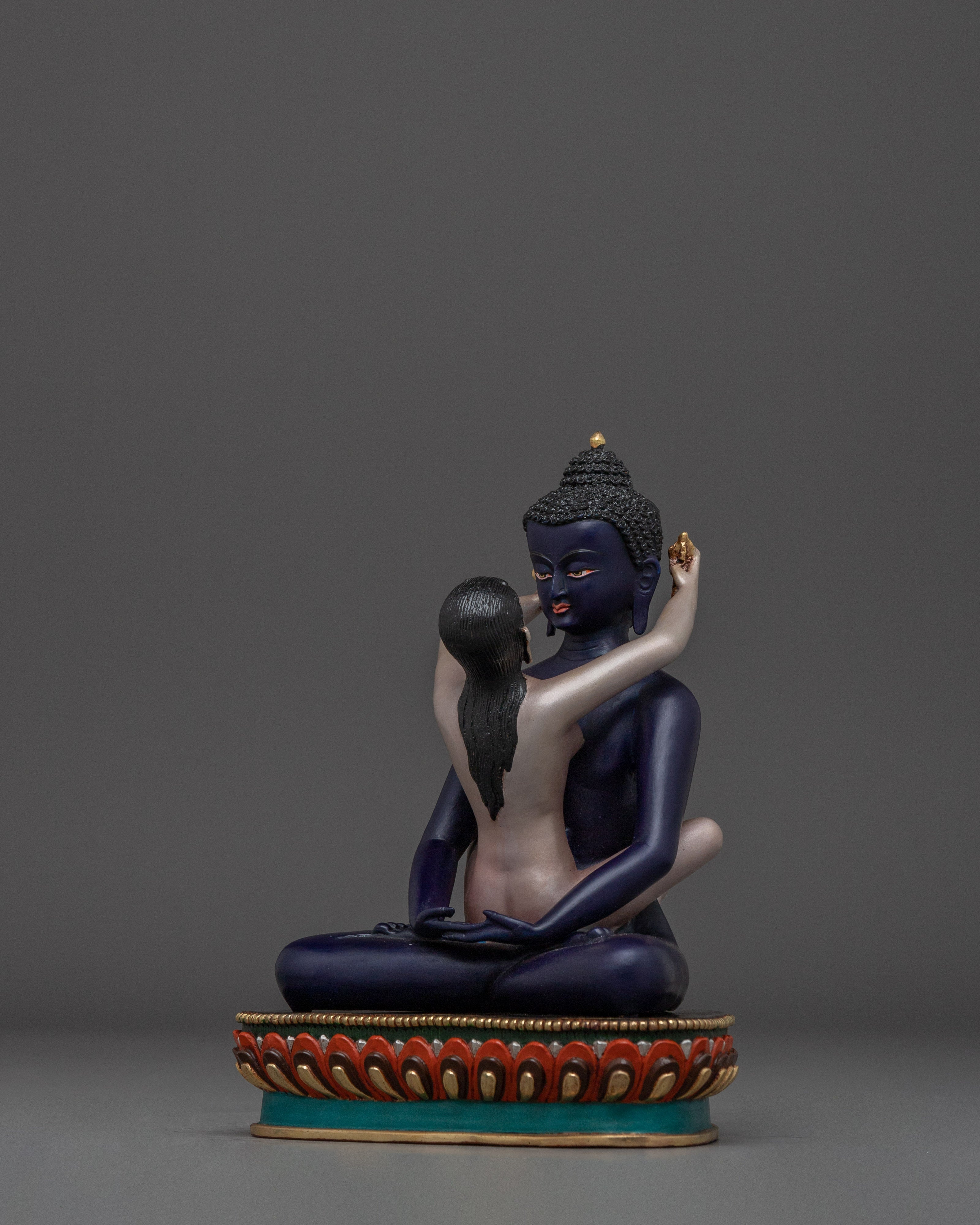
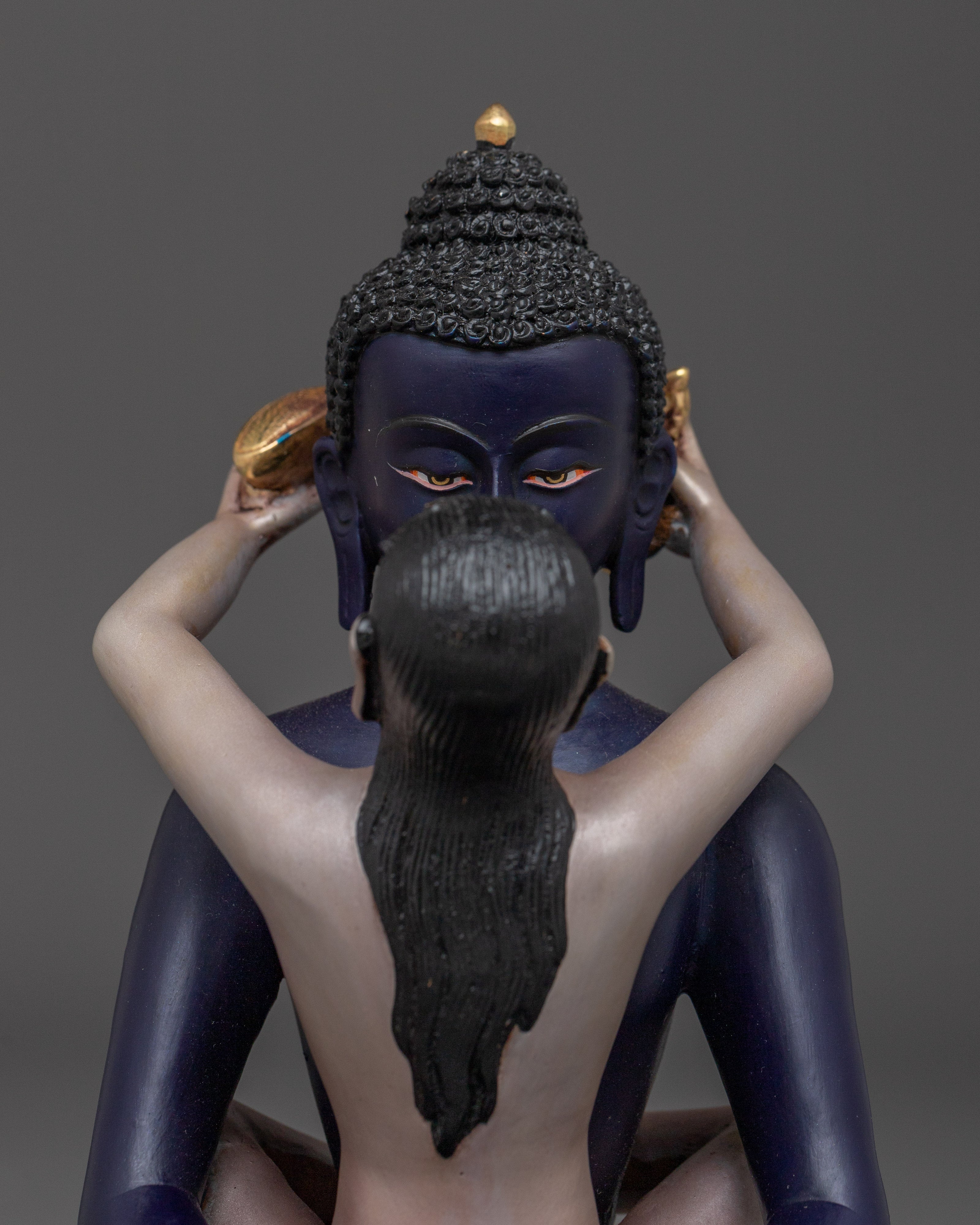
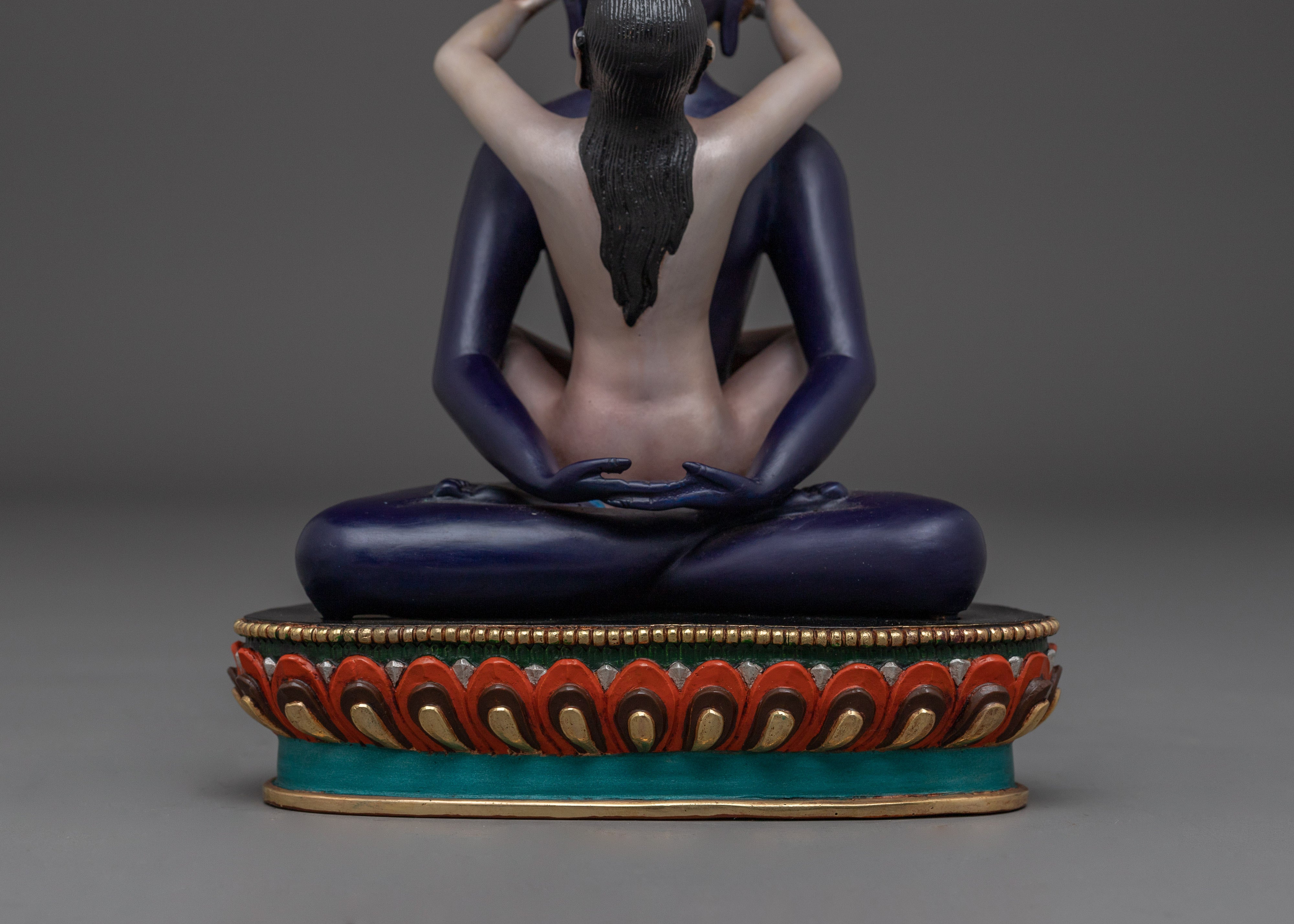
Samantabhadra, Tantric Form Figure stands 22.5 cm (8.9 inches) tall with a 17.5 cm (6.9 inches) wide base and weighs 2.34 kg. Made from a copper body and 24K gold and carved with deeply engraved carvings that produce a magnificent 3D-like effect, it embodies exceptional craftsmanship and sacred artistry.Perfect for personal altars, meditation spaces, or as a spiritual gift, this statue brings an aura of elegance and devotion, reflecting timeless Buddhist tradition and symbolic richness.
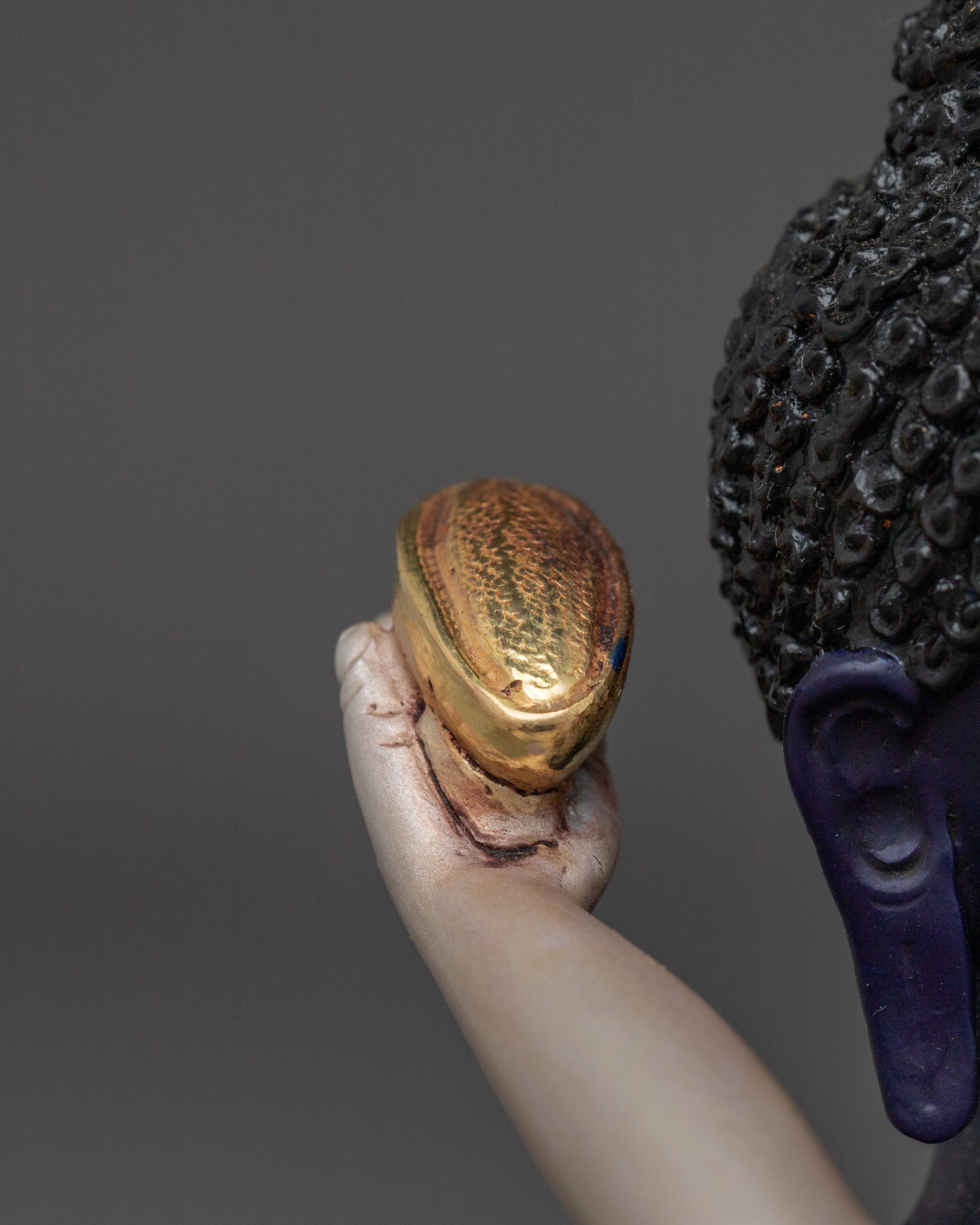
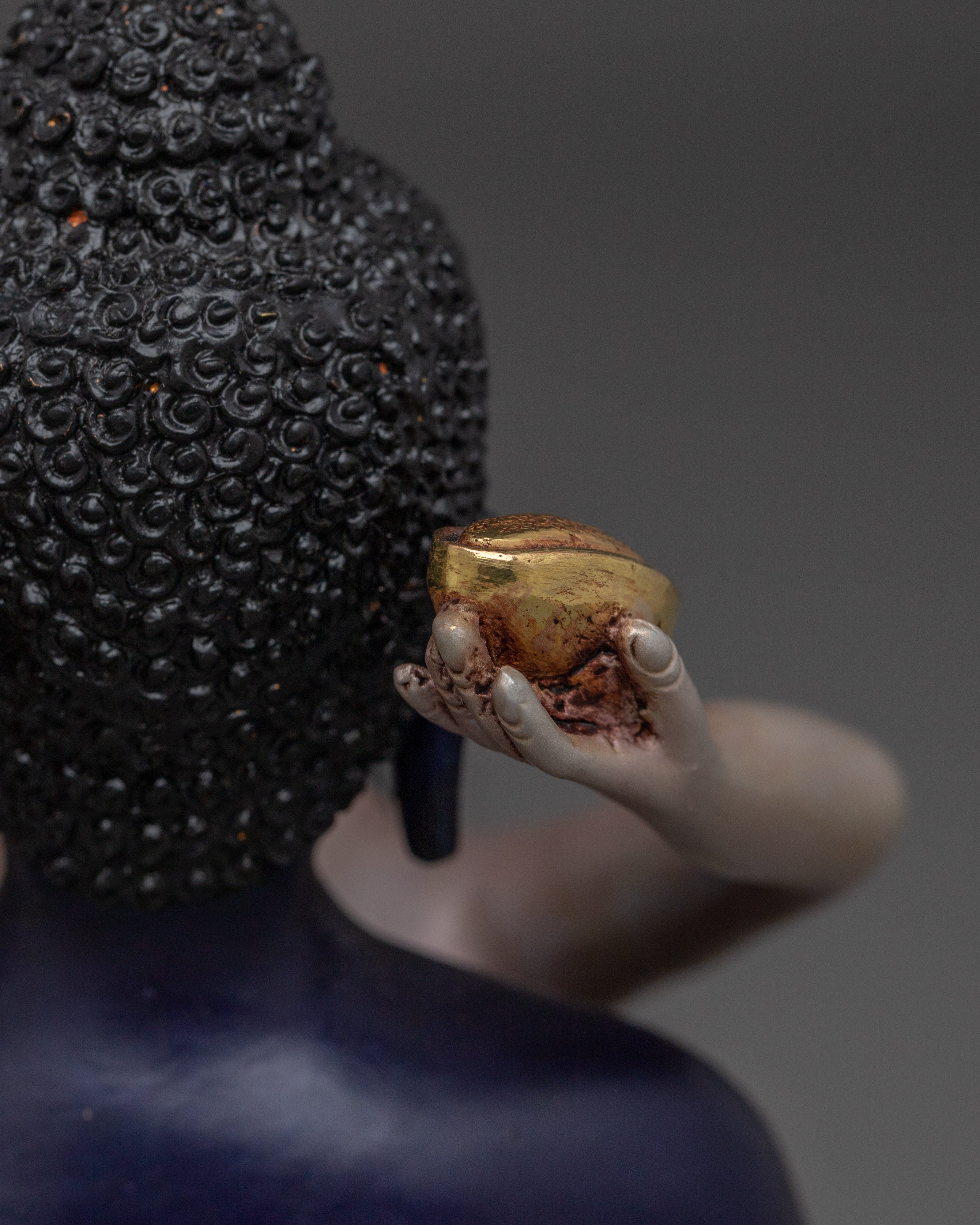
This exquisite statue captures Samantabhadra united with his consort, embodying the powerful blend of wisdom (prajna) and skillful means (upaya) central to Vajrayana Buddhism. Samantabhadra sits in the serene dhyana mudra, a gesture of deep meditation and spiritual harmony, while embracing his consort. She holds a skullcup (kapala), symbolizing the transformation of illusions into insight, and a kartika, a ritual knife that severs ego and ignorance. Rest upon a moon disc lotus base, representing purity and the blossoming of spiritual awakening beyond worldly attachments.
Size: 8.9”/22.5cm (Height) x 6.9”/17.5cm (Base)
Weight: 2.34 kg
Material: 24K Gold Gilded, Copper Body
In Mahayana Buddhism, Samantabhadra is a bodhisattva (buddha-to-be) representing benevolence or happiness. He is frequently depicted in a triad with Shakyamuni (the Buddha) and the bodhisattva Manjushri, either on a three-headed elephant or a single-headed elephant with six tusks. In China, he is the patron deity of Mount Emei, located in the province of Sichuan. He is regarded as the manifestation of Vairocana, the cosmic Buddha, in Vajrayana, or Tantric Buddhism. In Chinese, he is known as Puxian, while in Japanese, he is known as Fugen.