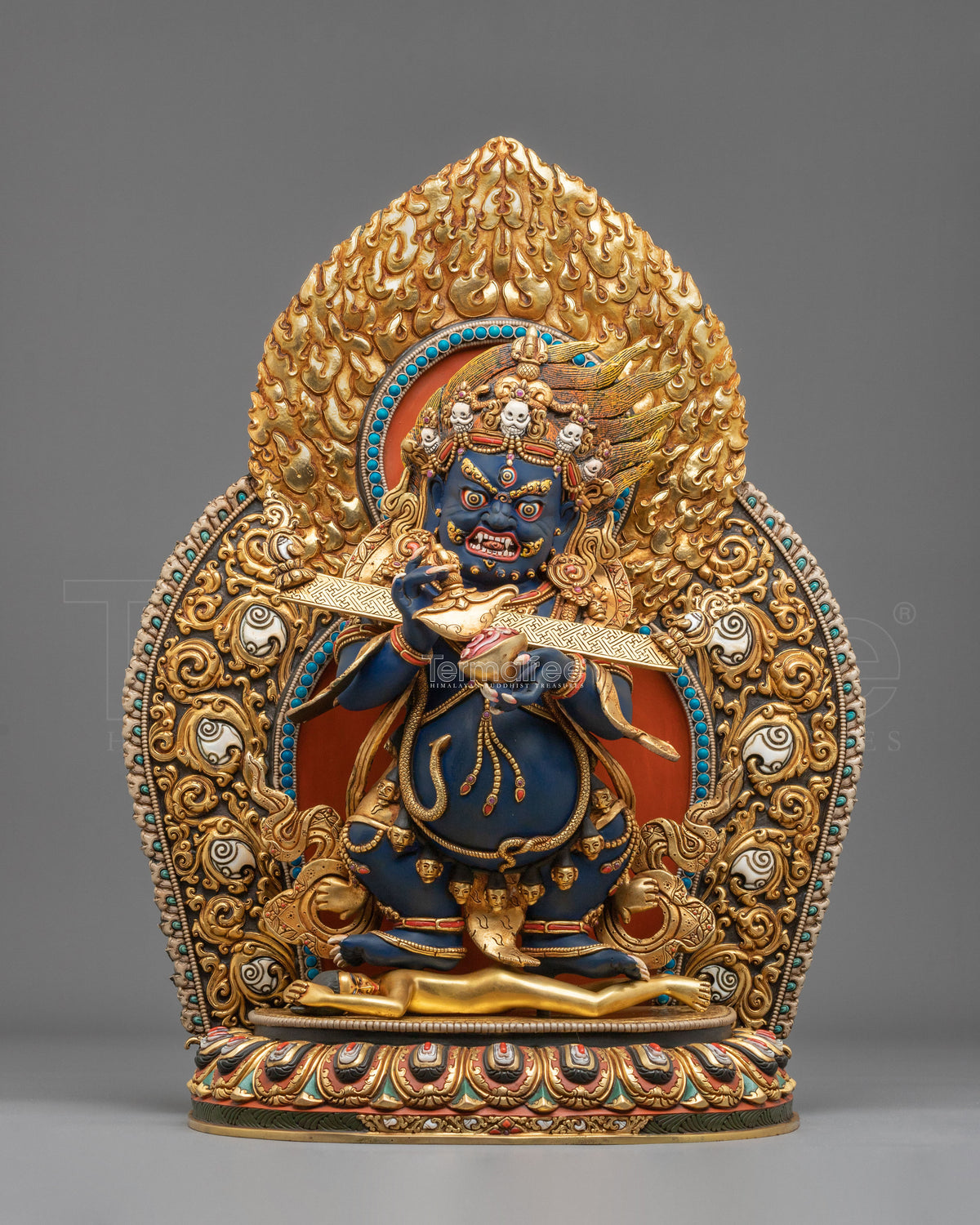
Hand-Crafted Shakya Mahakala Statue | "Panjarnata Mahakala" The Lord of the Pavilion
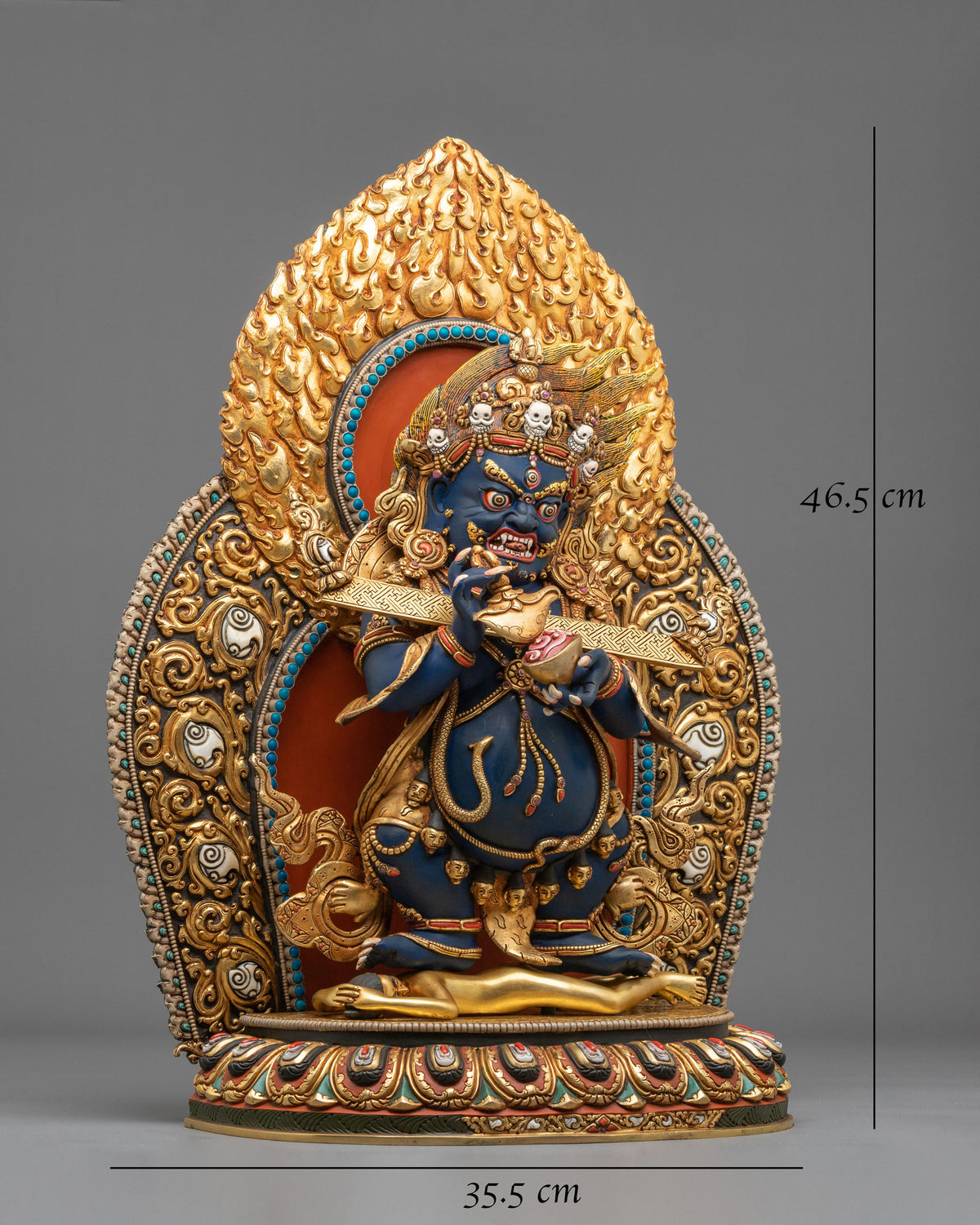
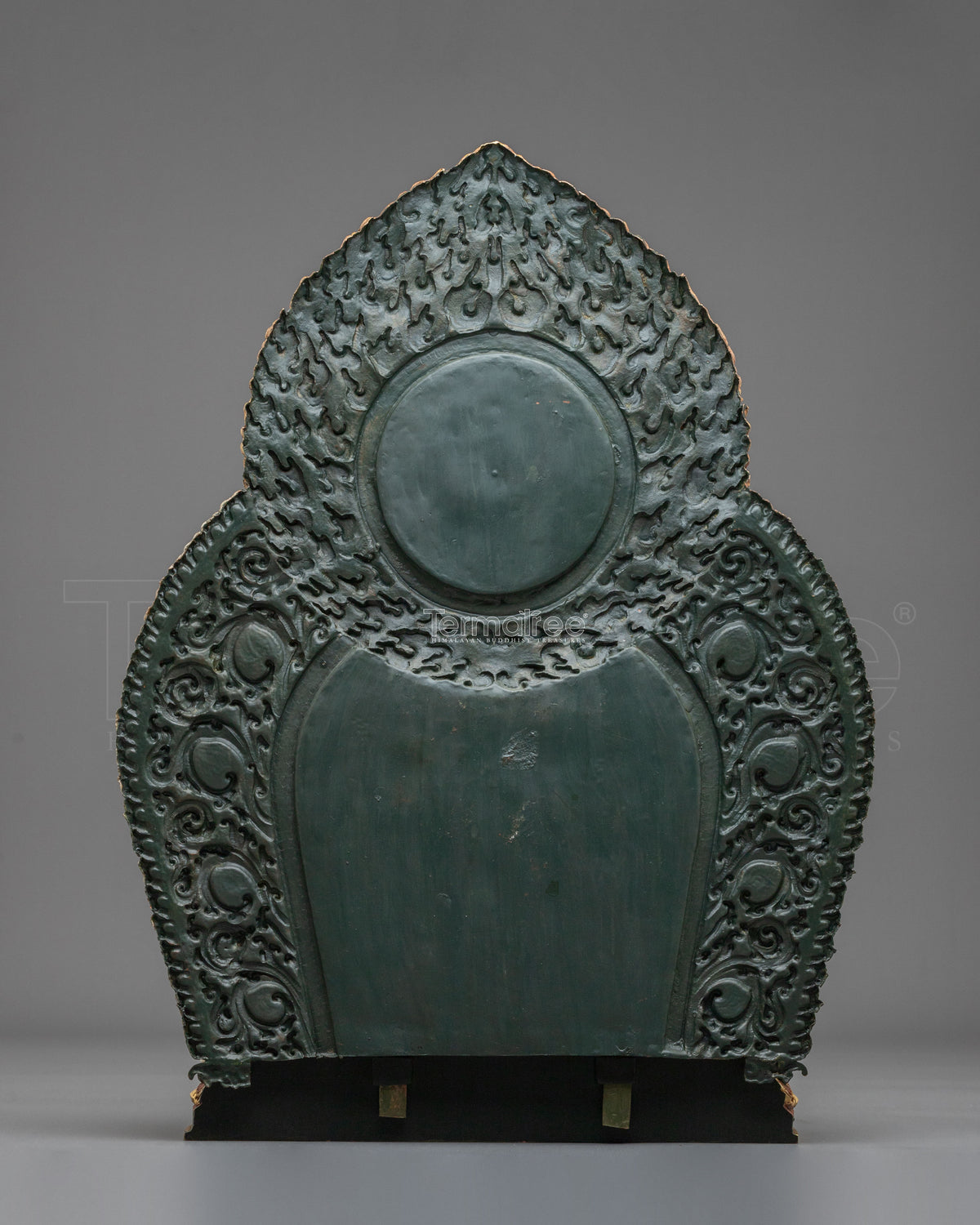
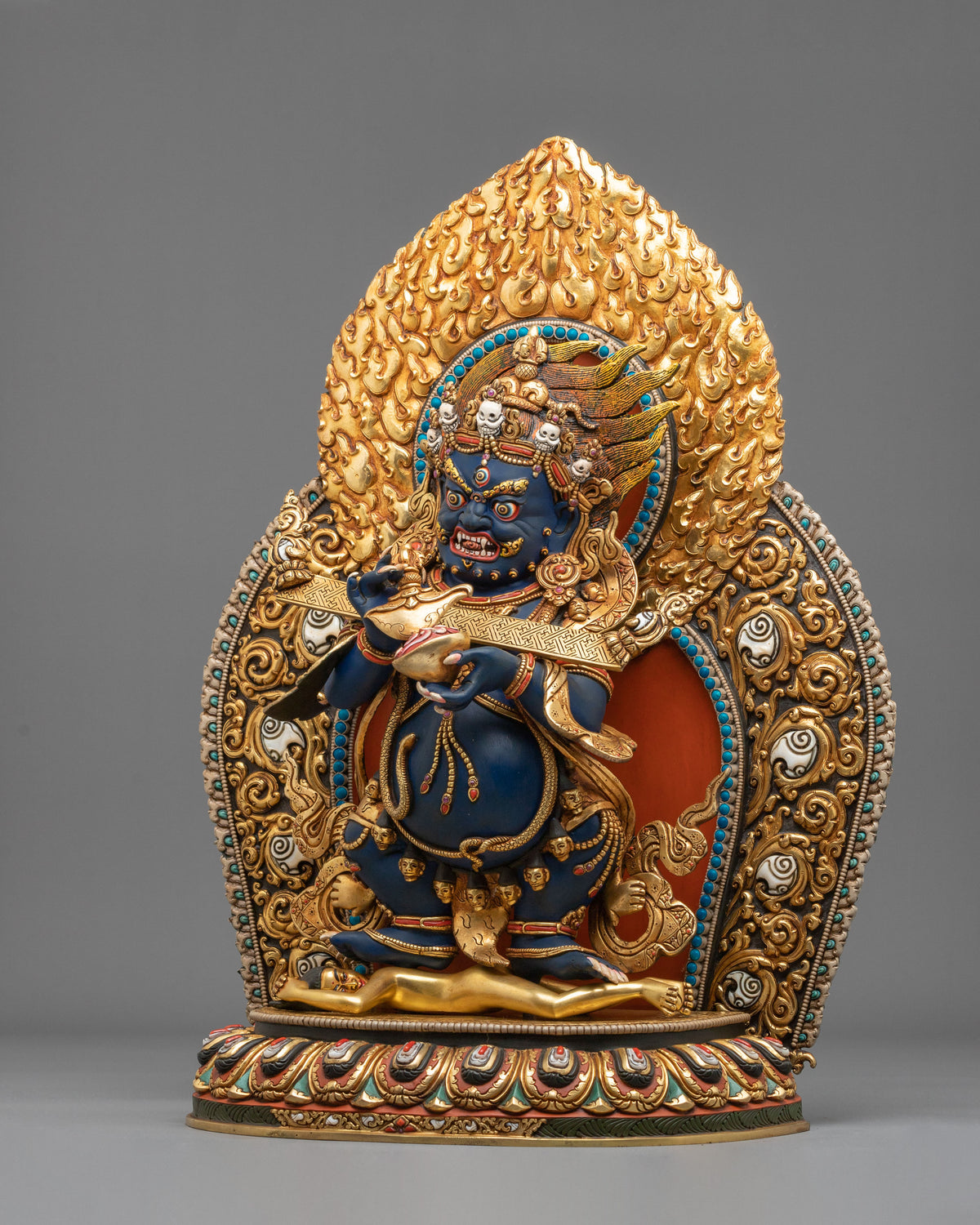
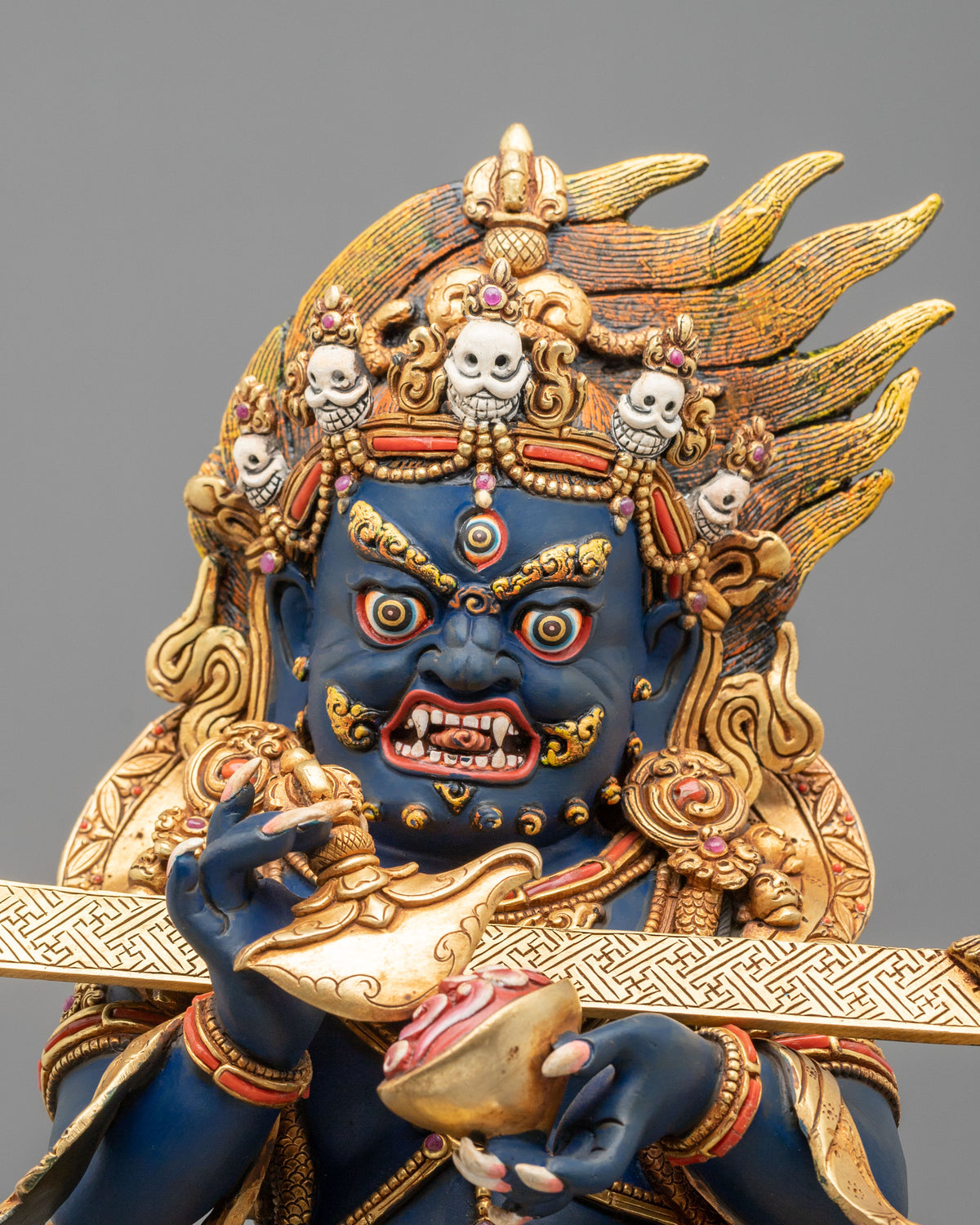
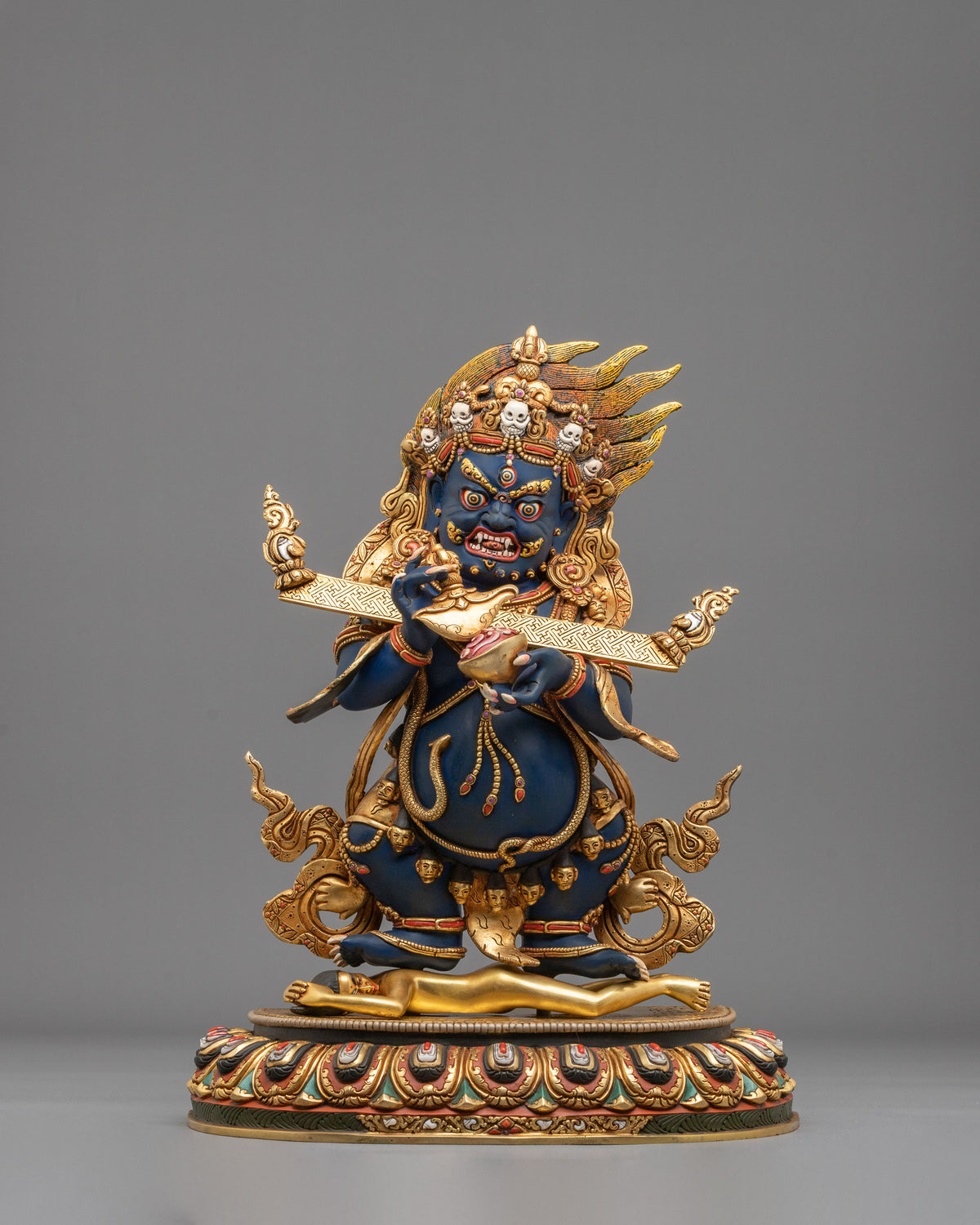
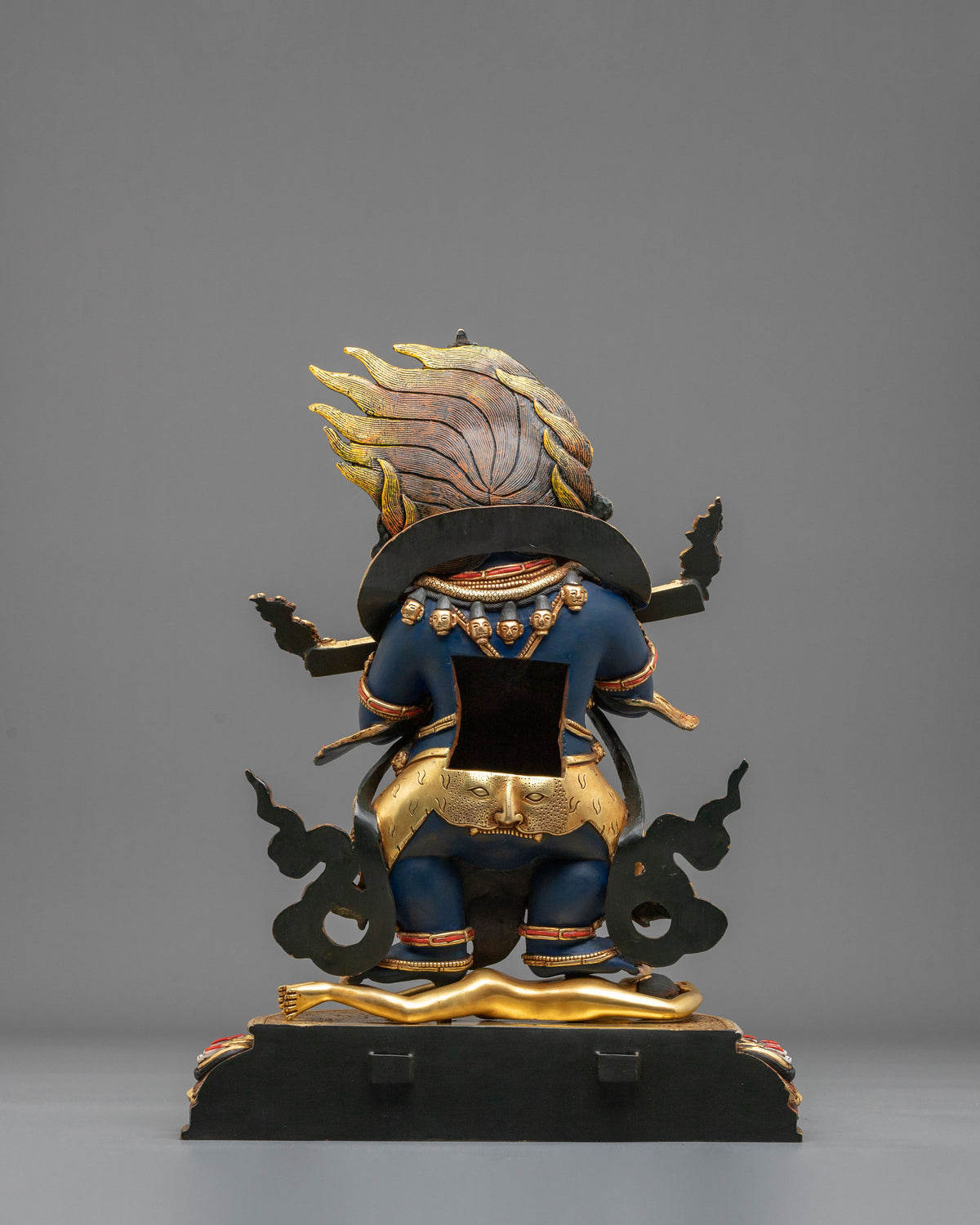
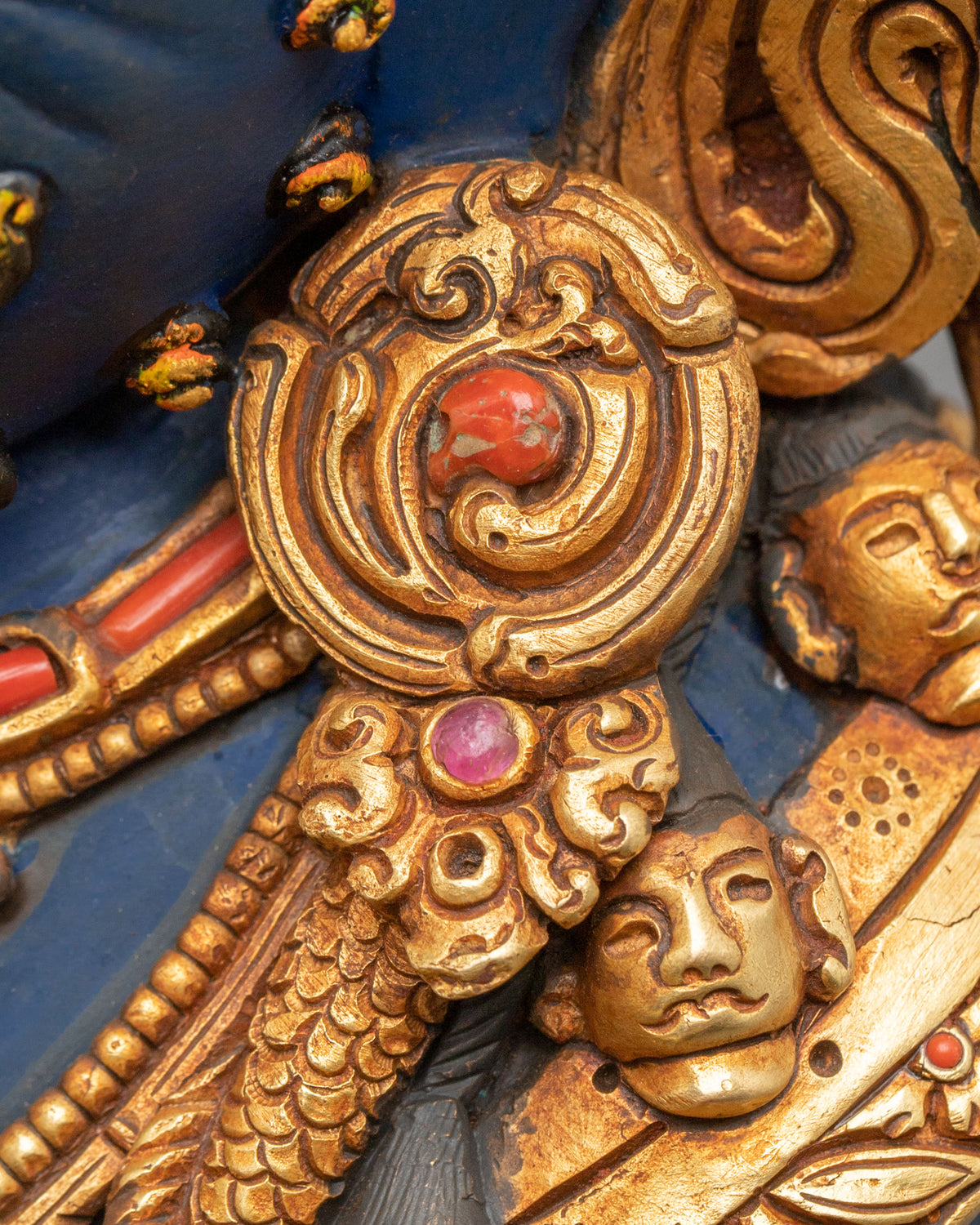
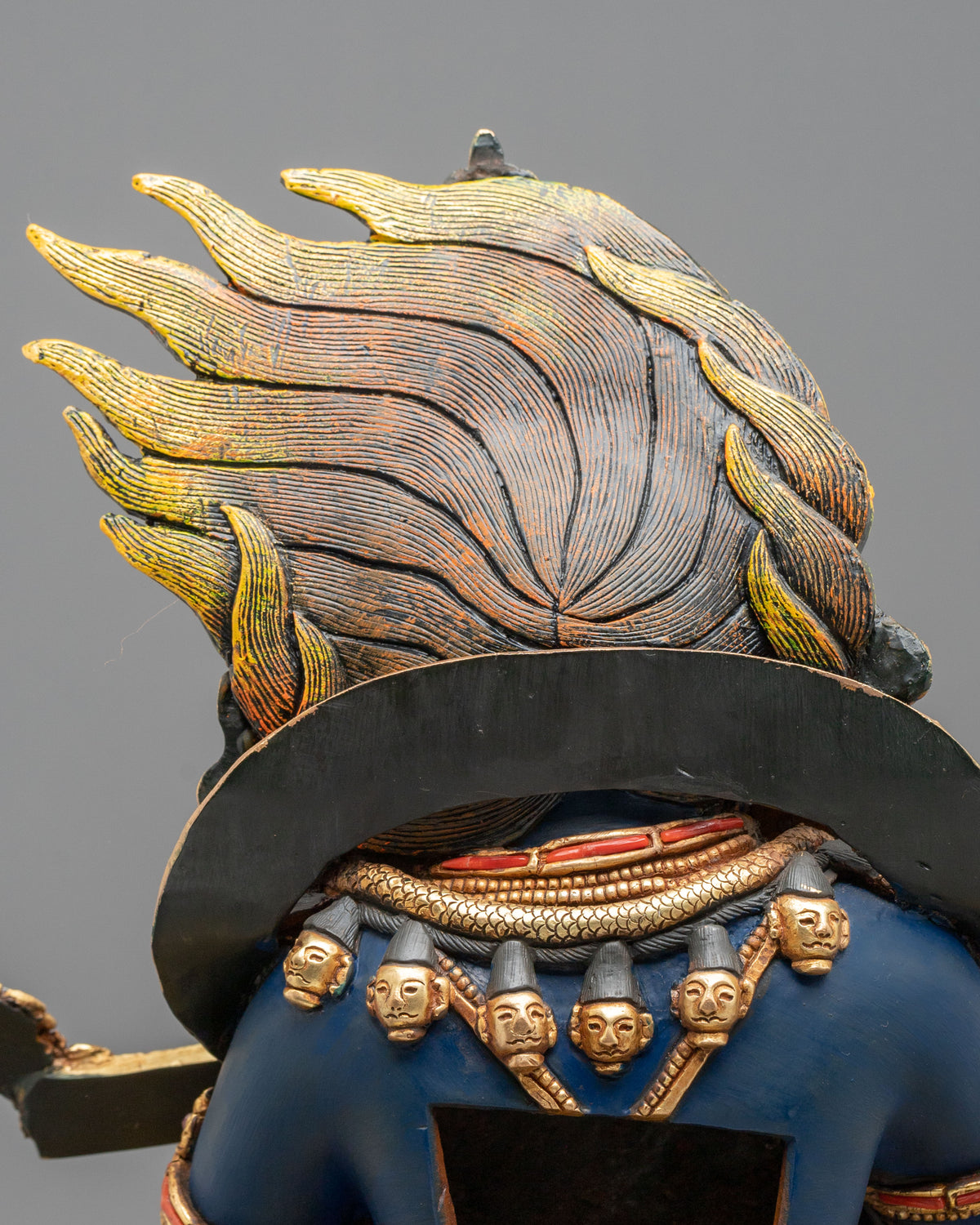
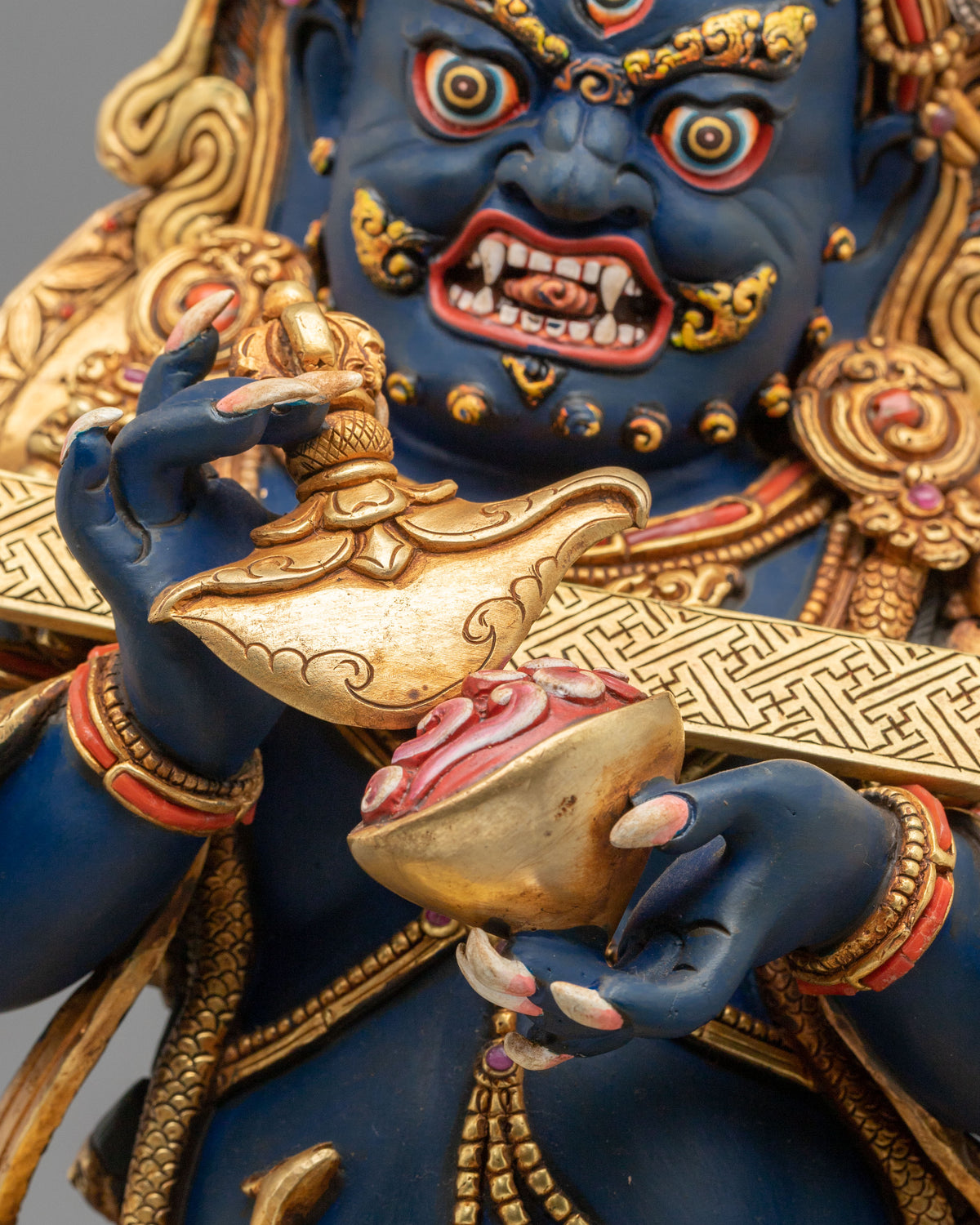
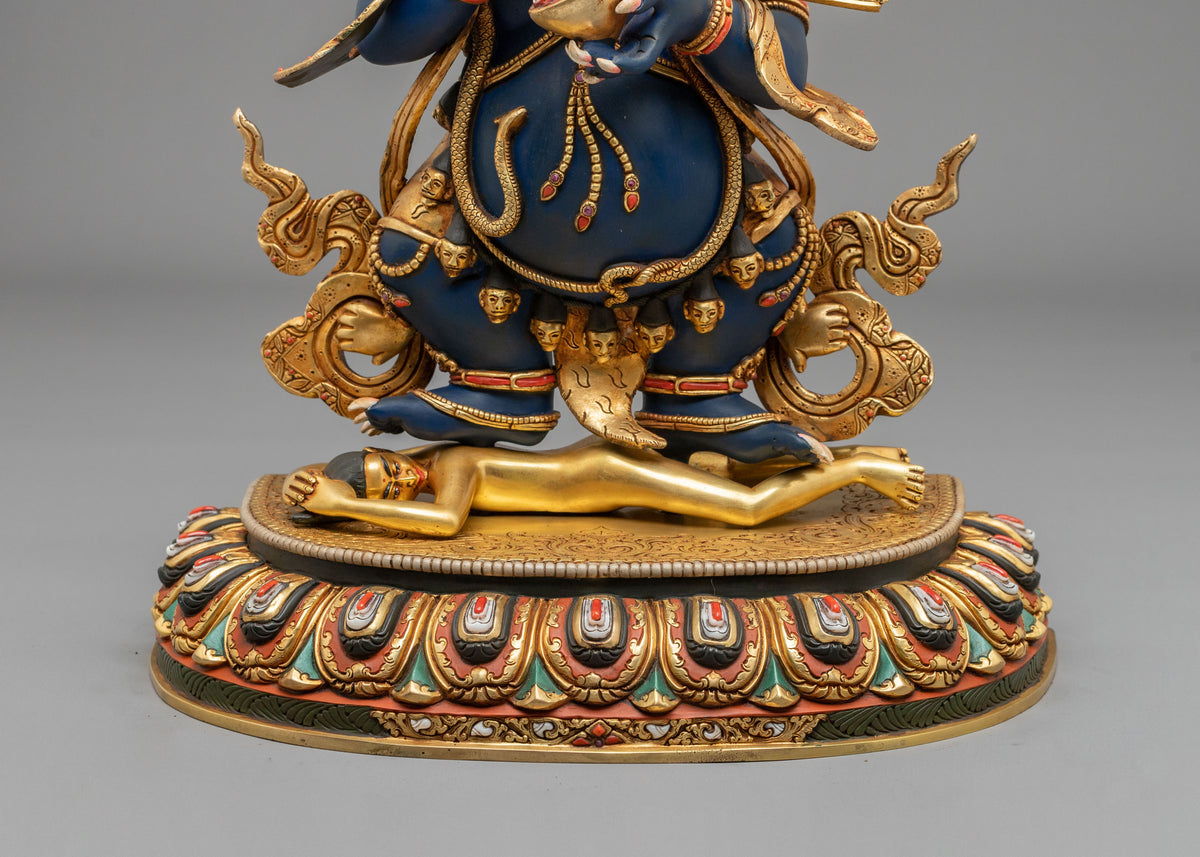
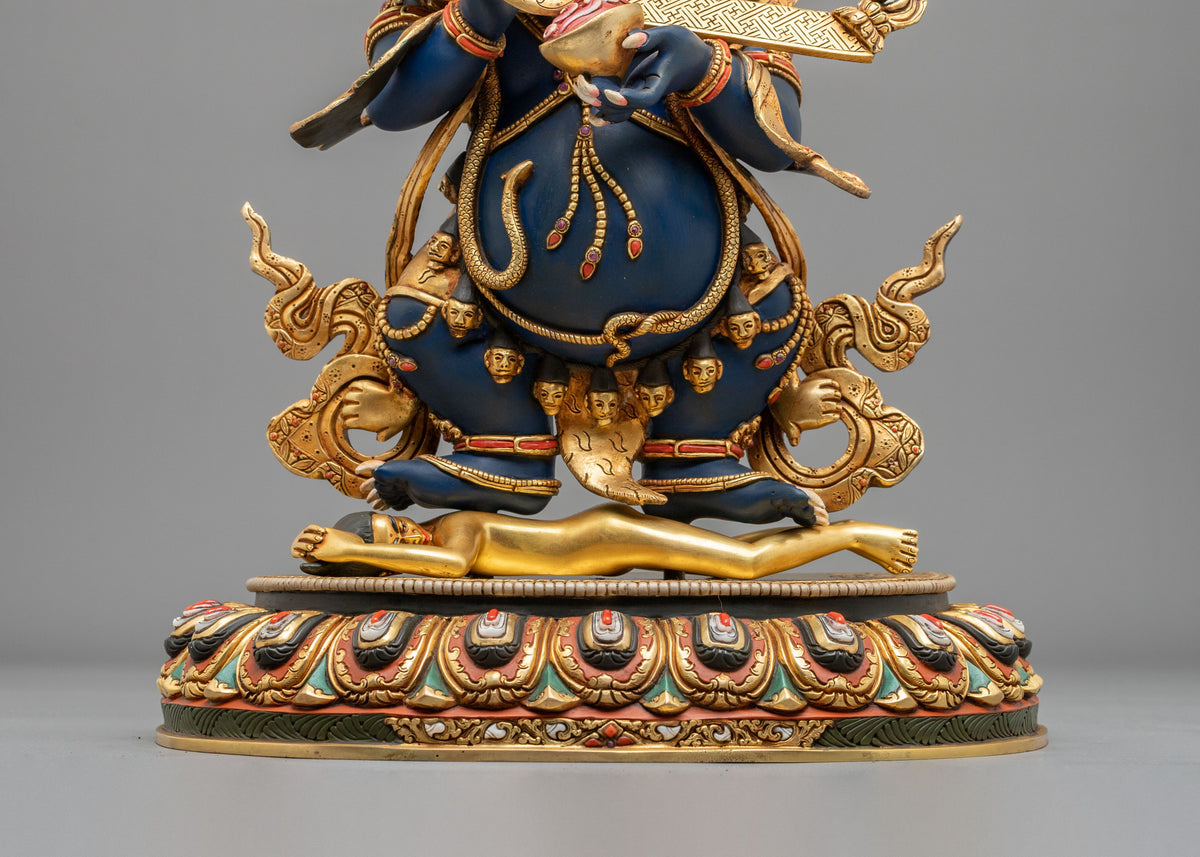
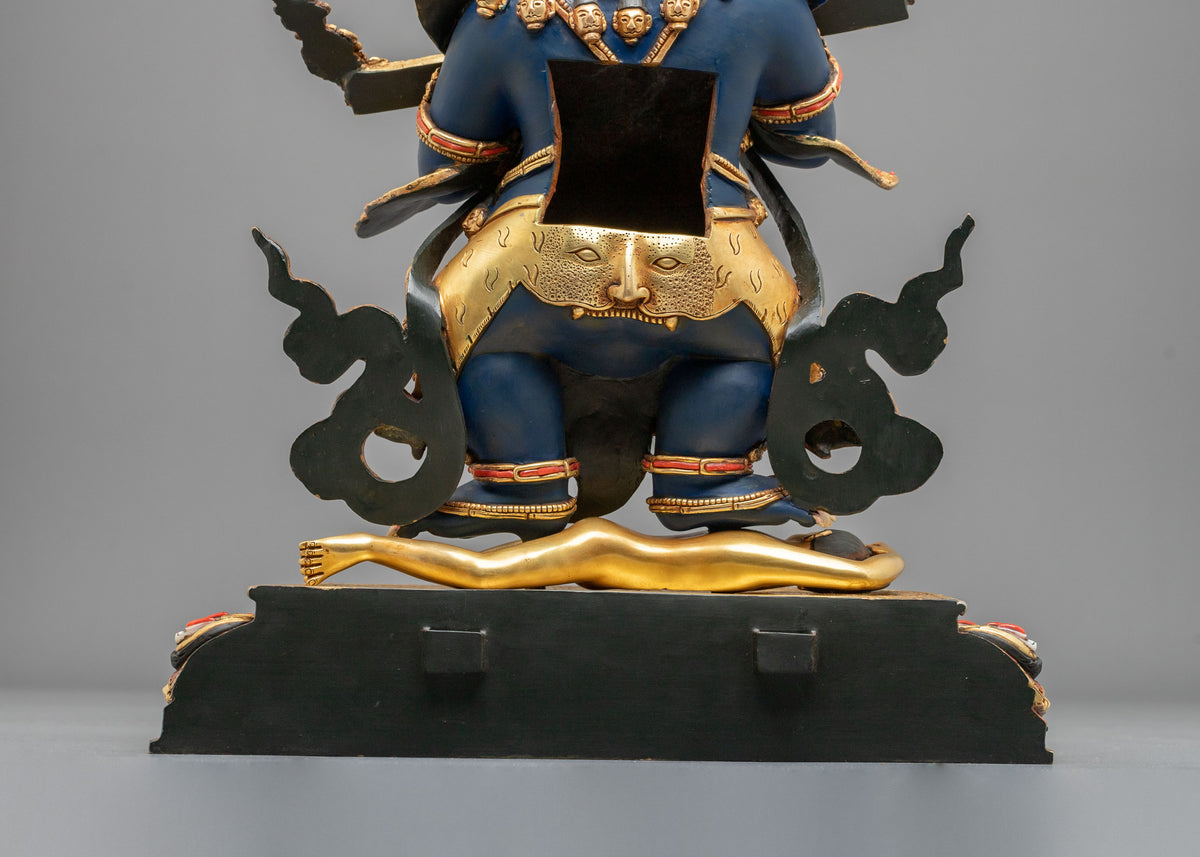
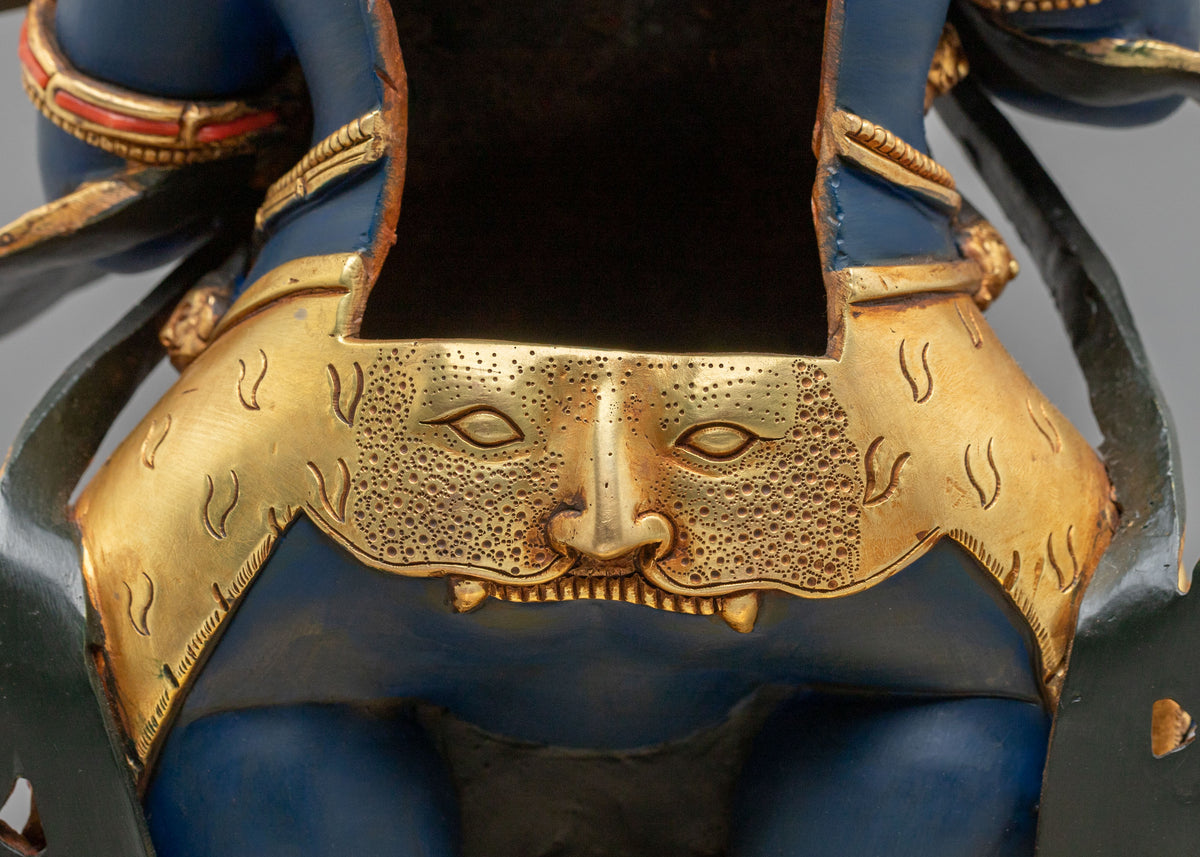
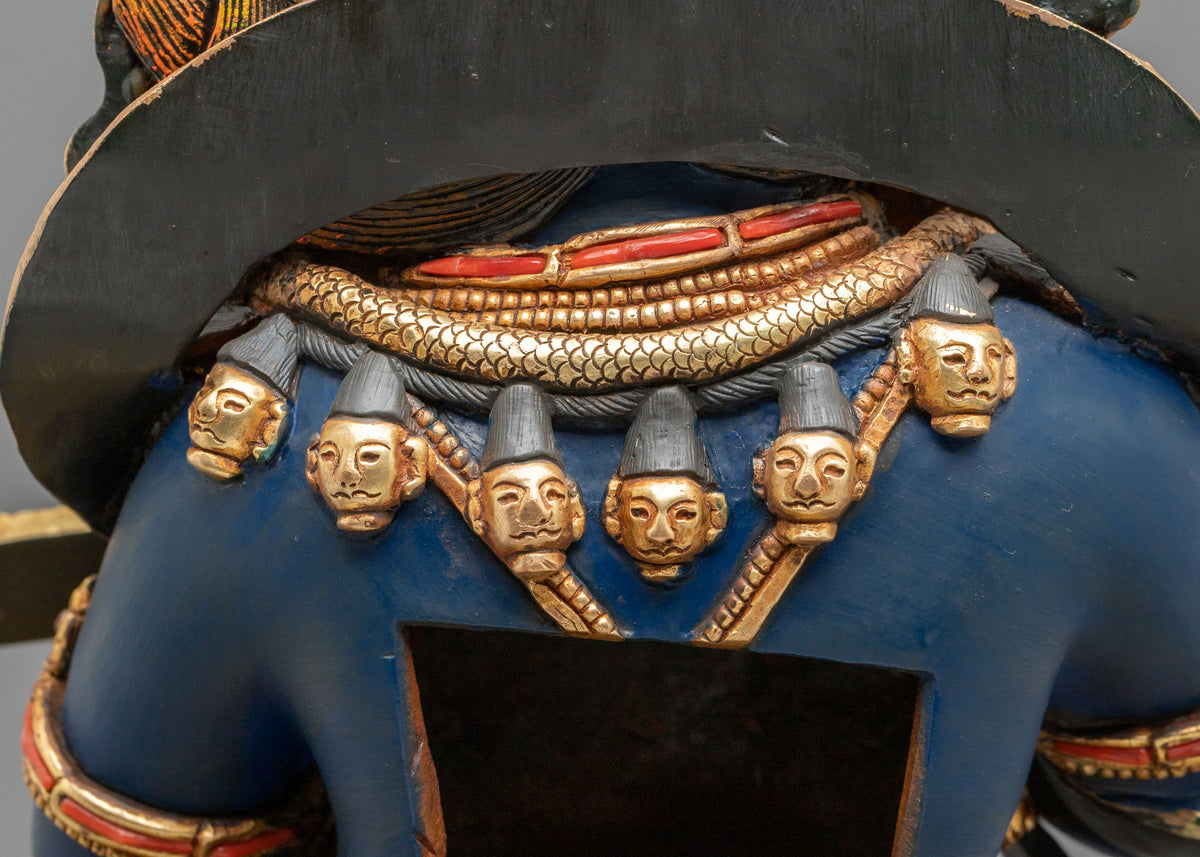
This Shakya Mahakala Fierce Dharma Statue measures 18.3”/46.5cm in height with a 14.0”/35.5cm base and weighs 9.38 kg. Meticulously handcrafted from a copper body, this exceptional sculpture is covered with a triple layer of 24K gold gilding and richly finished with gold and acrylic painting, along with extensively hand-carved gemstones. The deeply engraved carvings produce a magnificent 3D-like effect, creating remarkable depth across the figure, crown, aureole, garments, ornaments, and lotus pedestal. The luminous gold decoration contrasts with the deep blue complexion and vibrant painted details, while the numerous gemstone accents add color, texture, and dimension to the elaborate composition. The large scale, extensive ornamentation, detailed relief work, and meticulous craftsmanship give this sculpture a distinguished presence for prominent Buddhist altars, monasteries, meditation halls, Dharma centers, temples, and sacred art collections.
Size: 18.3”/46.5cm (Height) x 14.0”/35.5cm (Base)
Weight: 9.38 kg
Material: Copper Body, Gold and Acrylic Painting, Handcarved Gemstones
Shakya Mahakala "Panjarnata Mahakala" Iconography
Shakya Mahakala, also known as Panjarnata Mahakala, is traditionally depicted as a wrathful Dharma protector associated with the Sakya tradition. His iconography emphasizes fierce protective activity and the removal of obstacles to Buddhist practice.
-
Body and Face: He is shown with a dark blue or blue-black body, a fierce expression, glaring eyes, sharp fangs, and three eyes symbolizing heightened awareness.
-
Arms and Attributes: In the common two-armed form, the right hand holds a curved ritual knife or kartika, while the left holds a skull cup (kapala).
-
Crown: A crown of five human skulls represents the transformation of the five mental afflictions into wisdom.
-
Ornaments: He is adorned with wrathful ornaments, including a garland of severed heads and serpent ornaments, emphasizing his fierce protector aspect.
-
Garment: A tiger-skin garment is traditionally associated with the form, reinforcing its powerful wrathful appearance.
-
Posture and Base: He is commonly shown standing dynamically upon a figure or corpse, symbolizing the subjugation of ego, ignorance, and worldly obstacles.
-
Flames: A surrounding halo of flames represents the force of enlightened activity that overcomes obstacles and negativity.