Peaceful Shakyamuni Buddha Buddhist Spiritual Handmade Statue
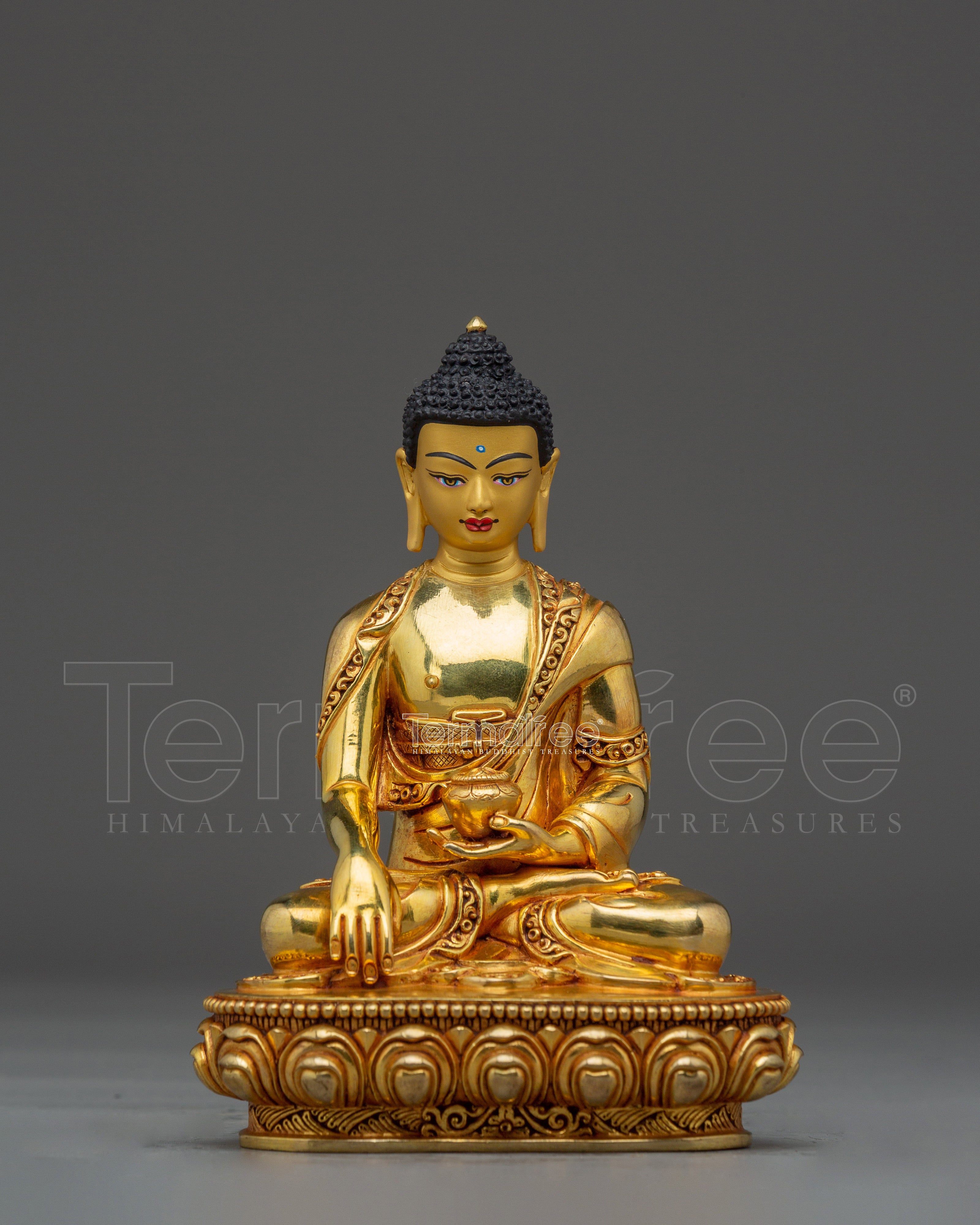
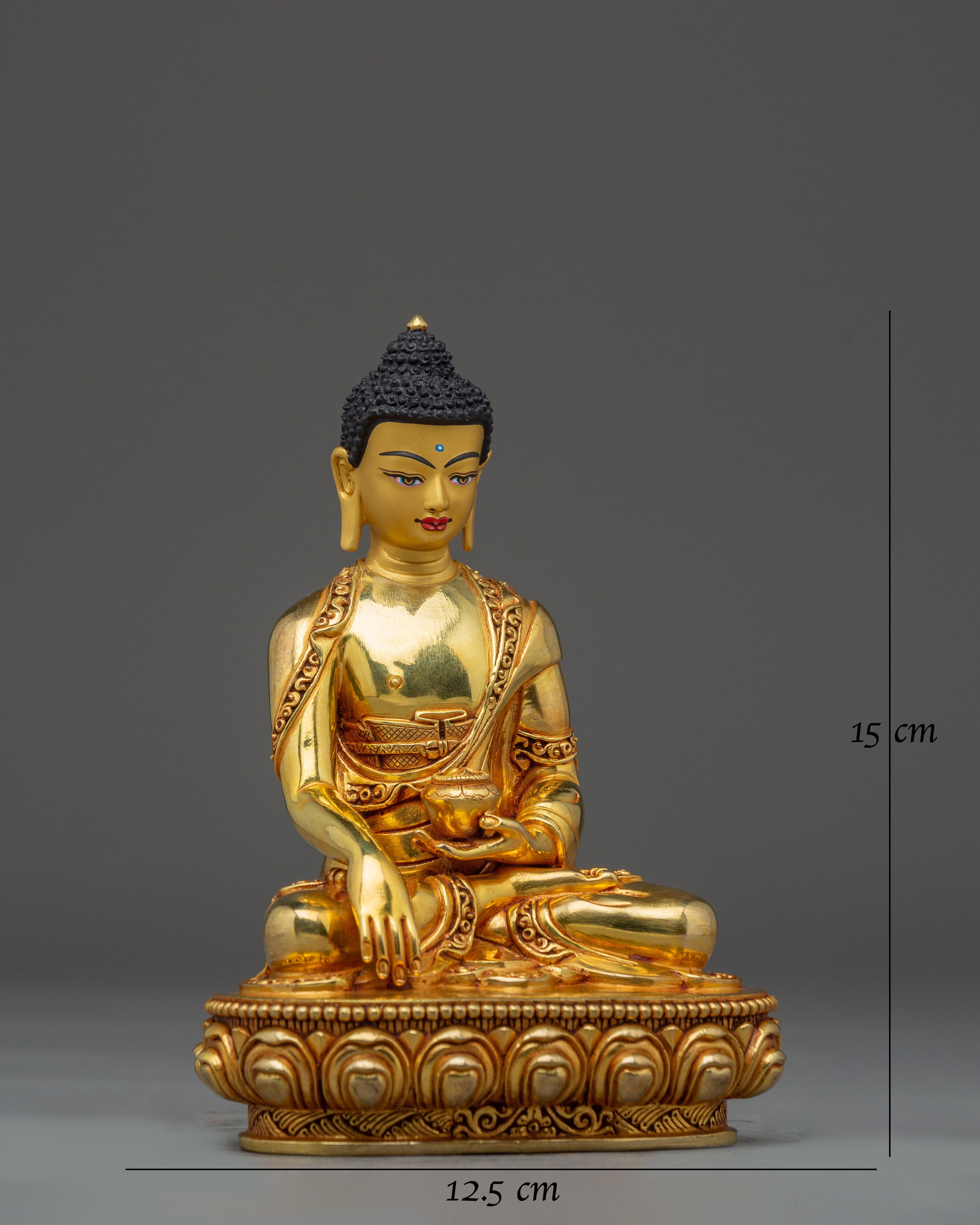
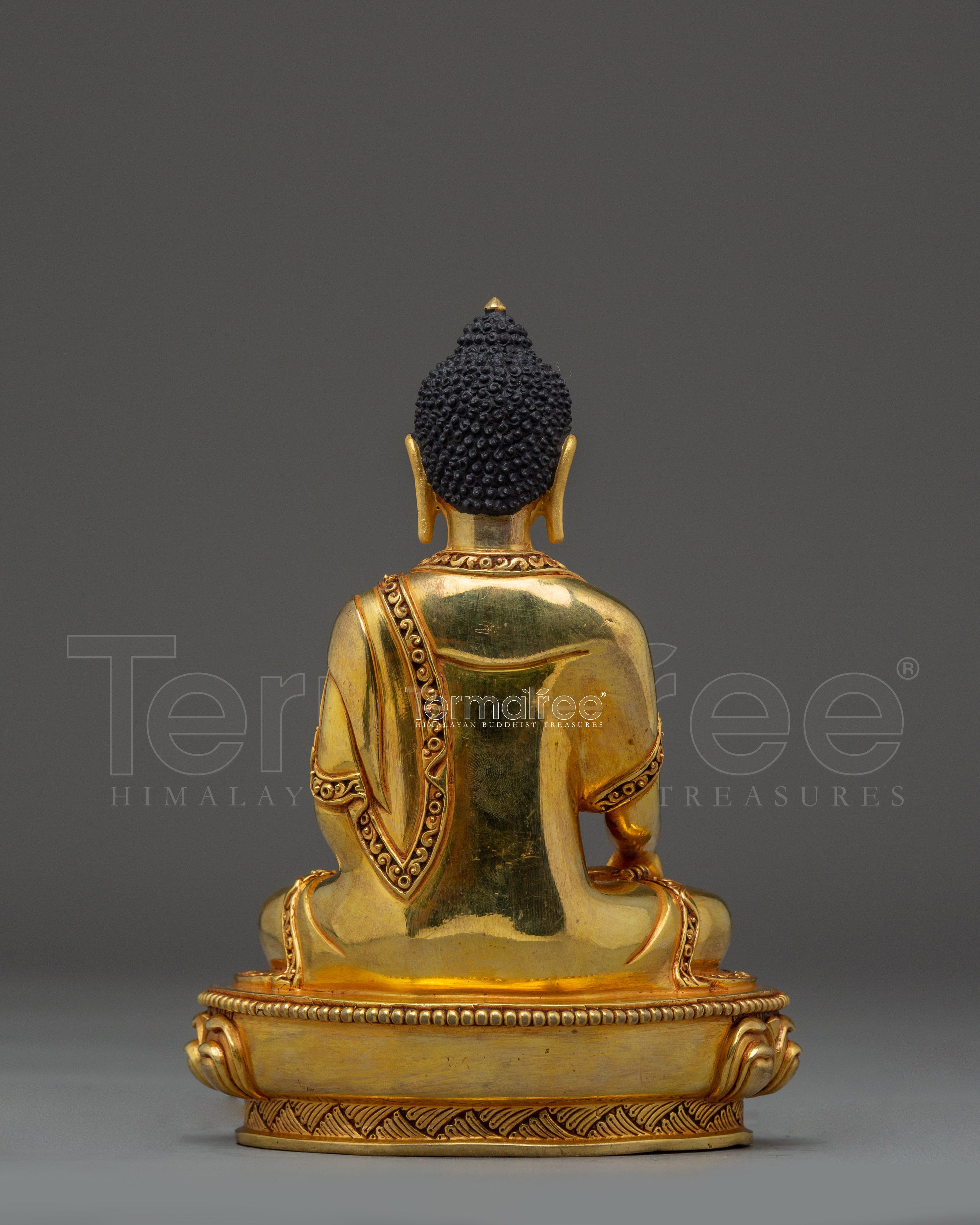
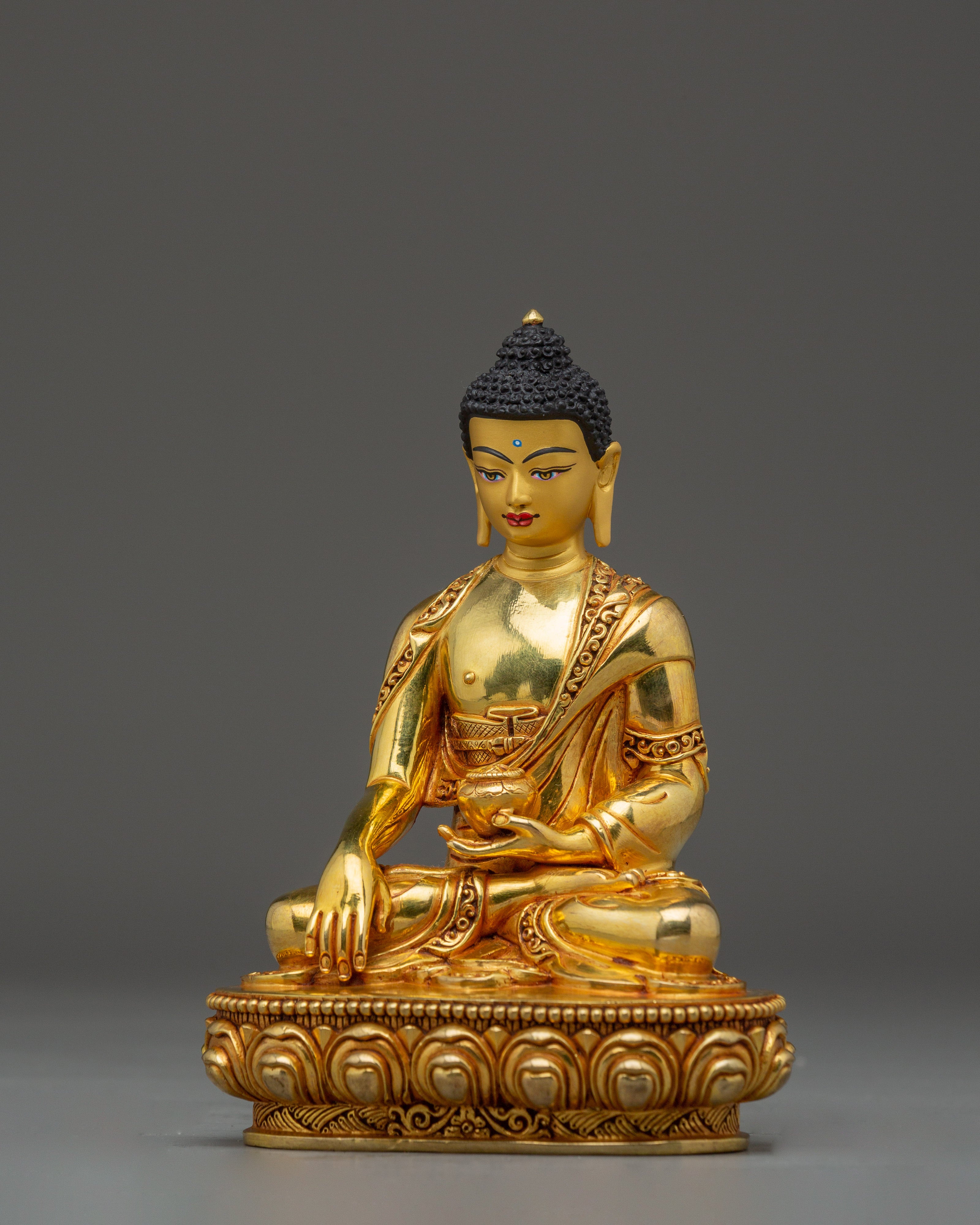
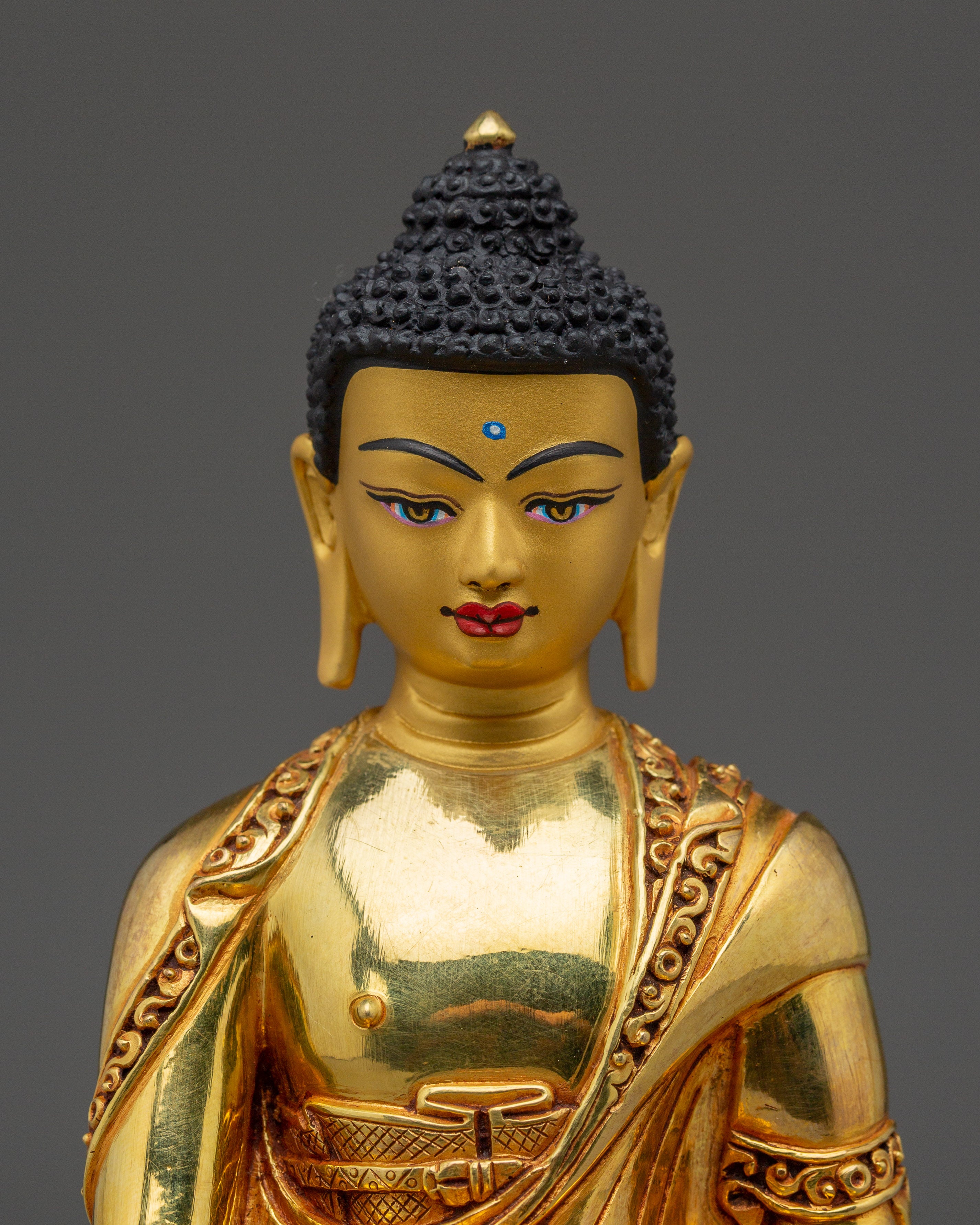
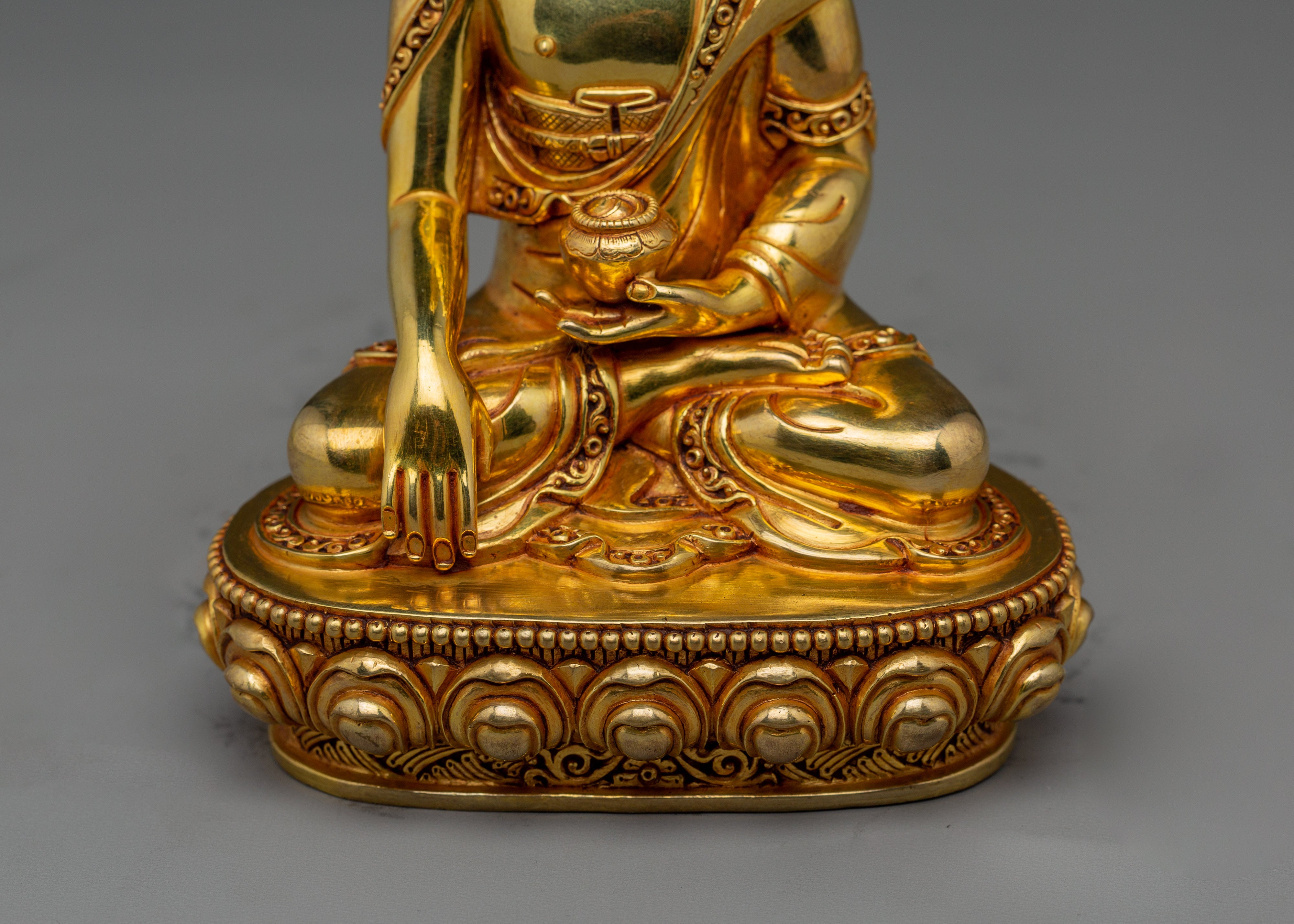
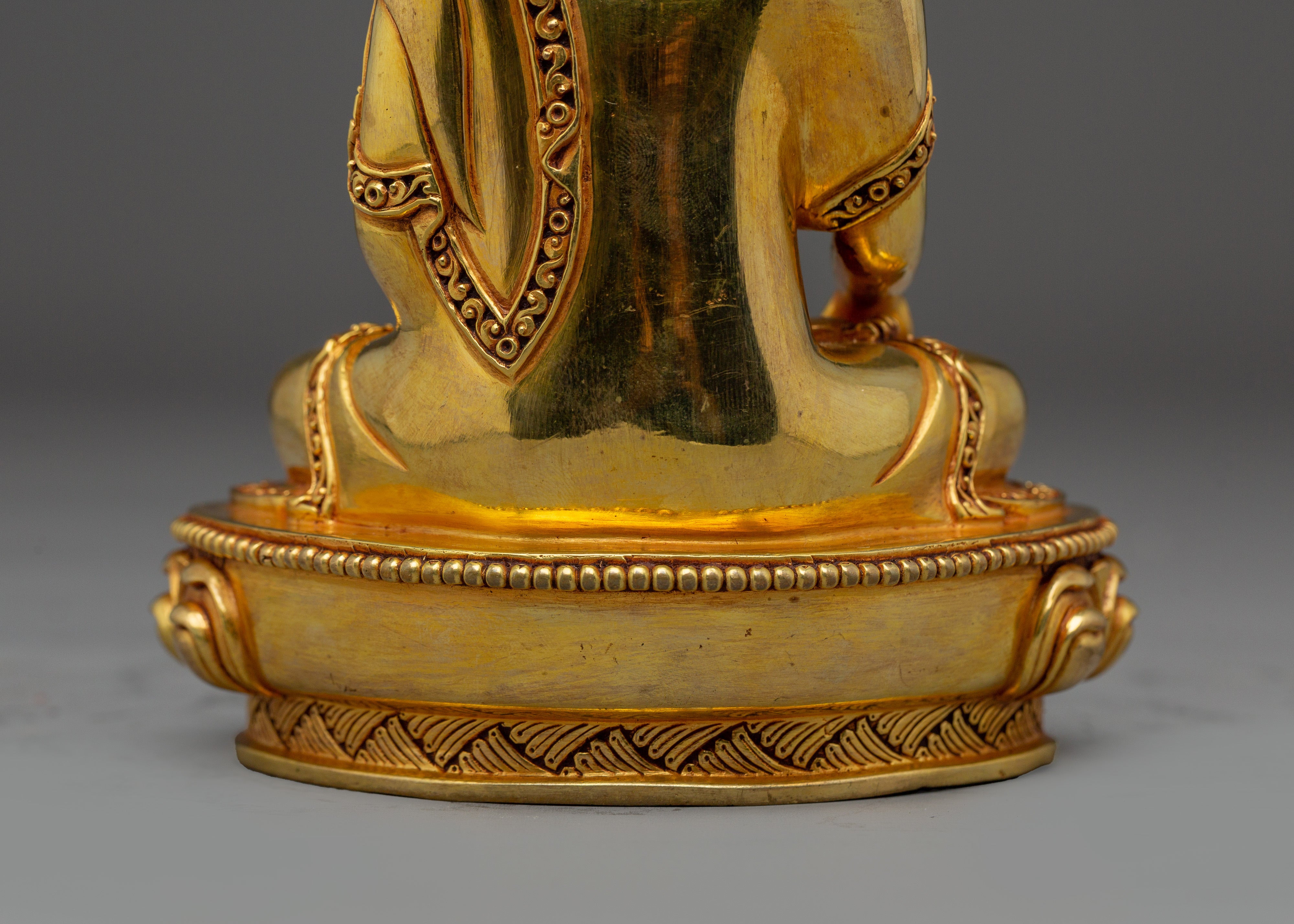
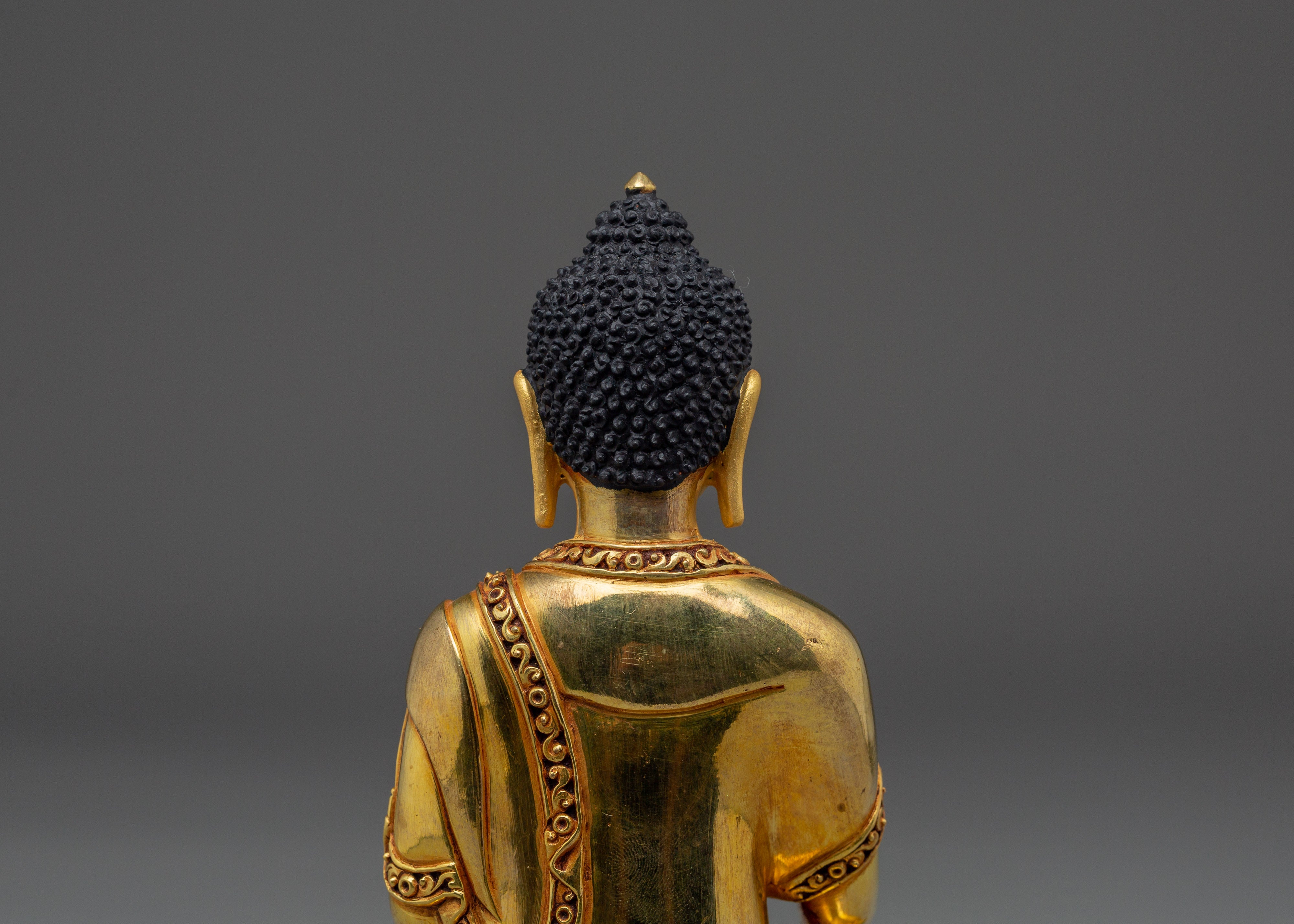
This Shakyamuni Buddha Buddhist Spiritual Statue stands at 5.9 inches in height with a 4.9-inch base and weighs 0.93 kg. It is made of copper, covered with a triple layer of 24K gold gilding, and carved with deeply engraved carvings that produce a magnificent 3D-like effect. Designed by skilled Nepali artisans, this statue embodies traditional Himalayan craftsmanship and is ideal for small altars, meditation corners, or as a thoughtful spiritual gift for those on the path of mindfulness and inner peace.
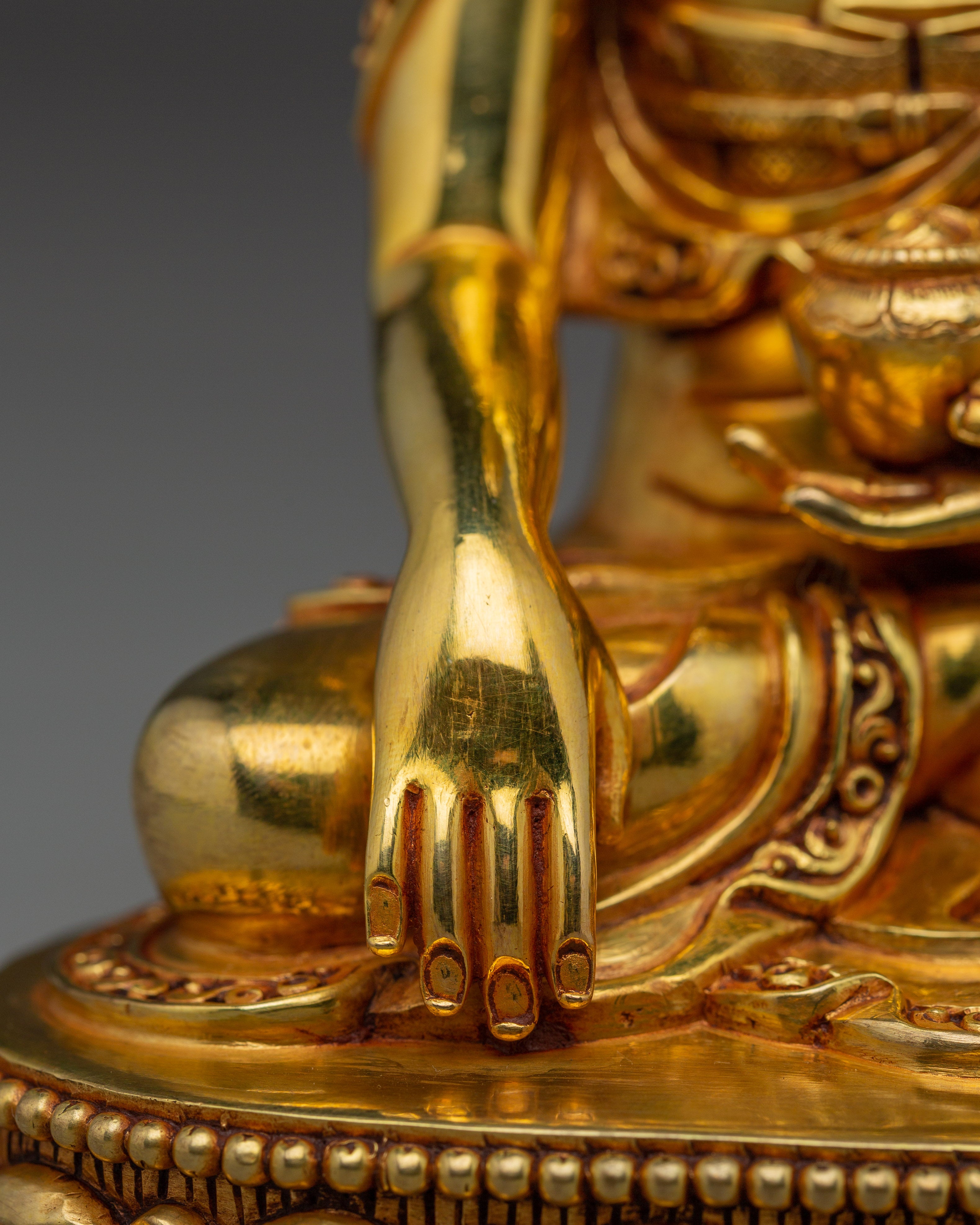
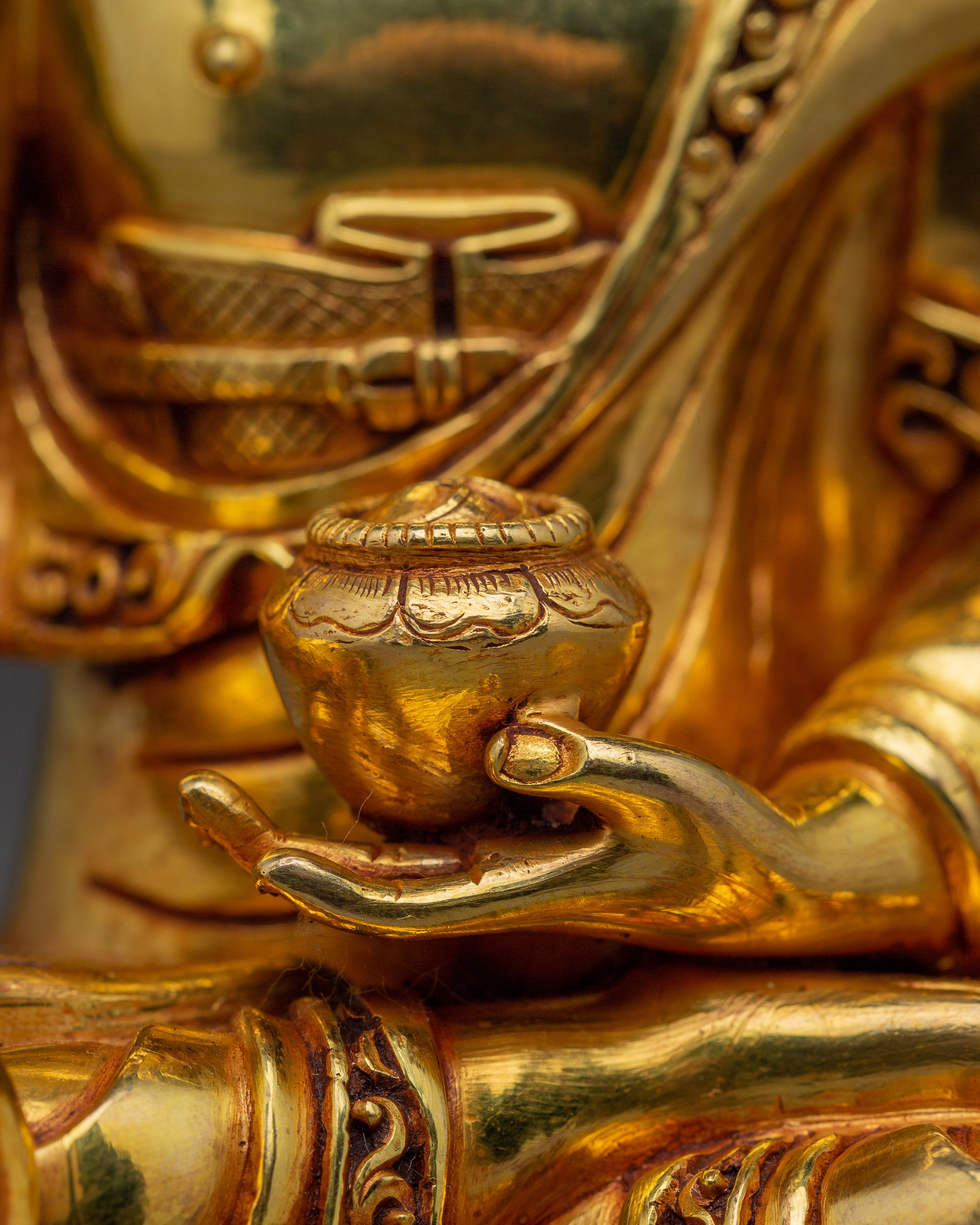
Shakyamuni Buddha is commonly portrayed with an ushnisha, a rounded protuberance atop his head that symbolizes his deep spiritual wisdom and enlightenment. A well-known story tells of snails crawling onto his head during meditation to shield him from the sun’s heat, reflecting nature’s reverence for his practice. In his left hand, he carries an alms bowl, representing a life of simplicity, humility, and dependence on the kindness of others. His right hand is posed in the bhumisparsha mudra, or “earth-touching” gesture, marking the moment he summoned the earth to bear witness to his enlightenment beneath the Bodhi tree. Seated in the vajra posture—a stable, cross-legged position—he rests on a lotus base shaped like a moon disc, which stands for purity and spiritual awakening. Wearing a modest monastic robe, Shakyamuni Buddha personifies renunciation and compassion as the founder of Buddhism.
Size: 5.9”/15cm (Height) x 4.9”/12.5cm (Base)
Weight: 0.93 kg
Material: 24K Gold Gilded, Gold & Acrylic Paintings, Copper Body
Shakyamuni Buddha, also known as Siddhartha Gautama, was a spiritual teacher and the founder of Buddhism who lived in the 5th to 6th century BCE. Born a prince in the Shakya clan, he renounced his royal life in search of a solution to human suffering after witnessing old age, sickness, and death. Through deep meditation and self-inquiry, he attained enlightenment under the Bodhi tree and became the Buddha, meaning “The Awakened One.” He taught the Four Noble Truths: that life involves suffering (duḥkha), suffering has a cause (craving or attachment), it can end (nirvāṇa), and there is a path to its end. This path is the Noble Eightfold Path, which includes right view, intention, speech, action, livelihood, effort, mindfulness, and concentration. Shakyamuni Buddha’s teachings form the foundation of Buddhism and guide countless individuals in their spiritual journey toward wisdom (prajñā), ethical living, and inner peace.