Peaceful Shakyamuni Buddha Gold Glided Copper Statue | Historical Buddha
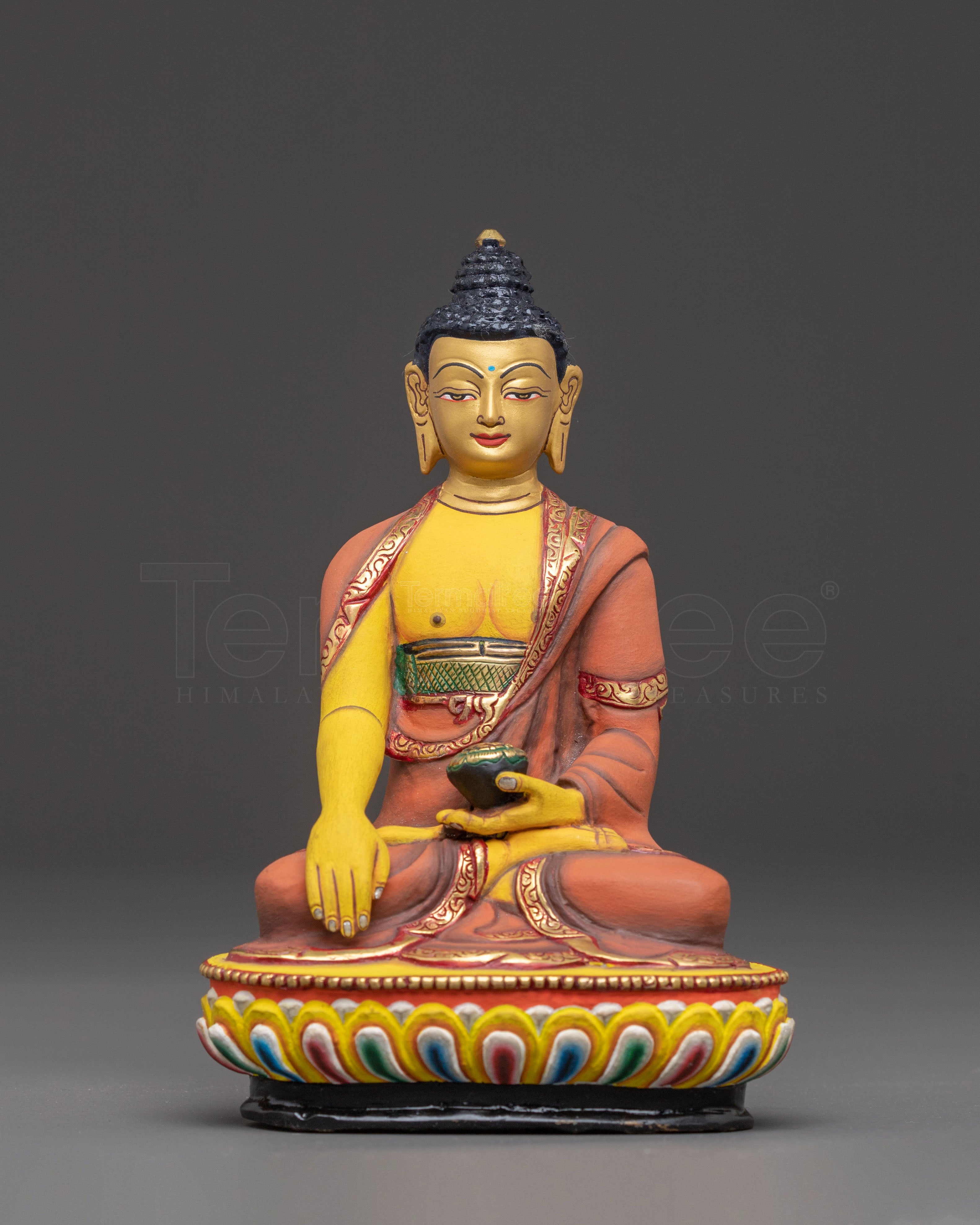
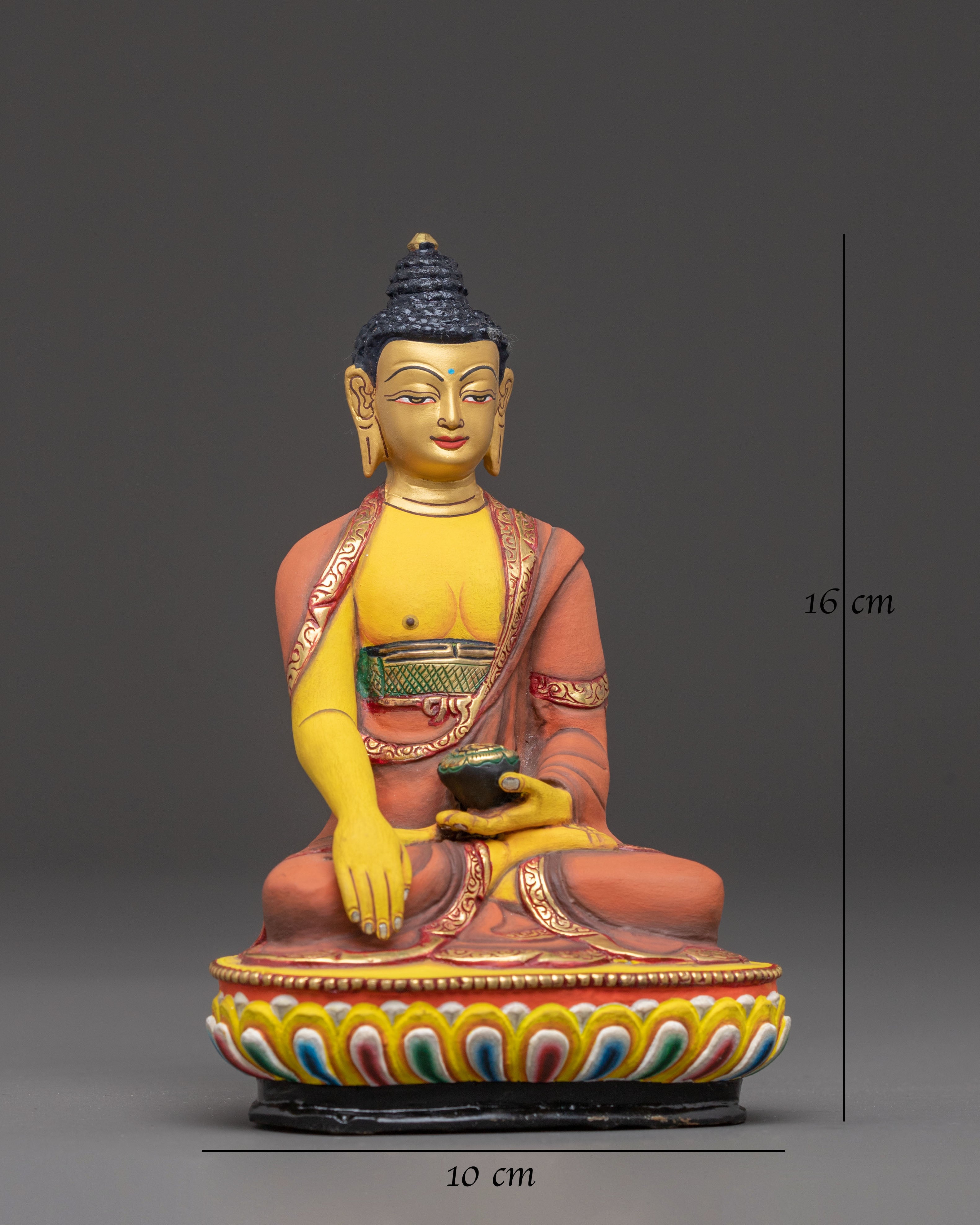
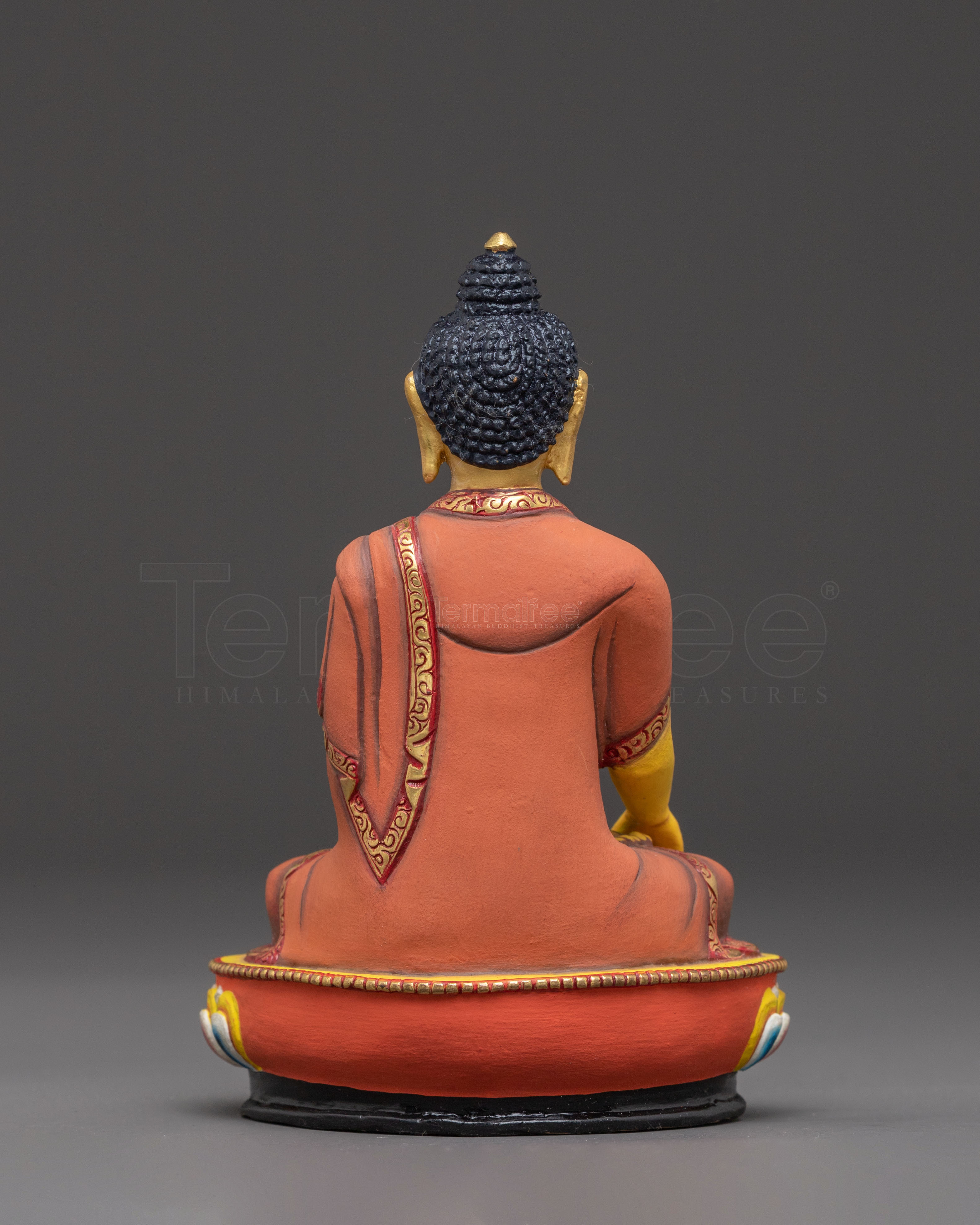
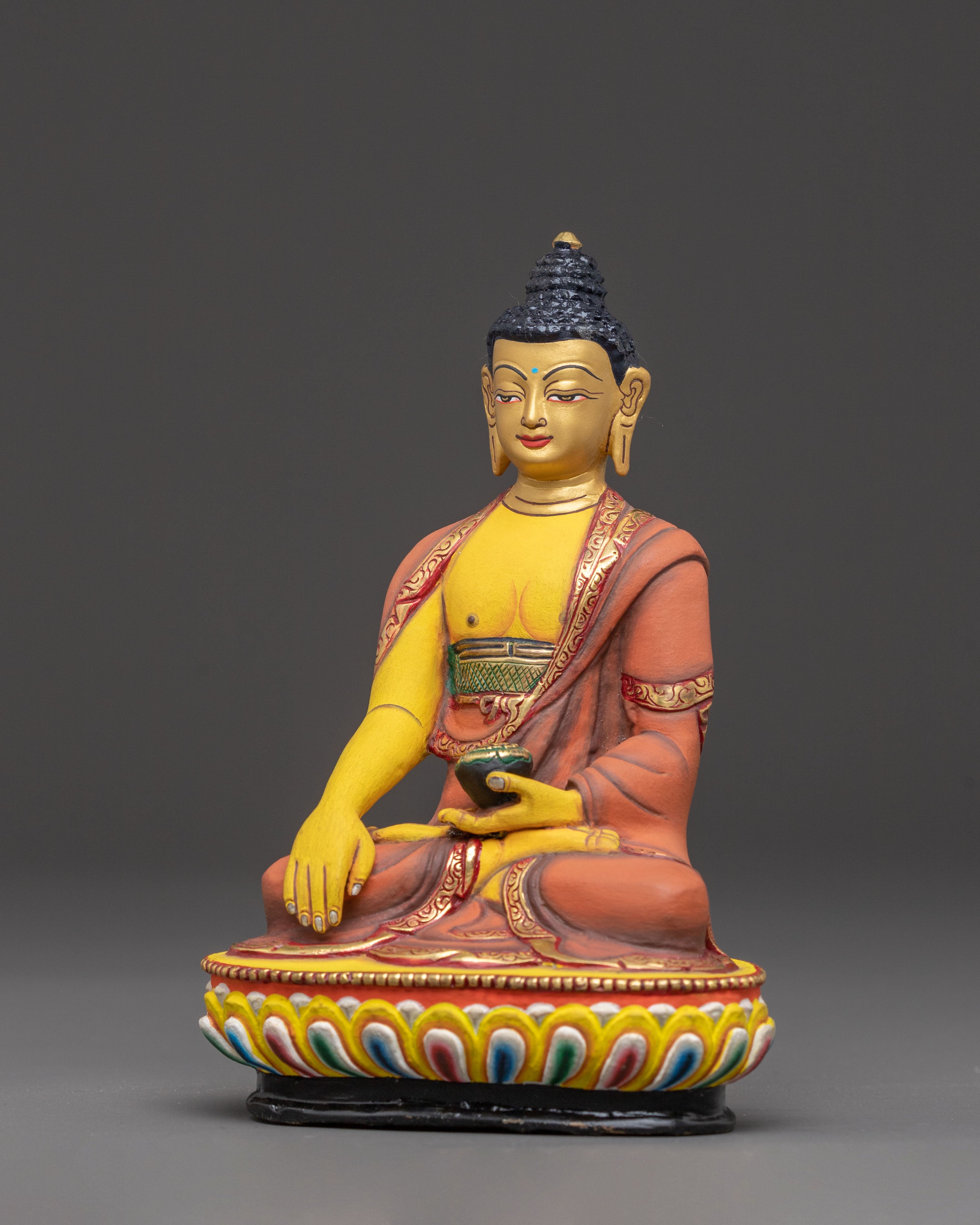
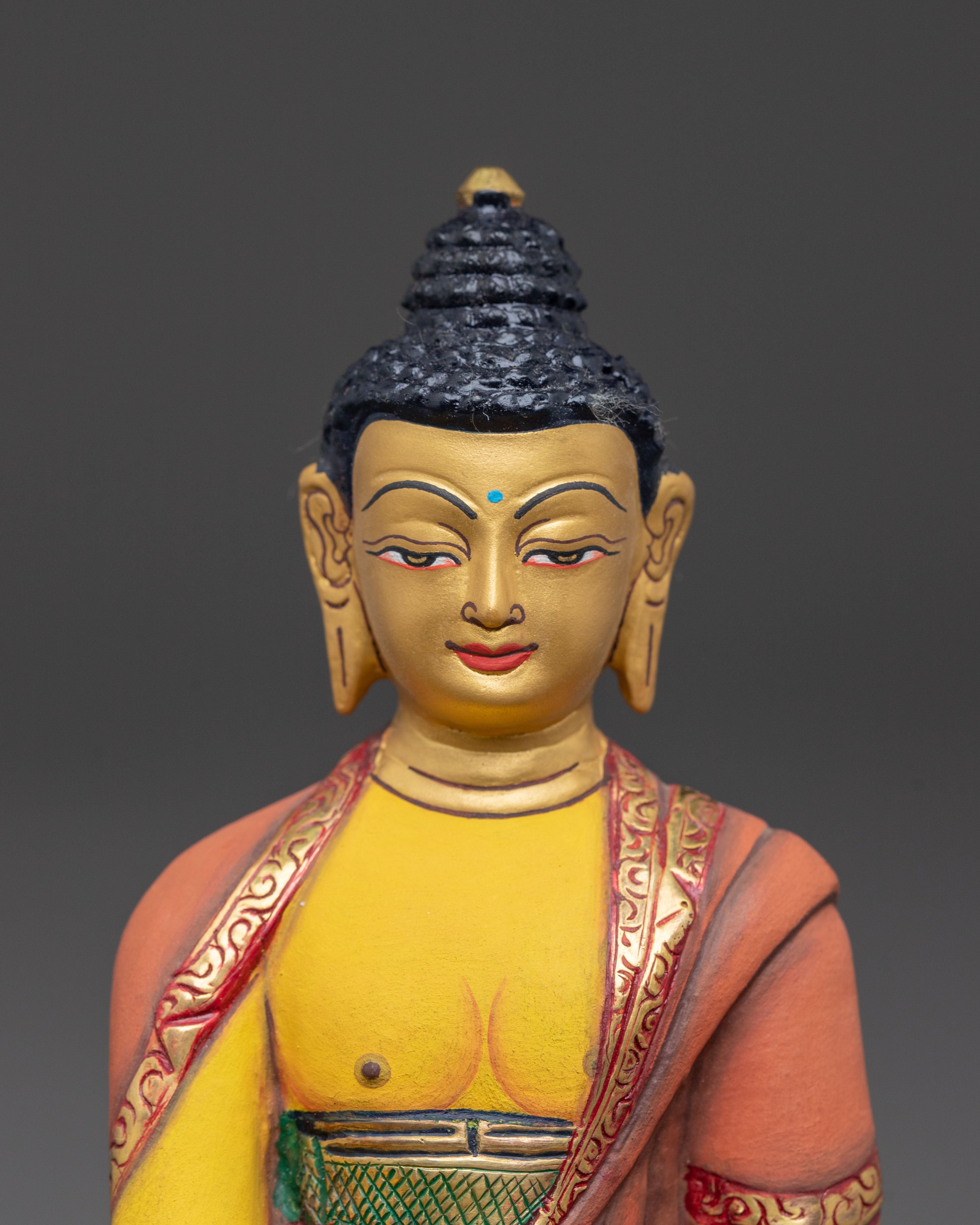
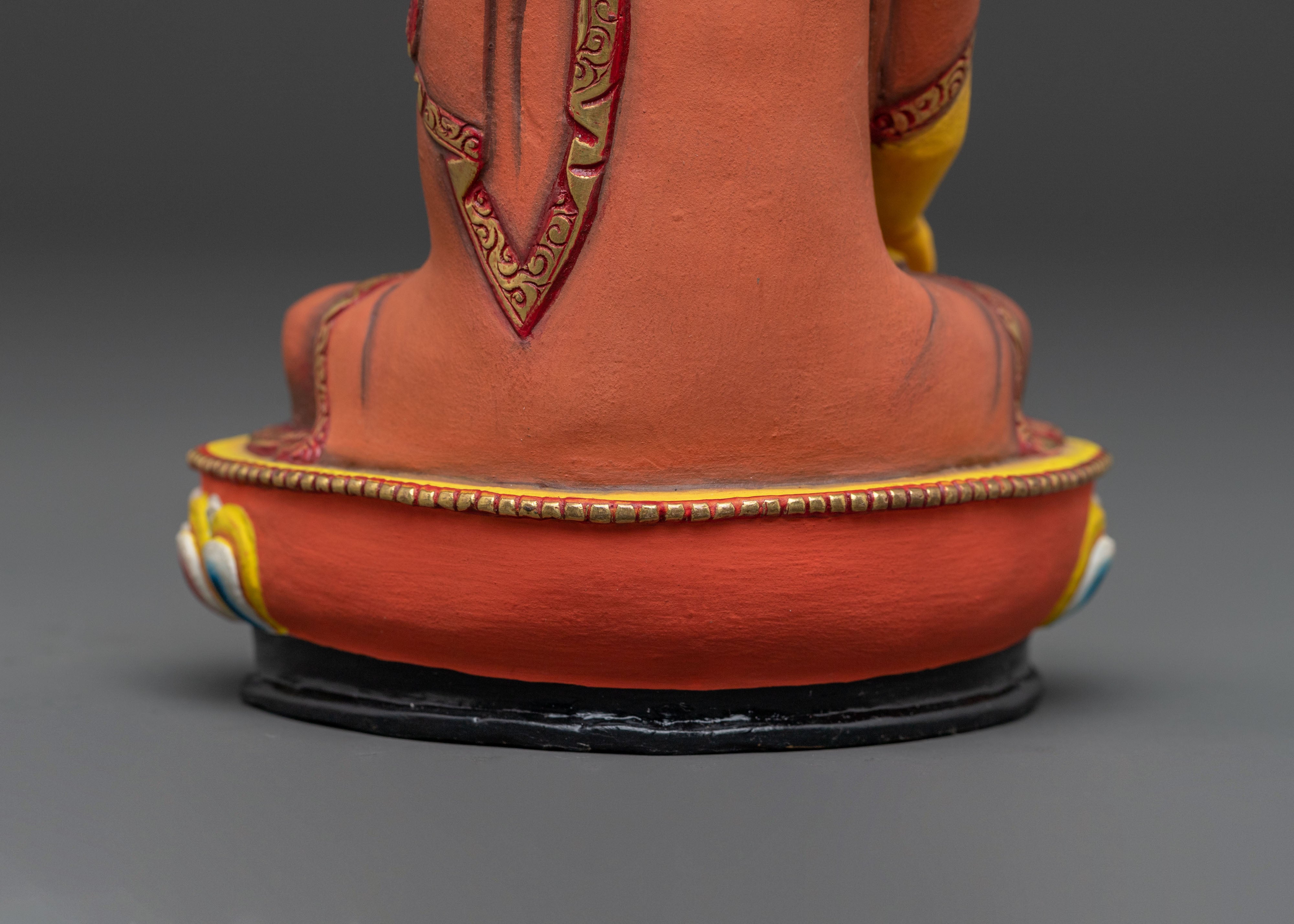
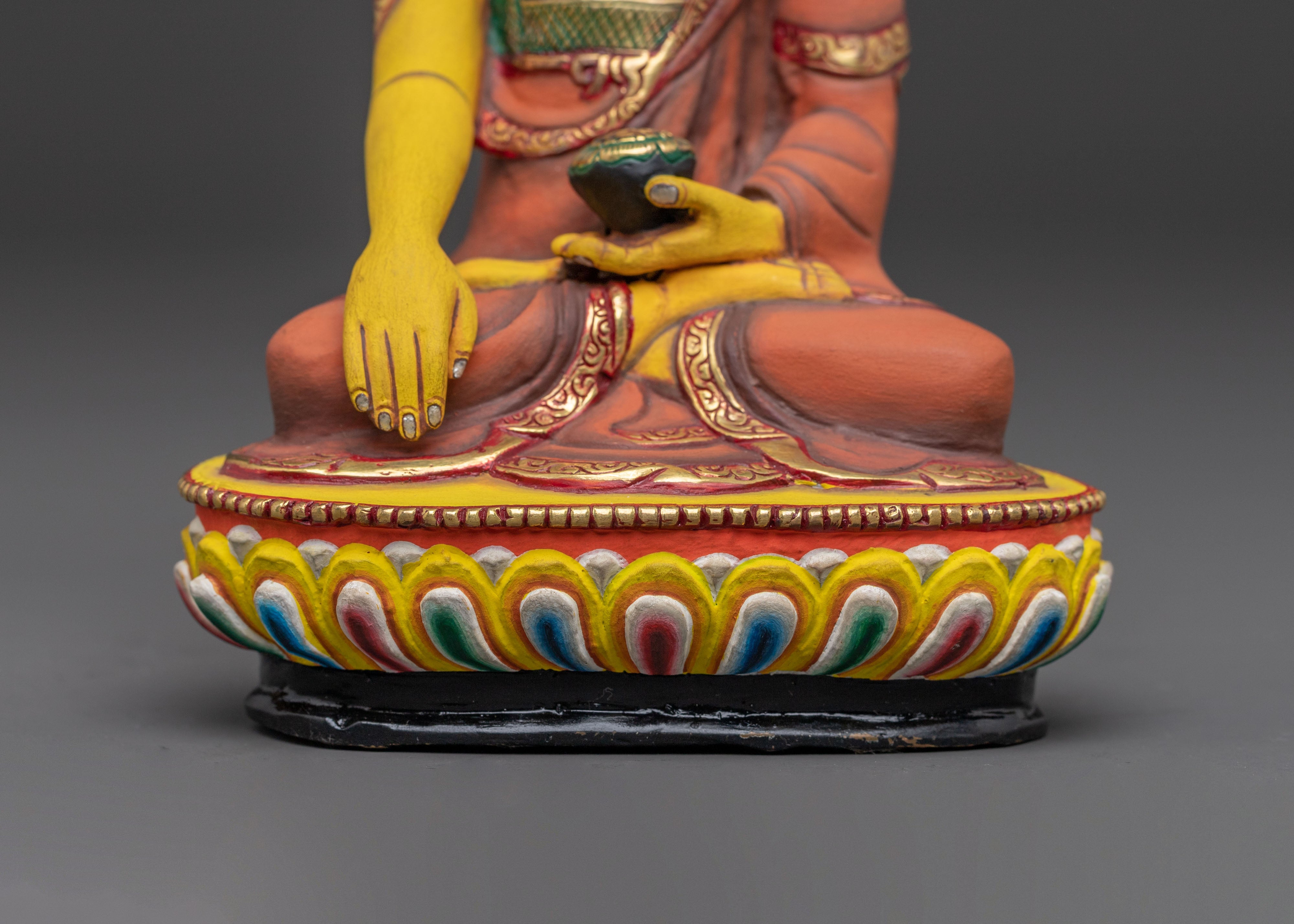
This Peaceful Shakyamuni Buddha Gold Glided Copper Statue stands at 6.3”/16cm in height with a 3.9”/10cm base and weighs 0.66 kg. Crafted from copper with 24K gold gilding and detailed acrylic paintings, this statue reflects serene elegance and traditional Himalayan artistry. Perfect for altars, meditation areas, or as a meaningful spiritual gift, it offers a peaceful presence and a reminder of the Buddha’s teachings on mindfulness and compassion.
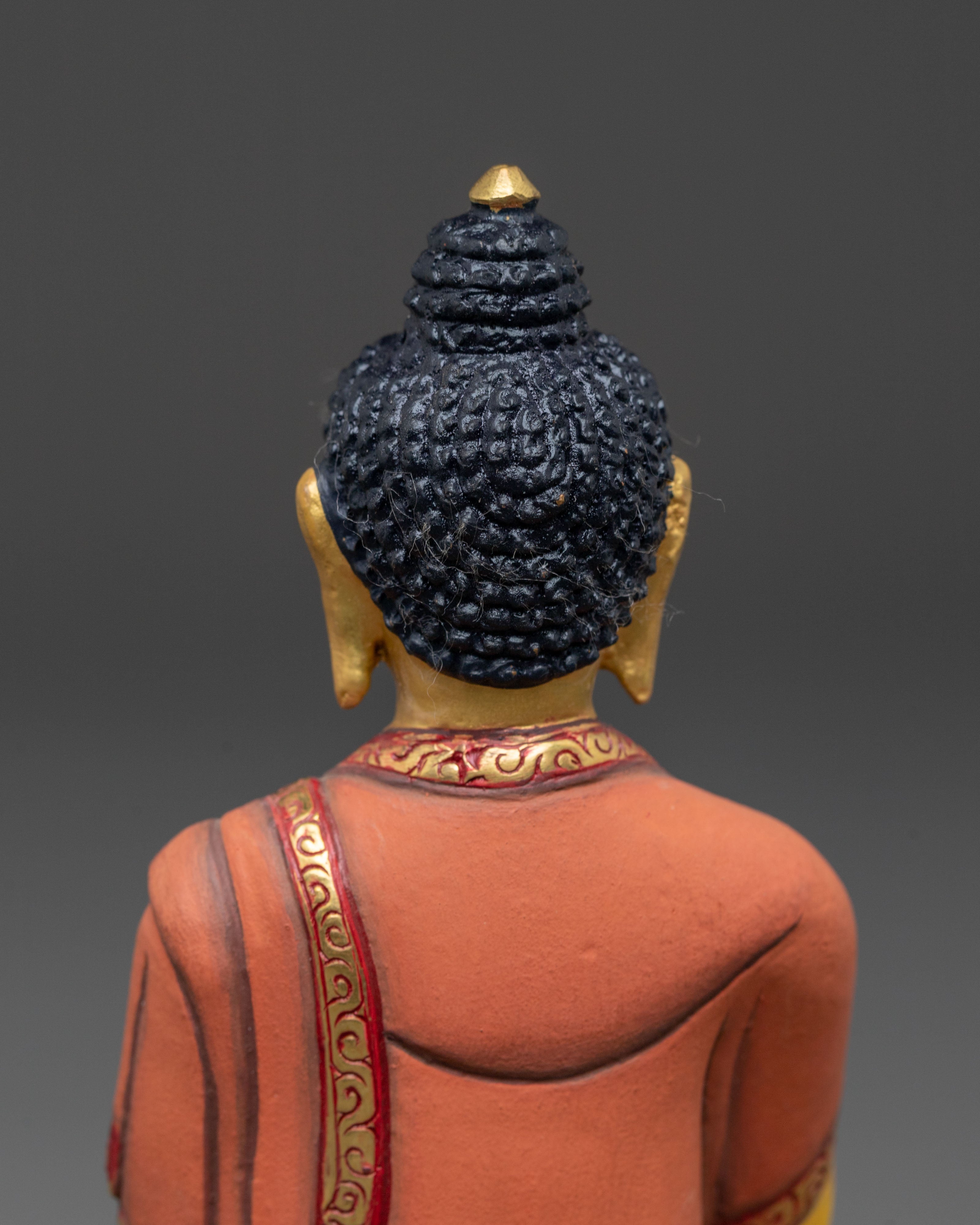
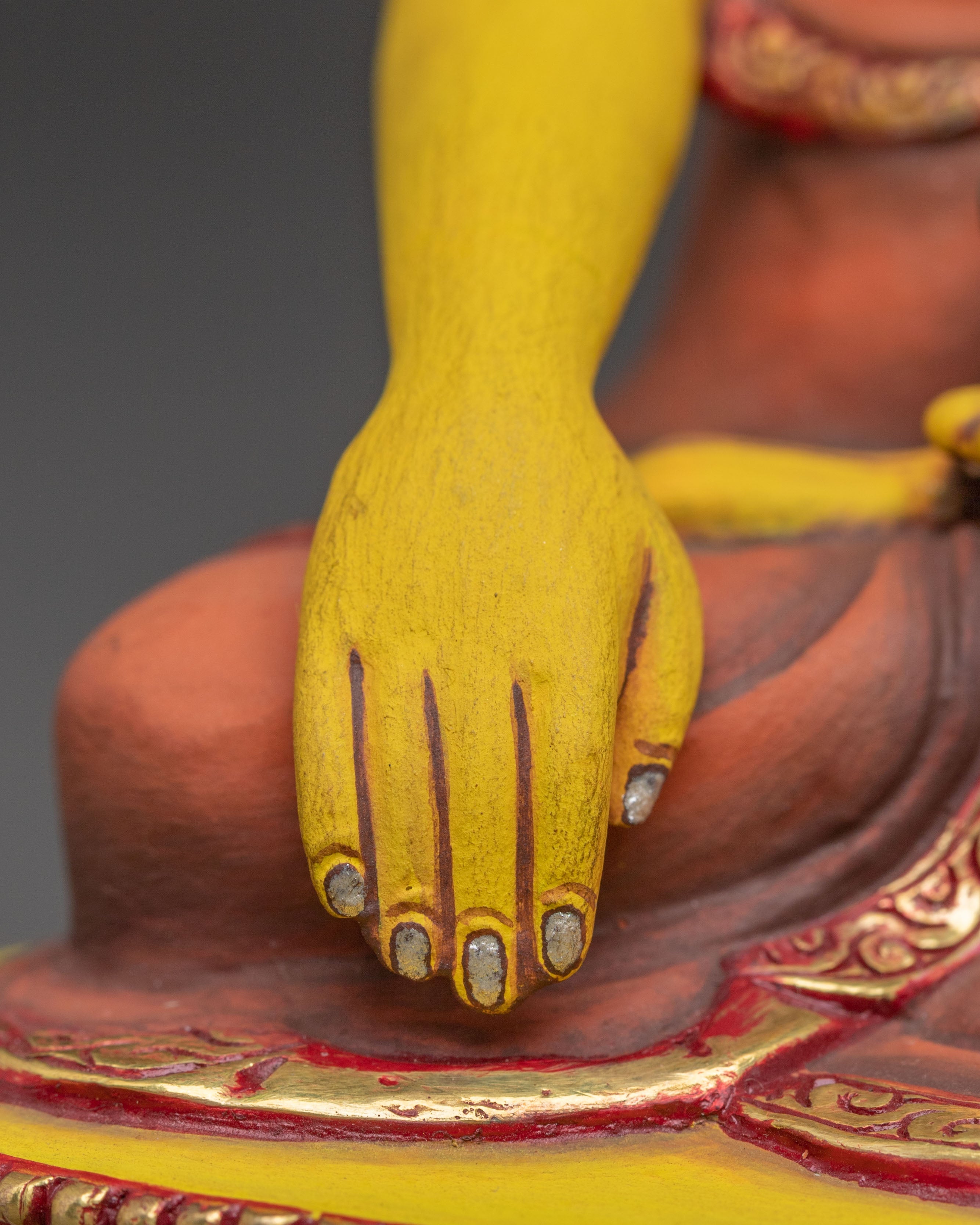
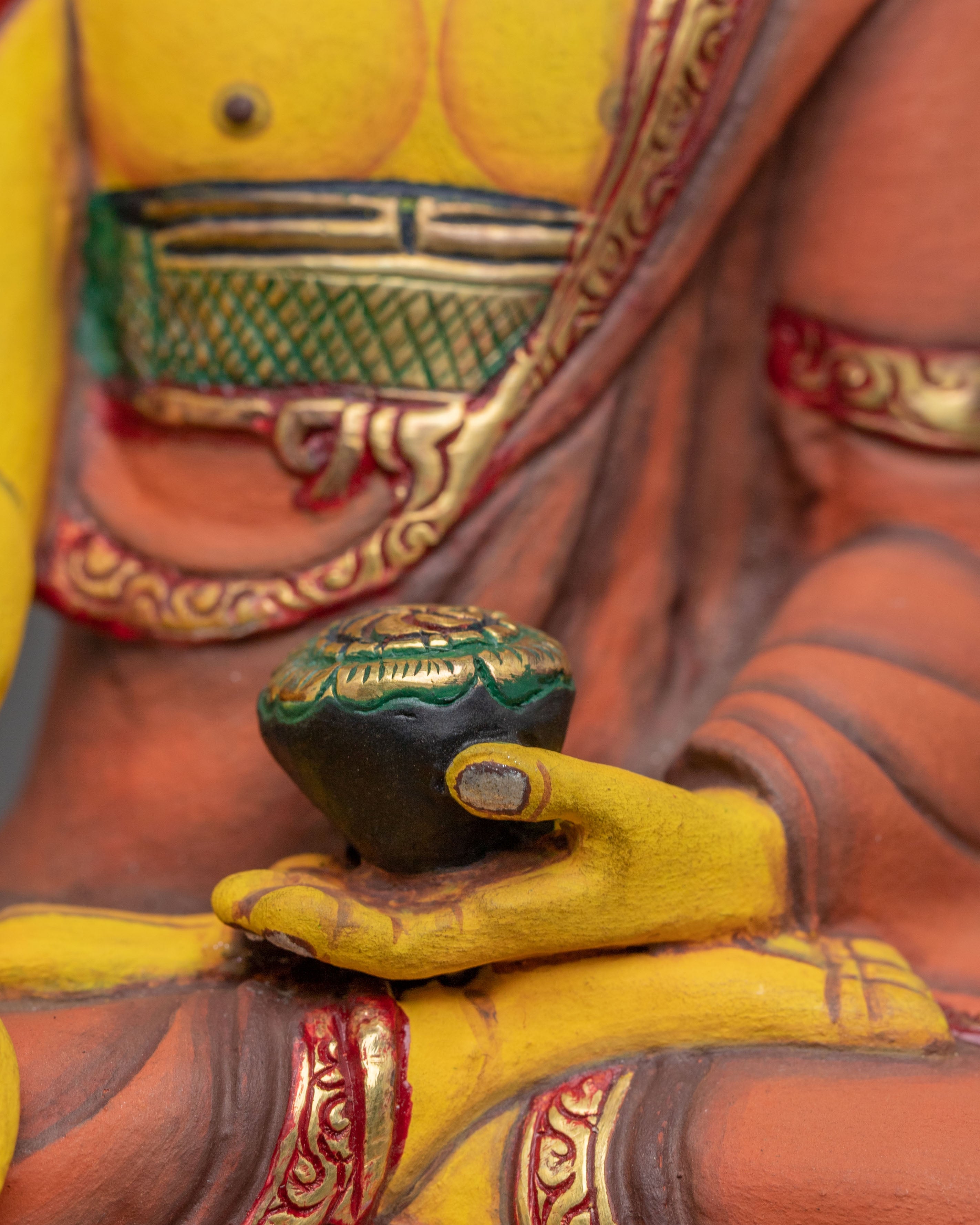
Shakyamuni Buddha is depicted in a calm, meditative state with half-closed eyes, embodying profound inner peace and an awakened presence. His right hand is in the bhūmisparśa mudrā (earth-touching gesture), signifying the moment he called the Earth to witness his enlightenment. His left hand holds an alms bowl, symbolising renunciation and the simplicity of the monastic path. Atop his head rests the usnisa, representing supreme wisdom, while his hair is styled in snail-like coils, referencing the well-known story of snails protecting him from the sun during prolonged meditation. He sits gracefully in the vajra posture on a moon disc lotus base, conveying stability, spiritual purity, and unwavering focus. This refined iconography honours the profound presence of the historical Buddha—serene, dignified, and deeply symbolic.
Size: 6.3”/16cm (Height) x 3.9”/10cm (Base)
Weight: 0.66kg
Materials: 24K Gold Gilded, Acrylic Paintings, Copper Body
Shakyamuni Buddha, also known as Siddhartha Gautama, was a spiritual teacher who lived approximately 2,500 years ago in ancient Nepal. Born a prince in the Shakya clan, he renounced worldly life in search of a solution to human suffering. After years of meditation and ascetic practice, he attained enlightenment under the Bodhi tree and became the Buddha, or “Awakened One.” His teachings, known as the Dharma, form the foundation of Buddhism. Central to his wisdom is the Four Noble Truths: acknowledging suffering (duḥkha), understanding its origin (samudaya), realizing its cessation (nirodha), and following the path to liberation (mārga). This path is the Noble Eightfold Path, which includes right view, intention, speech, action, livelihood, effort, mindfulness, and concentration. It guides followers toward ethical living and mental clarity, ultimately leading to the end of suffering (nirvāṇa).