


Description
Dukar Sacred Statue | The Supreme Guardian Against Obstacles and Negativity
Dukar Sacred Statue measures 19.8”/50.5cm in height with a 12.6”/32cm base and weighs 9.46 kg. Handcrafted in Nepal from a copper body, the sculpture is enhanced with gold and acrylic painting and carefully placed gemstones that add richness, contrast, and refinement to the hand-worked surface. Its substantial form and detailed finishing reflect the precision of skilled Nepalese artisans and the enduring traditions of Himalayan Buddhist metalwork. Spiritually, the figure is revered as a powerful protector associated with safeguarding practitioners, dispelling harmful influences, and removing obstacles, making this piece meaningful for Buddhist altars, monasteries, Dharma centers, meditation spaces, or sacred collections.
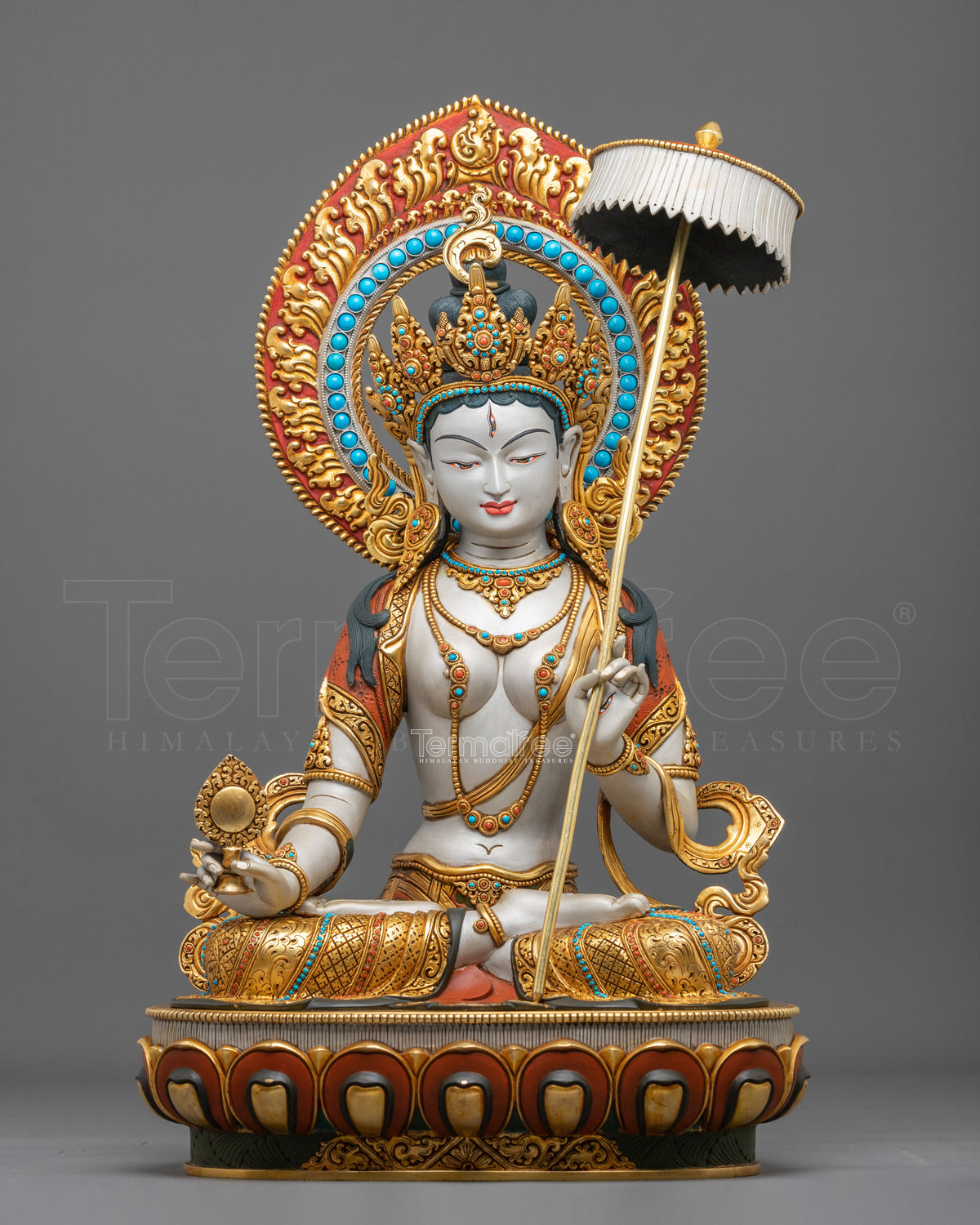
This Dukar (Sitatapatra) is depicted seated in a serene posture on a richly decorated lotus pedestal, with a white complexion and a peaceful expression marked by a third eye on the forehead. She wears an elaborate jeweled crown, large earrings, layered necklaces, armlets, bracelets, and richly patterned garments with gold and turquoise details. Her two arms are clearly shown: the hand on the viewer’s left holds a round golden ritual emblem, while the hand on the viewer’s right holds the long shaft of a large white parasol positioned above her. Lotus stems and ornamental scrollwork extend around her sides, while a large circular aureole behind her is richly decorated with turquoise beading, gold floral and flame-like motifs, and a red inner field. The double-tiered lotus throne beneath her features repeating sculpted petals, intricate borders, and dark red and black painted accents, completing the highly detailed protective representation of Dukar.
Size: 19.8”/50.5cm (Height) x 12.6”/32cm (Base)
Weight: 9.46 kg
Material: Gold and Acrylic Painting, Copper Body, Gemstones
Dukar, also known by the Sanskrit name Sitatapatra, has her origins in Indian Mahayana and Vajrayana Buddhist traditions and later became highly important within Tibetan Buddhism. Her name means “White Parasol,” referring to the protective parasol that symbolizes shelter from harmful influences, obstacles, negative forces, and spiritual dangers. Over time, her practice was transmitted from India into Tibet, where she became widely revered as a powerful female protector deity. In Tibetan Buddhist traditions, she is especially associated with protection, purification, the pacification of obstacles, and safeguarding practitioners from adverse conditions, making her an important figure in protective rituals, prayers, and sacred art.
Explore our Dukar Statue Collection.