


Description
Handmade Statue of Buddhist Master Padmasambhava | Lotus-Born Master
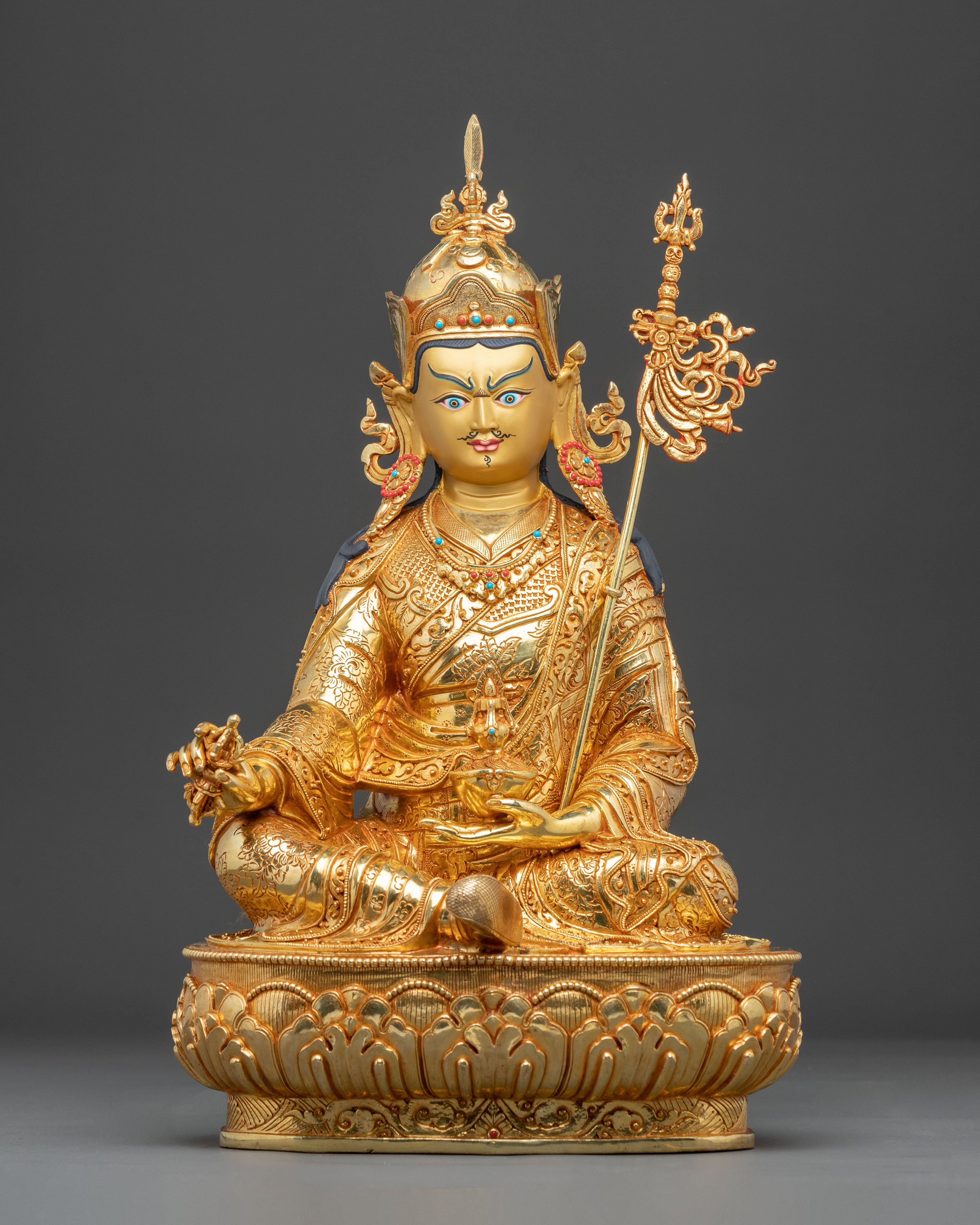
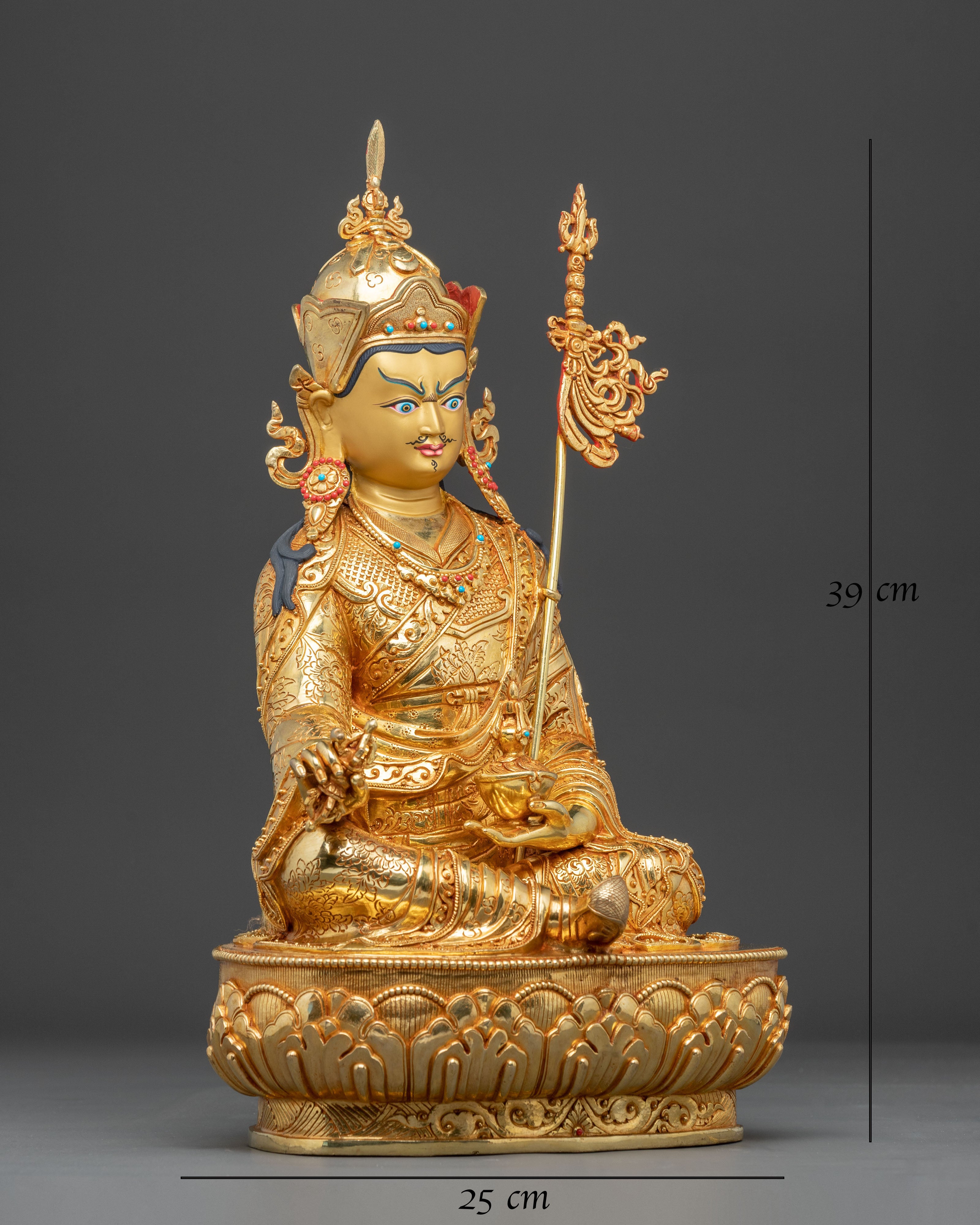
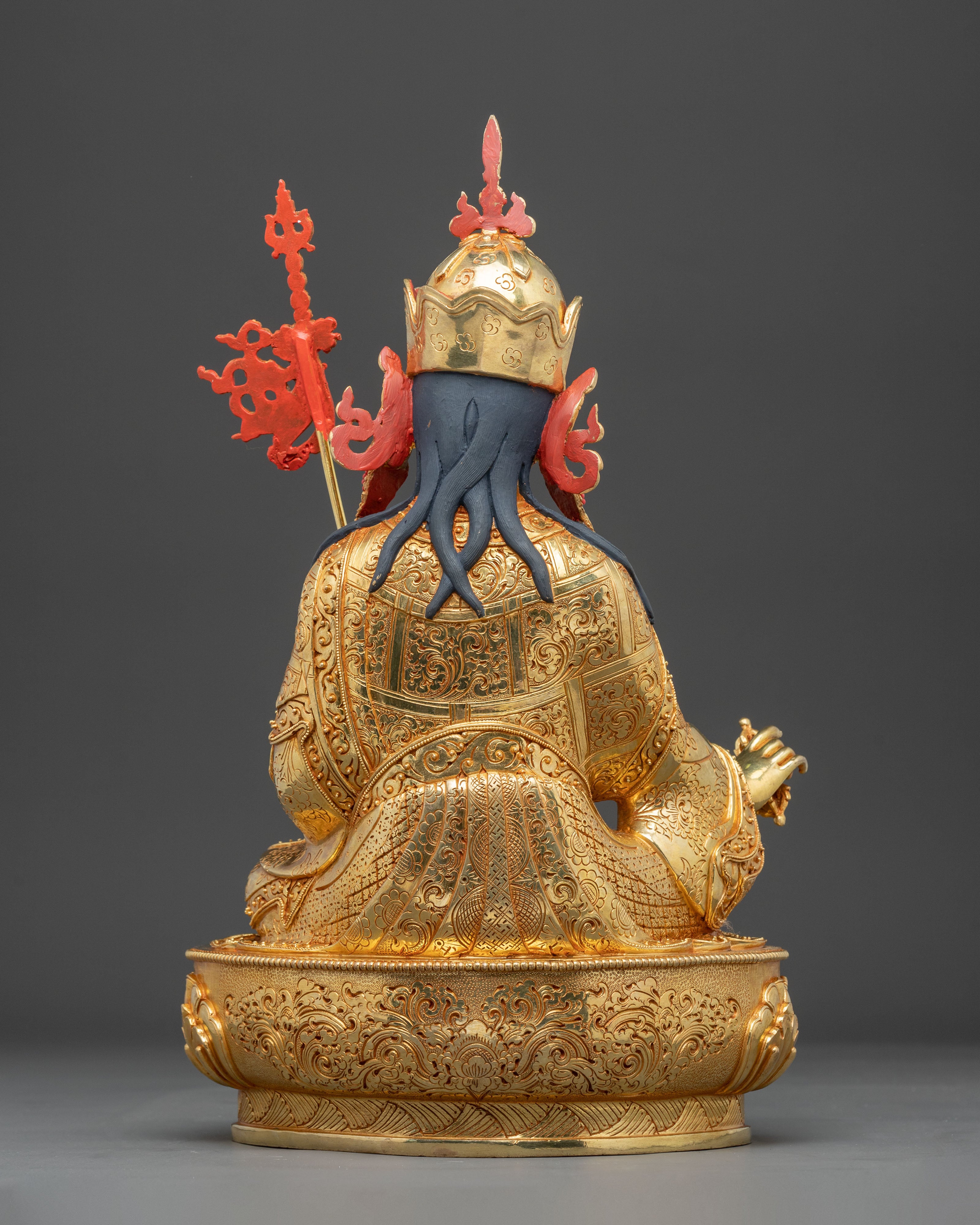
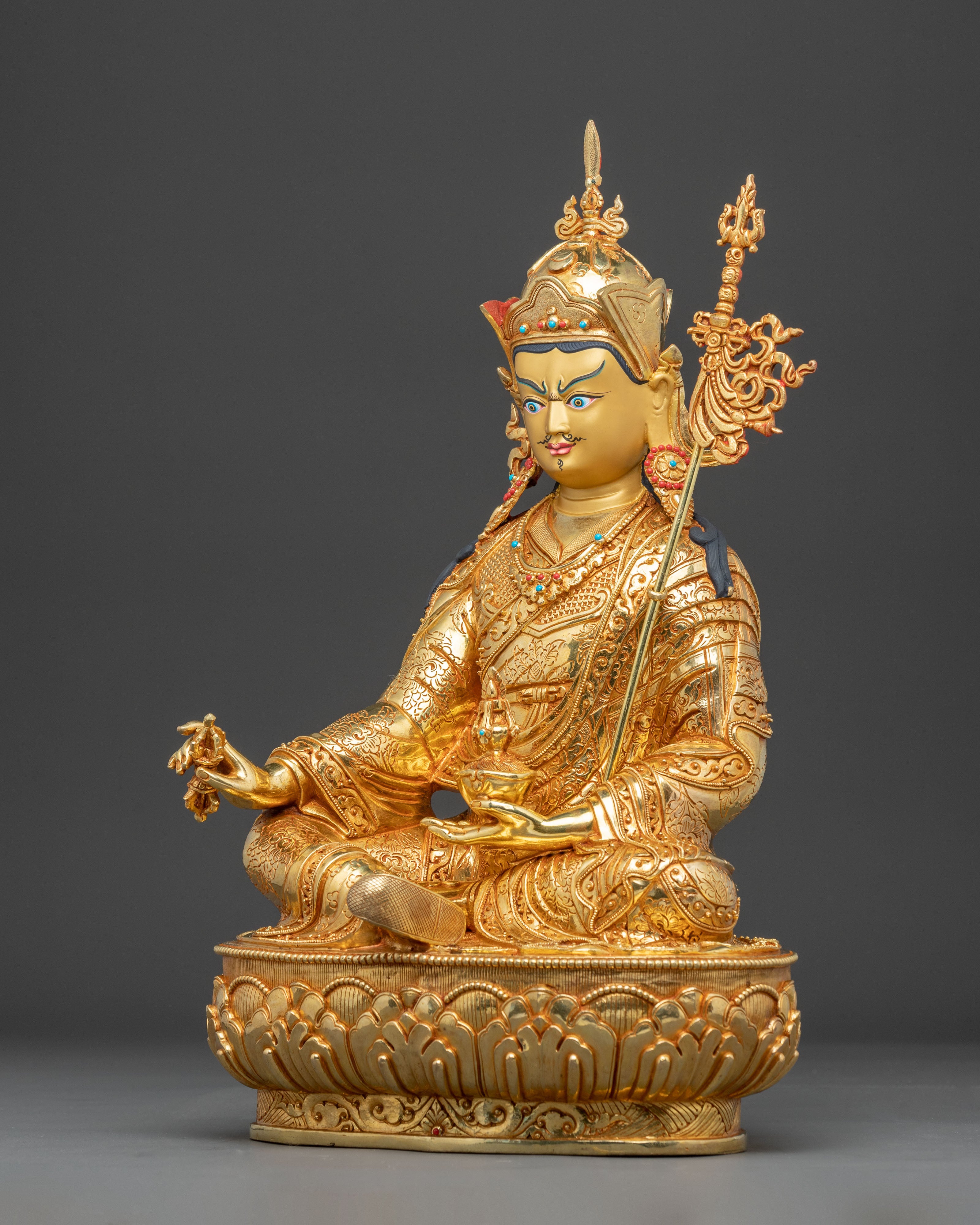
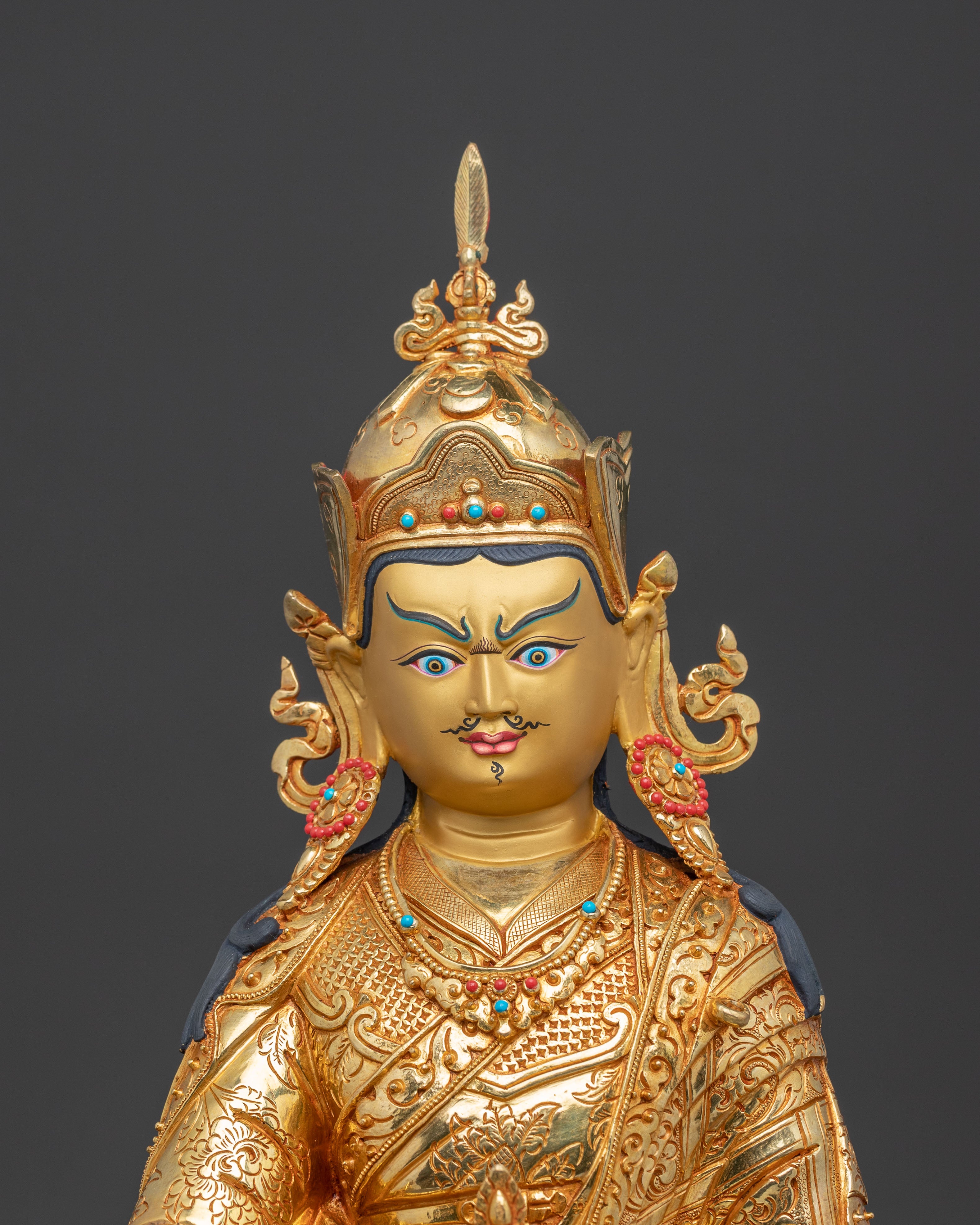
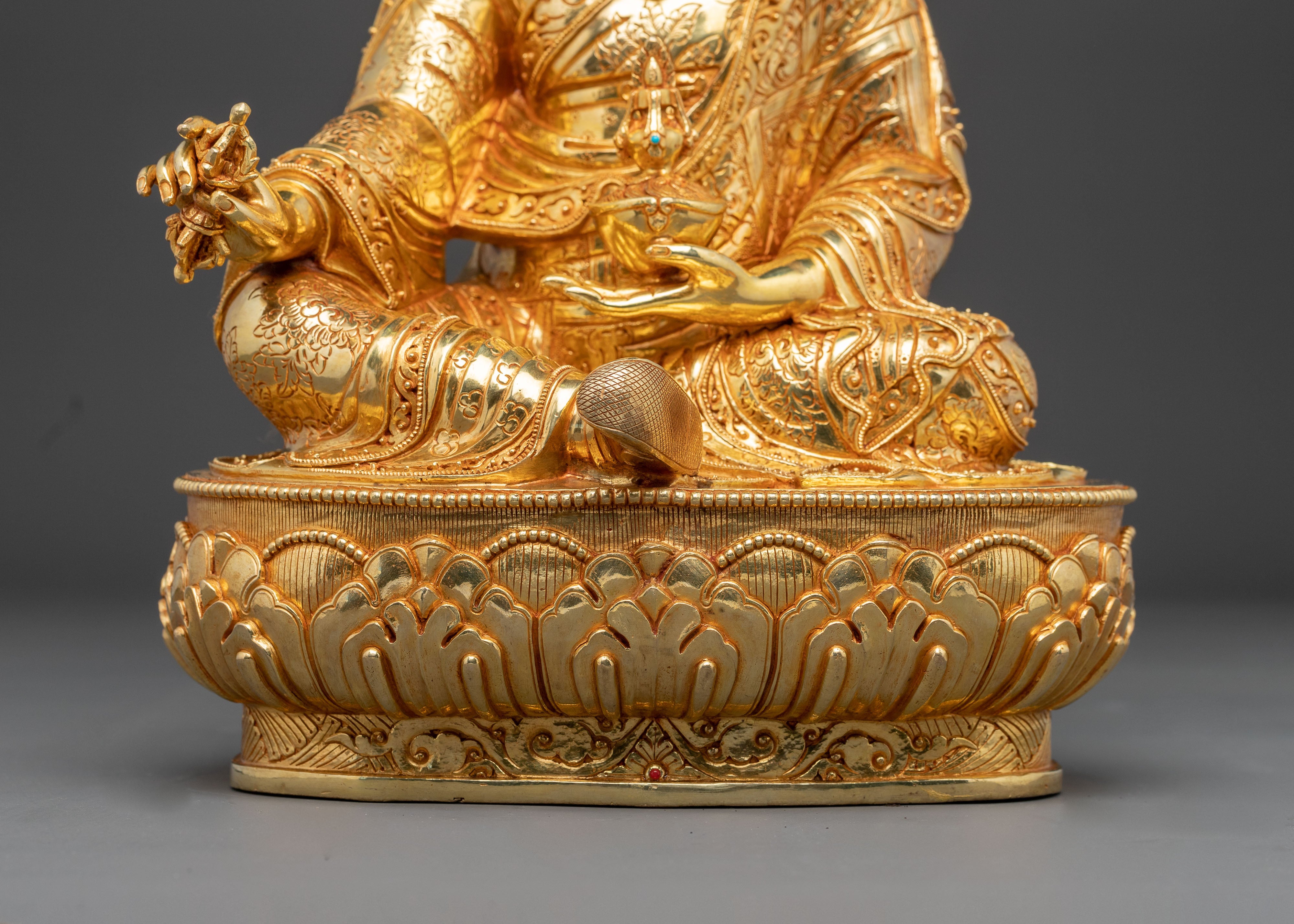
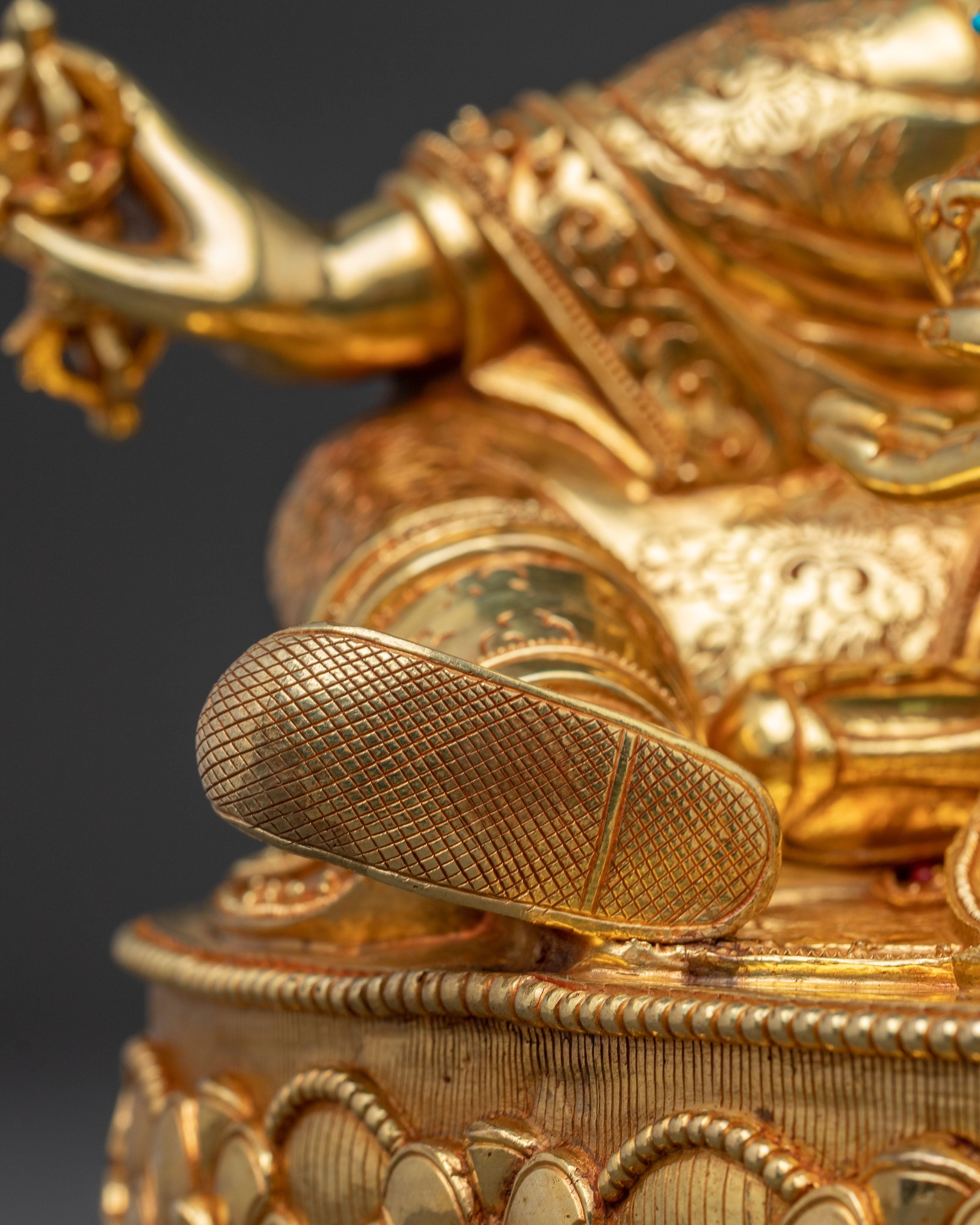
The Statue of Buddhist Master Padmasambhava, also known as Padmasambhava, the founder of Tibetan Buddhism, stands at 15.4”/39cm in height and 9.8”/25cm at the base, weighing 6.12 kg. Made of 24K gold-gilded Copper Body and Acrylic Paintings, this statue reflects the sacred artistry of Himalayan craftsmanship. Designed by talented Nepalese artisans, it is ideal for altars, meditation areas, or as a meaningful decor item for individuals seeking awareness in their daily lives.
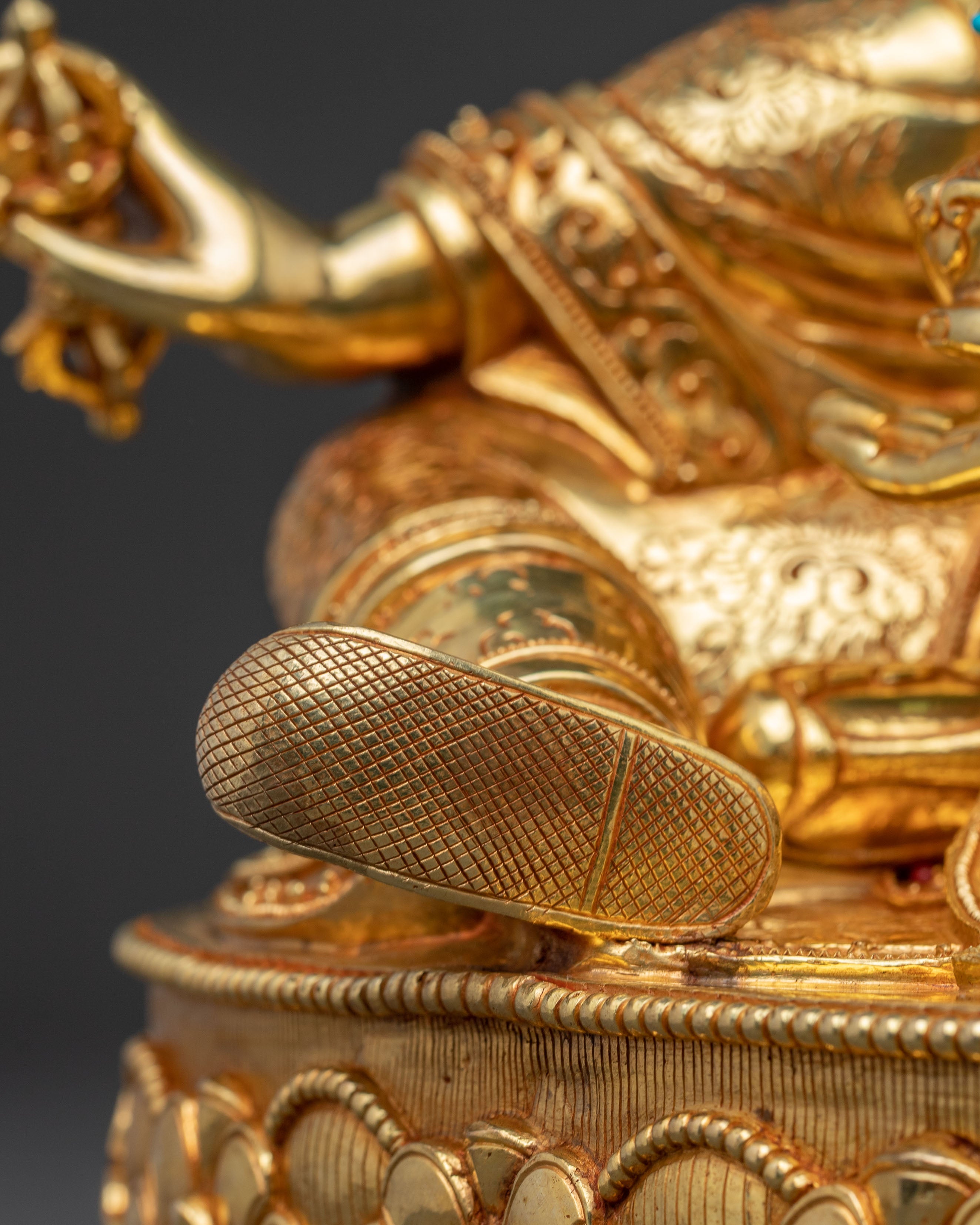
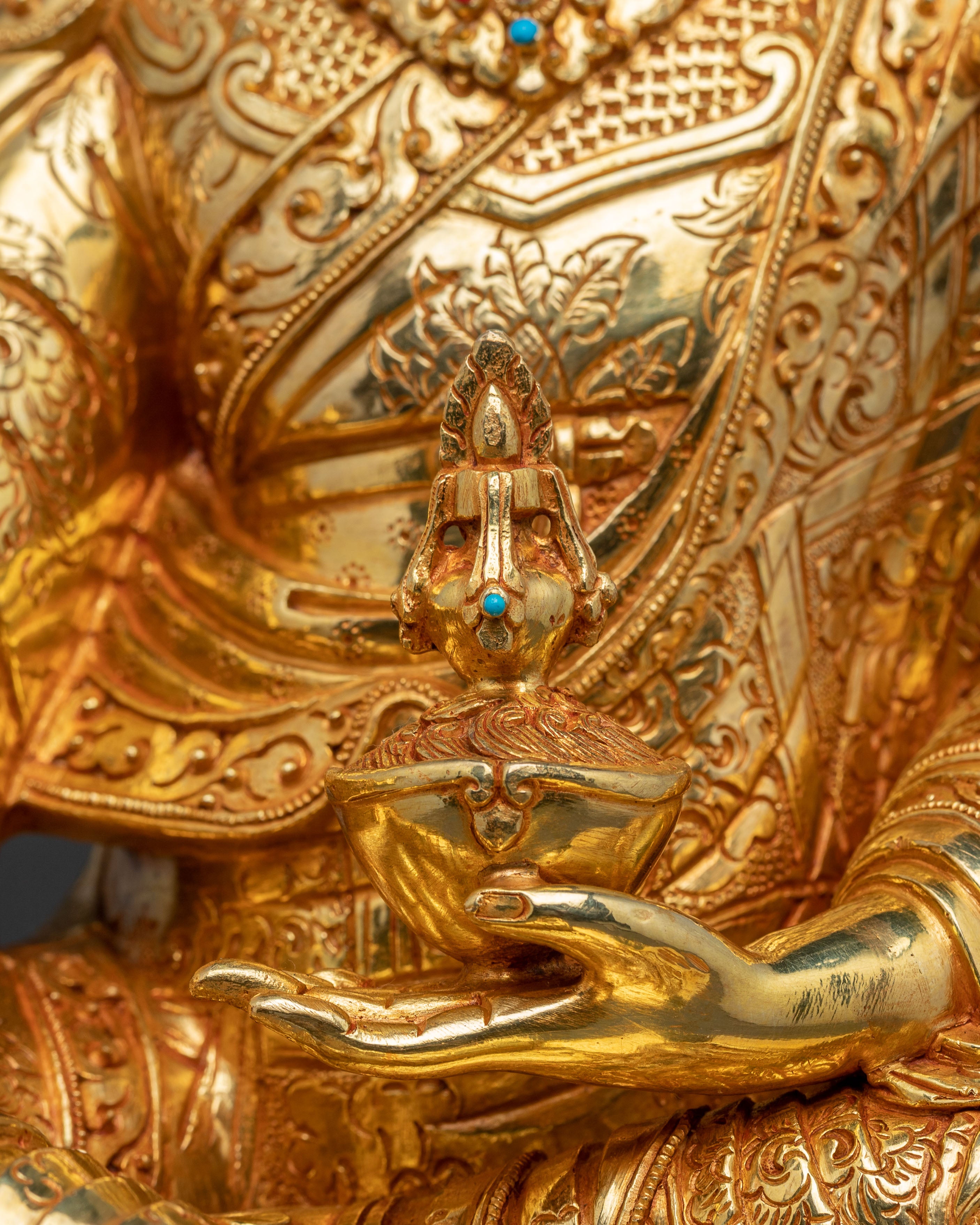
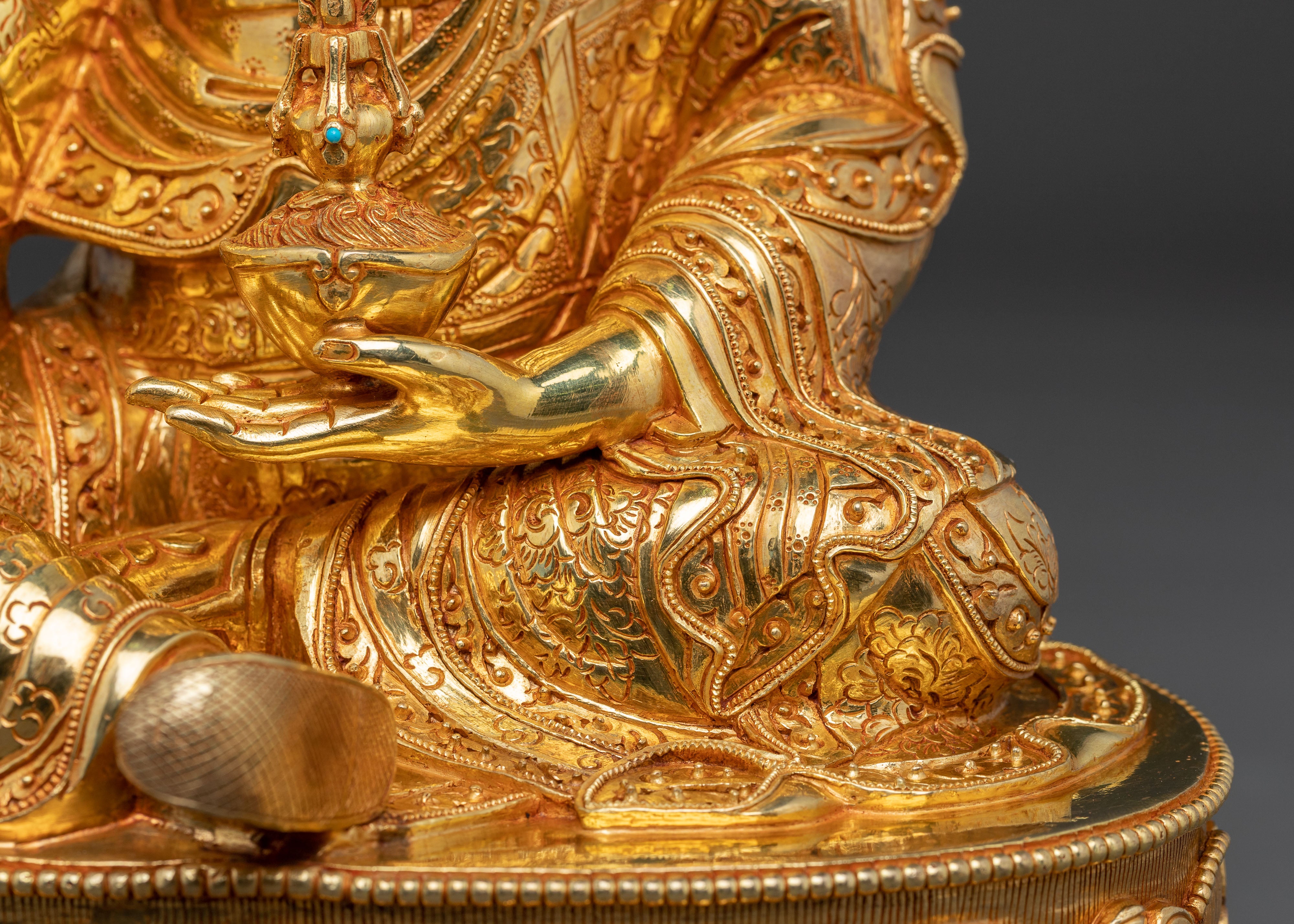
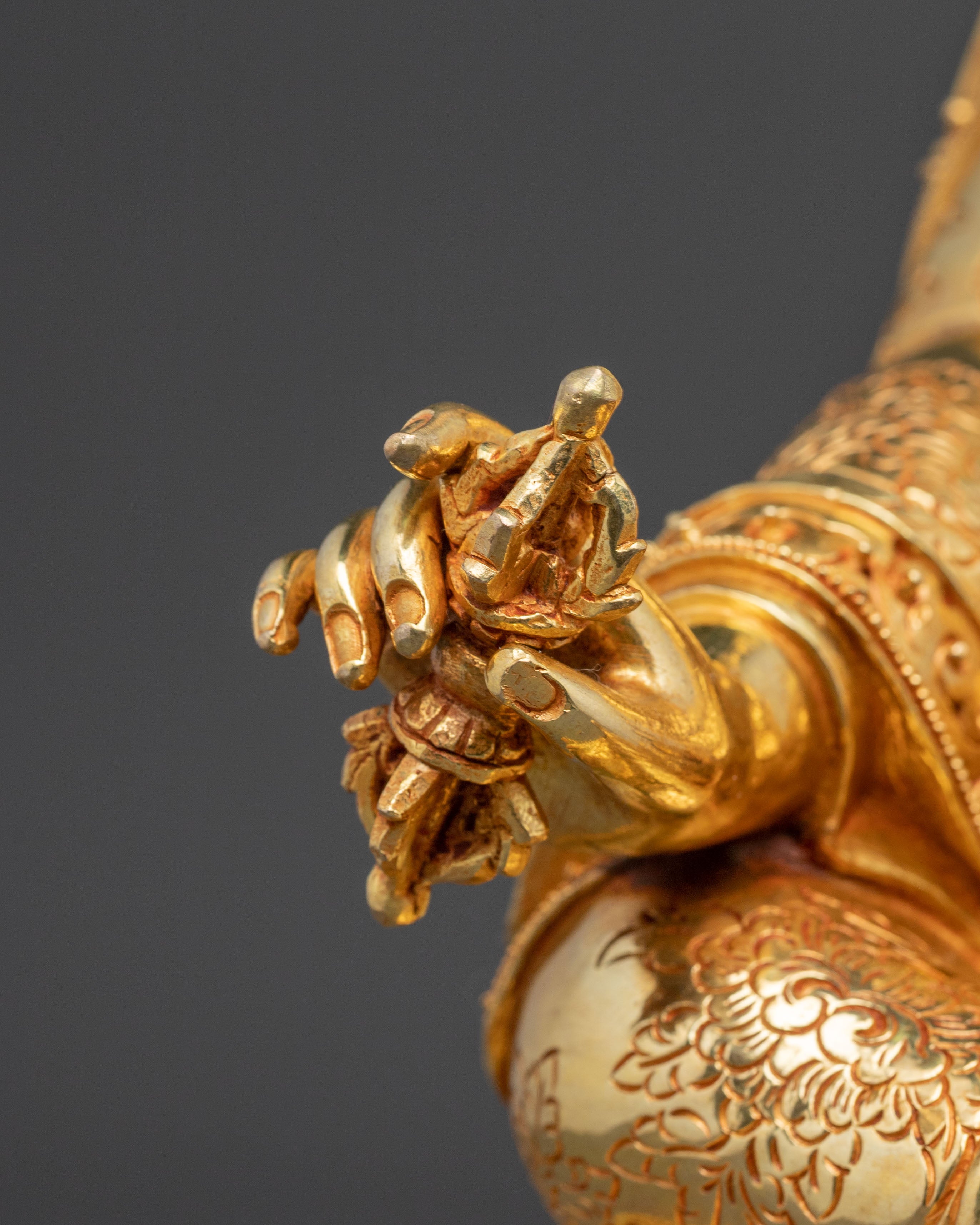
Padmasambhava is depicted seated in padmasana on a moon disc lotus base, symbolizing purity and spiritual awakening. He wears a five-pointed crown representing the Five Dhyani Buddhas, and his hair is styled in snail-like curls, reminiscent of the legend of snails protecting him during meditation. His right hand holds a vajra at his heart, symbolizing skillful means and method, while his left hand holds a skull cup containing a kalasha, representing the nectar of immortality. A khatvanga staff rests beside him, signifying tantric power and mastery. This statue embodies Padmasambhava's role as a powerful tantric master and protector in Vajrayana Buddhism.
Size: 15.4”/39cm (Height) x 9.8”/25cm (Base)
Weight: 6.12kg
Materials: 24K Gold Gilded, Copper Body, Gold & Acrylic Paintings
Padmasambhava, also known as Guru Rinpoche, is one of the most venerated figures in Tibetan Buddhism. Believed to have introduced Buddhism to Tibet in the 8th century, he is regarded as the "Second Buddha." Padmasambhava embodies enlightened wisdom and compassion, and his teachings combine tantra, mantra, and meditation. He is often depicted in a regal posture, holding a vajra and a skull cup, which symbolize his mastery over duality and his ability to transform obstacles into the path of enlightenment. His teachings continue to inspire practitioners, especially those following the Vajrayana path, as they seek to deepen their understanding of Buddhist philosophy and practice.