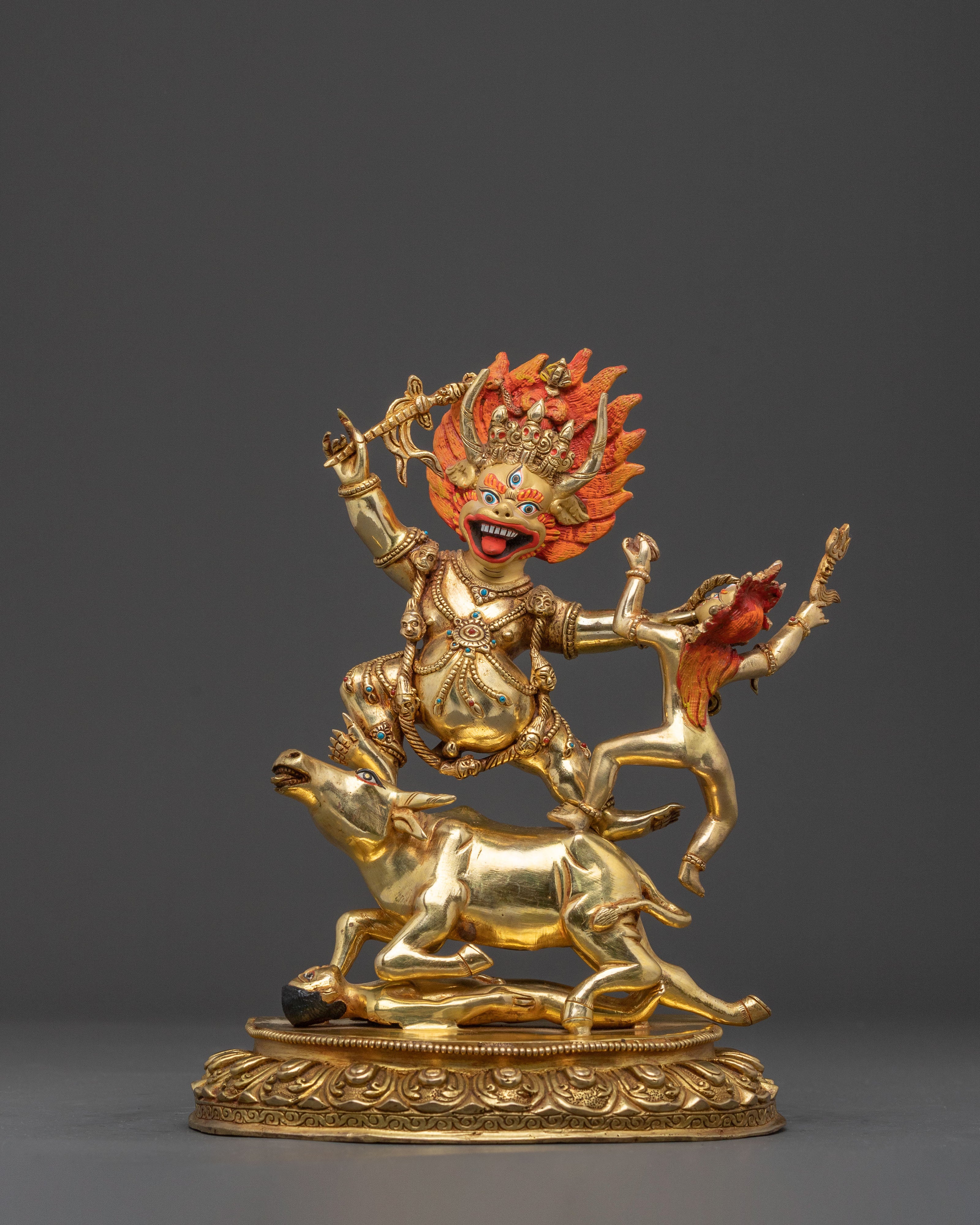
Yama Dharmaraja Spiritual Statue: Conqueror of Death and Obstacles
The Yama Dharmaraja Spiritual Statue: Conqueror of Death and Obstacles embodies the power and wisdom of the lord of death in Tibetan Buddhism. Standing 11.22 inches (28.5 cm) tall with a base of 8.86 inches (22.5 cm) and weighing 3.1 kg, this handcrafted statue is gilded in radiant 24K gold and features intricate acrylic paintings, a solid copper body, and inlaid gemstones. Handcrafted in Nepal, it represents Yama’s role as a protector of the Dharma, overcoming death and obstacles with fierce compassion, making it a profound focal point for spiritual practice and contemplation.
Yama Dharmaraja, the lord of death in Tibetan Buddhism, is a fearsome deity who rules the underworld and judges the deeds of beings after death. Depicted with a blue or black body, a crown of skulls, and a garland of severed heads, he holds a noose in one hand to capture those bound by karma, and a mace or sword in the other to destroy ignorance and attachment. While his wrathful form may evoke fear, Yama embodies the essential function of death and judgment, reminding beings of the impermanence of life and the consequences of their actions. As a protector of the Dharma, Yama encourages practitioners to cultivate virtuous deeds, emphasizing the importance of ethical living, meditation, and spiritual discipline in preparation for both this life and the afterlife.
Size: 11.22”/28.5cm (Height) x 8.86”/22.5cm (Base)
Weight: 3.1 kg
Material: 24K Gold Gilded, Acrylic Paintings, Copper Body, Gemstones
Yama Dharmaraja, often simply known as Yama, is the god of death in Hindu, Buddhist, and Jain traditions. In Buddhism, he serves as the ruler of the underworld and the judge of the dead, overseeing the judgment of beings based on their karma. Yama is typically depicted as a fierce figure with a buffalo head, holding a noose to capture souls and a staff to punish the wicked. His role is to maintain the karmic cycle, reminding beings of the consequences of their actions and emphasizing the impermanence of life and the importance of ethical living.