Handmade Statue Set of Shakyamuni Buddha, Green Tara, and Guru Rinpoche | Buddha Trinity
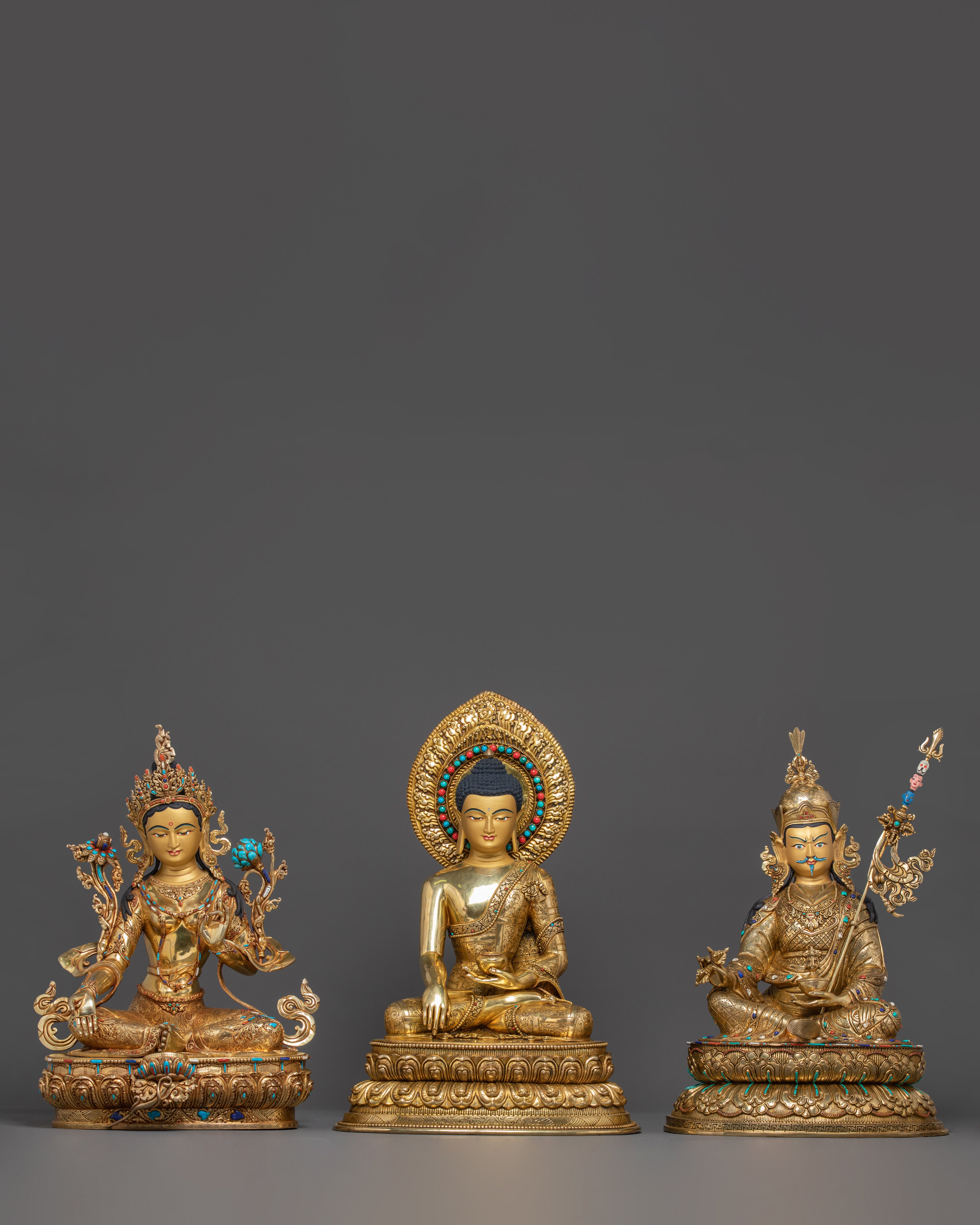
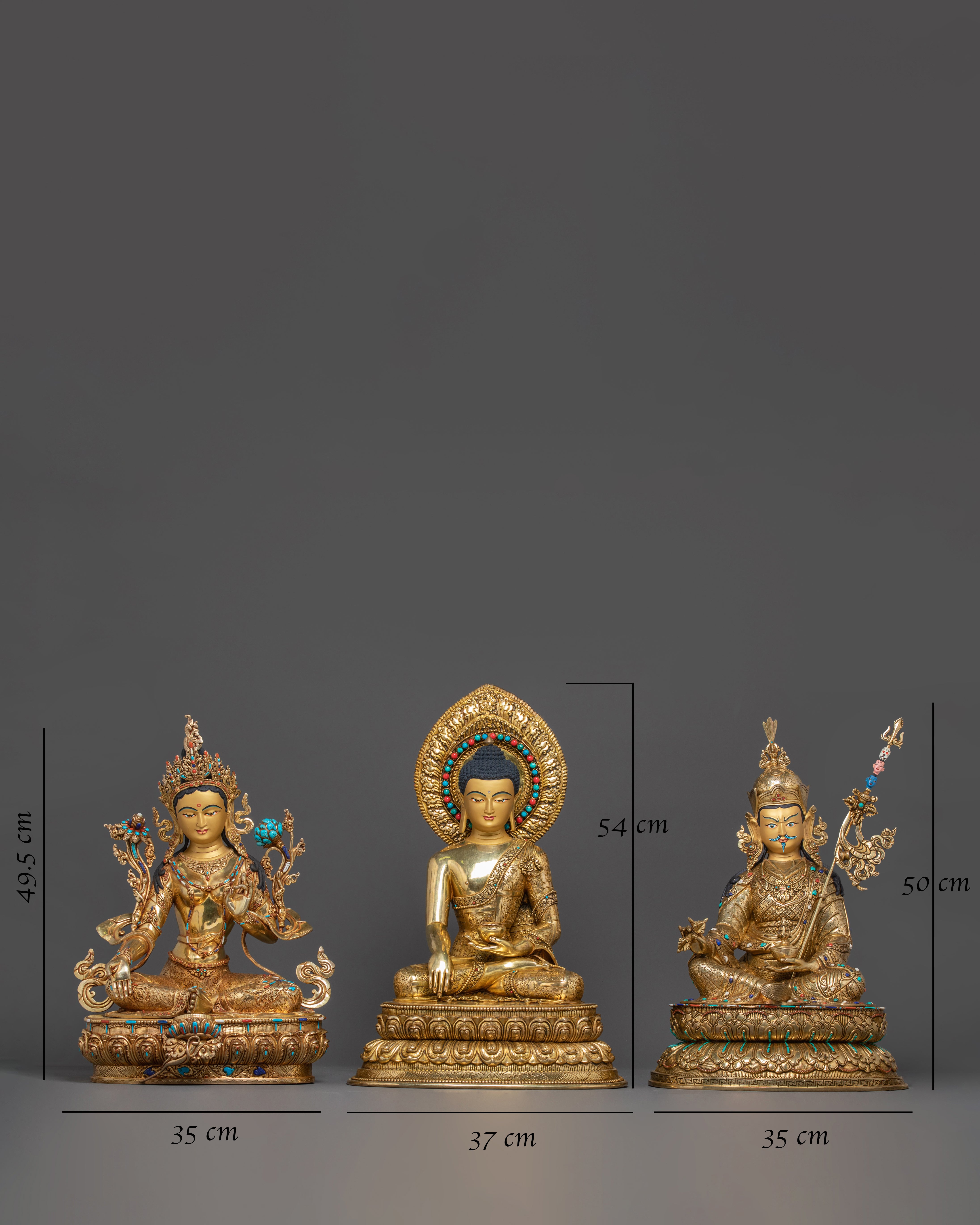
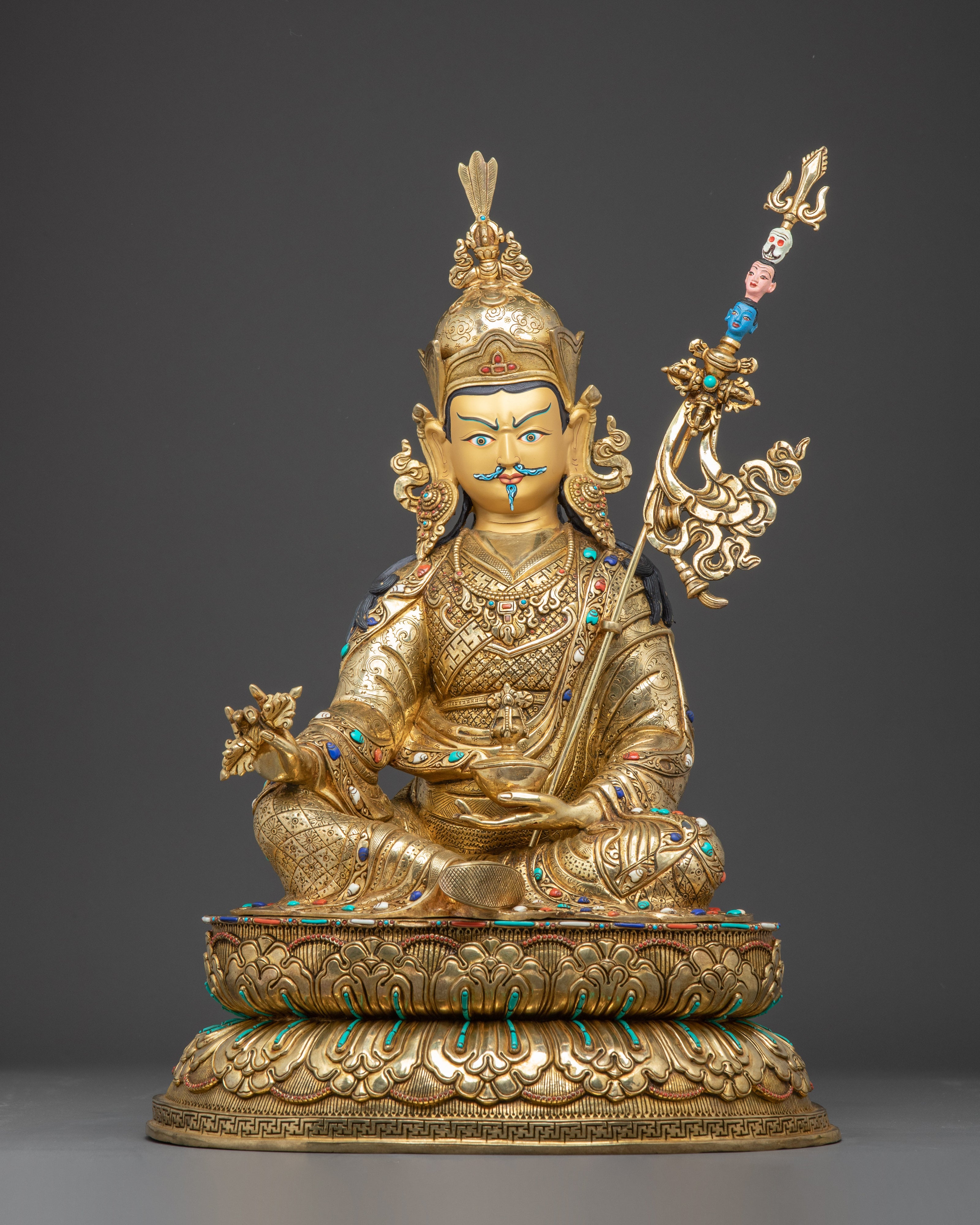
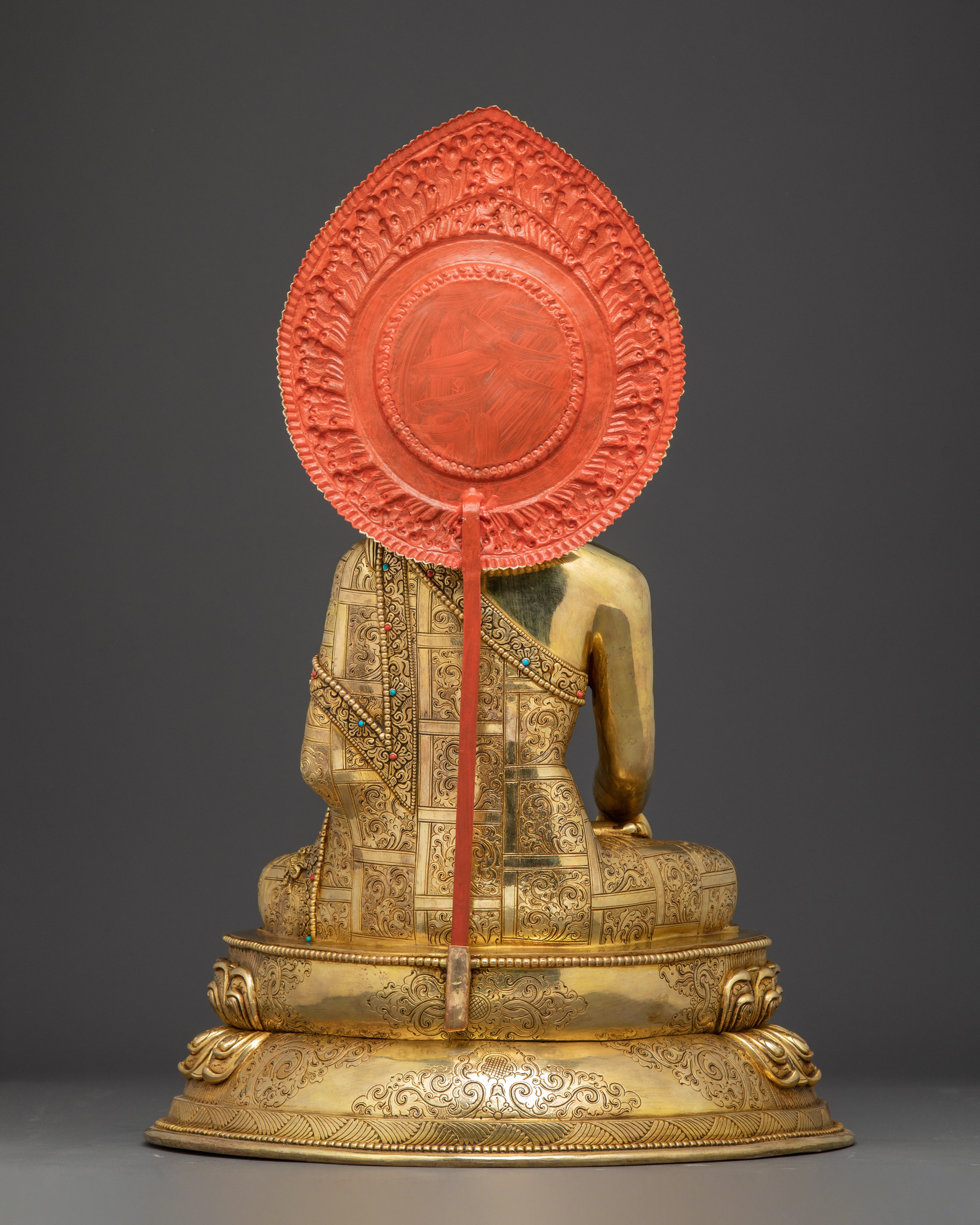
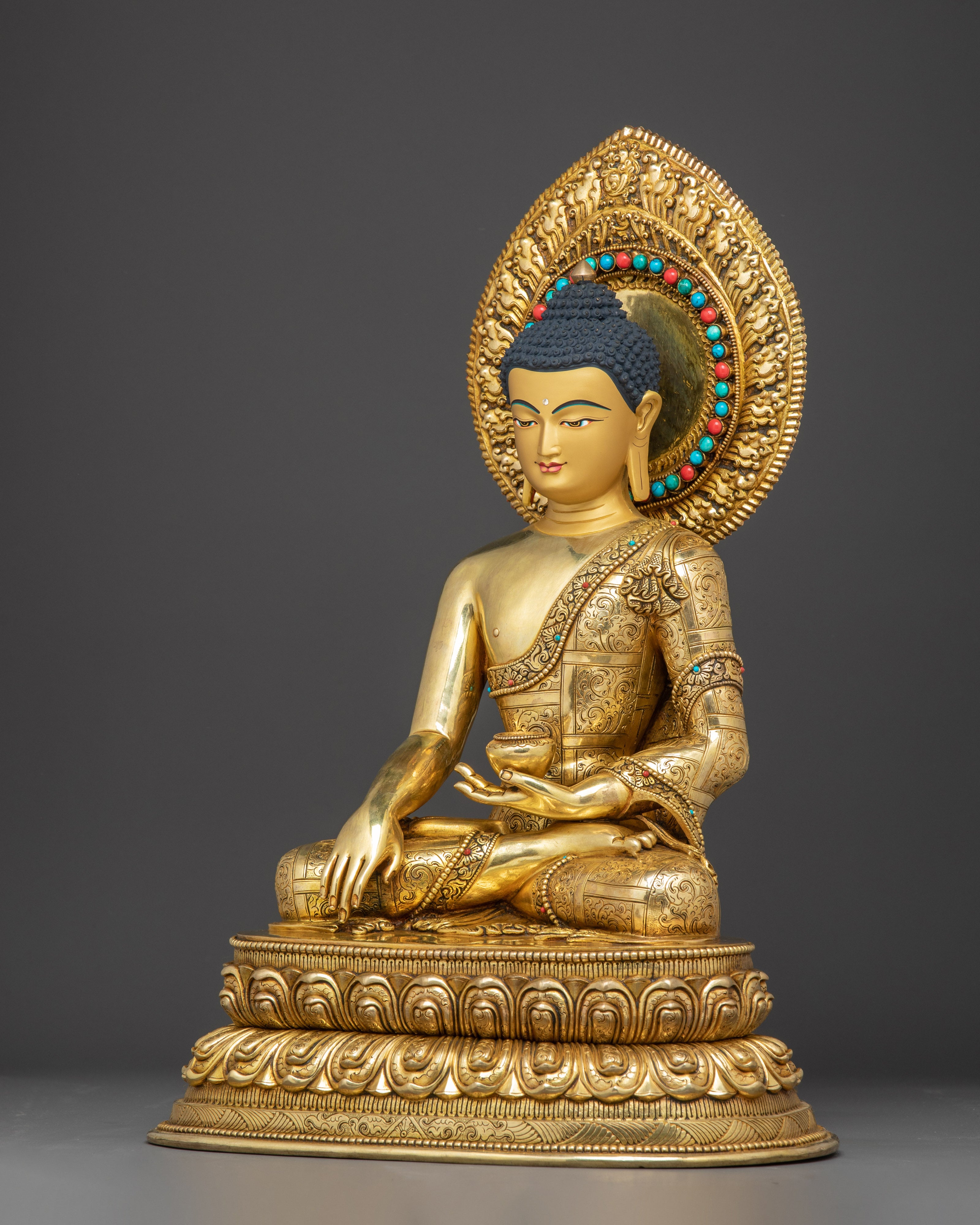
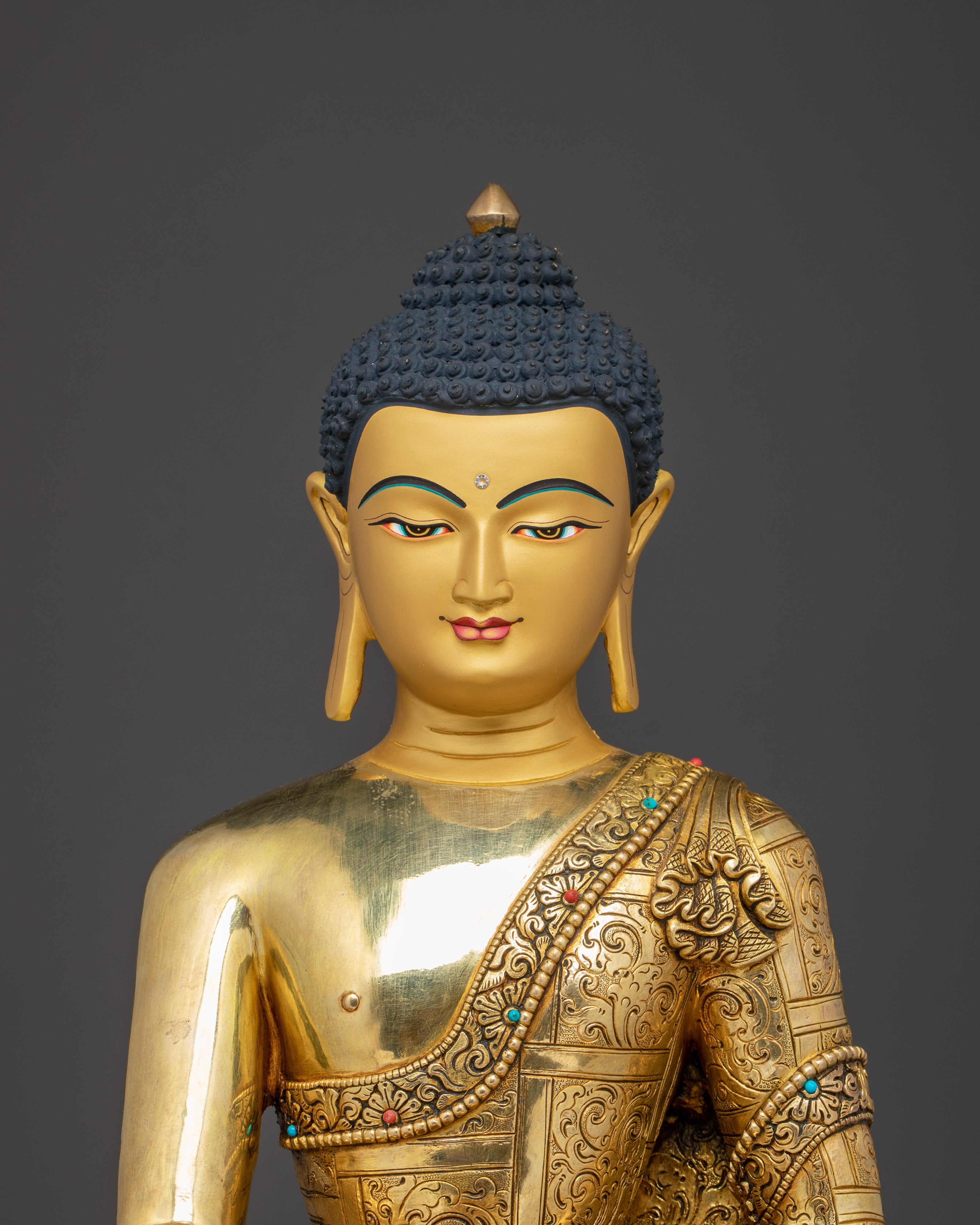
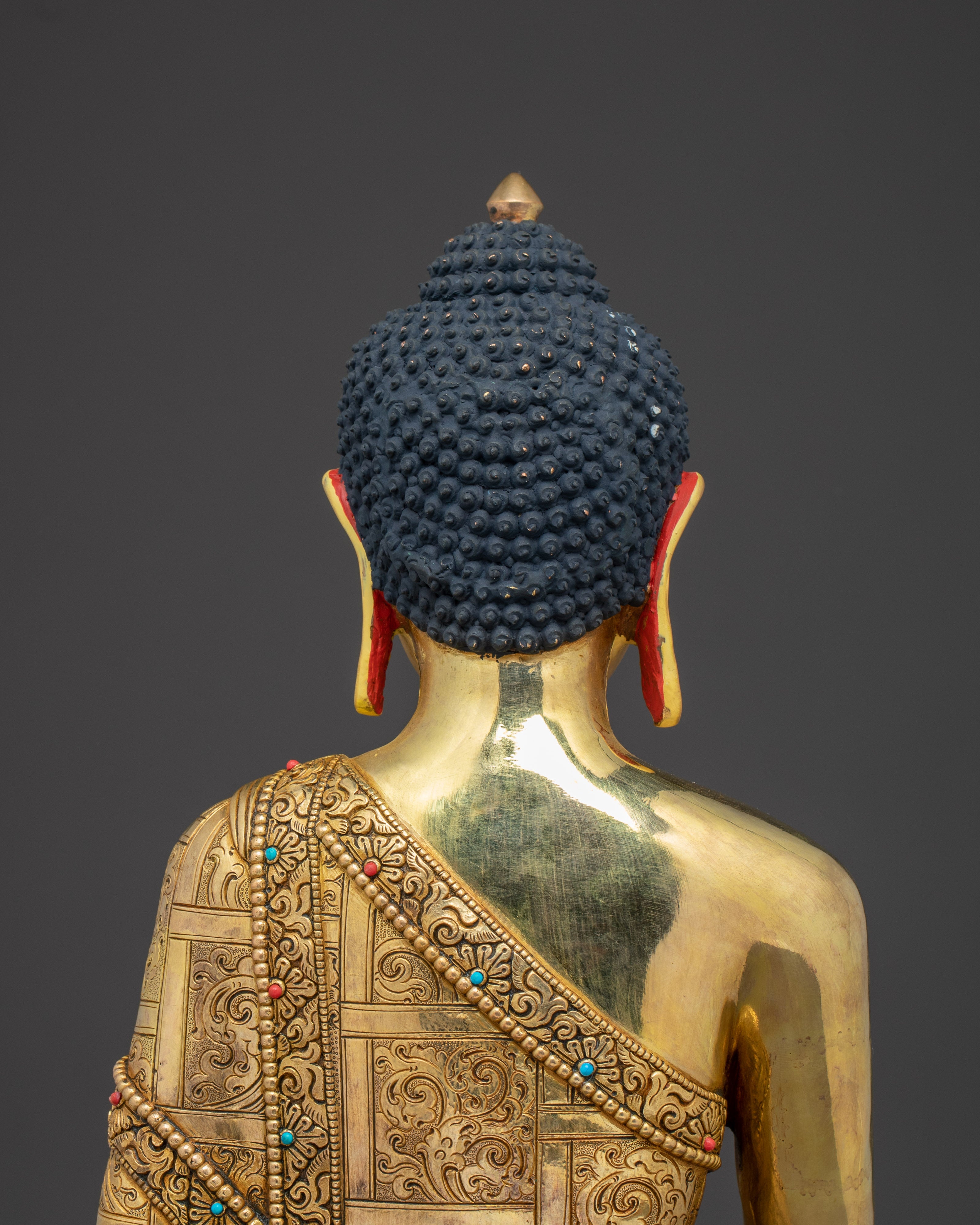
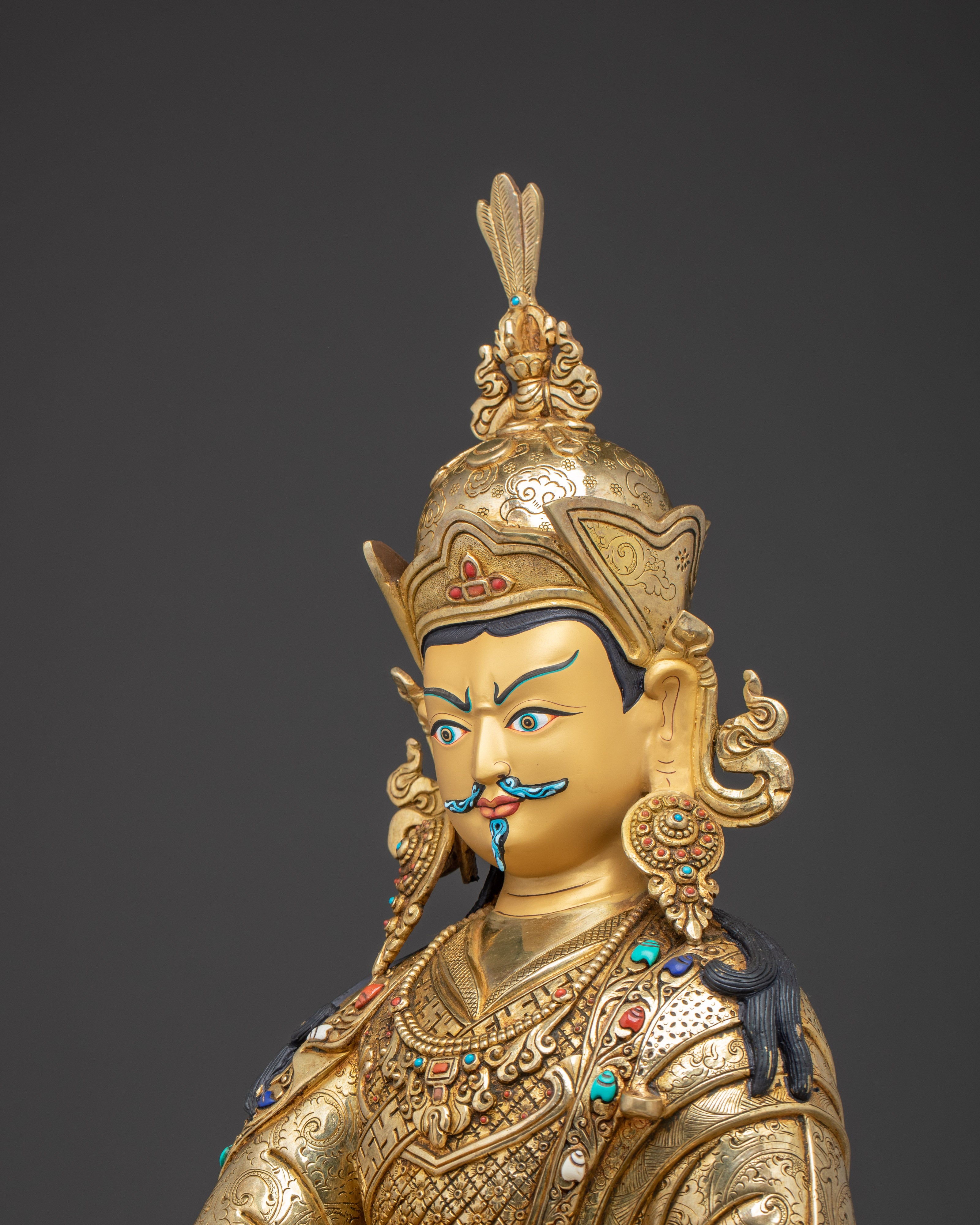
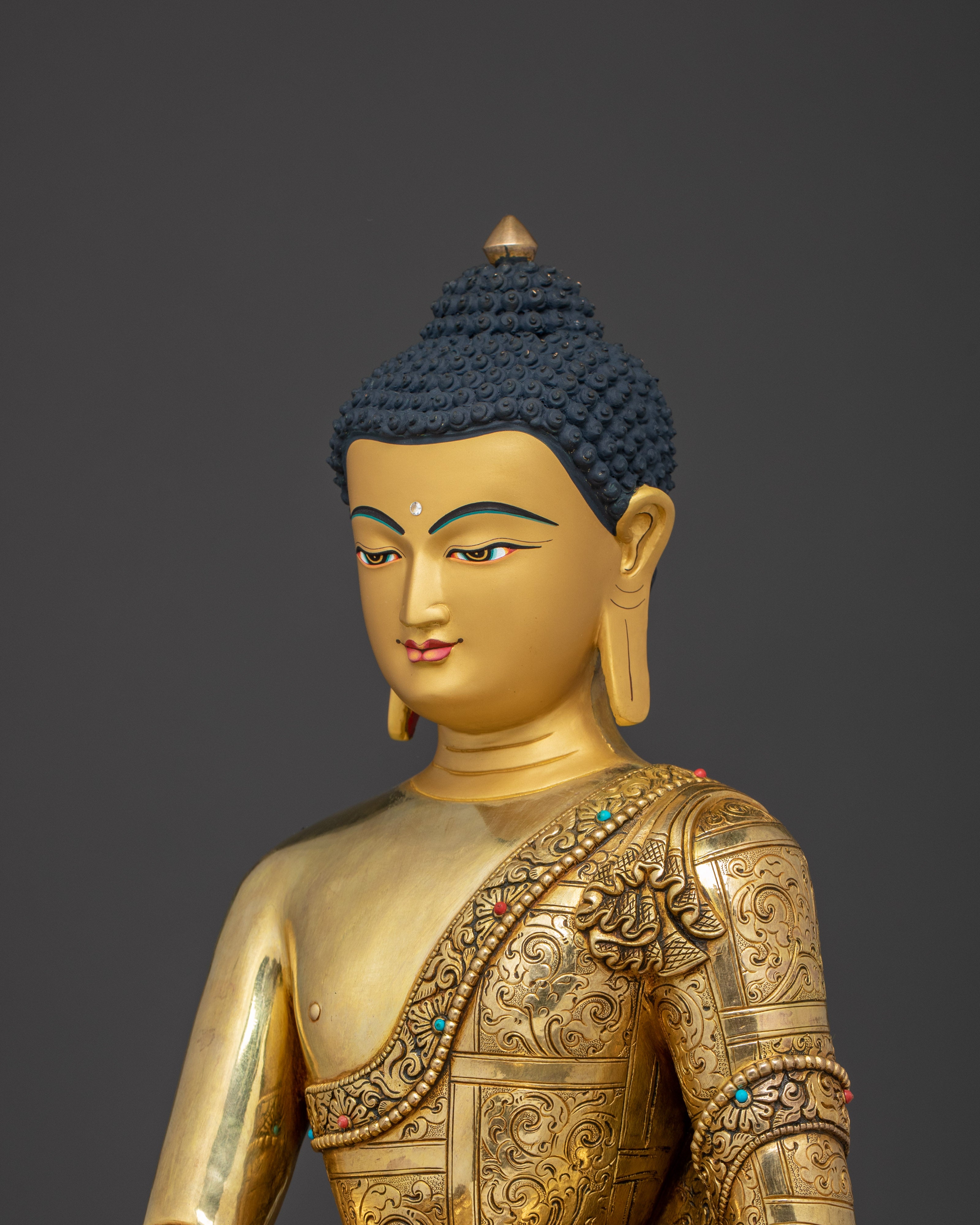
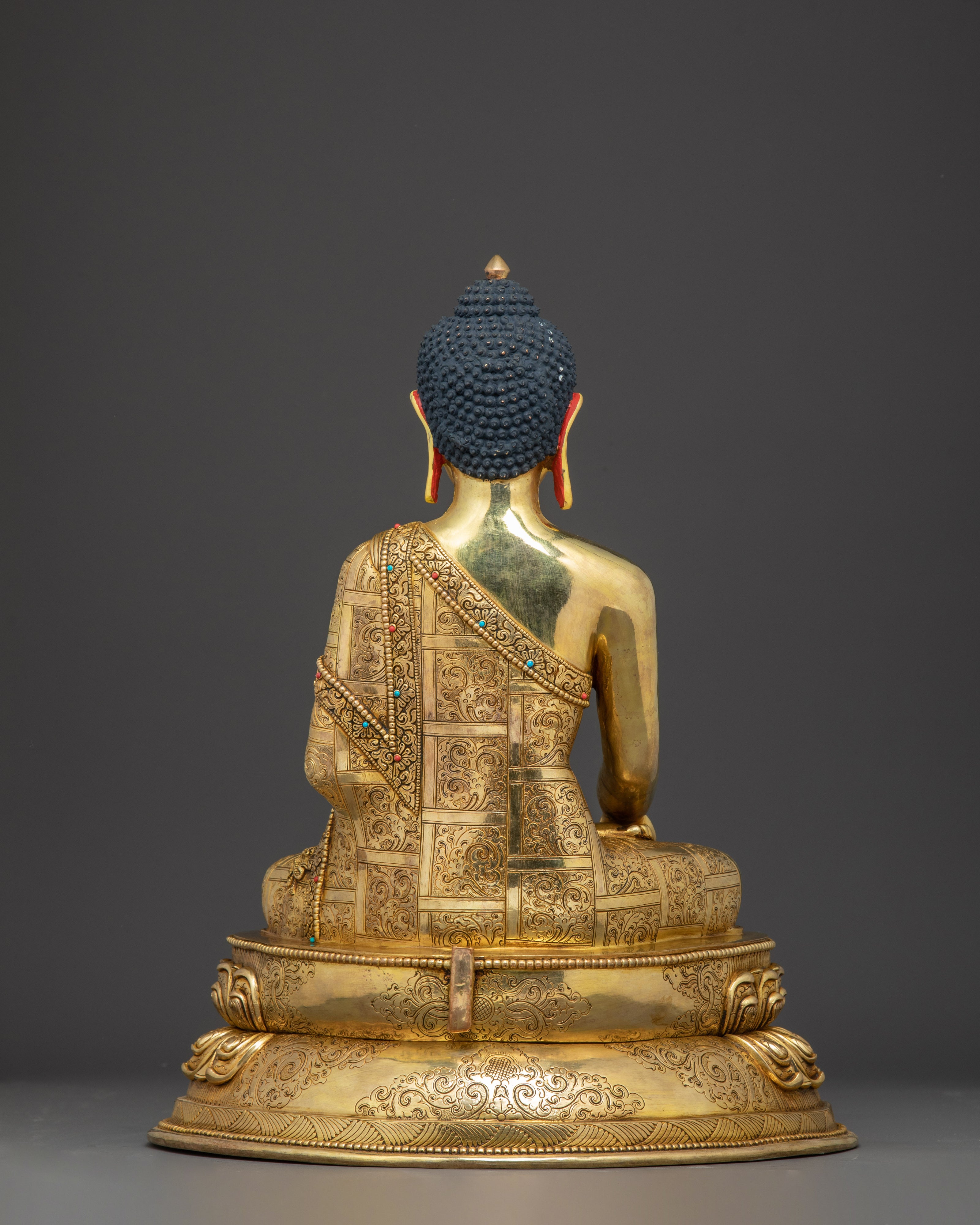
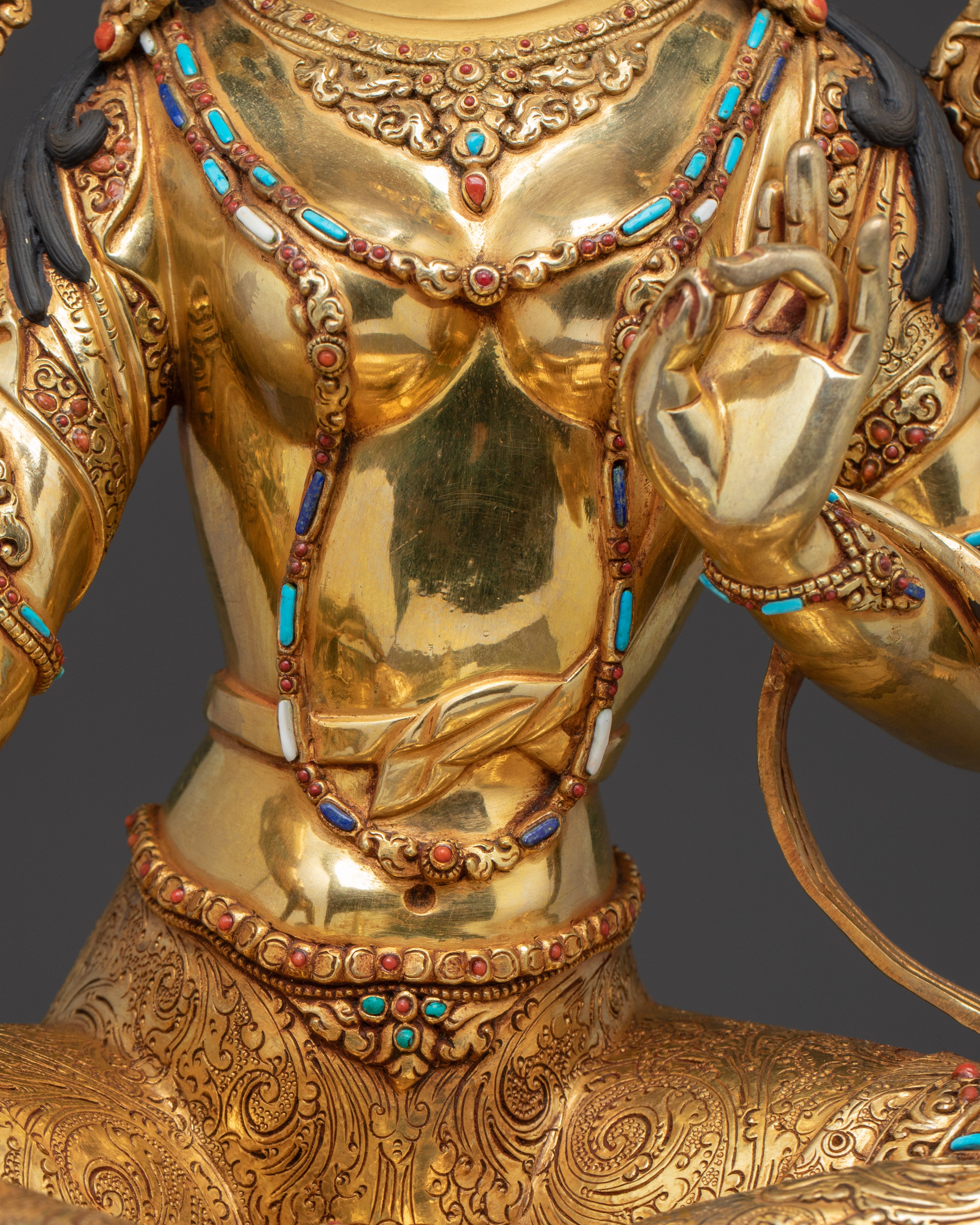
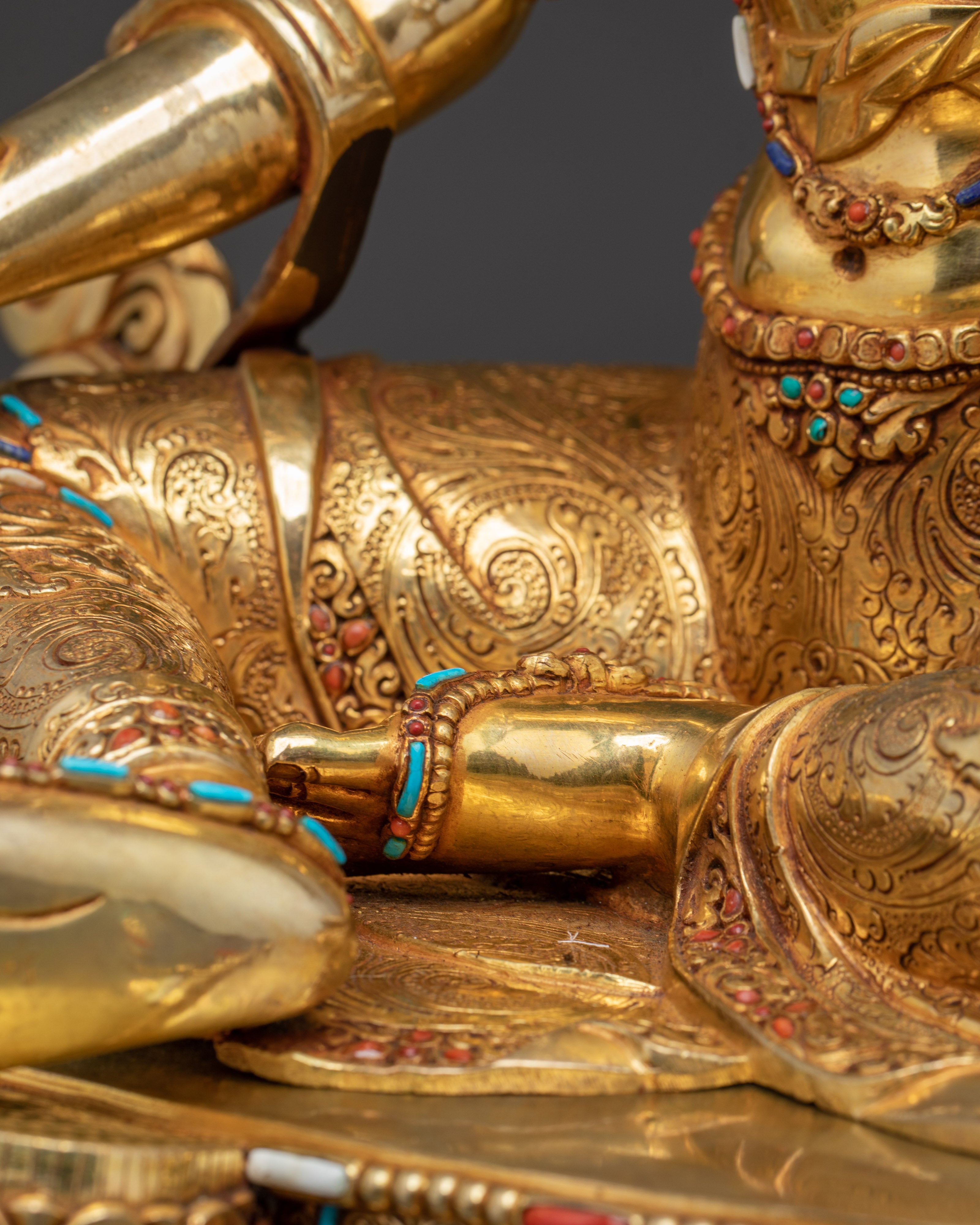
The handmade statue set of Shakyamuni Buddha, Green Tara, and Guru Rinpoche stands at 21.3”/54cm in height and 14.6”/37cm at the base, with a total weight of 11.46 kg. Expertly crafted from copper, this piece is covered with a triple layer of 24K gold gilding and features deeply engraved carvings that produce a magnificent 3D-like effect. This sculpture, adorned with gemstones and crafted by expert Nepalese artisans, elegantly symbolizes Himalayan Buddhism's sacred traditions, making it an appropriate addition to altars, meditation places, or sacred collections.
Shakyamuni Buddha Size: 21.3”/54cm (Height) x 14.6”/37cm (Base)
Weight: 4.04kg
Materials: 24K Gold Gilded, Gold & Acrylic Paintings, Gemstones, Copper Body
Green Tara Size: 20.9”/53.3cm (Height) x 15.7”/40cm (Base)
Weight: 2.84kg
Materials: 24K Gold Gilded, Gold & Acrylic Paintings, Gemstones, Copper Body
Guru Rinpoche Size: 20.9”/53cm (Height) x 15.7”/40cm (Base)
Weight: 4.58kg
Materials: 24K Gold Gilded, Gold & Acrylic Paintings, Gemstones
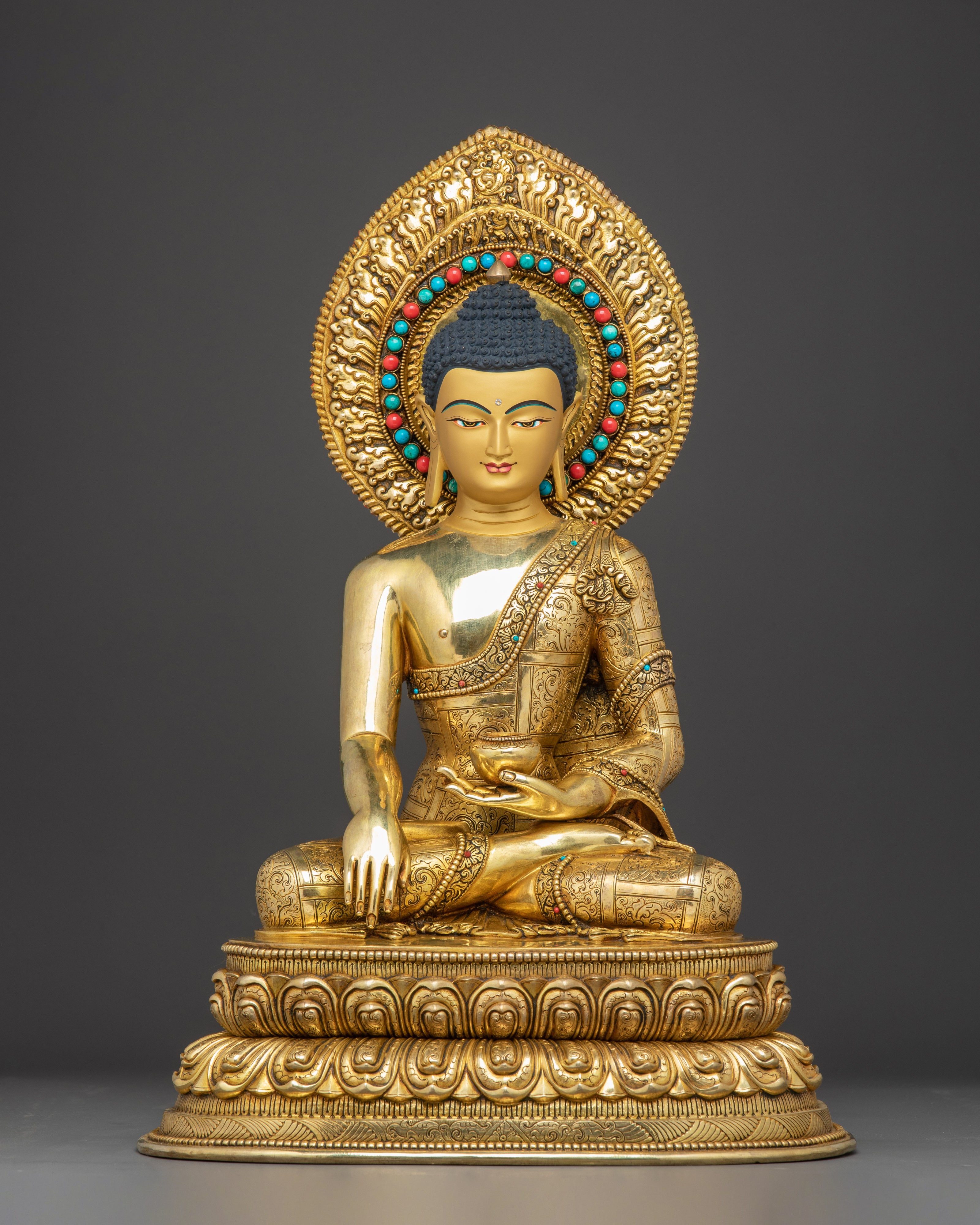
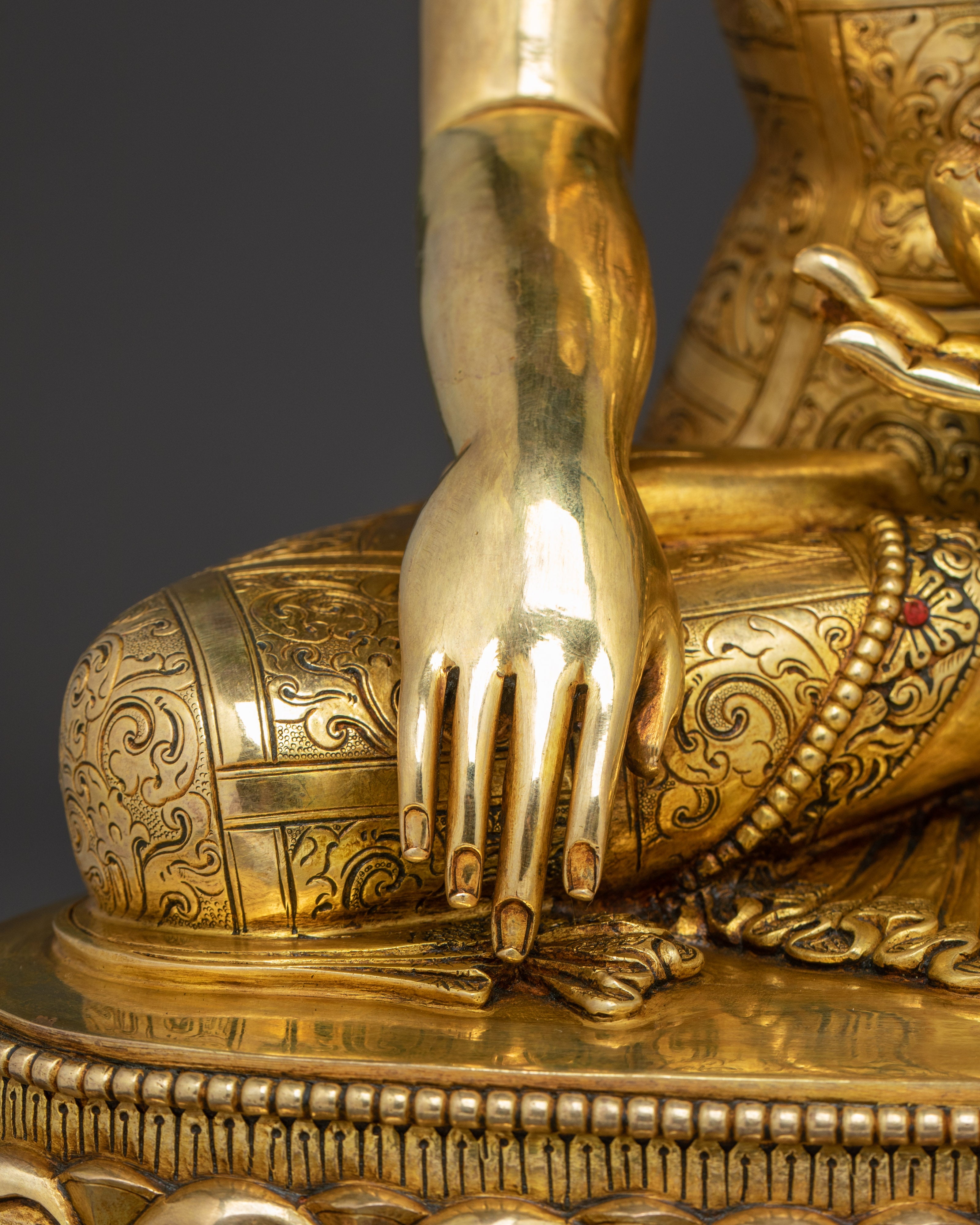
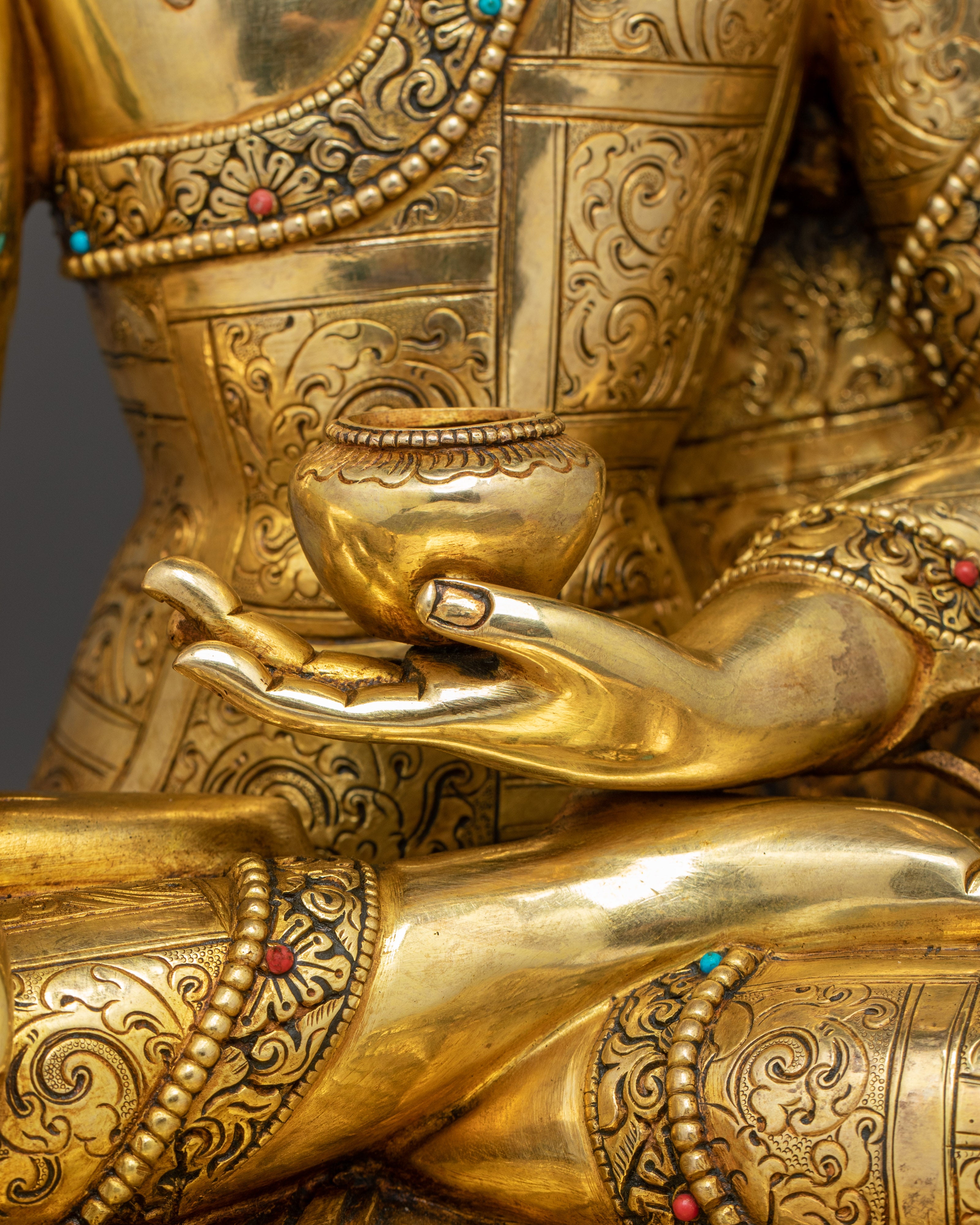
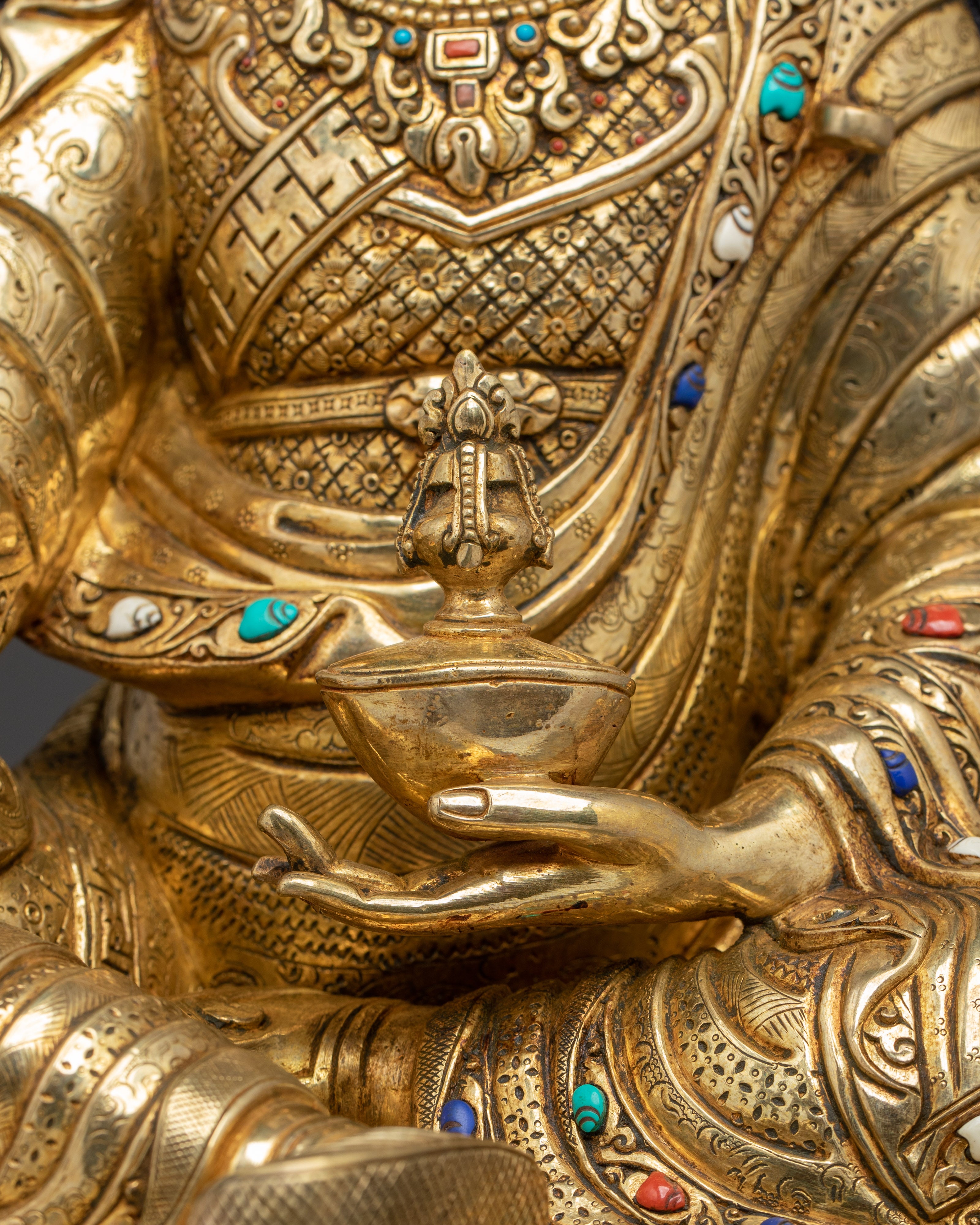
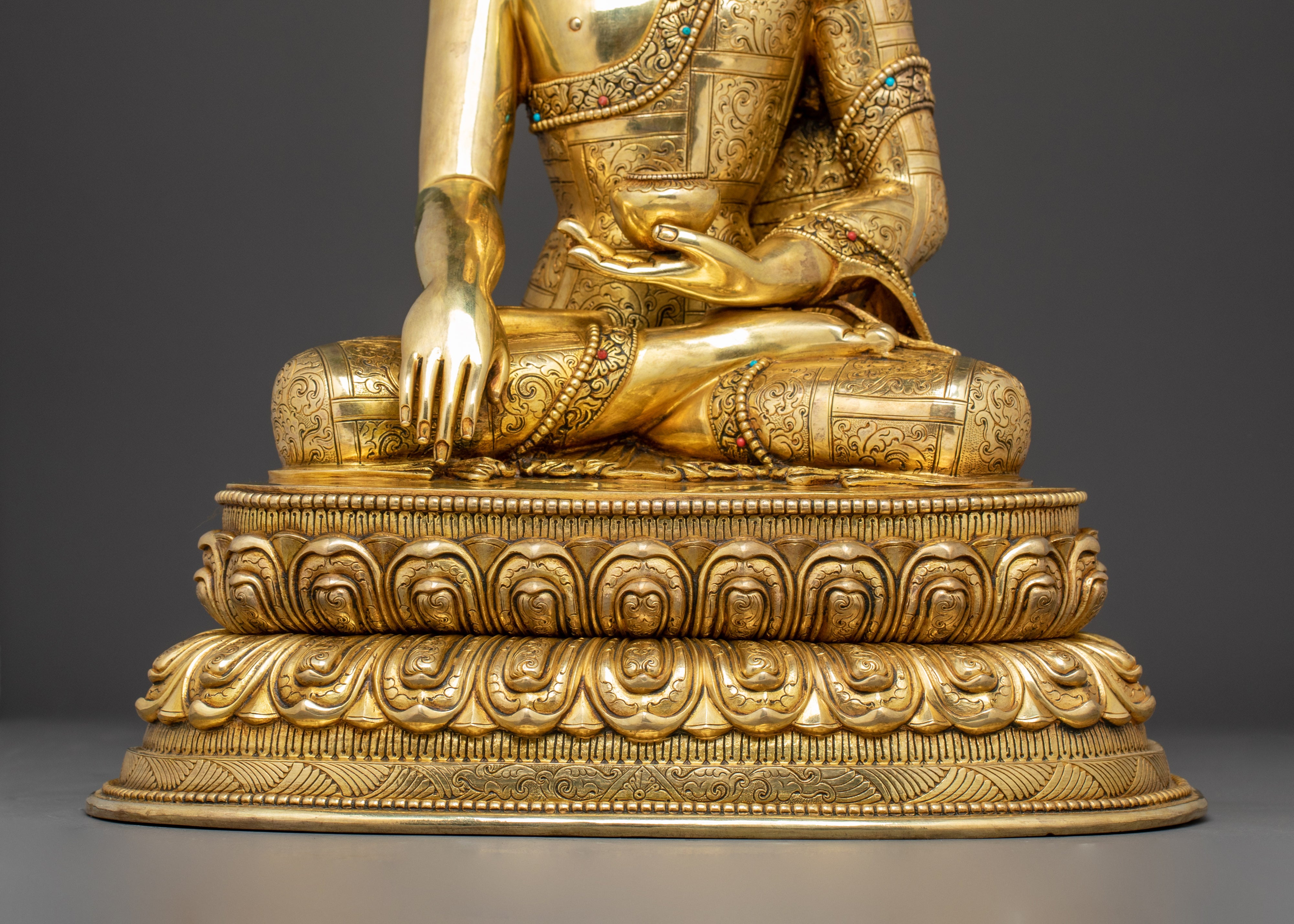
This Shakyamuni Buddha statue, known as the "Sage of the Shakya Clan," portrays the historical Buddha in a moment of serene enlightenment beneath the Bodhi tree. Seated in the Vajra (lotus) posture, he represents purity and spiritual awakening. His right hand displays the Bhumisparsha Mudra, symbolizing the victory over ignorance, while his left hand holds an alms bowl, signifying renunciation and material detachment. The statue rests upon a lotus pedestal, representing spiritual growth and purity arising from samsara (the cycle of suffering).
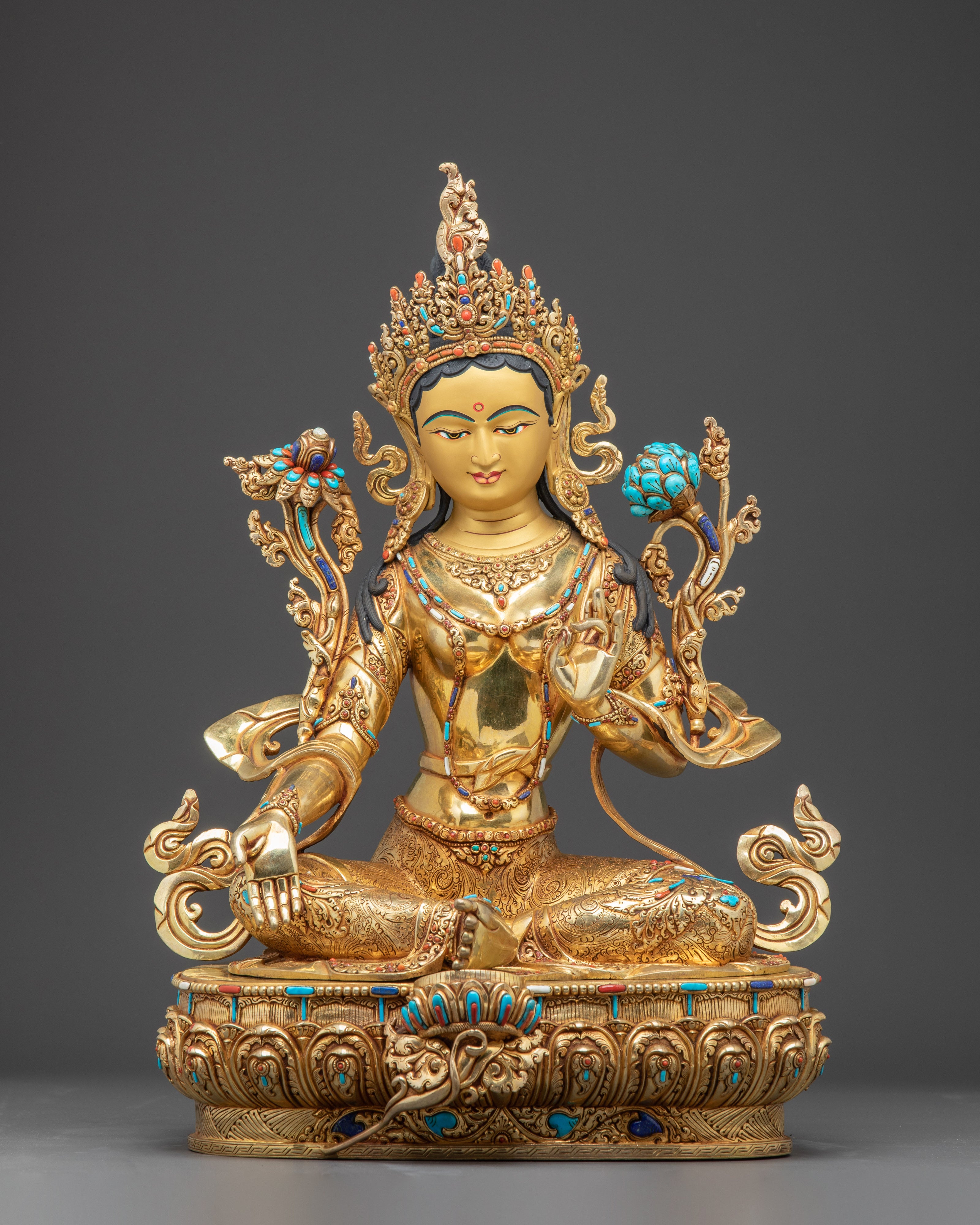
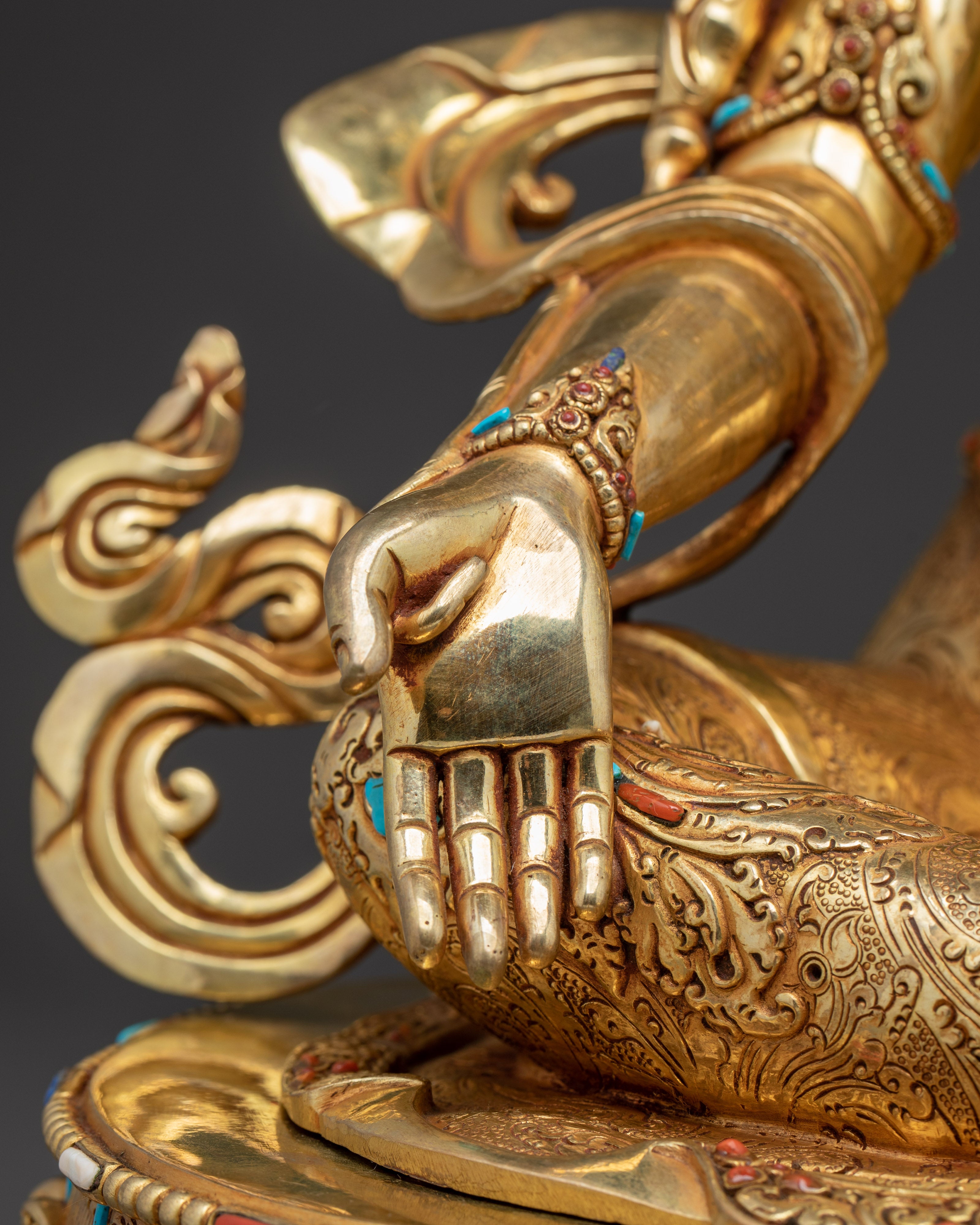
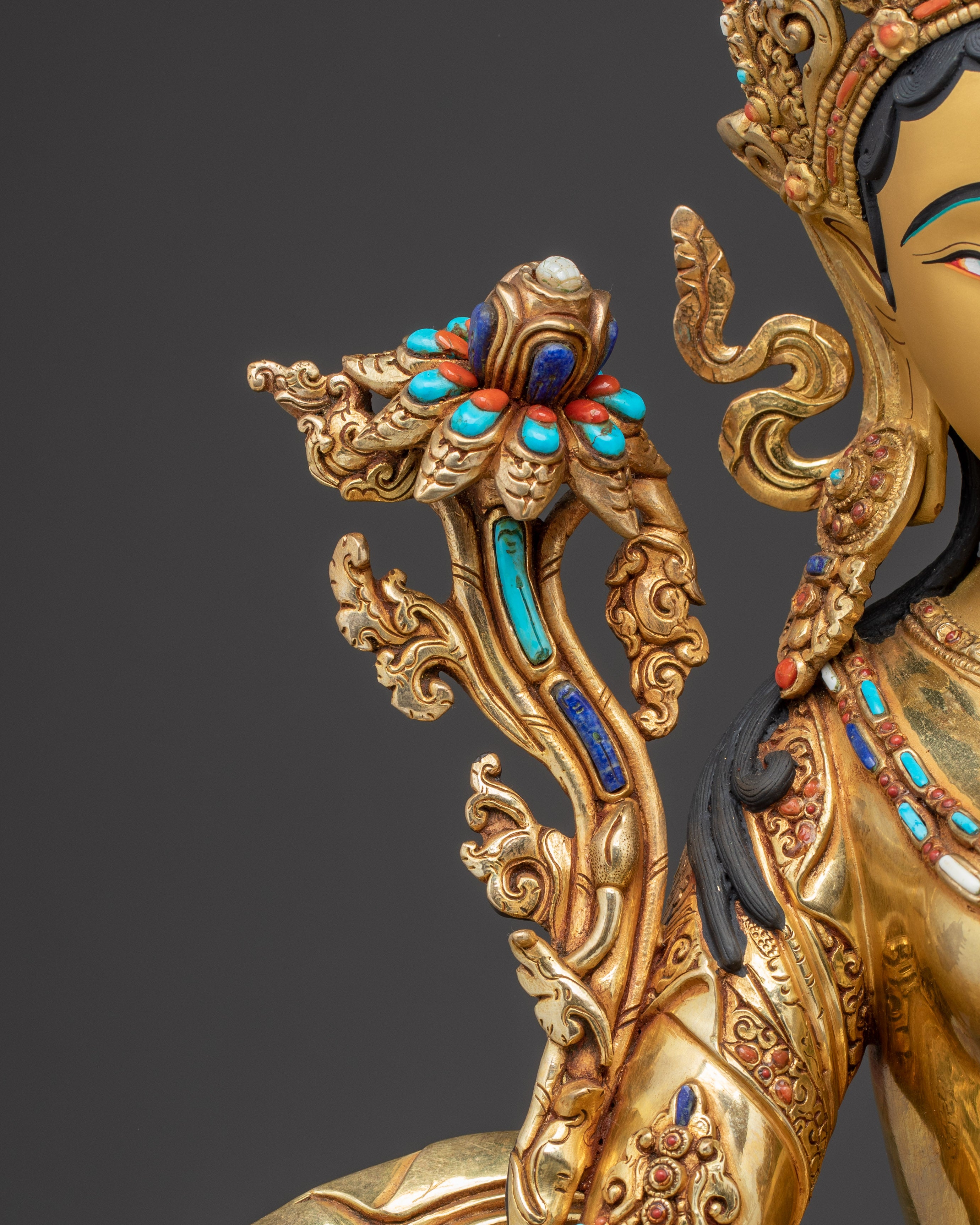
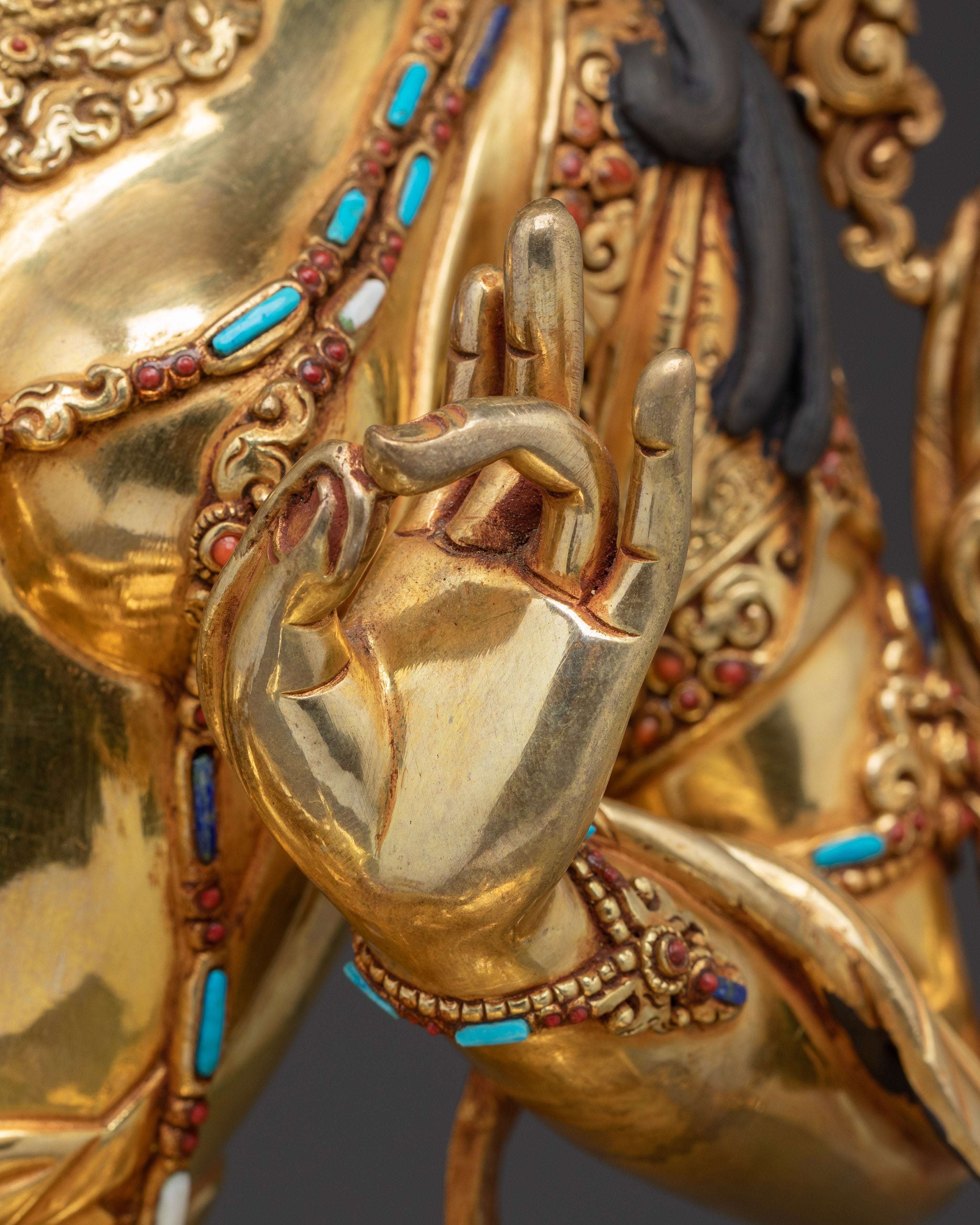
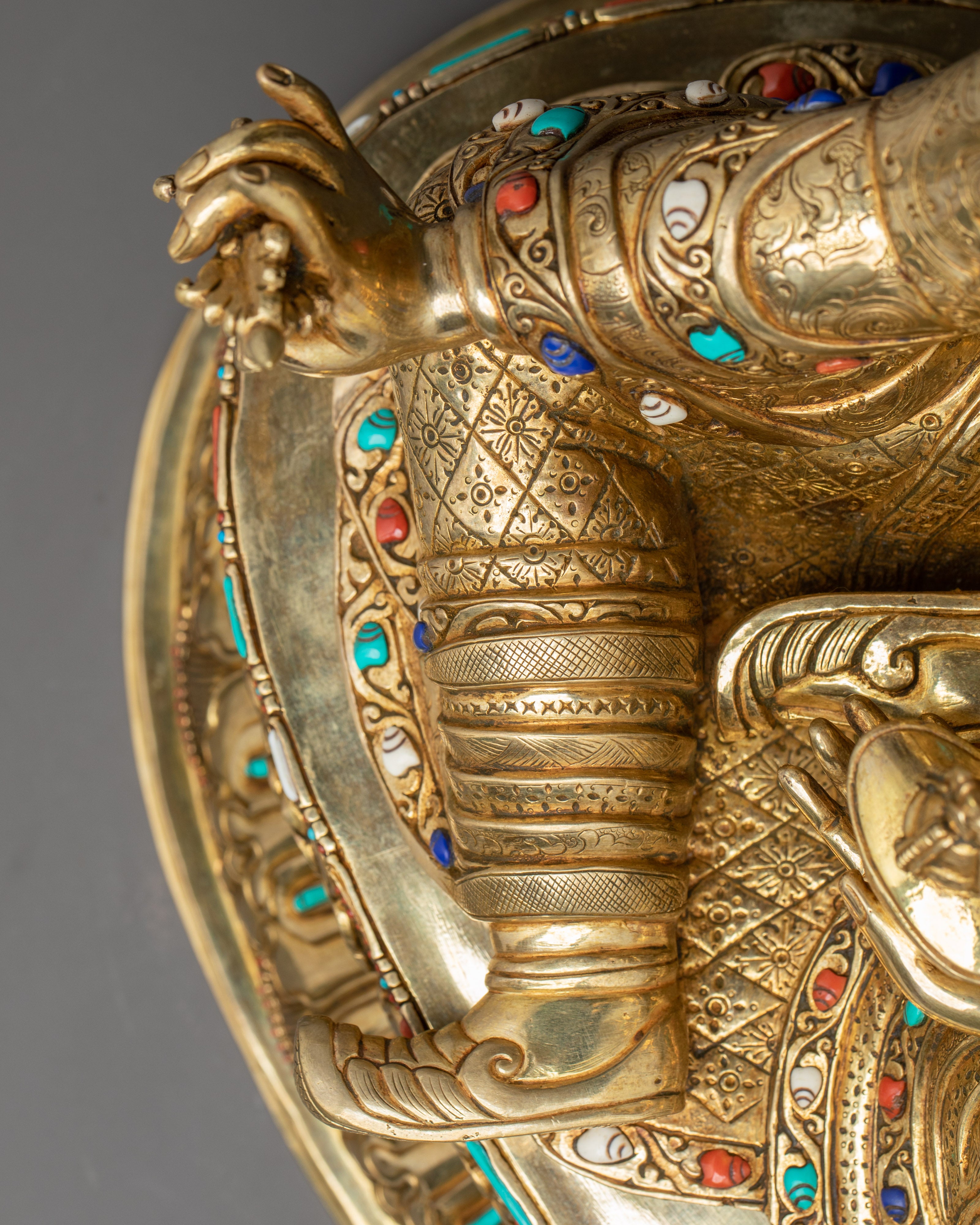
Green Tara is shown seated on a lotus throne, with her right leg extended, symbolizing her readiness to take action for the benefit of others. Her hands express profound meaning through their gestures; the right hand displays the Varada Mudra, a gesture of generosity and the fulfillment of wishes, while her left hand forms the Three Jewel Mudra, representing the Buddha, Dharma, and Sangha. In her right hand, she holds a blue lotus (Utpala), which signifies purity and spiritual blossoming, while her left arm cradles a second blue lotus, symbolizing her compassionate protection and nurturing presence.
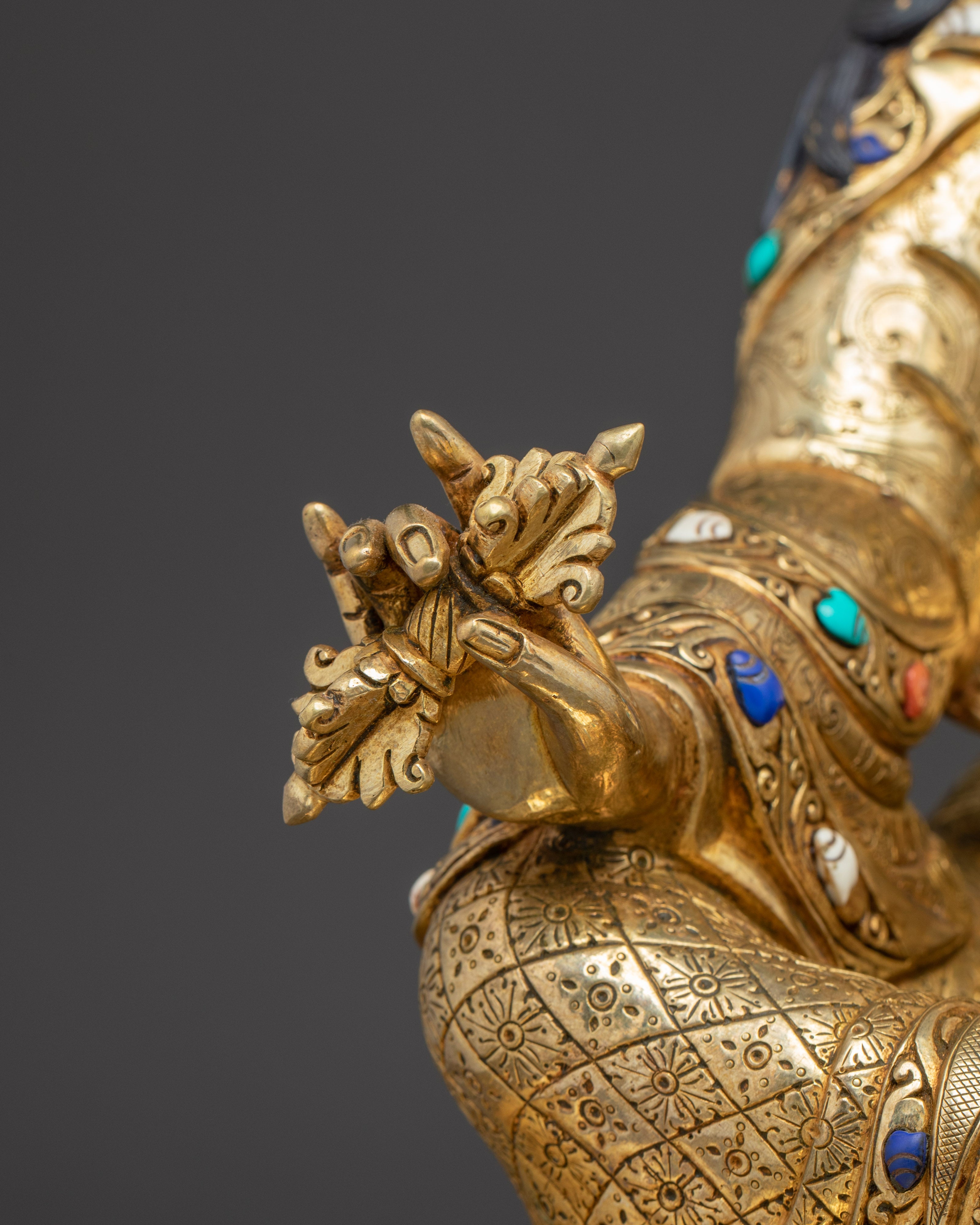
Guru Rinpoche, also known as Padmasambhava, is depicted holding his signature vajra in his right hand and a skull cup containing a kalasha (long-life vase) filled with nectar in his left hand. These symbols represent his mastery over spiritual powers and his ability to bestow blessings and longevity upon his disciples. He is seated in a regal posture, exuding confidence and enlightened presence. The khatvanga trident rests on his left shoulder, symbolizing his tantric mastery and control over spiritual energies. Adorned with elaborate jewelry and a crown, he radiates divine sovereignty and wisdom, embodying his role as the founder of Tibetan Buddhism and a great tantric master.