The Tantric Deity Hevajra | Wrathful Deity
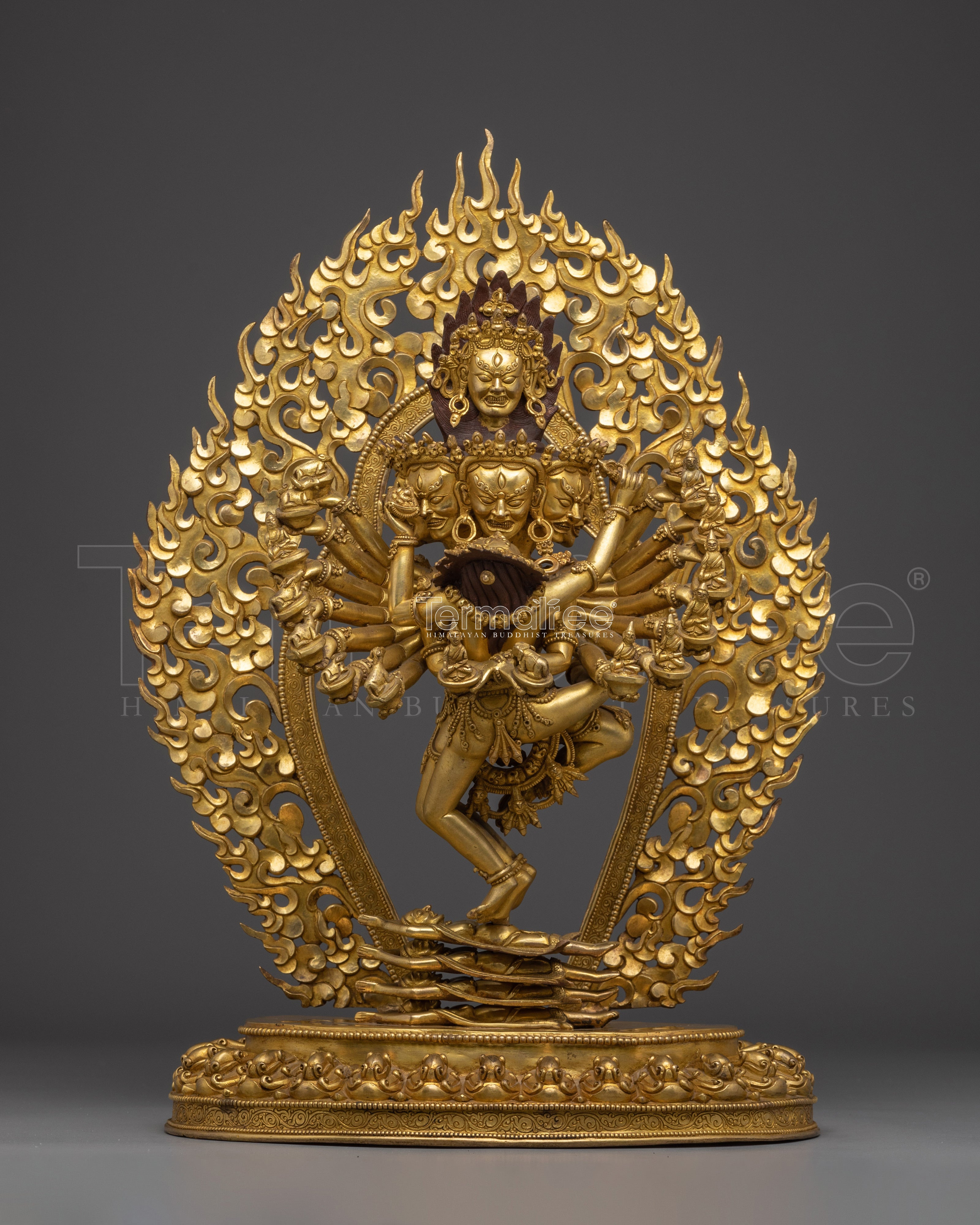
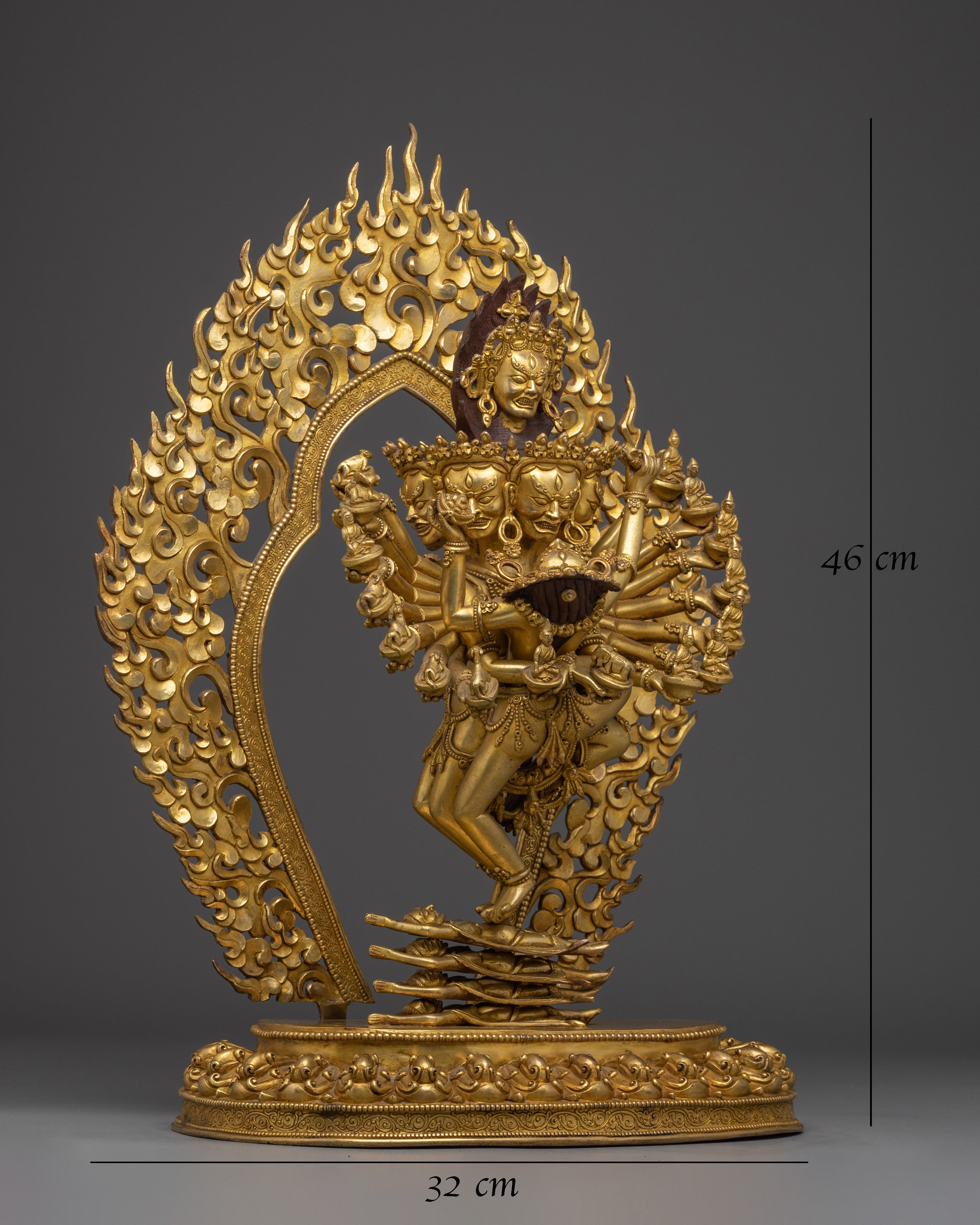
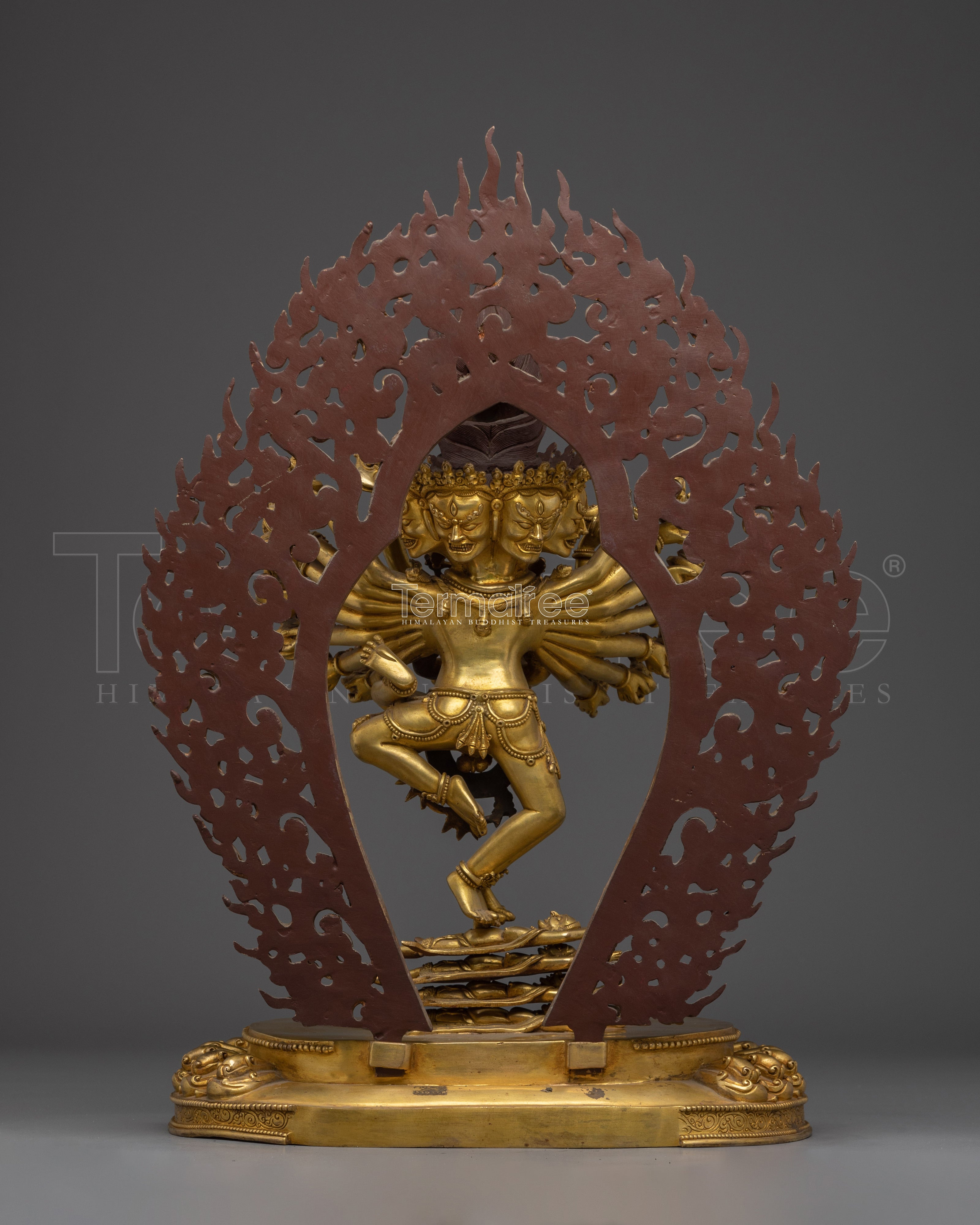
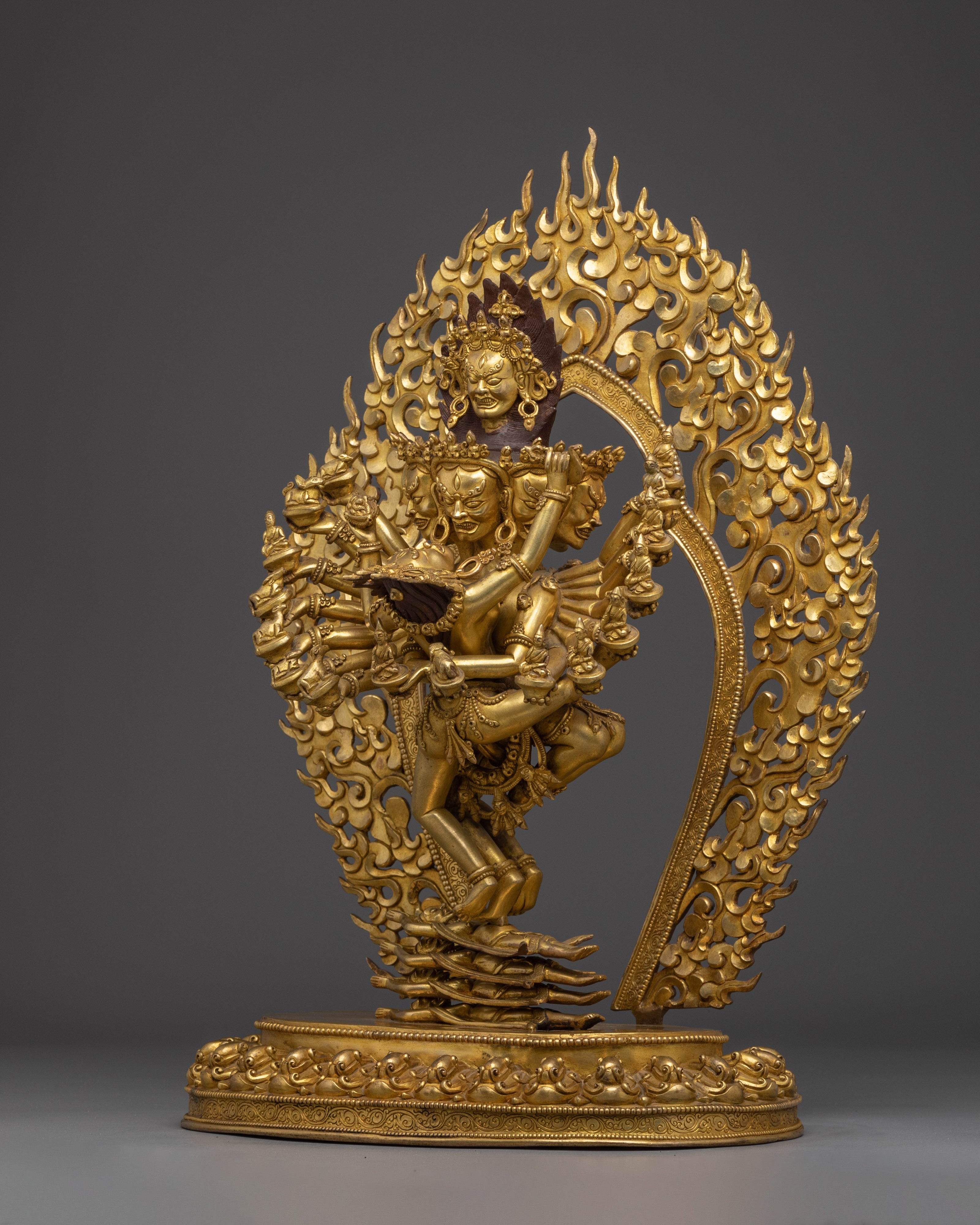
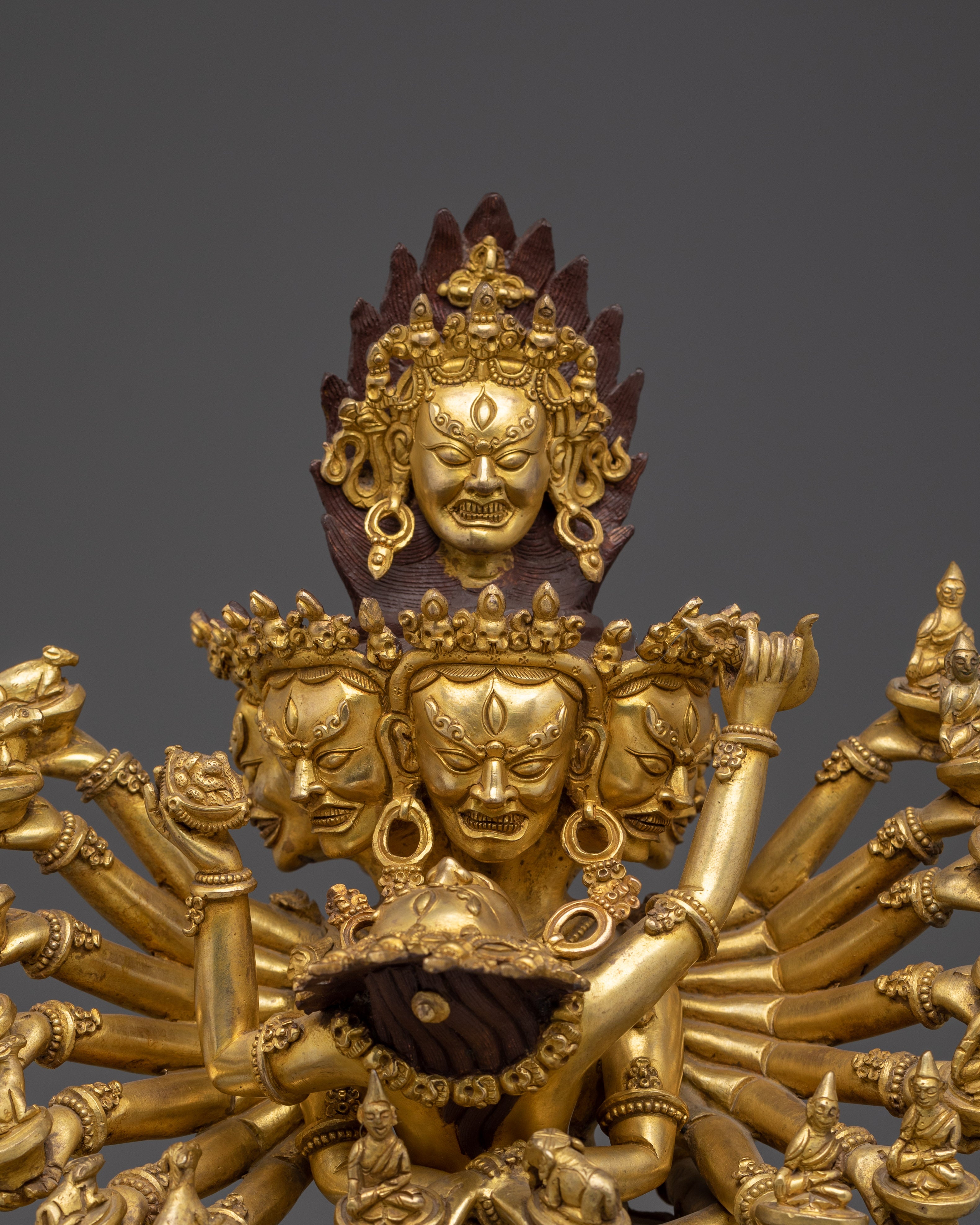
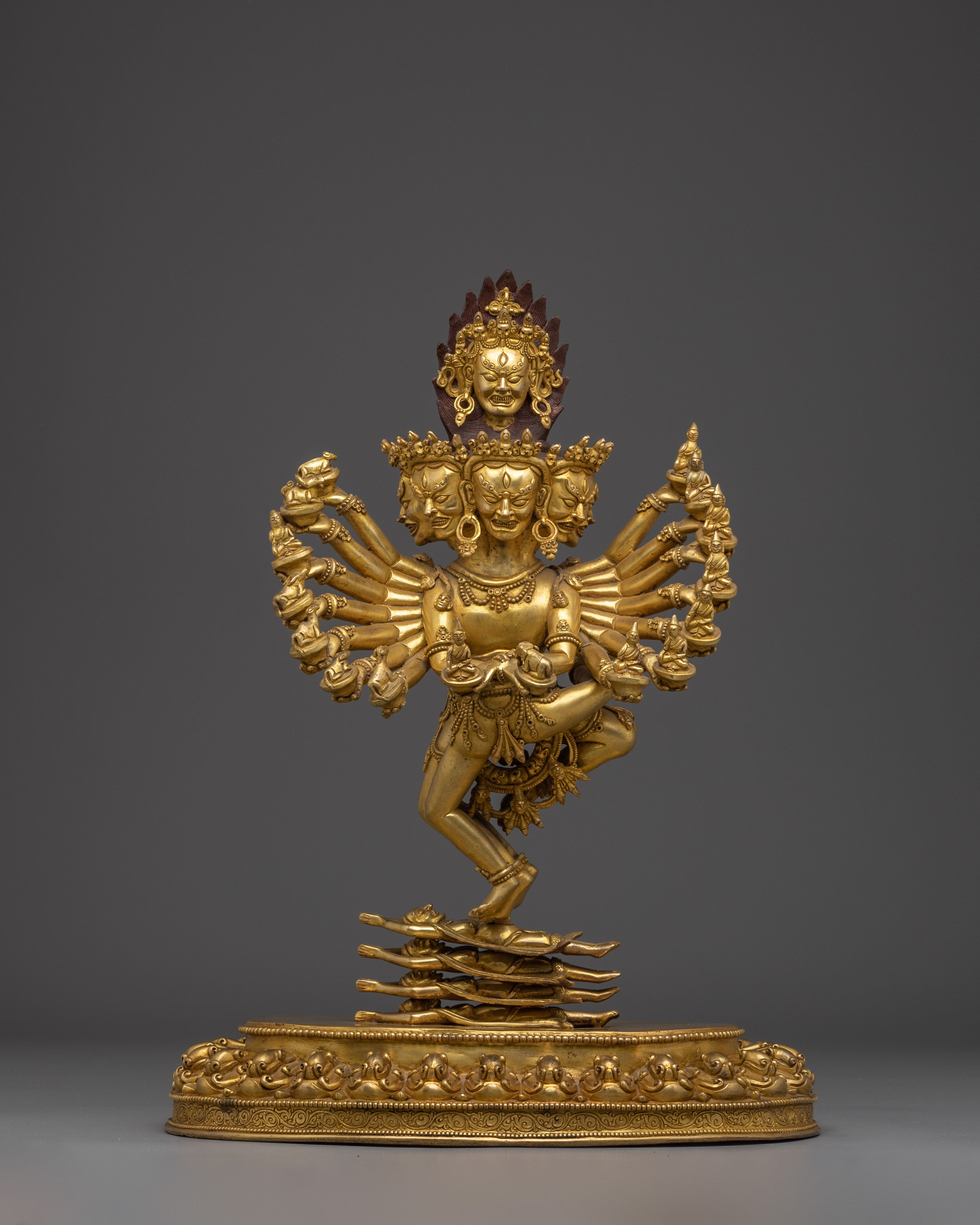
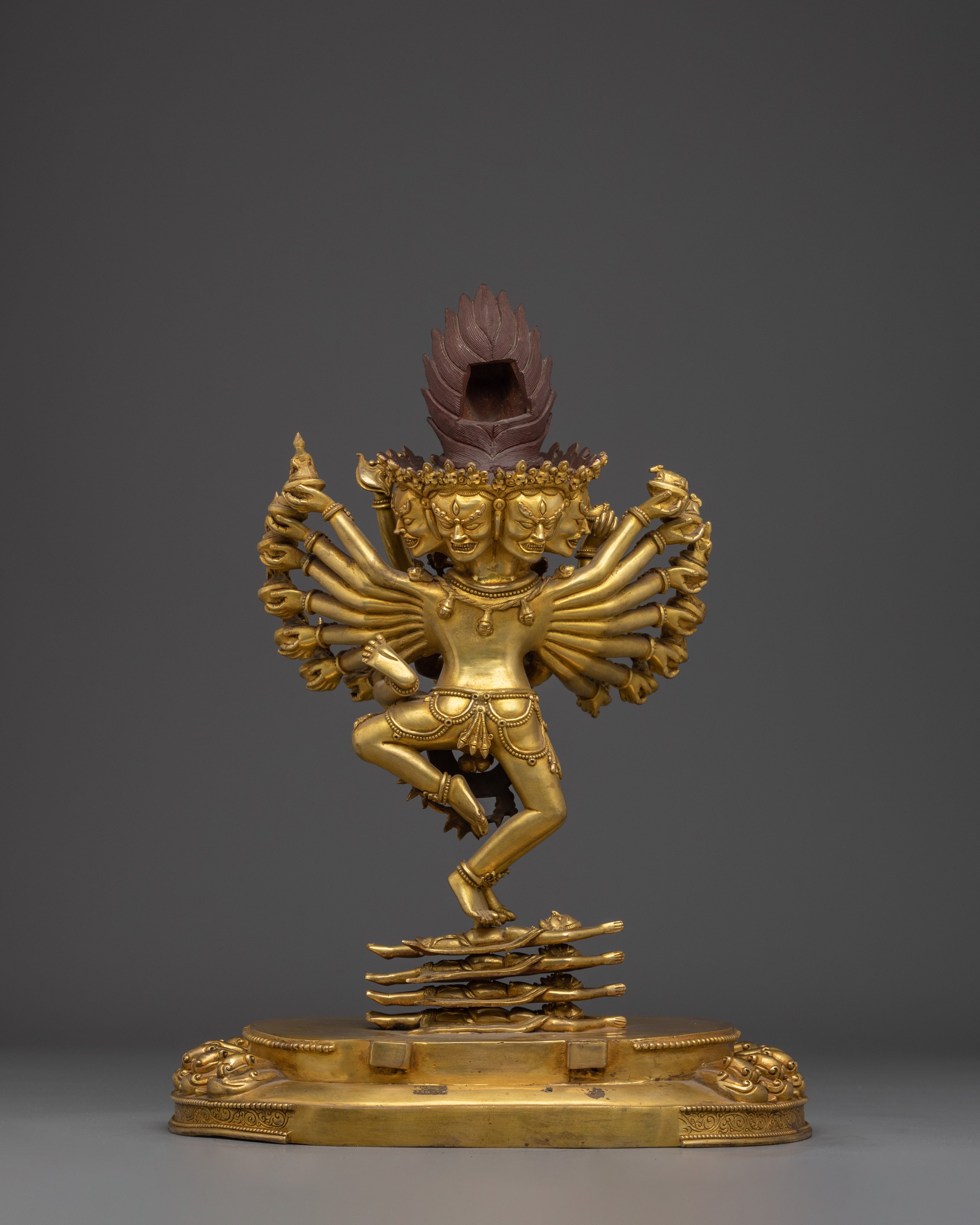
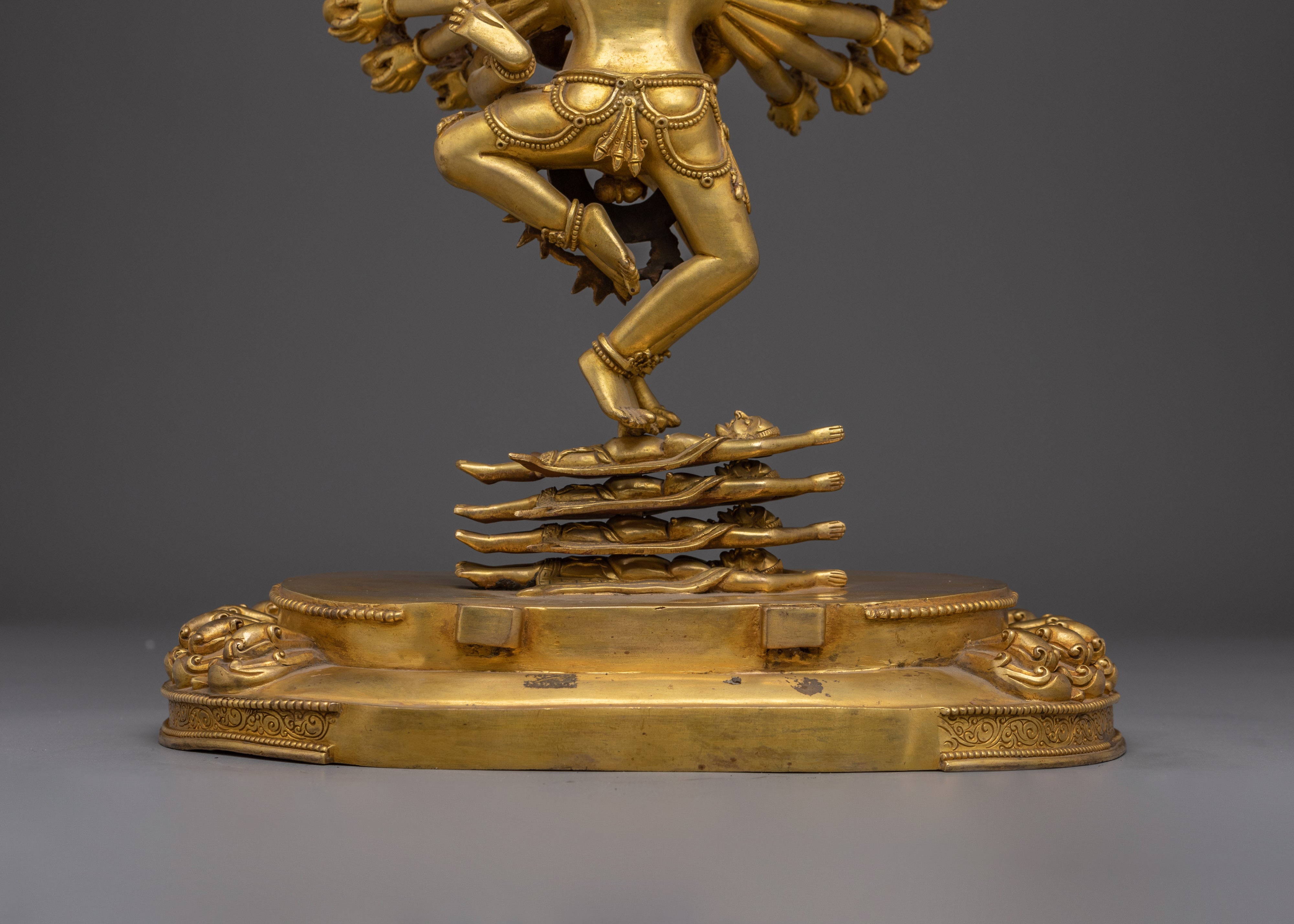
Tantric Deity Hevajra Statue is handcrafted from copper and adorned with 24K gold gilding, acrylic paintings, and expert craftsmanship. Standing at 18.1”/46cm in height with a base of 12.6”/32cm, it weighs 8.08 kg. Hevajra, a powerful tantric deity in Vajrayana Buddhism, symbolizes the union of wisdom and method. This formidable piece serves as a profound spiritual anchor for tantric practitioners, altar displays, or sacred art collections.
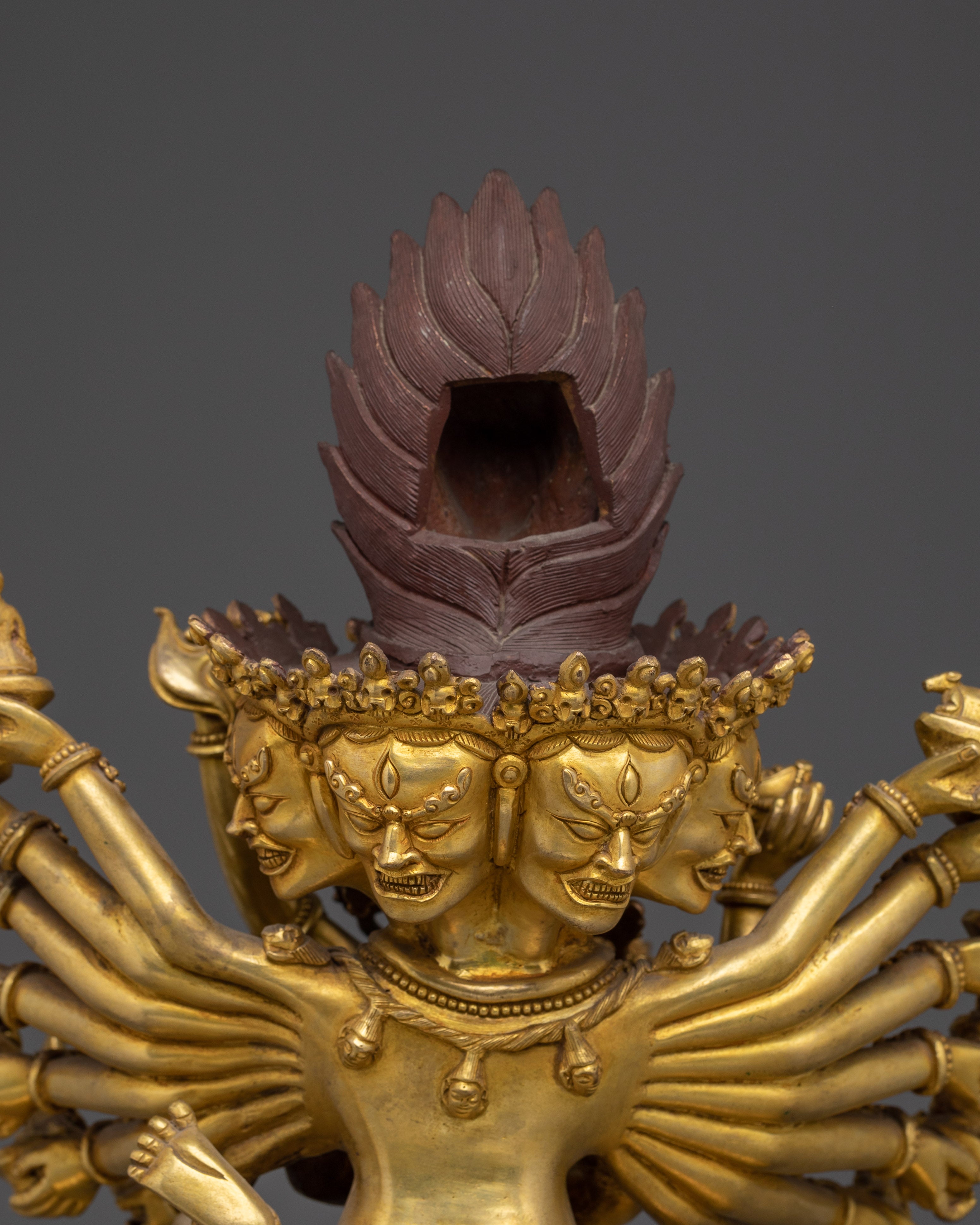
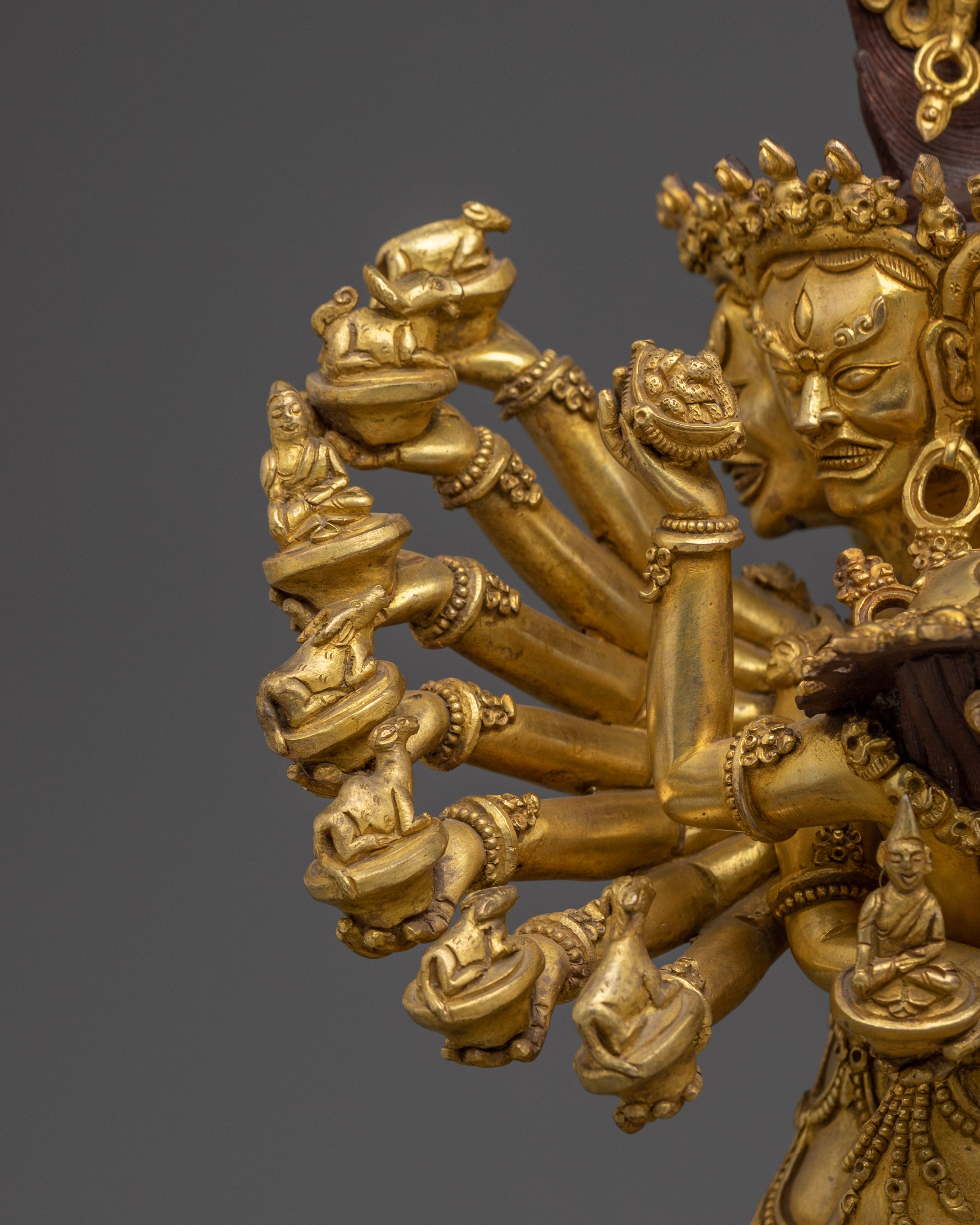
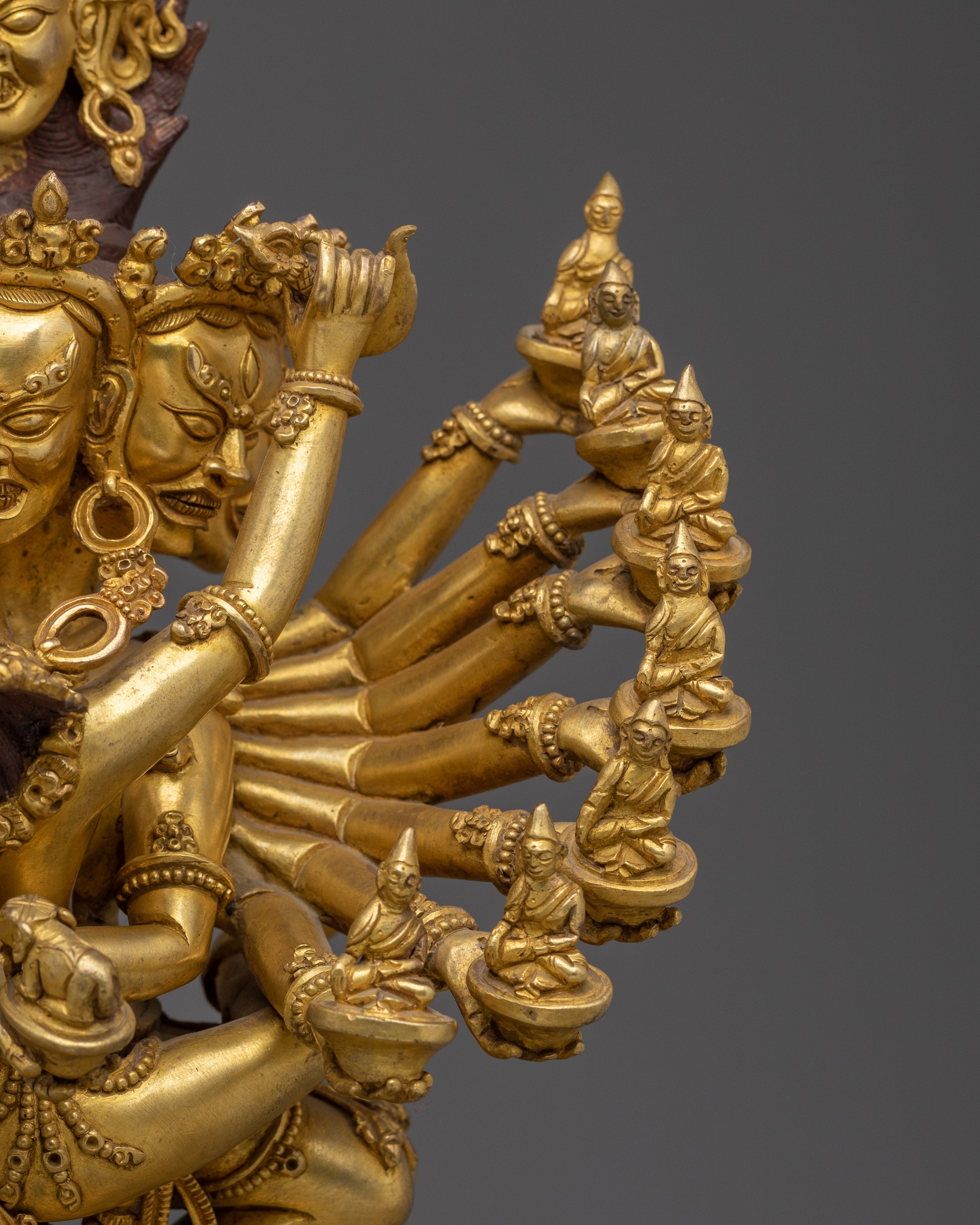
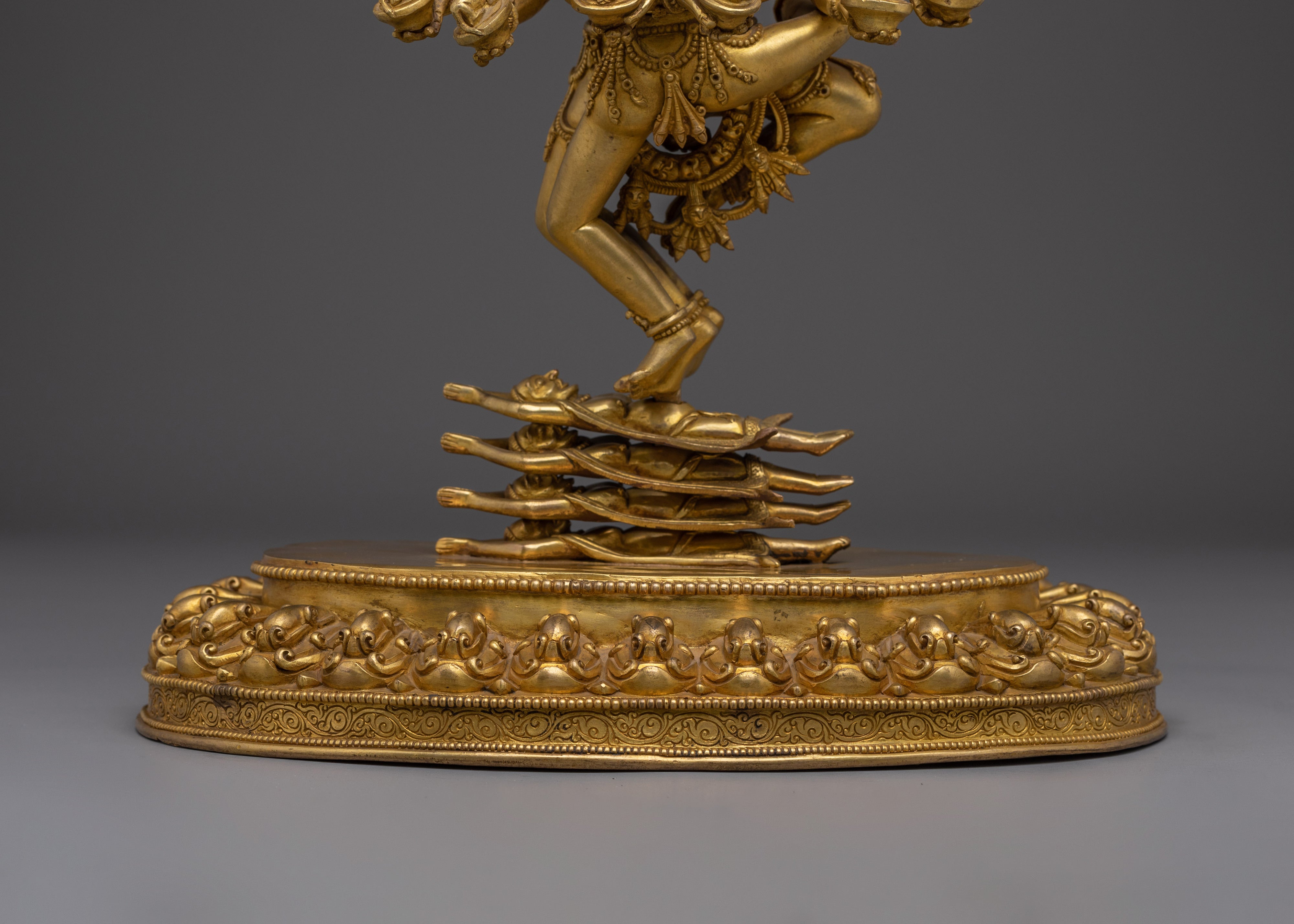
In his iconography, Hevajra is depicted in yab-yum union with his consort, Nairatmya, symbolizing the inseparability of method and wisdom. Hevajra features eight wrathful faces, each expressing fierce compassion, along with sixteen arms, emphasizing his power and dynamic presence in tantric Buddhism. He stands in a dancing posture atop a sun disc lotus base, triumphantly subduing the four maras, which represent obstacles to enlightenment.
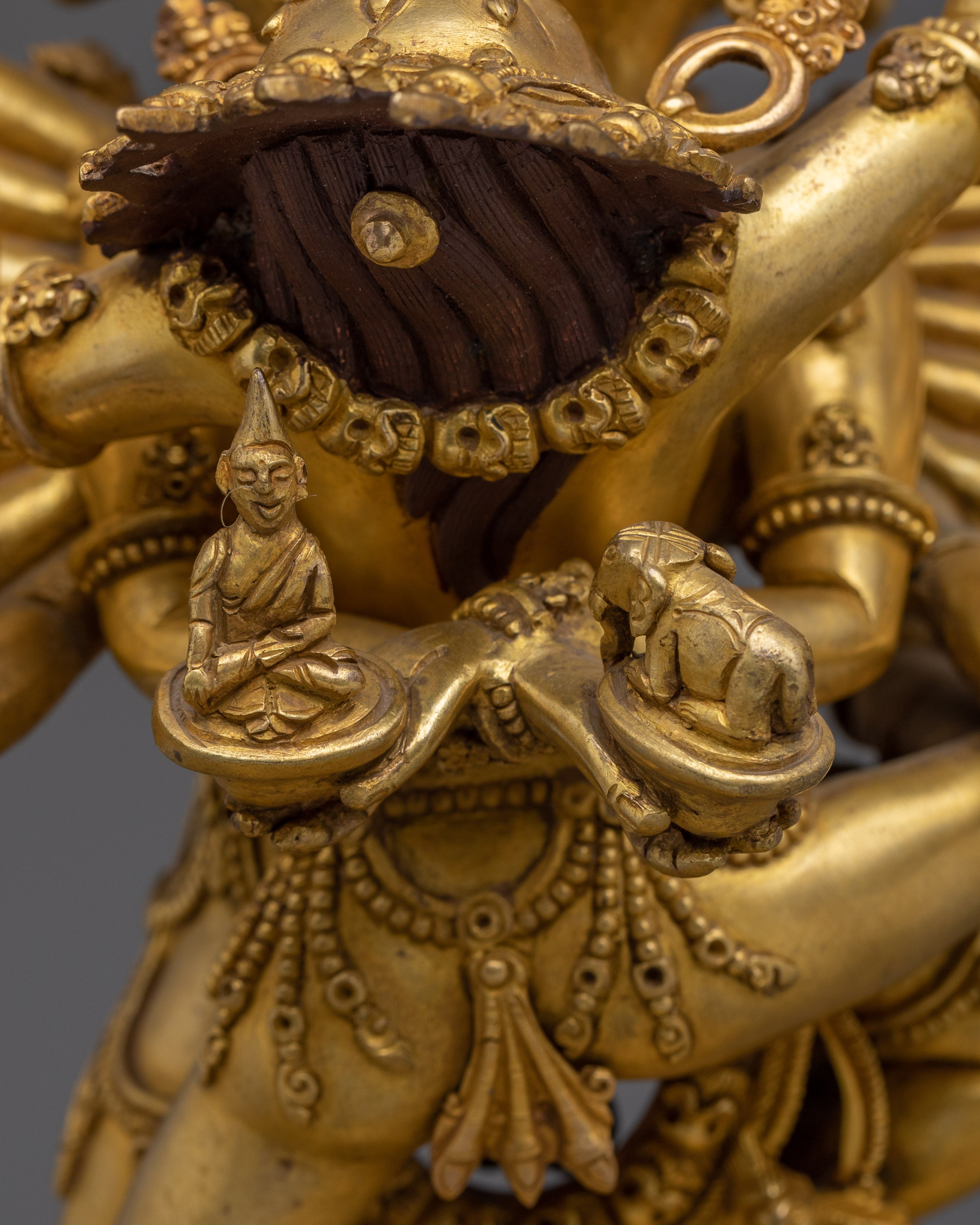
A flaming halo radiates from behind him, signifying the intense transformative energy of wisdom. In his right hands, Hevajra holds various symbolic animals, while his left hands carry representations of Buddhas, demonstrating his mastery over samsaric and enlightened realms. In his main hand, he has a skull cup, symbolizing the transformation of ignorance into wisdom. His consort Nairatmya, embodying selflessness, holds a kartika (ritual flaying knife), reinforcing the cutting away of ego and illusion. This intricate imagery reveals Hevajra’s role as a powerful tantric deity who destroys delusions and guides practitioners toward ultimate liberation.
Size: 18.1”/46cm (Height) x 12.6”/32cm (Base)
Weight: 8.08 kg
Material: 24K Gold Gilded, Acrylic Paintings, Copper Body
Hevajra is a significant deity in Vajrayana Buddhism, representing the necessary combination of wisdom and compassion for enlightenment. He is depicted as an influential, multi-armed figure, often accompanied by his spouse, Nairatmya, which signifies the combination of wisdom and skillful means. His approach entails complicated images and rituals that transform everyday experiences into enlightened states. Hevajra is especially important in the Sakya school of Tibetan Buddhism, where his tantra is a central practice.