





Description
A Thangtong Gyalpo 24K Gold Gilded Statue Inspiring Ingenuity and Devotion
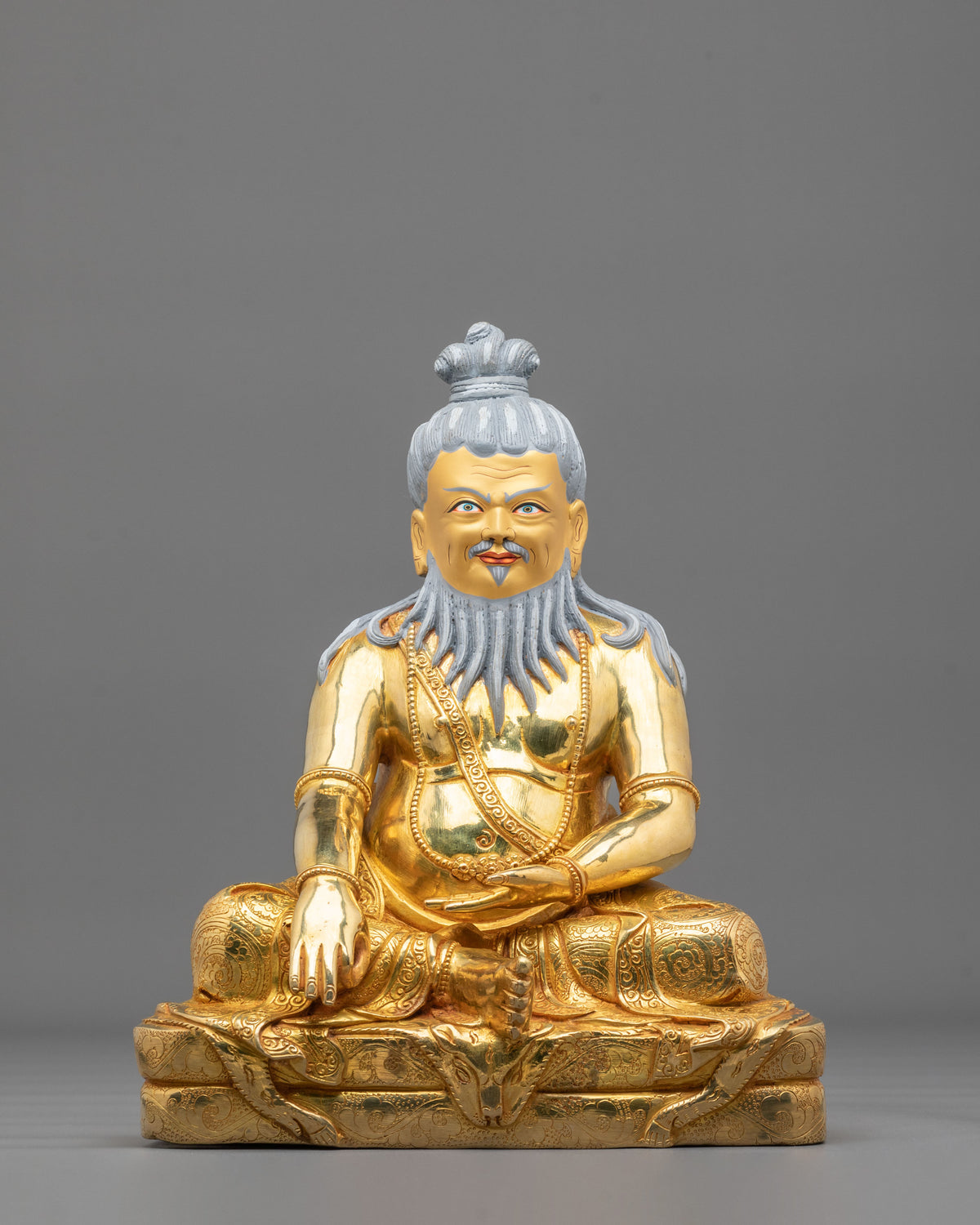
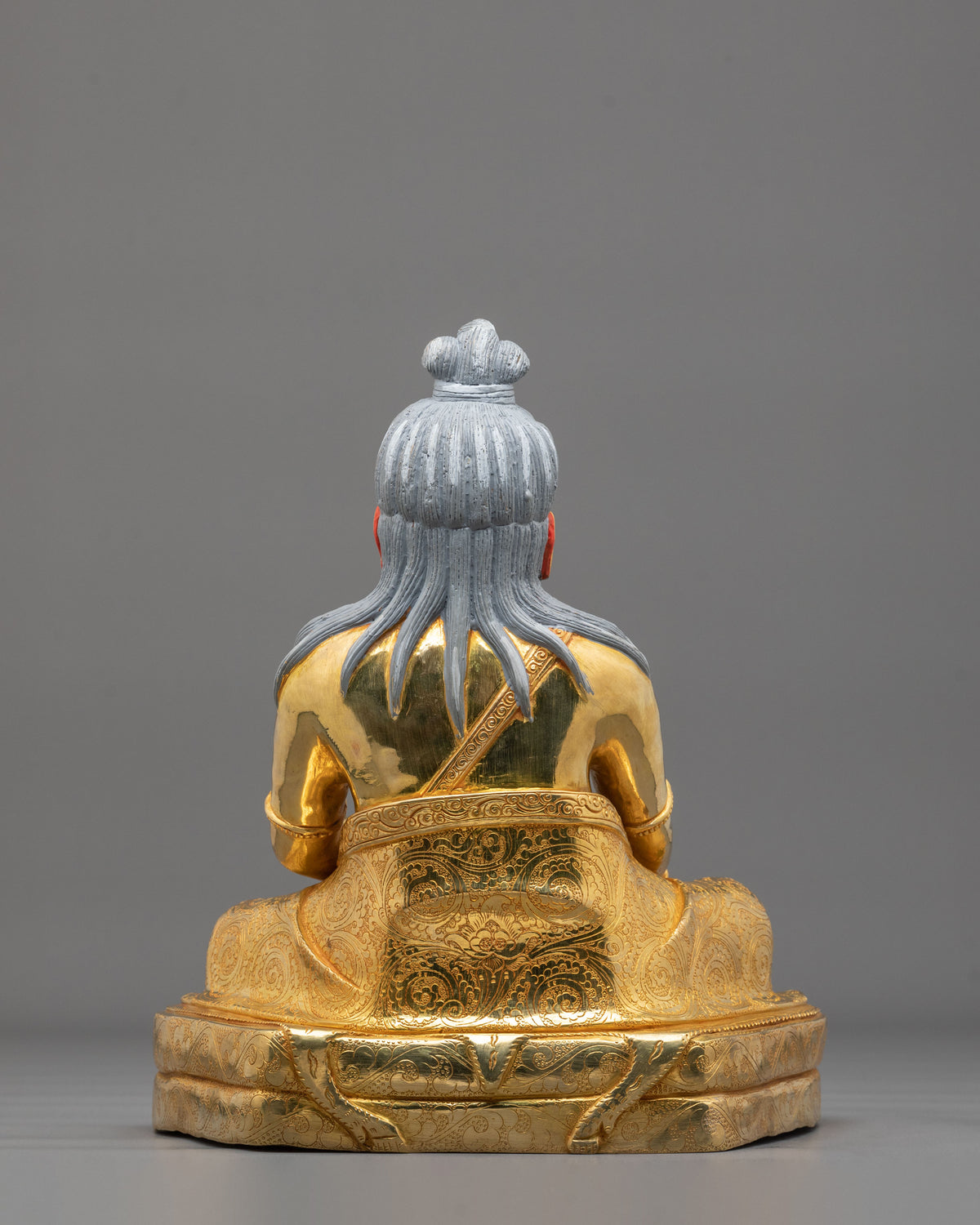
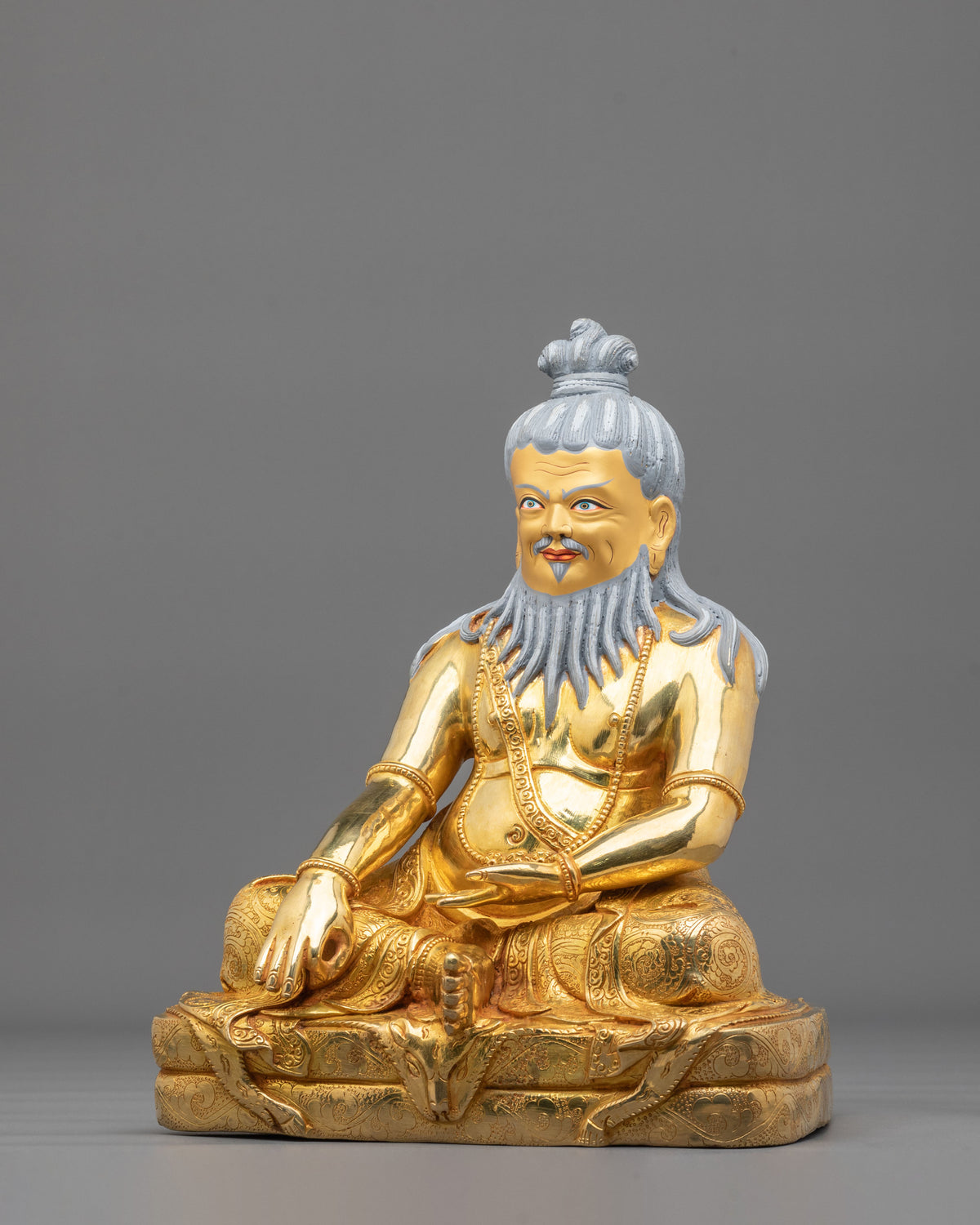
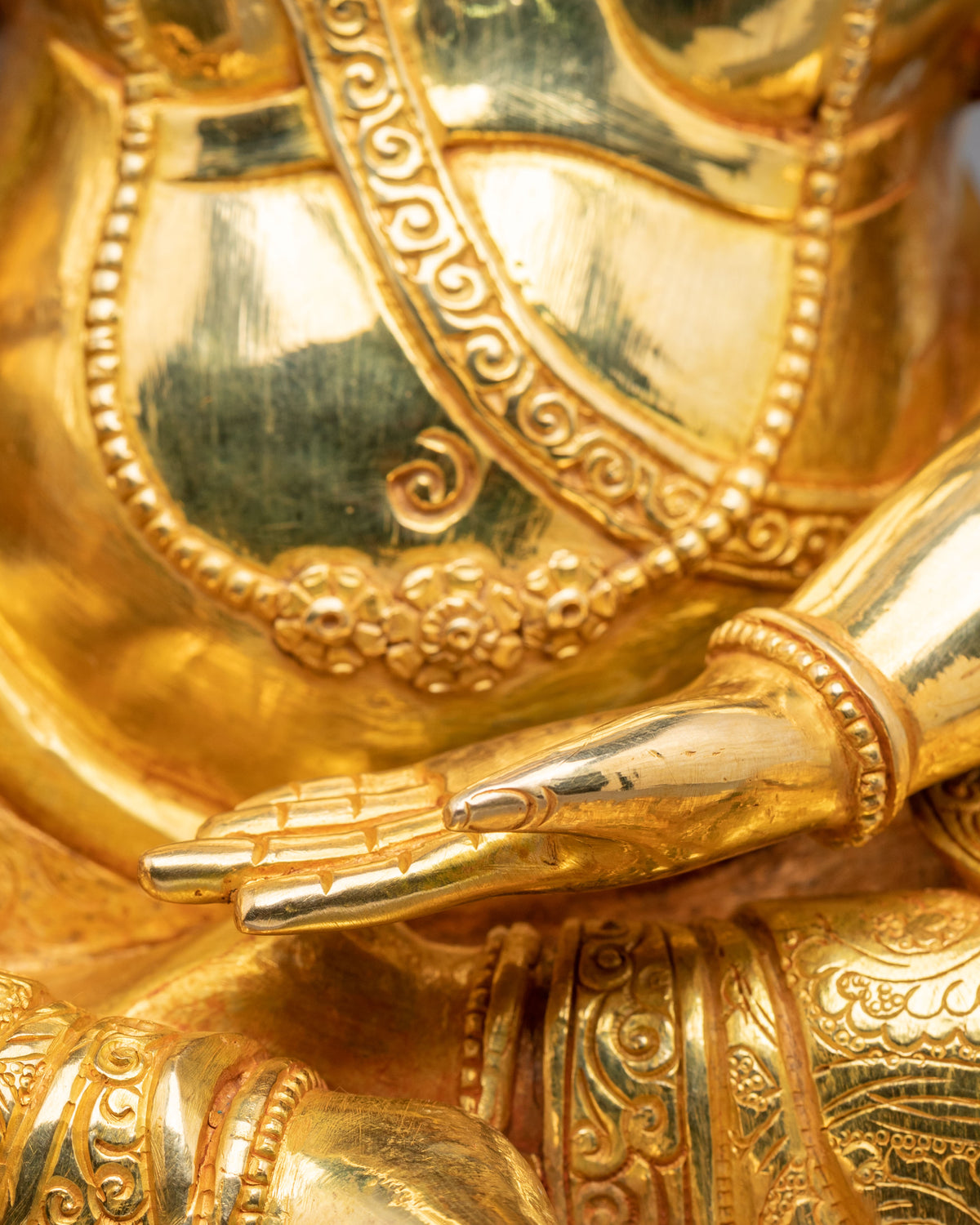
This Thangtong Gyalpo 24K Gold Gilded Statue measures 11.22”/28.5cm in height with a 9.45”/24cm base and weighs 4.65 kg. Handcrafted by skilled artisans, this sculpture features a copper body finished with 24K gold gilding and detailed acrylic painting. The radiant gold surface highlights the finely carved details across the master’s facial features, flowing beard, garments, jewelry, and pedestal, while the acrylic painting adds depth and character to the expressive appearance. The intricate engraved patterns on the robes and base showcase traditional Himalayan craftsmanship, creating a meaningful representation of one of Tibet’s most respected Buddhist masters. This statue is suitable for Buddhist altars, meditation spaces, Dharma centers, monasteries, or spiritual collections.
The sculpture depicts Thangtong Gyalpo, the renowned Tibetan Buddhist master, yogi, engineer, and accomplished practitioner, seated in a relaxed posture upon an intricately decorated pedestal. He is portrayed with his distinctive long white beard, tied hair, and wise expression, representing his advanced realization and experience. His right hand extends downward in a gesture of blessing and teaching, while his left hand rests near his lap holding a symbolic attribute associated with his spiritual practice. He wears simple yet finely detailed robes with engraved patterns and ornamental details, reflecting his identity as both a realized master and skilled artisan. The calm expression, unique appearance, and carefully carved details make this sculpture a distinctive representation of Thangtong Gyalpo in Himalayan Buddhist art.
Size: 11.22”/28.5cm (Height) x 9.45”/24cm (Base)
Weight: 4.65 kg
Material: 24K Gold Gilded, Acrylic Painting, Copper Body
Thangtong Gyalpo (1385–1464 or 1385–1509), renowned as "The Iron Bridge Builder," was an extraordinary Tibetan mahasiddha, physician, and engineer. Driven by boundless compassion, he is historically credited with constructing numerous innovative iron chain suspension bridges across Tibet and Bhutan, dramatically improving travel and facilitating pilgrimage for countless individuals. Beyond his engineering feats, he also founded significant monasteries, developed the distinct Tibetan operatic tradition of Ache Lhamo, and introduced advanced metallurgical techniques, all aimed at benefiting sentient beings and enriching Himalayan culture.