


Description
Guru Norla: Embodiment of Abundance and Spiritual Wealth
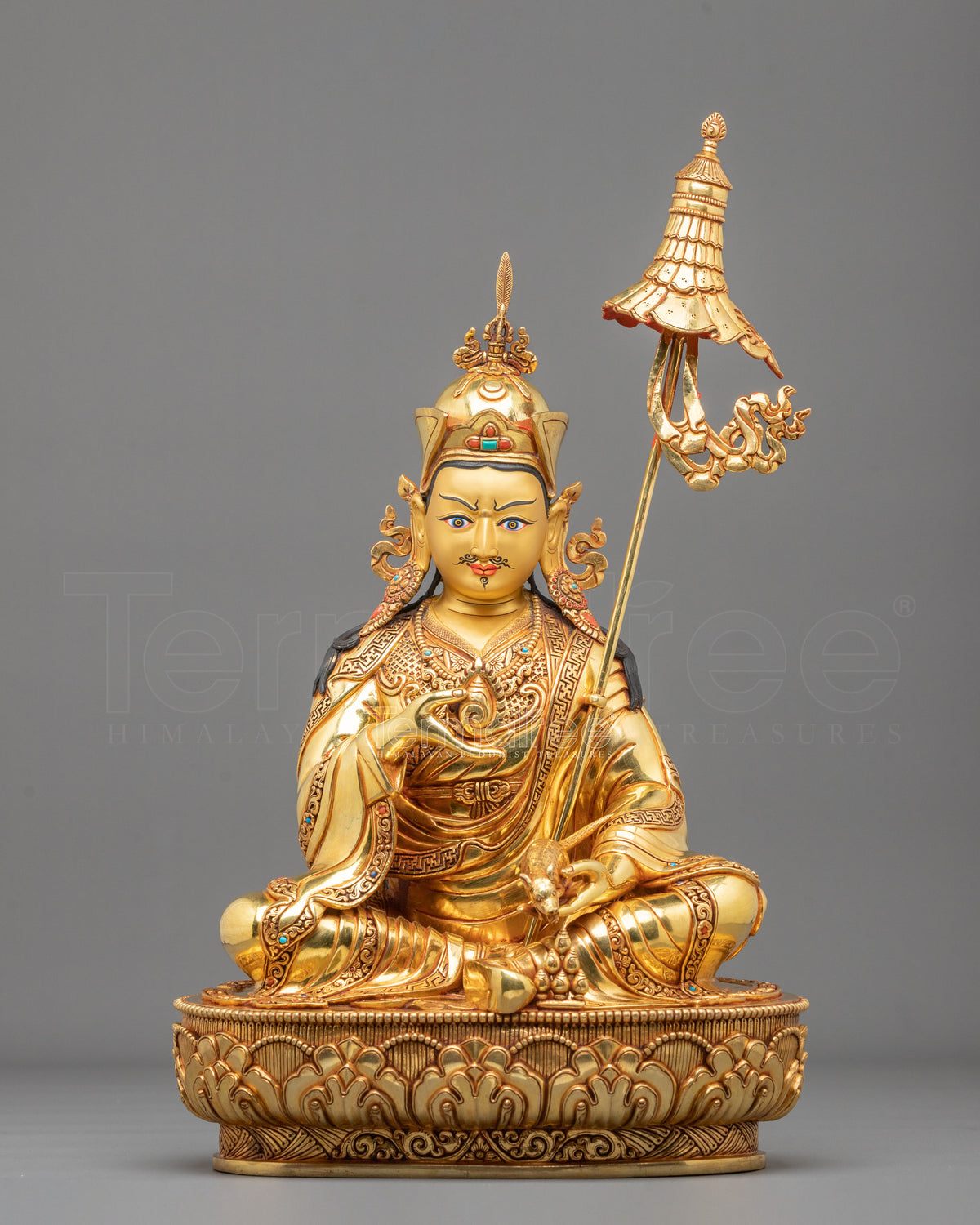
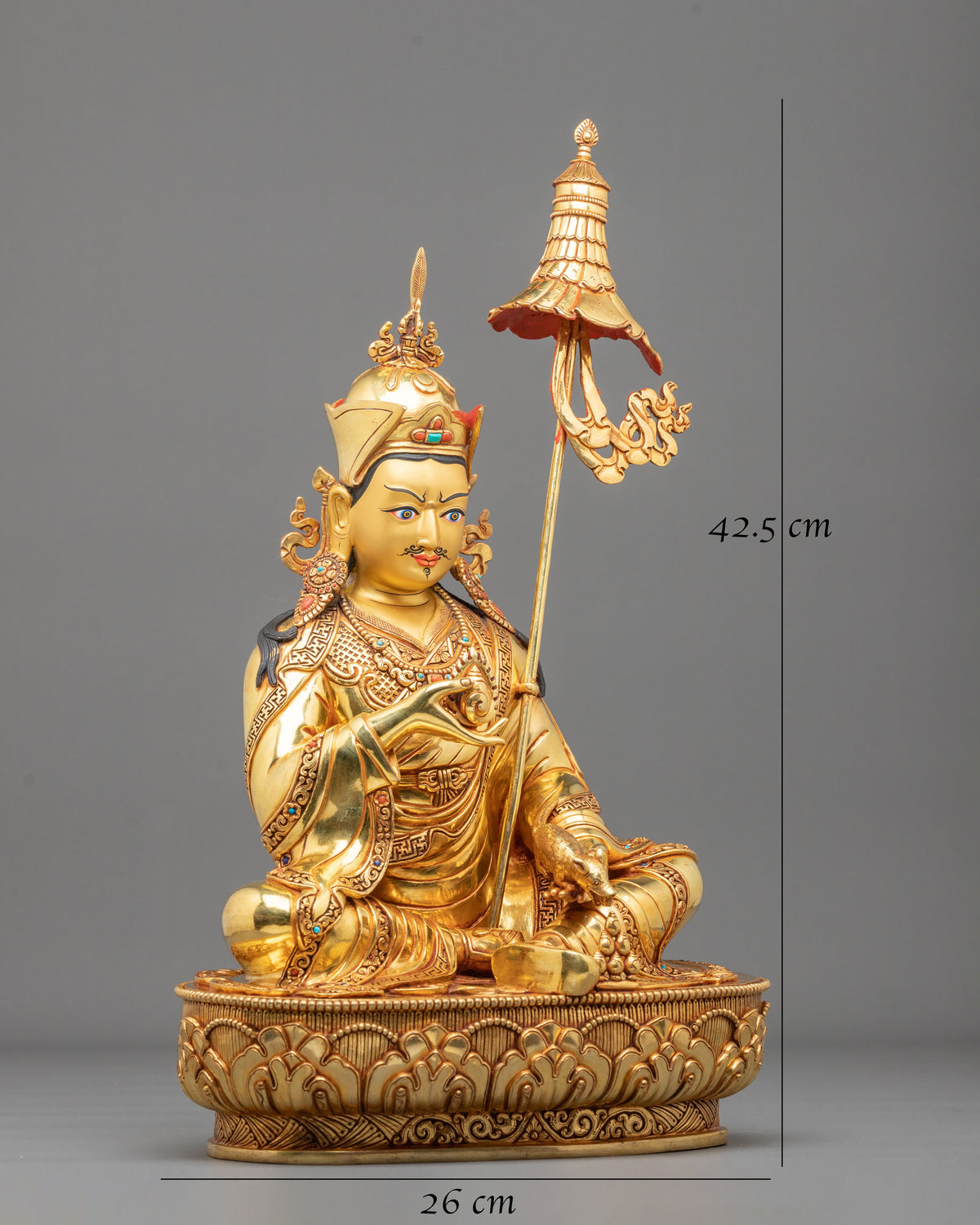
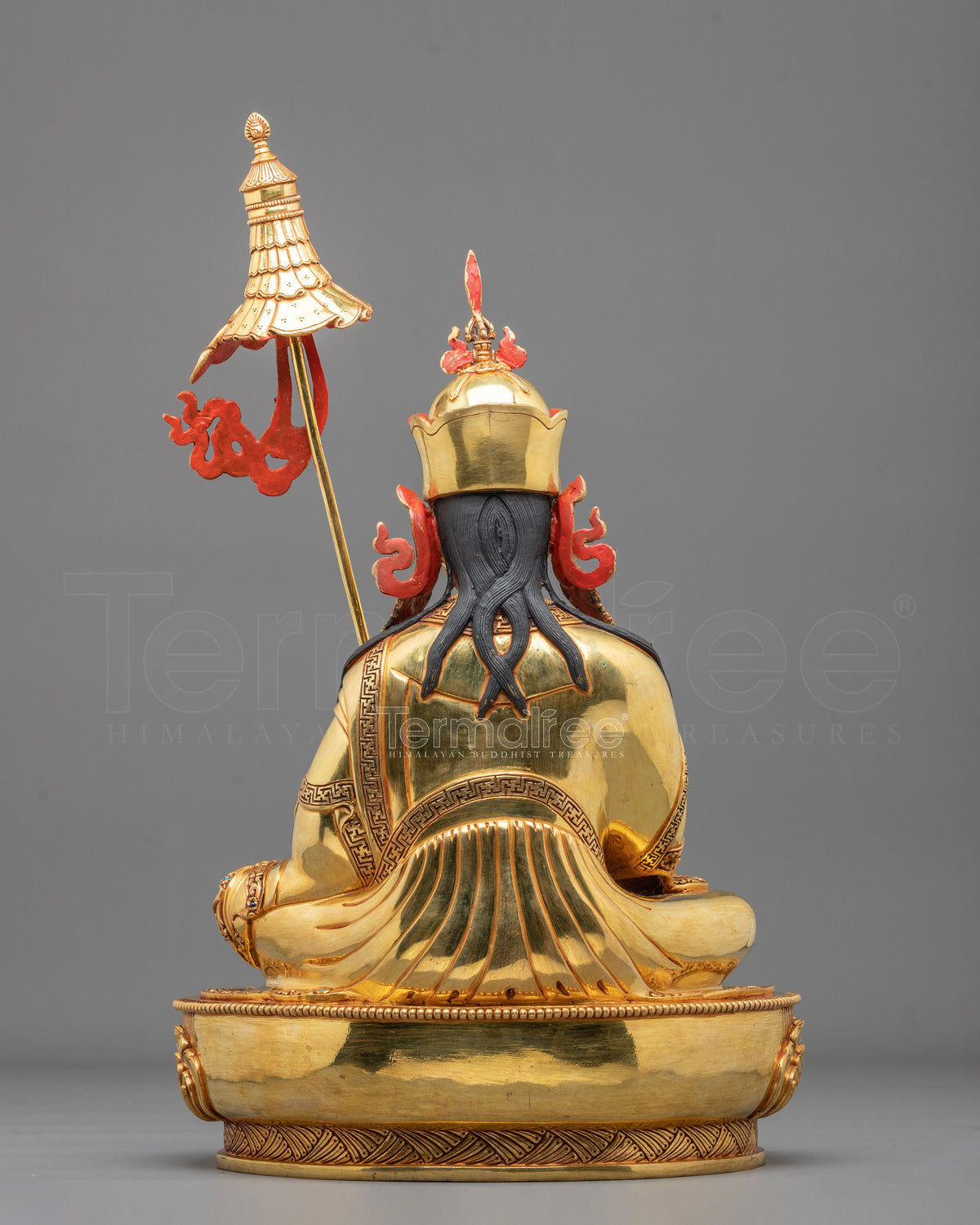
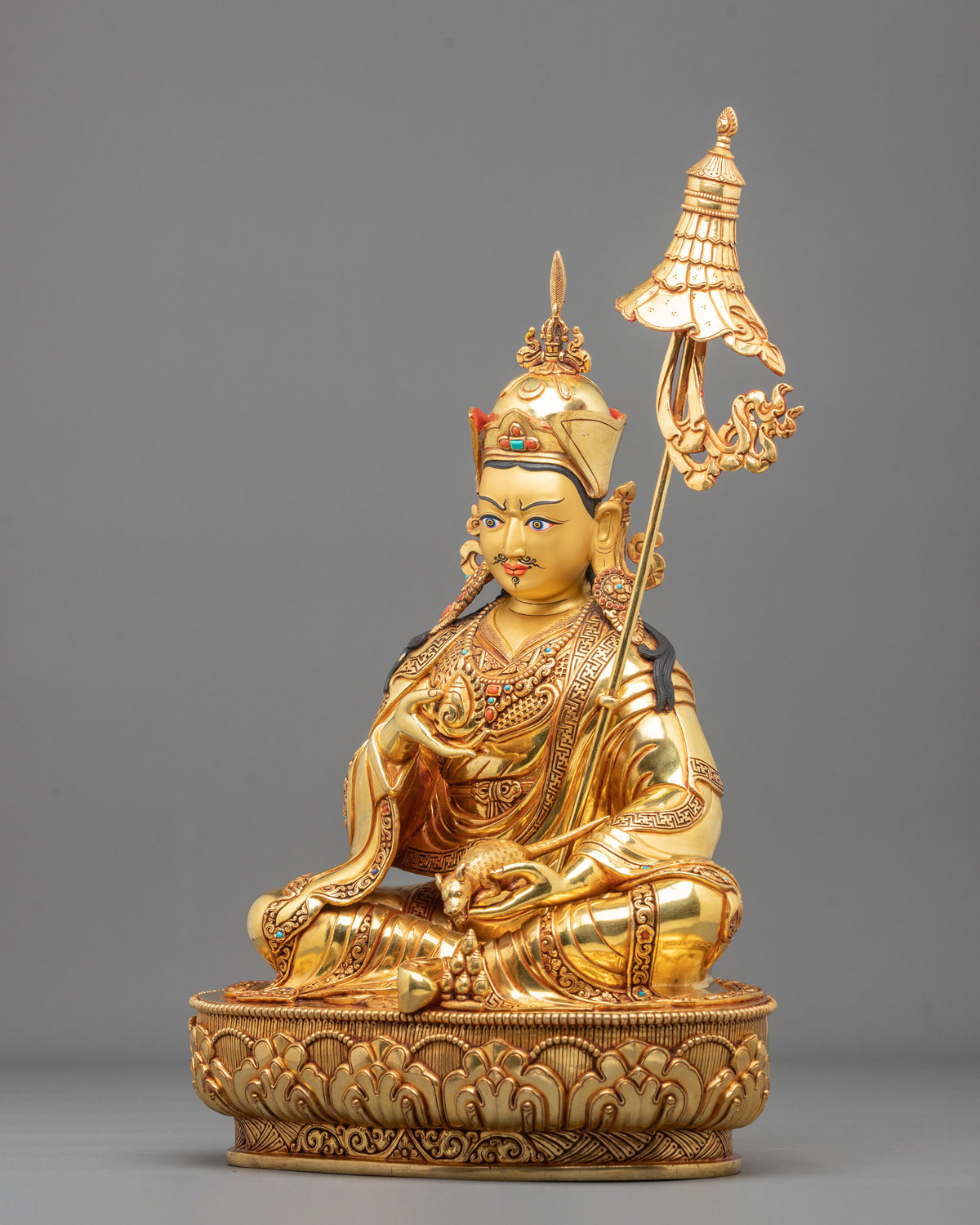
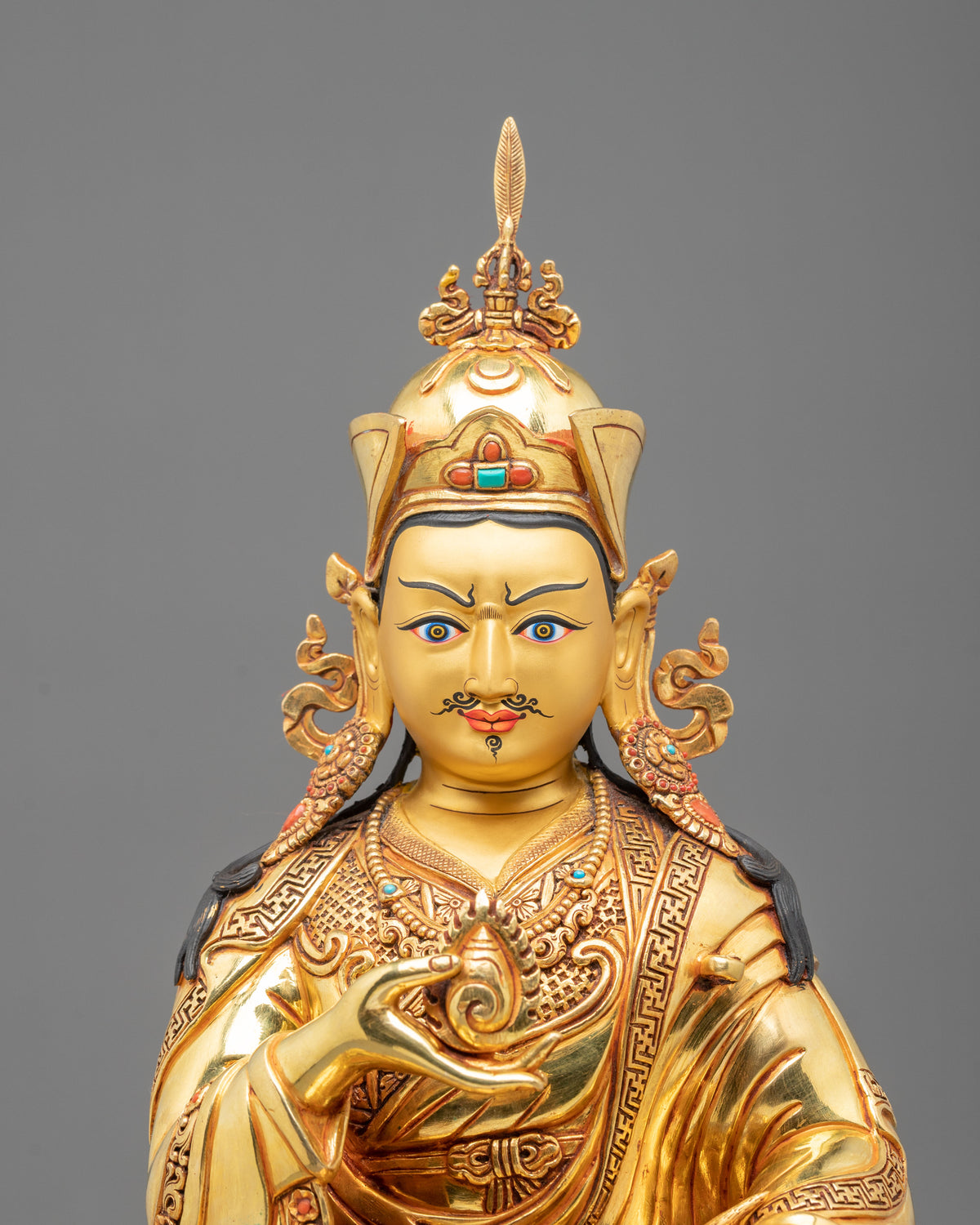
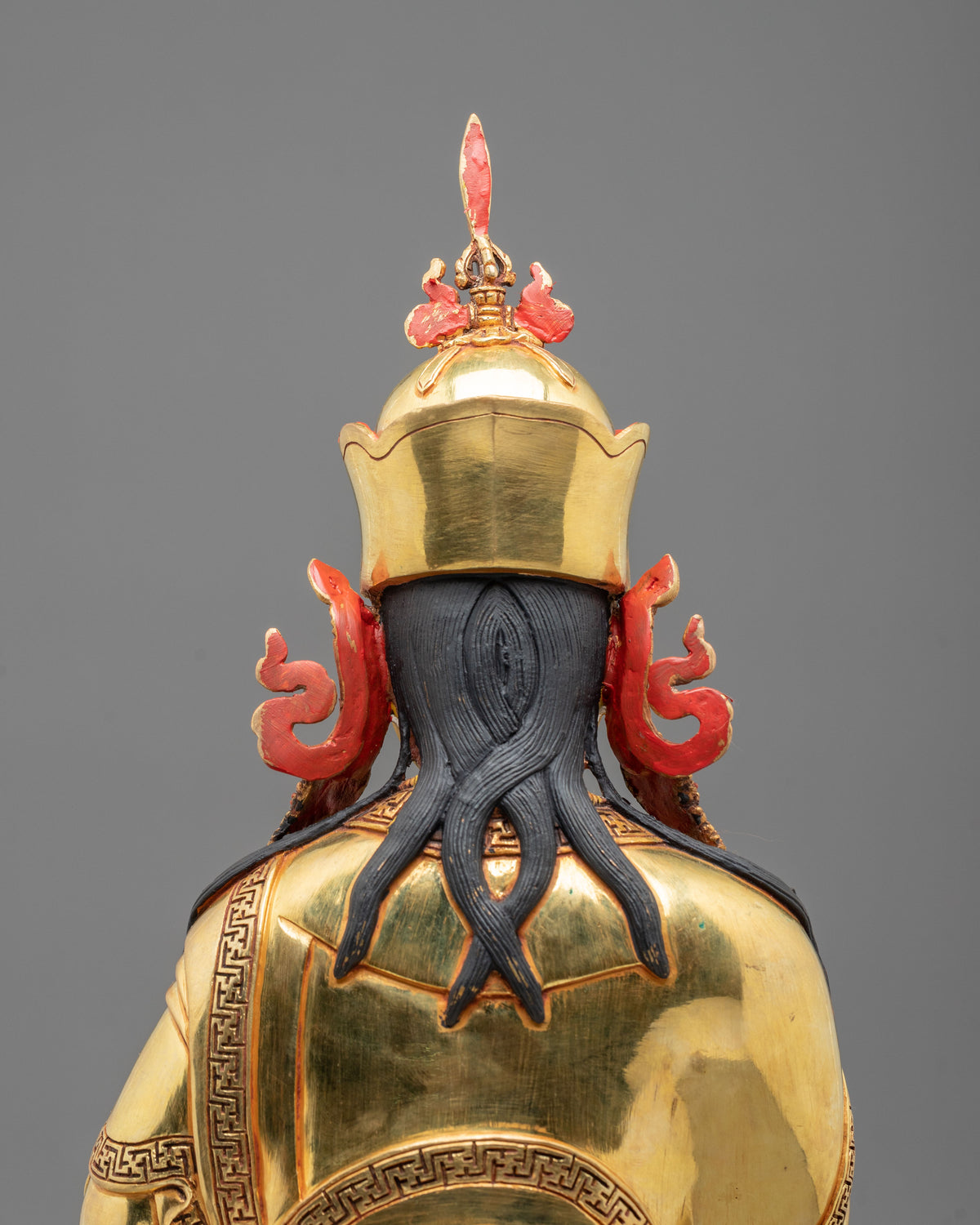
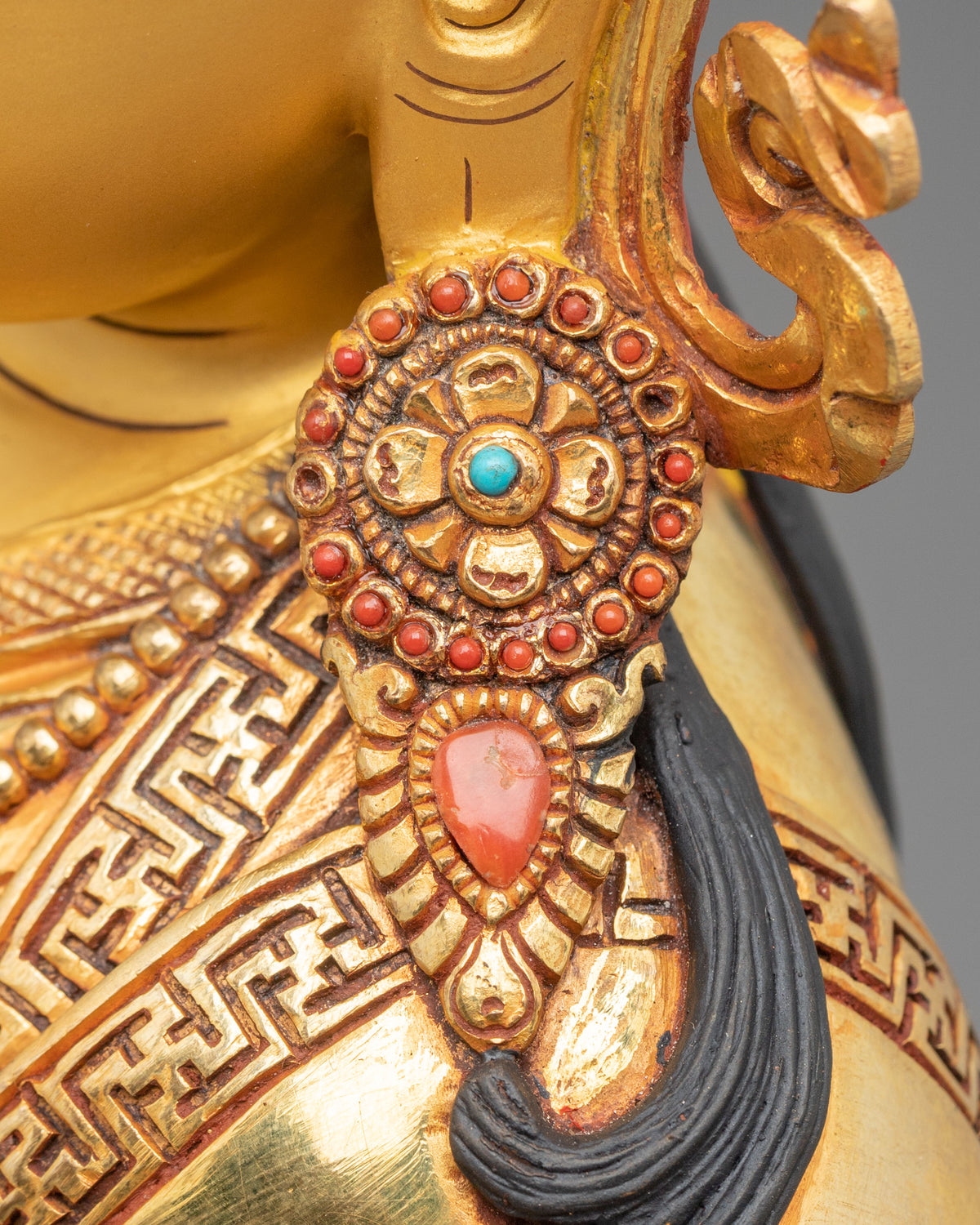
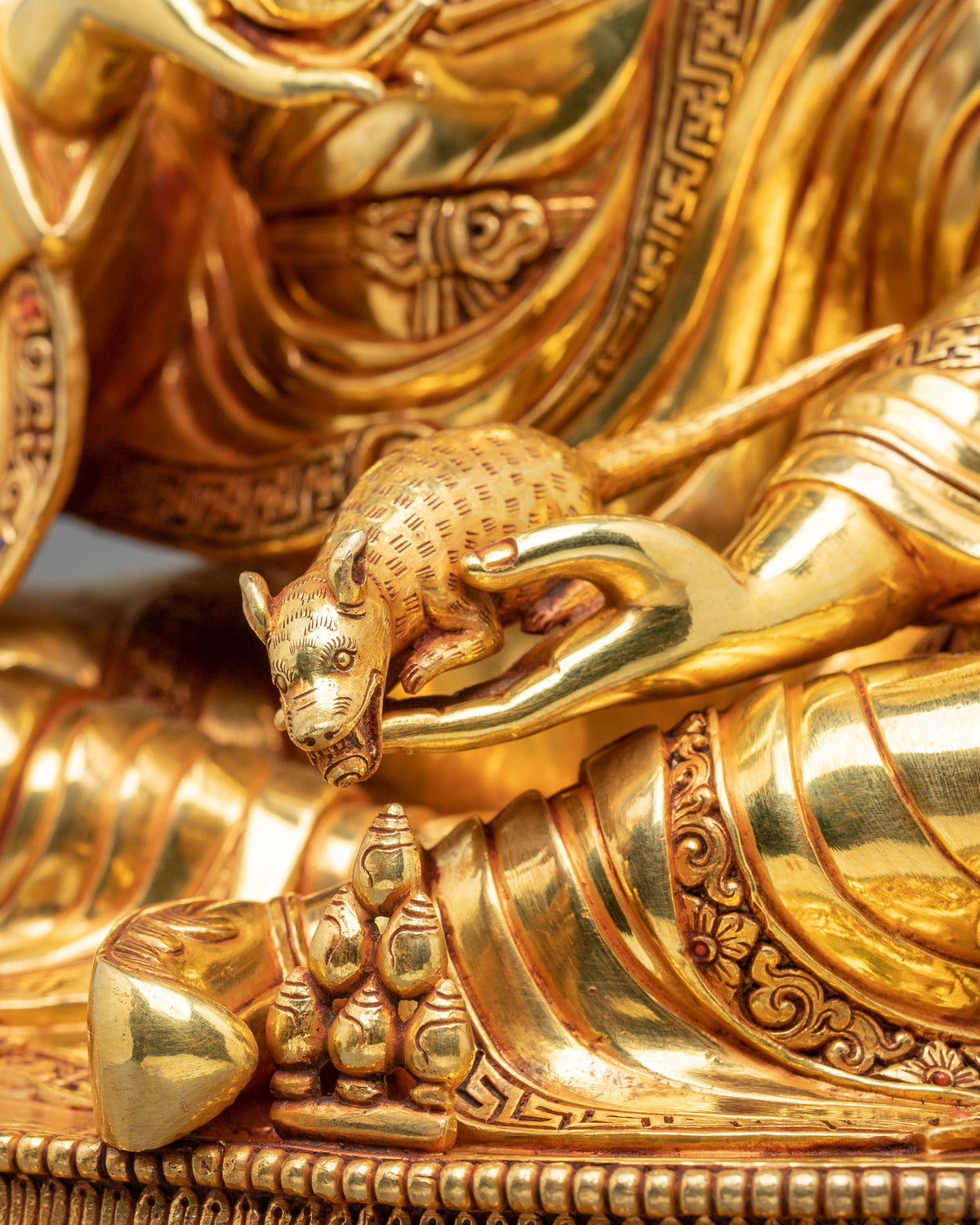
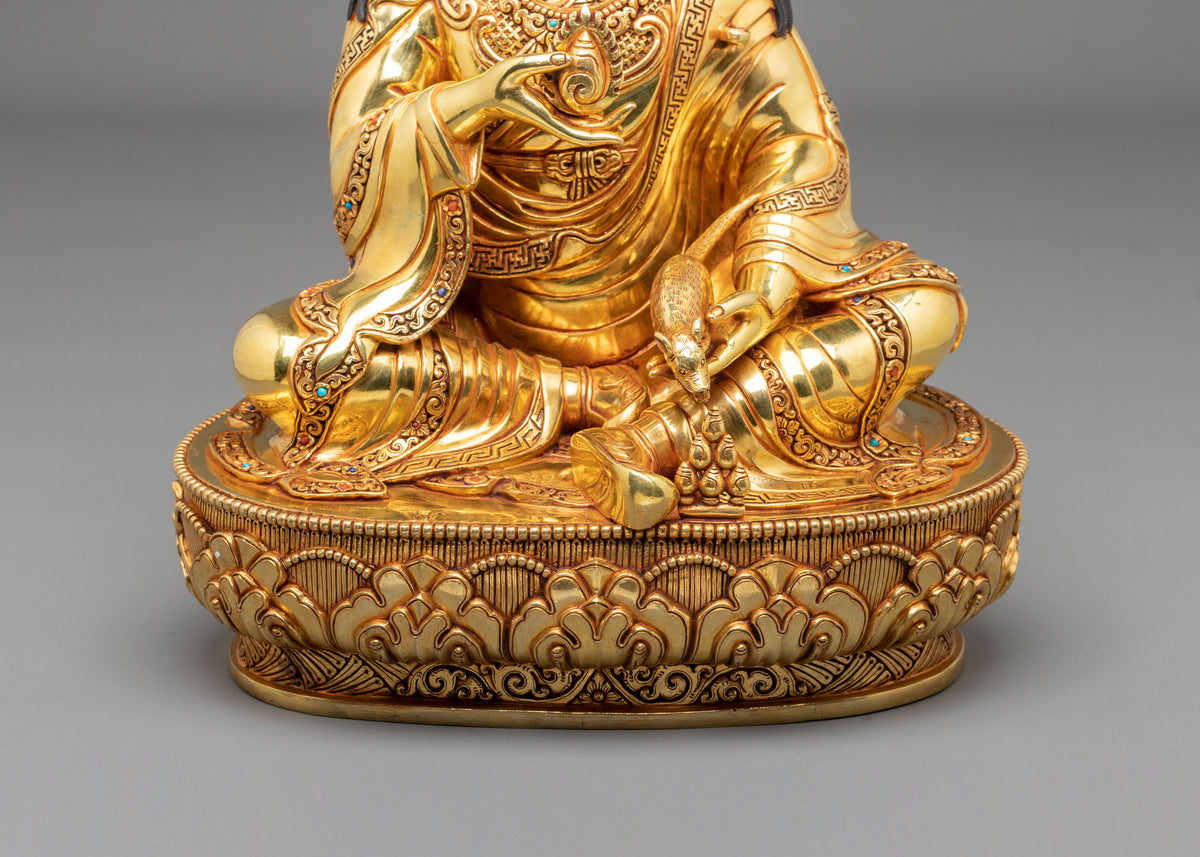
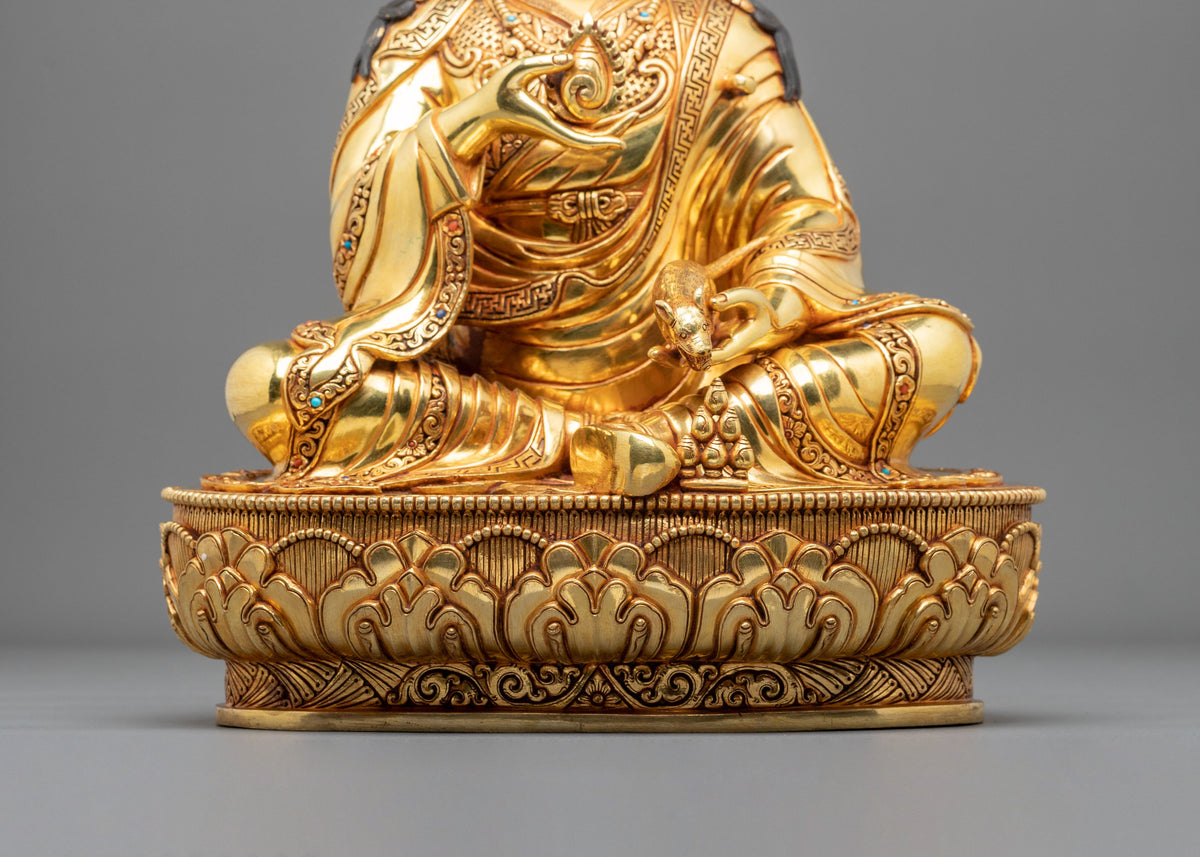
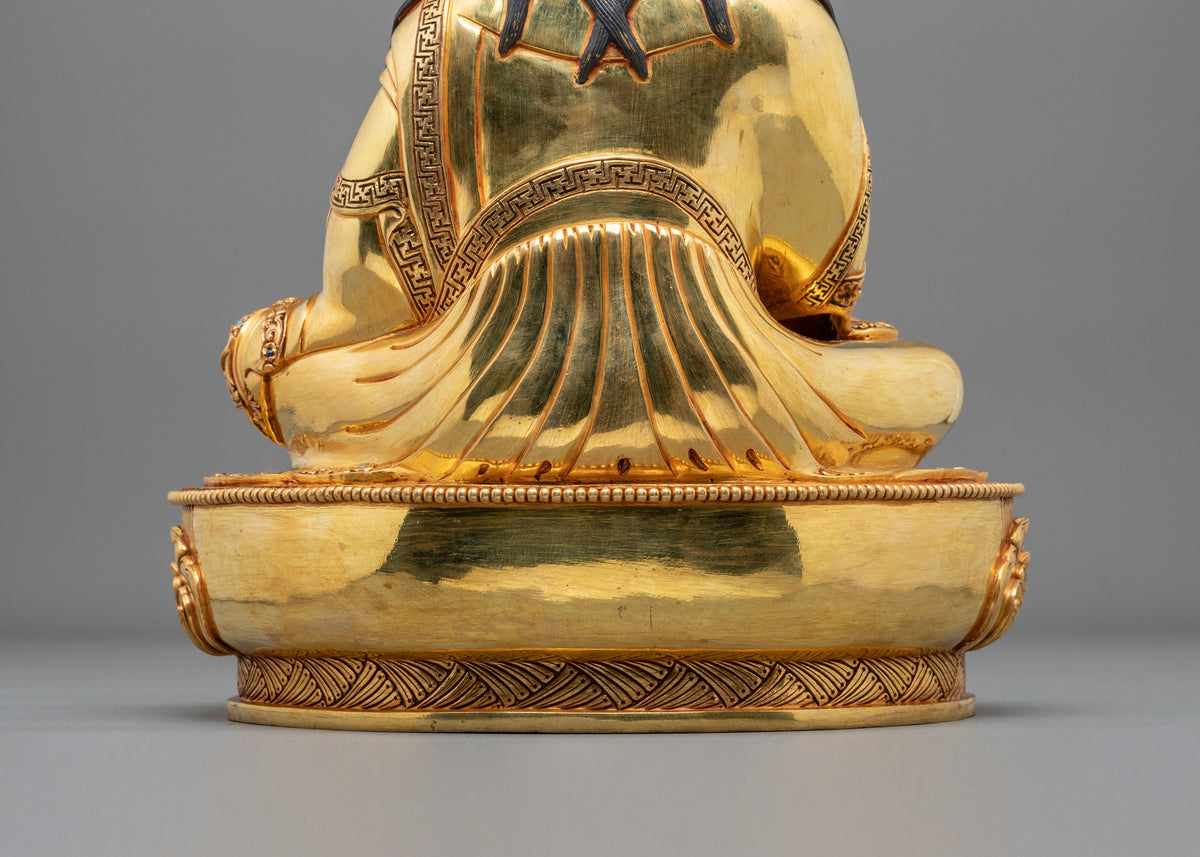
This Guru Norla Statue, the revered manifestation of abundance, prosperity, and generosity in Tibetan Buddhism, stands at 16.73”/42.5cm in height and 10.24”/26cm at the base, weighing 5.96 kg. It is made of copper, covered with 24K gold gilding, and features deeply engraved carvings across the deity’s ornaments, garments, crown, sacred attributes, and lotus pedestal that create a refined three-dimensional effect. This sculpture is handcrafted by skilled Himalayan artisans, combining traditional metal craftsmanship with detailed acrylic painting and gemstone embellishments. The intricate jewelry, symbolic elements, and carefully carved details reflect the rich artistic traditions of Tibetan Buddhist sculpture, making it a meaningful addition to altars, meditation places, Dharma centers, or sacred collections.
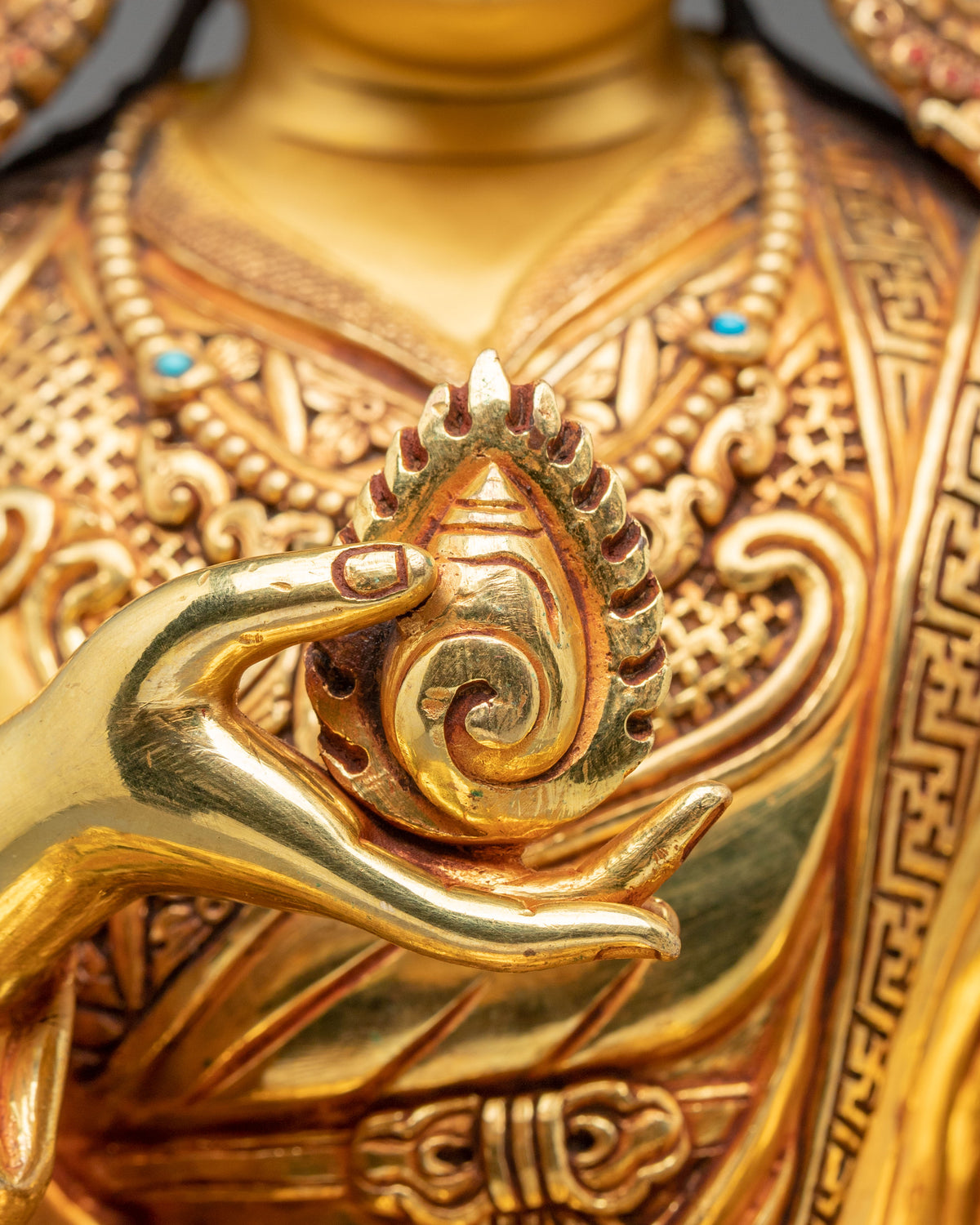
This sacred depiction portrays Guru Norla, also known as Dzambhala in the Nyingma tradition, a revered wealth deity associated with prosperity, generosity, and the accumulation of spiritual and material resources. He is shown seated upon a lotus pedestal in a majestic royal posture, wearing an elaborate crown, necklaces, earrings, and richly decorated garments symbolizing enlightened abundance. His right hand holds a citron fruit, representing generosity, fulfillment, and the ripening of positive qualities, while his left hand holds a jewel-spitting mongoose, symbolizing the transformation of greed and the effortless offering of precious resources. His peaceful yet powerful expression, ornate jewelry adorned with gemstones, detailed robes, and finely carved lotus throne highlight his role as a compassionate deity who supports practitioners in overcoming scarcity and cultivating generosity.
Size: 16.73”/42.5cm (Height) x 10.24”/26cm (Base)
Weight: 5.96 kg
Material: 24K Gold Gilded, Acrylic Painting, Copper Body, Gemstones
Guru Norla is a revered form of Padmasambhava (Guru Rinpoche), specifically associated with wealth and prosperity in Tibetan Buddhism. He is invoked to alleviate poverty, both material and spiritual, and to bestow abundance, resources, and favorable conditions for Dharma practice. His practice emphasizes generosity, compassion, and the understanding that true wealth is ultimately spiritual liberation and the ability to benefit all beings.