Tibetan Wealth Deity: Dzambhala Statue | Radiating Abundance and Benevolence
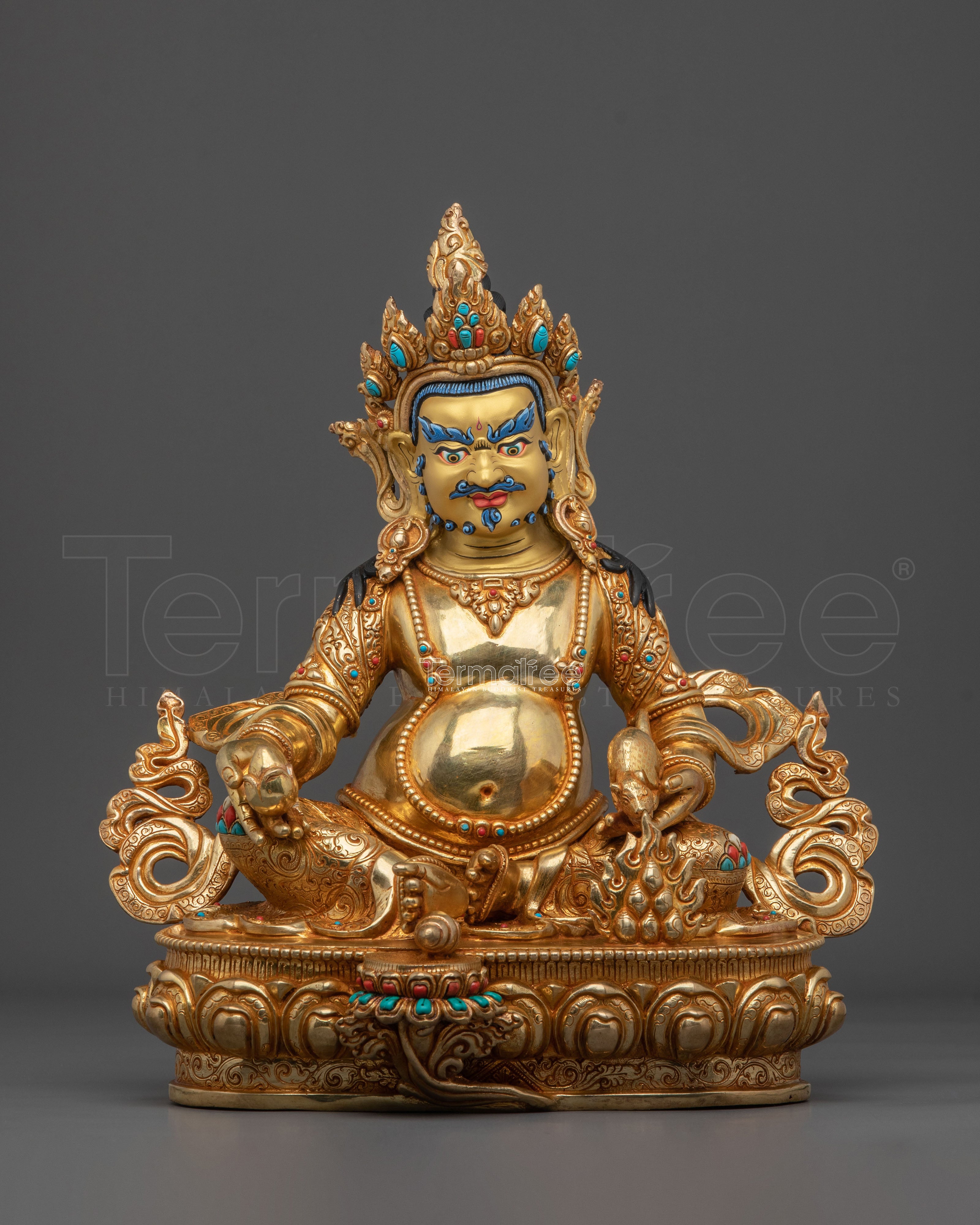
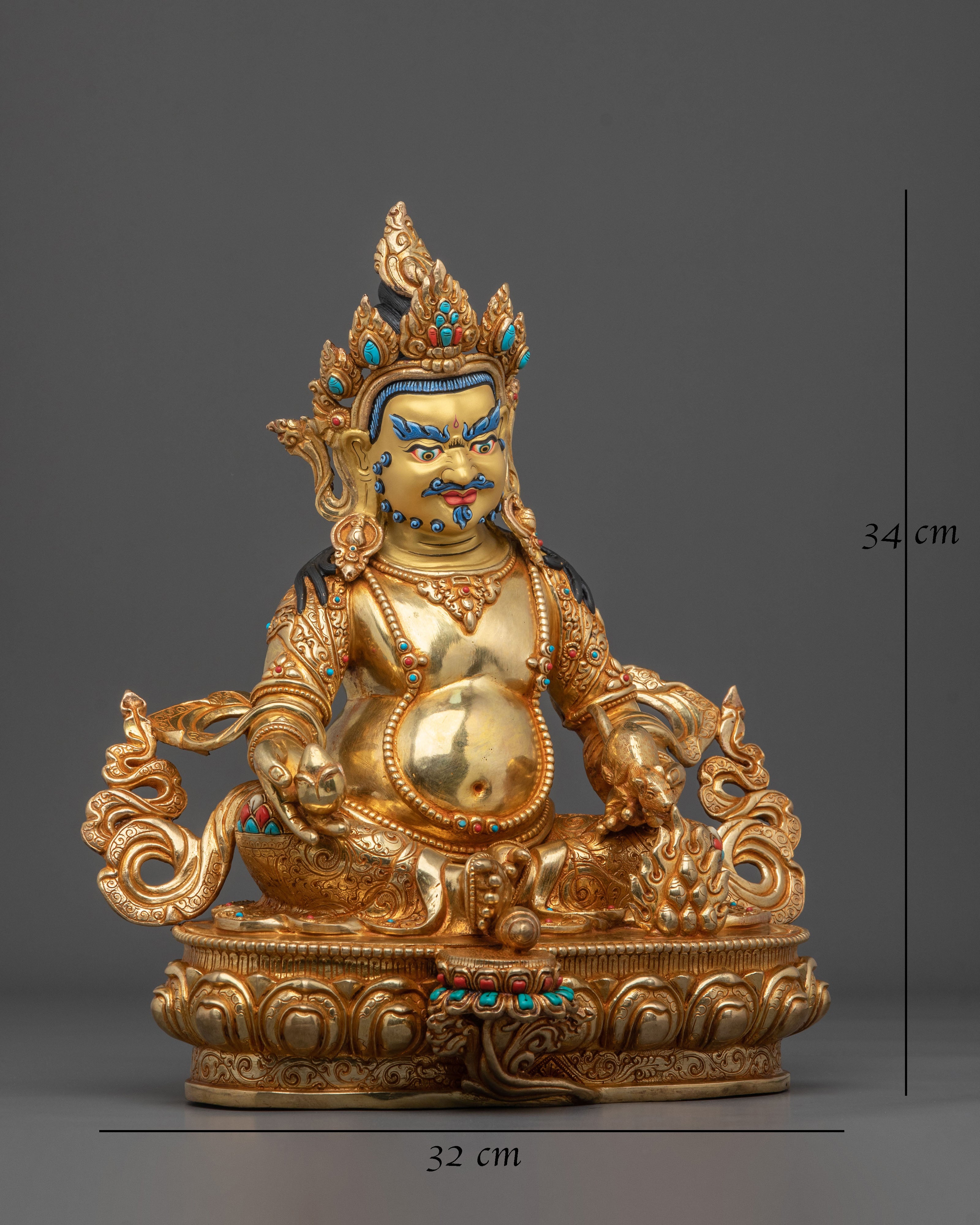
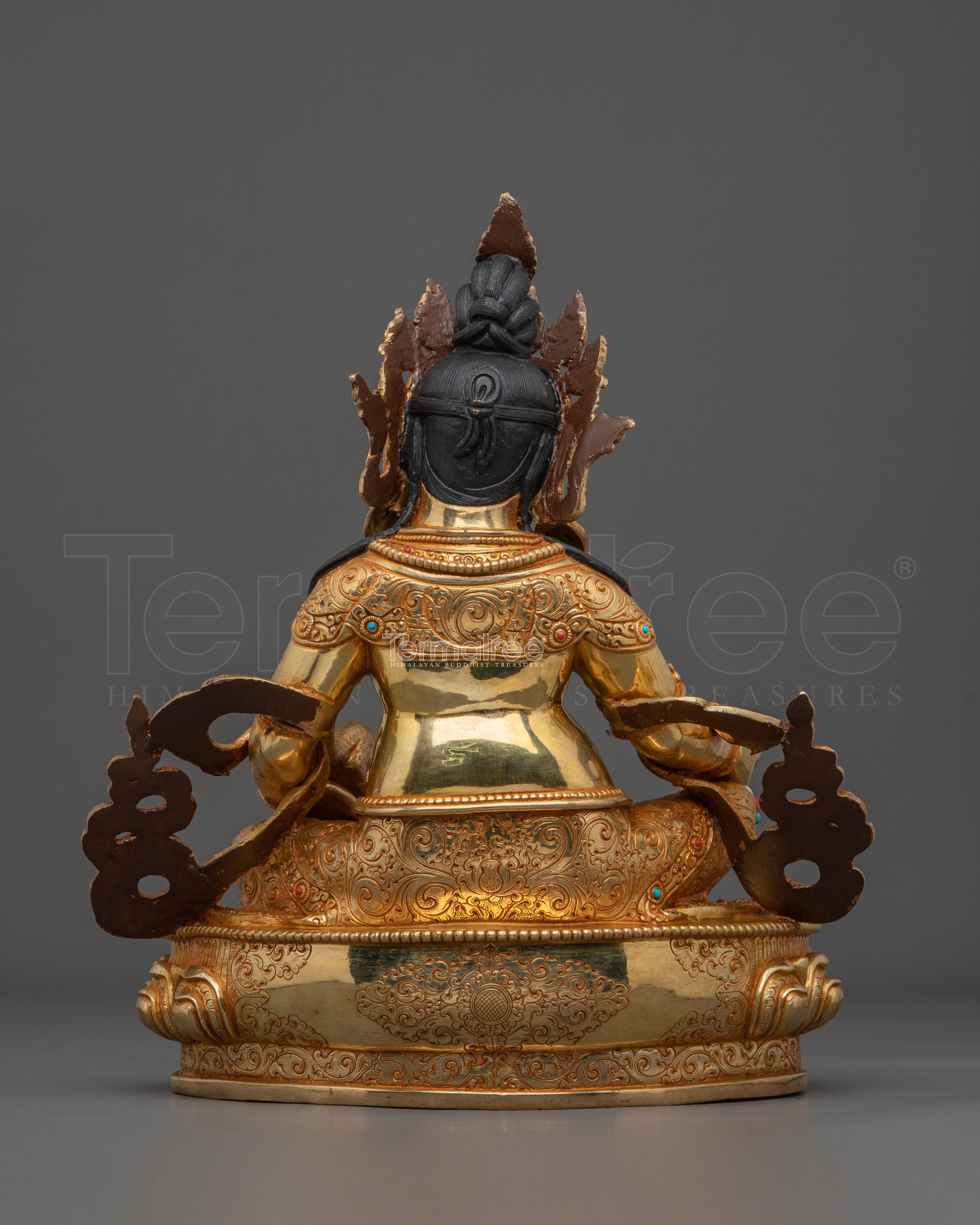
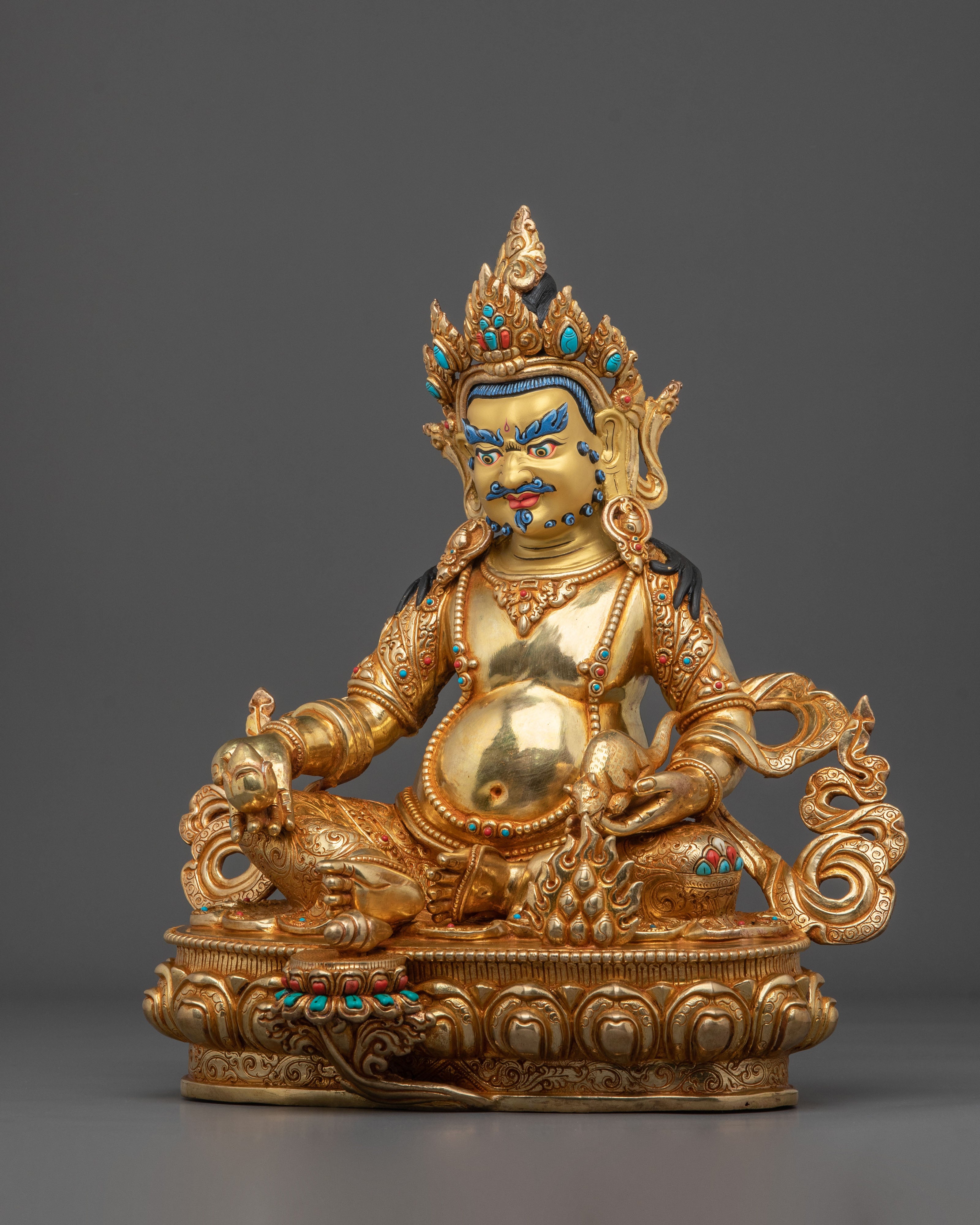
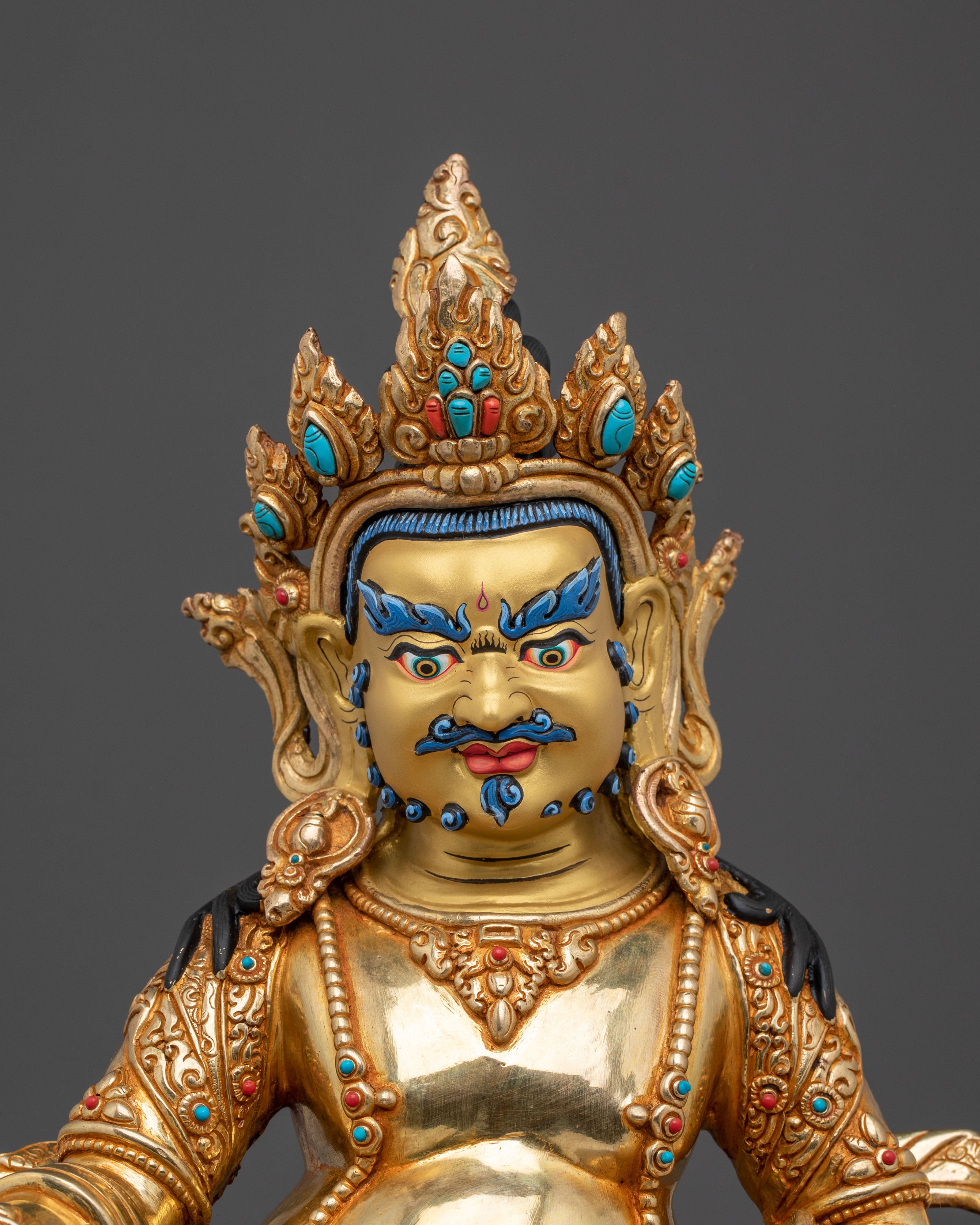
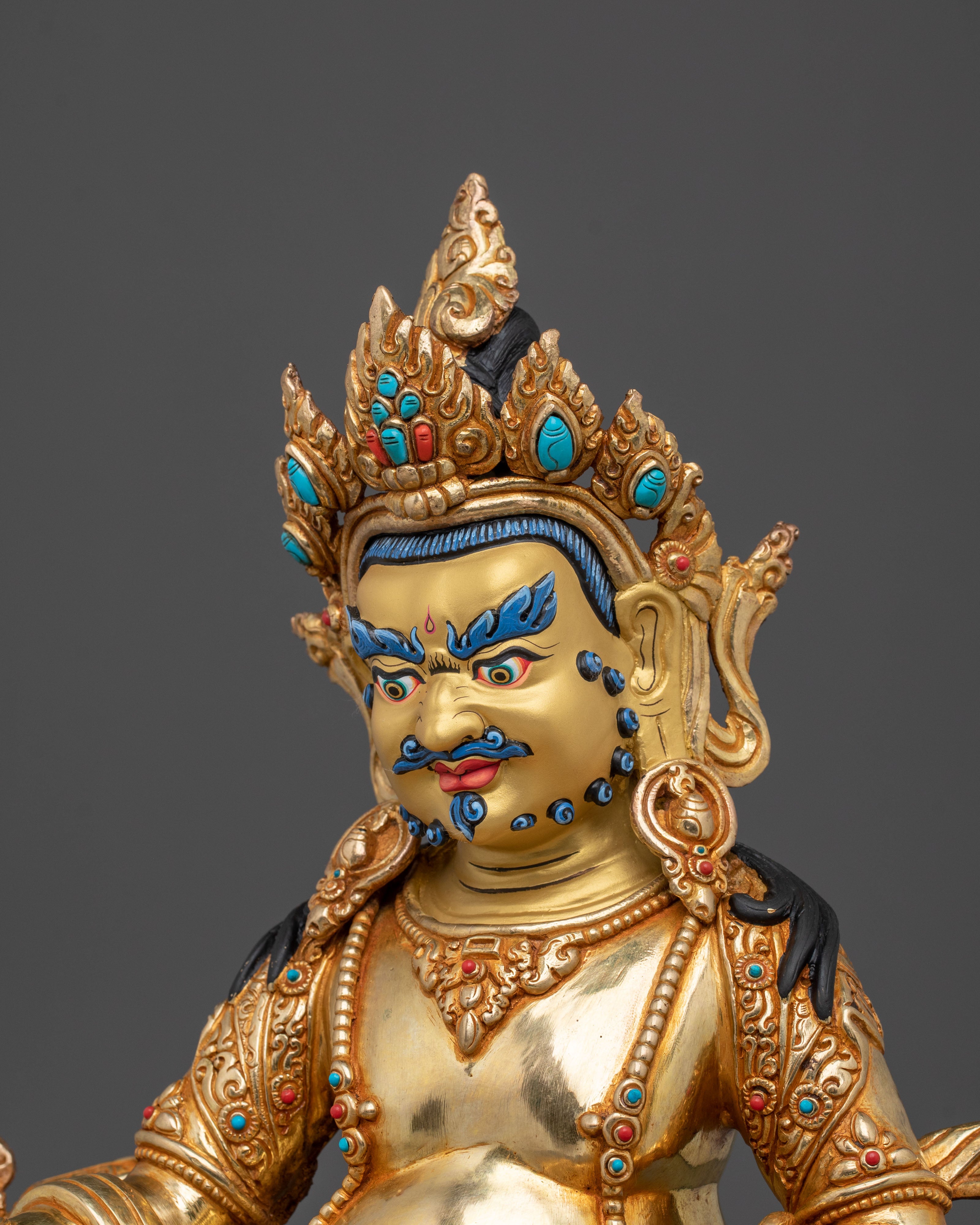
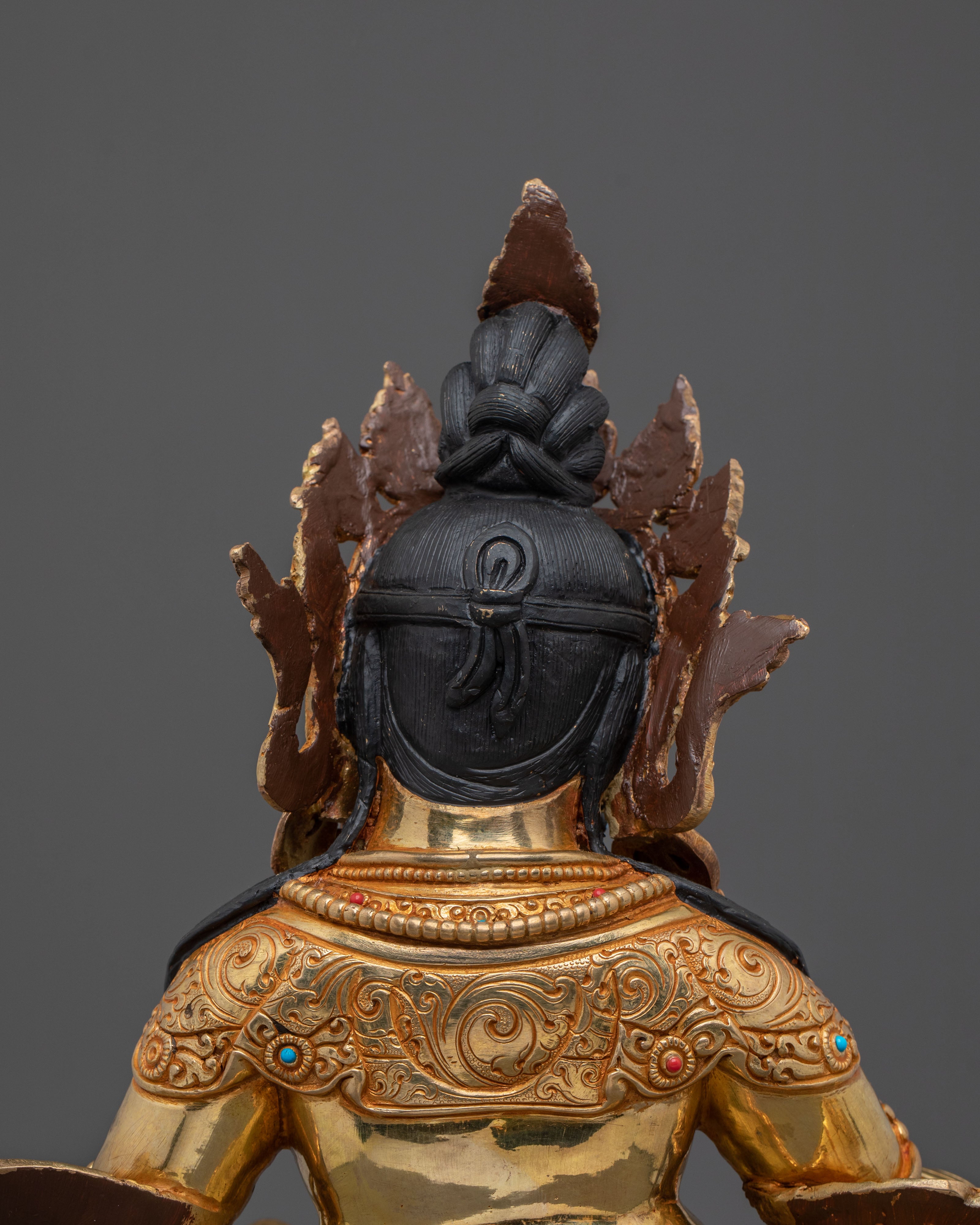
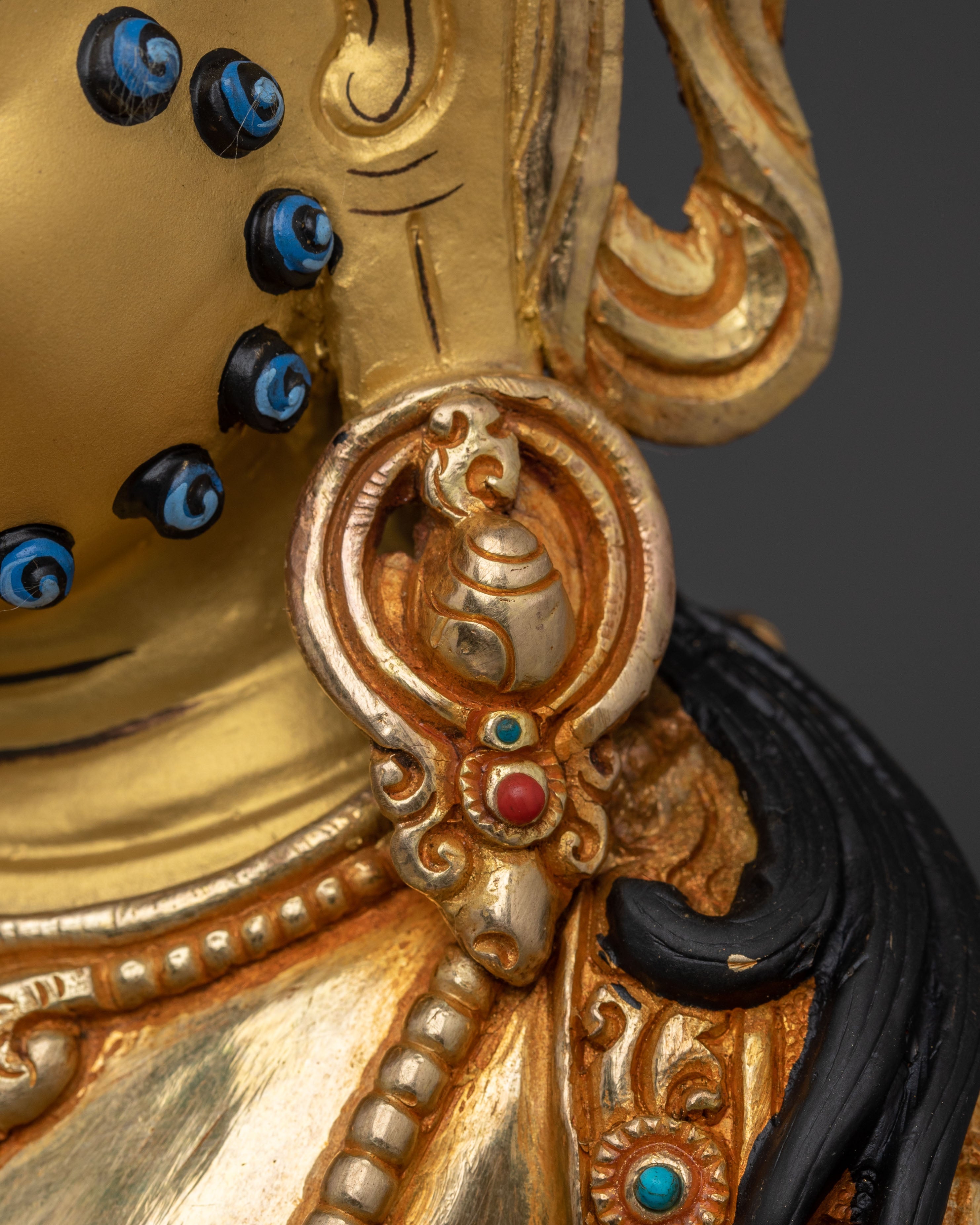
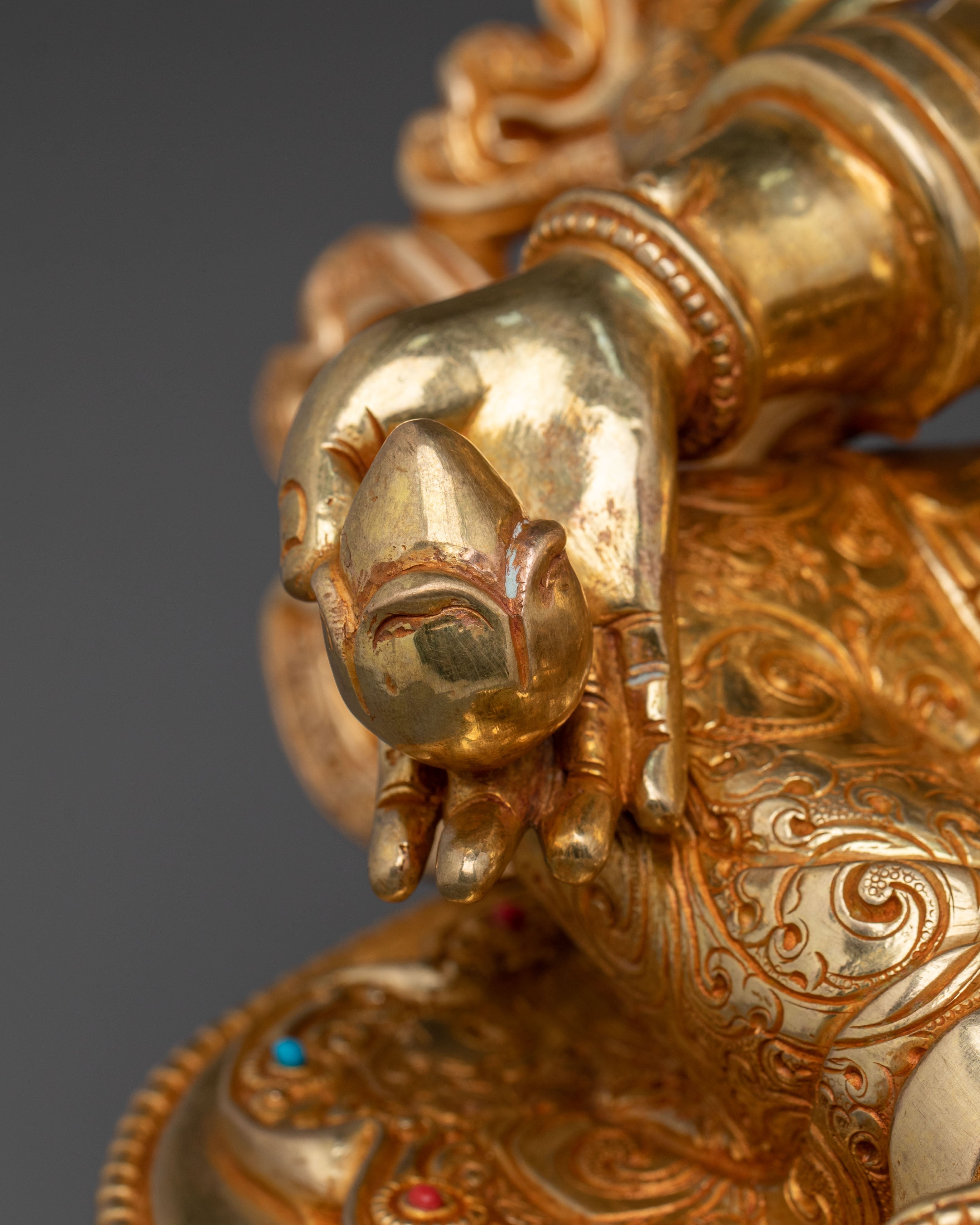
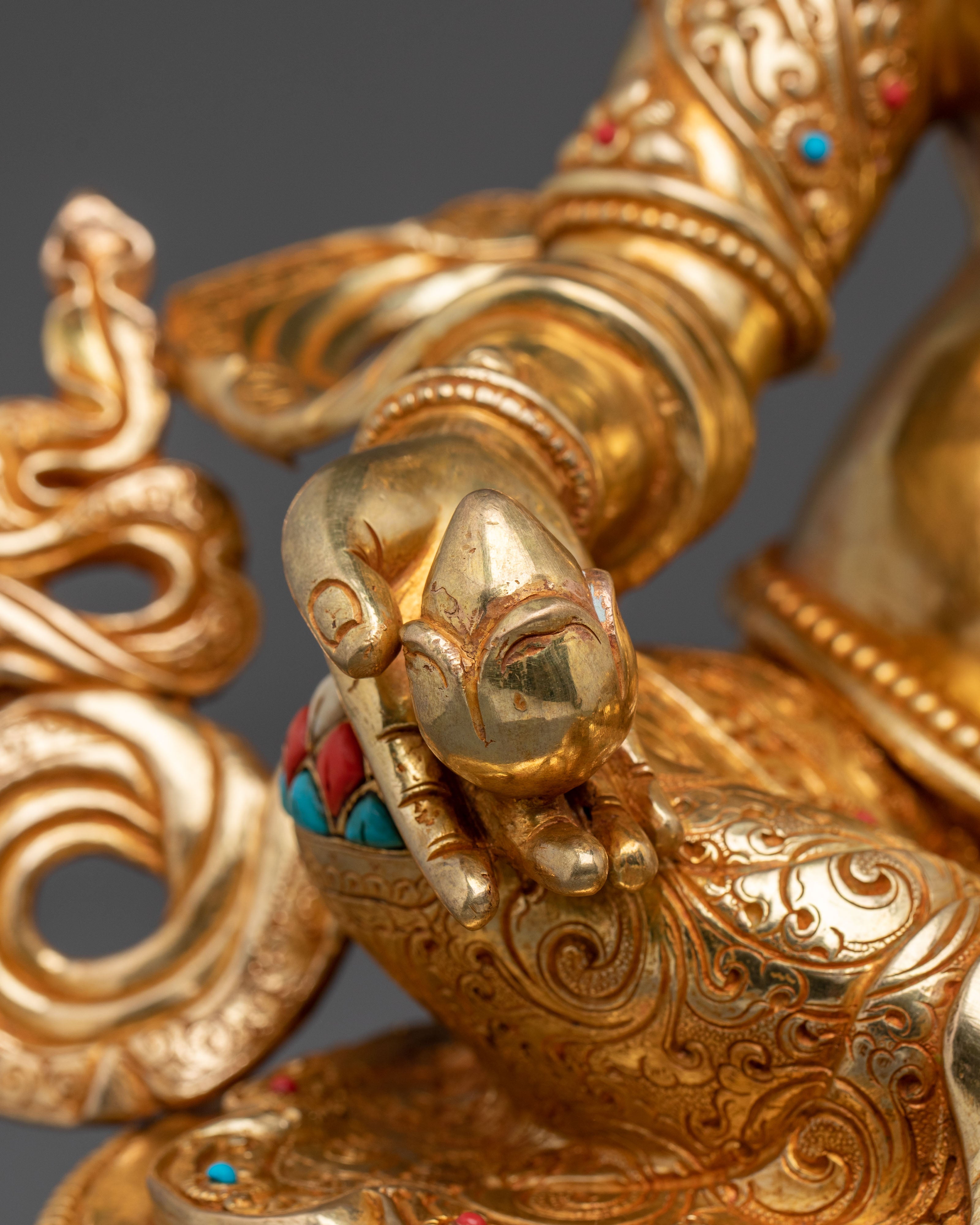
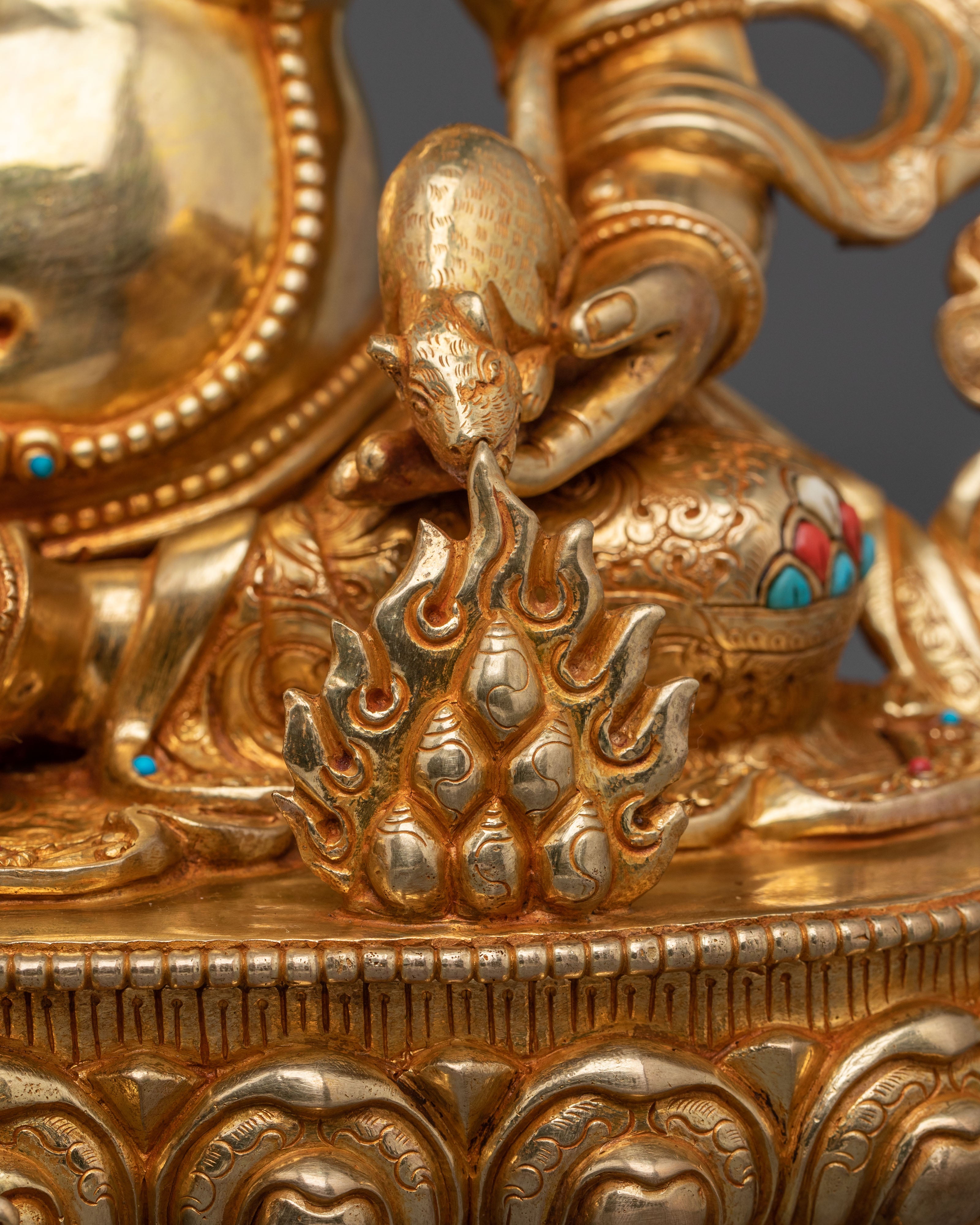
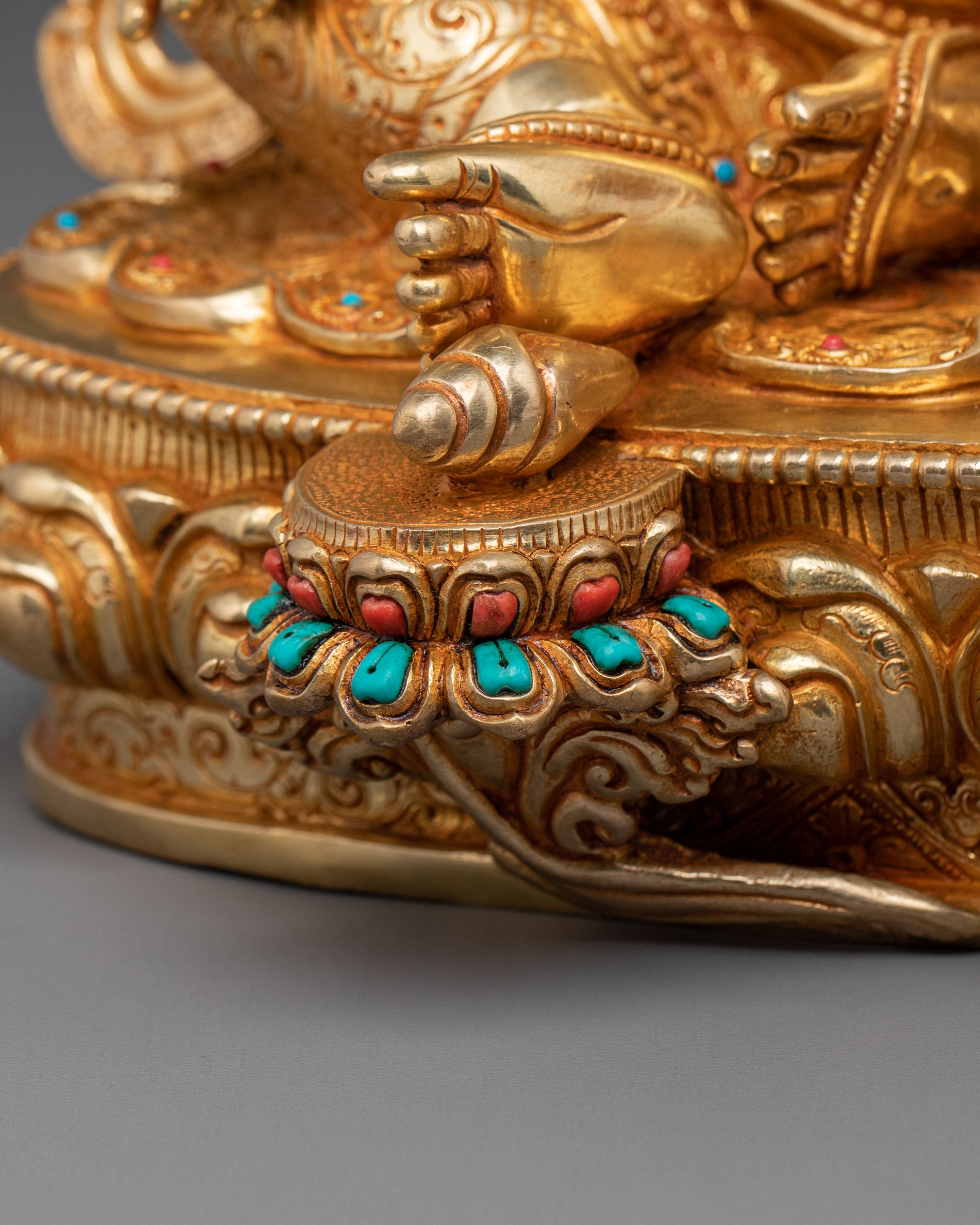
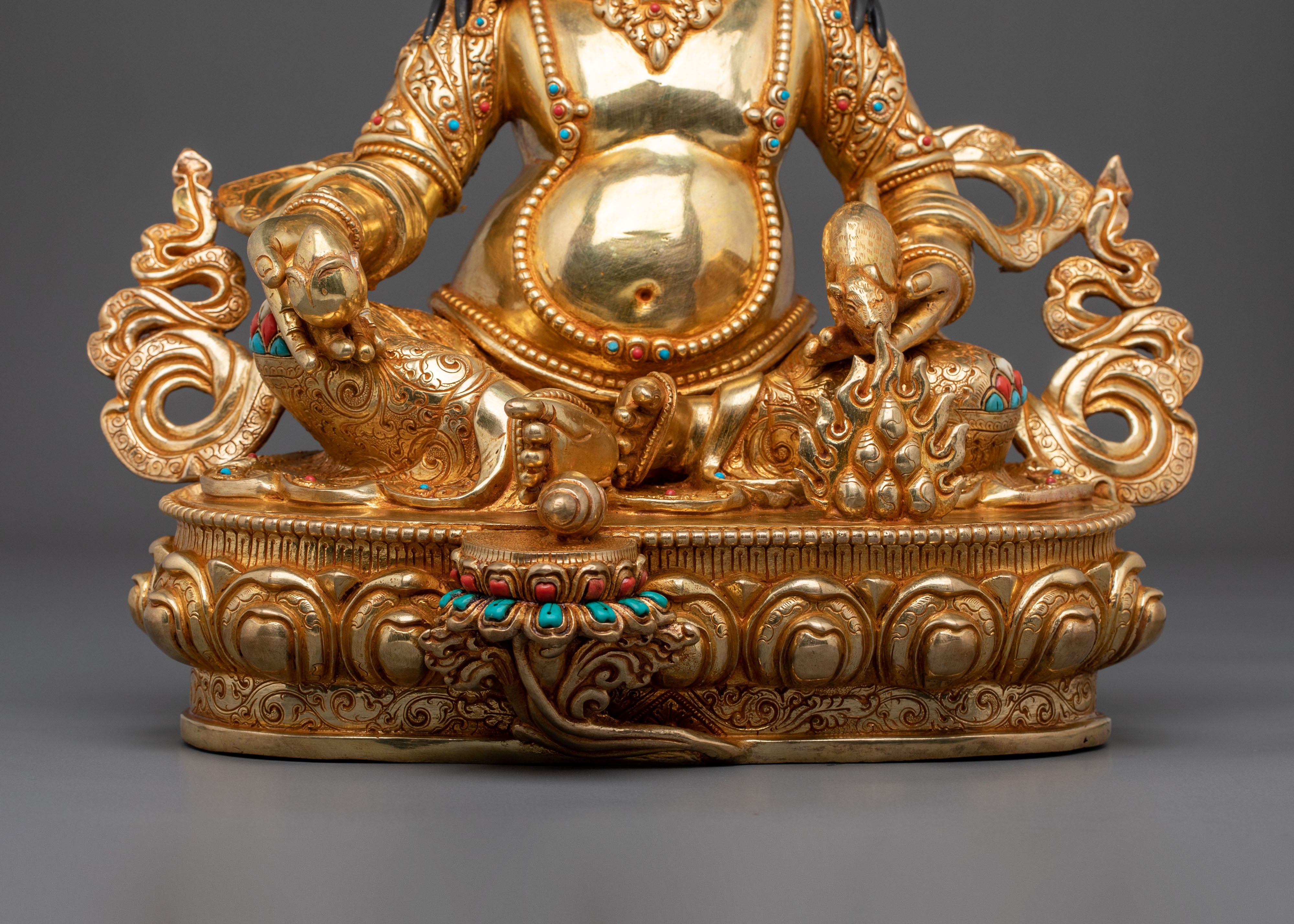
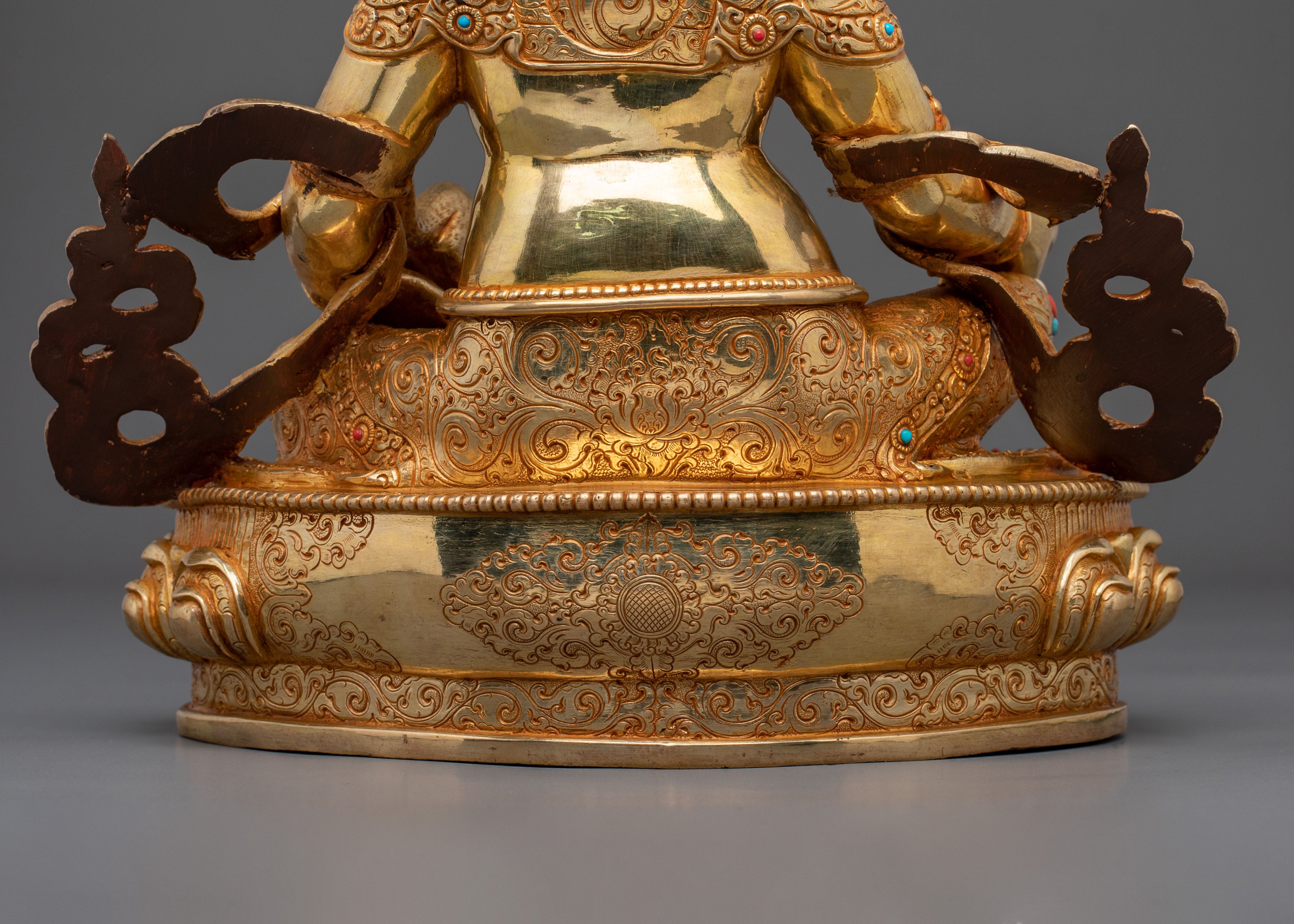
Crafted as a remarkable expression of Himalayan artistic heritage, this Dzambhala Statue showcases the dedication and expertise of skilled artisans through its intricate details and refined finishing. Measuring 34 cm (13.4 inches) in height with a 32 cm (12.6 inches) base and weighing 5.79 kg, it features a copper body adorned with a triple layer of 24K gold gilding, deeply engraved carvings that produce a magnificent 3D-like effect, detailed acrylic painting, and carefully set gemstones. The luminous gold surface, elaborate carved patterns, gemstone embellishments, and vibrant painted elements demonstrate the precision, patience, and craftsmanship involved in creating this sacred sculpture. Every detail reflects the traditional techniques and artistic excellence preserved within Himalayan Buddhist sculpture.
Dzambhala, the revered Buddhist Wealth Deity, represents enlightened abundance, generosity, prosperity, and the removal of obstacles. His iconography reflects the deeper meaning of wealth as a means to support compassion, spiritual practice, and the benefit of others rather than mere material accumulation. He is traditionally depicted in a majestic seated posture, holding a jewel-spitting mongoose, which symbolizes the endless flow of generosity, the overcoming of poverty, and the transformation of scarcity into abundance. His other hand may hold a citron fruit (bijapura) or a precious wealth symbol, representing auspiciousness, fulfillment of virtuous aspirations, and the blessings of prosperity. Adorned with rich ornaments and a powerful expression, Dzambhala embodies protection and compassionate support, reminding practitioners to cultivate gratitude, generosity, and inner richness through wisdom and selfless action.
Size: 13.4”/34cm (Height) x 12.6”/32(Base)
Weight: 5.79 kg
Material: 24K Gold Gilded, Acrylic Painting, Copper Body, Gemstones
Dzambhala, also known as Jambhala, is the Buddhist God of Wealth and the Chief of the Five Jambhalas in Tibetan Buddhism. He is considered an emanation of Avalokiteshvara or Manjushri. He is invoked to help practitioners overcome poverty, both material and spiritual, enabling them to focus on their dharma practice without financial distractions. His practice is linked to developing generosity and gratitude, providing wealth for the benefit of all beings and the sustenance of the teachings, not merely personal gain.