Gelugpa Founder: Tsongkhapa Statue | Path of Wisdom
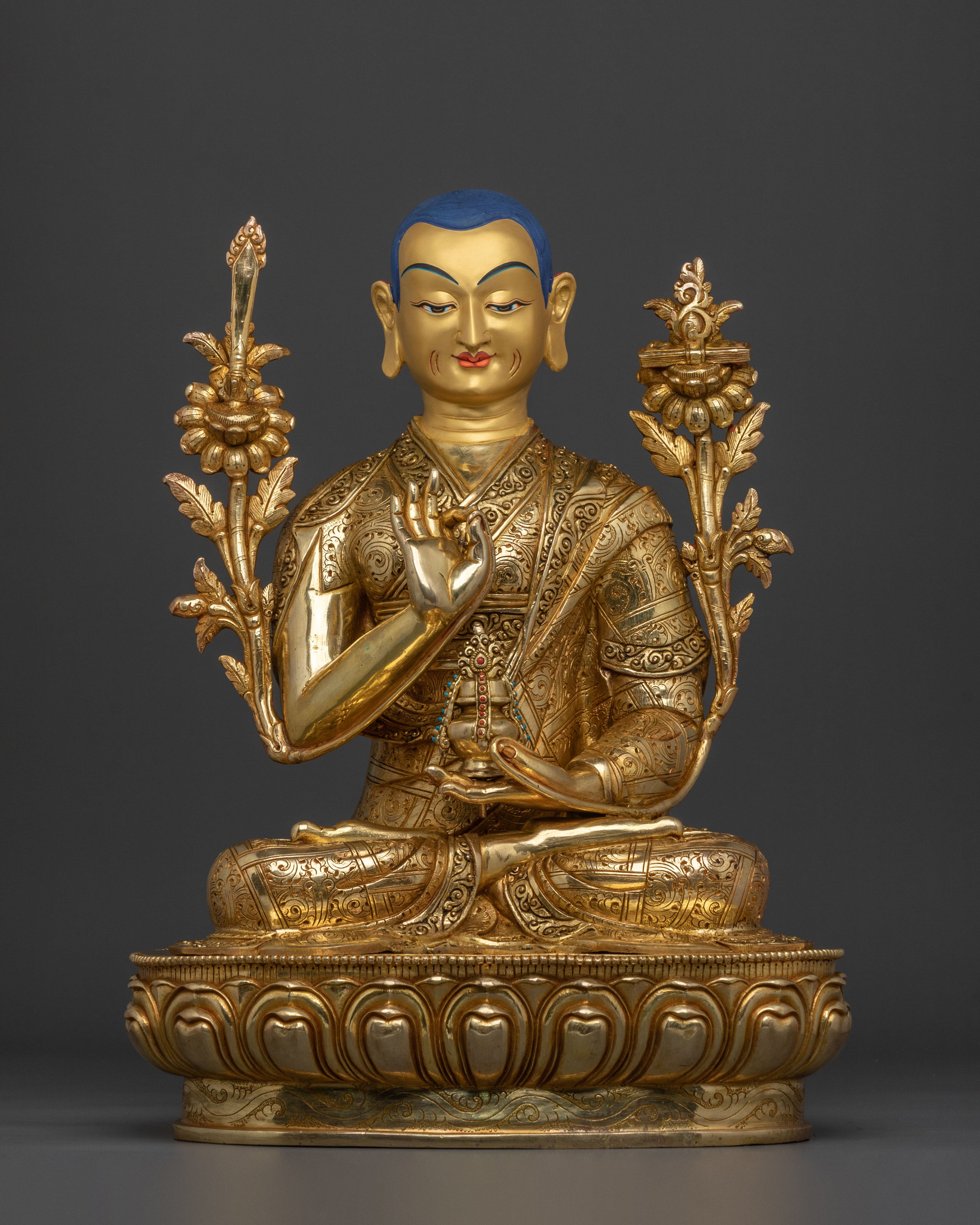
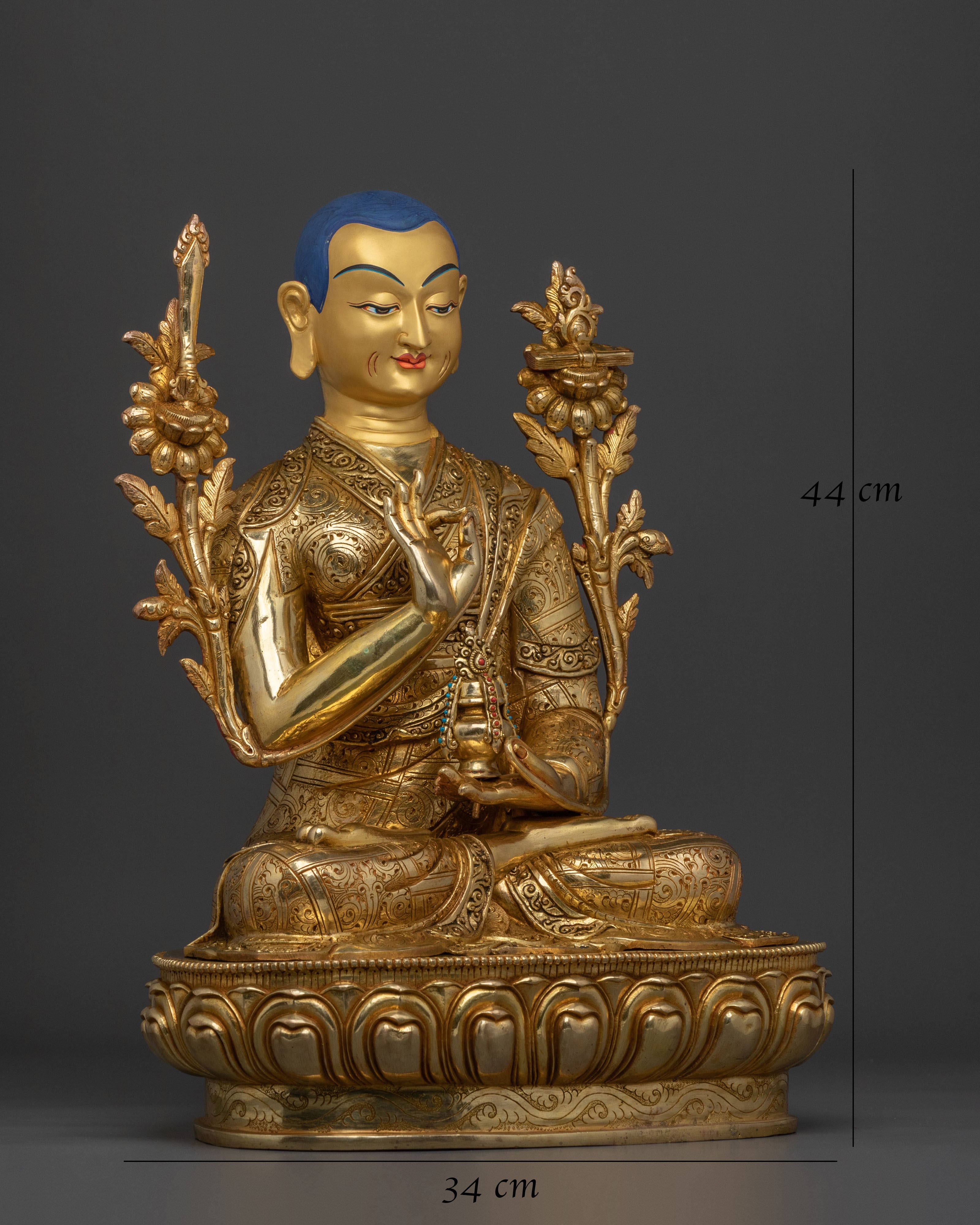
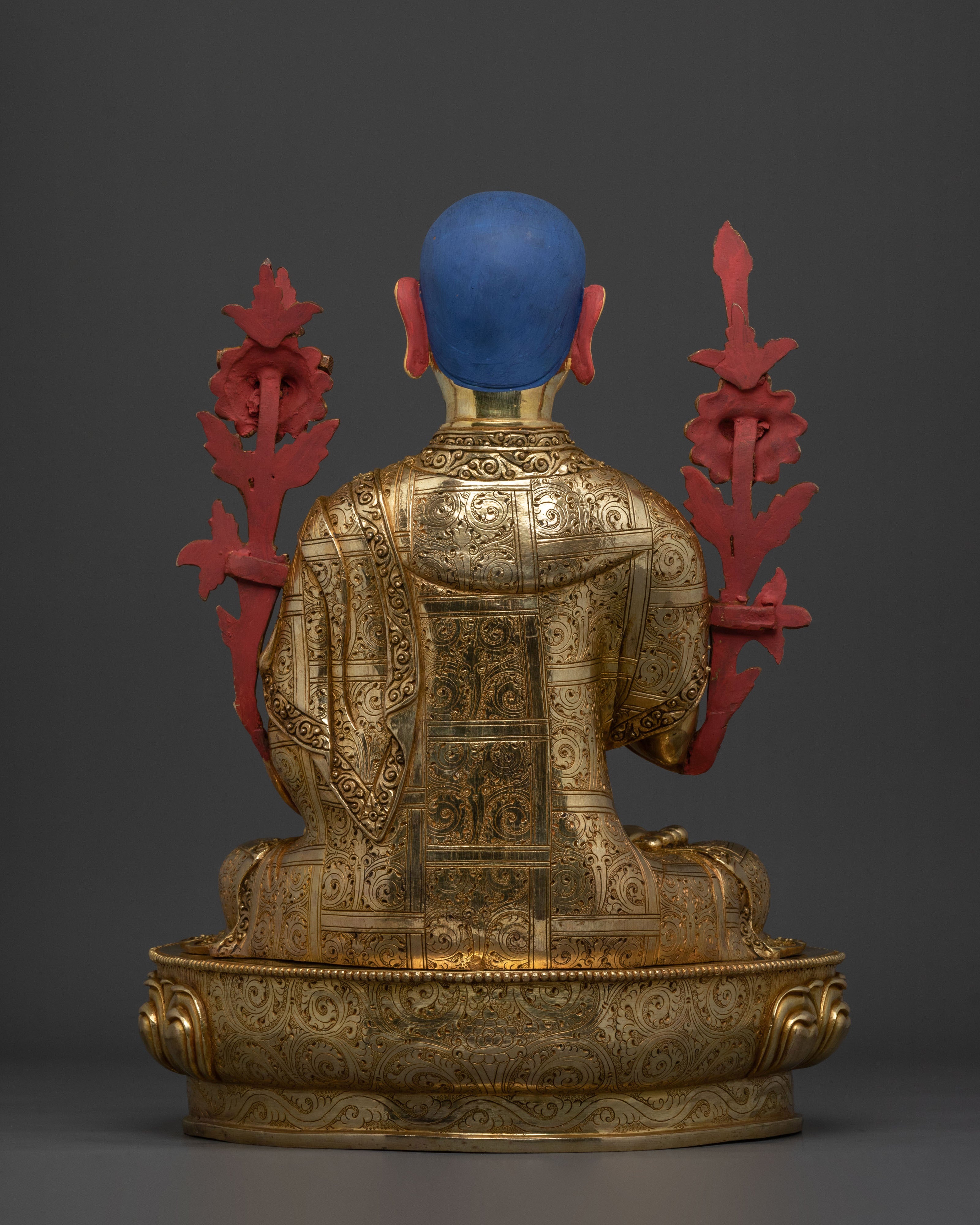
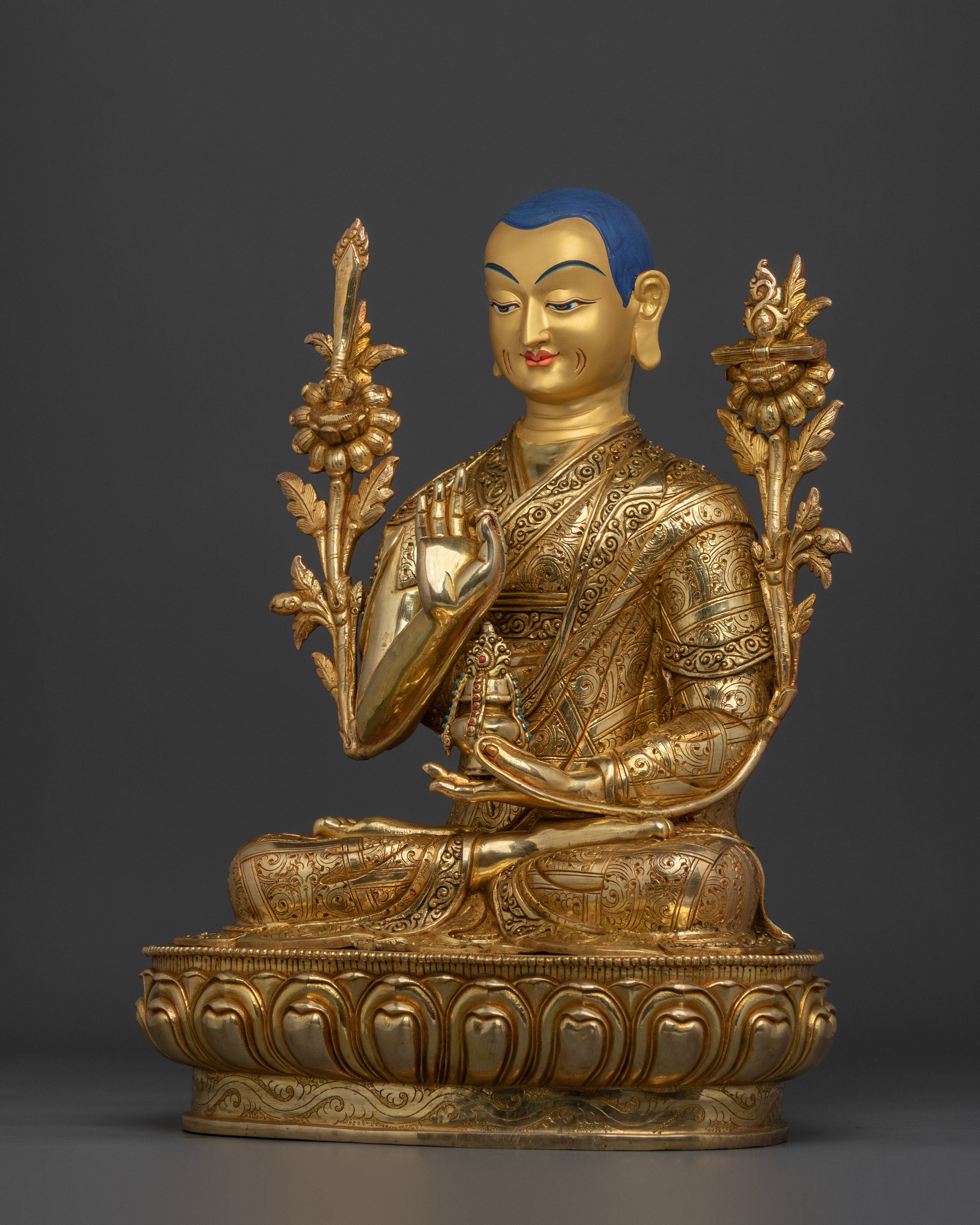
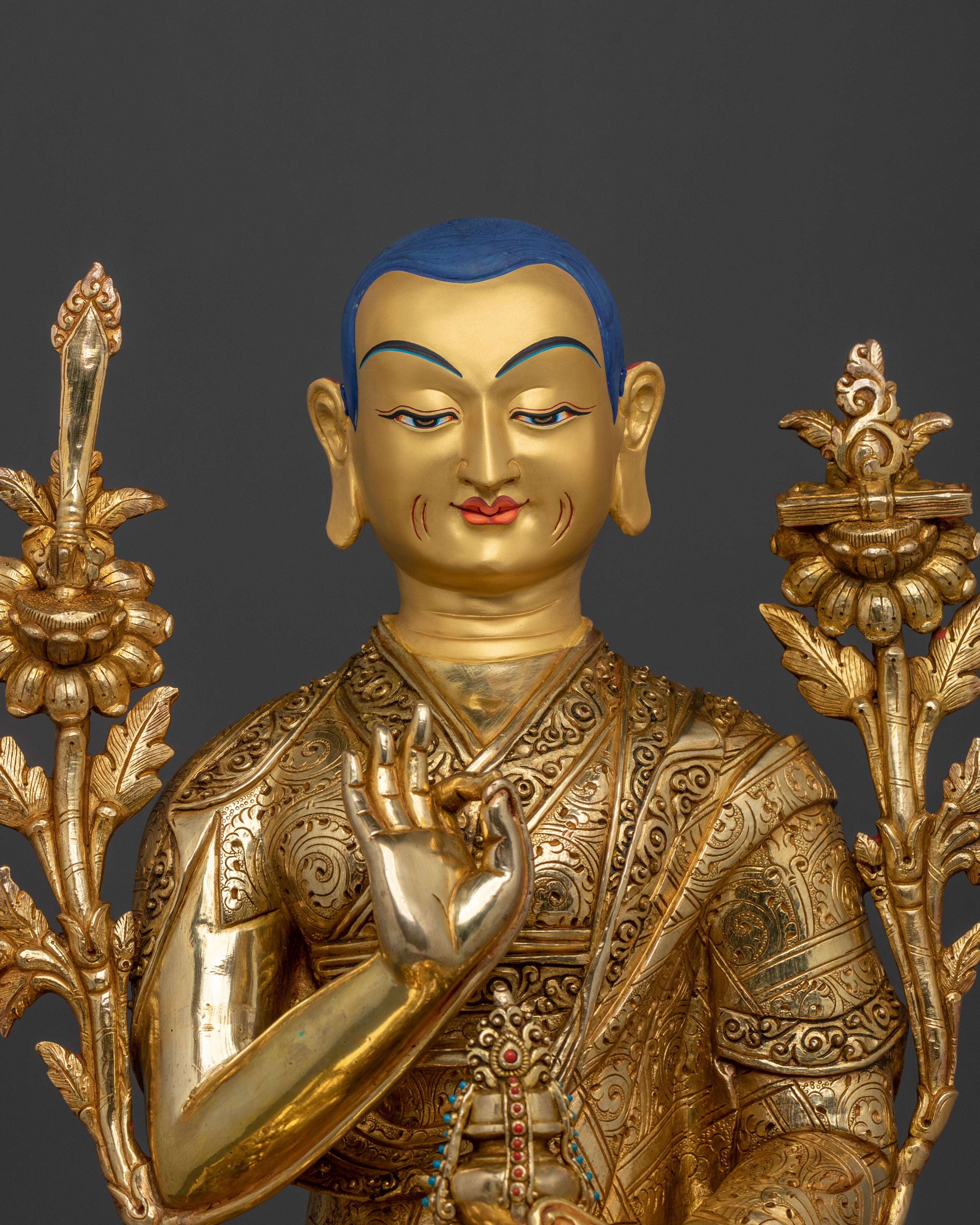
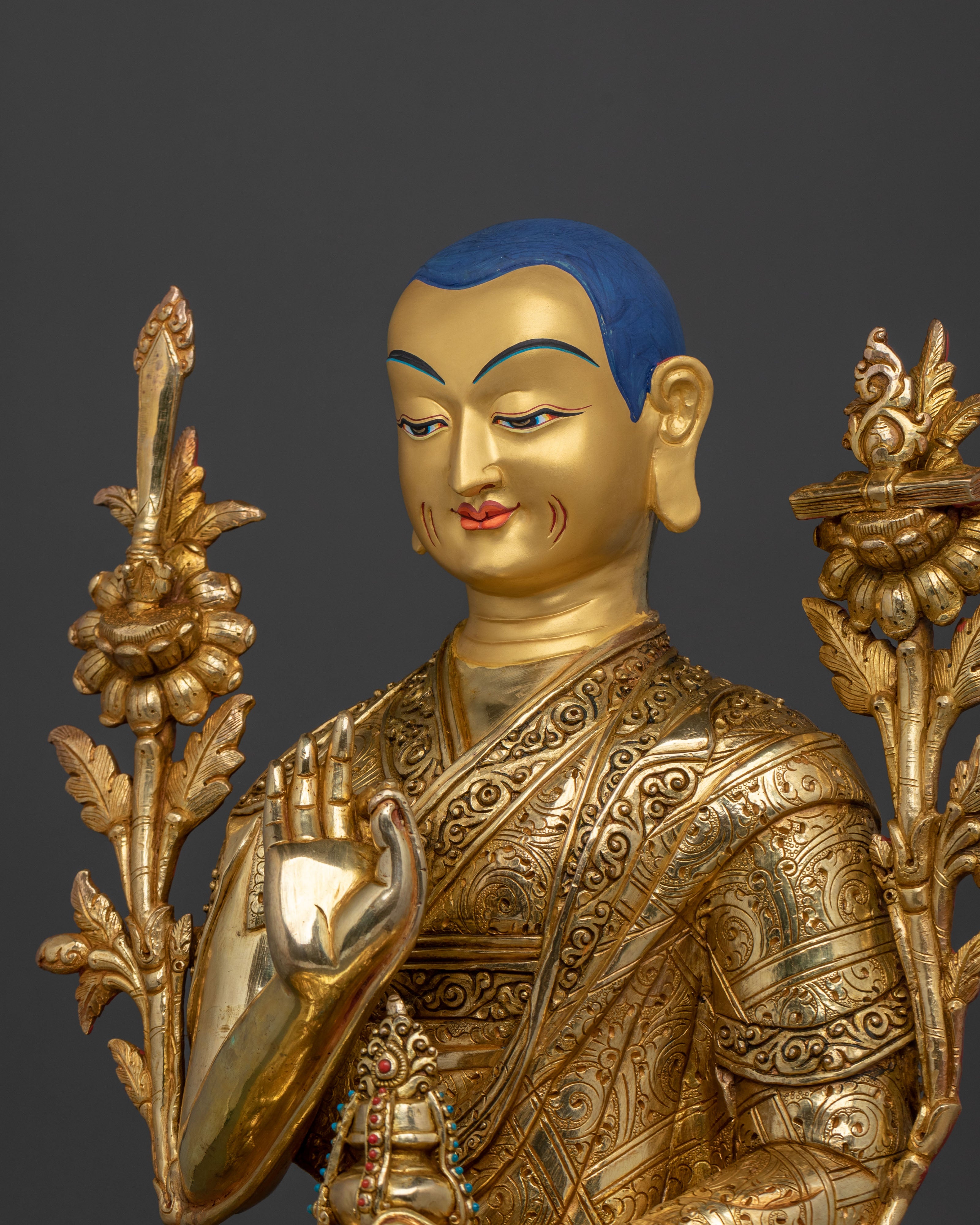
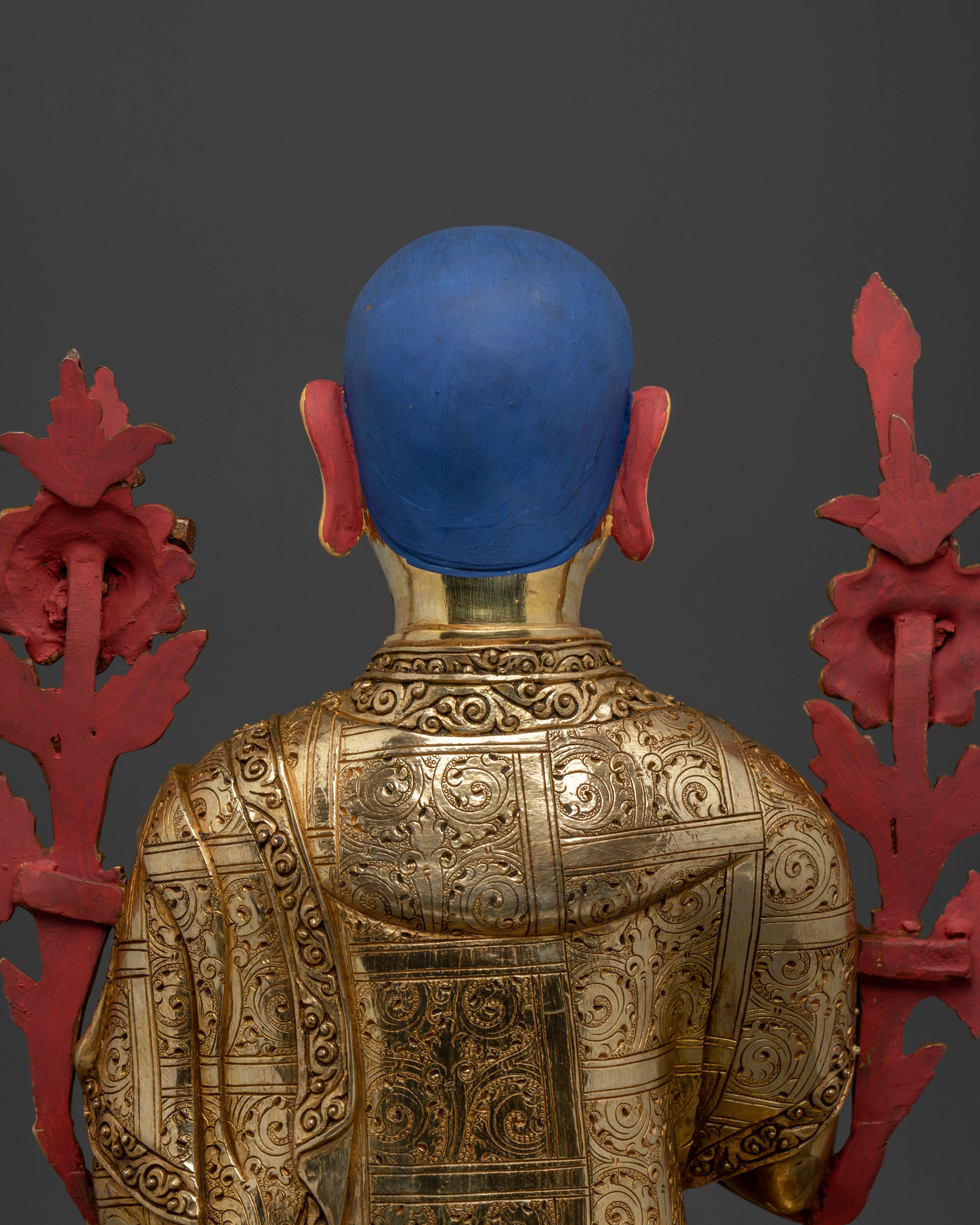
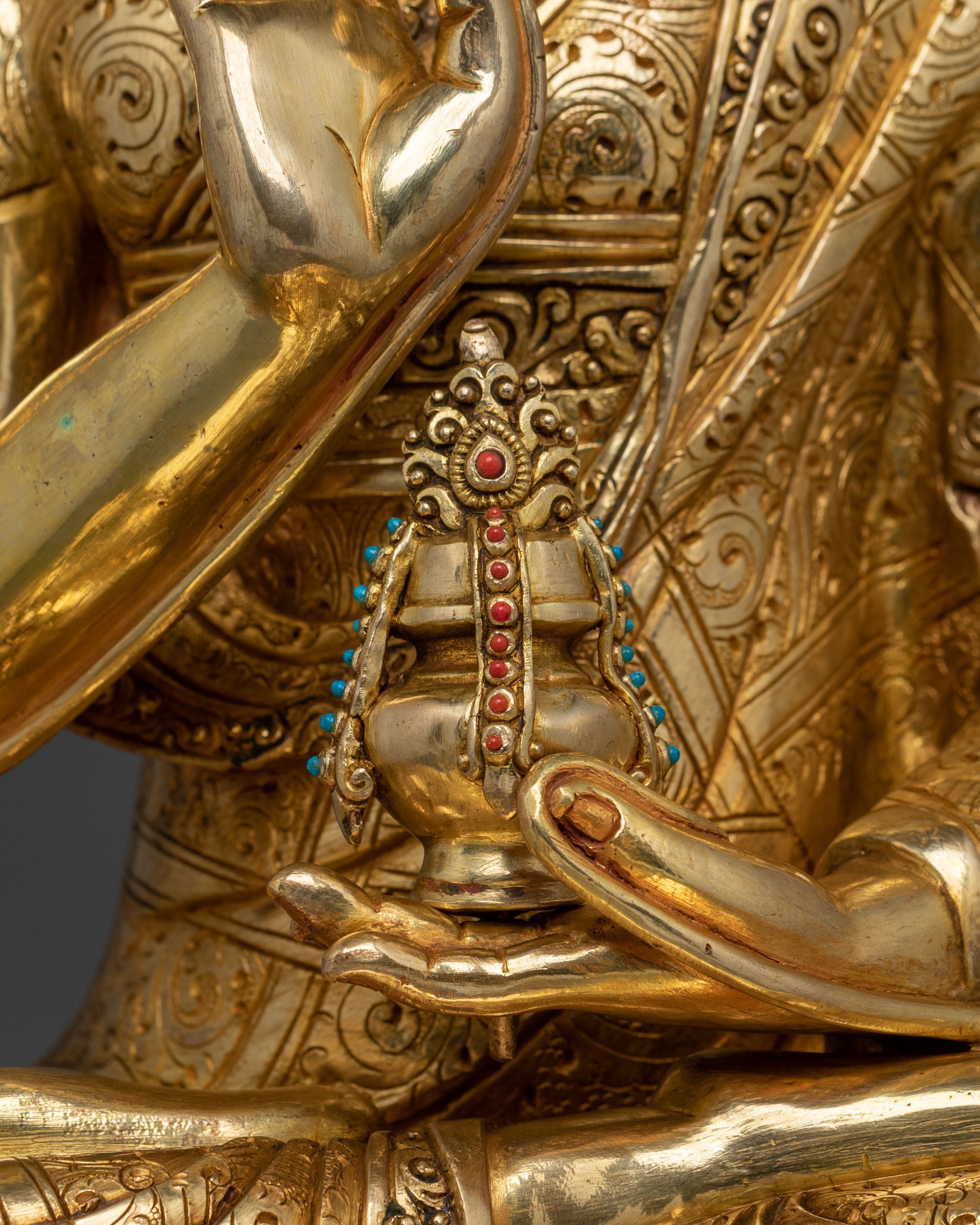
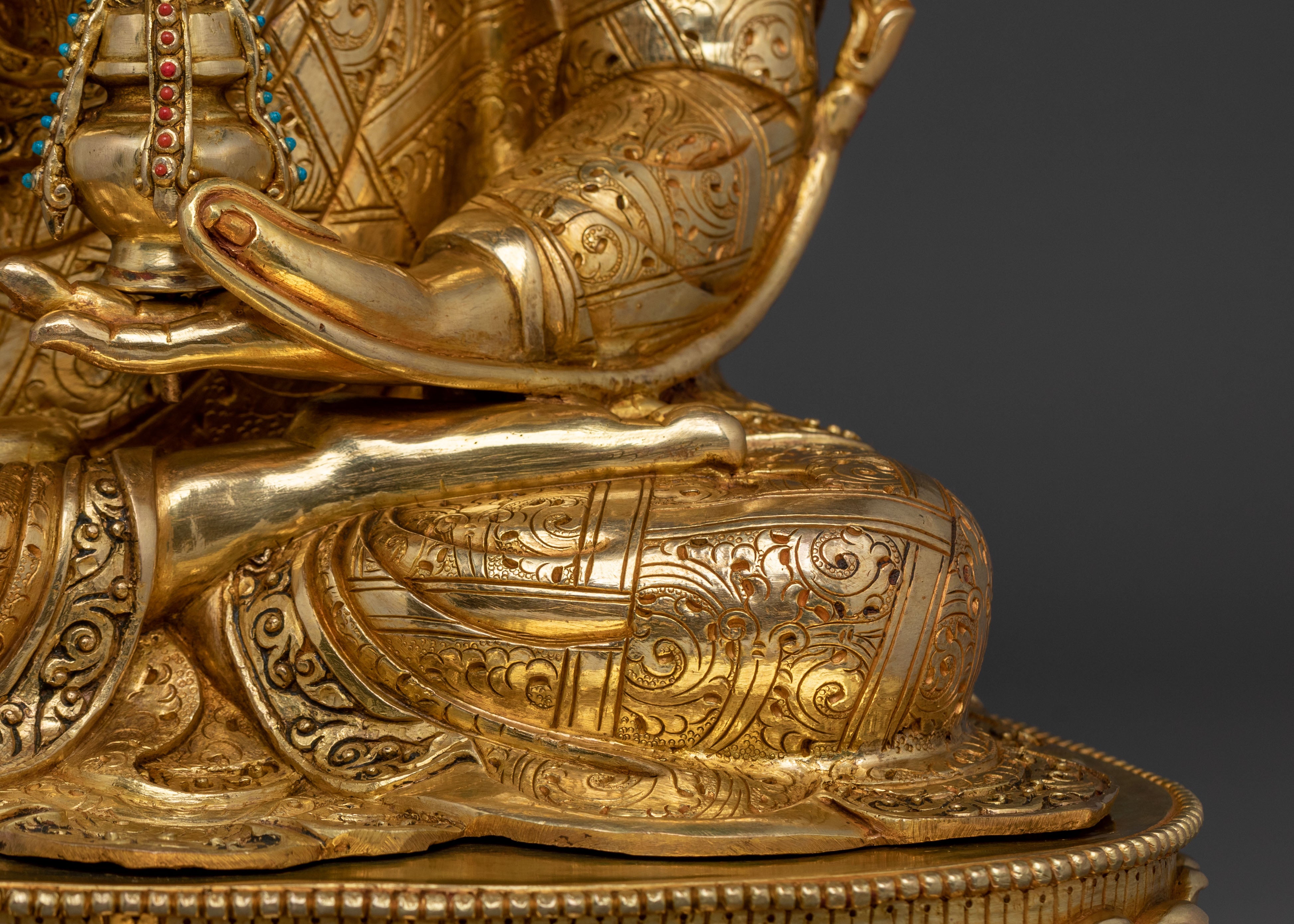
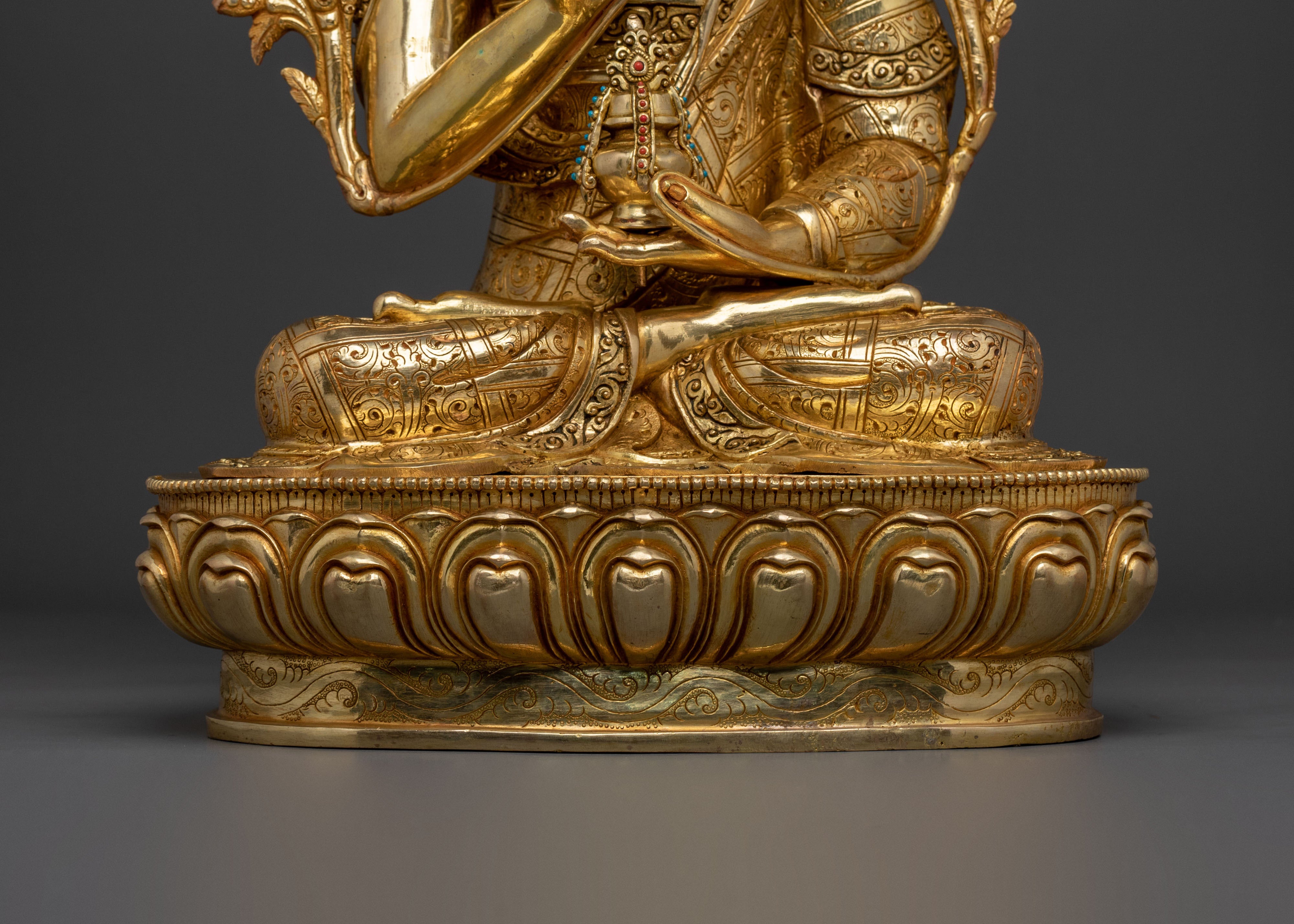
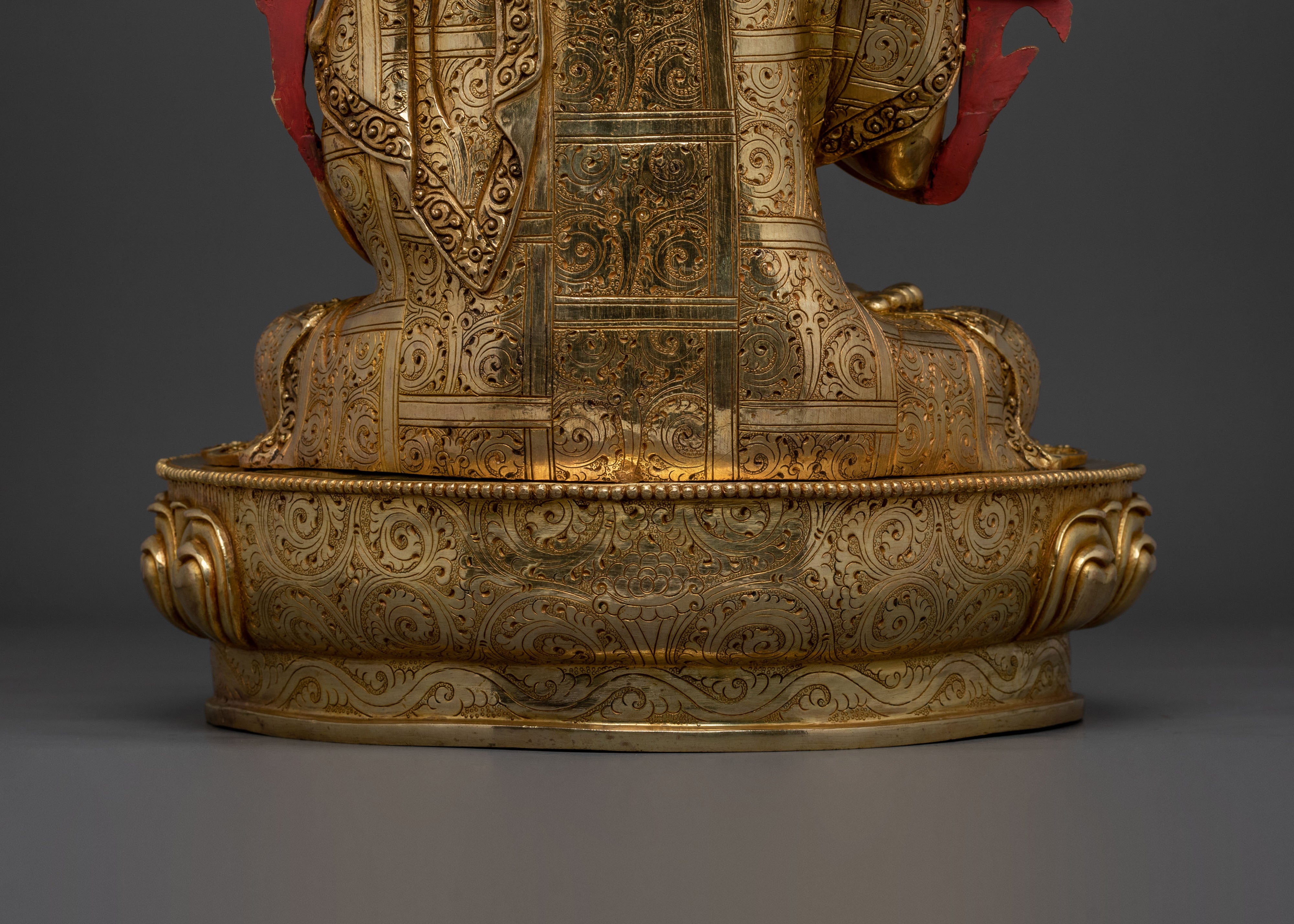
Je Tsongkhapa, the revered founder of the Gelugpa tradition, is embodied in this sacred statue that radiates profound wisdom and scholastic purity. Rising to a majestic height of 44 cm (17.3”) on a 34 cm (13.4”) base and weighing 10.78 kg, the sculpture is meticulously crafted from a solid copper body. Adorned with rich 24K gold gilding and delicate acrylic painting, it captures his serene gaze and gentle smile, evoking a sense of spiritual clarity, discipline, and inner peace, making it a powerful focal point for meditation, devotion, and sacred space.
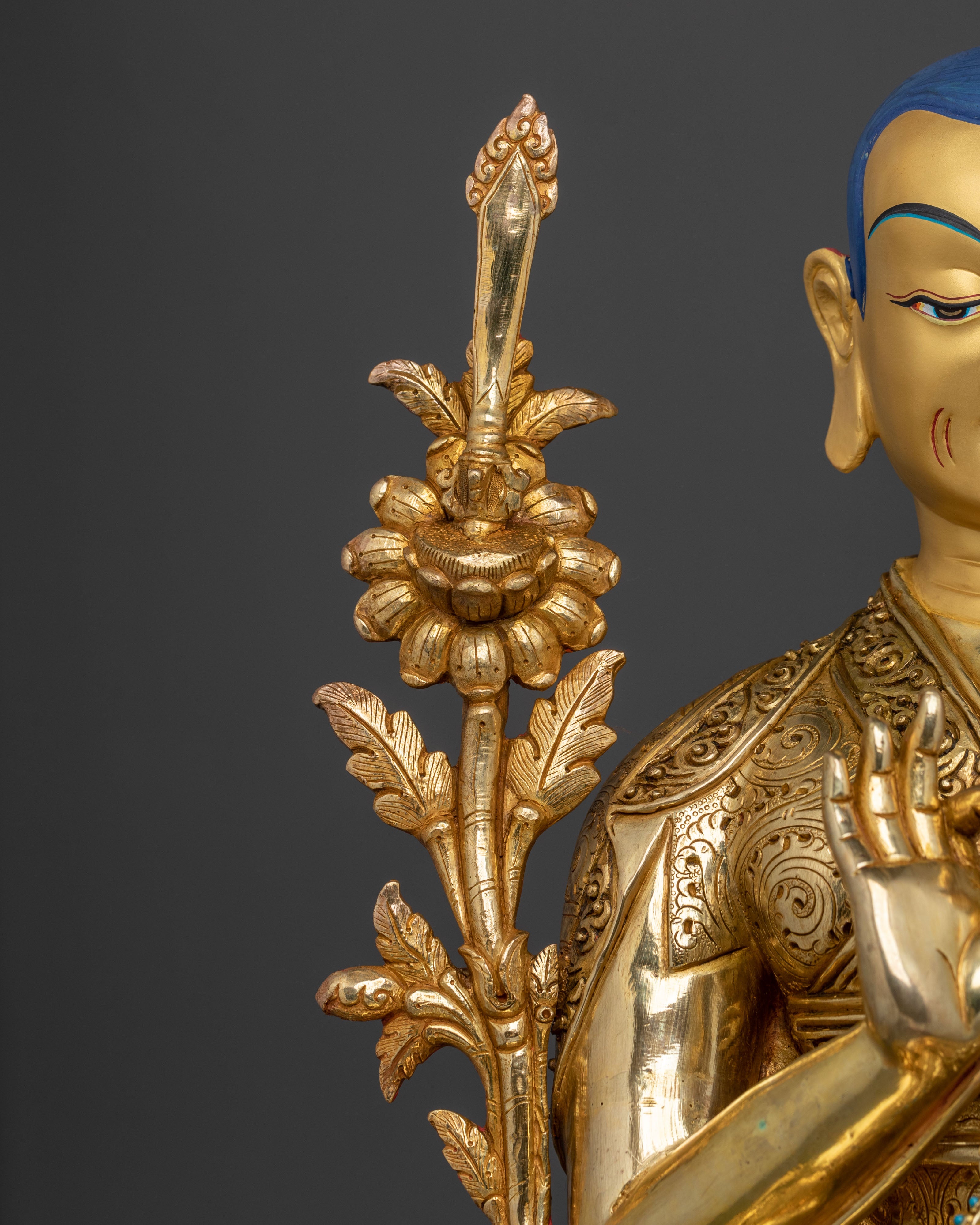
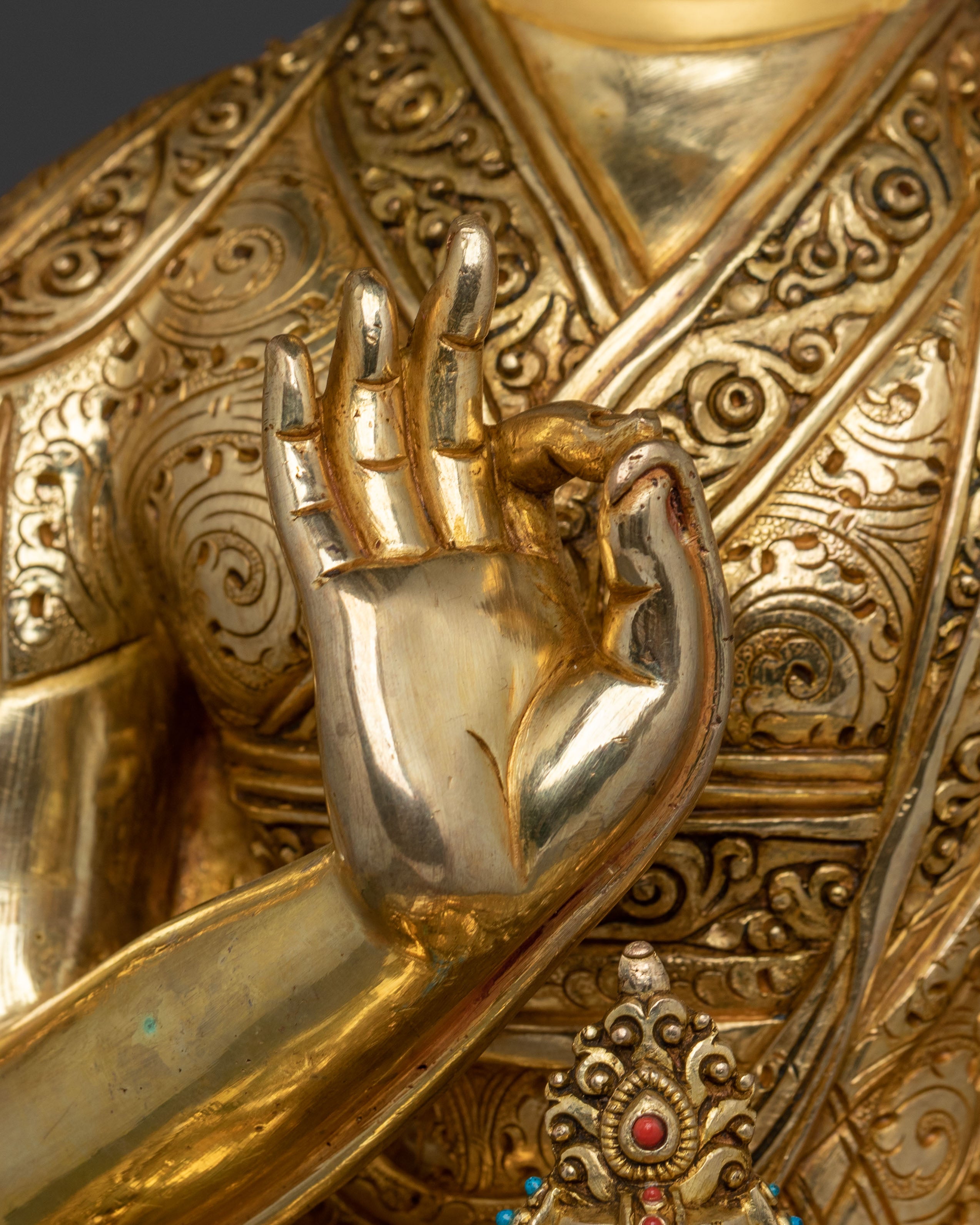
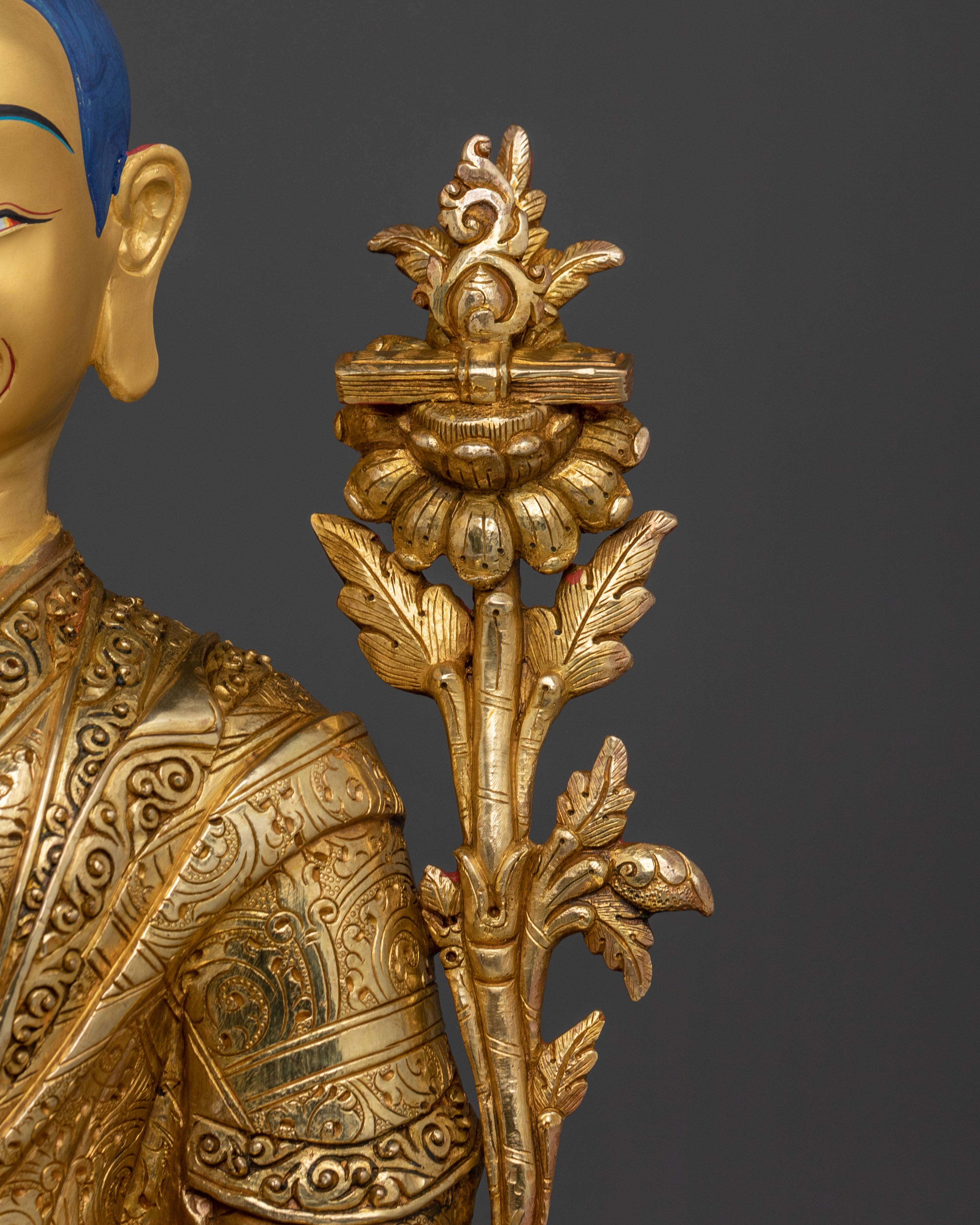
Tsongkhapa is depicted as the great reformer and scholar-saint of Tibetan Buddhism, embodying the union of profound philosophical wisdom and disciplined ethical practice. Seated in the vajra posture upon a lotus throne, he represents stability, clarity, and mastery of the entire Buddhist path. His right hand is shown in the teaching gesture, symbolizing the transmission of the Dharma and his role in revitalizing monastic discipline and philosophical study within the Gelug tradition. In his left hand, he holds the stems of blossoming lotus flowers, often supporting the sword of wisdom and the book of Prajnaparamita, representing the union of insight and transcendent knowledge. His serene golden visage reflects purity, intellectual clarity, and compassionate realization, while his blue hair signifies mastery over meditation and subtle realization. Adorned in monastic robes rather than ornate jewelry, Tsongkhapa emphasizes humility, ethical conduct, and the disciplined path to enlightenment through study, debate, and meditation.
Size: 17.3”/44cm (Height) x 13.4”/34cm (Base)
Weight: 10.78 kg
Material: 24K Gold Gilded, Acrylic Painting, Copper Body
Je Tsongkhapa (1357–1419) was a famous teacher of Tibetan Buddhism whose activities led to the formation of the Gelug school. Renowned for his vast learning, ethical purity, and profound compassion, he harmonized the various teachings of his era into a cohesive, structured path. His writings, particularly the Lamrim Chenmo (Great Treatise on the Stages of the Path), remain foundational texts for practitioners seeking systematic spiritual realization.