



Description
Vajradhara Buddhist Sculpture | Embodiment of Enlightened Truth
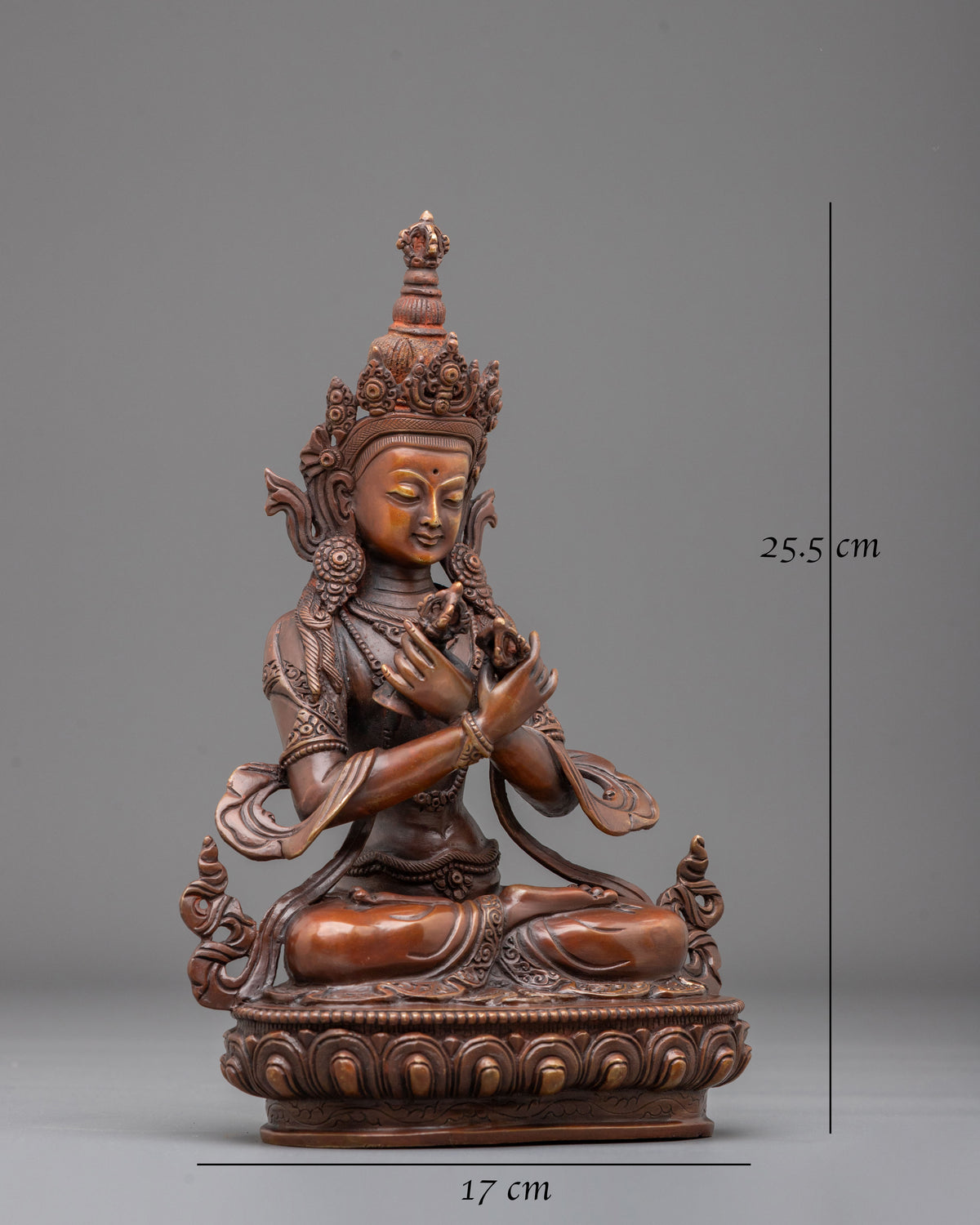
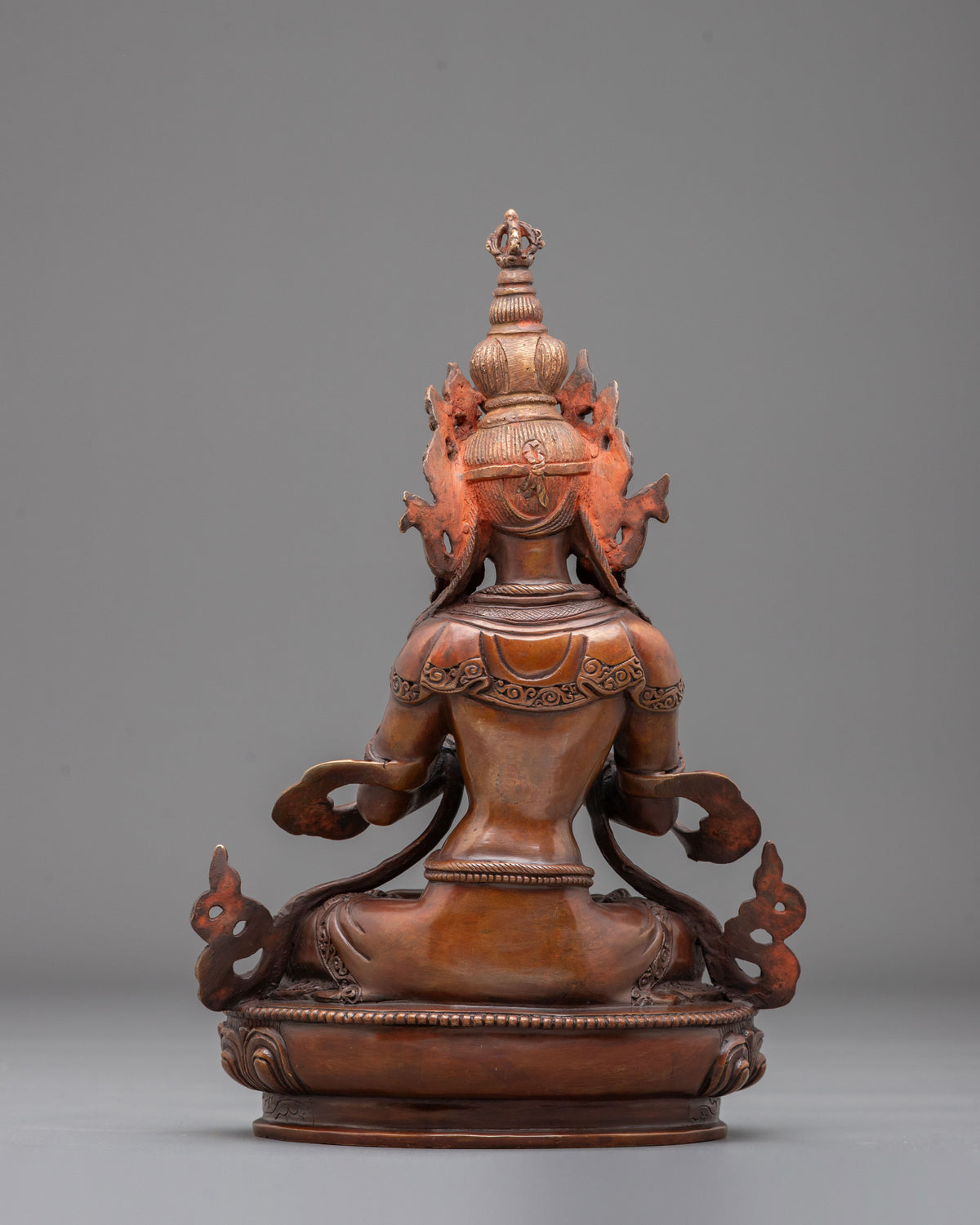
This Vajradhara Buddhist Sculpture measures 10.0”/25.5cm in height with a 6.6”/17cm base and weighs 1.69 kg. Handcrafted in Nepal from an oxidized copper body, the sculpture features a naturally darkened finish that enhances the contours and finely worked surface while preserving the depth and character of traditional metalwork. The controlled oxidation and precise craftsmanship reflect the skill of Nepalese artisans and the enduring traditions of Himalayan Buddhist sculpture. Spiritually, the figure is associated with the primordial state of enlightenment, the unity of wisdom and compassion, and the essence of Vajrayana teachings.
This Vajradhara is depicted as the primordial Buddha, seated in the full vajra posture upon a lotus throne. His arms are crossed over the heart, with the right hand holding a vajra and the left holding a bell, symbolizing the inseparable union of skillful means and transcendent wisdom. His serene face, gently lowered eyes, elongated earlobes, and composed expression reflect profound realization and primordial awareness. He is richly adorned with a five-jeweled crown, earrings, layered necklaces, armlets, bracelets, waist ornaments, and flowing silk garments characteristic of his sambhogakaya form. The lotus throne represents purity and awakened wisdom, while the vajra, bell, crossed-arm gesture, peaceful expression, and elaborate Bodhisattva ornaments define the distinctive sacred iconography of Vajradhara.
Size: 10.0”/25.5cm (Height) x 6.6”/17cm (Base)
Weight: 1.69 kg
Material: Oxidized Copper Body
Vajradhara originates in Indian Vajrayana Buddhism and later became especially important within Tibetan Buddhist traditions. His name means “Holder of the Vajra,” and he is regarded as a primordial Buddha representing the ultimate nature of enlightenment beyond ordinary conceptual distinctions. In Tibetan Buddhism, he is closely associated with the source of tantric teachings and the transmission of Vajrayana lineages, particularly within the Kagyu tradition. Spiritually, he symbolizes the inseparability of wisdom and compassion, the realization of emptiness, and the fully awakened state from which tantric teachings arise.