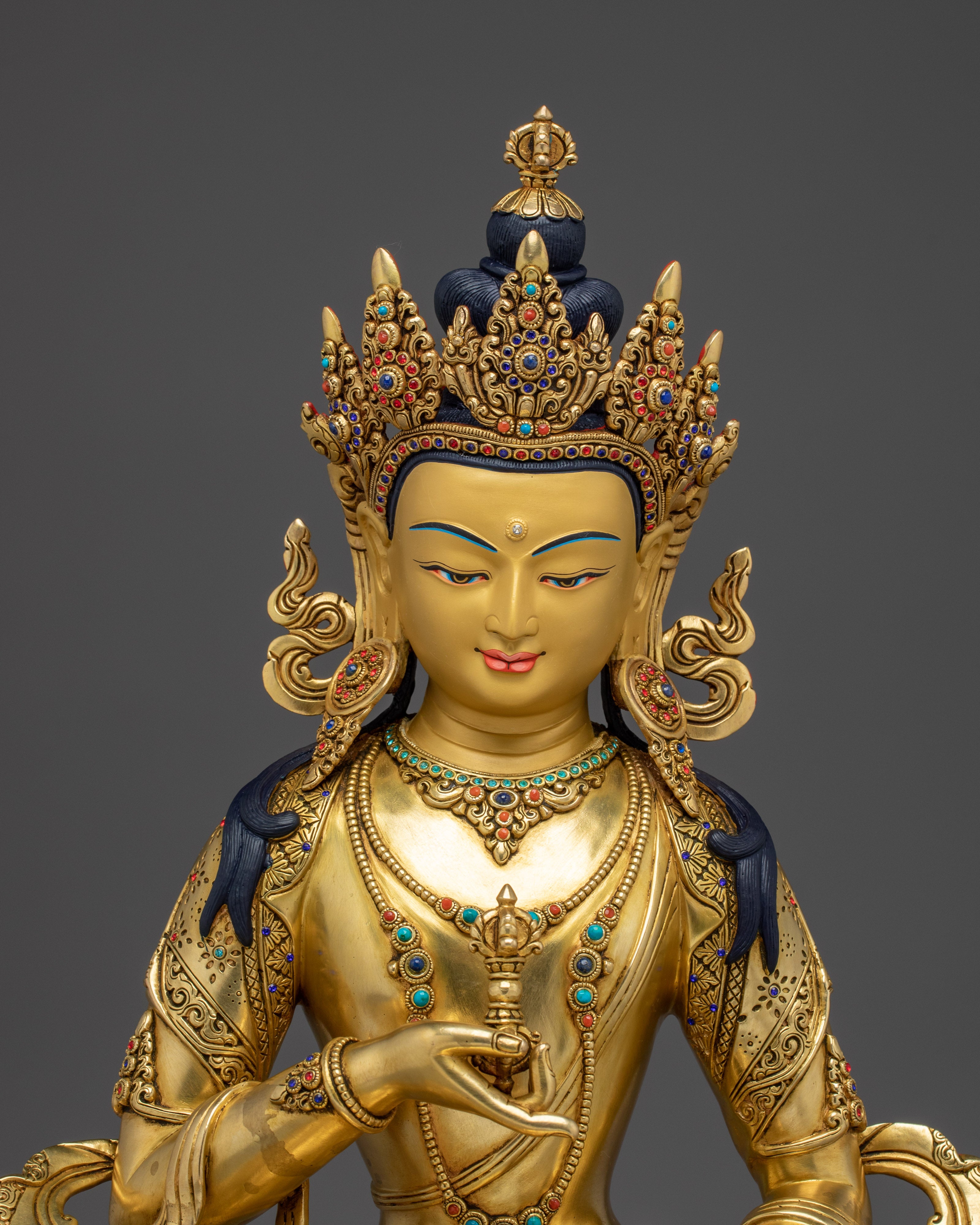
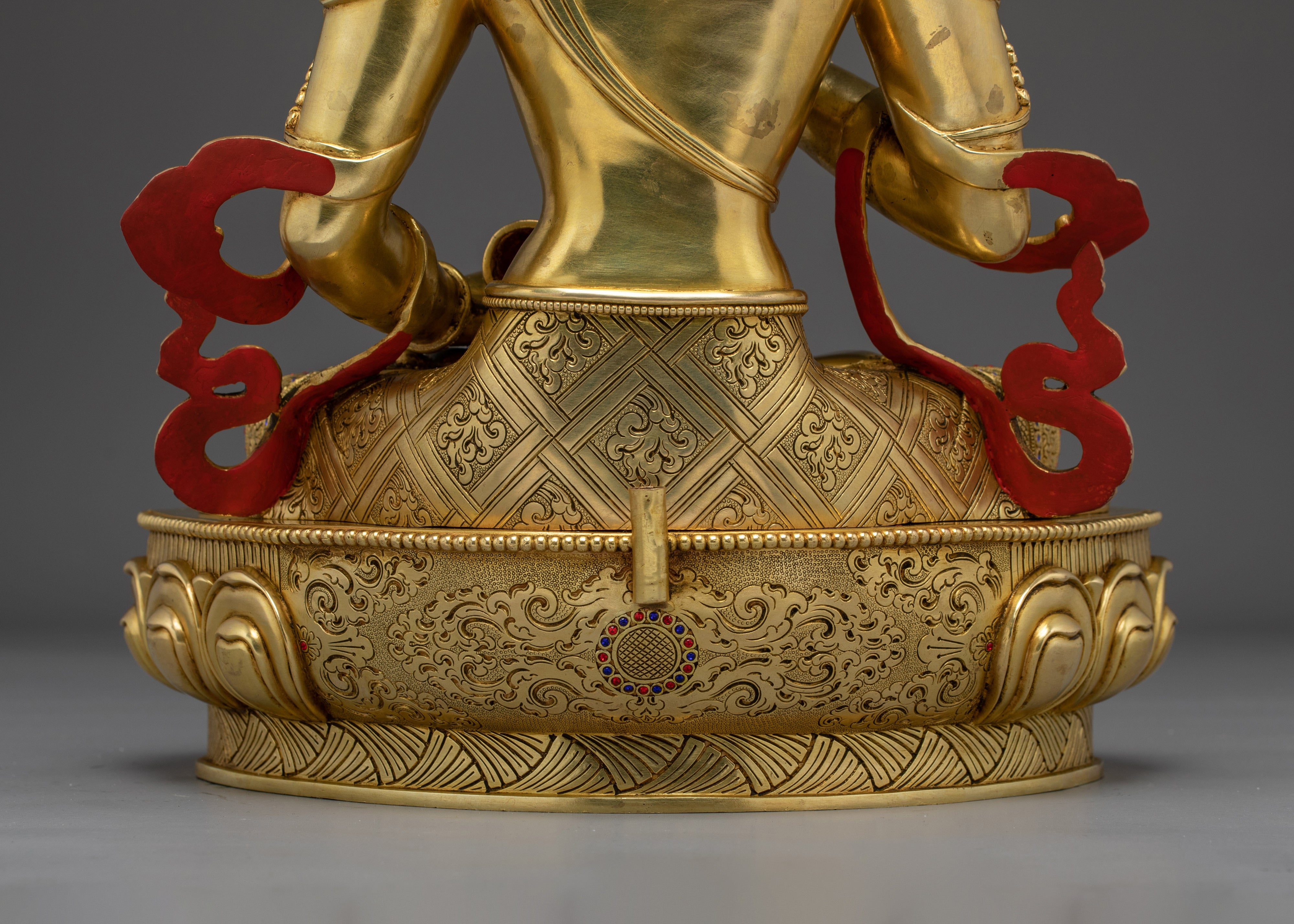
Statue of Vajrasattva, Bodhisattva of Purity | Made in Nepal
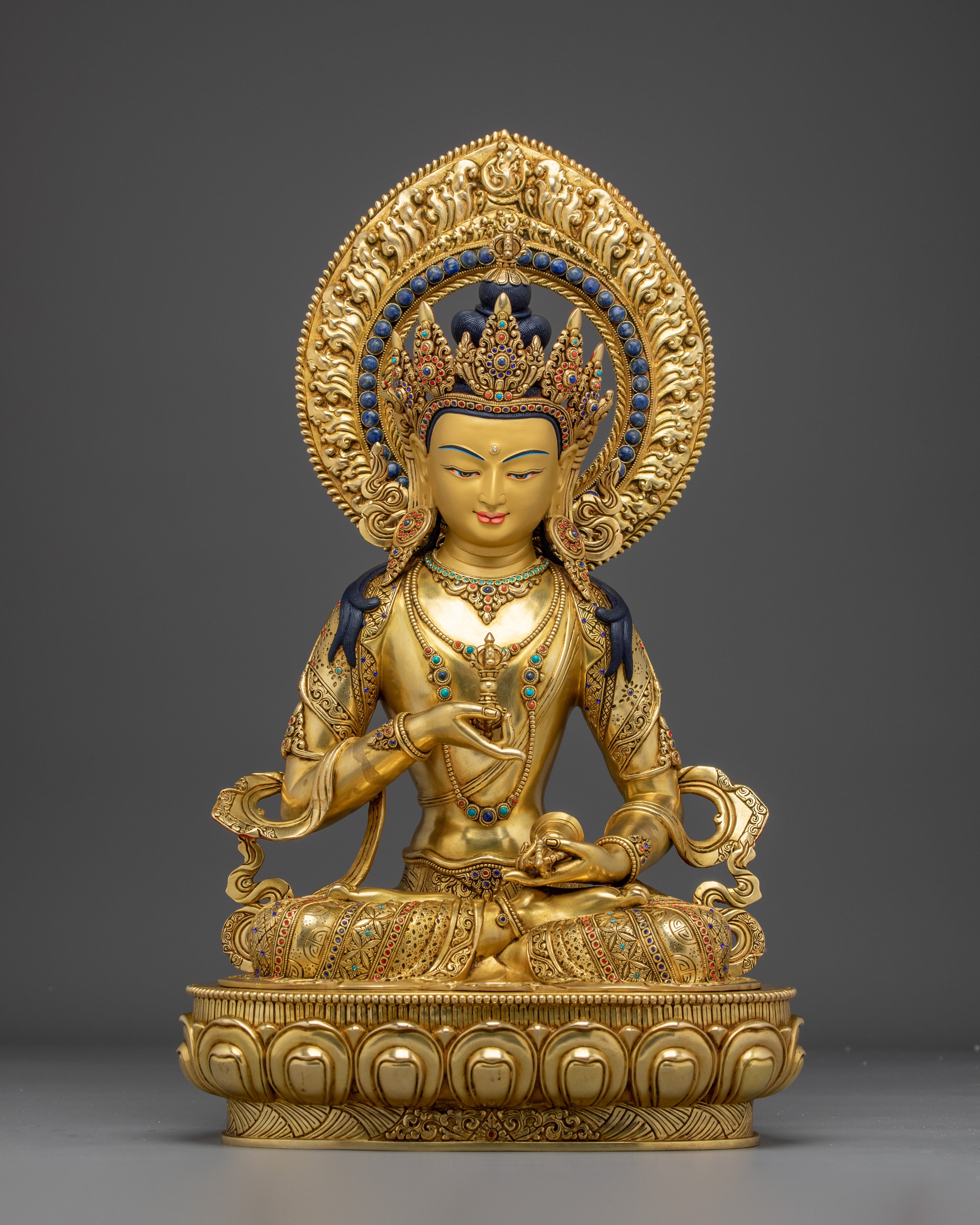
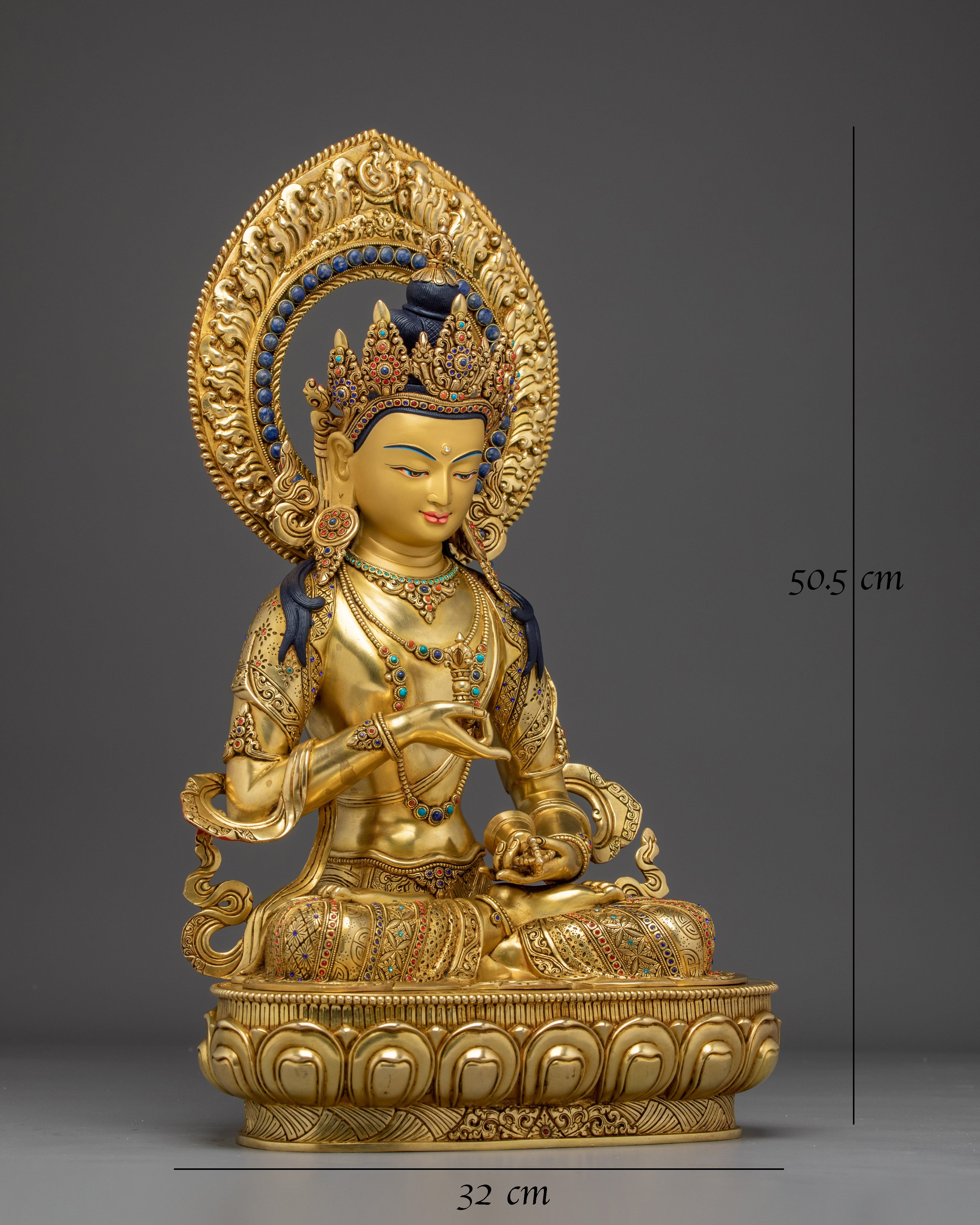
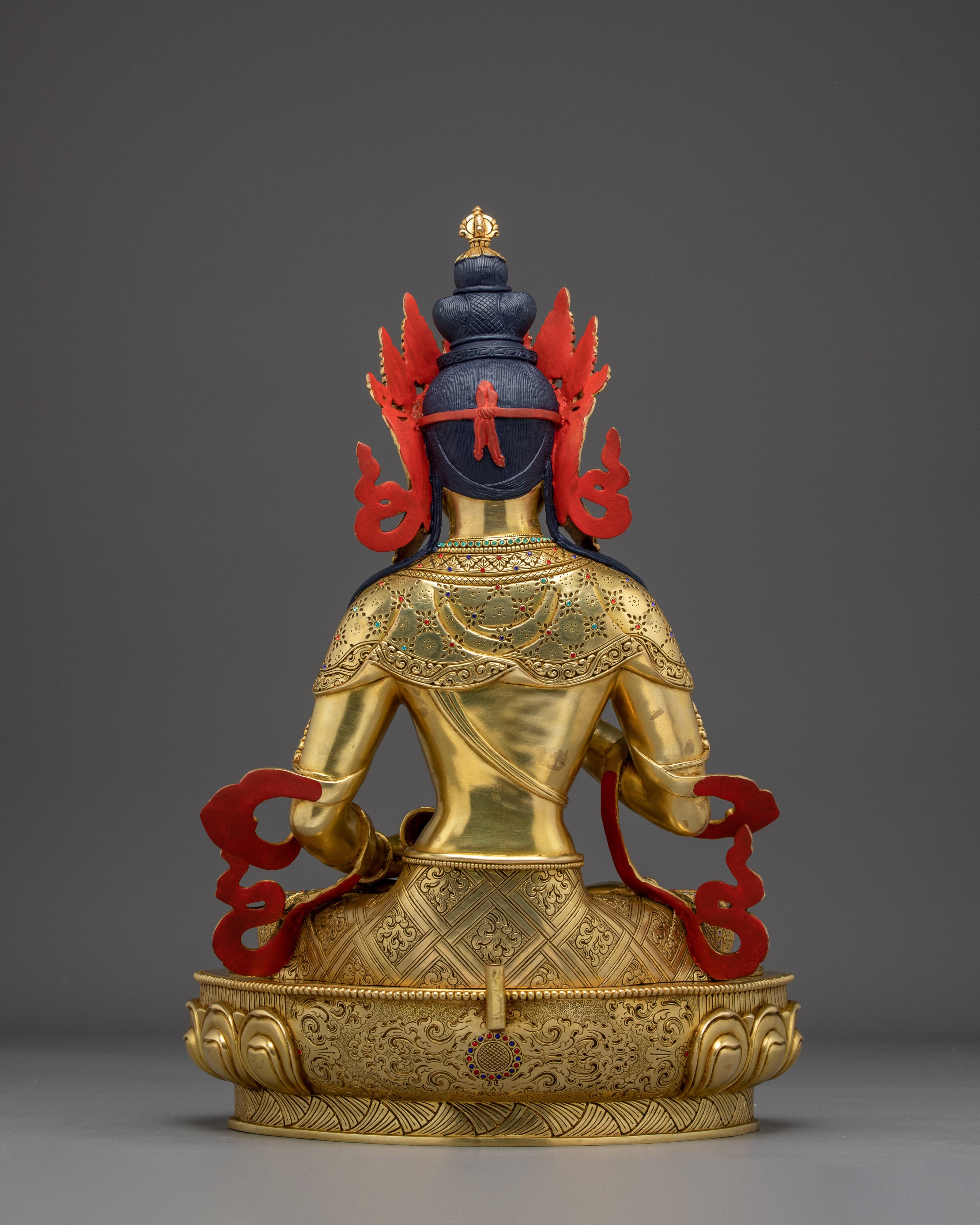
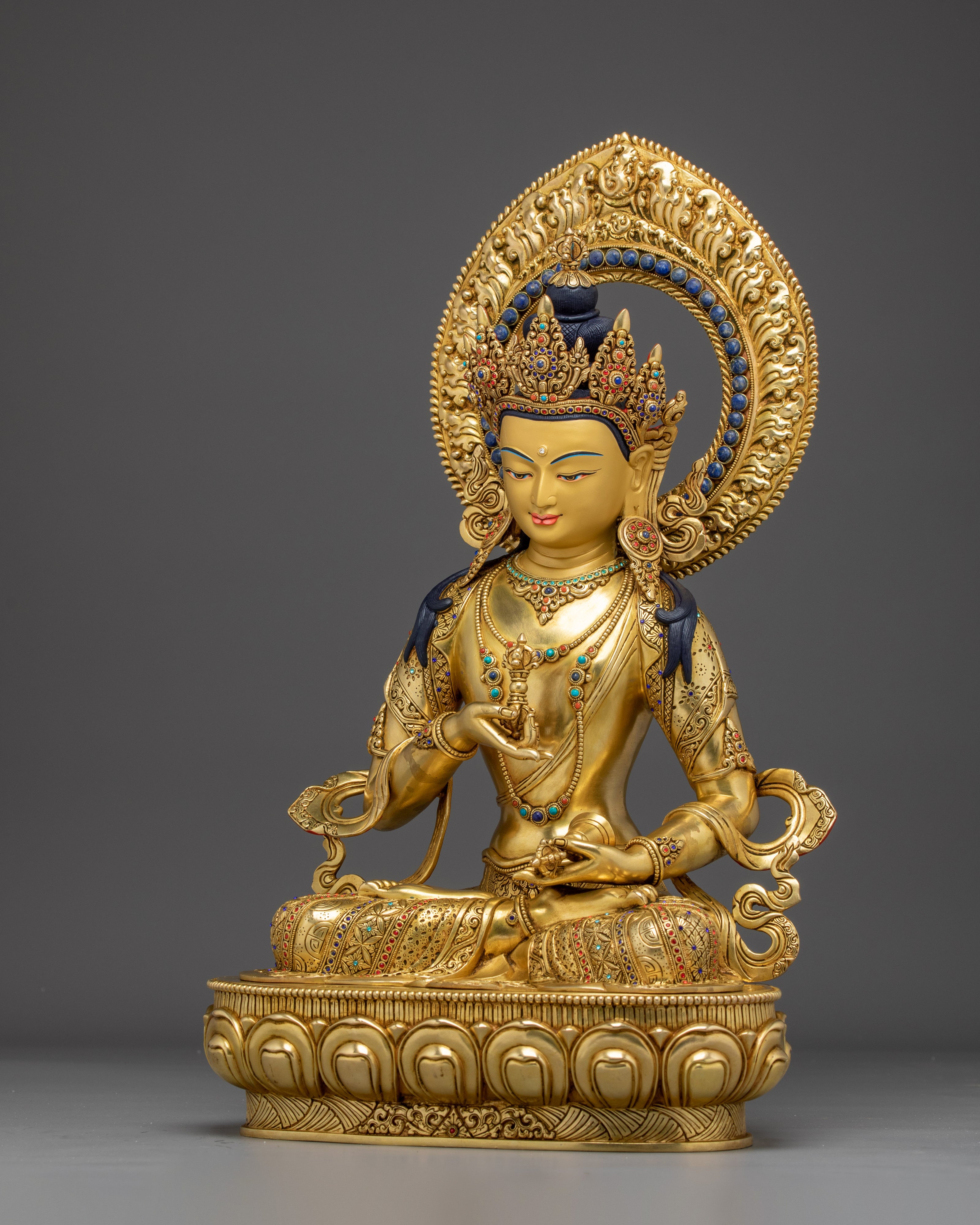
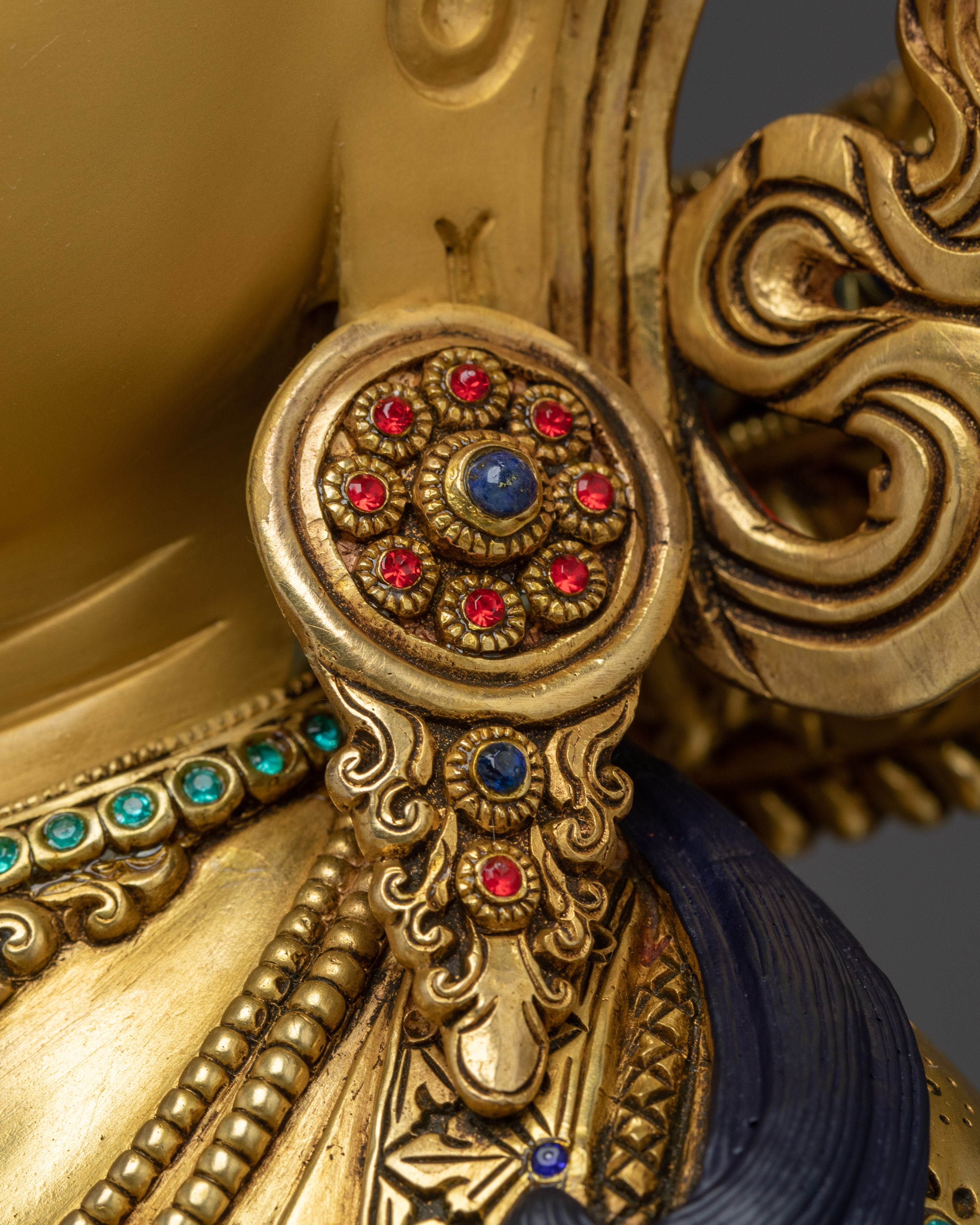
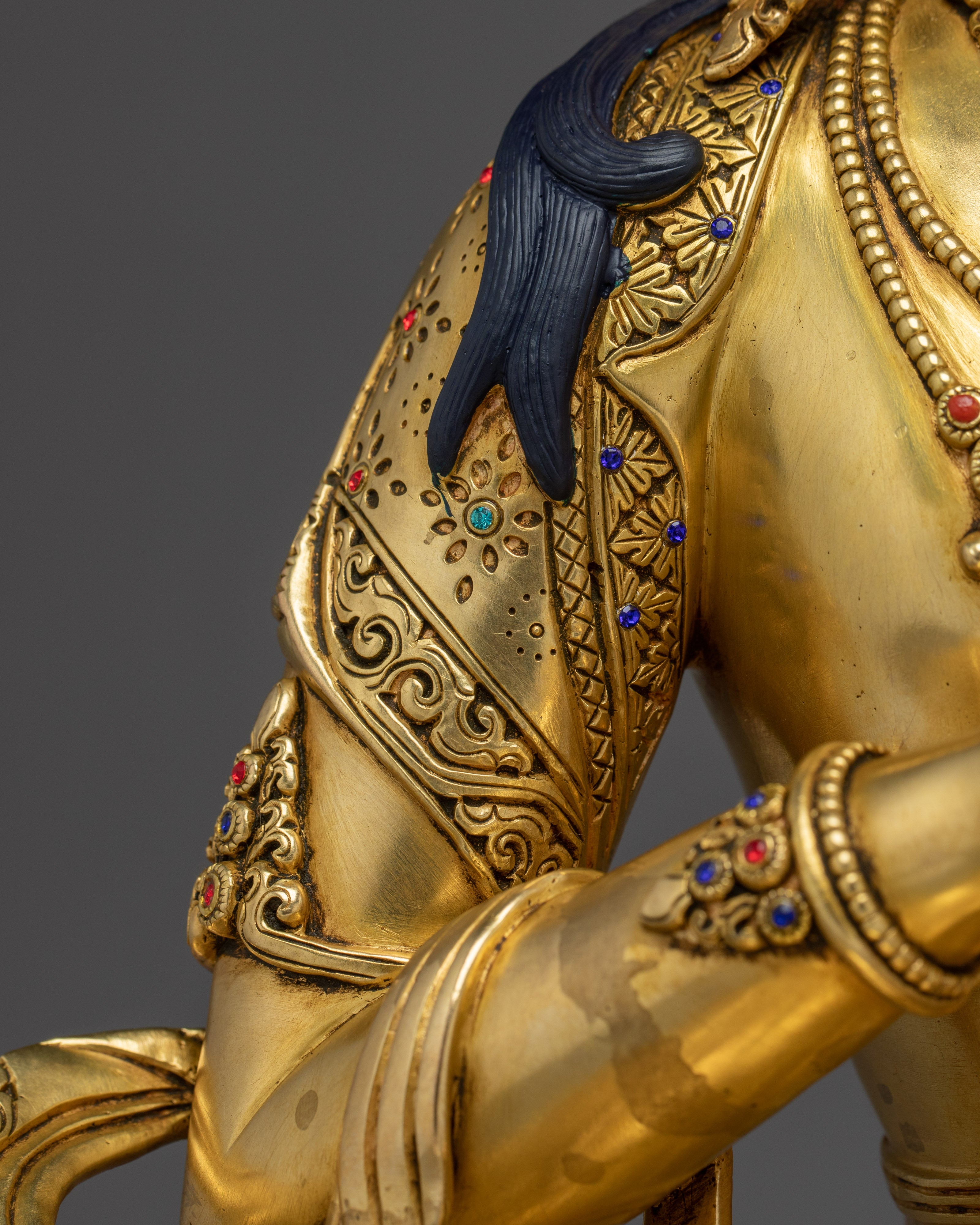
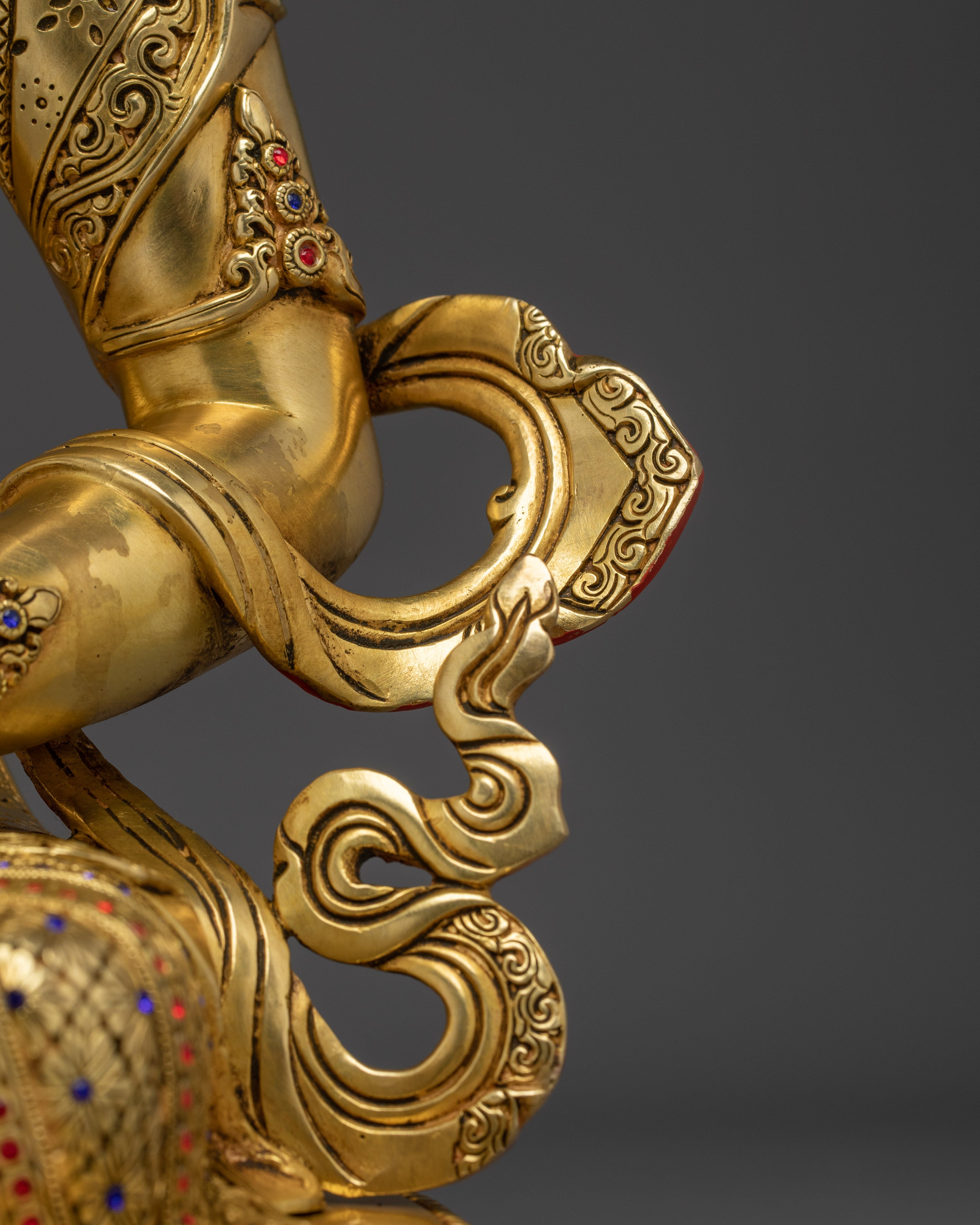
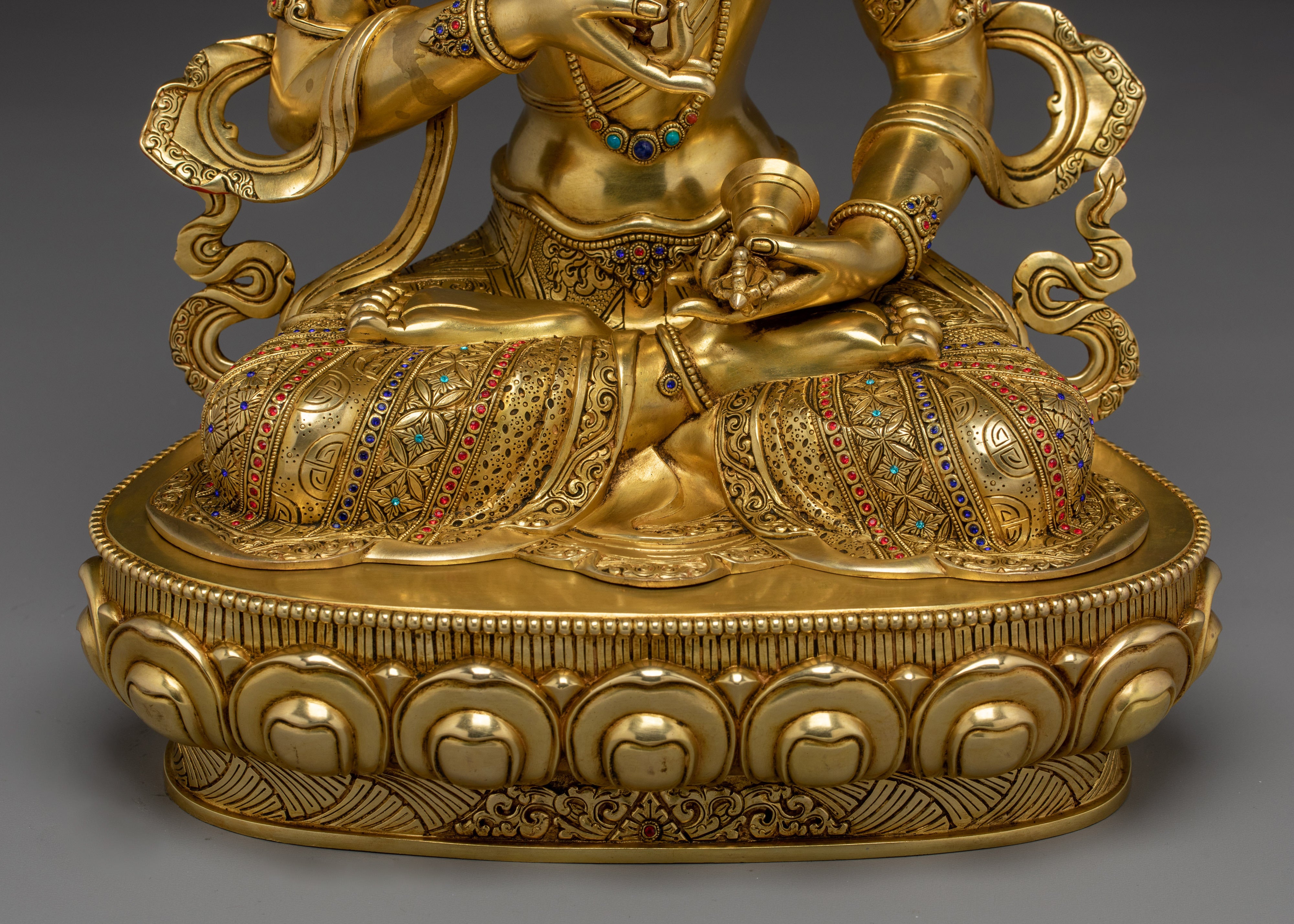
Vajrasattva, Bodhisattva of Purity, stands 19.9 inches (50.5 cm) in height with a base measuring 12.6 inches (32 cm), and weighs a substantial 10.46 kilograms, reflecting its solid construction and commanding presence. It is made of copper, covered with a triple layer of 24K gold gilding, and carved with deeply engraved carvings that produce a magnificent 3D-like effect. Expertly handcrafted from a copper body, it is adorned with radiant 24K gold gilding that imbues the piece with a luminous, sacred aura. Intricate gold and acrylic paintings enhance the fine details and spiritual symbolism, showcasing the depth of traditional Himalayan craftsmanship. Ideal as a centerpiece for temples, large altars, or sacred art displays, this statue embodies both spiritual reverence and exquisite artistry.
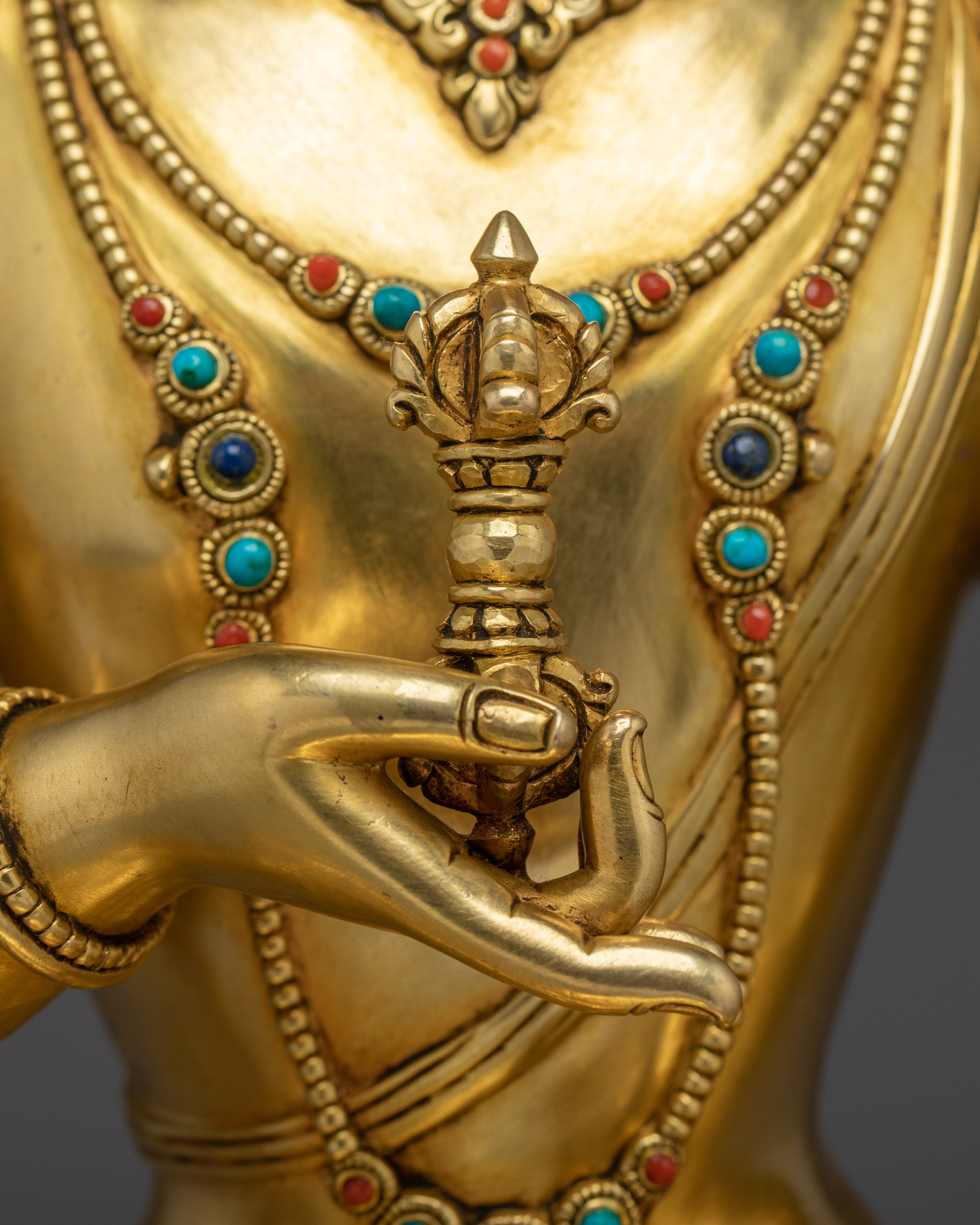
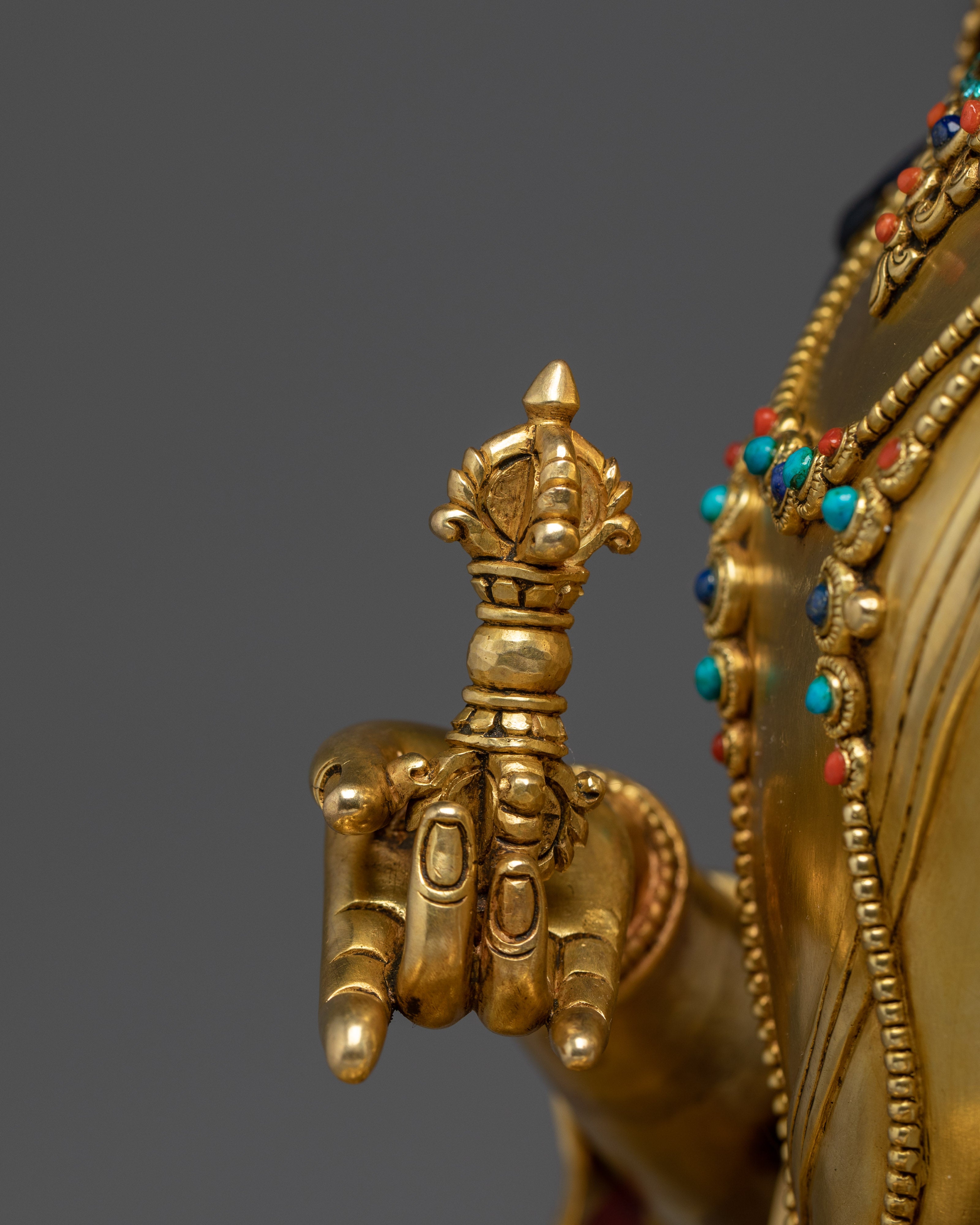
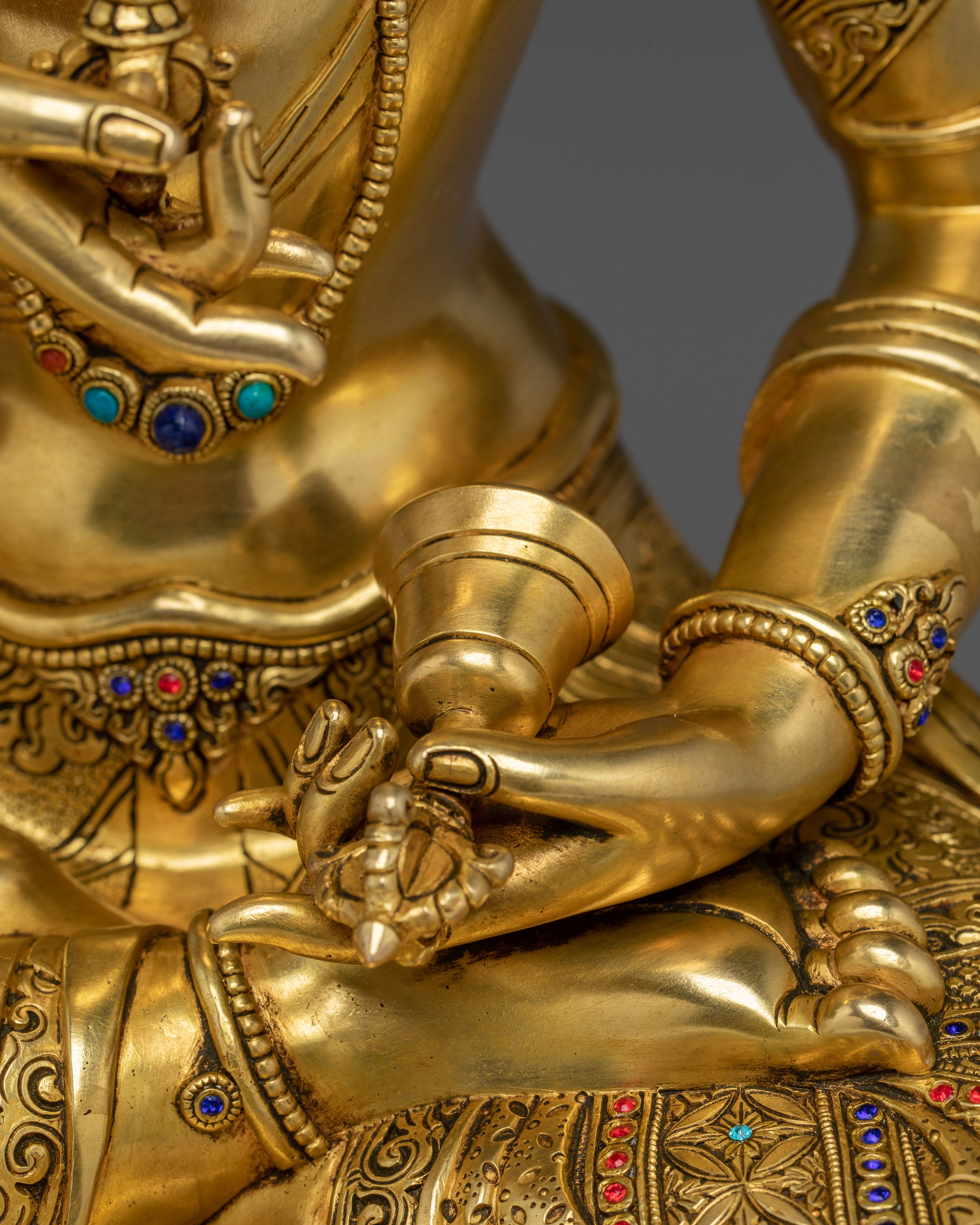
The Tibetan Buddhist Dorje Sempa, also known as Vajrasattva, is a revered deity associated with purification and spiritual cleansing. Depicted in a serene and meditative posture, he holds a vajra (thunderbolt) in his right hand, symbolizing wisdom and the ultimate truth. He gracefully holds a bell in his left hand, representing the wisdom of emptiness and the union of compassion and insight. The vajra and bell together signify the inseparable nature of method and wisdom, fundamental to Buddhist teachings. This sacred representation serves as a reminder of inner transformation and spiritual awakening in the Buddhist tradition.
Size: 19.9”/50.5cm (Height) x 12.6”/32cm (Base)
Weight: 10.46kg
Material: 24K Gold Gilded, Gold & Acrylic Paintings, Copper Body, Gemstones
Vajrasatva is known as the second patriarch in the Shingon Buddhist tradition, following Vairocana Buddha. According to Kukai’s Record of the Dharma Transmission, Nagarjuna met Vajrasatva inside an iron tower in southern India, a story supported by Amoghavajra’s account. The Mahavairocana Sutra recounts how Vajrasatva initiated Nagarjuna through an abhiseka ceremony, passing on the secret teachings he had received from Vairocana Buddha himself. While Kukai shares this intriguing encounter, he leaves Vajrasatva’s origins shrouded in mystery.