Vajrasattva Meditation Statue | A Sacred Symbol of Spiritual Cleansing and Renewal
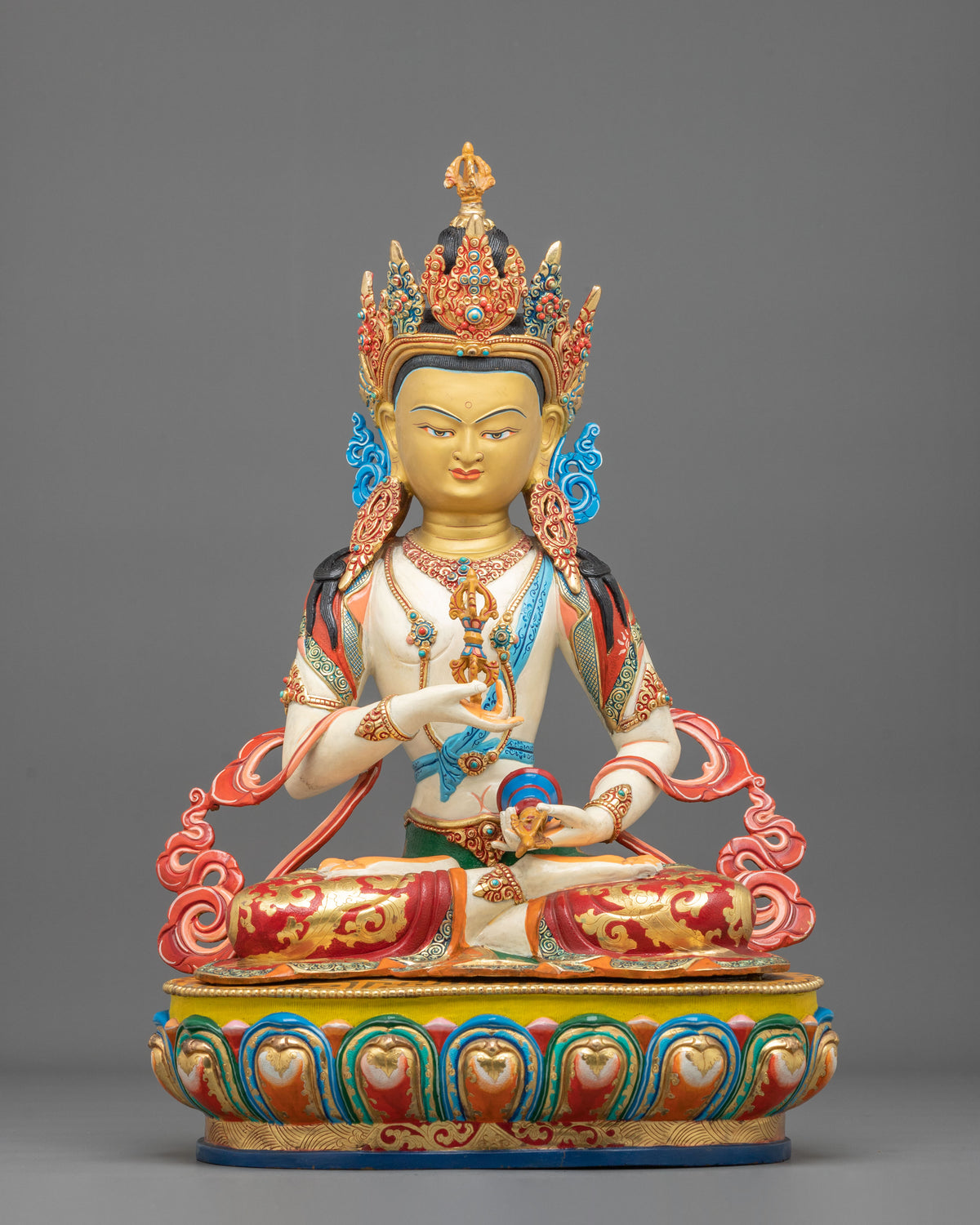
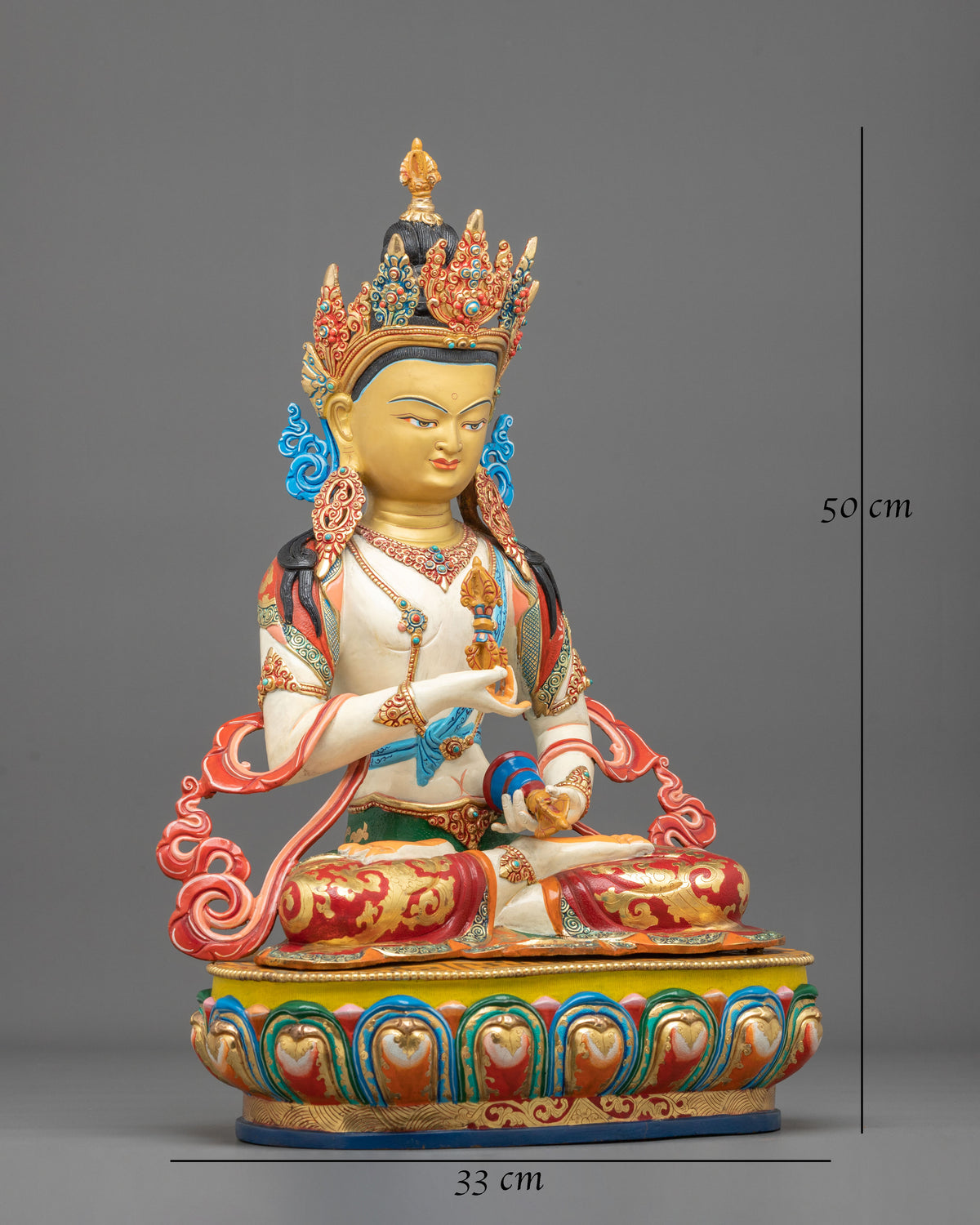
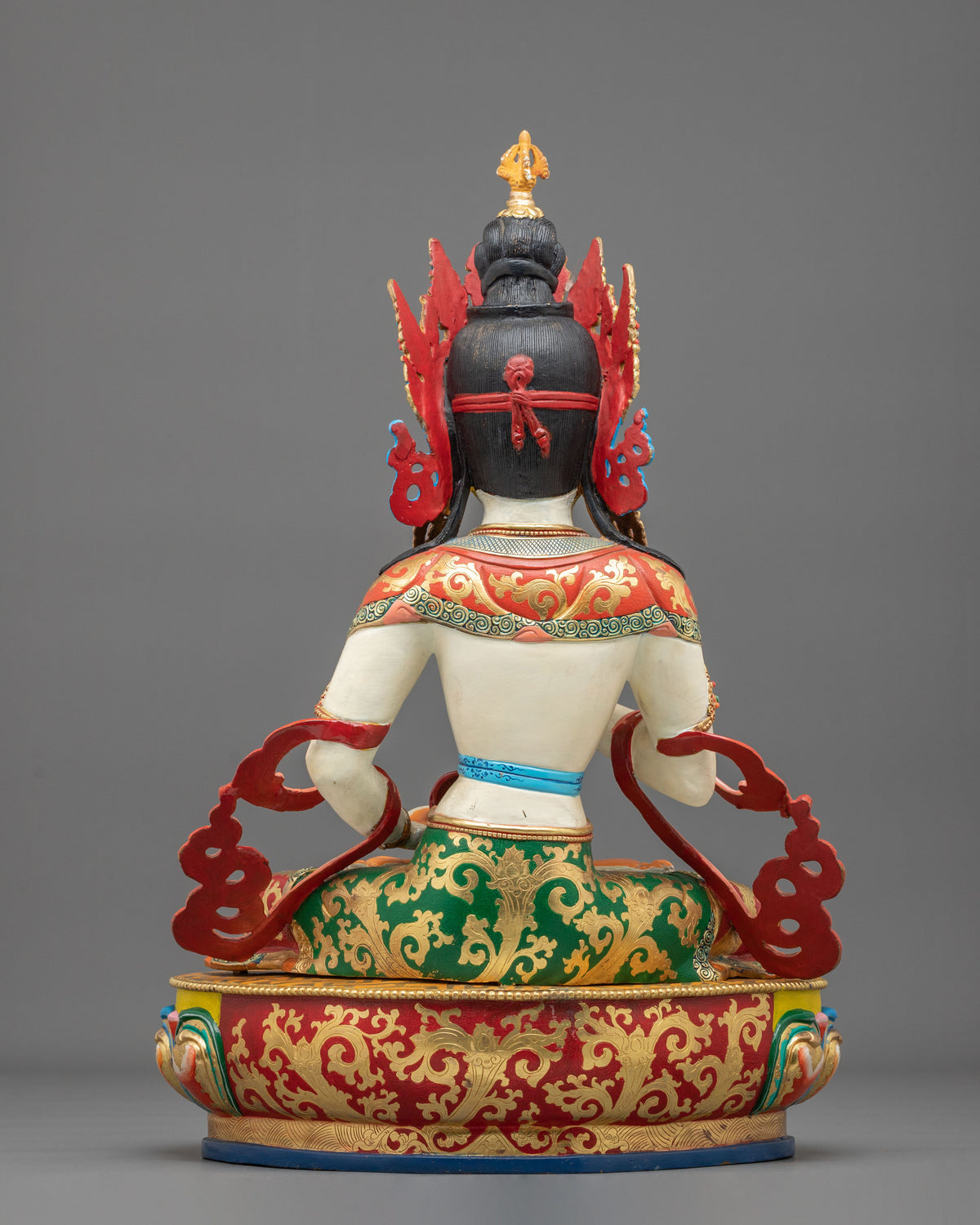
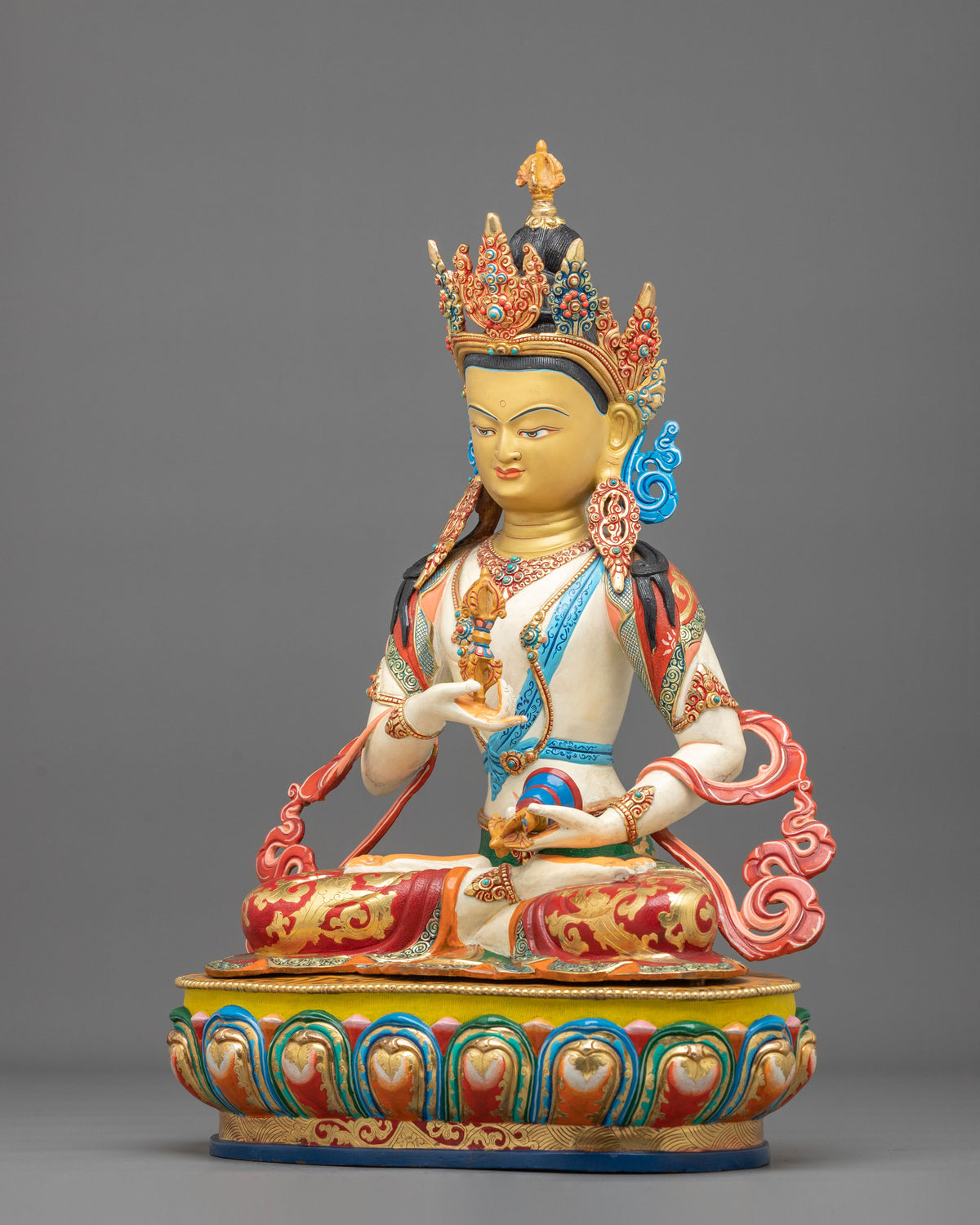
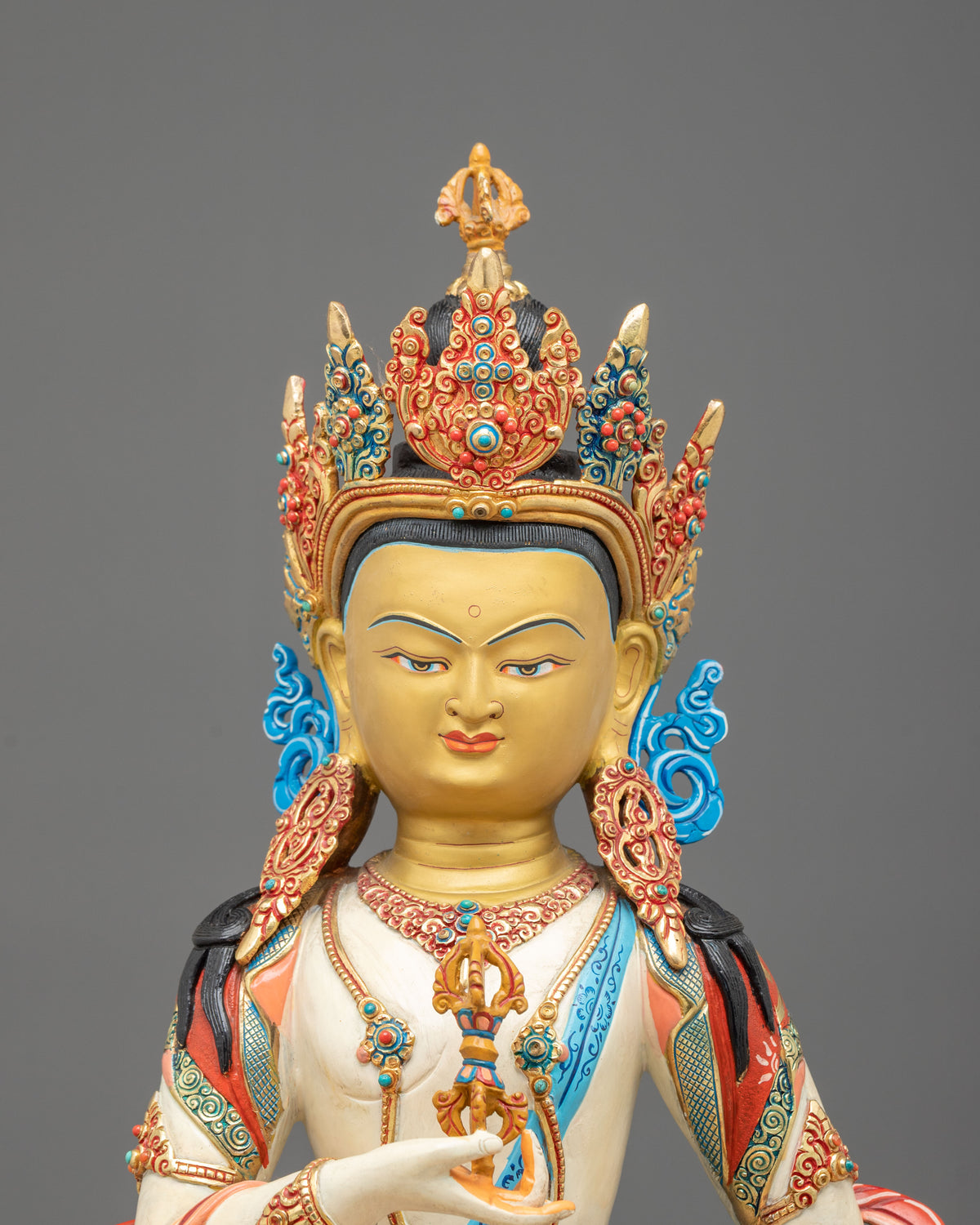
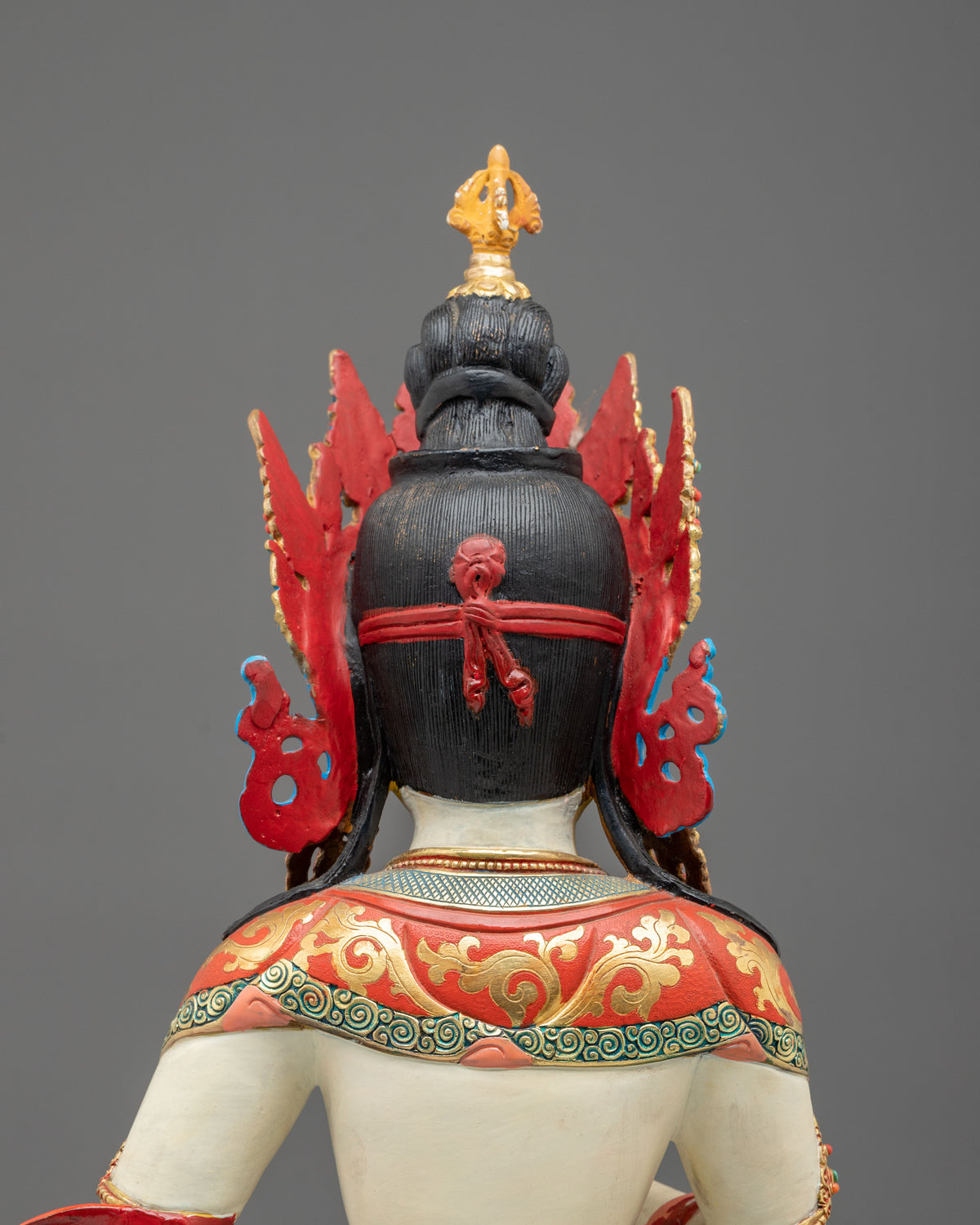
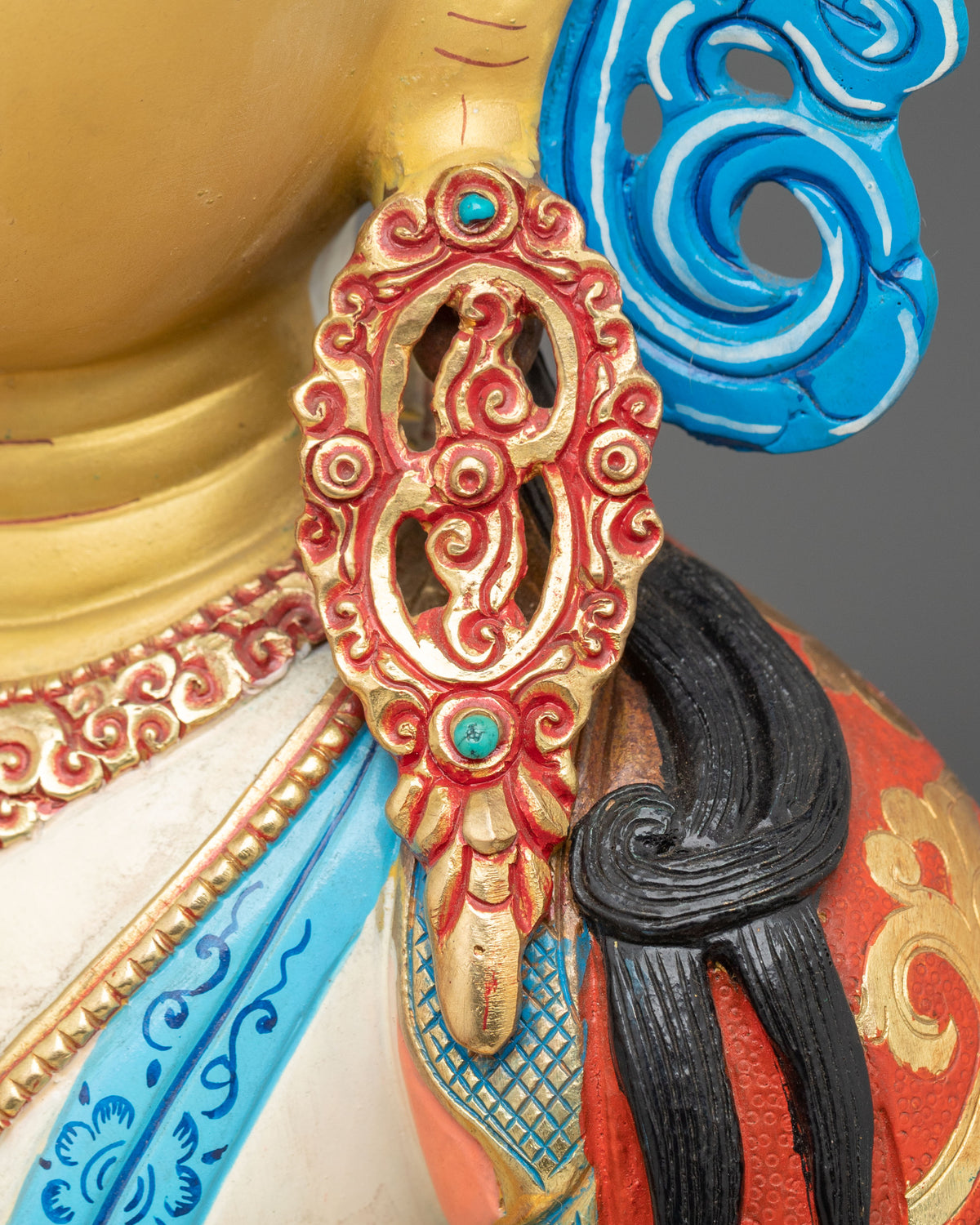
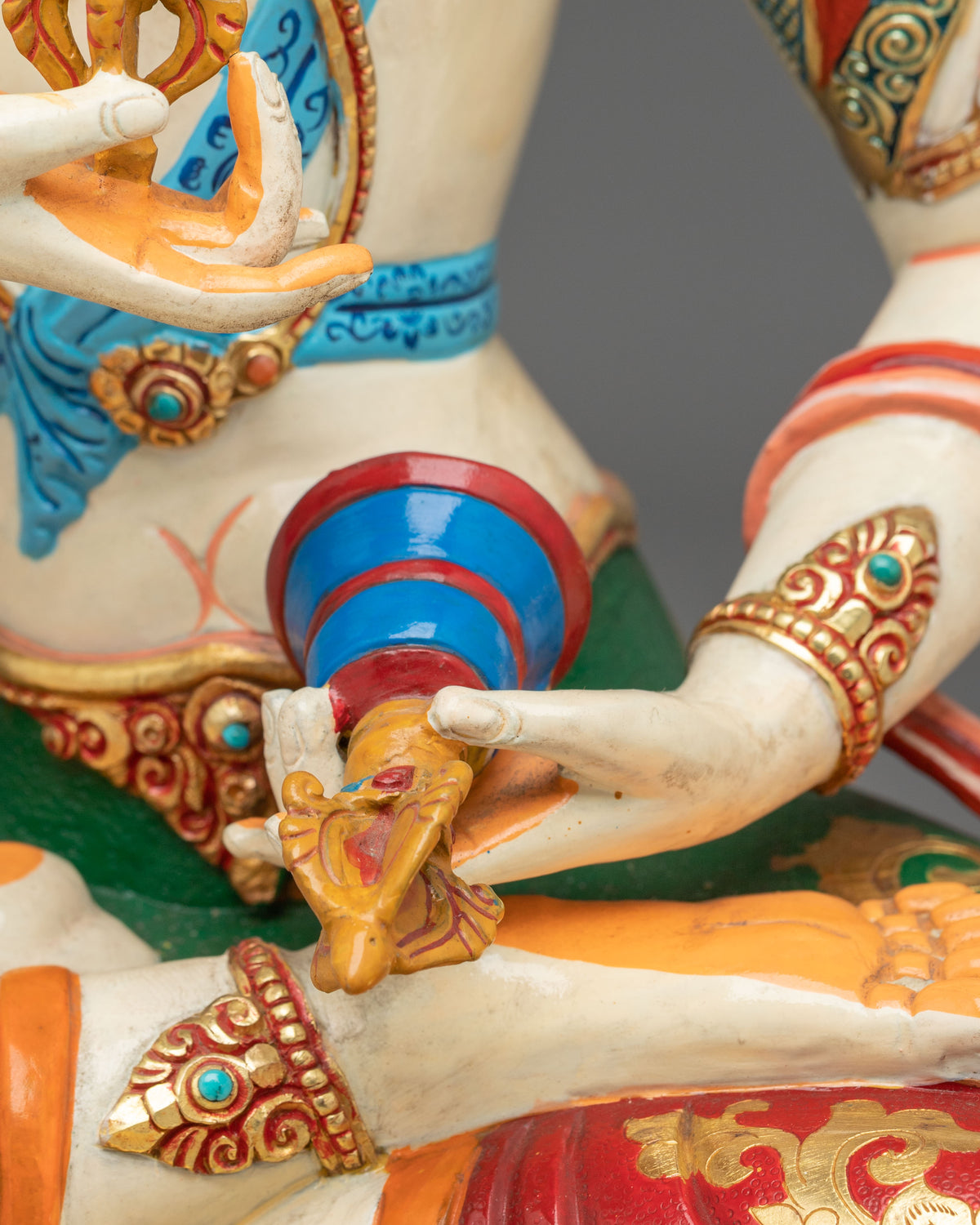
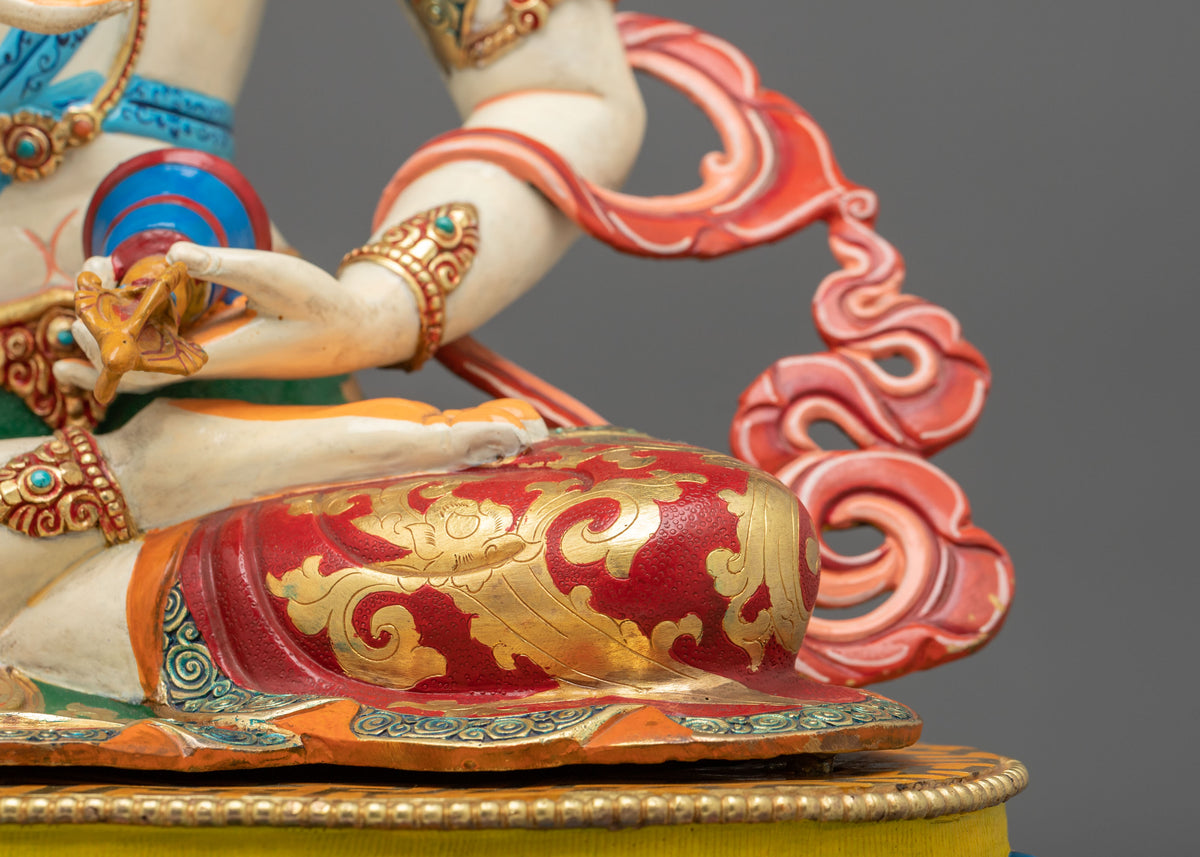
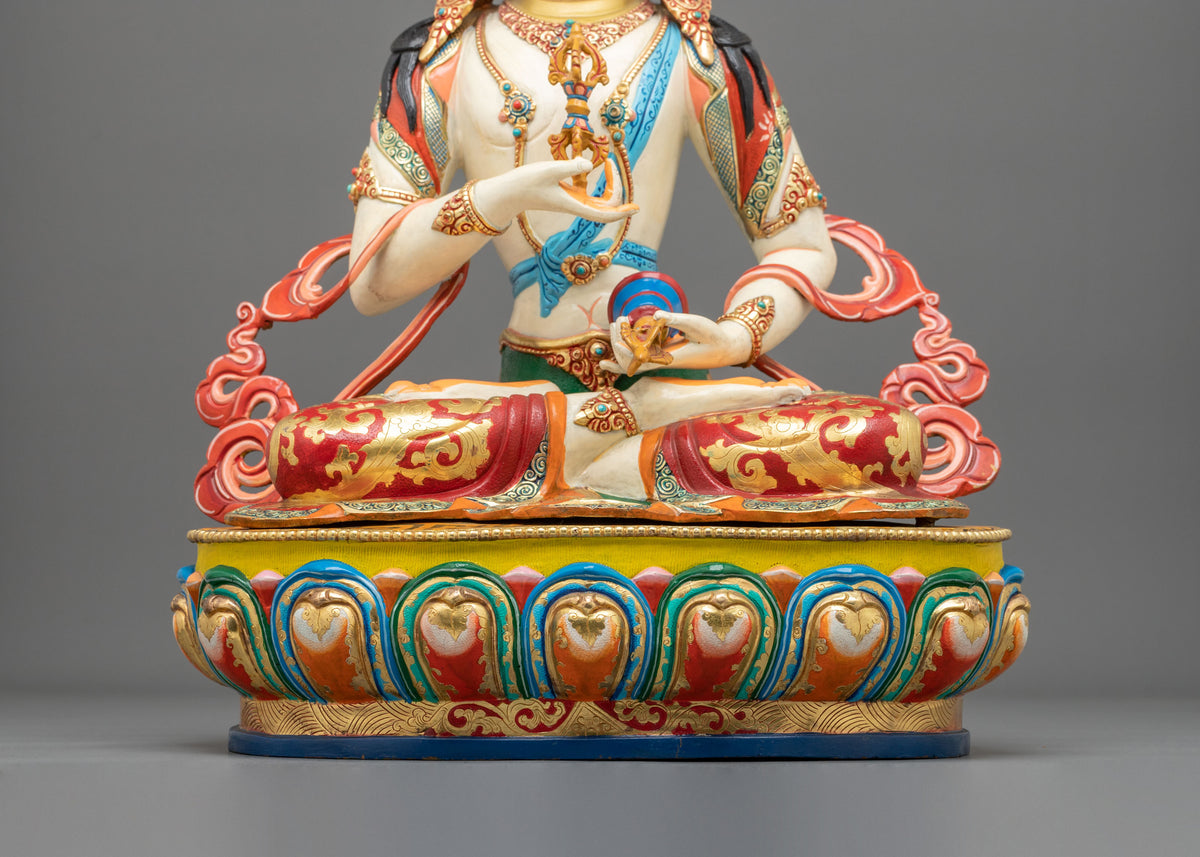
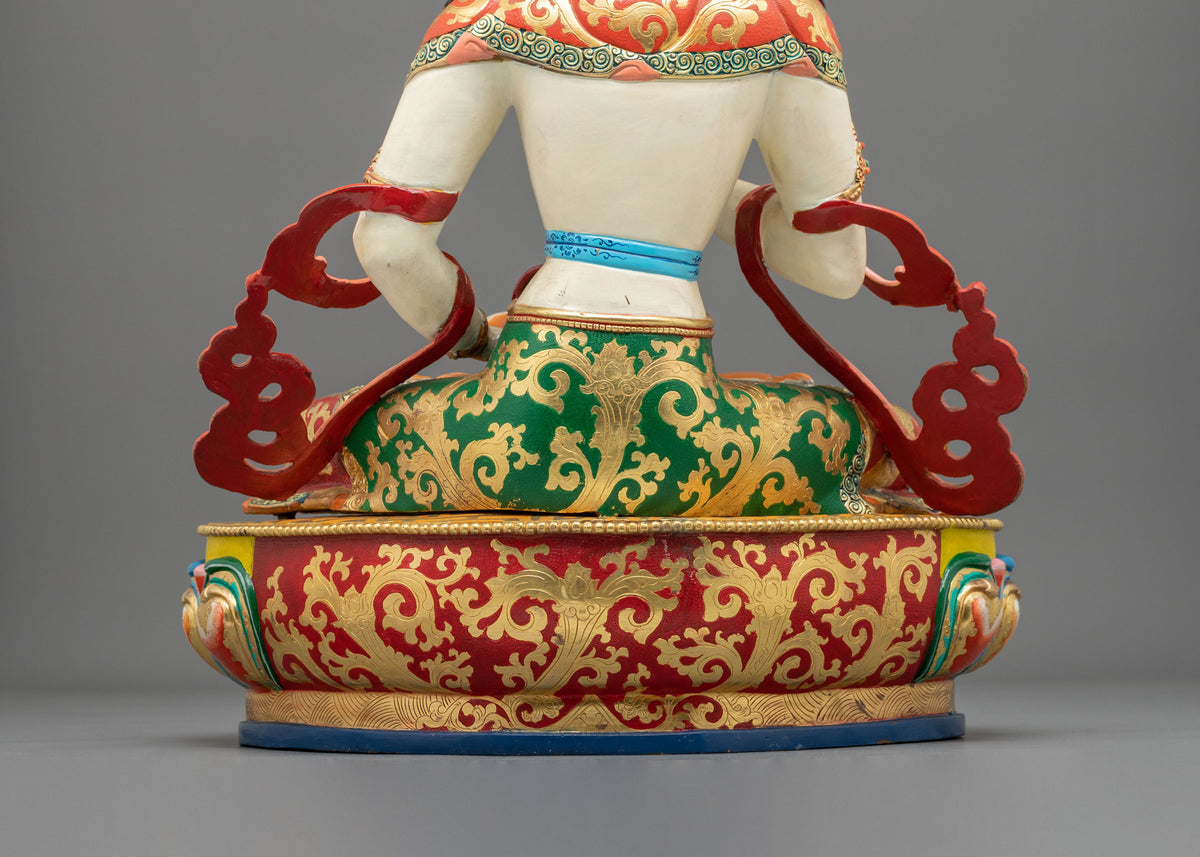
This Vajrasattva Meditation Practice Statue measures 19.7”/50cm in height with a 13”/33cm base and weighs 9.31 kg. Handcrafted in Nepal from a copper body, the sculpture is finished with 24K gold gilding, detailed acrylic painting, carefully placed gemstones, and deep hand engraving that creates a pronounced three-dimensional effect across the surface. The serene expression, ornate crown, elaborate jewelry, flowing celestial scarves, richly patterned garments, lotus flowers, decorative aureole, and detailed pedestal are enhanced by vibrant painted accents and gemstone embellishments. The refined carving and meticulous finishing reflect the skill of Nepalese artisans and the enduring traditions of Himalayan Buddhist craftsmanship, while spiritually the figure is associated with purification, the cleansing of negative karma, and the restoration of spiritual clarity.
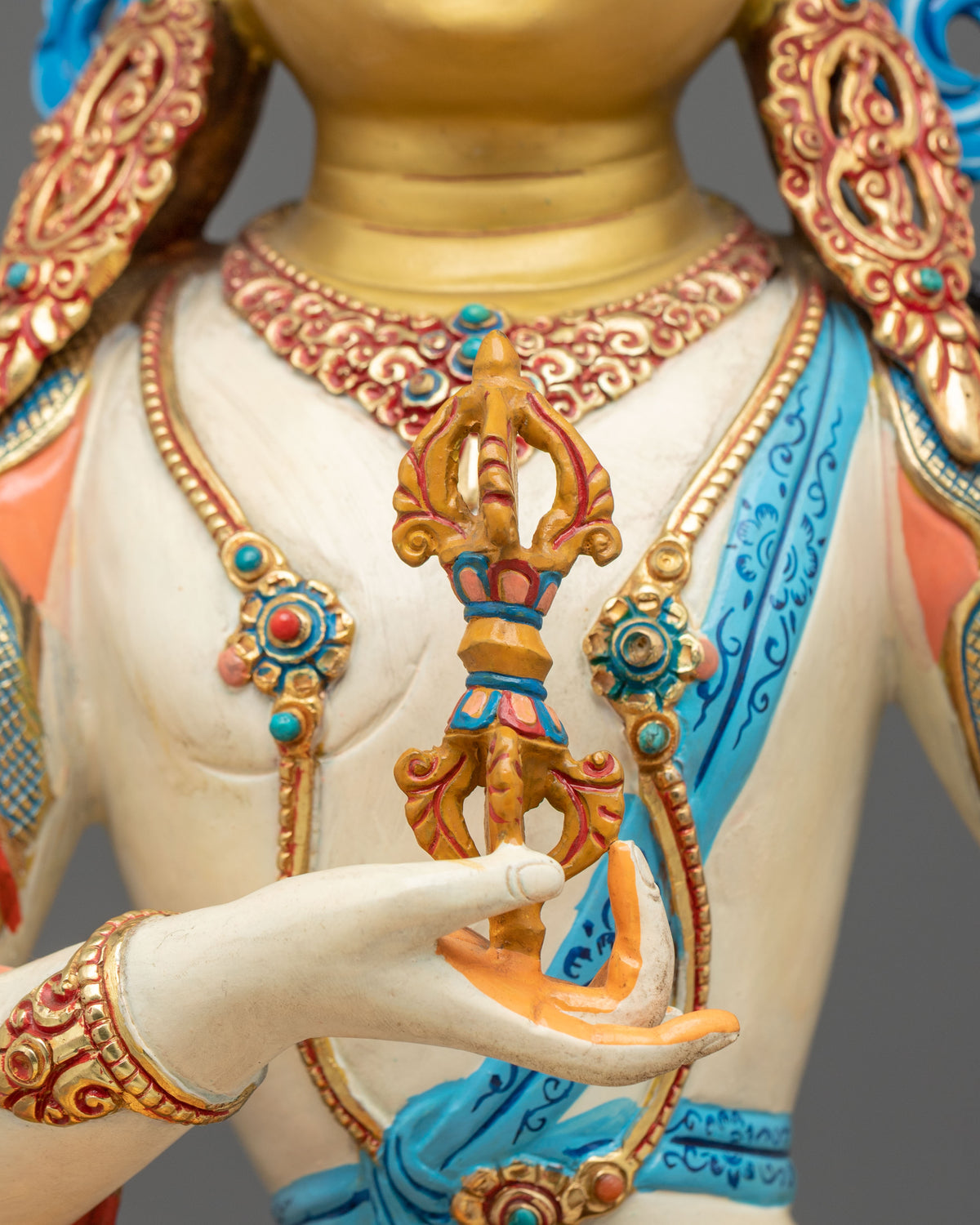
This sacred depiction portrays Vajrasattva, a principal figure of Vajrayana purification practice and an embodiment of primordial purity and awakened wisdom. He is seated peacefully in vajra posture, holding the vajra close to his heart in his right hand and the bell in his left hand, expressing the inseparable union of compassionate method and transcendent wisdom. His calm expression and meditative posture convey clarity, peaceful awareness, and inner purification, while his elaborate crown, necklaces, earrings, bracelets, and celestial garments emphasize his enlightened form. The lotus flowers and richly ornamented throne symbolize purity and spiritual awakening. Vajrasattva is especially associated with purification practices that address negative actions and mental obscurations, making his image a meaningful reminder of reflection, renewal, mindful conduct, and the cultivation of wisdom and compassion.
Size: 19.7”/50cm (Height) x 13”/33cm (Base)
Weight: 9.31 kg
Material: 24K Gold Gilded, Acrylic Painting, Copper Body, Gemstones
Vajrasattva originates in Indian Mahayana and Vajrayana Buddhist traditions and later became especially important within Tibetan Buddhism. His name means “Vajra Being,” referring to the indestructible purity and clarity of enlightened awareness. His practice became central to purification rituals, especially through the recitation of the Hundred-Syllable Mantra, which is traditionally used to cleanse negative karma, obscurations, and broken commitments. In Tibetan Buddhism, he is closely associated with purification, spiritual renewal, and preparing the mind for deeper meditation and tantric practice.
Explore our Vajrasattva Statue Collection.