Vajrasattva Statue for Spiritual Purification | Handcrafted in Nepal
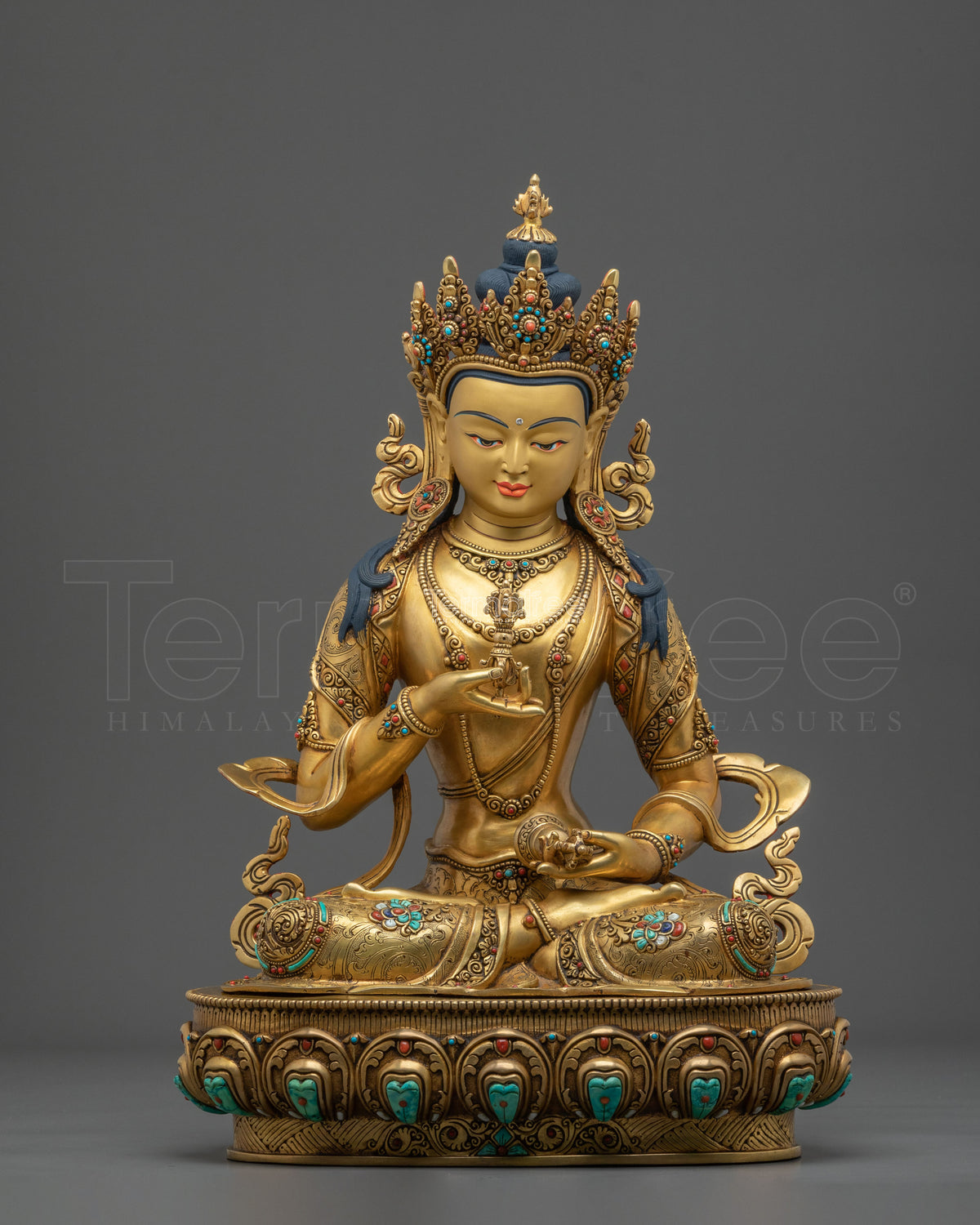
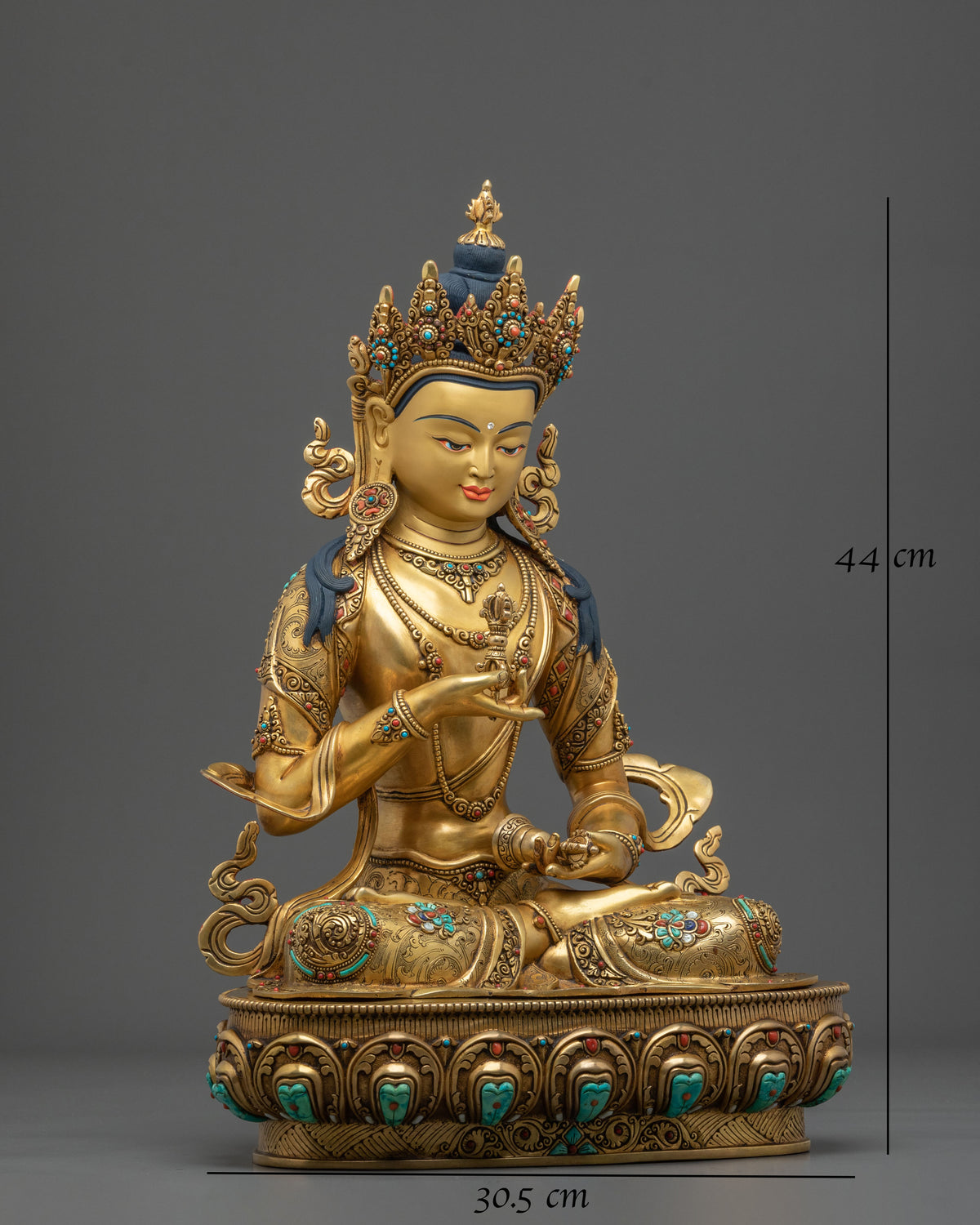
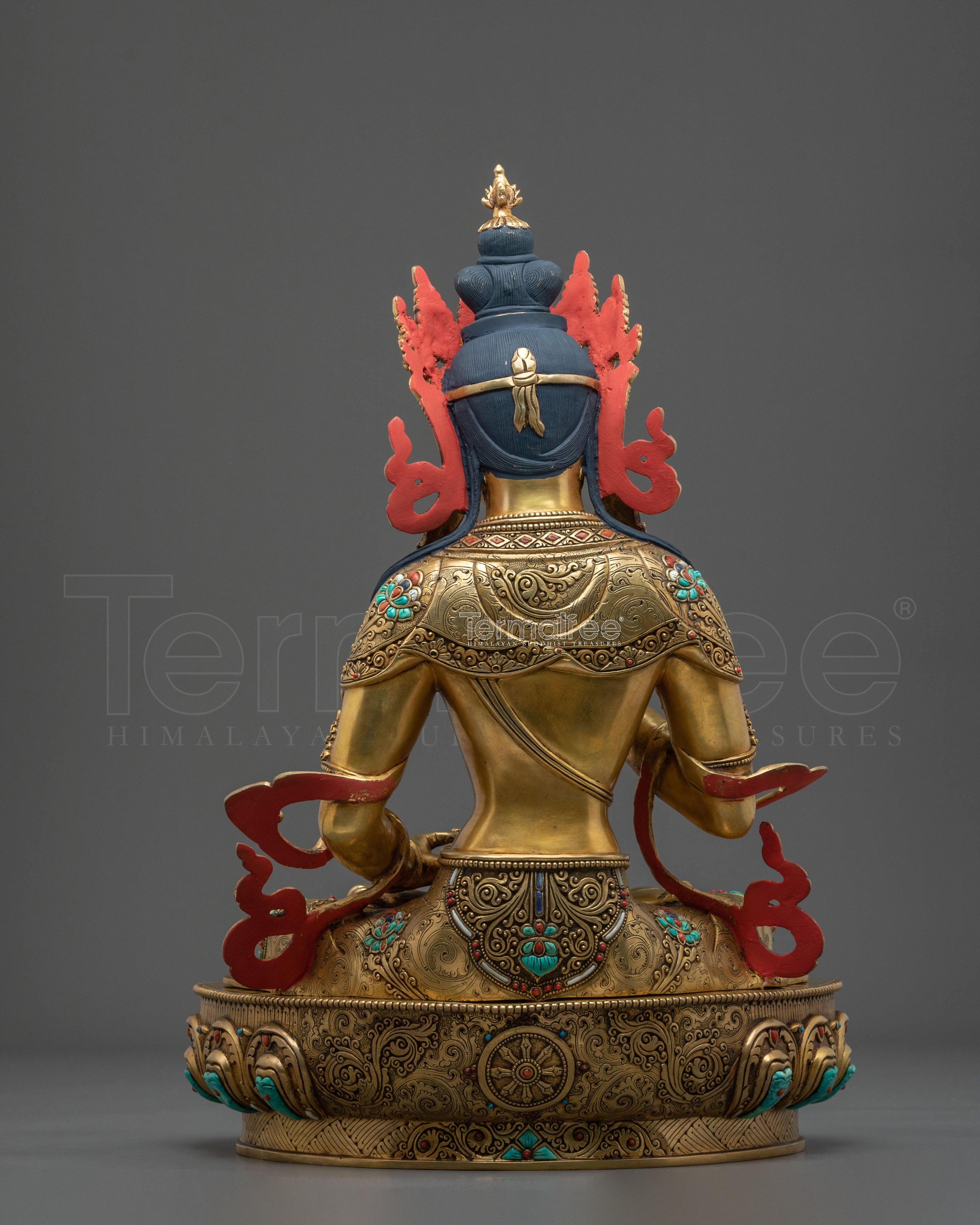
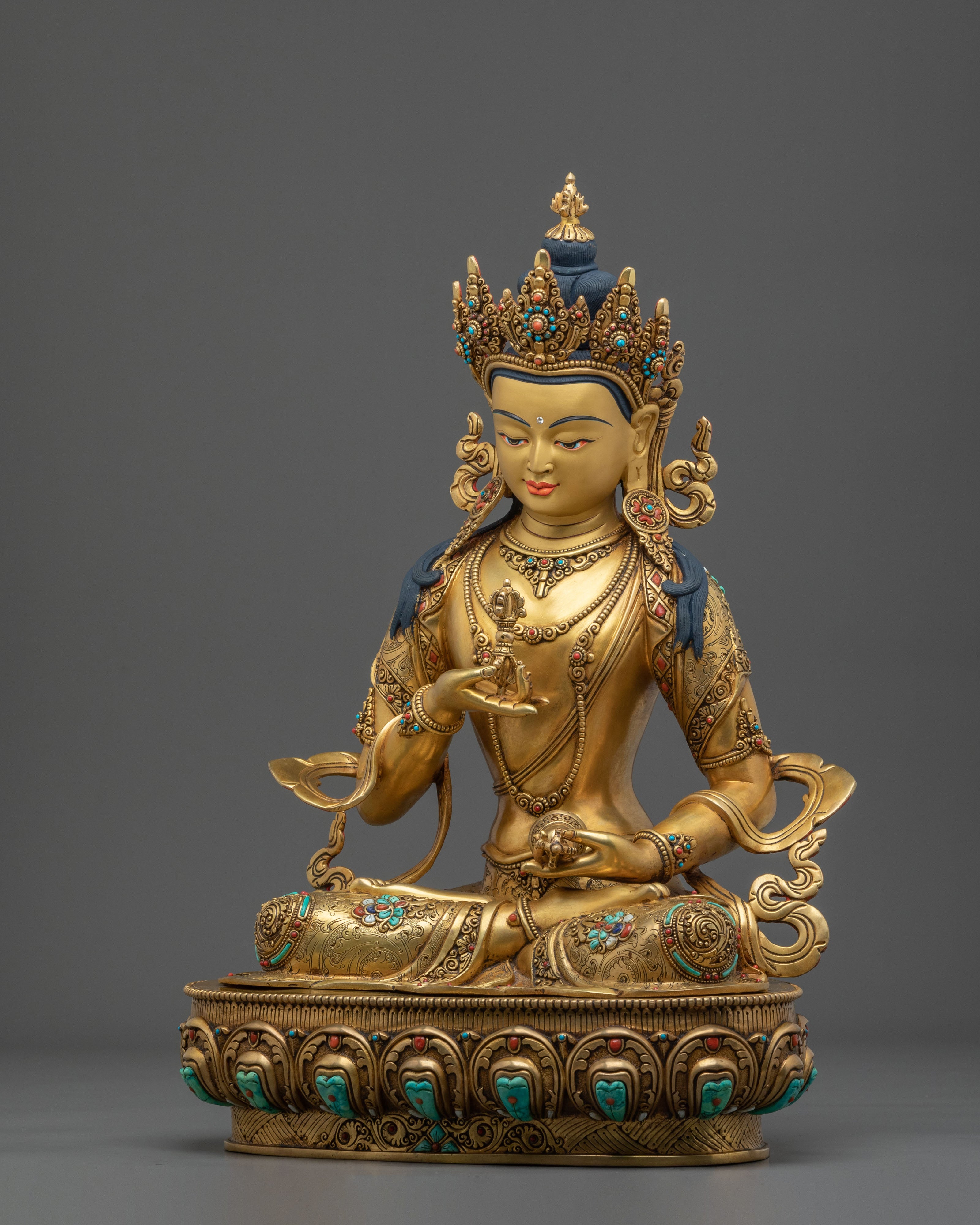
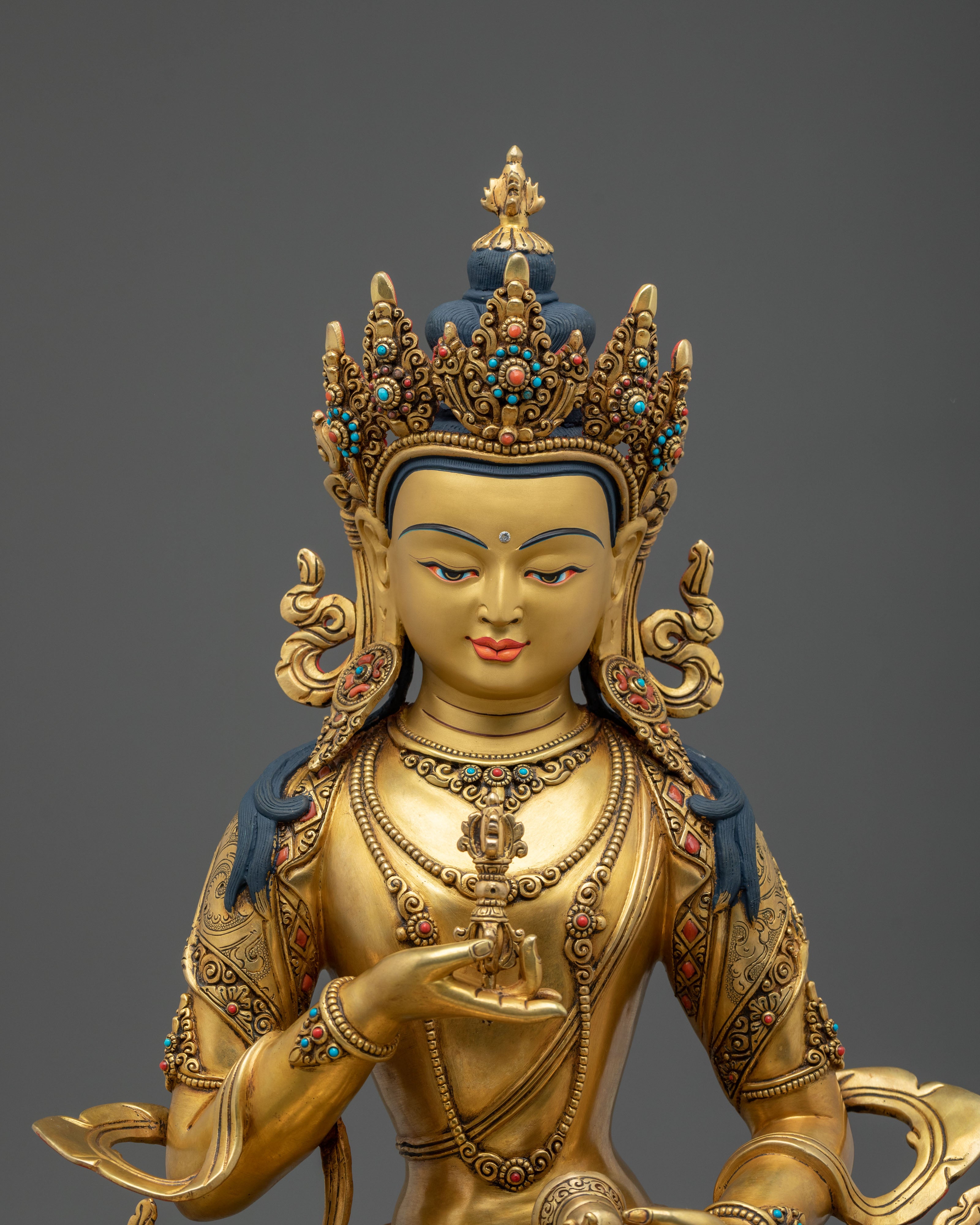
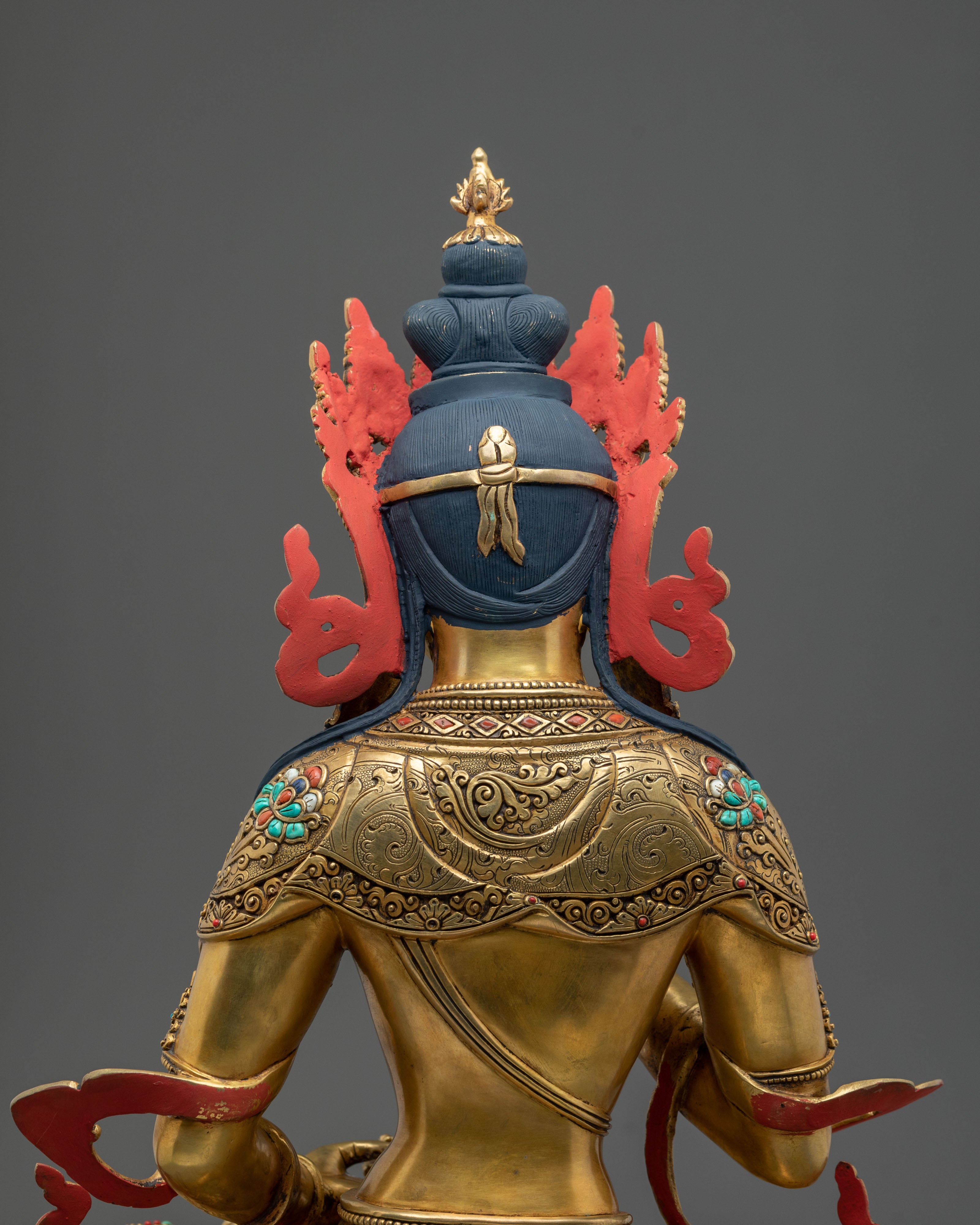
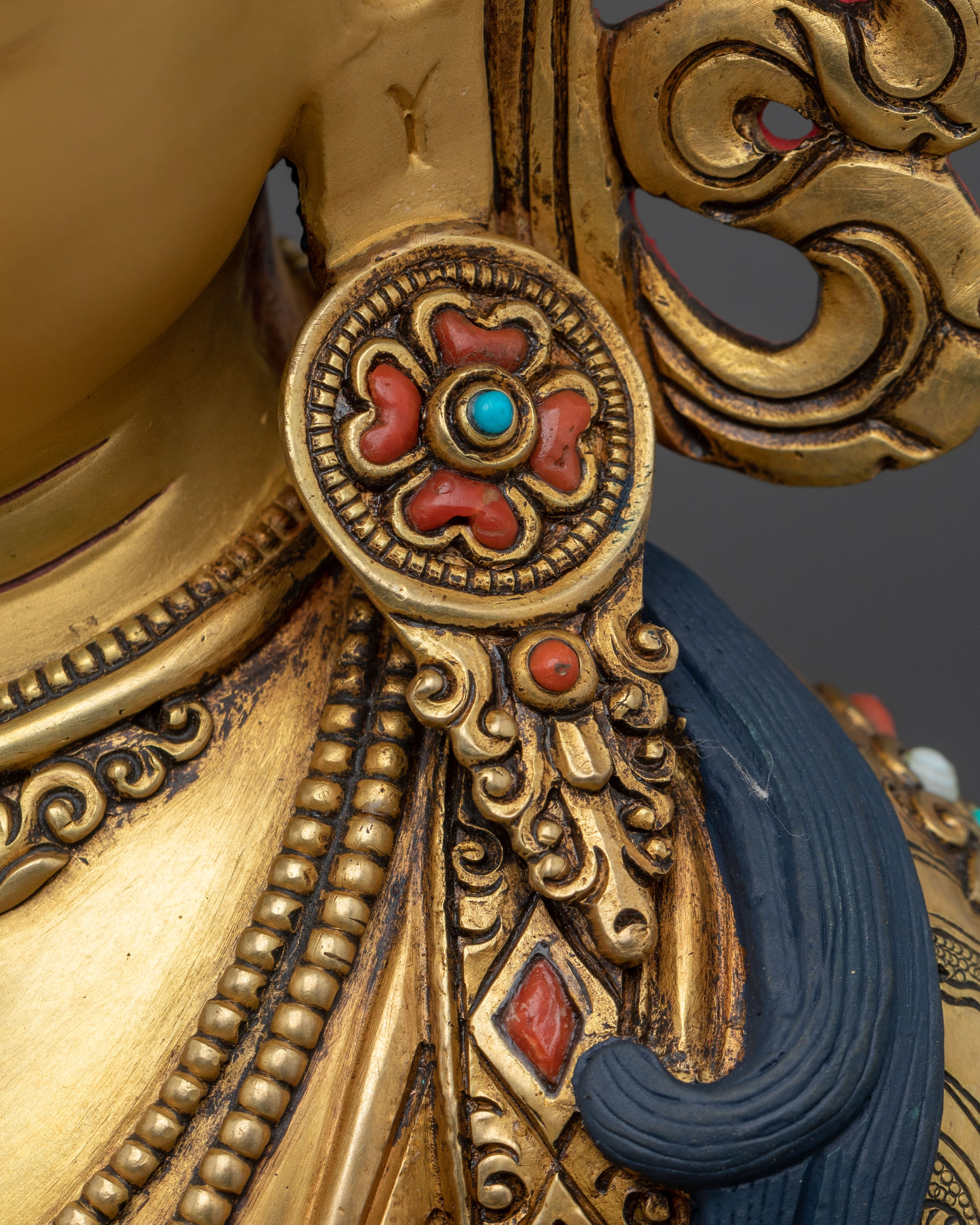
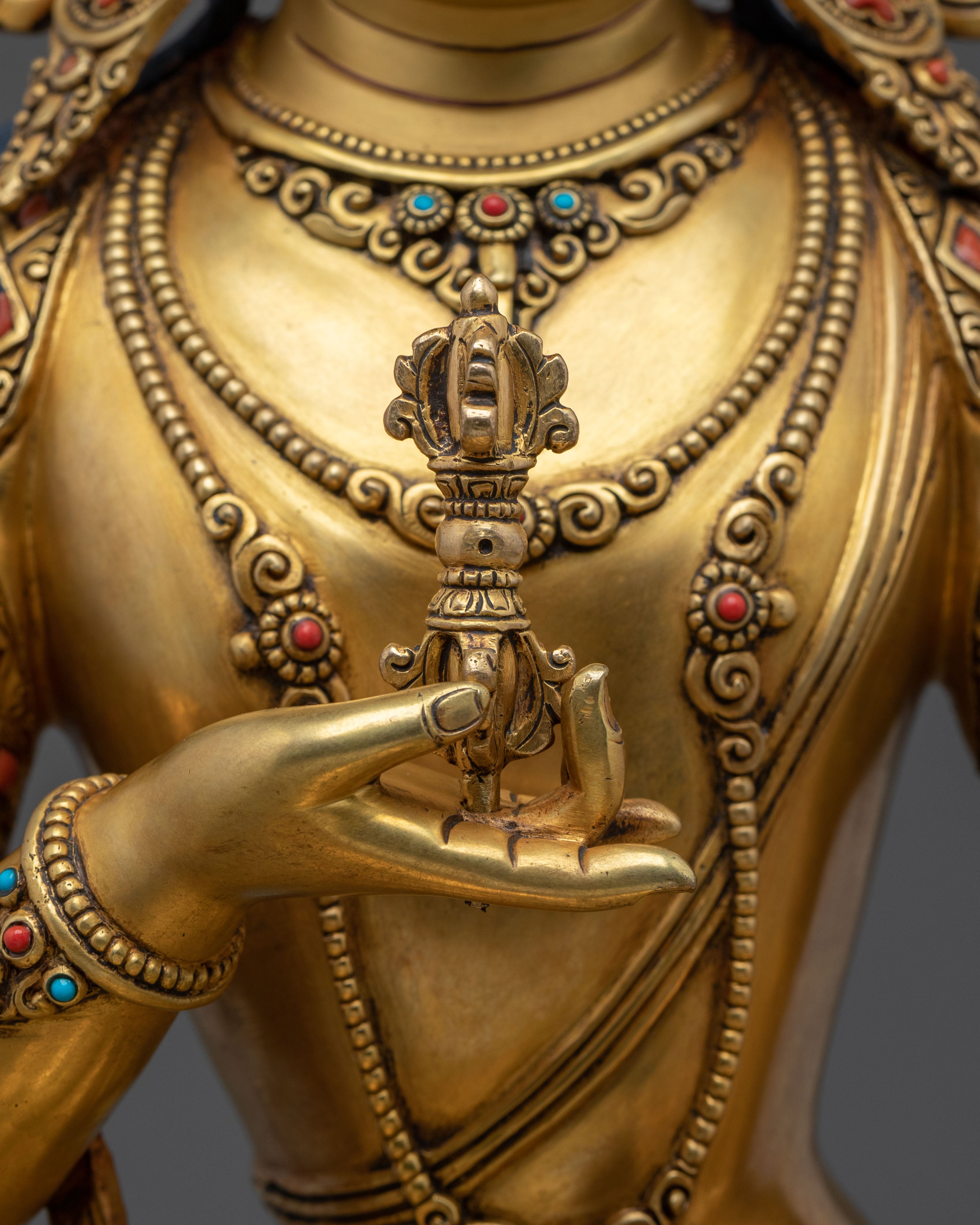
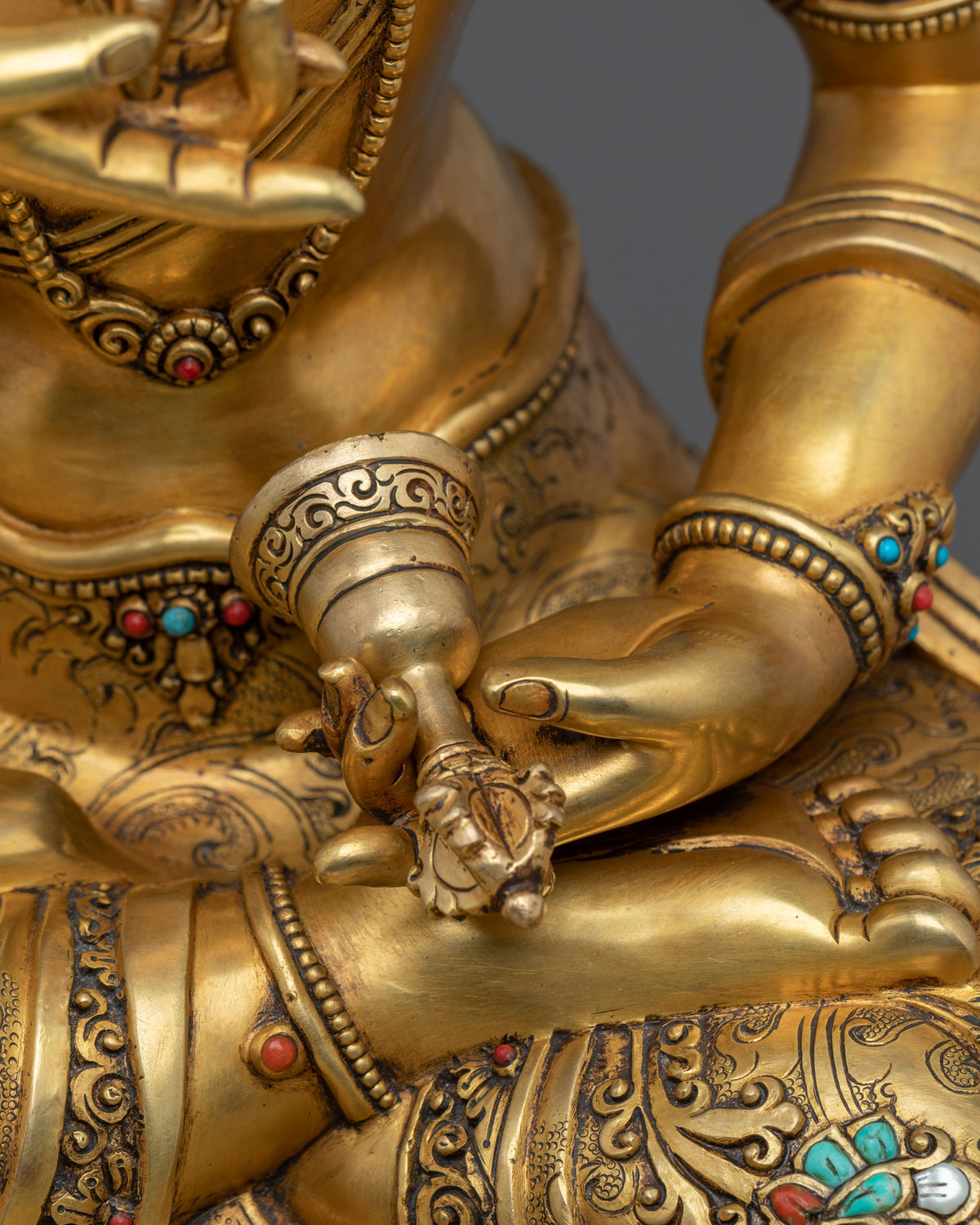
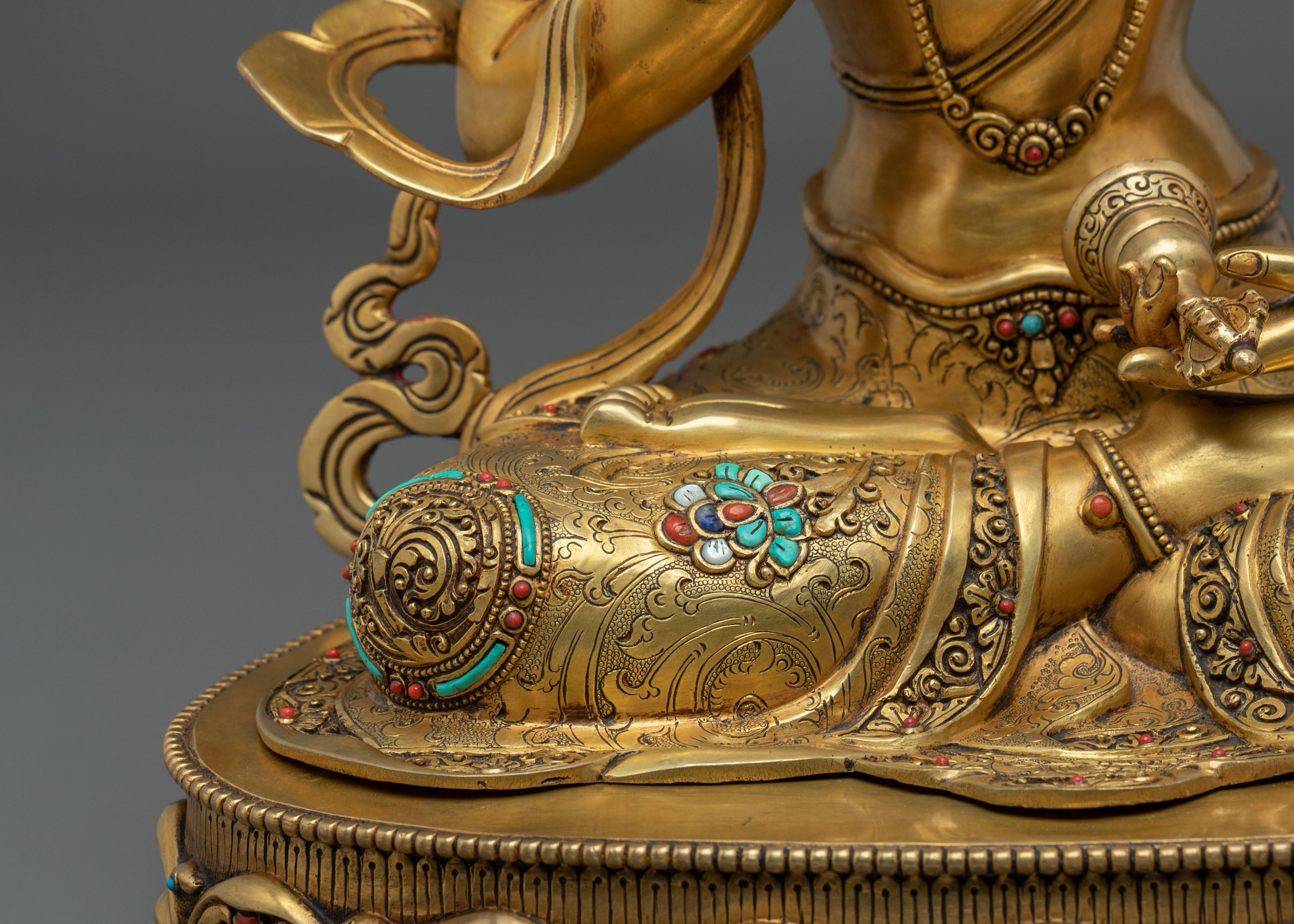
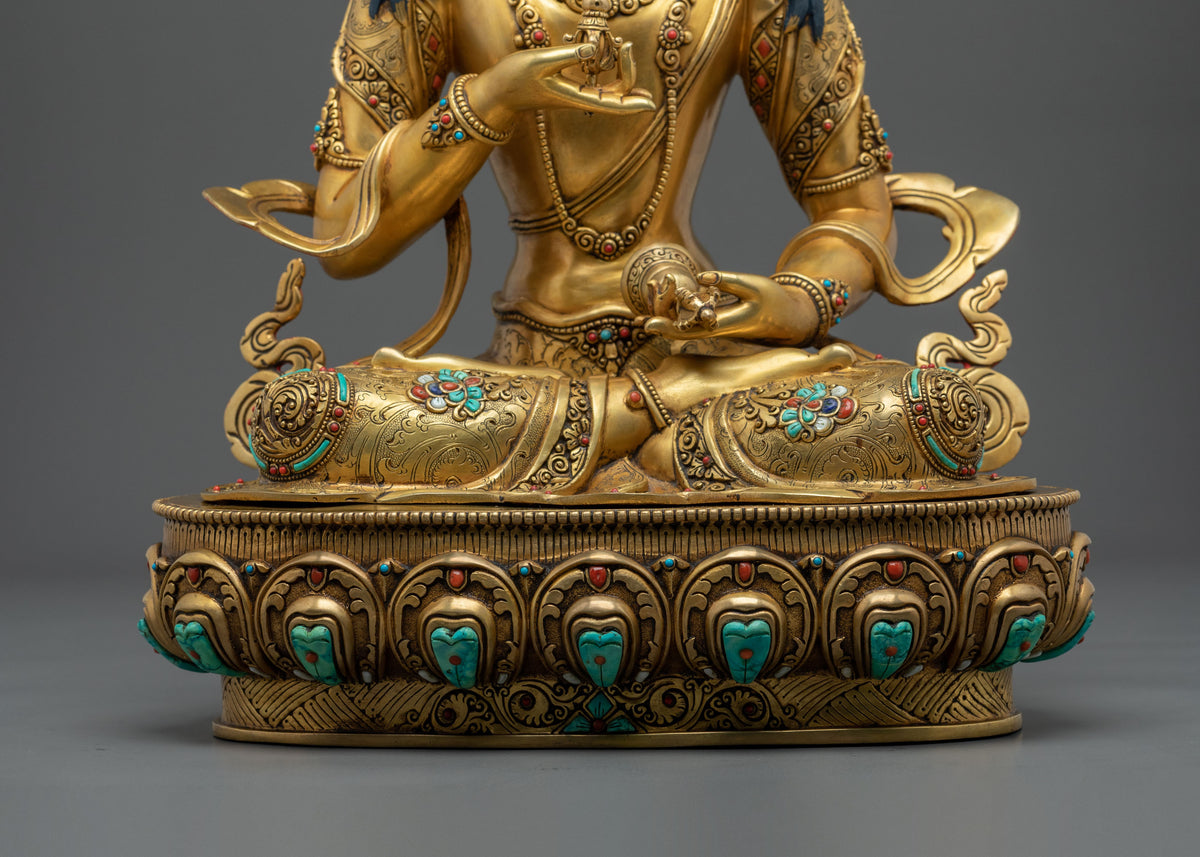
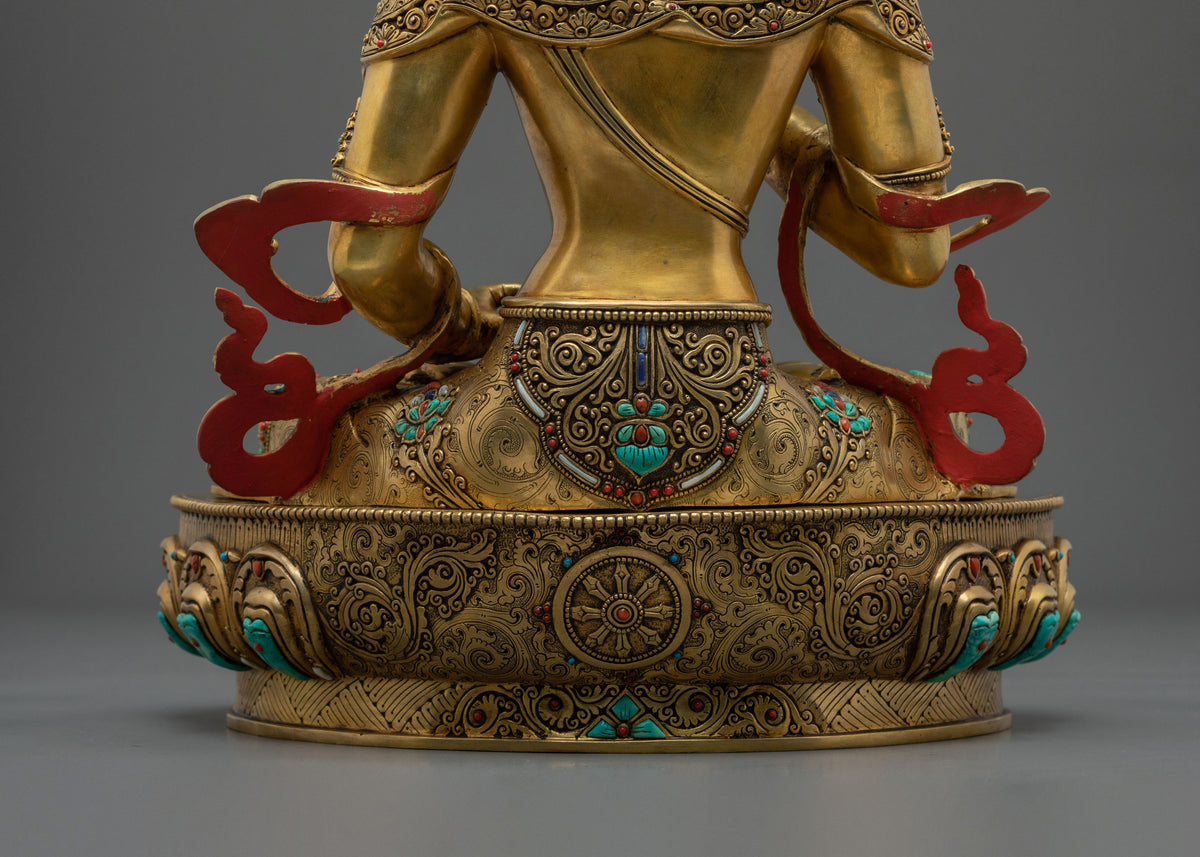
This handcrafted Vajrasattva Statue for Spiritual Purification is made in Nepal using a copper body, finished with a triple layer of 24K gold gilding, acrylic painting, and gemstone embellishments. Measuring 17.32”/44 cm in height with a 12.01”/30.5 cm base and weighing 6.93 kg, the sculpture features deeply engraved carvings that create a refined three-dimensional effect, enhancing the intricate details of the ornaments, robes, and lotus base. The finely crafted figure is depicted holding the vajra and bell, representing the union of wisdom and compassion, with traditional Himalayan iconographic details carefully preserved throughout the design.
Vajrasattva, revered as the “Diamond Being,” embodies purification, primordial purity, wisdom, and the transformation of negative karma and obscurations in Vajrayana Buddhism. His sacred form represents the inseparable union of wisdom and compassion, guiding practitioners toward inner clarity, renewal, and awakened awareness. He is depicted seated in the vajra posture (lotus posture) upon a lotus pedestal, symbolizing deep meditation, stability, and the unchanging nature of enlightened mind. His right hand holds the vajra (dorje) near his heart, representing indestructible wisdom, compassion, and skillful means (Upaya), while his left hand holds the ritual bell (ghanta), symbolizing transcendent wisdom (Prajna) and the realization of emptiness. Together, the vajra and bell express the inseparable union of method and wisdom, the foundation of Vajrayana practice. His peaceful expression, graceful ornaments, and composed posture reflect purified consciousness, inspiring practitioners to cultivate purification, inner transformation, clarity, and profound spiritual realization.
Size: 17.32”/44cm (Height) x 12.01”/30.5cm (Base)
Weight: 6.93 kg
Material: 24K Gold Gilded, Acrylic Painting, Copper Body, Gemstones
Vajrasattva is a central figure in Vajrayana Buddhism, revered as the embodiment of purity, purification, and the primordial nature of awakened mind. His origins are closely connected with the development of tantric Buddhist teachings, where he appears as a source of purification practices and as a manifestation of the enlightened qualities of all Buddhas. In Vajrayana traditions, he is regarded as the holder of the hundred-syllable mantra, a profound practice used to purify negative karma, obscurations, and spiritual obstacles. Teachings associated with him are found in major tantric texts, including the Guhyasamaja Tantra and other Vajrayana scriptures, where he represents the inseparable union of wisdom and compassion. Through centuries of Tibetan Buddhist practice, Vajrasattva has remained an essential figure in meditation lineages, symbolizing renewal, inner transformation, and the restoration of enlightened awareness.
Explore our Vajrasattva Statue Collection.