





Description
A Vajrasattva Traditional Sculpture for Spiritual Purification
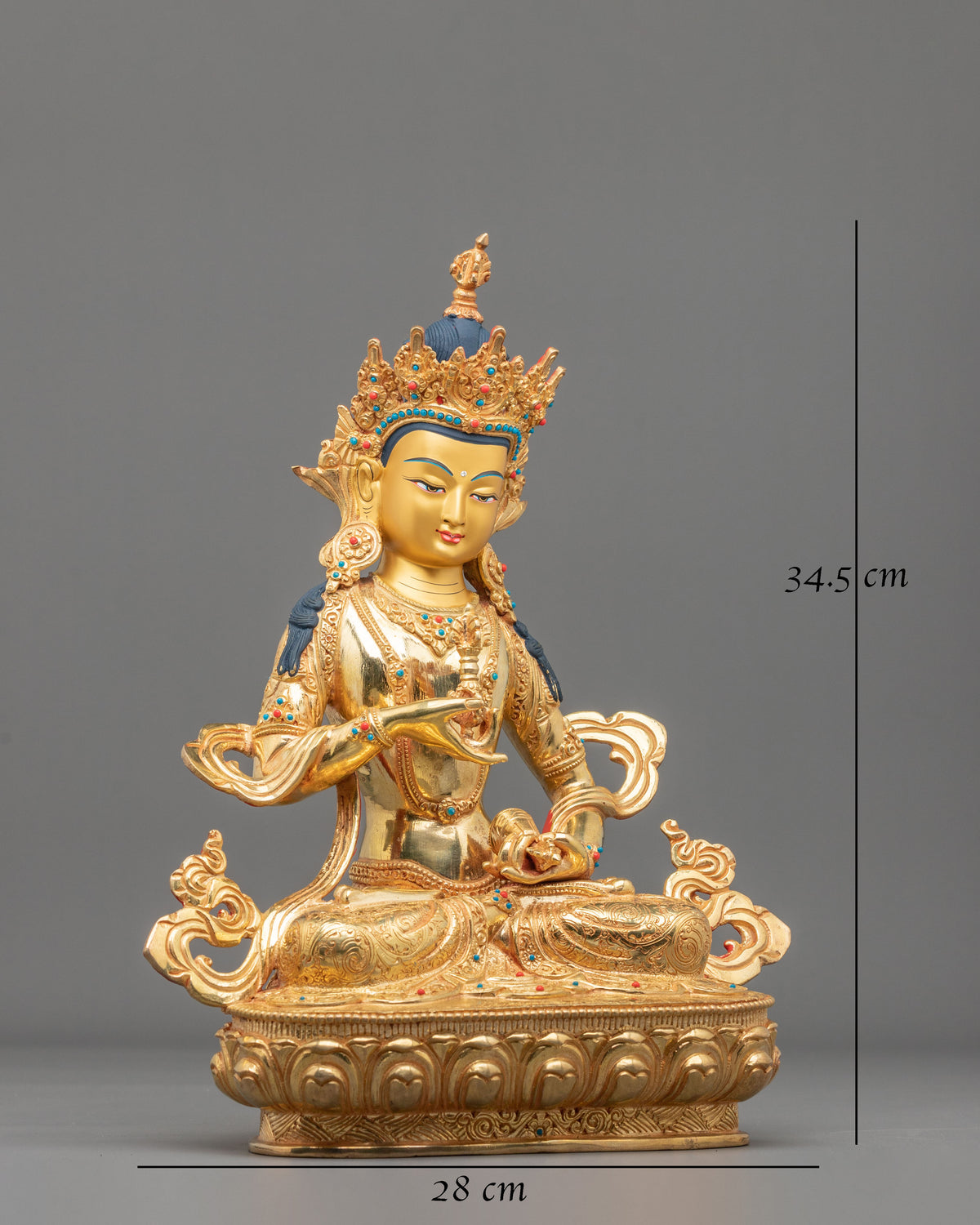
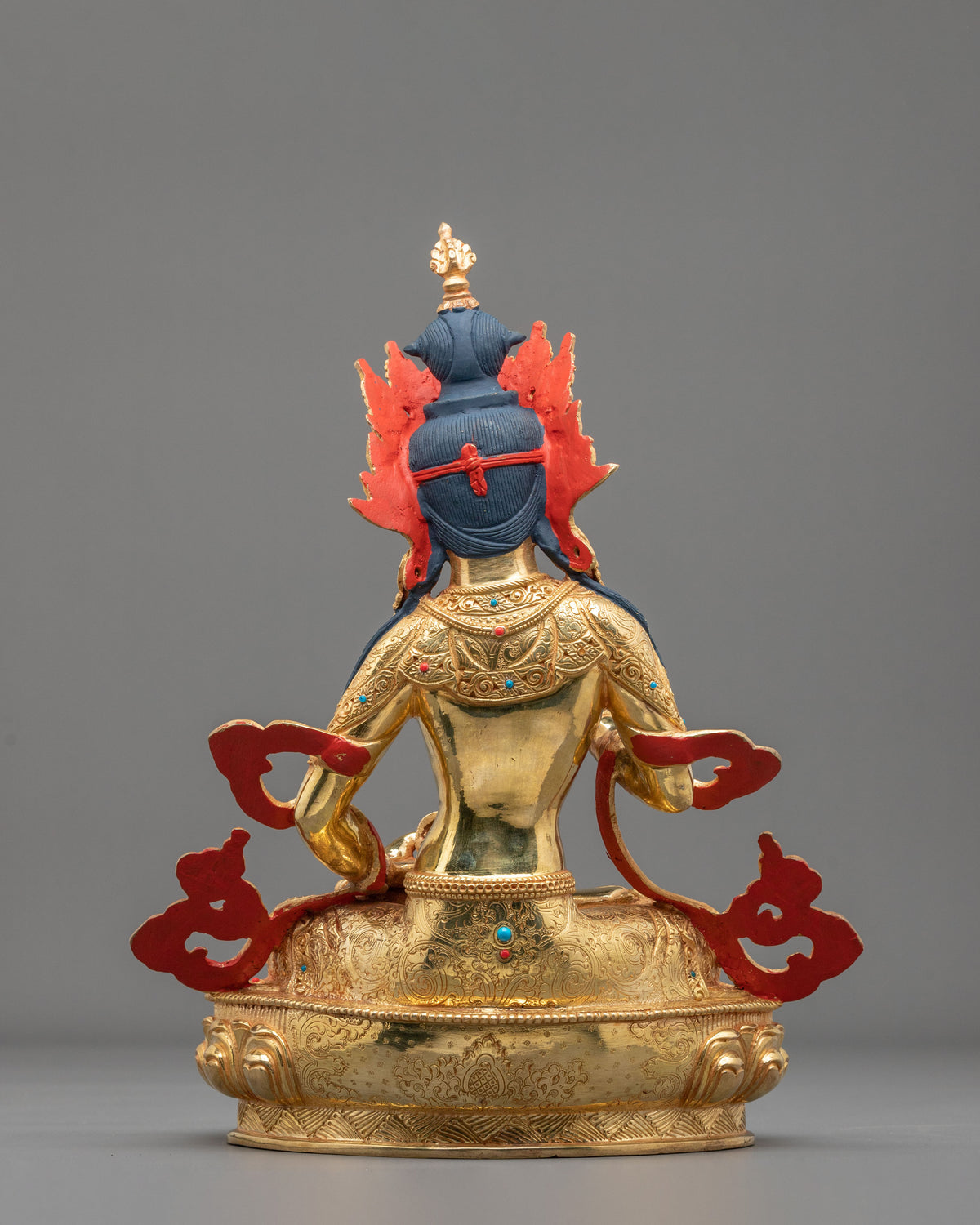
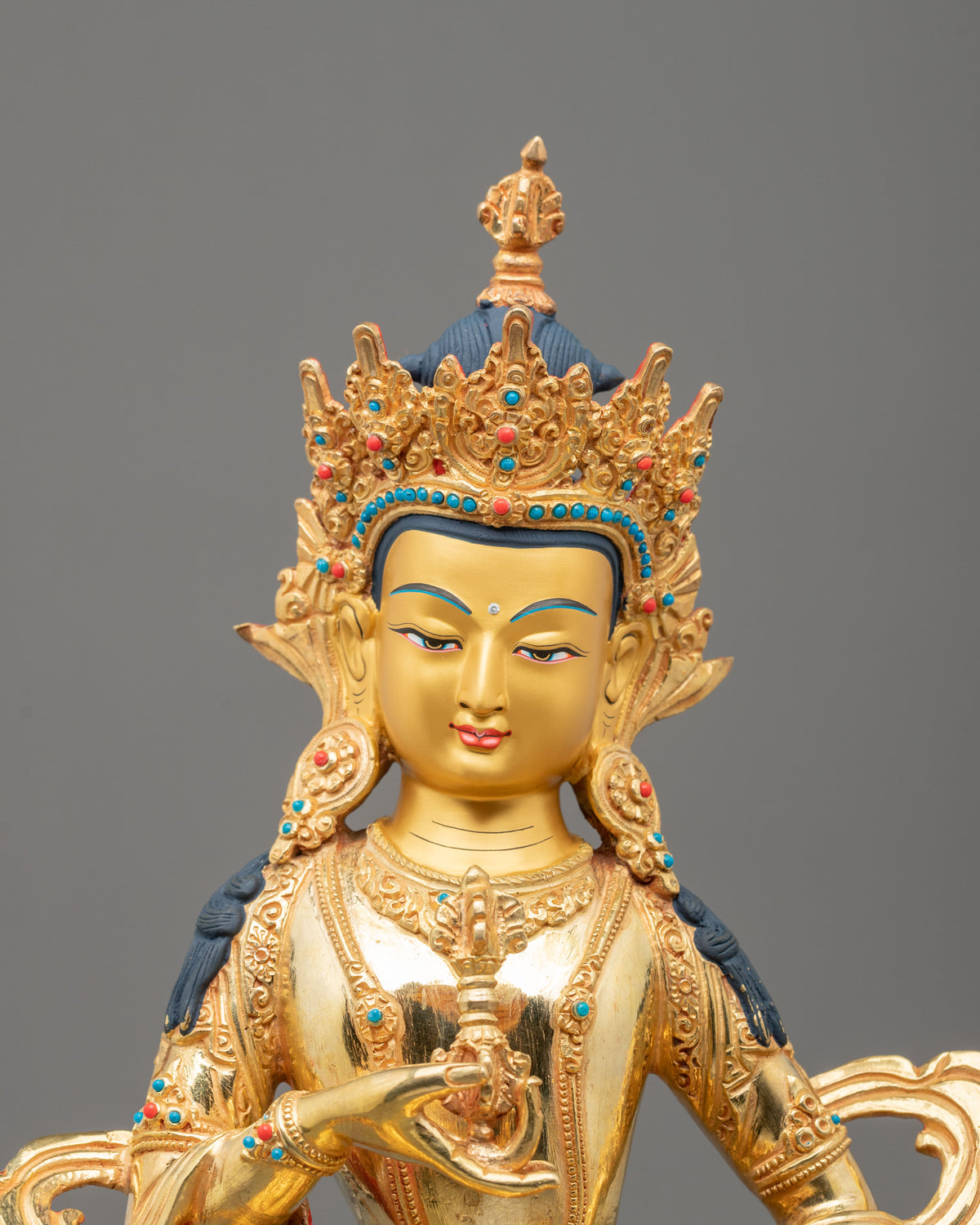
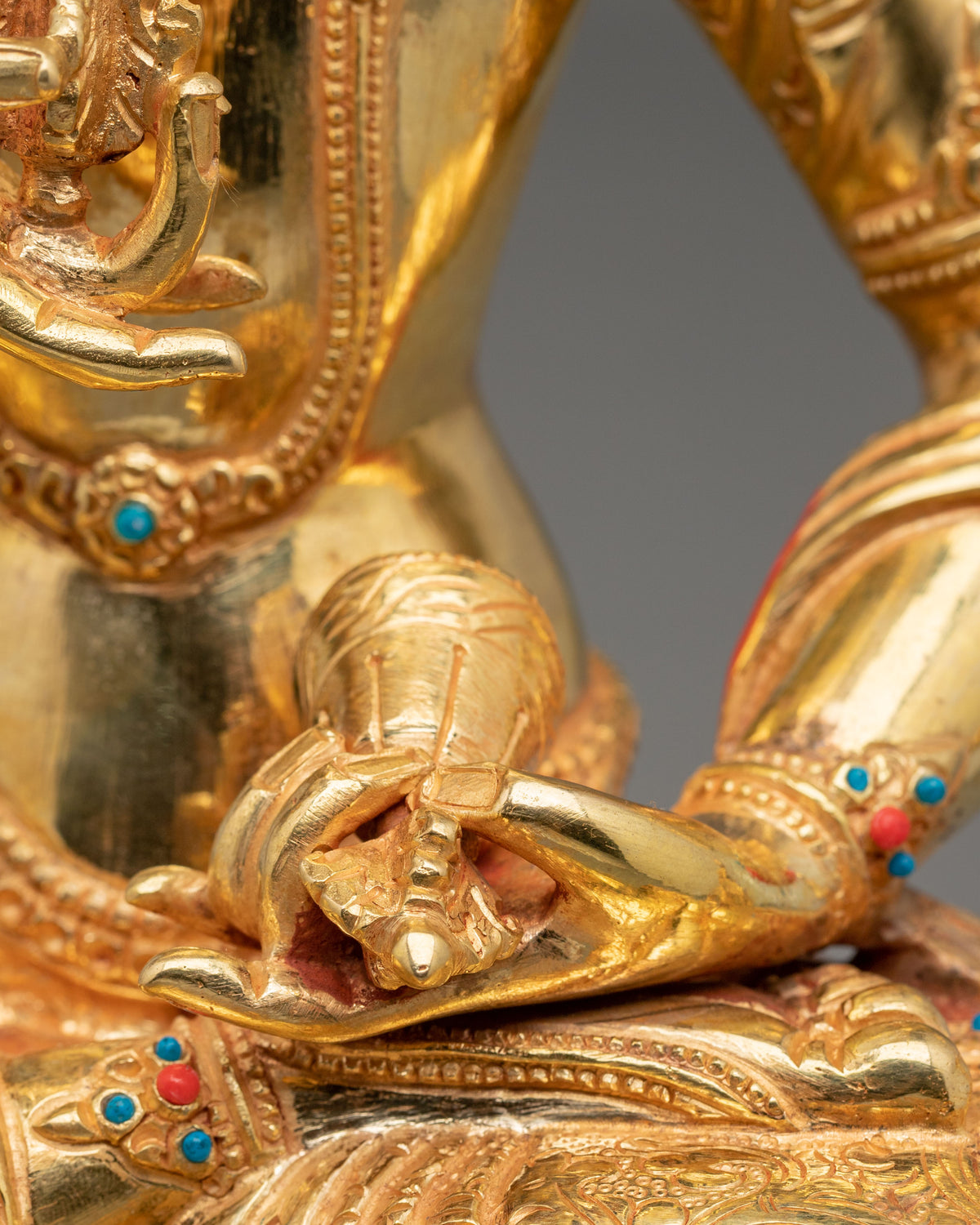
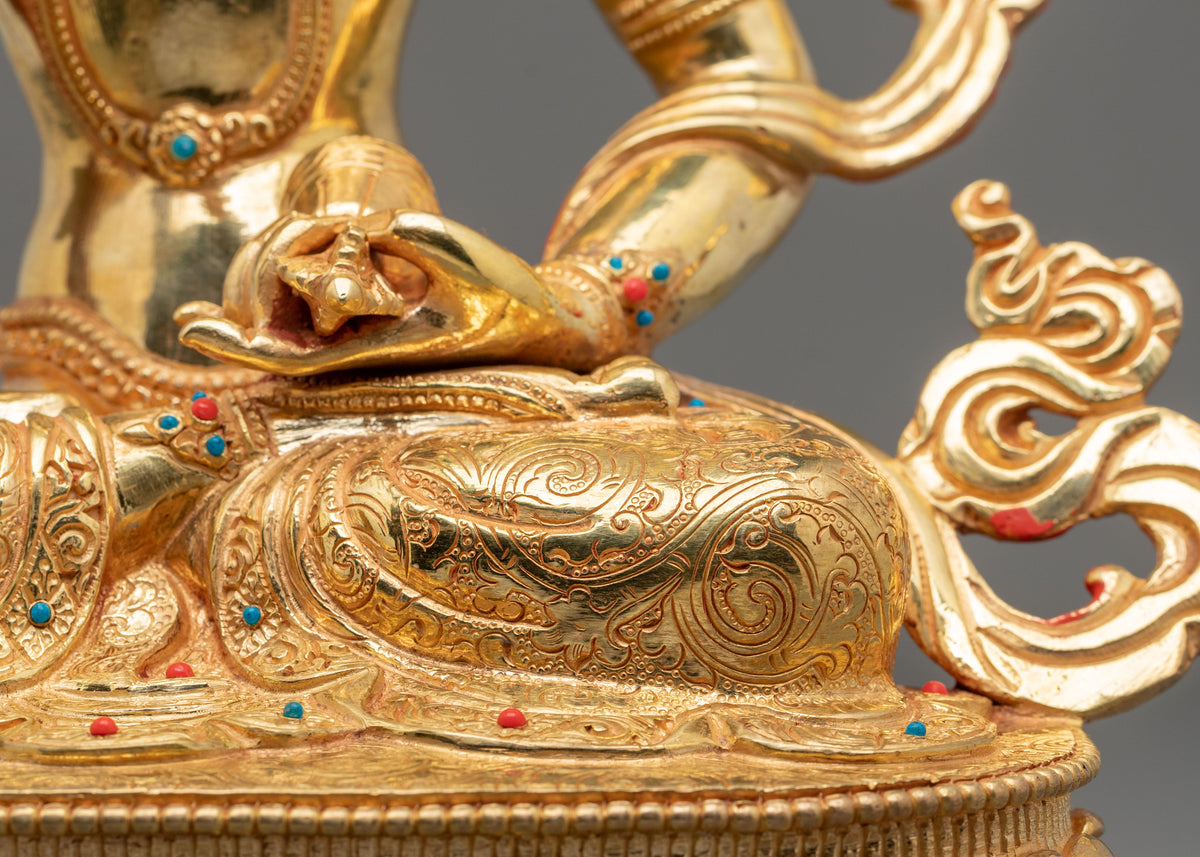
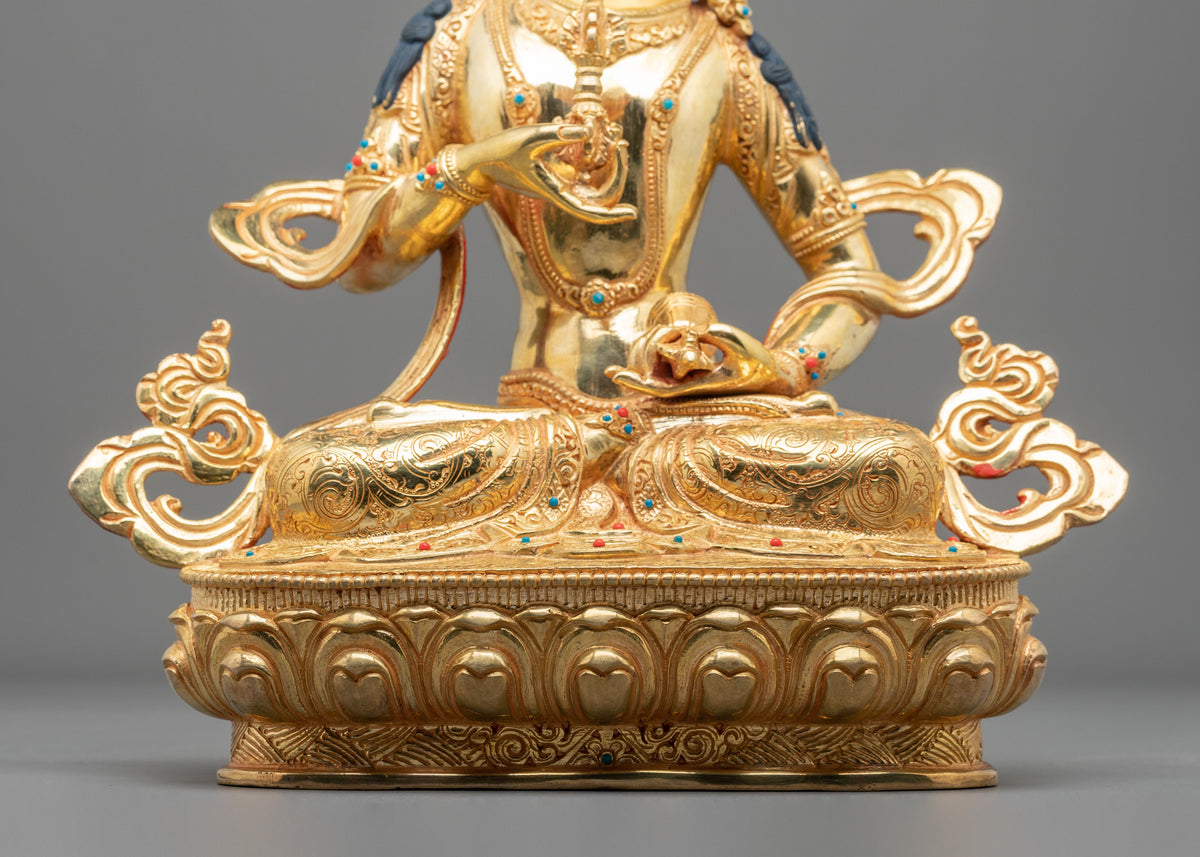
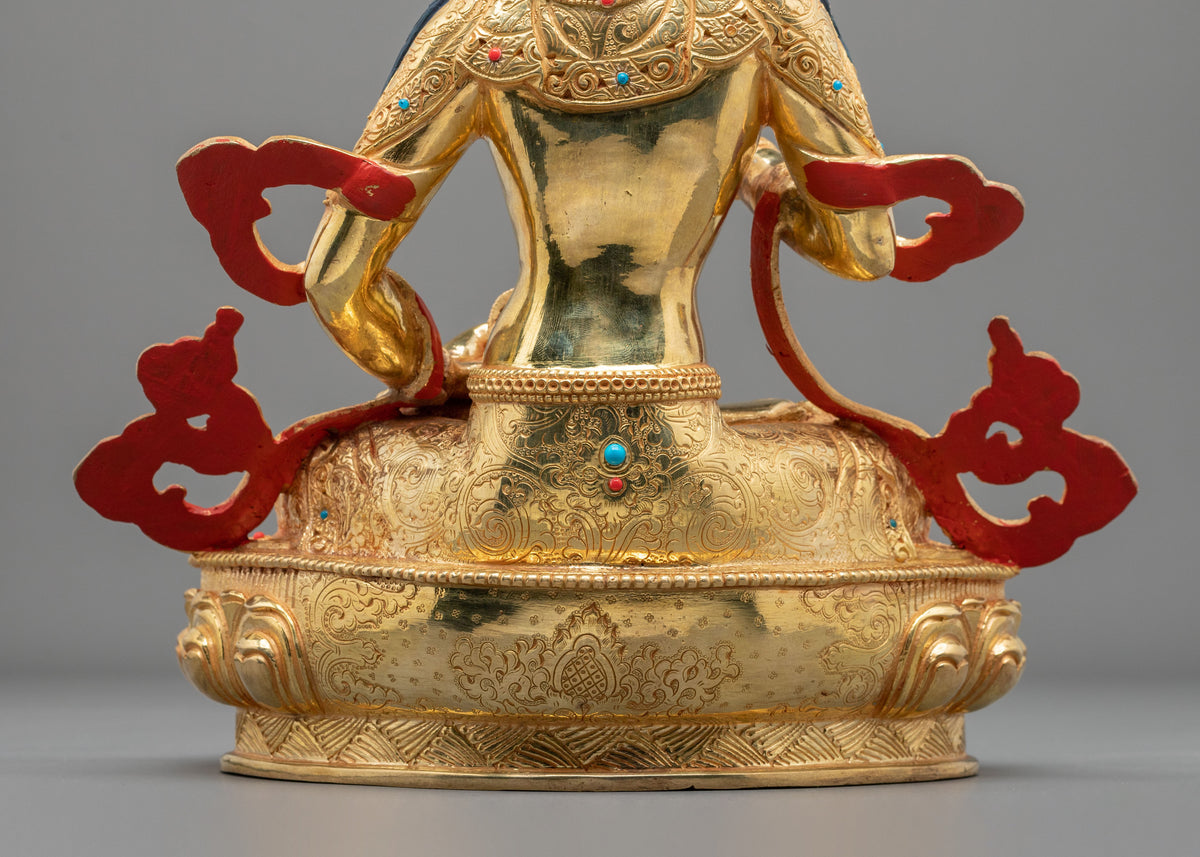
This Vajrasattva Traditional Sculpture measures 13.6”/34.5cm in height with an 11.0”/28cm base and weighs 3.24 kg. Crafted by skilled Nepali artisans, this sculpture features a copper body finished with 24K gold gilding, detailed acrylic painting, and carefully placed gemstones. The gold gilding enhances the deeply engraved carvings across the deity’s crown, ornaments, robes, lotus pedestal, and decorative elements, creating a refined three-dimensional appearance. The acrylic painting adds carefully applied color to the facial features, garments, and ornaments, while the gemstones provide subtle highlights throughout the composition. The combination of traditional metalwork, detailed carving, and precious decorative finishes makes this statue suitable for Buddhist altars, meditation spaces, Dharma centers, or spiritual collections.
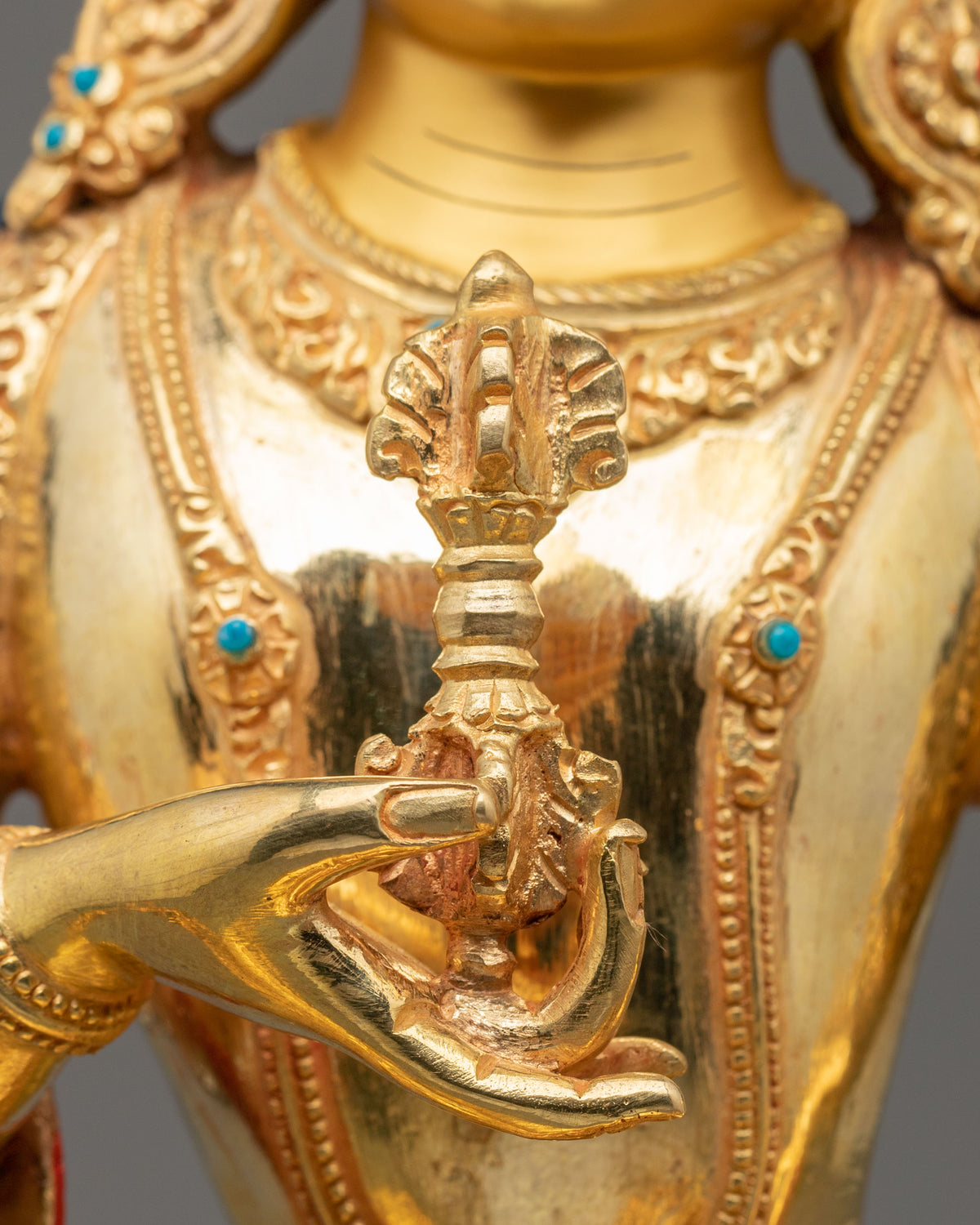
The sculpture depicts Vajrasattva seated peacefully upon an intricately carved lotus pedestal. He holds a vajra in his right hand close to his heart and a bell in his left hand near his hip. His serene expression is framed by an elaborate crown, earrings, necklaces, bracelets, and other finely carved ornaments. Flowing scarves extend around his body, while the detailed robes and lotus throne add depth to the composition. The carefully arranged posture, ritual implements, ornate jewelry, and finely decorated pedestal reflect the traditional Himalayan representation of Vajrasattva and the detailed craftsmanship of the sculpture.
Size: 13.6”/34.5cm (Height) x 11.0”/28cm (Base)
Weight: 3.24 kg
Material: 24K Gold Gilded, Acrylic Painting, Copper Body, Gemstones
Vajrasattva is the supreme deity of purification in Vajrayana Buddhism, often invoked to cleanse the practitioner's speech, body, and mind of obscurations. As the "Diamond Being," he embodies the indestructible nature of enlightenment, teaching that our fundamental essence remains unstained despite worldly suffering. His practice is central to the preliminary foundations of many Tibetan Buddhist lineages, emphasizing the transformative power of mantra and the aspiration for clarity.