Statue of Vajrayogini, Goddess Of Transformation | Enlightenment Symbol
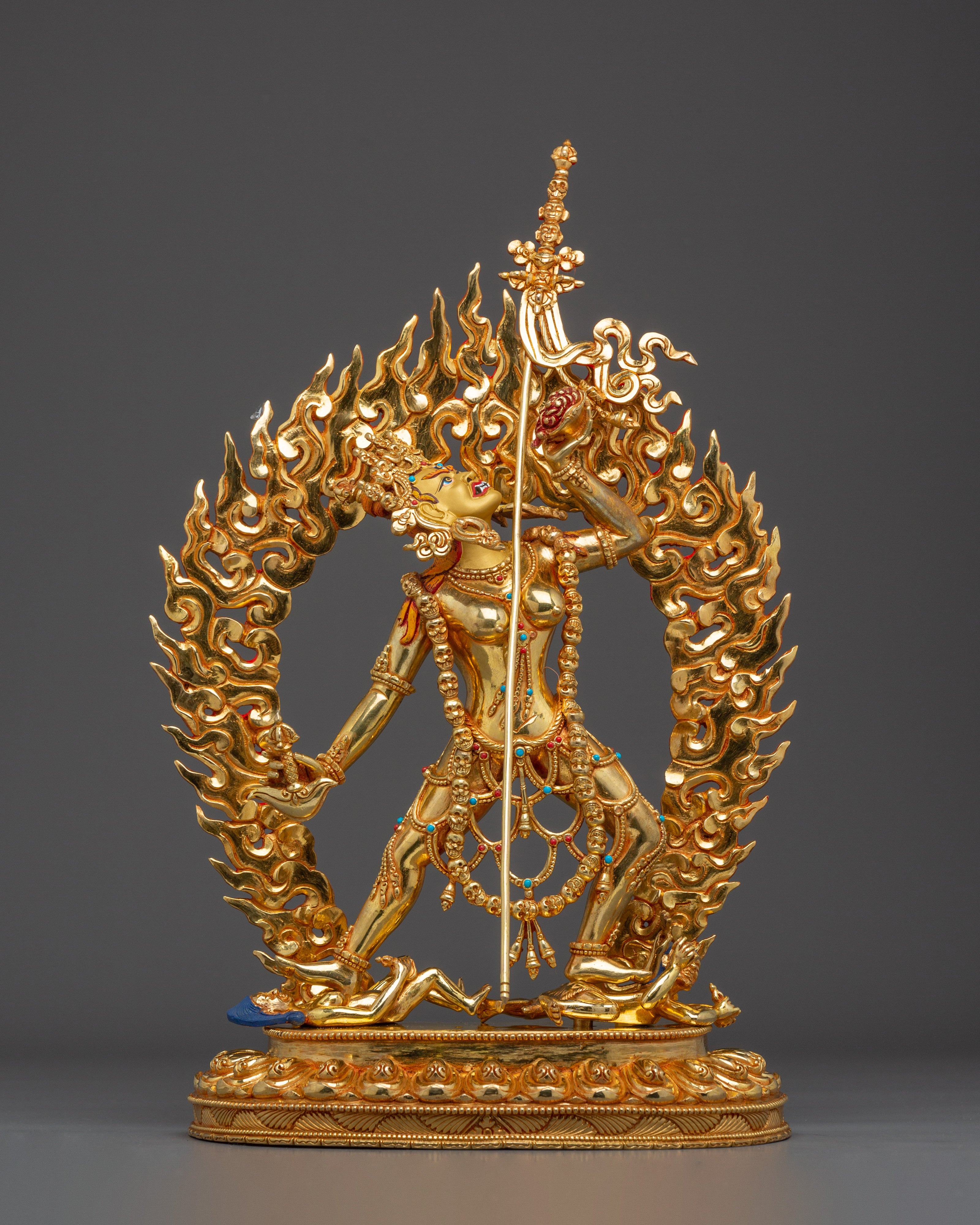
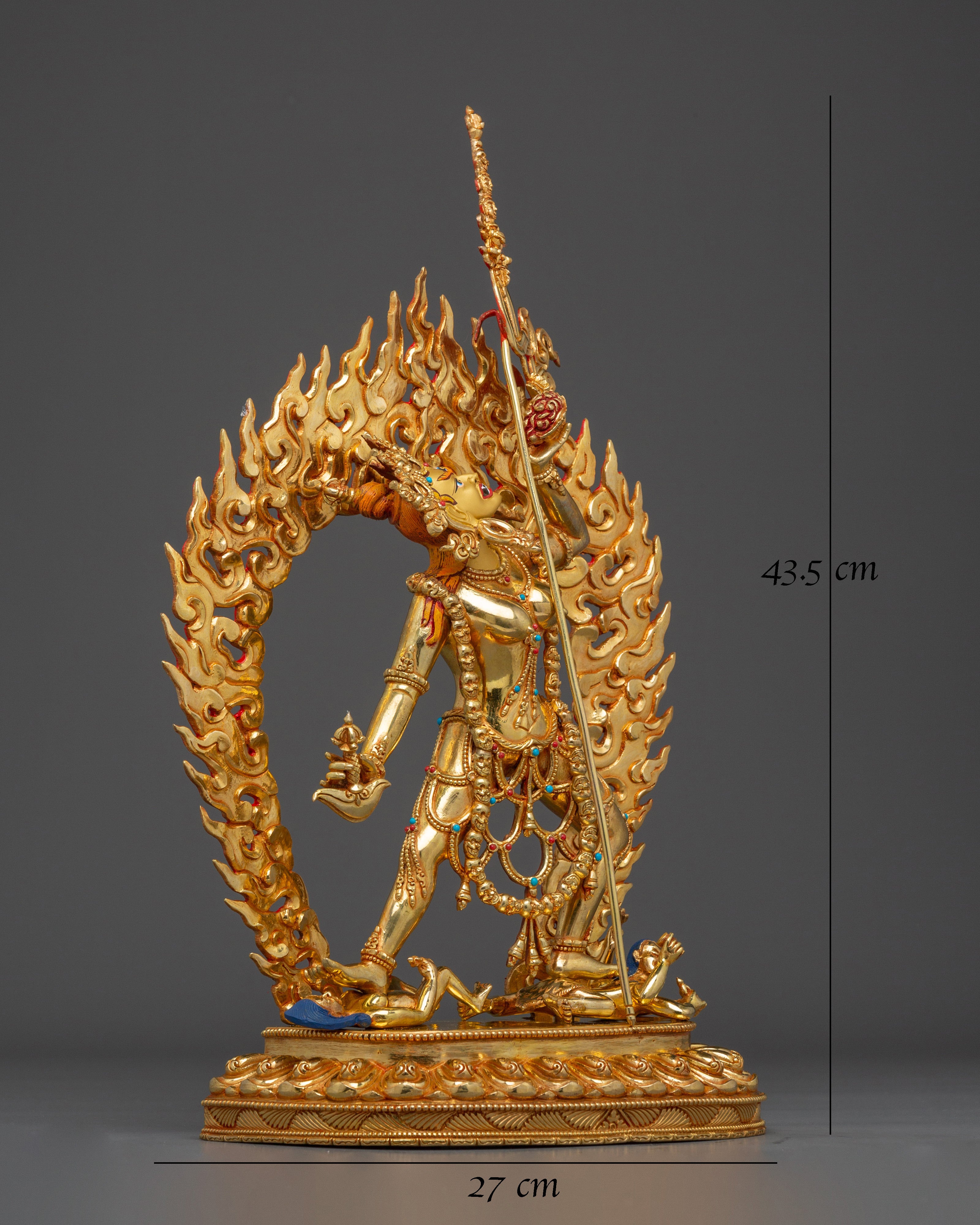
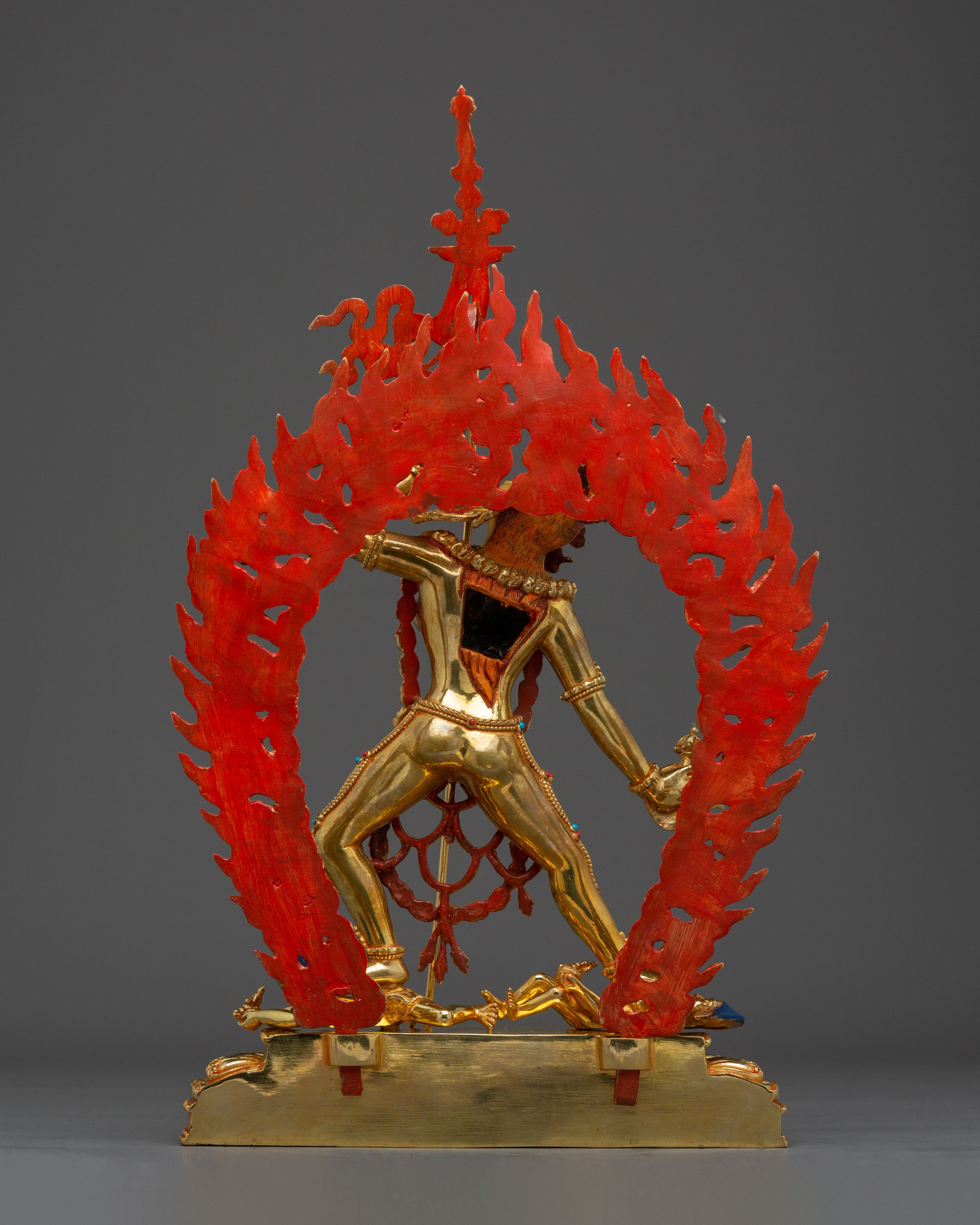
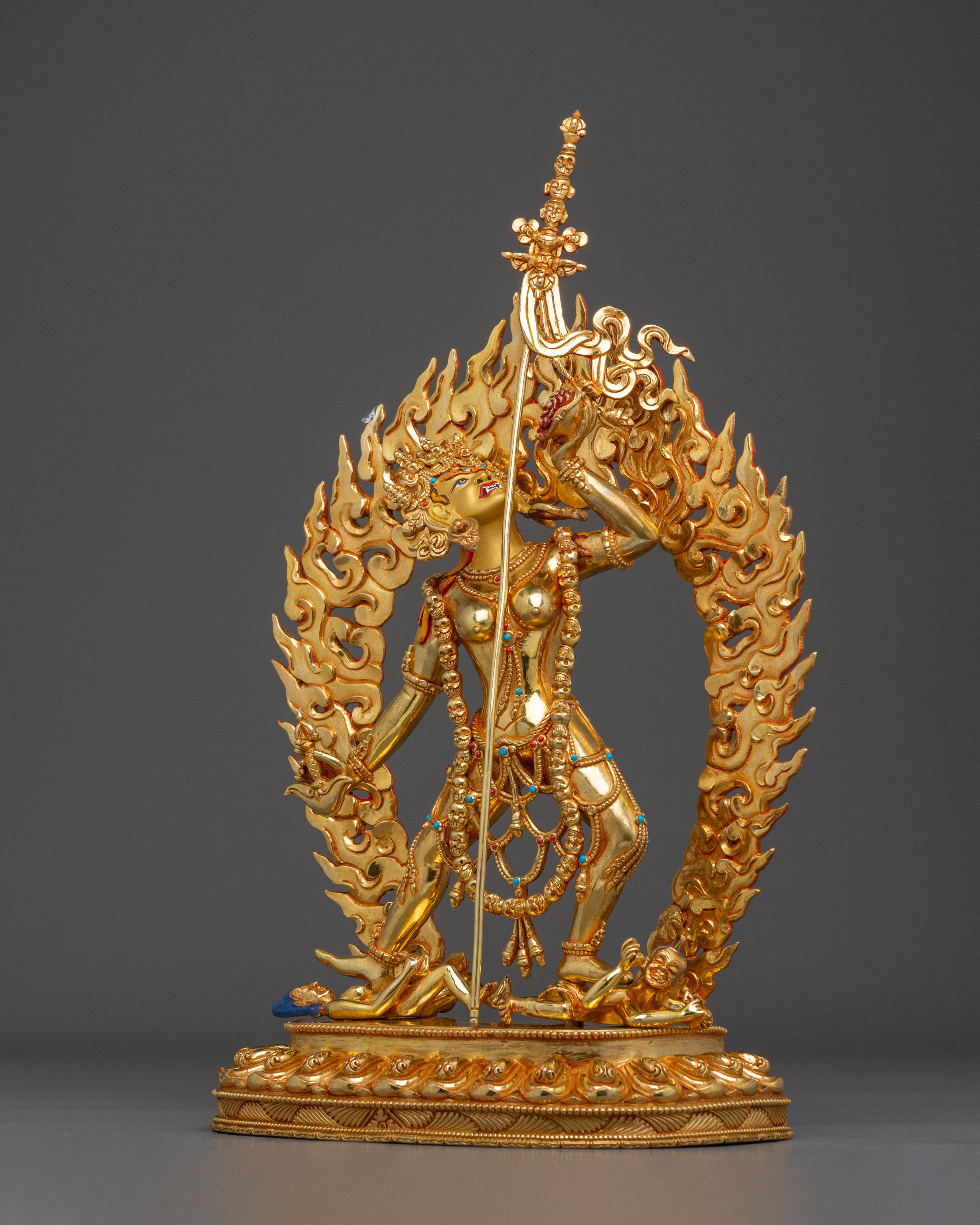
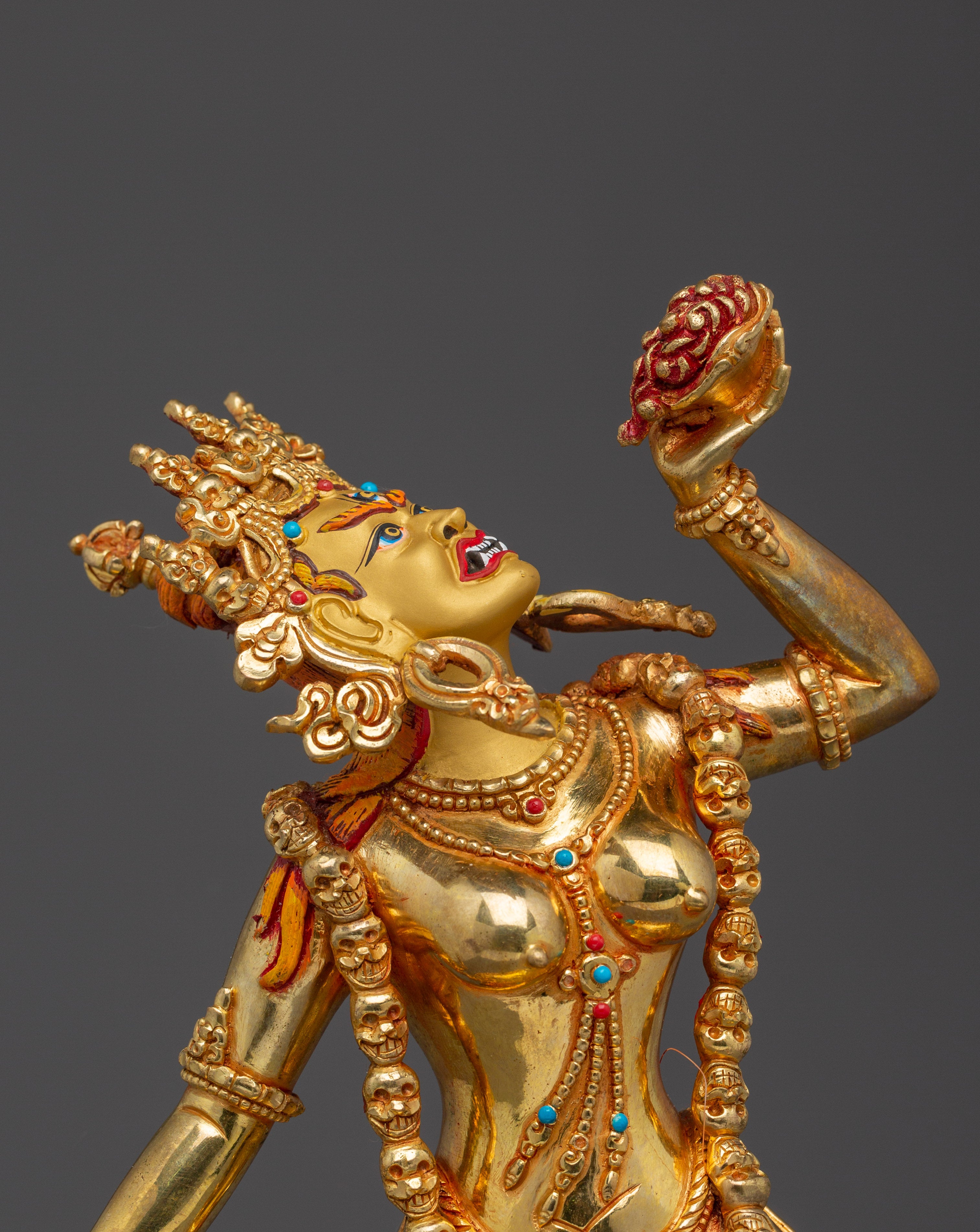
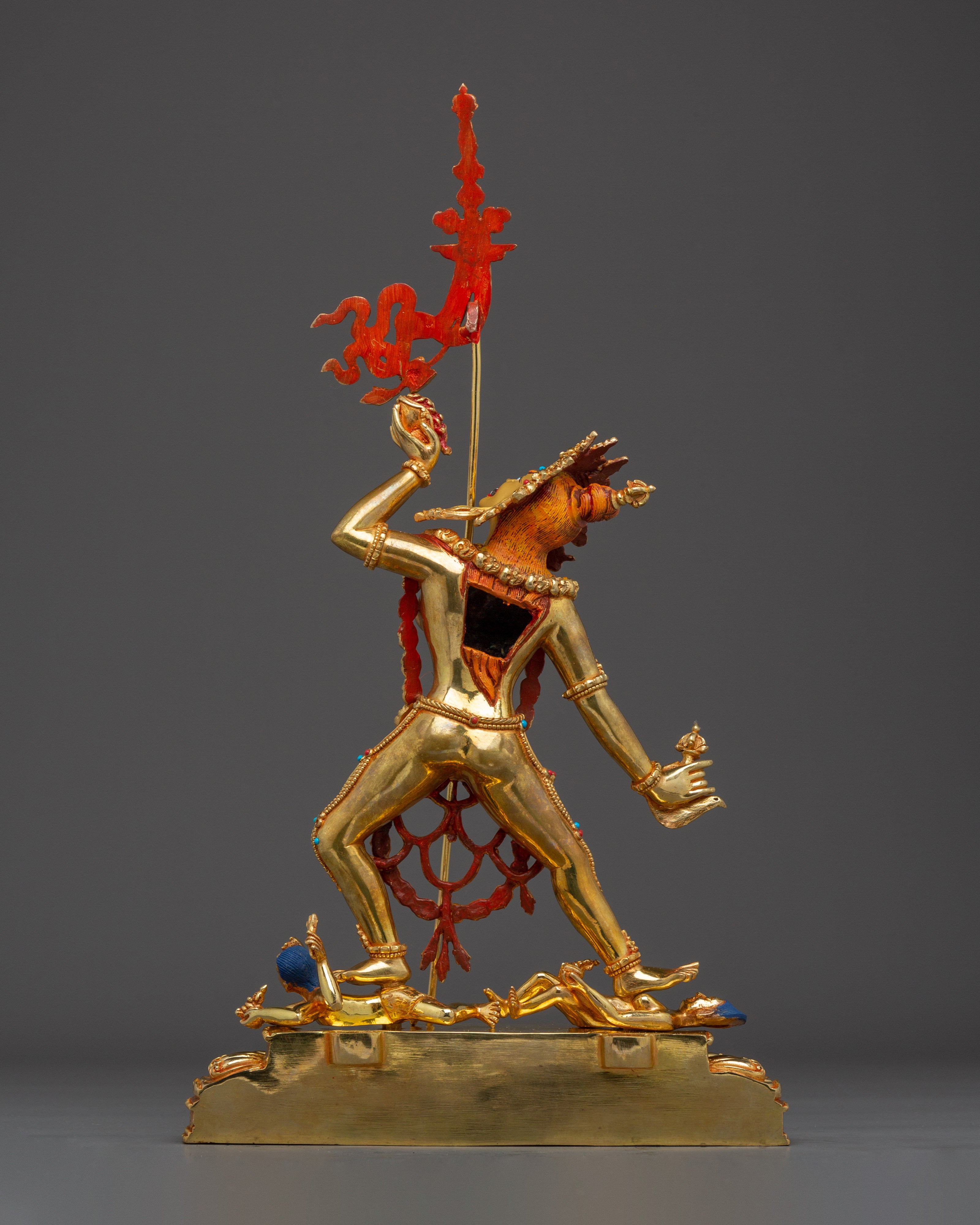
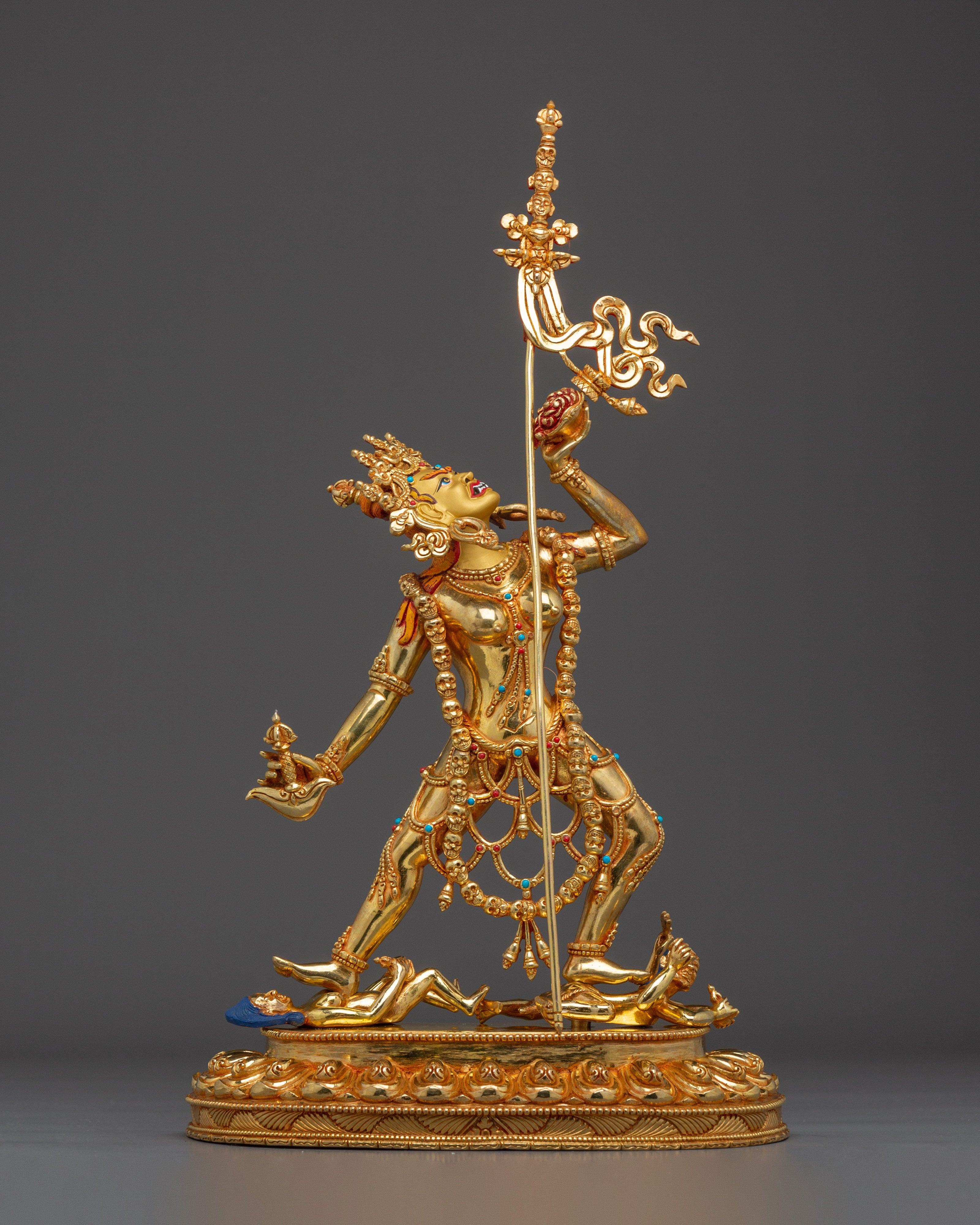
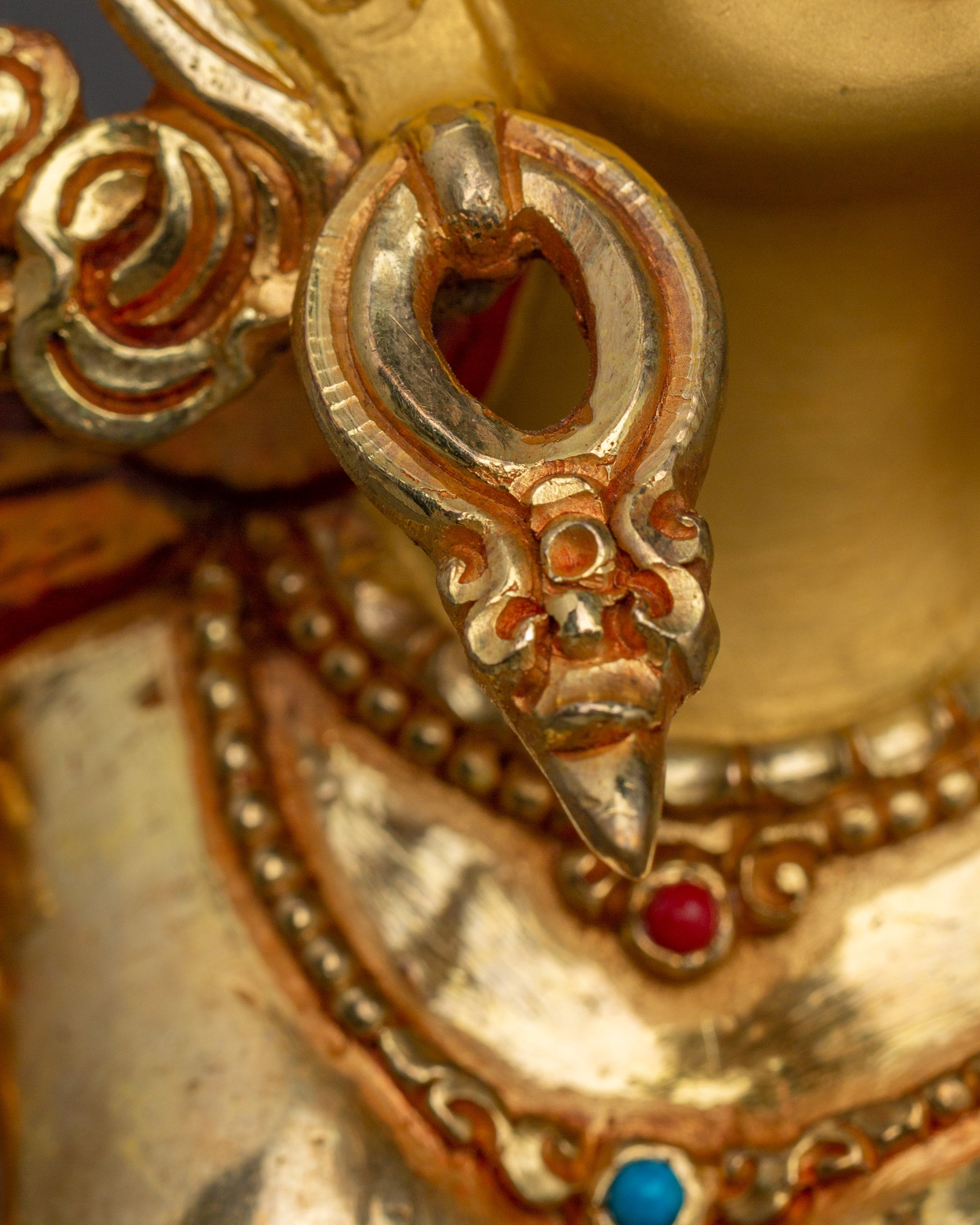
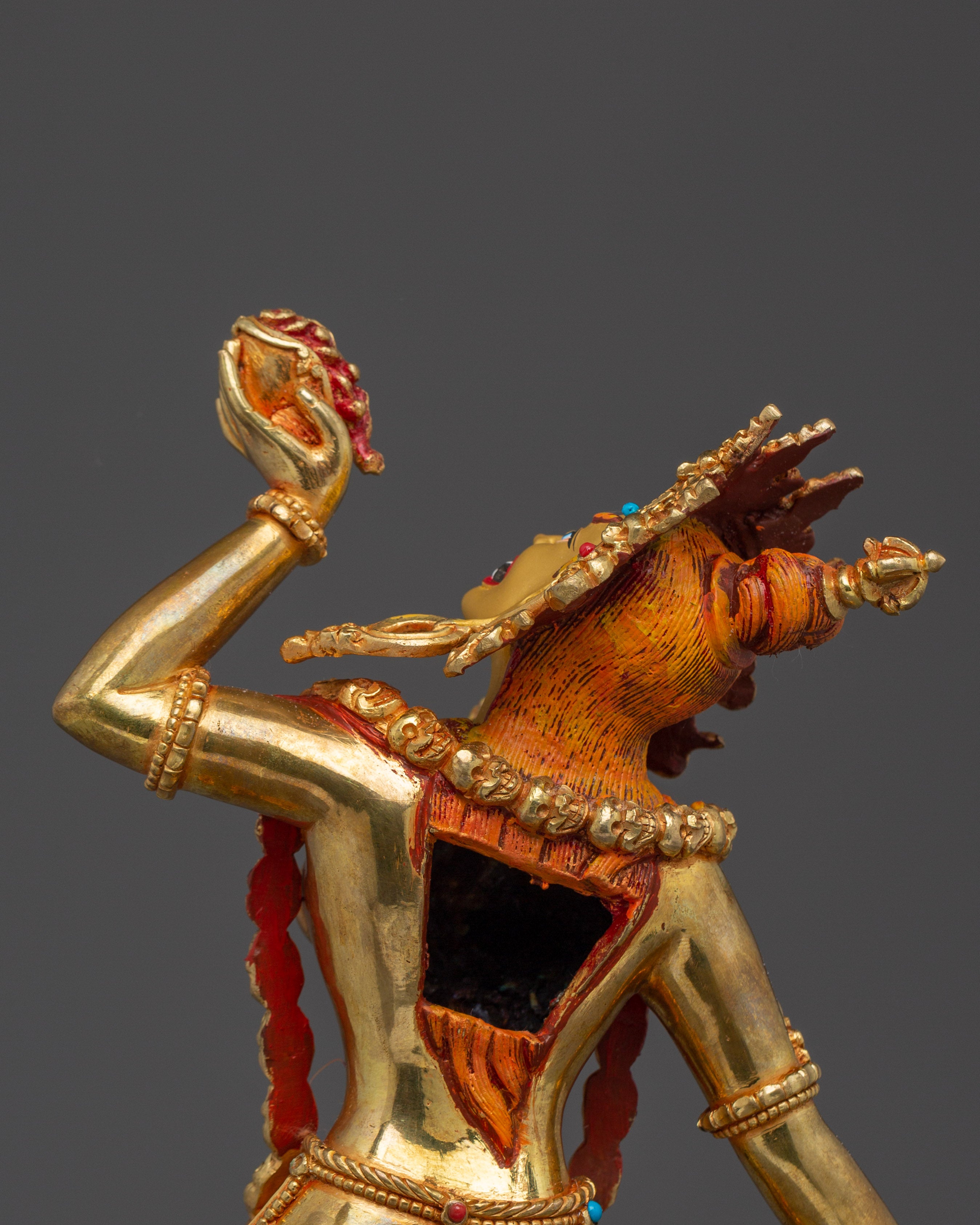
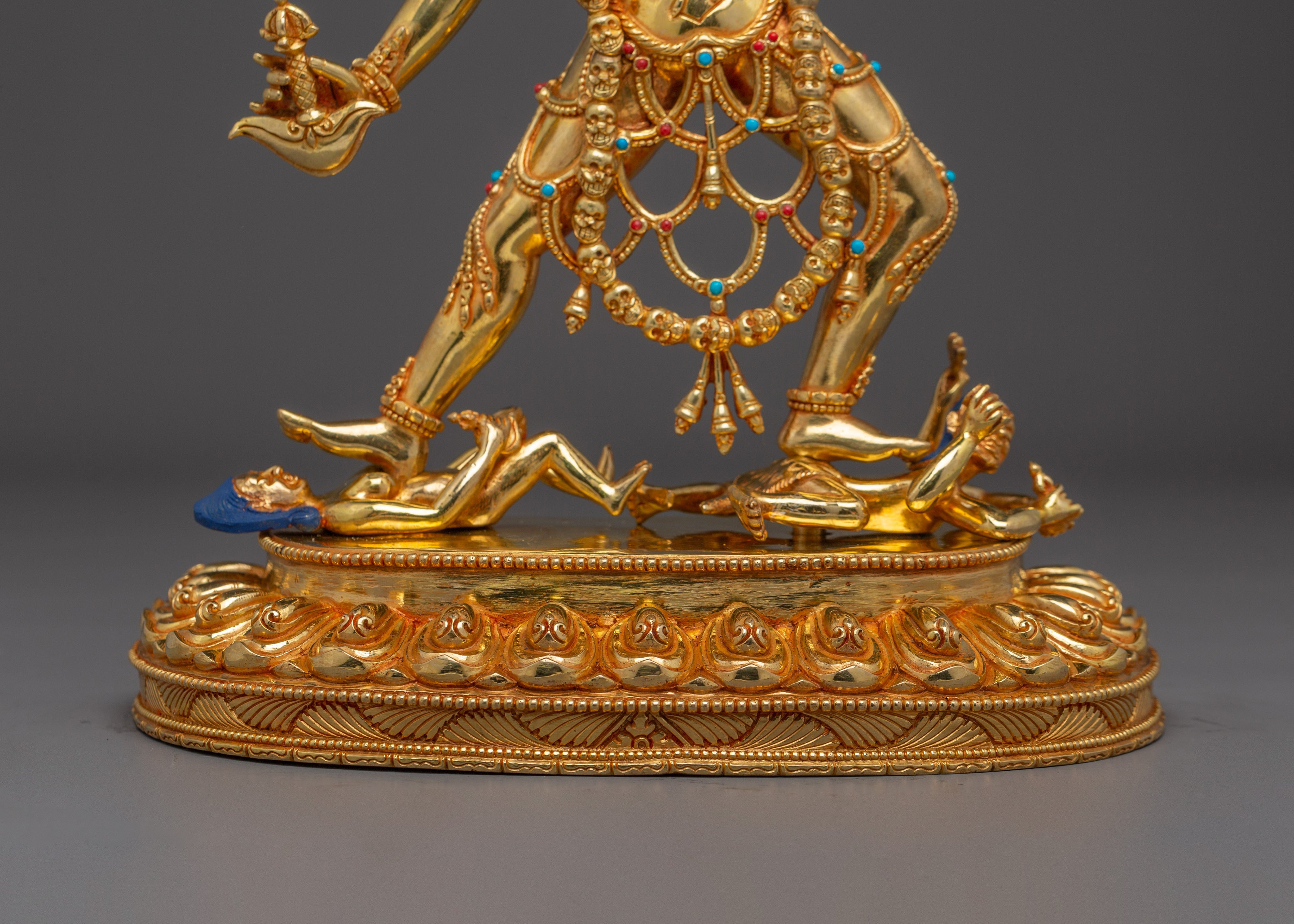
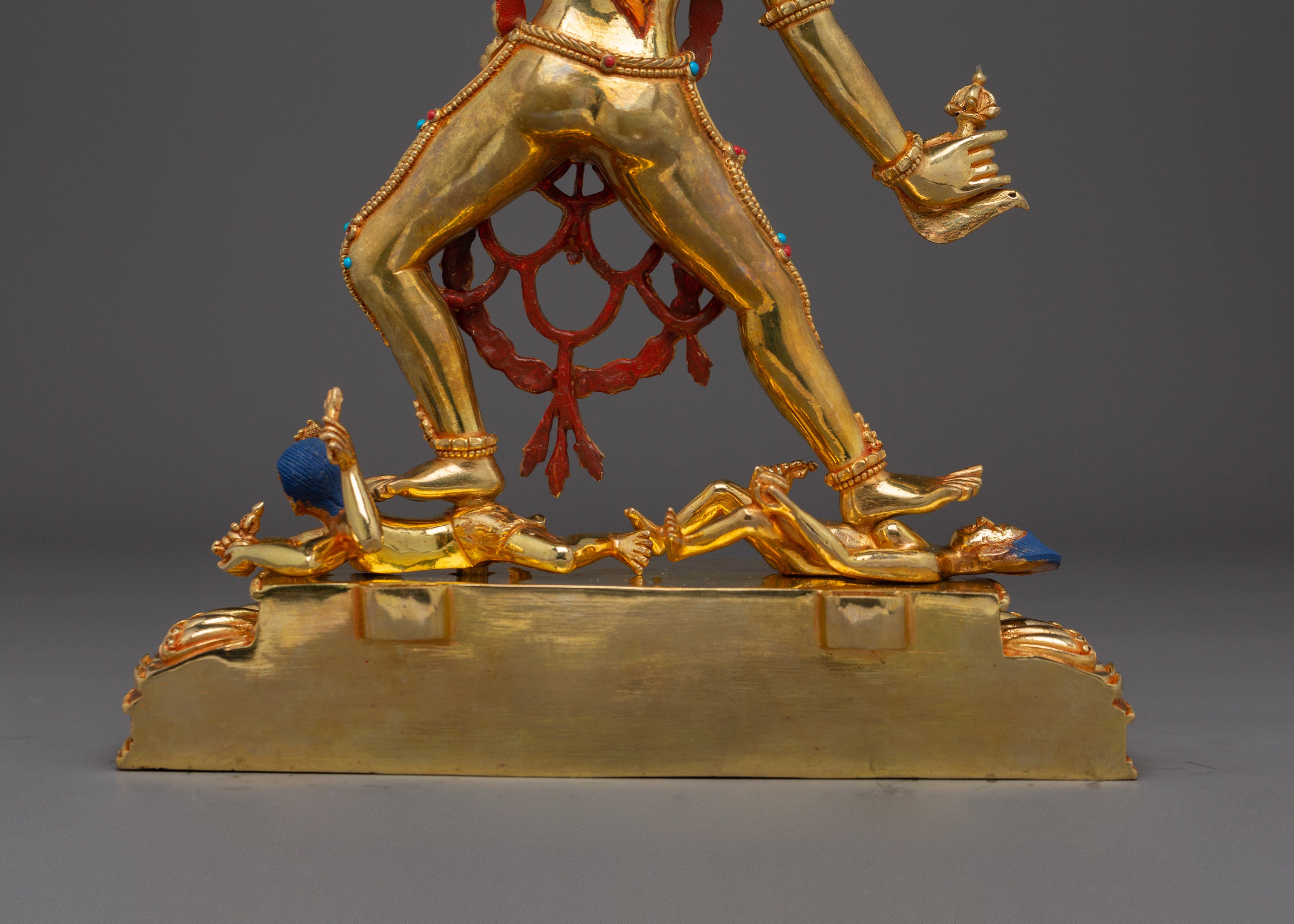
Vajrayogini, the Goddess of Transformation, stands 17.1 inches (43.5 cm) tall, with a broad base measuring 10.6 inches (27 cm), and weighs 4.31 kilograms, presenting a balanced and elegant presence. Crafted from a sturdy copper body, the statue is covered with a triple layer of 24K gold gilding, further enhanced with vibrant colors and masterful gold and acrylic paintings. The surface is carved with deeply engraved patterns that produce a magnificent 3D-like effect, reflecting the intricate artistry and spiritual depth of Himalayan craftsmanship. This exquisite statue embodies both divine power and refined beauty, making it a meaningful addition to altars, meditation spaces, or sacred collections.
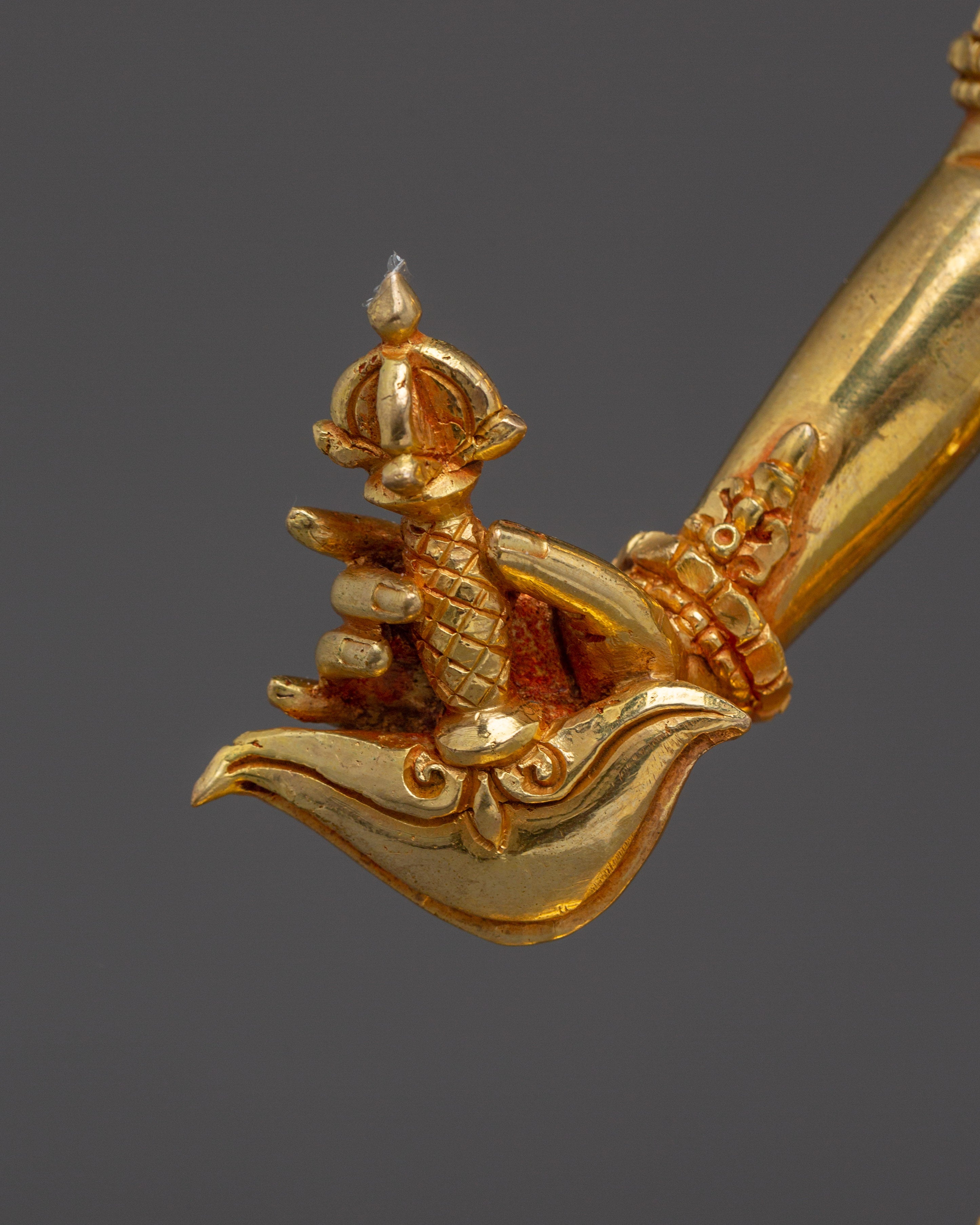
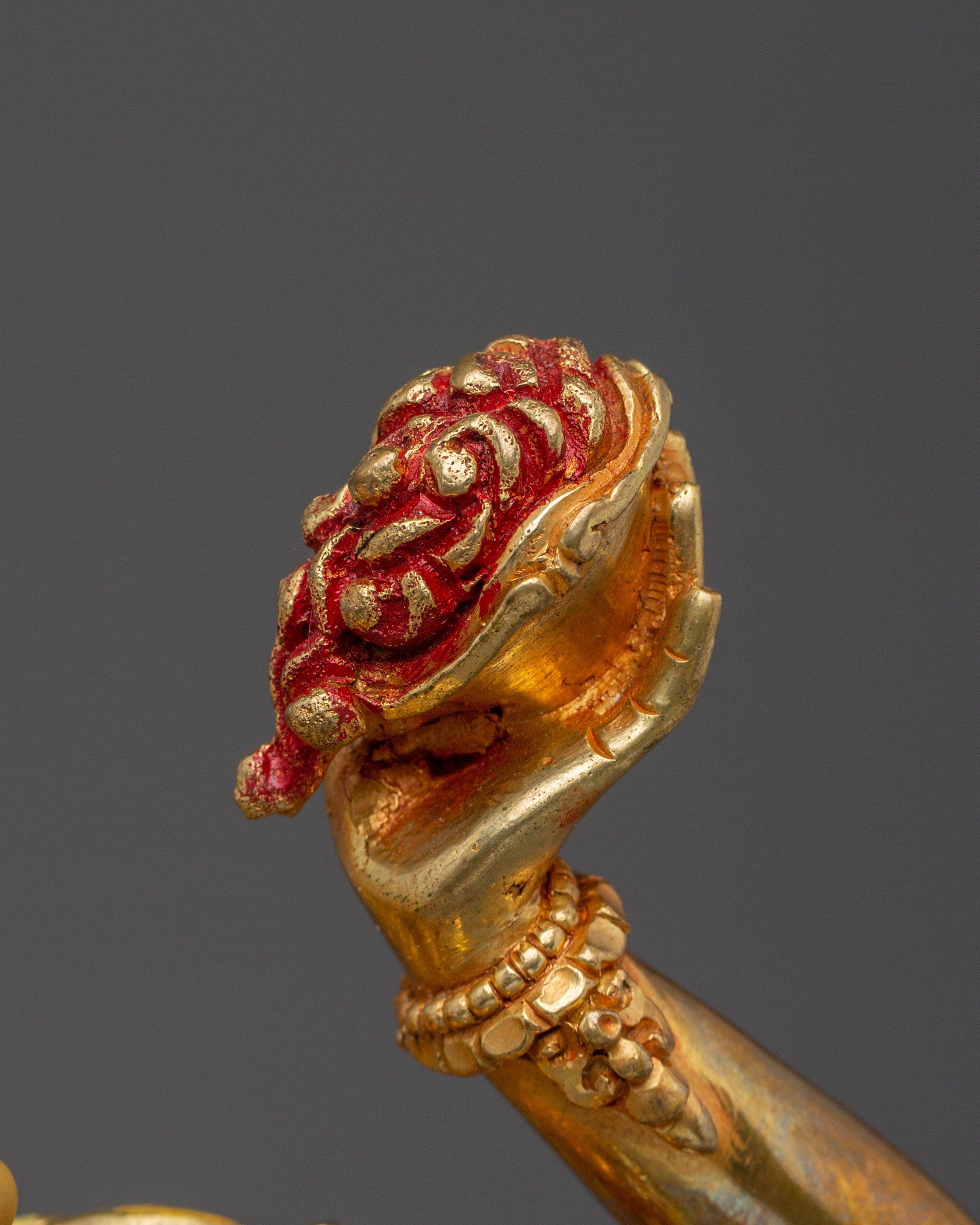
Vajrayogini is a central female Buddha and ḍakini in Vajrayana Buddhism, representing the union of wisdom (prajna) and compassion (karuna), as well as the path to enlightenment in the female form. She holds a khatvanga trident in her right hand, symbolizing the three bodies of a Buddha: Dharmakaya (the body of truth), Sambhogakaya (the body of bliss), and Nirmaṇakaya (the body of manifestation). In her left hand is a skull cup filled with blood, signifying the transformation of defilements into wisdom. The flaying knife she carries cuts through ignorance and attachment, while the blazing halo around her embodies the brilliance of enlightenment. Her skull garland and five-skull crown reflect impermanence and the transmutation of the five afflictions into the five wisdoms. Standing atop Kalaratri and Bhairava, she displays her power over ego and illusion.
Size: 17.1”/43.5cm (Height) x 10.6”/27cm (Base)
Weight: 4.31 kg
Material: 24K Gold Gilded, Gold & Acrylic Paintings, Copper Body, Gemstones
A key figure in Vajrayana Buddhism, Vajrayogini represents the synthesis of bliss and emptiness, as well as the pinnacle of wisdom. She is portrayed as a ferocious red goddess holding a skullcup and a knife with a vajra handle, signifying the transformational force of enlightenment. Her techniques are complex and call for the right initiation, such as visualization and reciting mantras. Vajrayogini, who is revered in the Sakya, Kagyu, and Gelug schools, is particularly important to female practitioners as a symbol of empowerment and feminine enlightenment. She also plays a vital role in assisting practitioners on their path to enlightenment.