Statue of Yeshe Tsogyal and Mandarava | Female Deities of Wisdom and Power
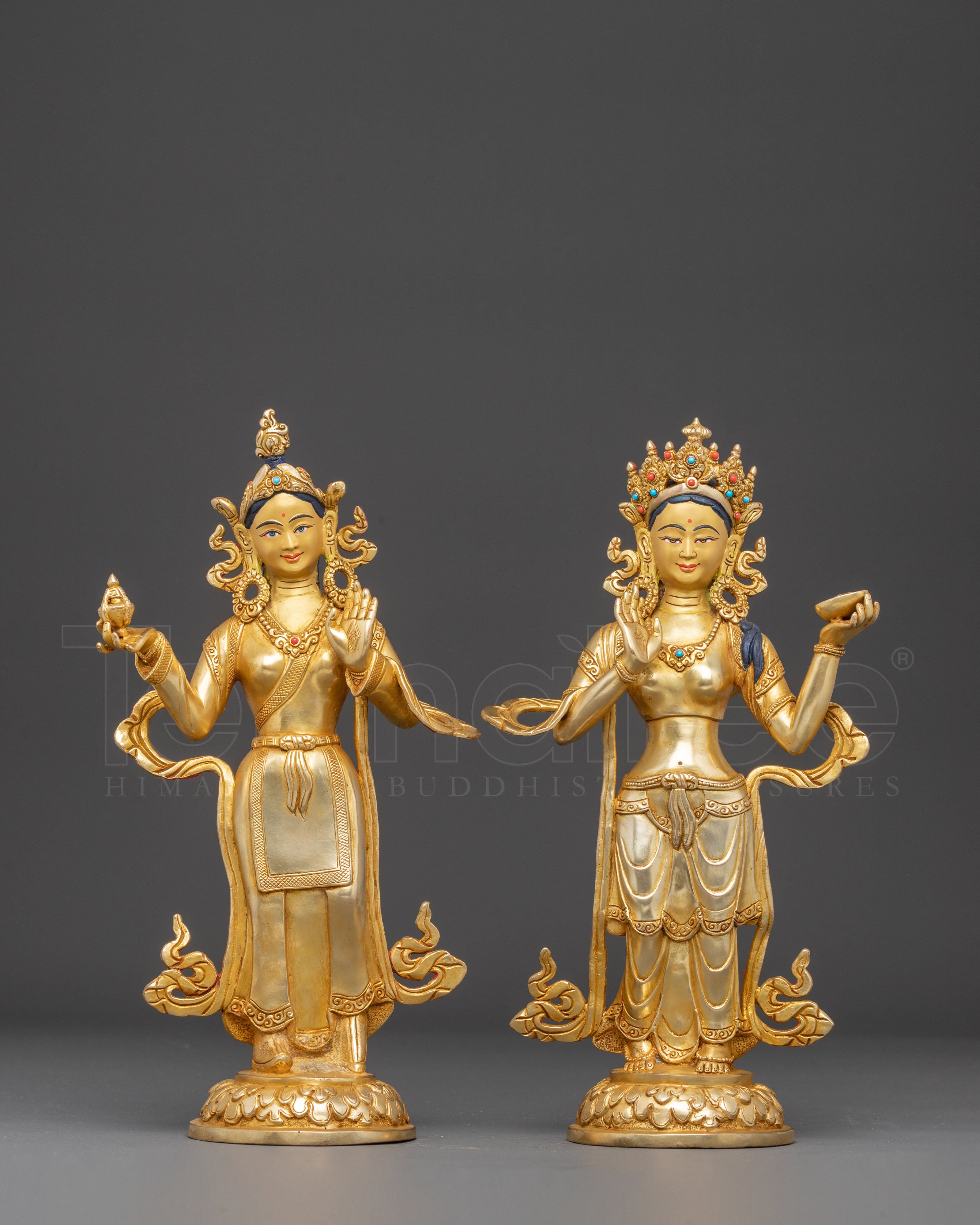
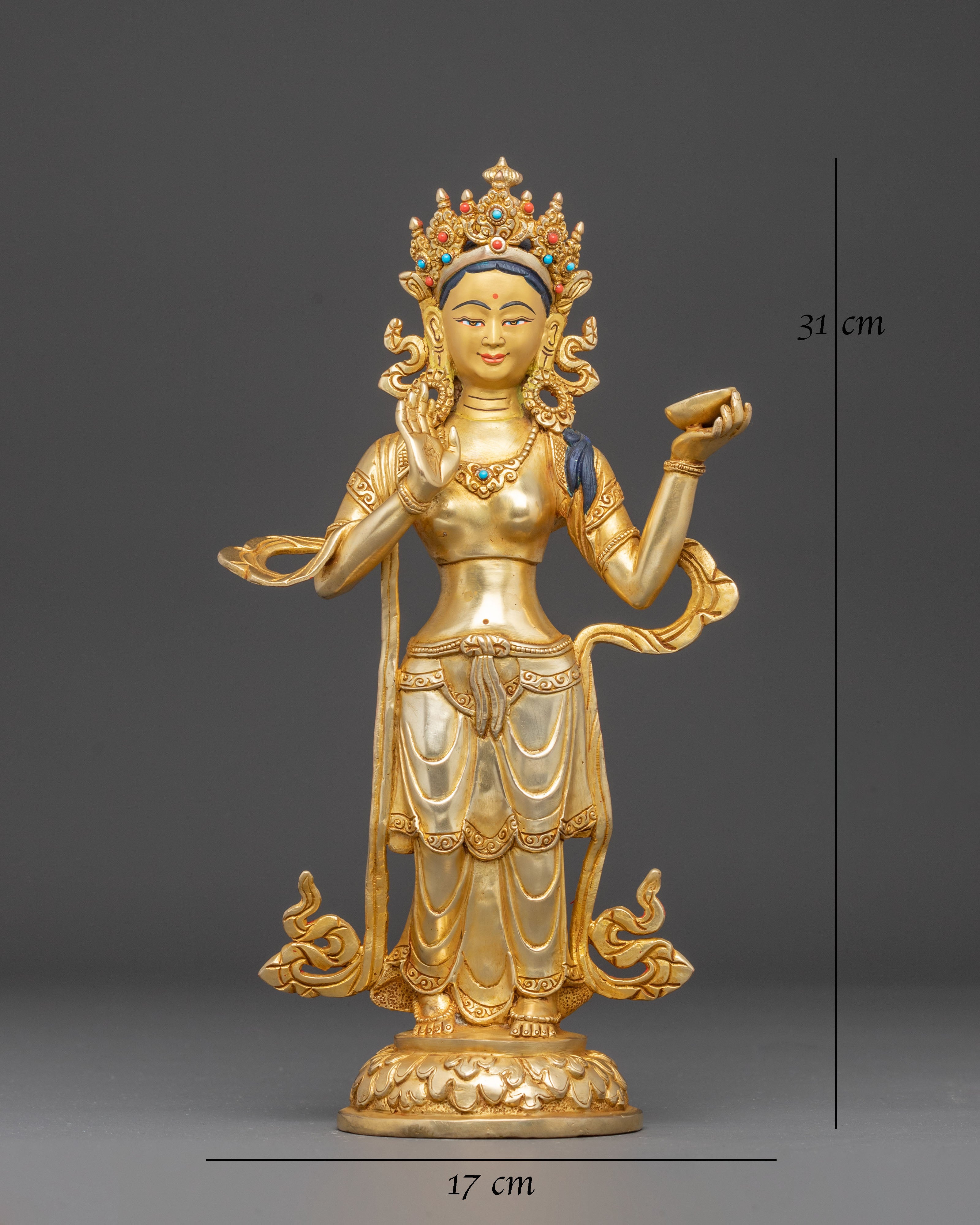
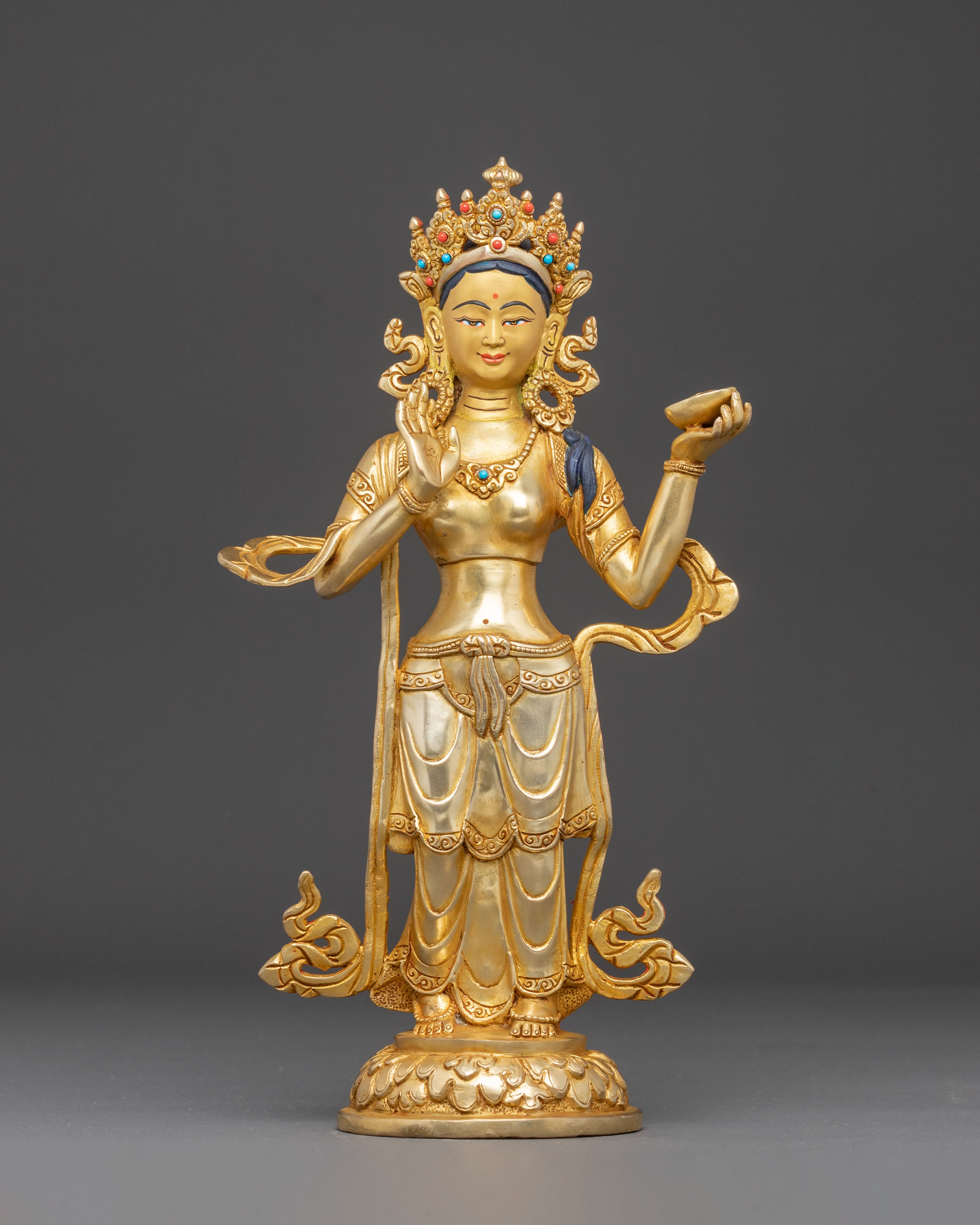
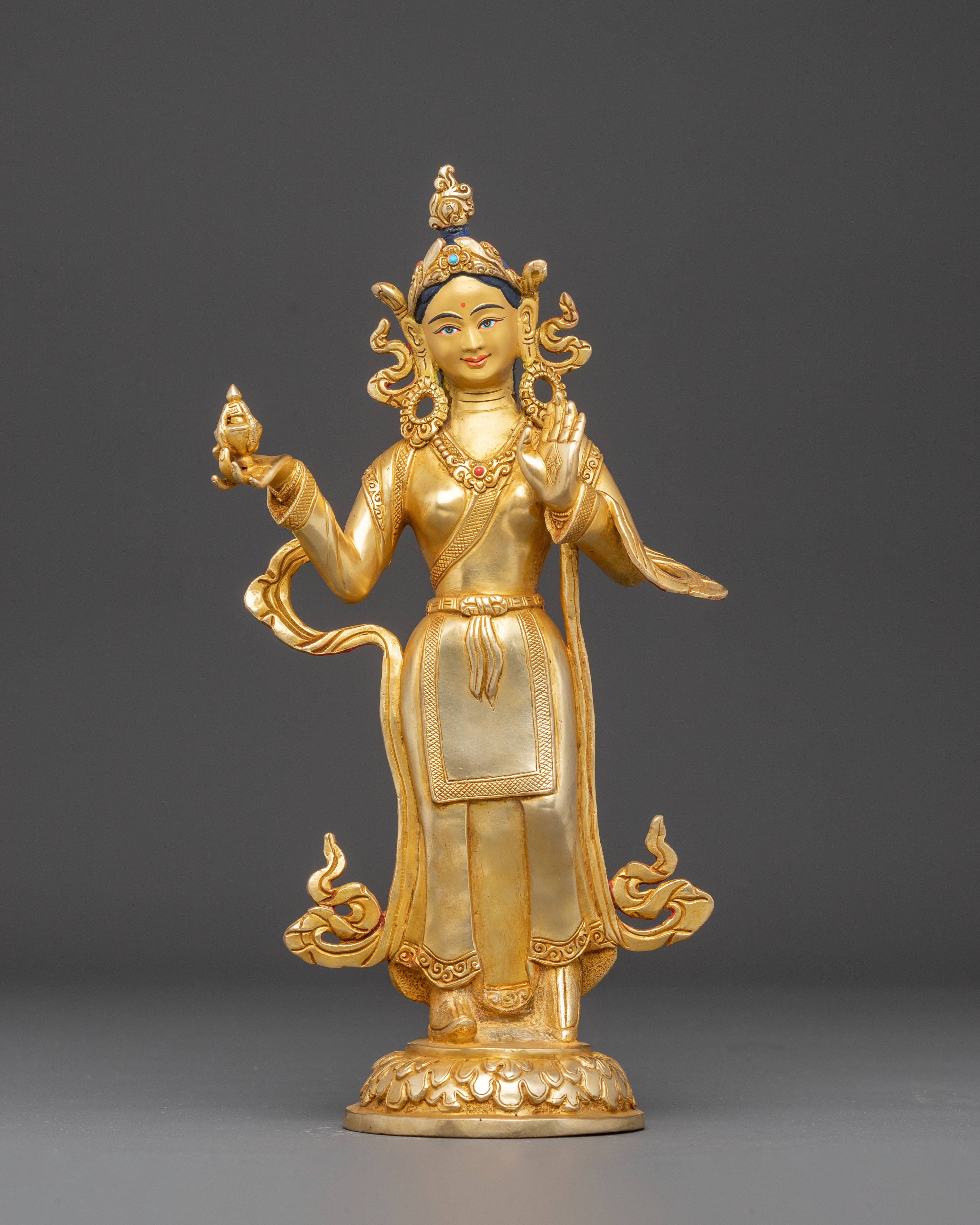
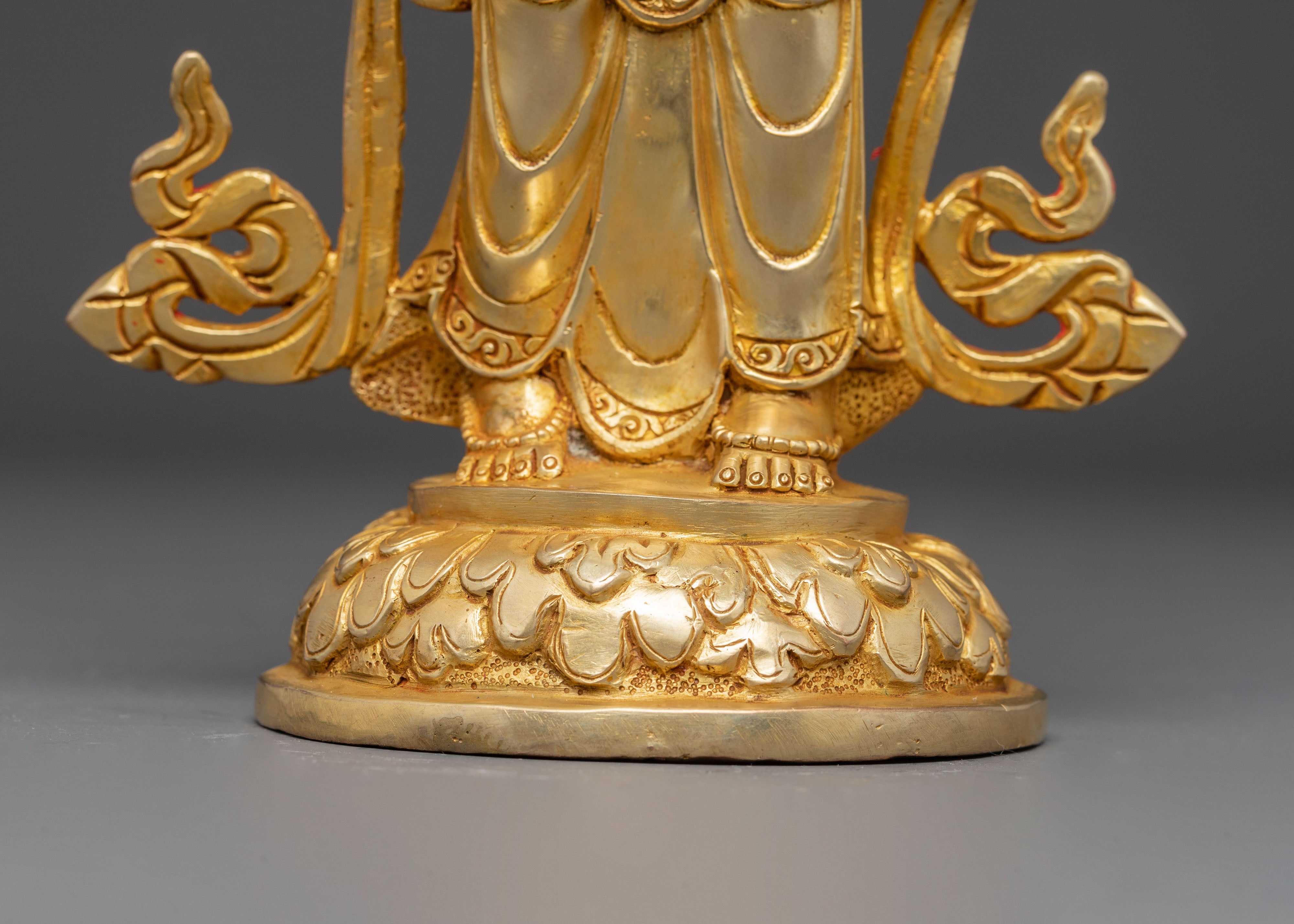
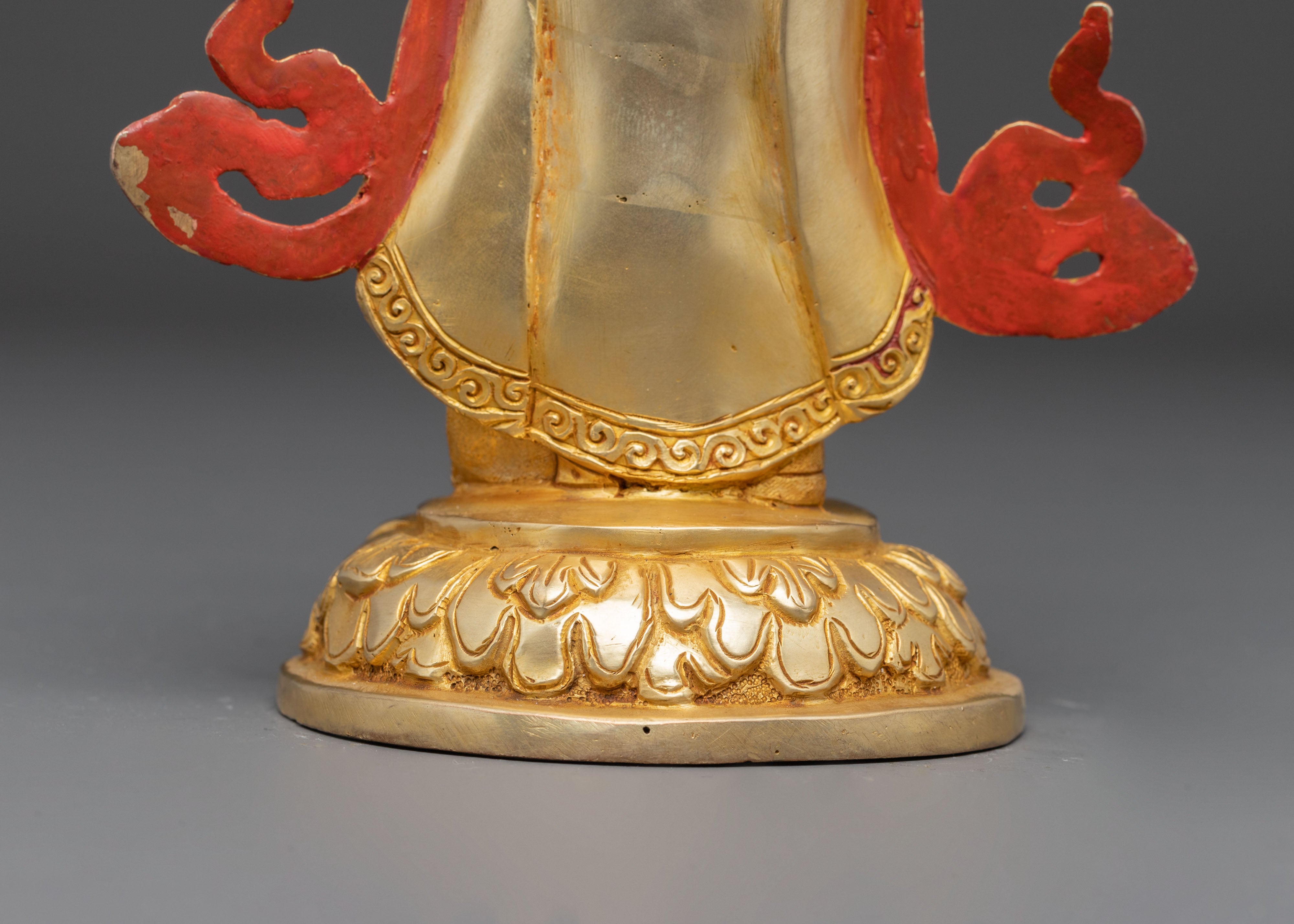
Yeshe Tsogyal and Mandarava Statues, the consorts of Guru Rinpoche, represent wisdom, empowerment, and the feminine principle in Vajrayana Buddhism. These handcrafted statues are made of copper, covered with a triple layer of 24K gold gilding, and carved with deeply engraved carvings that produce a magnificent 3D-like effect. The statues are adorned with gemstones, enhancing their divine elegance. Measuring 12.2”/31cm in height and 6.7”/17cm at the base, they weigh 3.49 kg. Their balanced size makes them ideal for personal altars, meditation spaces, or as meaningful spiritual gifts.
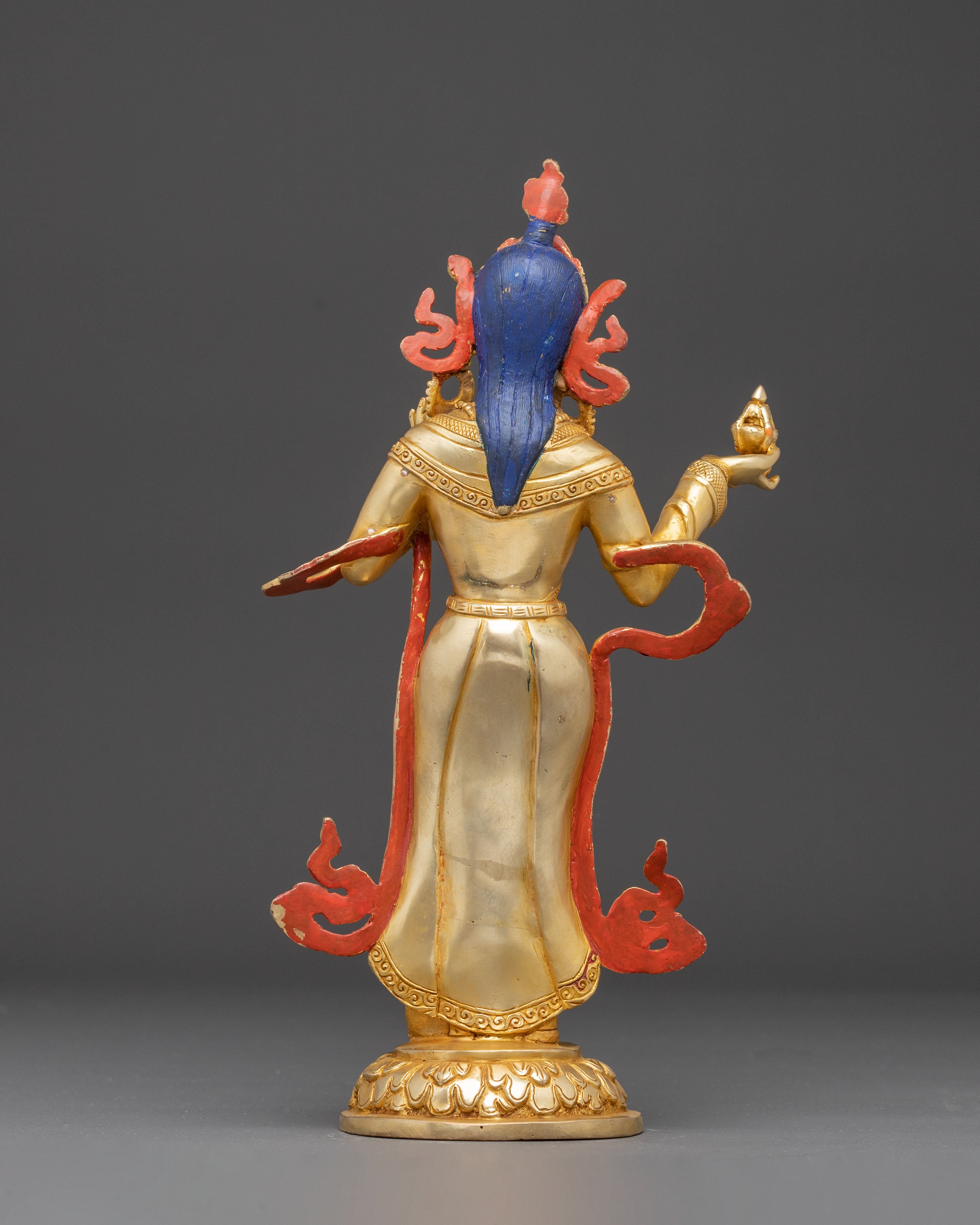
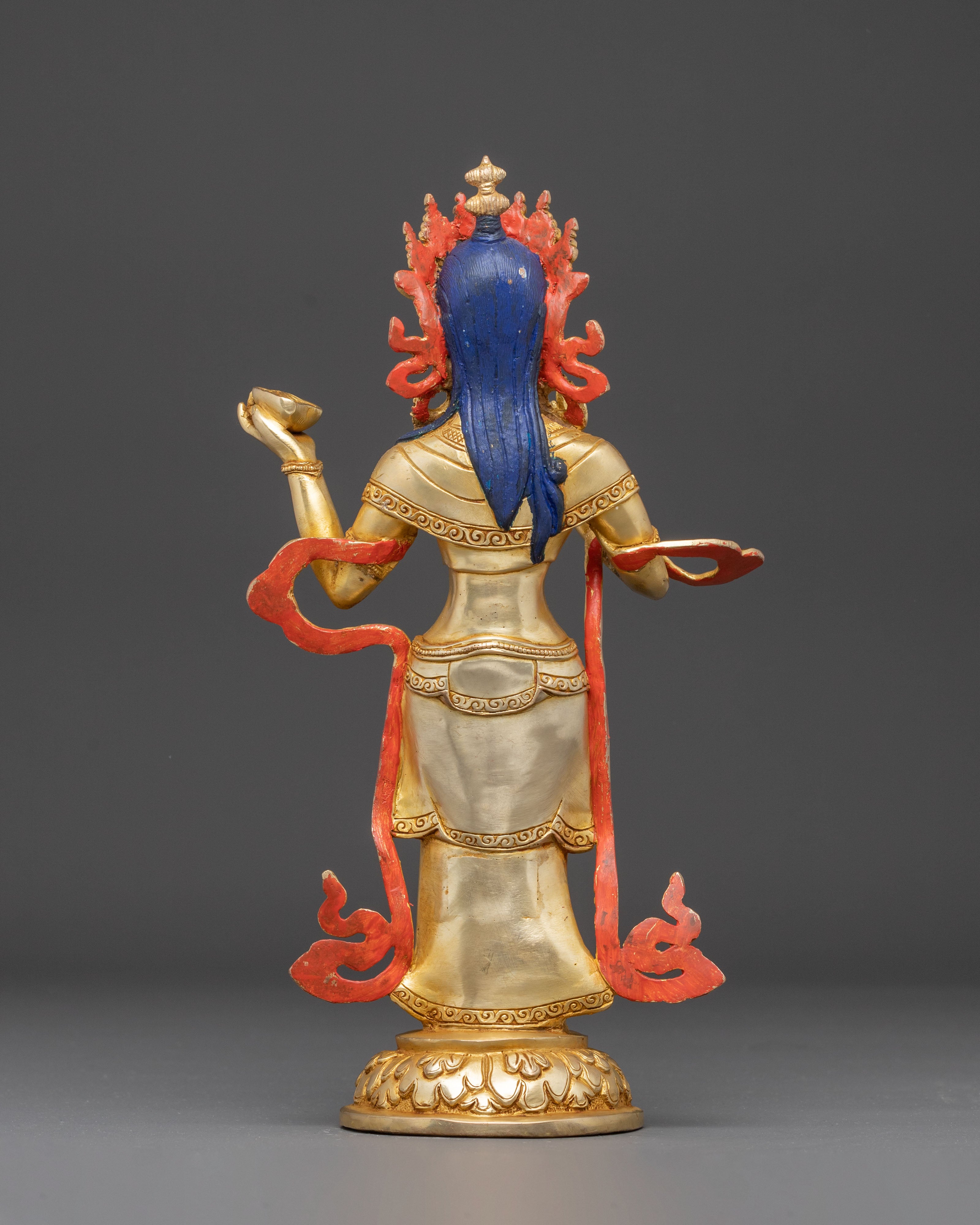
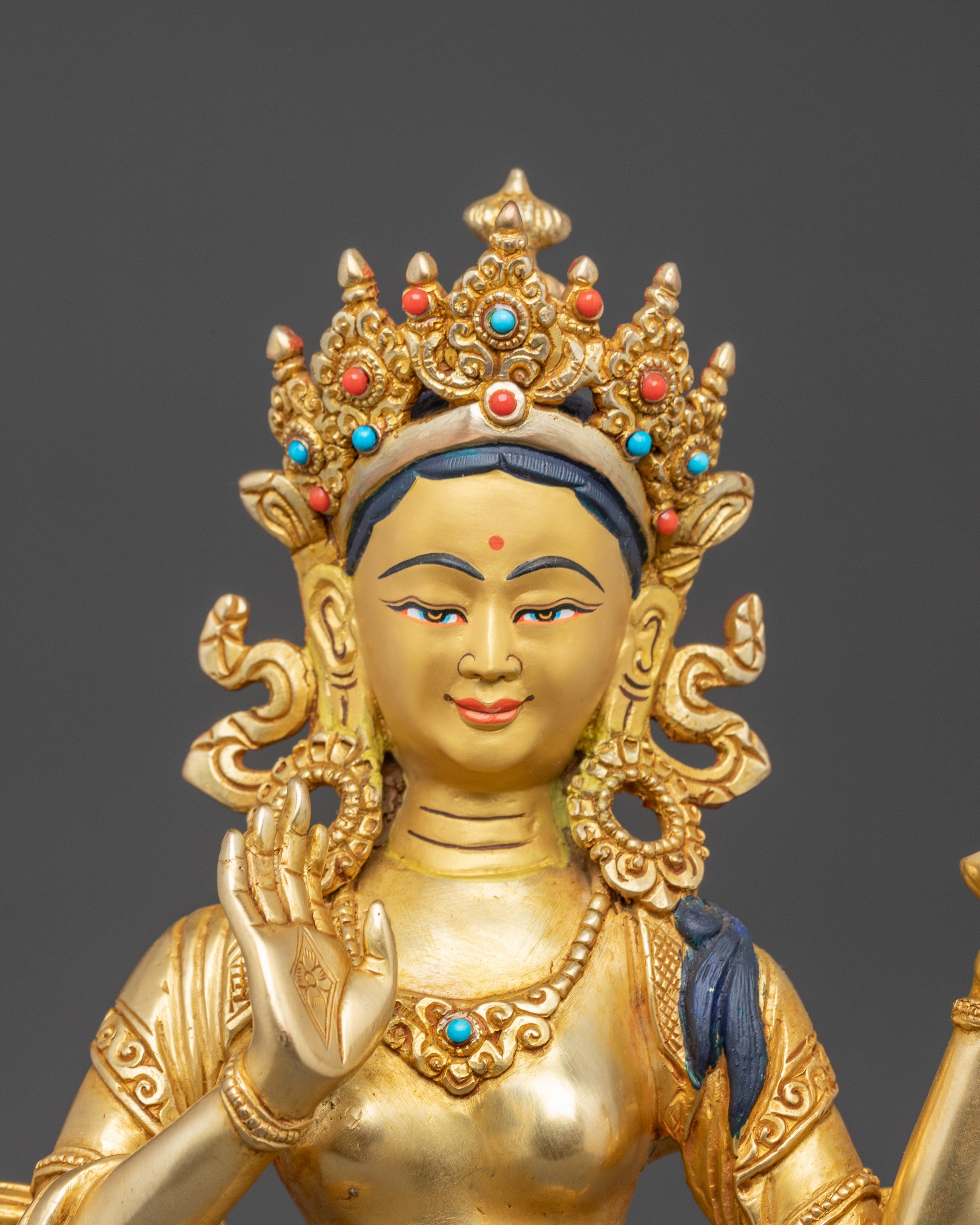
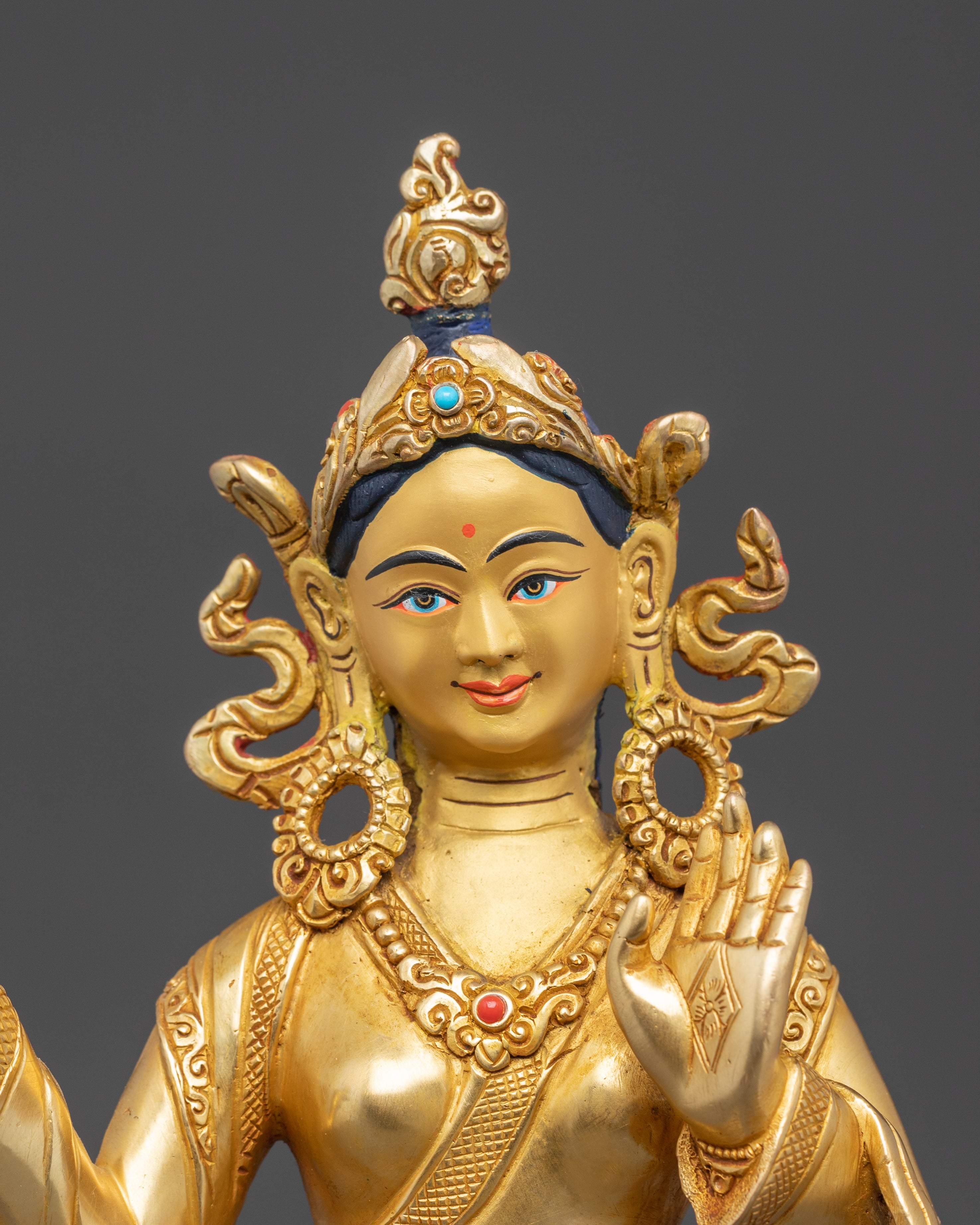
The statue portrays Yeshe Tsogyal and Mandarava, the two revered consorts and enlightened disciples of Guru Padmasambhava. Yeshe Tsogyal, positioned on the left, displays her right hand in abhaya mudra, a gesture of fearlessness and spiritual protection, while her left hand holds a skull cup, symbolizing wisdom and the transformation of desires into spiritual insight. Mandarava, standing on the right, has a kalasha (vase) in her right hand, representing longevity, vitality, and the nectar of immortality, while her left hand is in abhaya mudra, offering blessings and reassurance. Both figures are adorned in traditional robes and royal ornaments, reflecting their enlightened feminine presence and devotion. They are standing gracefully upon sun-disc lotus bases, symbolizing the union of wisdom and compassion rising from the purity of enlightenment.
Mandarava Statue Size: 6.7”/17cm (Height) x 5.9”/15cm (Base)
Yeshe Tsogyal Statue Size: 12.2”/31cm (Height) x 6.7”/17cm (Base)
Total Weight: 3.49kg
Materials: Copper Body, 24K Gold Gilded, Gemstones, Gold & Acrylic Paintings
Yeshe Tsogyal, regarded as the "Mother of Tibetan Buddhism," was a great Indian princess who became a key disciple of Guru Rinpoche. She played a crucial role in spreading Vajrayana Buddhism in Tibet and is celebrated for her profound wisdom, spiritual realization, and compassionate activities. Often depicted with a vase of immortality, she symbolizes the transcendence of death and the attainment of ultimate enlightenment.
Mandarava, another significant consort of Guru Rinpoche, was an Indian princess and tantric practitioner. She is renowned for her deep spiritual realization and mastery of Vajrayana practices. Mandarava's story highlights the power of wisdom, compassion, and spiritual dedication. She is often shown holding a blooming lotus or arrow, symbolizing purity, awakening, and the ability to pierce through illusion. Together, Yeshe Tsogyal and Mandarava represent the feminine aspect of enlightenment, wisdom, and the path to spiritual awakening in the Vajrayana tradition.