
Understanding the Magnetizing Compassion and Tantric Symbolism of Kurukullā and Red Tārā
In Vajrayana Buddhism, Kurukullā and Red Tārā are two deities who symbolize aspects of awakened compassion and wisdom. Both appear in radiant red and are closely associated with the magnetizing activity of enlightened awareness. Although Kurukullā is sometimes regarded as a manifestation of Red Tārā’s magnetizing power, the two deities also express distinct aspects of enlightened activity. Red Tara represents calm protection and beauty and is usually painted in an upright, still position, with an emphasis on her ability to change things for the better. Kurukullā is more dynamic, represented in a "Dakini" dance with a bow and arrow of red lotuses, highlighting her ability to alchemize desire and pierce the ego in beings, bringing them to the point of liberation. They both symbolize the two poles of the feminine goddess in Buddhism, showing how caring will may be both a soft direction and a change agent.
The Power of the Red Color
The symbolic use of color in tantric symbolism can never be superficial. Each of the colors has a certain spiritual content and awakened awareness. Red is associated with the mandala's western direction and the Padma family, which is associated with the transformation of raga into discriminating awareness. The desires of human beings are not perceived as moral flaws that need to be inhibited but as a powerful fuel that, when refined, can be used to attract advantageous circumstances and speed up the journey to enlightenment in Vajrayana.
Red Tara: The Attracting Mother

Red Tārā, or Kurukullā-Tarah in certain families, embodies the discriminating power of compassion. She is the "Sovereign of Power," drawing sentient beings toward the Dharma with a warmth that is both irresistible and protective.
Kurukullā: The Alchemical Fire

Kurukullā expresses this same magnetizing energy but through a more specialized, dynamic, and often "wrathful" esoteric lens. Providing Red Tara is the queen's sun that is warming and attracting, and she is the laser concentrated on the same light.
Symbolism and Iconography of Kurukullā and Red Tārā
The symbolism of the deities in the Buddhism of Vajrayana is abundant. Kurukulla and Red Tara are not just artistic images but visual sermons; they have an inner meaning of awakened wisdom and compassionate action.
The Color Red
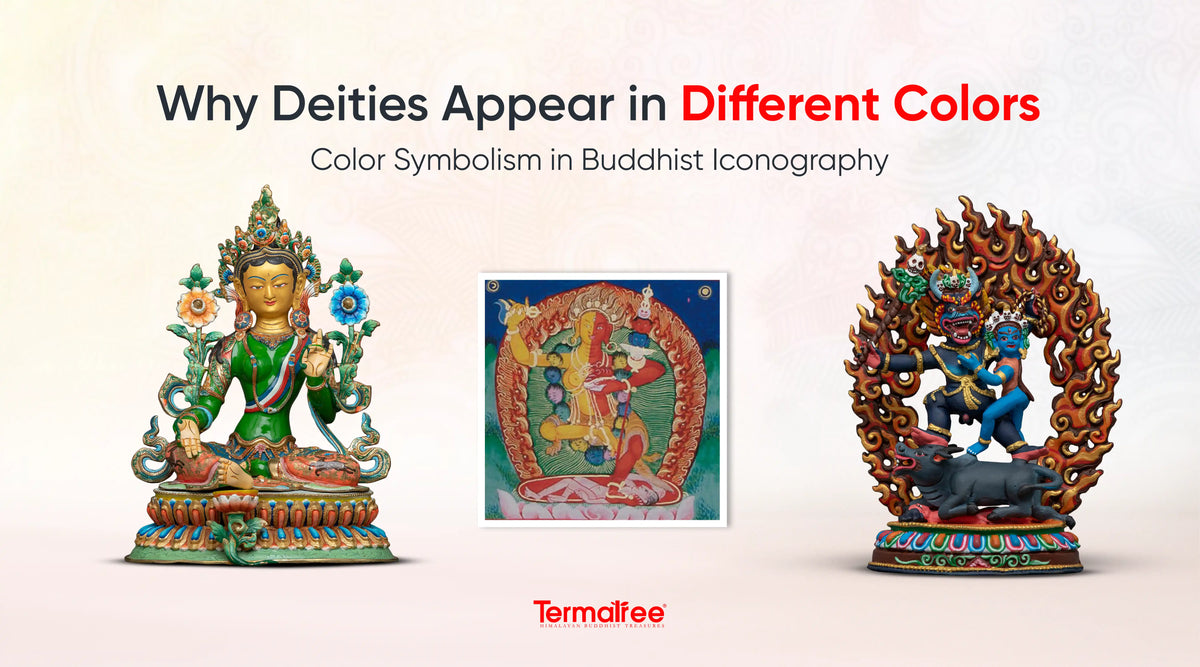
 Both deities are depicted with the use of the color red, which is associated with the Buddha, Amitabha. Holding to tantric symbolism, red symbolizes the process by which the raga, or attachment, becomes the discriminating awareness, an awareness that is a pure and clear perception of the specific qualities of all phenomena, devoid of grasping.
Such symbolism echoes one of the main Vajrayana teachings: the energy of desire itself can be turned into wisdom and empathetic insight.
The Lotus

This is the common trait of the imagery of the two deities; the lotus flower. The lotus sprouts out of muddy water but opens in purity, and this symbolizes that it is possible to awaken in the conditions of ordinary life.
The lotus, in the case of both, can be seen as a symbol of the birth of wisdom out of the very feelings and experiences that appear to have had a hold on the mind before.
Bow and Arrow
Bow and arrow are important qualities of Kurukullā and are usually represented as composed of lotus flowers. They are a symbol of the attracting power of enlightened benevolence. The arrow symbolizes the penetration of ego and delusion, and the bow is the concentration of intention of wisdom behind that act.
In other cultures, Red Tara is portrayed as a woman with a bow and arrow, as the delicate source of attraction of creatures towards wisdom and the Dharma. Since these weapons are crafted out of flowers, they focus on change by use of beauty, compassion, and spiritual power more than force.
The Dancing Posture

Kurukullā is often depicted in a dynamic dancing posture, standing on one leg with the other raised, while trampling upon the personification of the ego or worldly desire. This dance represents the natural flow of enlightened wisdom, which continually works to help beings and remove barriers to awakening.
In contrast, Red Tārā is usually shown seated in a posture of royal ease, reflecting the calm and effortless presence of compassionate magnetizing energy.
Iconography of the Magnetizing Mother
While both deities share the vibrant red of the Padma (Lotus) family, their physical forms represent two distinct "modes" of enlightened energy.
|
Feature |
Red Tārā |
Kurukullā |
|
Posture |
Lalitāsana: Seated in royal ease. |
Ardhaparyanka: Dancing on the ego. |
|
Mood |
Peaceful, smiling, and welcoming. |
Semi-wrathful, "fierce-smile," dynamic. |
|
Attributes |
Holds a single red lotus (utpala). |
Holds a floral bow and arrow. |
|
Crown |
Five-leaf jeweled crown. |
Five-skull Tantric crown. |
Historical Origins of Kurukullā and Red Tārā
Kurukullā appears in several tantric Buddhist traditions, particularly within Tibetan Vajrayana practice cycles associated with the Padma (Lotus) family. Her practices are preserved in various tantric texts and ritual traditions transmitted through Indian and Tibetan masters. In these teachings, she is often invoked as a deity connected with magnetizing activity and the transformation of emotional energy into wisdom.
Red Tara is a result of the larger tradition of Tara, which gained particular power in India in the 7th to 11th centuries with the emerging Tantric Buddhism. Taras have, over time, manifested in various forms, each symbolizing different aspects of enlightened compassion and activity. These are the four awakened activities in Vajrayana Buddhism, which are pacifying, increasing, magnetizing, and subjugating.
In certain tantric traditions, Kurukulla is interpreted as a regulated or interior expression of Red Tara, an expression of the more active and transformational aspect of her magnetizing energy. Whereas Red Tara is the gracious, Kurukulla, the more dynamic tantric power, is an attracting benevolence of beings to wisdom, changing the desire and leading it to awakening.
Activity of Tantra Magnetizing
 Red Tara (Photo from Enlightenment Thangka)
Vajrayana Buddhism describes enlightened beings as demonstrating compassion through four main activities: pacifying, increasing, magnetizing, and subjugating. On the one hand, every activity is a variant of how awakened wisdom is useful to beings and eliminates the barriers on the way.
Kurukulla is particularly identified with the magnetizing action. She frequently incorporates a bow and arrow made of flowers in her imagery, representing the force of attraction and influence without violence or conquering power. This symbolism implies a form of transformation by beauty, allure, and spirituality rather than imposing change. Her flower arrows grab the mind and pull wandering attention back to wisdom and compassion.
The tantric traditions closely relate to Red Tara because she possesses the same magnetizing capacity. Certain schools even explain Kurukullā as the tantric, or inner, form of Red Tārā, and channeling the same loving energy into a more active and professional channel.
Different Faces of the Same Compassion
While Red Tara and Kurukulla may appear as two distinct deities, they are actually two manifestations of the same enlightened energy.
Red Tara is the kind and loving form of attraction that pulls beings toward wisdom and spiritual development.
Kurukulla is that same compassion but with more intensity, with the energy of desire, charisma, and influence to change confusion and lead beings toward awakening.
In this sense, they do not differ in their nature; they are two variations of the same awakened kindness. Instead, they are two complementary sides of one light activity, showing that compassion may be both soft and moving at the same time, as it does when it aims for the same destination, awakening.
A Teaching About Transformation

The relationship between Red Tara and Kurukulla reveals a deeper message at the core of Vajrayana Buddhism. Instead of discarding human feelings like passion, attraction, or desire, tantric spirituality focuses more on the fact that these forces can also be converted to wisdom. The practitioners are advised to see the potential in their minds, and this is the same way the red energy of such deities represents the change of attachment to awareness. The misunderstanding may be that the confusion will lead to a realization, as wisdom and compassion are expressed through speech.
In this respect, Red Tāra and Kurukulla are not merely symbolic characters. They are a significant lesson: nothing in human experience is necessarily an impediment. Wisdom and the power of hands can include even the most powerful feelings in the path to enlightenment.
Kurukullā and Red Tārā in Vajrayāna Practice
Kurukulla and Red Tara are both connected with the magnetizing action of enlightened compassion in Vajrayana Buddhism. Their teachings can be found in many traditions of tantra, especially in Tibetan Buddhism, where visualization, chanting, and meditation are practiced to develop the effects of compassion and inner change.
Red Tara is usually depicted in a serene sitting position, and it is very warm, bringing favorable fortunes to spiritual development. On the other hand, Kurukulla is typically depicted dancing with her lotus bow and arrow, which represent the active transformation of desire and emotional forces into wisdom. These practices aim to motivate practitioners to understand that the same energies that have bound the mind can also be redirected to promote awakening and loving action.
Feminine Wisdom of Tara and Kurukulla

Both Red Tāra and Kurukulla are symbols of the female aspect of the enlightened wisdom in Vajrayana Buddhism. Their shapes remind professionals that enlightenment is not a part of the masculine pictorial but can also be found in other traditional female qualities like compassion, intuitive insight, and nurturing guidance. Tara herself is universally respected as the Mother of Liberation, and this is a symbol of compassionate action, which assists beings in awakening.
Kurukulla also shares this wisdom in a more dynamic and tantric expression that is able to turn the energies of desire and attraction into a force that can be used to foment spiritual growth. At the same time, Red Tara is a symbol of the kind of focused warmth of compassion, whereas Kurukulla is its active and transformative expression. Collectively, they demonstrate a great teaching of the Vajrayana Buddhism that wisdom and compassion may manifest themselves in a great variety of forms, but all of them are based on the same awakened state of mind.
Conclusion
The interaction between Kurukulla and Red Tara is one of the biggest revelations of Vajrayana Buddhism: change, instead of denial. Tantric teachings do not regard passion and desire as barriers to wisdom but demonstrate their ability to be turned into potent tools for wisdom. The element of red Tare represents the warm magnetism of compassion, and the dynamic and transformative force is represented by Kurukulla. The combined depicts how awakened activity may manifest in numerous forms; these may be calm, vigorous, but always aimed at the liberation of beings. Their words are an appeal to the fact that even the most powerful emotions can result in awakening when controlled by wisdom and compassion.