
The Lotus-Bearing Bodhisattva’s Enduring Influence
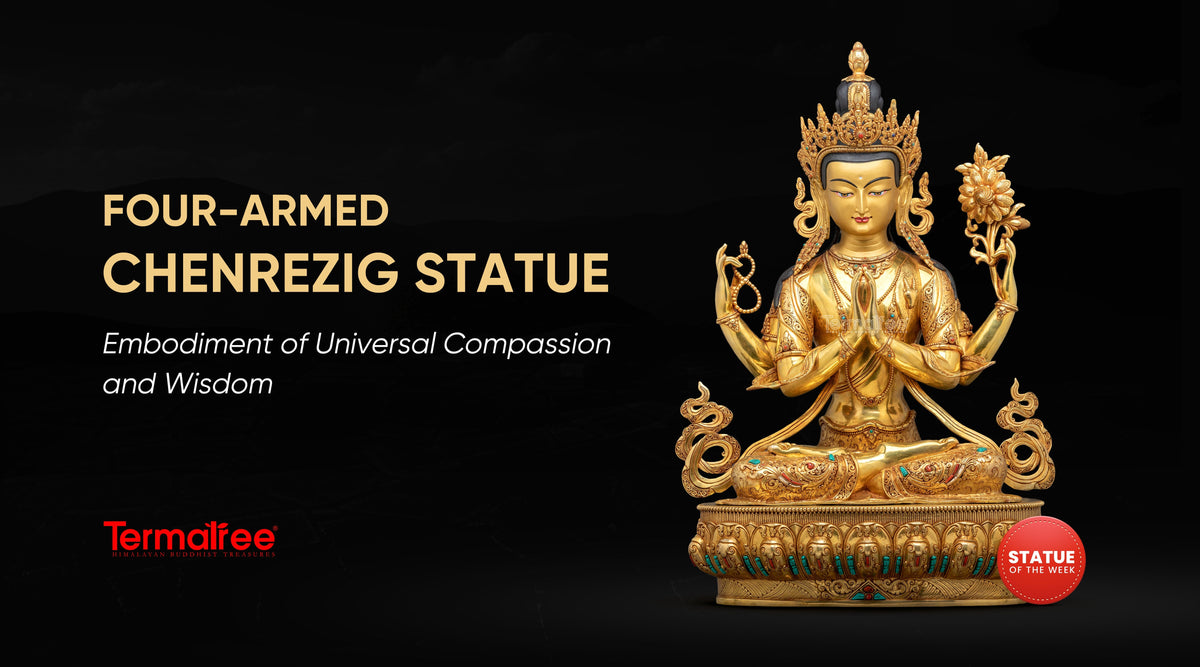
The Padmapani Lokeshwor Statue exists as an artistic creation that functions as a sacred emblem that represents both compassion and spiritual traditions. The statue holds important meaning for Nepalese people while its impact extends throughout the Mahayana Buddhist community. The beautiful statue displays Padmapani, which represents the Bodhisattva Avalokiteshvara, who shows the primary Buddhist principles of compassion, mercy, and protection. The statue functions as a reminder for people to overcome their personal pain and practice unconditional love toward others. His statue is something that helps people remember the past and contemplate the present time. It inspires people who are looking for answers and people who love art to visit the site. The Padmapani Statue is a symbol that teaches people about Buddhist teachings.
Padmapani Lokeshwor: The Bodhisattva of Infinite Wisdom

The Padmapani Lokeshwor name contains a deep, profound meaning that derives from its Sanskrit language origins. The name "Padmapani" translates to "Holder of the Lotus," which represents spiritual purity and awakening, while "Lokeshwor" translates to "Lord of the World," who protects all living beings through his compassionate guidance. The Bodhisattva Padmapani represents Avalokiteśvara, who is known as the Bodhisattva who embodies supreme compassion in Buddhist teachings. The Mahayana and Vajrayana traditions worship Avalokiteśvara as a sacred figure who made a vow to help all beings achieve freedom from suffering.
Origin of Lokeshwor Statue
The Mahayana Buddhist tradition regards Lokeshwor (Lokesvara) as one of its most important Bodhisattvas, who also has some recognition in Theravada Buddhism. The exact origin of Lokeshwor remains unclear, but his significance is recognized across both major Buddhist traditions. In Mahayana Buddhism, he is celebrated as the Bodhisattva who vowed to assist all sentient beings during times of suffering and to postpone his own enlightenment until all beings achieve Nirvana. His mission of compassion is highlighted in several key sutras, such as the Lotus Sutra, Heart Sutra, and Karandavyuha Sutra.
In Theravada Buddhism, Lokeshwor, also known as Natha, continues to be a notable figure, particularly in Sri Lanka. While some recent interpretations try to link him with Maitreya Bodhisattva, Natha's iconography is generally associated with Amitabha Buddha, especially with Amitabha’s image depicted on his crown. Lokeshwor is also venerated in several Southeast Asian countries, including Burma, Thailand, Cambodia, and Nepal. The widespread devotion of people demonstrates that he serves as a universal symbol of compassion that connects with all Buddhist cultures.
The Historical and Cultural Significance of Padmapani Lokeshwor

Buddhist art has established Kathmandu Valley as a historical center that has maintained its artistic traditions for more than 1000 years. The Padmapani Lokeshwor statues exist as essential elements of this heritage because artisans created them through their skilled craftsmanship and their sacred Buddhist design. The artifacts exist from the Licchavi period, which lasted from the fourth to the 9th century CE, because the valley developed into a major artistic and spiritual center. The Malla period, which lasted from the 12th to the 18th century, experienced artistic and religious growth that continued from 10th-century statue production. The statues of Padmapani made from stone and metal have detailed designs. These designs include jewelry and mudras that show spiritual meanings. The faces on the statues are very peaceful.
Individuals see Padmapani Lokeshwor as a protector. He watches over the statues that are displayed in temples. Devotees go to the temples to receive blessings and say prayers in front of the statues of Padmapani. During their festivals and rituals, Buddhists use these statues as items. This gives believers the guidance and protection they need for their journey. They help people understand the value of compassion and kindness.
Iconography of Padmapani Lokeshwor
Lotus:

The lotus that Padmapani Lokeshwor holds is a symbol of purity and spiritual growth. As a lotus flower rises above dirty water, it shows that we can overcome problems and achieve inner peace. Life is full of challenges. We can learn to face them and find beauty in the process of growing.
Serene Expression:
 His face shows that he is calm and peaceful. This is what Buddhists think is essential—being calm and peaceful. His expression is a reminder that we need to find peace inside ourselves if we want to be wise and kind to others.
Mudras:
 His hands are positioned in his statue, which is very meaningful. These hand gestures represent kindness and protection. They show that Padmapani Lokeshwor is committed to helping people attain peace and freedom.
Jewelry:
The shown wear is very detailed and beautiful. His crowns and necklaces show that he is a being, and they symbolize his power. The jewelry also connects him to the divine. It makes the sculpture look even more beautiful.
Posture:
 Often shown sitting or standing in his statues. When he is sitting, it means that he is meditating and calm inside. When he is standing, it means that he is ready to help others. Either way, his posture shows that he is a caring person who wants to guide us on our journey.
Compassionate Gaze:
Padmapani Lokeshwar looks at us with caring eyes. His gaze shows that he truly cares about every person, which is significant. He wants to help us. His soft, focused eyes remind worshippers of his unconditional love and commitment to alleviating others' suffering, offering spiritual guidance and support.
The Tale of Padmapani Lokeshwor’s Compassion
In a small village in Nepal, a farmer named Suresh faced multiple difficulties because of his failed crops, poor health, and financial problems. One night, Suresh felt down, and he thought about the story of Padmapani Lokeshwor, the Bodhisattva of Compassion. He went to the temple where there was a statue of Lokeshwor, and he decided to ask for help. Suresh got down on his knees in front of the statue. Told him all his problems, asking for some guidance. The day a big storm came to the village, the rain did not hurt the crops. Instead, the rain made the fields happy and healthy. After some time, Suresh's crops started to grow well, and he felt better too. He went back to the temple to thank him. He described his ordeal to the villagers.
People in the village started talking about this story. It reminded them that Padmapani Lokeshwor, the Bodhisattva of Compassion, is very kind and helps people who are suffering. They learned that if they have faith and are kind, they can get help, and they started a tradition to honor him. They believed that he could make their suffering go away with his kindness.
Padmapani's Influence on Art and Culture
The Padmapani Lokeshwor image serves as a major influence on Buddhist artistic expression and the cultural heritage of all Mahayana Buddhist regions, which include Nepal, Tibet, and India. The artistic display of Padmapani through various artistic mediums, such as sculptures and paintings, serves as a visual expression of Buddhist teachings, which protect all beings and show compassion.
1. Buddhist Sculpture:

The Kathmandu Valley in Nepal showcases Padmapani Lokeshwor statues, which represent the traditional Newar artistic skills. The statues display a peaceful and loving expression together with sacred hand gestures, royal headpieces, and jewelry, which the artists used to create their works. The lotus flower that he holds is a symbol of purity. The statues show how talented Nepali artisans are. They are very good at what they do and help artists connect with something other than themselves through meditation.
2. Painting and Thangka Art:
 (Photo from Enlightenment Thangka)
Padmapani has inspired many artists to make thangkas, which are paintings from Tibetan Buddhism. The paintings show Padmapani Lokeshwor holding a lotus flower, and they are full of colors and symbols like clouds and flames. These paintings help people meditate and teach them about his qualities, like being kind and wise.
The Rato Matsyendranath Jatra of Patan

In Lalitpur, Padmapani Lokeshwor is also known as Rato Matsyendranath or Bungadeya. The rain god formerly occupied the large Shikhara-style temple, which served as his residence. The Rato Matsyendranath Jatra begins with his movement between Patan and his second location, where he stays, for the next six months. The annual chariot procession of the deity, which King Narendra Deva established, requires workers to construct a 60-foot-tall chariot from bamboo and wood materials. During this month-long festival, devotees pull the chariot through the streets of Patan. The Barha Barsa Jatra, which occurs every 12 years, requires the construction of a chariot at Bungamati, which residents use to pull the chariot through their neighborhood to reach Pulchowk, starting from Bhaisepati and passing through Nakhu, Bhanimandal, and Jhamsikhel.
Modern Interpretation of Padmapani Lokeshwor

Padmapani Lokeshwor represents compassion and mercy through its modern interpretations, which address present-day issues. The Bodhisattva Padmapani teaches selfless love through his teachings that help people worldwide solve problems related to conflict, poverty, and environmental issues. He serves as a spiritual guide who demonstrates empathy, social responsibility, and mental health, whom people view as a role model who inspires them to practice charitable work, meditation, and mindfulness activities to build compassion. Through his teachings, he offers a connection among different faiths, helping to create peace among diverse cultural backgrounds. His teachings go beyond Buddhism. They attract people from many religious groups. These people strongly value being kind and showing mercy to others. This approach is what makes his message of compassion for everyone important in today's society, where people are really divided.
Conclusion: A Timeless Symbol of Compassion and Hope
The world is still experiencing the kindness of Padmapani Lokeshwor. He has been a part of different cultures and religions for a long time. We can see how much he matters in sculptures and new art. He has changed the way people practice their religion and how they work together to help others.
Padmapani Lokeshwor is remembered during festivals and rituals and in life. He provides people with hope. Shows them that being kind can help them get through tough times. The world has many problems. His teachings will always be there to guide people. They motivate us to be kind to one another. They inspire us to strive for a world that is more peaceful. His message is one of compassion and kindness; it inspires people to improve the world.