
Details of the Sacred Statue: Made in Patan, Nepal

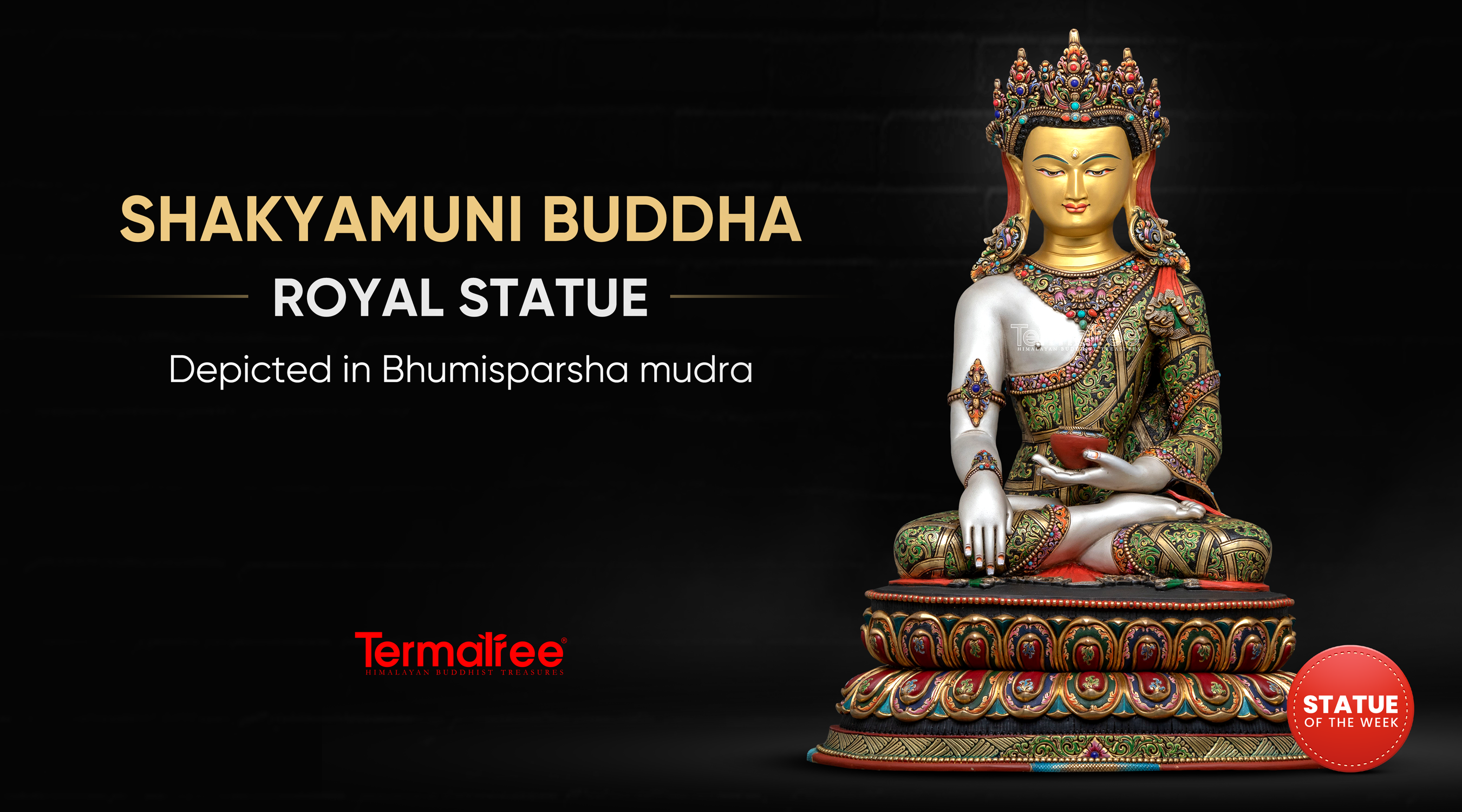
At Termatree, each week we highlight a sacred statue that reflects the depth of Himalayan Buddhist craftsmanship and spiritual tradition. This week, we are honored to present this magnificent Crown Shakyamuni Buddha statue, a serene and refined representation of the historical Buddha adorned in royal bodhisattva ornaments.
Standing at 18.9” (48 cm) in height with a 14.2” (36 cm) base and weighing 10.78 kg, this sacred statue is handcrafted using the traditional lost-wax casting technique in Patan, Nepal, a region renowned for preserving centuries-old metalworking traditions. The Buddha’s face is delicately finished with gold dust, giving the expression a radiant and peaceful presence. The body is beautifully decorated with acrylic paintings, further enriched with 24K gold gilding on the robes, highlighting the intricate patterns and sacred elegance of the garment.
The statue rests upon a double lotus base crafted from copper, adorned with detailed paintings and enhanced with 24K gold gilding. This carefully executed foundation symbolizes spiritual purity and the blossoming of enlightenment. The finely crafted five-pointed crown, set with colorful gemstones, adds a sense of regal presence while reflecting profound symbolic meaning within Vajrayana Buddhist traditions.
The Significance of the Crowned Buddha Form

Unlike the simple monastic representation often seen in early Buddhist imagery, the crowned form of Shakyamuni Buddha reflects a deeper interpretation found within Vajrayana Buddhist traditions. In this form, the Buddha is portrayed with the ornaments of a bodhisattva, symbolizing the union of wisdom and compassionate activity in the world.
The jeweled crown and ornate garments do not represent worldly luxury, but rather the enlightened qualities of the Buddha manifesting in a way that inspires practitioners. This iconographic style reminds us that enlightenment does not withdraw from the world but instead transforms it through wisdom and compassion. The presence of gemstones within the crown further symbolizes the radiant qualities of awakened awareness.
Iconography and Sacred Symbolism

This Crown Shakyamuni Buddha displays several important iconographic elements that embody the enlightened qualities of the Buddha.
The five-pointed crown represents the Five Dhyani Buddhas, symbolizing the transformation of the five mental afflictions into the five transcendent wisdoms (prajñā). The crown signifies the Buddha appearing in a bodhisattva-like form, reminding practitioners that enlightenment can manifest with compassionate activity in the world.
The Buddha’s right hand forms the Bhumisparsha Mudra, the earth-touching gesture. This sacred gesture commemorates the moment of enlightenment when the Buddha called upon the earth to witness his awakening, symbolizing unwavering resolve and the triumph over inner obstacles.
In the left hand, the Buddha holds an alms bowl, representing renunciation, simplicity, and the monastic path. It reflects the Buddha’s life of humility and his teaching that liberation is found through balance and mindful discipline.
The Buddha sits in Padmasana (lotus posture), the classic meditation position symbolizing stability, inner balance, and spiritual awakening. This posture embodies the deep meditative state through which enlightenment is realized.

A Masterpiece of Devotion and Craftsmanship

More than a work of art, this Crown Shakyamuni Buddha statue is a sacred presence that reflects both spiritual meaning and masterful craftsmanship. From the radiant gold-dusted face to the richly painted robes and gemstone-adorned crown, every detail is created with devotion by skilled artisans in Nepal.
This statue serves as a powerful centerpiece for altars, meditation spaces, or sacred collections, offering a constant reminder of wisdom, compassion, and the path toward awakening.
At Termatree, we remain deeply grateful to share such meaningful works of sacred Himalayan artistry with practitioners and collectors around the world. Each statue carries not only artistic beauty but also the living tradition of Buddhist culture and devotion.


