Statue of White Dzambhala: The Symbol of Wealth
This week, we are honored to present a remarkable Dzambhala statue, meticulously handcrafted by skilled Newar artisans in Patan, Nepal. Standing at an impressive 24.2 inches (61.5 cm) in height, this one-of-a-kind sacred statue combines traditional lost-wax casting with detailed 24K gold gilding, acrylic painting, and carefully hand-applied gemstones.
Dzambhala is traditionally associated with wealth, abundance, generosity, and the removal of obstacles. One of his most recognizable attributes is the mongoose, traditionally depicted releasing jewels. Historical Buddhist sculptures and iconographic sources consistently identify the mongoose as an important attribute of Dzambhala and Jambhala imagery.

A Powerful and Distinctive Form
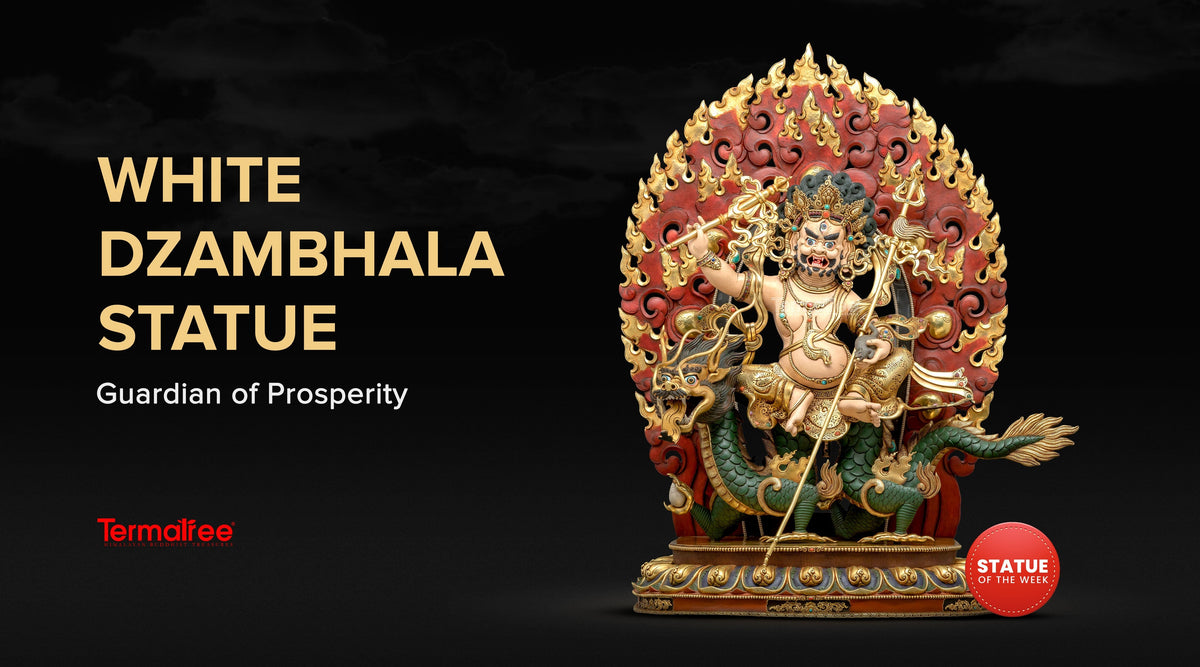
What immediately sets this Dzambhala apart is his dynamic composition. Dzambhala is seated upon a beautifully detailed green dragon, which rests upon a lotus base. Behind him rises a flaming halo, creating a powerful visual presence and framing the deity with radiant energy.
His five-pointed crown is richly adorned with gemstones, while his body and ornaments are enhanced with 24K gold gilding. The combination of gold, vibrant acrylic painting, and gemstones gives the statue a striking depth and presence while preserving the traditional character of Nepalese Buddhist sculpture.
In his hands, Dzambhala holds sacred attributes including a vajra-topped trident, with the three-pronged trident resting across his shoulders, while the mongoose sits in his other hand, representing the traditional treasure-bearing attribute associated with Dzambhala. The carefully rendered details throughout the figure demonstrate the precision and patience required of traditional lost-wax casting.

Crafted in the Artistic Tradition of Patan
This statue was created in Patan, Nepal, a historic center of Newar metalworking and Buddhist sculpture. Using the traditional lost-wax casting technique, the sculptors first create the detailed wax model before casting the statue in copper. The surface is then carefully finished, gilded, painted, and adorned with gemstones by hand.
The result is not simply a large statue, but a complete expression of traditional Himalayan craftsmanship. From the intricate crown and ornaments to the dragon, lotus base, flaming halo, and individual iconographic details, every part has been carefully considered by the artisans.
What Makes This White Dzambhala Truly Special?
At 24.2 inches tall and weighing 14.46 kg, this Dzambhala has a substantial presence while retaining an extraordinary level of detail.
One-of-a-kind craftsmanship: This statue has been individually handcrafted rather than mass-produced, giving it its own character and artistic expression.
Traditional materials: The statue is made from a copper body and finished with 24K gold gilding, acrylic painting, and gemstones.
Traditional technique: It has been created using the ancient lost-wax casting method practiced by generations of Nepalese artisans.
Detailed iconography: The dragon, lotus base, flaming halo, trident, vajra, mongoose, five-pointed crown, and gemstone details come together to create a distinctive and carefully rendered representation of Dzambhala.
Statue Details

Deity: Dzambhala
Size: 24.2” / 61.5 cm (Height) × 18.1” / 46 cm (Base)
Weight: 14.46 kg
Material: Copper Body, 24K Gold Gilding, Gold & Acrylic Painting, Gemstones
Technique: Lost-Wax Casting
Origin: Patan, Nepal
A Sacred Statue for Your Altar or Meditation Space
With its commanding size, radiant gilding, and exceptional craftsmanship, this Dzambhala statue would make a meaningful presence in a Buddhist altar, shrine, meditation space, or sacred collection.
More than its impressive appearance, the statue reflects the living artistic tradition of Nepal, where sacred Buddhist sculpture continues to be handcrafted with devotion, patience, and generations of accumulated knowledge.
For collectors and Dharma practitioners seeking a distinctive Dzambhala statue handcrafted in Nepal, this one-of-a-kind sculpture offers an opportunity to bring together traditional iconography, exceptional craftsmanship, and the enduring artistic heritage of Patan.