Embracing Transformation and Spiritual Growth through the Power of the Fire Horse
The Tibetan calendar is several centuries old, and it is rooted in the spiritual traditions, astrology, and philosophy. Every year is an expression of different energies and qualities. The Fire Horse year has been defined as one of great change, abundant energy, and intense activity. It is a year of boldness and radical change, as it is the blend of the hot-bloodedness of change and the solid, independent spirit of the horse. Fire Horse is not limited to individual and spiritual growth; it is also a major aspect of Tibetan mythology and Buddhism, where, in most cases, horses are often assumed to be custodians of power, motion, and spiritualism.
Tibetan Buddhism and mythology share a conception of the Fire Horse deities, which are viewed as ferocious protectors or warriors of their followers in hard times, clearing the way through their transformative energy. Hayagriva and Palden Lhamo are among the deities that symbolize the horse's spirit of fire. They use the strength and power of the horse to protect the Dharma and bring change. The Fire Horse represents both physical and spiritual power. This period demonstrates an opportunity for people to harness the transformative energy of the Fire Horse to overcome difficult times and become more self-aware and enlightened. Thus, the Year of the Fire Horse is not simply the year of physical well-being but also the year of great spiritual significance.
The Fire Horse in Tibetan Astrology: A Year of Power, Transformation, and Vitality

The Tibetan zodiac has twelve years, each represented by one of twelve animals paired with an element (Wood, Fire, Earth, Metal, or Water). The year of the Fire Horse is significant within this system because it represents the most vibrant and passionate period of the zodiac cycle, as well as the potential for making significant changes. Individuals born during a Fire Horse year are generally regarded as ambitious, independent, and brave. Consequently, Fire Horses are powerful leaders in introducing fresh ideas and innovations worldwide.
In Tibet, the horse symbolizes power, speed, and freedom. The element of fire intensifies these qualities, leading to a year full of action, movement, and occasionally chaos. The Fire Horse year is an opportunity for tremendous transformation and expansion. It makes people take drastic, aggressive action and do serious things to better themselves and the surrounding world.
The Connection Between Fire and Horses in Tibetan Mythology
Tibetan Buddhist mythology and Tibetan Buddhism are also associated with horses, specifically and symbolically. They are commonly regarded as spiritual speed and power and as messengers of the gods. They are frequently depicted in the Tibetan Buddhist religion and artifacts as the associates, transports, or sources of energy of various deities. The people of Tibet are not mere animals; they are also believed to have spiritual significance. They are the embodiments of such virtues as power, speed, and breaking the earthly bounds. Significantly, numerous deities are depicted as horse riders, indicating they can move quickly in the material world and into other spheres of spiritual knowledge.
People believe that the Fire Horse is a powerful and active force that transcends the physical world. Not only is it an earthly creature in the Tibetan Buddhist symbolism, but it is also a symbol of change and the power of the spirit. The Fire Horse is also strongly associated with the element of fire, which symbolizes change. It represents not the incineration of the obstacles, but the power and boldness to overcome everything personal and spiritual. It is said that through its help, people can proceed to take on challenges, put up with hard times, and keep their spiritual journey with determination. The perfected energy is the optimum concession towards the awakening of the spirit. It is one of the forces that may cause profound personal transformation, prepare the path to enlightenment, and help practitioners confront personal and external challenges with fearlessness. The Fire Horse symbolizes vigorous, dynamic development, as it is associated with movement and transformation. It supports not only gods but also those individuals who want to get to know more about their spirituality.
Deities Are Associated with the Fire Horse
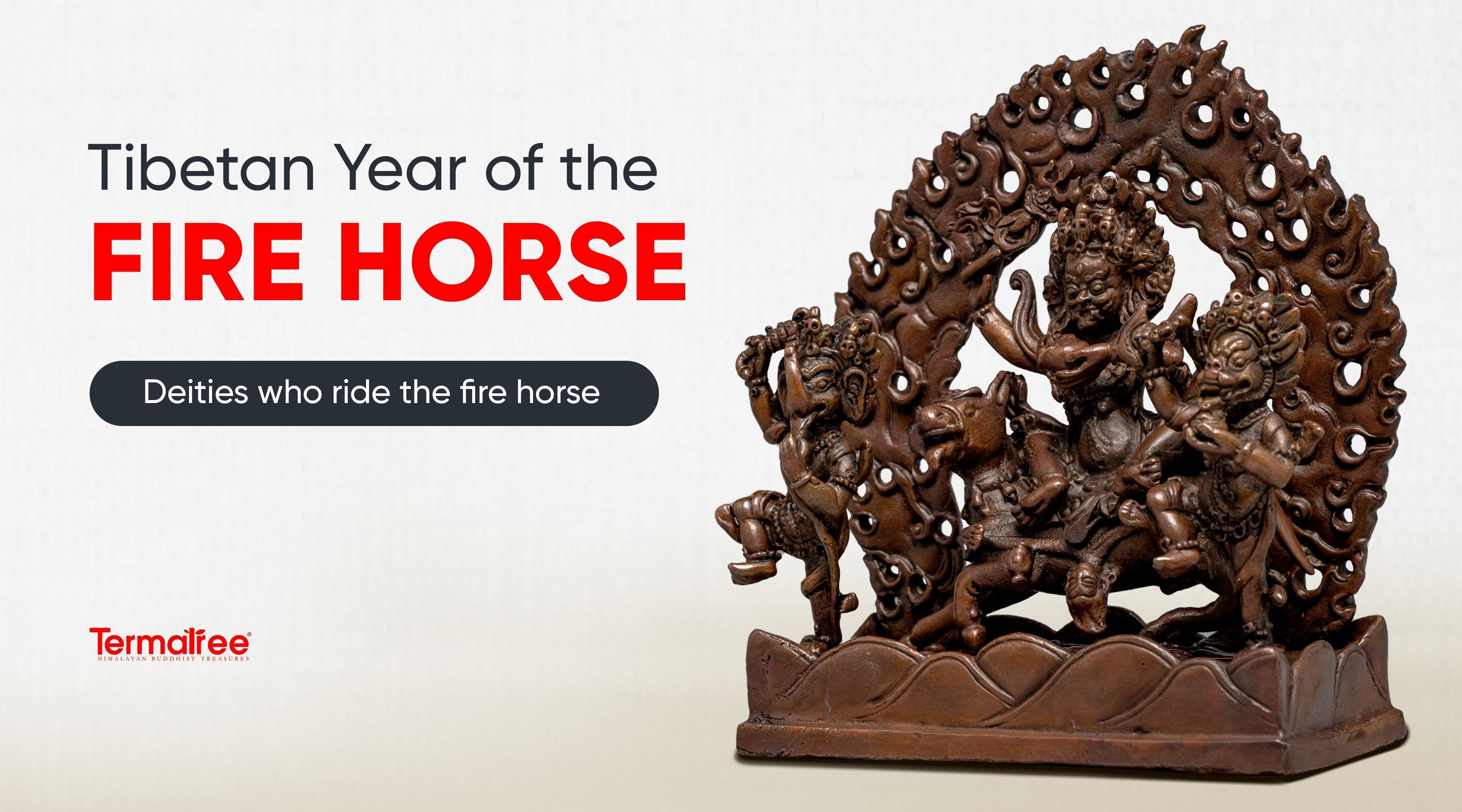
The relationship between horses and deities is a typical metaphor that is frequently used in Tibetan Buddhism to describe the personalities and powers of the gods. Many deities are linked to horses or embody the power of change and the transition of fire and movement, though no single deity is always shown mounted on a Fire Horse in every depiction.
Hayagriva: The Angry Guardian

Hayagriva is a popular god in Tibetan Buddhism and is associated with horses as well as the energy of change that burns like fire. Hayagriva is depicted as an enraged and violent deity, having the head of a horse. He symbolizes the destructive force needed to eliminate problems and evil forces. His burning nature symbolizes the disposal of ignorance, which is one of the primary components of the way of enlightenment. In some of the images, Hayagriva is mounted on a horse, which in most cases is symbolic of the swift, irresistible power of illumination that shatters down barriers and knowledge.
Palden Lhamo: The Intense Protector of the Dharma

Another Tibetan Buddhist deity, which is associated with horses, is Palden Lhamo. We see her frequently riding a horse or mule, occasionally on a vengeance mission to clean up the world of evil. She is a defender of the Dharma and an eminent fighter of the Tibetan people. Her energy is fiery and protective; at least, people believe that she can employ fire to defend truth and justice, as she is believed to be a goddess. Her iconography featuring a horse demonstrates the speed and decisive nature of her spiritual role, which embodies the power and intensity of the Fire Horse.
Karmapa: The Black Hat Lama

It was believed that the 16th Karmapa, a highly respected Tibetan spiritual leader, had the Fire Horse energy since he was a strong-willed person capable of motivating other people and was not afraid to question the status quo. The Karmapa is a Fire Horse that is fearless and able to transform things. He was born in the Year of the Fire Horse (1937), and as a spiritual leader, he possessed most of the qualities that are attributed to the same year: a lot of energy, power, and readiness to initiate revolution. His life's work was to challenge the established norms of doing things and seek alternative means through which Tibetan Buddhism can expand.
The White Horse of the Buddha

Kanthaka (Photo from Wikipedia)
Most of the time, people associate the white horse known as “Kanthaka” with the life of Siddhartha Gautama, the actual Buddha. That horse is not a fiery one; it only represents the journey to enlightenment. Many of the deities who surrounded the Buddha and his teachings were known to ride horses. Hares (1995) mentions that in Tibetan art, certain Buddhist deities are depicted riding horses to move around or as an embodiment of their infinite power and capability to transcend troubles. Although these gods are not directly associated with the "Fire Horse," they do possess some of the horse's movement, power, and spiritual speed.
Symbolism of the Fire Horse and Its Impact on Tibetan Spirituality
Tibetan Buddhism views fire as a representation of how we purify ourselves, change from who we think we are spiritually, and destroy our ego. When you combine this idea of fire with the horse representing power and quick movement, it creates an image of a fire horse or fire element. A Fire Horse is a representative for all of those who have undergone a fast-moving spirituality transformation through fire, as well as those who have uncontrollably experienced their changes.
The deities associated with a Fire Horse are generally thought of as those who provide assistance to individuals going through this process or embody the change that occurs during a Fire Horse year. They ride the Fire Horse as a vehicle and a symbol of their rapid progress through destruction and renewal. Those riding the Fire Horse possess the ability to bring about change quickly and effectively, and often require the respect and reverence of their followers due to their great speed in bringing about transformation.
Modern Interpretation of the Fire Horse

The Tibetan Year of the Fire Horse has strong origins in ancient astrology, but it also has an indication of personal change and social transformation in a modern context. It is marked by fearlessness and audacity in exploring new frontiers, which are essential for survival in the fast-paced world. The activity of the Fire Horse would awaken anybody experiencing a significant life transition to remain faithful and vigorous, which can assist in career variations, soul searching, and personal problems.
Such a burning character reminds us that, despite the chaos, change can lead to growth and new opportunities. It also appeals to the leaders and visionaries who are ready to go against the traditional standards and bring new ideas into the world, which is the quality that leads to the shift in technology and culture in society. Fire Horse is also associated with the power available in modern times, as the strength within to overcome barriers on the emotional and social levels. It encourages individuals to solve their failures and other causes that impact society in general with the view of fostering courage. The Fire Horse represents the force of transformation, enabling individuals to begin their path of personal and collective transformation, bringing spiritual awakening and the ability to withstand life's hardships through courageous leadership.
Conclusion
The Tibetan Year of the Fire Horse is not only a time when everything changes physically but also a period of immense spiritual significance. This year is grounded in Tibetan Buddhism and astrology. It is the emblem of transformation and the fast and flashy energy that transforms. The Fire Horse is the power of transformation, when people can start their processes of individual and collective changes, promote the development of spiritual awakening, and give the courage to withstand the hardships of life by being a brave leader. Examples of gods and goddesses who possess this burning spirit include Hayagriva, Palden Lhamo, and the 16th Karmapa. They tend to ride horses or are related to energy that transforms things. Fire Horse is a period of massive transformation, and individuals born during this year are believed to be courageous, competitive, and willing to undertake any endeavor. The Fire Horse still makes people in the contemporary world ask questions about how things should be, go on a path of self-discovery, and live their lives with indestructible determination. One aspect that brings people to big change is the Fire Horse, which can manifest as personal, social, or spiritual change.