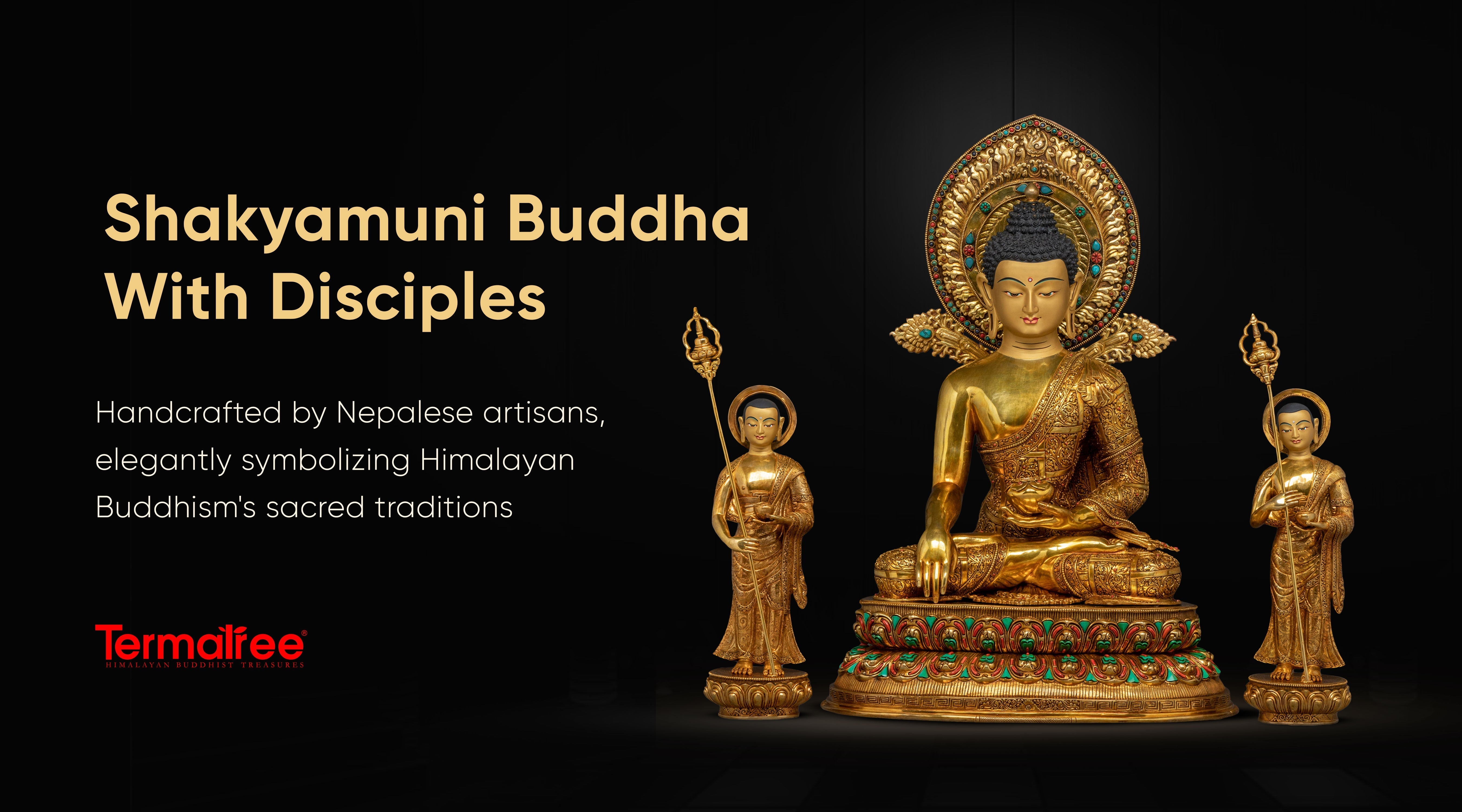

Exploring the Three Jewels of Buddhism: Buddha, Dharma, and Sangha as the Foundation of Spiritual Practice
Buddhism is a profound spiritual tradition that educates individuals on how to end suffering and attain wisdom, moral conduct, and mental discipline. When an individual takes refuge, they place their faith in these three holy things to secure themselves against suffering and bring them to the ultimate purpose: enlightenment. This refuge is not an orthodox worship; it is a recognition of the sheer wisdom, teachings, and community that the Three Jewels can provide. The act of seeking refuge is considered an essential commitment to living a path of Buddhadharma, as it offers individuals the opportunity to ask for and receive help and guidance along their paths.
The three main elements of the Buddhist path are the Three Jewels (Buddha, Dharma, and Sangha), and though each has its own emphasis, they are closely related. The Buddha is the awakened one who is beyond suffering and attained the peak of compassion and knowledge. The Dharma refers to the Buddha's teachings and wisdom that demonstrate how to overcome suffering in a practical, straightforward way. The Sangha is the community of monks, nuns, and laypeople who practice Buddhism, look after one another, carry the teachings, and live in harmony in accordance with the Dharma. Once you embrace and adhere to these three principles, they will provide you with a comprehensive framework for spiritual practice. They are also regarded as essential for individuals seeking tranquility in the Buddhist lifestyle.
Origin of the Three Jewels (Tri Ratna)

The early period of Buddhism, known as the time of the Three Jewels—Buddha, Dharma, and Sangha—was an essential part of the origin story for Siddhartha Gautama, who achieved enlightenment while meditating under a tree around 528 B.C. Siddhartha's enlightenment revealed the essence of suffering (Dukkha), its origins, and the means to transcend Dukkha through Dharma. Buddha's teachings include the importance of wisdom, ethical living, and the practice of mental control or restraint, and they are meant for everyone. To support individuals in following the teachings of Buddha, there was a community of believers known as the Sangha. Buddha created this community of followers early in his teaching career, comprising both men and women (monks and nuns) and lay people who collectively supported the preservation and transmission of the Buddha's teachings from one generation to the next.
The Three Jewels, often referred to as the Foundations of Buddhist Practice, are the Three Jewels of Buddhism. The Dhammapada, a critical text of Buddhism, was compiled in the 3rd century BCE and demonstrates how vital the Three Jewels have been to Buddhism throughout its history. The Dhammapada, in verse 188, presents what the Buddha had to say about the Three Jewels and their importance when seeking refuge:
"Take refuge in the Buddhas, Dharmas, and Sanghas; with them you will be free from suffering and at peace."
The Dhammapada is a vital source for all Buddhists, as it presents the words of Siddhartha Gautama on the importance of the Three Jewels in attaining peace and liberation from suffering. While the official recognition of the Three Jewels has contributed significantly to the development of the fundamental beliefs of Buddhism, they will continue to shape and influence Buddhist practitioners and their practice to
Threefold Refuge in Buddhist Practice
Threefold Refuge is a fundamental practice in Buddhism, and it is at this stage that a practitioner is introduced to the spiritual journey. It means a profound devotion to the way of wisdom, moral existence, and awareness.
The Threefold Refuge is traditionally chanted in Pali, and it is stated as follows:
Buddham saranam gacchami—I take refuge in the Buddha.
Dhammam saranam gacchami—I take refuge in the Dharma.
Sangham saranam gacchami—I take refuge in the Sangha.
Seeking refuge is not a recital but a deep dedication to live a life of moral rectitude, to develop consciousness, and to make discriminating decisions. When a practitioner takes refuge in the Three Jewels, they initiate a path of spiritual development and direction and commit to a long-term effort to reduce suffering and eventually achieve liberation from samsara.
The Buddha: The Enlightened One

The first Jewel in Buddhism is the name given to Buddha, meaning not only Siddhartha Gautama but also enlightened individuals of all. The word "Buddha" is translated as "the one who is awakened," and it refers to the highest spiritual state a person can reach by overcoming the cycle of samsara and arriving at nirvana. Buddhists do not consider the Buddha as a god but rather a teacher whose life and teachings are a way to enlightenment. His doctrines emphasize the importance of psychic awareness and psychological change in overcoming suffering and attaining wisdom. The Dhammapada, a famous scripture, highlights these themes by emphasizing the importance of mental focus for seekers of enlightenment.
"One who perceives the Dhamma perceives me; one who perceives me perceives the Dhamma."
-Samyutta Nikaya
The Dharma: The Truth and the Teachings

In Buddhism, Dharma encompasses all the teachings left behind by the Buddha, focusing on the truth about existence and the way to end suffering. In particular, the subject includes the Four Noble Truths, which identify suffering and explain how to end it, as well as the Noble Eightfold Path, which guides us in developing our wisdom and being charitable to others. Dharma shows us the universal truth that lies beyond individual and cultural perspectives. It shows how all living things are connected by their ability to see and act clearly, as well as by their shared suffering.
"The Blessed One has expounded the Dharma well, immediately accessible, not deferred, and calls upon everyone to come and see."
-Anguttara Nikaya
1. The Four Noble Truths
The Four Noble Truths embody the essence of Buddha's teachings. They convey a profound understanding of the persistence of existence. They give a genuine assessment of the causes of pain and offer suggestions for obtaining release and harmony.
Dukkha (Suffering)—All creatures experience suffering, which is a sign of dissatisfaction and impermanence. Suffering exists for all beings from birth to death, and during that period, they all suffer pain, grief, and longing.
Samudaya (The Cause of Suffering)—Our craving for pleasure, control, and permanence is the source of our suffering.
Nirodha (The End of Suffering)—There is the potential to release suffering. When desire and attachment are eradicated, suffering ceases.
Magga (Path to the End of Suffering)—The Eightfold Path, as a disciplined practice, leads to the end of suffering by living an ethical life, cultivating the mind, and developing wisdom.
2. The Noble Eightfold Path
The Noble Eightfold Path provides a roadmap for overcoming suffering while also cultivating insight, ethical conduct, and mental discipline. It is not a series of progressions or stages, but rather a practice of harmony among aspects that all operate together.
- Right Understanding entails understanding the nature of reality as it exists, including the Four Noble Truths.
- Right intention is the intention of non-attachment, loving-kindness, and compassion.
- Right speech is defined as speaking the truth in a courteous and non-harmful manner.
- Right Action - To act ethically, without violence or theft, and with respect for life.
- Right Livelihood - Earning a living while avoiding harm and adhering to ethical principles.
- Right Endeavor - The endeavor to cultivate wholesome states and let go of unwholesome states of thought.
- Right Mindfulness is the awareness of the body, feelings, thoughts, and things without attachment or aversion.
- Right Concentration is the development of deep levels of meditation absorption that calm the mind and deepen insight.
The Sangha: The Community of Practitioners

Sangha is the third jewel of Buddhism, which describes the fellowship of people who believe in the Buddha's teachings. Previously, it was for people interested in studying and practicing the Dharma. Today, the Sangha includes anyone who wishes to pursue this Buddhist path collectively. The Sangha is essential to the practice of Buddhism, offering guidance, encouragement, and inspiration, and ensuring responsibility among its members. By engaging in everyday activities such as rituals, meditation, and teachings, people develop together by conserving and passing on the Dharma to succeeding generations. The community stresses that the Buddhist practice is a community activity that should focus on the well-being of everyone.
A Compass for Spirituality and Moral Development
-
Lifelong Promises: Seeking guidance from the Three Jewels is not only that; it is a lifelong commitment to moral and spiritual development and to reducing suffering.
-
Guidance through Life: This commitment is a guide, offering direction for navigating life's problems and providing clarity.
-
Embodied Practice: Buddhism is not a learning activity per se, but a practice of applying that learning to your day-to-day activities.
-
Living with Intention: The Three Jewels help individuals live with meaning by cultivating mindfulness, compassion, and ethical conduct.
-
Minimizing Suffering: The Three Jewels inspire individuals not only to reduce the suffering in their own lives but also to minimize the suffering of every other living being.
A Lifelong Journey to Freedom: Committing to Liberation through the Three Jewels

To find refuge in the Three Jewels, it is essential to understand that this is a lifelong commitment to personal and spiritual growth through self-discovery and a continuing pursuit of enlightenment. A person who acts on this commitment to follow the Three Jewels must achieve it by constantly working on themselves through self-exploration and steadfast optimism in both good times and bad as they work toward the goal of liberation. The Three Jewels, therefore, are constant sources of inspiration along the path of spiritual growth. The Buddha represents the model for a completely developed individual; the Dharma comprises teachings that lead to transforming one's way of thinking and acting in ways that reduce suffering; and the Sangha provides a forum for community and support among individuals striving to achieve the same goal.
The refuge represents a more profound life purpose, emphasizing the pursuit of nirvana and the escape from the cycle of samsara. Every single day offers an opportunity to become more mindful, live ethically, and deepen one's sense of existence. As practitioners progress, they increasingly experience relief from attachments that perpetuate suffering. In the end, committing to this path means making this life full of peace, wisdom, and compassion, not only for personal satisfaction but also for the benefit of all creatures. Adhering to the teachings of the Three Jewels, the followers strive for actual freedom, insights, and loving-kindness in their lives.
Conclusion: The Path of Transformation through the Three Jewels
The most significant aspects of Buddhist practice are the Three Jewels: the Buddha, the Dharma, and the Sangha. They assist humans in their spiritual growth. Seeking refuge in these Three Jewels is not something that can be handled as a recitation. It is a lifetime commitment to being mindful, witty, and well-behaved.
The Buddha provides you with hope, the Dharma provides you with purpose and a sense of direction, and the Sangha assists you in your quest. This retreat is one upon which one can base personal transformation, helping practitioners shift to a sense of non-suffering for themselves and for all beings. By practicing the Three Jewels, you will make a promise to yourself to always be mindful, lead an ethical life, and think about yourself. This path aims to achieve nirvana, to put an end to suffering, and to break the cycle of samsara. The Three Jewels are not merely teachings but the fundamental framework of attaining peace, wisdom, and compassion in life. This practice leads to spiritual freedom and inner peace for the practitioner and the world.