
Suresh Lawot Tuladhar: A Master of Nepali Wood Sculpture
In the world of Nepali wood sculpture, Suresh Lawot Tuladhar stands out as one of the most influential figures, carrying forward a legacy of craftsmanship that spans centuries. His work is a testament to the depth of Nepal’s artistic and spiritual heritage, blending tradition with contemporary interpretations. He is carrying on a family tradition of four generations. His work is not just an art but a respectful devotion to the Newar culture, the very spiritual images that have been a constituent of the temple and palace art of Nepal for hundreds of years. Tuladhar uses wood to his advantage, creating sculptures of historical significance. Both carvings depict that he is well-versed in religious and cultural symbols.
The art of Tuladhar is not just a continuation of tradition but also an answer to modernity, as he blends the old craft with the new. His sculptures are not merely forms; they are also spiritually deep and expressive of his personality. A fantastic example of this blend of the old and the new is his popular series of statues of the 21 Taras. The contemporary environment resurrects the old deities, while the holy aspect of Nepalese art traditions endures. Tuladhar not only has a strong commitment to work, which is more difficult in modern times, but he also contributes significantly to the continuity of the rich tradition of Nepali wood craftsmanship for future generations.
A Legacy Carved in Wood: The Artistic Journey of Suresh Lawot Tuladhar

Suresh Lawot Tuladhar was born and raised in the culturally rich village of Bungmati, Lalitpur. He is an heir to a family of old-time woodcarvers. Over the years, his family has produced elaborate wooden sculptures that have become a significant part of Nepalese culture. They have transmitted the knowledge, skills, and artistic vision to accomplish this. Tuladhar is the fourth descendant in his family to practice woodcraft. He is continuing a legacy that has influenced his artwork and himself immensely. Over the past two decades, he has striven to perfect his art and deepen his knowledge of woodworking.
Wood carving by Tuladhar is not only a profession but also a lifelong love affair, rooted in the historical context of his family and the significance of the art. His work is so related to the traditional methods of creating Newar art, which have long been a significant aspect of religious and architectural expression in Nepal. This close attachment with his past makes him who he is, and he is not only a guardian of the tradition but also a modern innovator in the industry of wood sculpture. He is carrying on the tradition of preserving these skilled techniques, which were handed down through generations, but he is also creating new meanings that will prove these long-established artistic traditions of Nepal are both everlasting and evolving.
Craftsmanship That Breathes Life into Wood
The wooden sculptures created by the artist Suresh Lawot Tuladhar illustrate an array of stories and provide a connection to the cultural heritage of Nepal and to spirituality. Many of these tales stem from the artists and artisans in Nepal, who are rich in their histories, and the sculptures represent "Newar" traditional craftsmanship that has been used to adorn temples, palaces, and other religious places found throughout Kathmandu Valley for hundreds of years. These sculptures honor the spiritual beliefs that have existed throughout Nepal's history and their beauty. Each of the artist's sculptures contains many layers of meaning, representing both the divine aspect of the god or goddess and reflecting structures based on mythological stories or events. The sculptures reflect the relationship between human beings and deities, as well as the spiritual significance of both.
Spiritual Symbolism in Wood
In Nepal, wooden art has been important for many years. Statues, elaborate doorways, window frames, and other religious symbols exemplify the use of wood as a primary medium of artistic expression. Furthermore, wood presents a contradiction for an artist: both art and the artist must maintain a positive relationship if the artist fully understands the qualities of different types of wood, including grain, texture, natural strength, and organic properties. To create objects from wood, an artist must pay close attention to every detail, as the material's organic nature demands patience and precision. If an artist makes an incorrect cut or misplaces a detail, they may compromise the balance of a piece; thus, artistic craftsmanship can be viewed as creating harmony. Through Tuladhar's artistic talents, viewers can visualize how he has given sculptures the appearance of living wood by transforming them into seemingly lifelike pieces of art that exhibit flowing forms and movement, creating the illusion of motion or sentience. The smooth and seamless transitions within his sculptures exhibit not only extraordinary craftsmanship but also a significant understanding of how to convey liveliness or emotion in a piece of wood that is actually an inanimate object (i.e., a solid piece of wood).
The 21 Tara Series: A Milestone in Tuladhar’s Artistic Legacy

Tara is a deity in the Buddhist religion; her representation, consistent with the figure's origins and carved from wood, has created an artistic miracle for both artisans and viewers alike. One of the many reasons for this miracle is that the composition of 21 Tara, an amazing display of craftsmanship, was created from a single solid block of wood, with 21 figures appearing together in the same piece. With its significant dimensions and more complex nature than any other sculpture currently displayed at NAFA (including several large sculptures), Avalokiteshvara has been awarded First Prize in the 2081 National Exhibition for Fine Arts, given by NAFA's curators to the artist, along with the National Academy of Fine Arts (NAFA).
The collection was completed in nine months and included many different symbols and gestures, each representing a figure of Tara. In addition to the artist's extraordinary expertise, patience, and time, it also required an impressive understanding of Tara's image within Buddhist iconography, Tara's overall spiritual significance, and the spiritual significance of each image of Tara, particularly according to tradition.
As a result, this work has become a landmark in wood sculpture, representing both a continuation of traditional methods and an expansion of the possibilities for using wooden images to tell stories with spiritual messages across various forms of visual art.
Buddhist Icons in Wood: A Collection of Divine Sculptures
This collection includes wooden statues of Buddhist deities, such as Lokeshvara, Shakyamuni, Vajrasattva, and Namasangiti. Each one is carved from wood with outstanding precision and expresses a deep spiritual truth. The statues are not only artistically beautiful but also spiritually inspiring.
Lokeshvara:

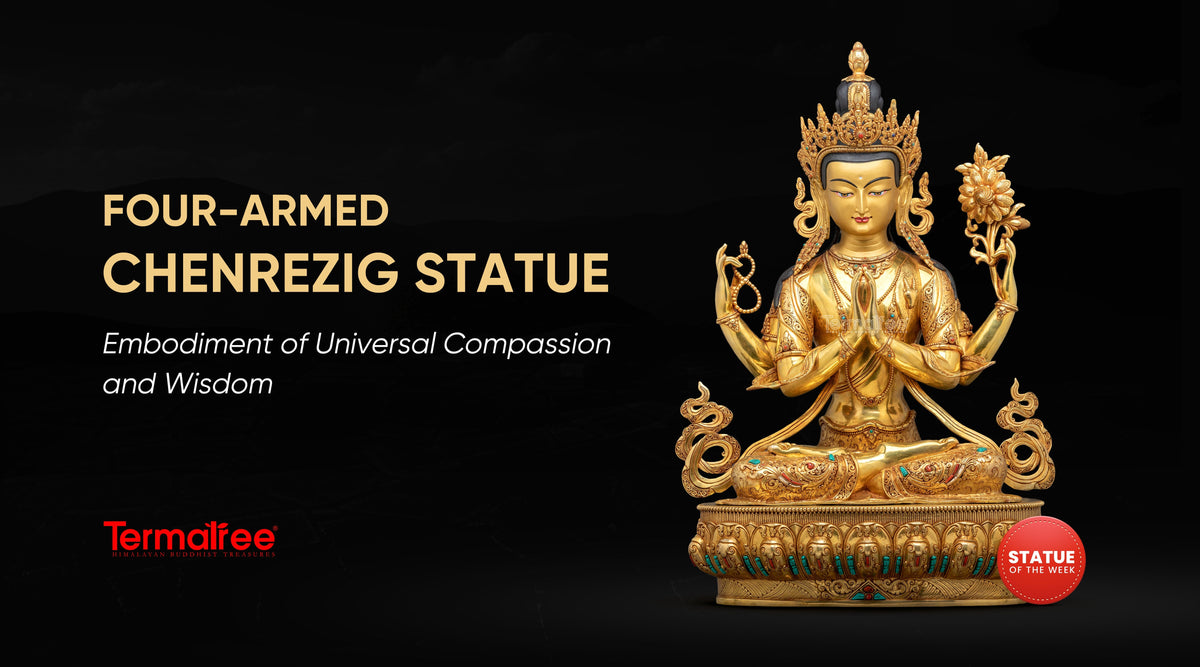
Avalokiteshvara is exquisitely carved with outstanding accuracy, care, and exceptional artistic skill, creating a sense of elegance. In addition to being large, difficult to create, and containing deep significance with a considerable amount of thought behind it, this sculpture has a great deal of meaning to convey to the viewer; the sculptor has done an excellent job conveying his vision through the robe, the face, and the body positions of Avalokiteshvara. The sculpture's natural surface pattern and its surface characteristics also help create the appearance of warmth and beauty in Avalokiteshvara. The image of a wooden statue represents much more than just an object; it embodies the concept of mindfulness, compassion, and kindness, the three major teachings of Siddhartha's Buddhist philosophy.
Shakyamuni Buddha:

The wooden body statue of Shakyamuni Buddha is an example of the historical Buddha sitting in a tranquil meditative position, symbolizing enlightenment and inner peace, as portrayed in the Buddha's teachings on the Four Noble Truths and the Eightfold Path. This statue has been carved and polished to depict flowing clothing and the calm, meditative posture of Shakyamuni Buddha. The statue's wooden material gives it an organic texture that creates a soothing grounding effect and a sense of simplicity. The natural wood will create a conscious awareness of the object's existence through the material used to make it. Additionally, this piece serves as both an artistic representation of the teachings of Buddhism and spiritual enlightenment.
Vajrasattva:

The Vajrasattva Purification Wooden Sculpture depicts the Bodhisattva Vajrasattva, revered in Tibetan Buddhism for performing purification ceremonies. This sculpture depicts the unique vajra (scepter) held by the Buddha and shows him in a standing, active meditation (samadhi) pose. The robes and position of the Buddha illustrate how to purify negative karma (bad actions) and develop peace of mind. By using wood as a primary medium, this sculpture reinforces the Buddha's relationship with nature and serves as a constant reminder of the importance of purification on the Buddhist path. Therefore, this sculpture embodies constructive symbolism of spiritual transformation rather than being merely beautiful art.
Namasangiti:

The Namasangiti Wisdom Wooden Sculpture illustrates the intricacy and profundity of the Namasangiti mantra in Tibetan Buddhism. The detailed craftsmanship conveys an elevated quality, portraying the god as embodying wisdom, insight, and the mystical power of mantra. The quality craftsmanship of this sculpture demonstrates a serene, stable, peaceful yet active spirit, expressed in the Namasangiti Mantra and its powerful spiritual teachings through its construction. Every detail from the face and the flowing robes depicts the wisdom of sound, which creates change. The natural vibrations embedded in the wood remind us of the role of wisdom in attaining enlightenment. There is only one subject.
Craftsmanship Through Generations: Tuladhar’s Family Legacy
Wood carving is not just an art form in Nepal; it also represents the spiritual and traditional foundations of Nepalese society. For thousands of years, wood has been the primary medium for Nepalese artists to express their spirituality and to use their art to convey divine messages and share stories. The long-standing tradition of creating wood carvings is part of the Newar art style and has been practiced for centuries to beautify temples, monasteries, and homes, while also providing both practical and decorative benefits. According to Suresh Lawot Tuladhar, wood carving is far more than a technical artistic skill. Every curve, line, or contour in a carving conveys meaning, providing the foundation for understanding the symbols of Nepalese culture.
For Tuladhar, a carving carries much more than artistic value; it shares a story filled with meaning and uses visual language to speak to our souls. He imprints his carvings with the same spiritual and cultural importance as his ancient counterparts. His carvings, therefore, serve as more than mere sculptures or objects of beauty; they incorporate the properties and representations of both deities, spiritual beings, and cultural symbols, all created with care and accuracy. Every detail of a god’s pose and all of the intricately carved details on the clothing and other features that distinguish how unique they are have been meticulously thought out so that the overall result is both aesthetically pleasing and meaningful. In this way, his art demonstrates the relationship between traditional art-making methods and contemporary life. In addition, his work emphasizes that wood is not only a material, but also a living medium through which many stories can be told and many objects can be honored.
Reviving Ancient Deities: Tuladhar’s Influence in Contemporary Nepali Art

Traditional wood carving is facing difficulties due to the increasing popularity of modern art and mass-produced objects. The shift from sculptures made through traditional carving to those produced through modern aesthetic practices and readily available manufactured pieces has reduced the focus on the difficult aspects of traditional carving. Providing the skills needed to create these works is an even bigger issue. Many young people have little interest in investing significant time in developing their craft. Therefore, Tuladhar has serious concerns about the future of this craft: whether it can survive in a rapidly changing world and whether future generations will continue this tradition.
Tuladhar is committed to keeping the traditional craft alive. His award-winning creations and exposure in national media are helping to keep young people interested in traditional sculpture. The artist demonstrates how wooden sculpture can grow and develop while remaining connected to its history and spirituality. In addition to working as an artist, Tuladhar has taken on the role of mentor to others seeking to reconnect with their heritage, helping ensure that traditional wood carving continues to thrive within Nepal's artistic community. His creations prove that craftsmanship remains relevant even in an evolving society.
Conclusion: A Living Legacy in Wood
Through his remarkable skill at wood sculpture, Suresh Lawot Tuladhar is an example of how traditional artistry can endure into the future. In creating modern versions of ancient woodworking techniques with precision-carved intricate artwork by blending the present day with Nepal's cultural heritage and its methods of artistic expression, his work demonstrates the divine and humanity's connection to the divine within this artwork, through an artist's interpretation or representation. Tuladhar will further build upon at least 1,000 years of experience as a craftsman by continuing to evolve his designs and tools used in their creation. He is setting the stage for many future generations of craftsmen and women to keep their cultural heritage alive through the continuation of traditional craftsmanship. He has demonstrated that art is a timeless means of preserving cultural heritage and important historical elements, regardless of how rapidly the world around us changes.