
Choosing the right sacred finish for your shrine
Buddhist statues crafted from gold and silver hold significant importance in the art of the Himalayas, representing different forms of beauty and spiritual symbolism. Gold statues signify radiance, enlightenment, and sacred wealth, while silver statues represent purity, clarity, and calming spiritual elegance. The decision between gold and silver is determined by the purpose of the statue, the deity it represents, the energy of the shrine, and the practitioner's relationship with the shrine. In the end, a statue is not just a statue, but one with the spiritual attributes it represents, a sacred aid for attention and dedication. Gold and silver, on the other hand, express these qualities in different ways: gold brings warmth and majesty; silver brings coolness and clarity, so that practitioners can choose statues for their spiritual room.
Gold Buddhist Statues: Radiance, Devotion, and Sacred Grandeur

A gold Buddhist statue is often the best choice when you want the statue to become the main focus of your shrine. The light naturally falls upon gold and forms a powerful sacred presence. A gold statue can enhance an altar into a powerful devotional area when arranged with butter lamps, offering bowls, flowers, and incense. Gold statues are particularly well suited for practitioners who are keen to focus on inspiration, devotion, and the majesty of enlightenment. The glowing surface reminds the mind of the awakening of wisdom in ignorance. It can also make the deity’s facial expression, ornaments, robes, and mudras appear more vivid.
In Himalayan craftsmanship, many gold statues are made with a copper body and then covered with 24K gold gilding. This technique will maintain the strength of the copper and will provide the statue with its sacred golden appearance. Some statues are either painted with acrylic in color or inlaid with gemstones or detailed engraving. The additional features add expression and richness to the statue. Gold statues of the Buddha are commonly chosen for those who are interested in collecting them, serious practice, temple offerings, and for use in the main shrine, as they give a sense of devotion and value.
1. The Spiritual Meaning of Gold in Buddhist Statues
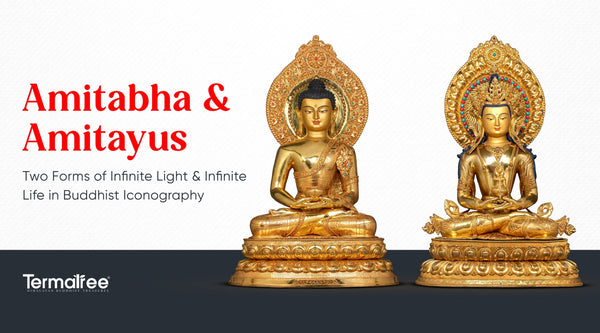
Gold is also a valuable material in Buddhist art and represents light, purity, and spiritual superiority. It is usually connected to the radiant body of the Buddha in nirvana, that is, the body of the enlightened one who is beyond any states of darkness. The statues of important personages such as Shakyamuni Buddha and Amitabha Buddha are gilded to give a representation of the presence of the divines. The gold not only conveys the dignity of these enlightened beings but also adds warmth and devotion to the altar. Further, gold is associated with generosity and merit: giving a gold statue is a sign of training in devotion and giving up attachment; it is a sign of the person's best qualities, not of worship of wealth. The gold statue represents the aim to be enlightened, the wish to respect and be disciplined in sincerity.
2. The Technique: Fire Gilding
Fire gilding, also known as mercury gilding, is a prestigious method of gilding Buddhist statues applied by the Shakya metalcraft community in Patan, Nepal. The intricate art is a combination of 24-karat gold and liquid mercury, forming an amalgam that is melted onto statues made of copper or bronze, and then the mercury is vaporized, leaving a thin layer of color on the metal surface. The proportion of gold to mercury will influence the ‘flow' of the amalgam and the final thickness of the gilding. The artisans then burnish the surface with the use of agate stones to produce the characteristic luster of the gilded statues of Nepal. This is an inexpensive and corrosion-proof technique, as evidenced by the long-lasting color of ancient temple roofs. In Tibet, a less permanent method, which uses a glue of gold dust, is also employed, usually for gilding the face of a deity and consequently as a way of making merit in devotional rituals.
3. Where Gold Appears: Iconographic Conventions
The most common color used in the Buddhist traditions of the Himalayas for the Buddha, bodhisattva, and peaceful deities is gold, appearing on the face, torso, and limbs. The warm gilded copper appears to glow. A similar luminous effect can be created with statues or figures constructed in clay or wood by using extremely thin sheets of hammered gold. In addition, gemstone inlay work is a characteristic feature in Himalayan Buddhist art, which differentiates the Nepalese statues from those of India and Tibet, where a striking contrast is created between the warm gilded gold and the cool gemstones, mainly turquoise, coral, and lapis.
Silver Buddhist Statues: Peace, Clarity, and Subtle Beauty

The softer and more refined appeal is the Buddhist statues in silver. They may not be as spectacular as statues of gold, but their enigmatic look is still full of spiritual allure. The overall appearance of the shrine can be soothed, cleansed, and balanced by a silver statue. It is particularly appropriate for someone who desires a sacred object that is not imposing.
Silver Buddhist statues are also popular for their fine workmanship. These elements, like engraved patterns or ornaments, bases of lotus designs, and facial features, look great on a silver surface. In certain statues, silver is used in conjunction with gold highlights, gemstones, coral, turquoise, lapis, or even painted features. This contrast effect gives it a natural and sacred look while providing a pleasing contrast. The other is the association with purity and meditative quiet that silver statues have. A silver statue is not screaming to be noticed. It evokes contemplation. This is an effective and powerful way to create personal meditation areas. The statue is a peaceful reminder to be mindful and aware, to step back into clarity and tranquility.
1. The Spiritual Meaning of Silver in Buddhist Statues
Silver has a different sacred quality than gold; it seems to glow more gently, almost like it’s warm but still cool. People say it’s calm and reflective, like the moon, and it creates a peaceful, inward atmosphere that fits well in meditation rooms, spiritual corners, and places where you settle. Silver stands for purity, lucidity, repair, and refinement. It also carries a subtle kind of interest, not just decoration, but more like a signal. That’s why silver statues work so well for small, quiet altar setups and also for serene deities such as White Tara, Medicine Buddha, Amitayus, and similar figures. The cool tones of silver support themes of healing, kindness, compassion, or inner steadiness.
2. Silver in Ritual Objects and Sacred Use
 Pure Silver Jwala-Nhyaka & Sinamu Set (Photo from Enlightenment Thangka)
Silver is also important for making ritual objects, like offering bowls and lamps used for divine offerings or for ceremonial light. There’s spiritual meaning connected with silver-inscribed plaques, especially when they have mantras, because they strengthen the ritual setting and make the participants feel more involved. In Buddhist practice, silver statues, particularly of deities tied to coolness and healing, are pretty common. They emphasize this contrast, like coolness in response to warmth, and it supports the mood of careful attention.
3. The Newar Tradition of Silver Statuary
The Newar people of the Kathmandu Valley have produced a great deal of Buddhist works that have been influenced by Indian, Tibetan, and Central Asian styles. Their skilled work has established a particular visual vocabulary for making Buddhist statues, a type of excellent portrayal of sacred men, women, and their accompanying rituals. Silver statues, especially, have a lofty position, appropriate for any space with a focus on meditation, clarity, and awareness, as their cool radiance can augment devotion.
Gold vs Silver: The Key Differences at a Glance
|
Dimension |
Gold |
Silver |
|
Core symbolism |
Enlightenment, incorruptibility, radiance, divine warmth |
Purity, clarity, mirror-like awareness, lunar coolness |
|
Associated quality |
The Buddha's outward radiance and active compassion |
Reflective wisdom; meditative clarity |
|
Saptaratna reference |
Suvarṇa: gold; the crowning jewel |
Rūpya: silver; purity of perception |
|
Typical deities |
Shakyamuni, Amitabha, Padmasambhava, Guru figures |
White Tara, Medicine Buddha, certain Avalokiteshvara forms |
|
Dominant tradition |
Tibetan, Nepalese, East Asian Buddhist statuary |
Specific Himalayan and Newar ritual contexts |
|
Visual quality |
Warm, solar, radiant presence announced |
A cool, lunar, luminous presence suggested |
|
Gilding technique |
Fire gilding (m |
Silver casting or silver plating over copper base |
|
Durability |
Exceptional fire-gilded gold resists corrosion for centuries |
High, though silver can develop patina over time |
|
Practical setting |
Altar, monastery, meditation room, home shrine |
Meditation spaces, healing contexts, formal ritual use |
Which Material Is Better for a Shrine?

The best material depends on the feeling and purpose of your shrine.
-
If your shrine is meant to feel radiant, devotional, traditional, and visually powerful, a gold Buddhist statue is often the better choice. Offering bowls and lamps, brocade and flowers, and ritual items are beautifully combined with gold for the central altar statue. It infuses the room with a serene and sacred ambiance.
-
If you want your shrine to be calming, simple, healing, and meditative, then a silver Buddhist statue would be better. Silver can be used in a serene environment, where the aim is to achieve a sense of quiet contemplation. It is also a beautiful choice for modern homes, meditation rooms, and minimalist altar designs.
Gold is often chosen for the main deity, while silver may be used for supporting deities, offering sets, ritual objects, or peaceful shrine arrangements. However, there is no strict rule that one is spiritually superior to the other. When used with reverence and with a proper purpose, both can be considered sacred.
Symbolic Difference: Sun-Like Gold and Moon-Like Silver

One simple way to understand the difference is to think of gold as sun-like and silver as moon-like.
-
Gold is bright, warm, powerful, and radiant. It embodies spiritual enlightenment, sacred energy, abundance, and the shine of enlightenment. Perfect for statues intended for devotion and good altar presence.
-
Silver is cool, calm, reflective, and pure. It means clarity, healing, peacefulness, and meditative awareness within. Perfect for statues that will inspire contemplation, calm, and quiet spiritual practice.
Both are beautiful. Both are meaningful. However, they bring different emotional and spiritual moods.
Durability and Maintenance
When choosing between gold statues of Buddha and silver statues of Buddha, one must consider not only quality, but also practical considerations.
-
Gold statues are valuable because gold does not tarnish easily. If a gilded statue is cared for properly, it will retain its radiant appearance for a long time. However, the surface should be rubbed no more than is necessary, cleaned with no harsh chemicals, and handled only a few times with bare hands. This can be accomplished with a soft brush dusting.
-
Silver statues or silver-plated pieces may need a little more care, as silver can tarnish or fade with time. Others like this vintage look because it gives it the air of antiquity and devotion in the statue. Others like to maintain the shine and luster of the silver. Polishing might be necessary but should be done carefully to prevent damage to the sacred details and plating.
The gold and silver statues would preferably be kept in a clean, dry, high place. Avoid wet areas, extreme heat, and rough handling. The value of a Buddhist statue should not only be respected in terms of the material, but also in terms of the symbol.
Craftsmanship Matters More Than Material Alone
 (Photo from Garland Magazine)
The worth of a statue isn't in gold or silver alone. It is also important to have great craftsmanship. Elements of a well-made statue are balanced proportions, calm facial expression, iconography, mudras, and salient details. The statue is spiritually present in the sculpture, engraving, gilding, painting, and finishing.
The "sacred art" of the statuaries of the Himalayas, especially in Kathmandu Valley, Nepal, and Patan, involves skills and methods passed down from generation to generation. Many statues begin with a copper body, then receive gold gilding, silver plating, oxidation, gemstone setting, or hand-painted details. The best statues are not only decorative objects; they are created with knowledge of iconography and respect for the deity’s meaning. A poorly made gold statue may not feel as powerful as a beautifully crafted silver statue. Likewise, a finely made gold-gilded statue can become a deeply inspiring spiritual centerpiece.
Conclusion
The most important thing to understand about the gold versus silver question is that it does not have a universal answer and that Buddhist tradition never intended it to. Both materials appear in the saptaratna framework. Both carry authoritative symbolic meanings. Both have been used in the Himalayan tradition for over a millennium to create objects of extraordinary beauty and sacred power. What the tradition does offer is guidance: gold for radiance and active compassion, silver for clarity and reflective wisdom. Gold for solar deities and primary shrine figures, silver for lunar deities and meditative contexts. Gold for warmth, silver for stillness. These are not hard and fast rules, but principles and frameworks of interpretation that can be used to inform the selection, not to make it.
The best Buddha statue is one that is true to the practice. Whether its surface catches the light with the warm glow of 24-karat gold or the cool luminosity of polished silver, what matters is that the figure has been made with skill, consecrated according to tradition, and placed with intention. The material is the beginning of the conversation between the practitioner and the sacred object, not the end of it.